Texas Electrical Contract for Contractor
Understanding this form
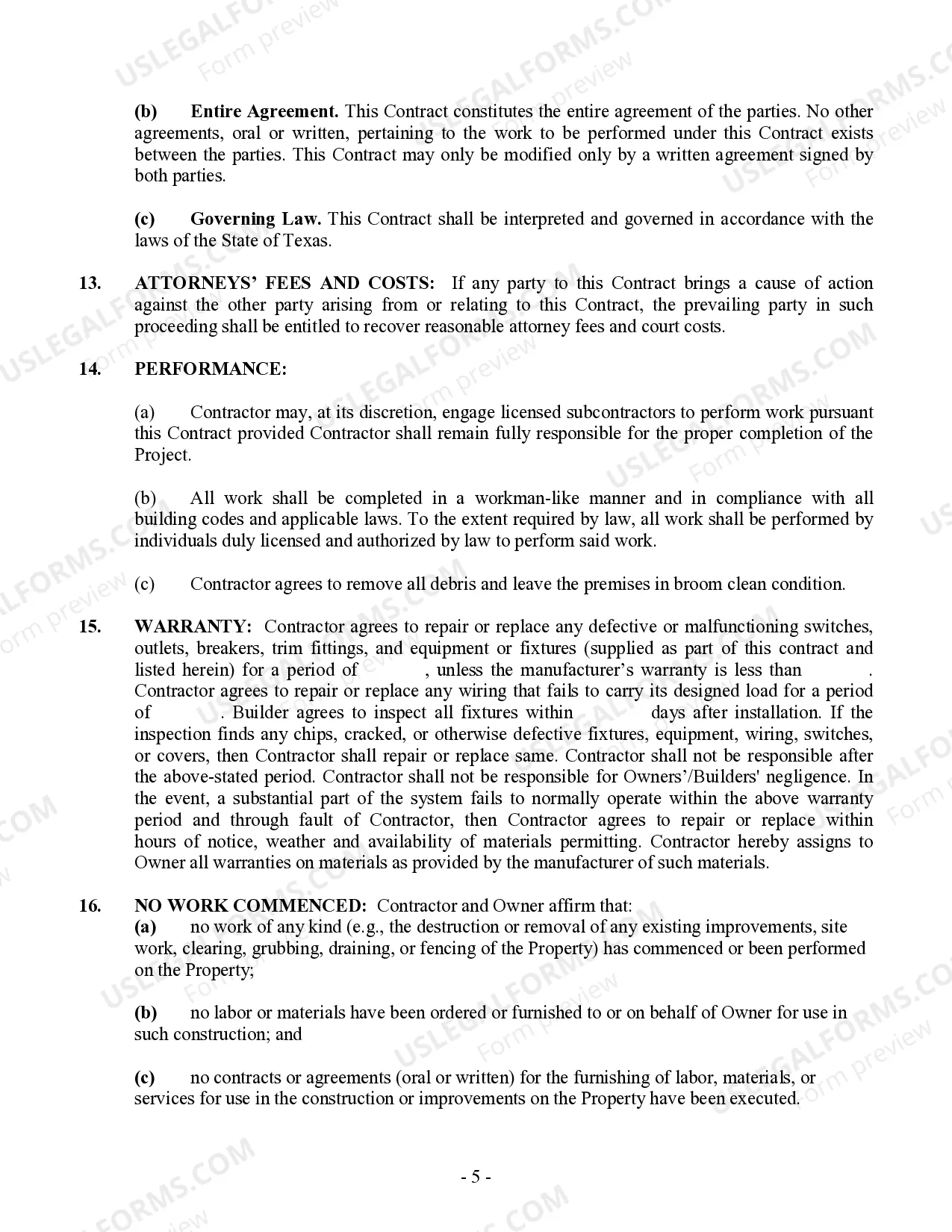
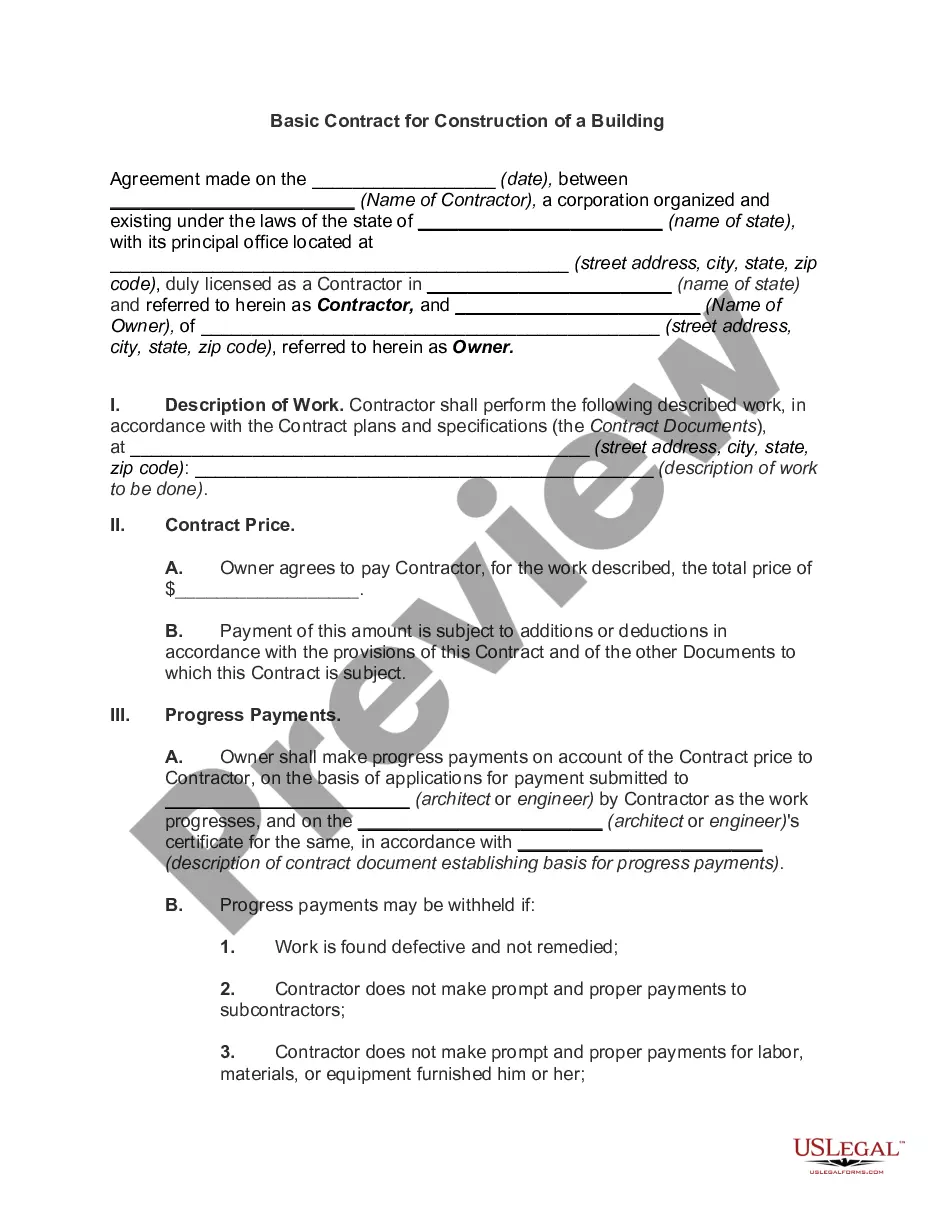
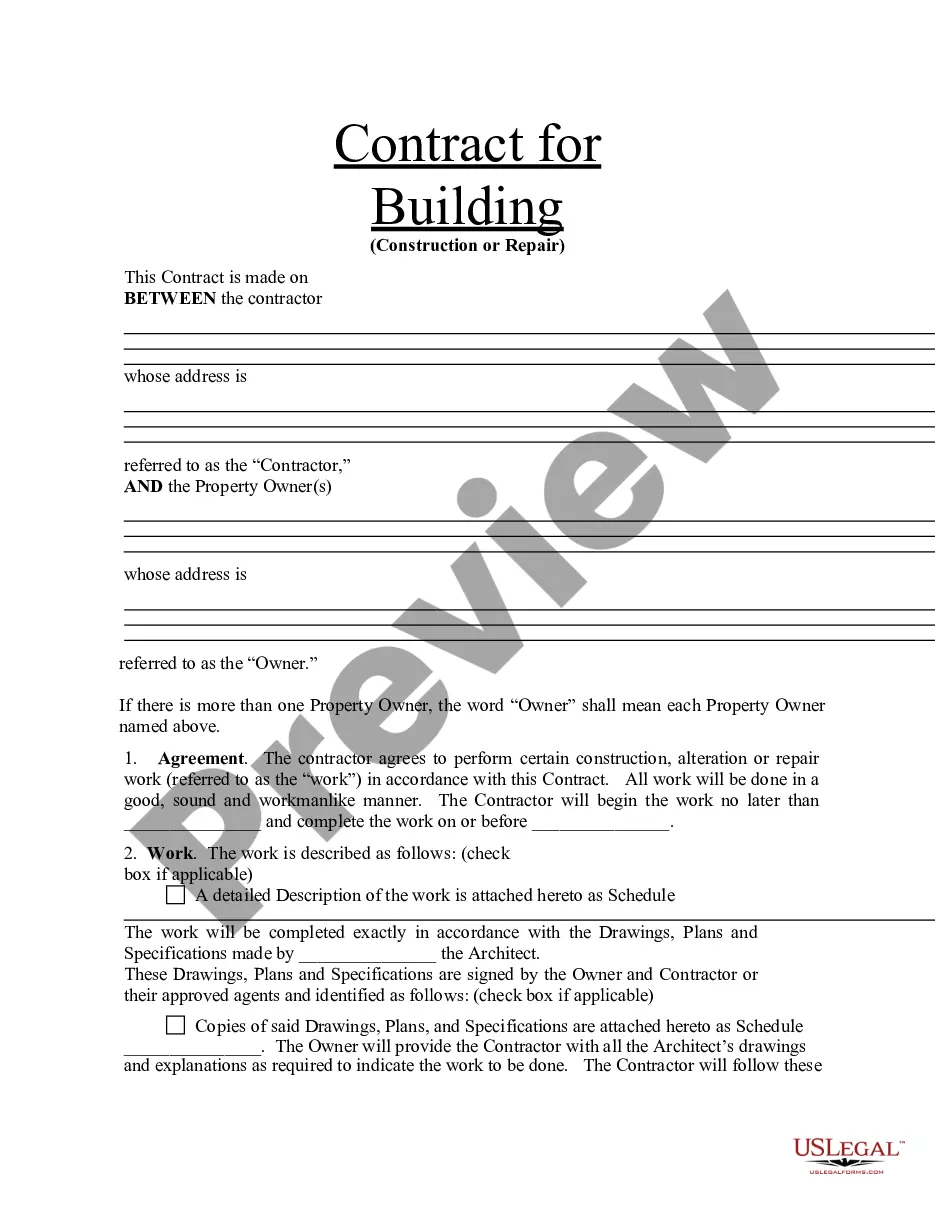
The Electrical Contract for Contractor is a legal agreement specifically designed for use between electrical contractors and property owners in Texas. This contract outlines the terms under which electrical work will be performed, including payment structures such as cost plus or fixed fee arrangements. It covers important aspects like permits, insurance, change orders, and other project details, ensuring clarity and legal compliance throughout the project.
Form components explained
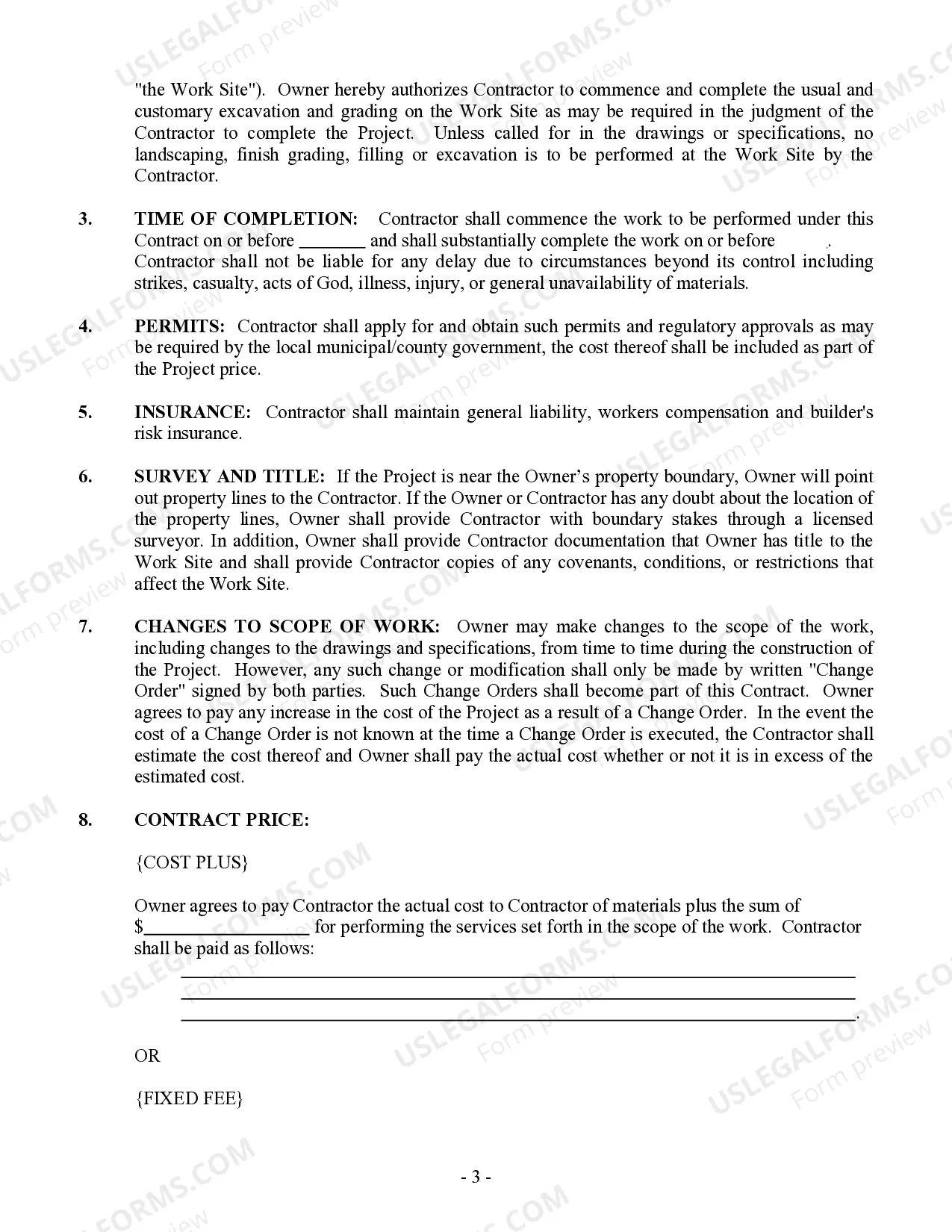
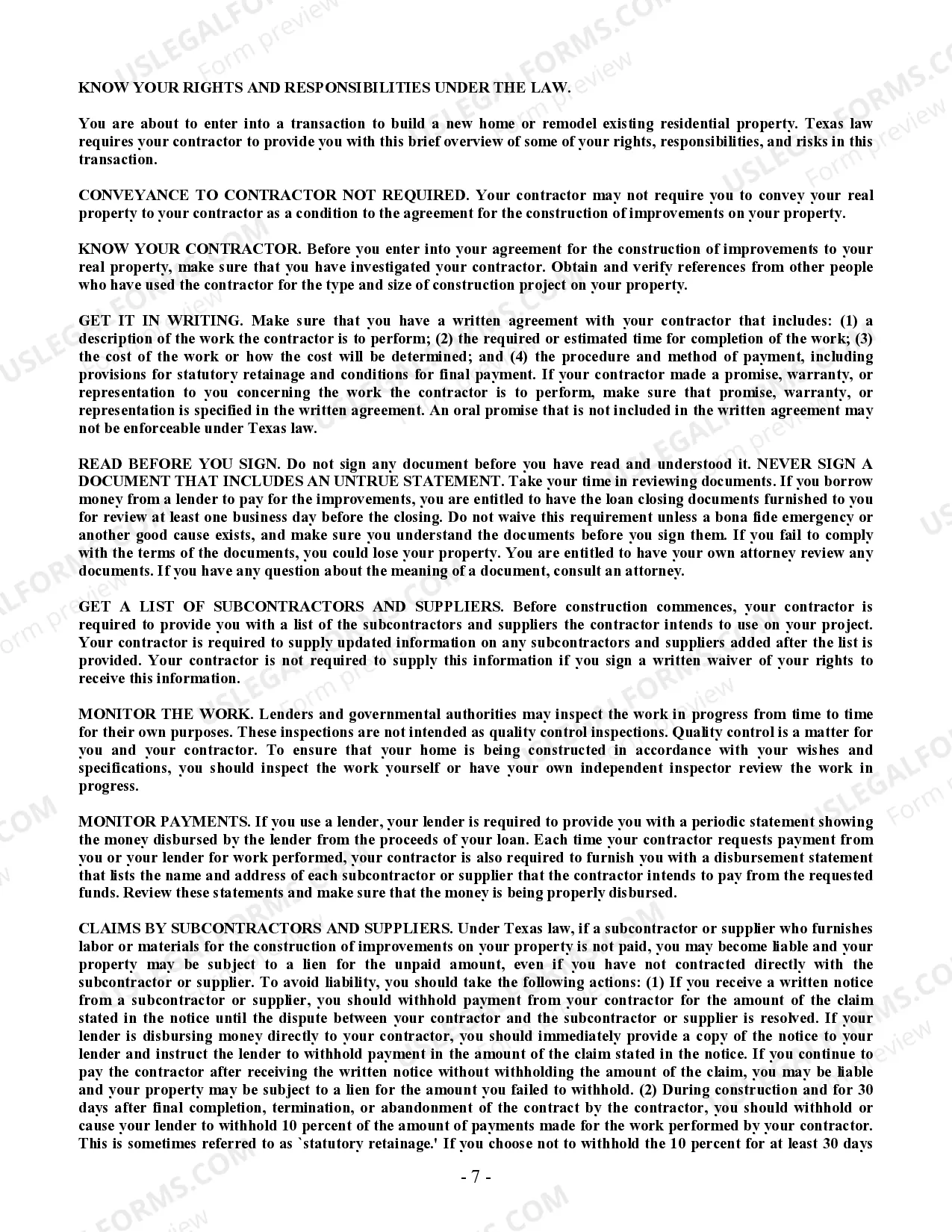
- Permits: Specifies the contractor's responsibility to obtain necessary permits for the project.
- Insurance: Outlines the types of insurance the contractor must maintain, including general liability and workers' compensation.
- Changes to scope of work: Details the process for owners to request changes and how those changes affect pricing and contracts.
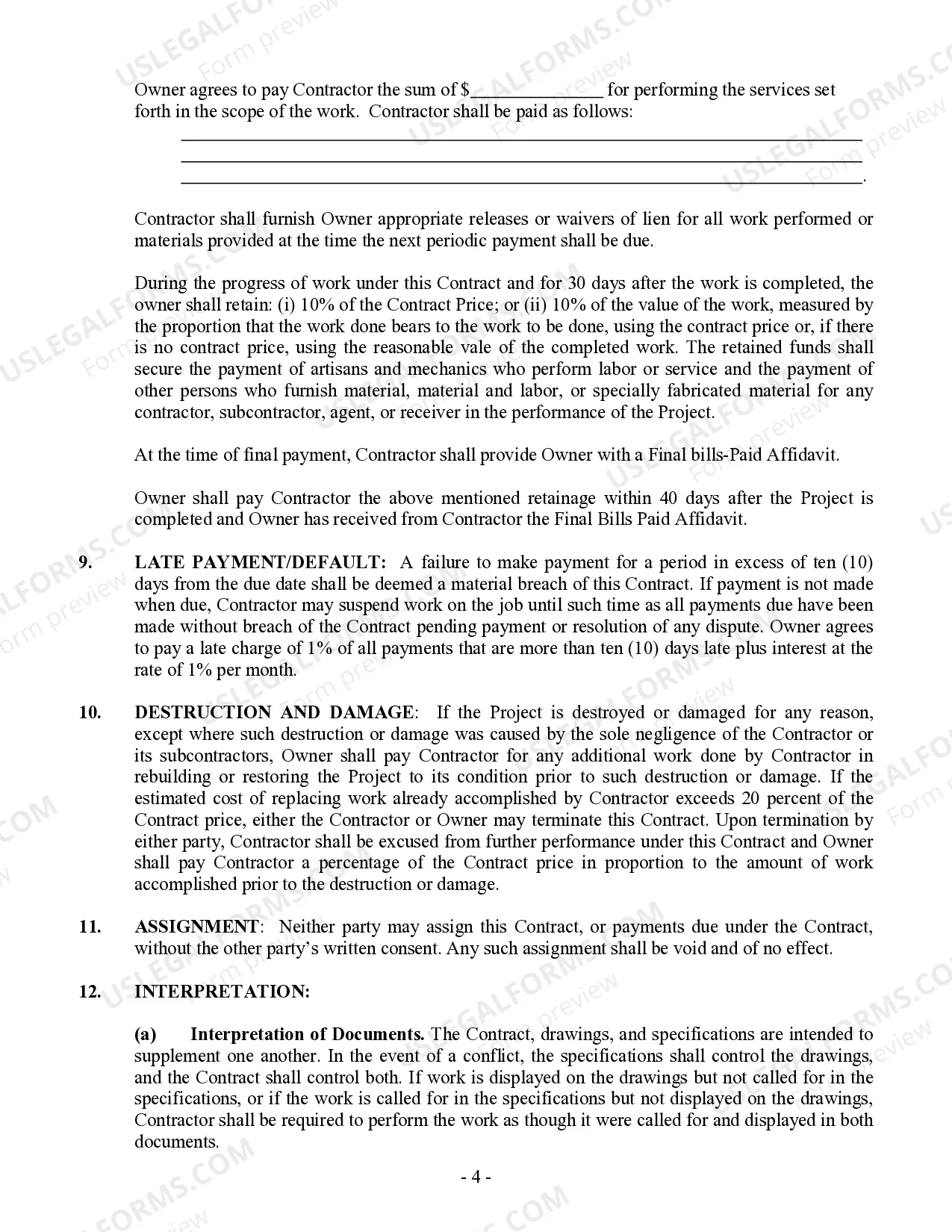
- Late payment/default: Describes consequences for late payments, including material breaches and potential work suspension.
- Destruction and damage: Establishes compensation obligations if the project is damaged, and procedures for termination.






When to use this document
This form should be used when a property owner hires an electrical contractor to perform work on their property. It is applicable in both new construction projects and renovations involving electrical installations. Use this contract whenever you want to ensure that both parties have a clear understanding of their responsibilities, payment terms, and legal protections under Texas law.
Who needs this form
- Property owners seeking electrical work for residential or commercial projects.
- Electrical contractors who require a formal contract to outline the scope of their work and payment details.
- Both parties looking for a clear legal framework to protect their interests and ensure compliance with Texas laws.
Instructions for completing this form
- Identify the parties involved: Clearly state the names and addresses of the contractor and property owner.
- Specify the work: Provide a detailed description of the electrical work to be performed and any plans or specifications.
- Set payment terms: Indicate the agreed payment structure, whether cost plus or fixed fee, and include any retainage provisions.
- Include insurance details: Specify the types of insurance the contractor is required to maintain.
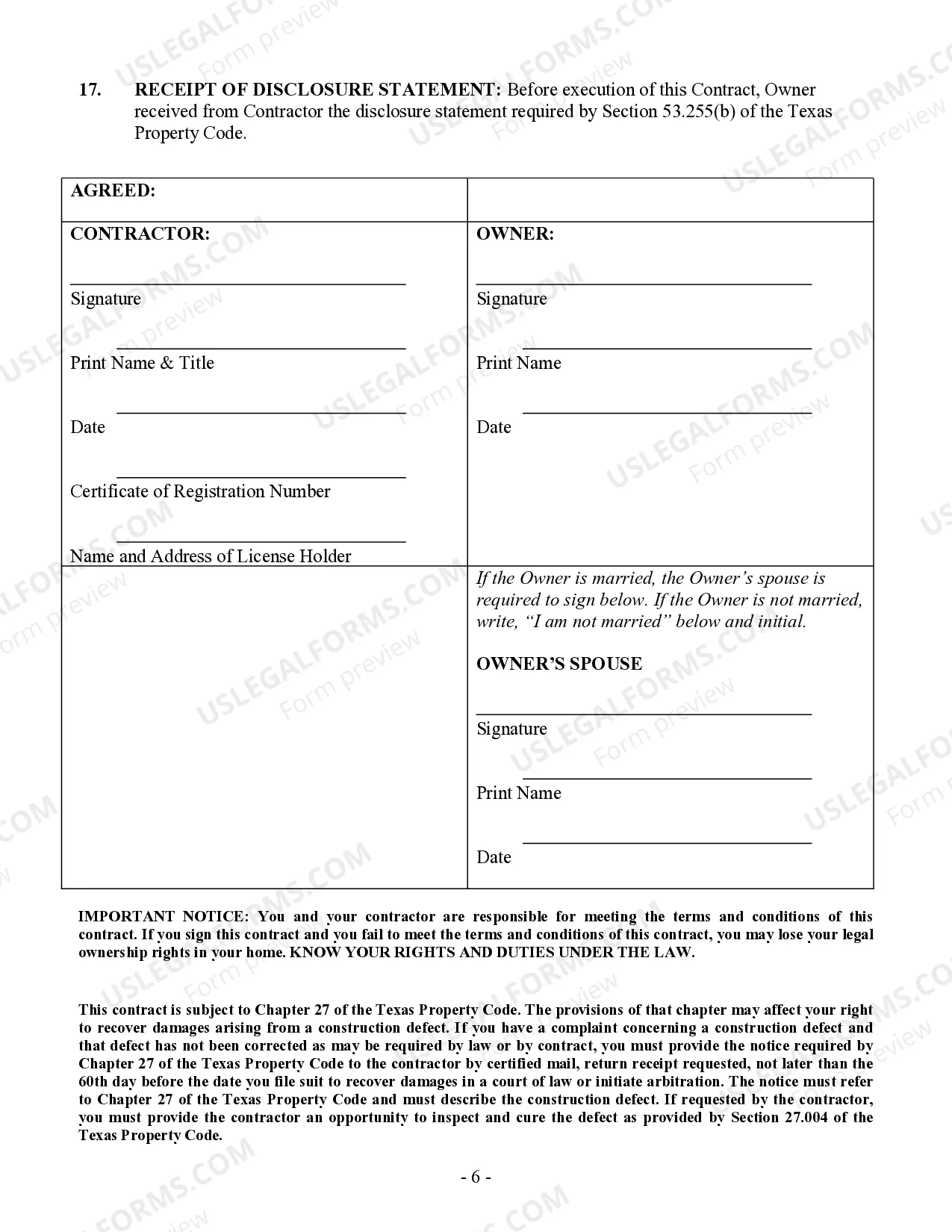
- Sign and date the contract: Ensure both parties sign and date the document to make it legally binding.
Does this document require notarization?
This form does not typically require notarization unless specified by local law. Ensure you review your local regulations to confirm the requirements for your specific situation.
Get your form ready online
Our built-in tools help you complete, sign, share, and store your documents in one place.
Make edits, fill in missing information, and update formatting in US Legal Forms—just like you would in MS Word.
Download a copy, print it, send it by email, or mail it via USPS—whatever works best for your next step.
Sign and collect signatures with our SignNow integration. Send to multiple recipients, set reminders, and more. Go Premium to unlock E-Sign.
If this form requires notarization, complete it online through a secure video call—no need to meet a notary in person or wait for an appointment.
We protect your documents and personal data by following strict security and privacy standards.

Make edits, fill in missing information, and update formatting in US Legal Forms—just like you would in MS Word.

Download a copy, print it, send it by email, or mail it via USPS—whatever works best for your next step.

Sign and collect signatures with our SignNow integration. Send to multiple recipients, set reminders, and more. Go Premium to unlock E-Sign.

If this form requires notarization, complete it online through a secure video call—no need to meet a notary in person or wait for an appointment.

We protect your documents and personal data by following strict security and privacy standards.
Avoid these common issues
- Failing to specify clear payment terms, leading to disputes later.
- Not obtaining required permits before starting work.
- Neglecting to include details regarding changes to the scope of work.
- Inadequate insurance coverage, which can expose both parties to risk.
- Skipping the review of the contractor's credentials and references.
Benefits of completing this form online
- Convenience: Easily download and customize the form from anywhere.
- Editability: Make necessary adjustments to fit your specific project needs.
- Accessibility: Access the form anytime, ensuring you can create contracts on-demand.
- Legal reliability: Use forms drafted by licensed attorneys to ensure compliance with Texas laws.
- The contract is legally binding once signed by both parties, providing protections and obligations.
- It may be enforceable in court in the event of disputes over project details or payment.
- Both parties should retain copies of the signed contract for future reference.
Key takeaways
- This Electrical Contract for Contractor is essential for formal agreements between contractors and property owners.
- Understanding the key components of the contract can prevent future disputes.
- Completing the form accurately ensures compliance with Texas regulations and secures the interests of both parties.
Looking for another form?








Form popularity
FAQ
Can you upgrade an electrical panel without permit? For homeowners, a permit is not required for replace electrical devices or to work on maintenance to an existing electrical install. If you are unsure if you need a permit, contact the building department responsible in your area.
Can I perform electrical work in Texas? Yes, but you can only perform electrical work within the city where you are licensed. A municipal license is not valid statewide.
If you do choose to install wiring in your home you must hire a licensed electrical inspector to connect the cables to the electric supply.It's also important to hire a licensed professional. Many handymen and unlicensed electricians are willing to do the work. But, this also comes with a risk for you as a homeowner.
A person must obtain a homestead permit and pay required permit fees before beginning any electrical, mechanical and plumbing work.A person who has obtained a homestead permit may not allow or cause any person to perform electrical, mechanical or plumbing work under the permit.
Identify the Electrical Contractor and the Customer. Define the Scope of the Electrical Project. Identify the Plans and Specifications and the Location. Set Out the Payment Schedule. List Completion Dates and Schedules. Set Out Who Will Pay for Licenses and Fees. Explain the Safety Protocol.
An electrical contractor is different from an electrician; an electrician is an individual tradesman and an electrical contractor is a business person or company that employs electricians.Electricians may work for an electrical contractor, or directly for individuals or companies.
Be at least 18 years old. Have a high school diploma or GED. Possess a valid Texas electrician journeyman license. Pass an examination. Work two years as a journeyman under the supervision of a master electrician.
(Most municipalities allow you to do your own electrical work, though you're never allowed to wire someone else's home.) Also, get the proper permits from your local building department before starting.Electrical work isn't difficult, but the consequences for not doing it right can be serious.
Be at least 18 years old. Have a high school diploma or GED. Possess a valid Texas electrician journeyman license. Pass an examination. Work two years as a journeyman under the supervision of a master electrician.