Tennessee Boundary Line Agreement
What is this form?
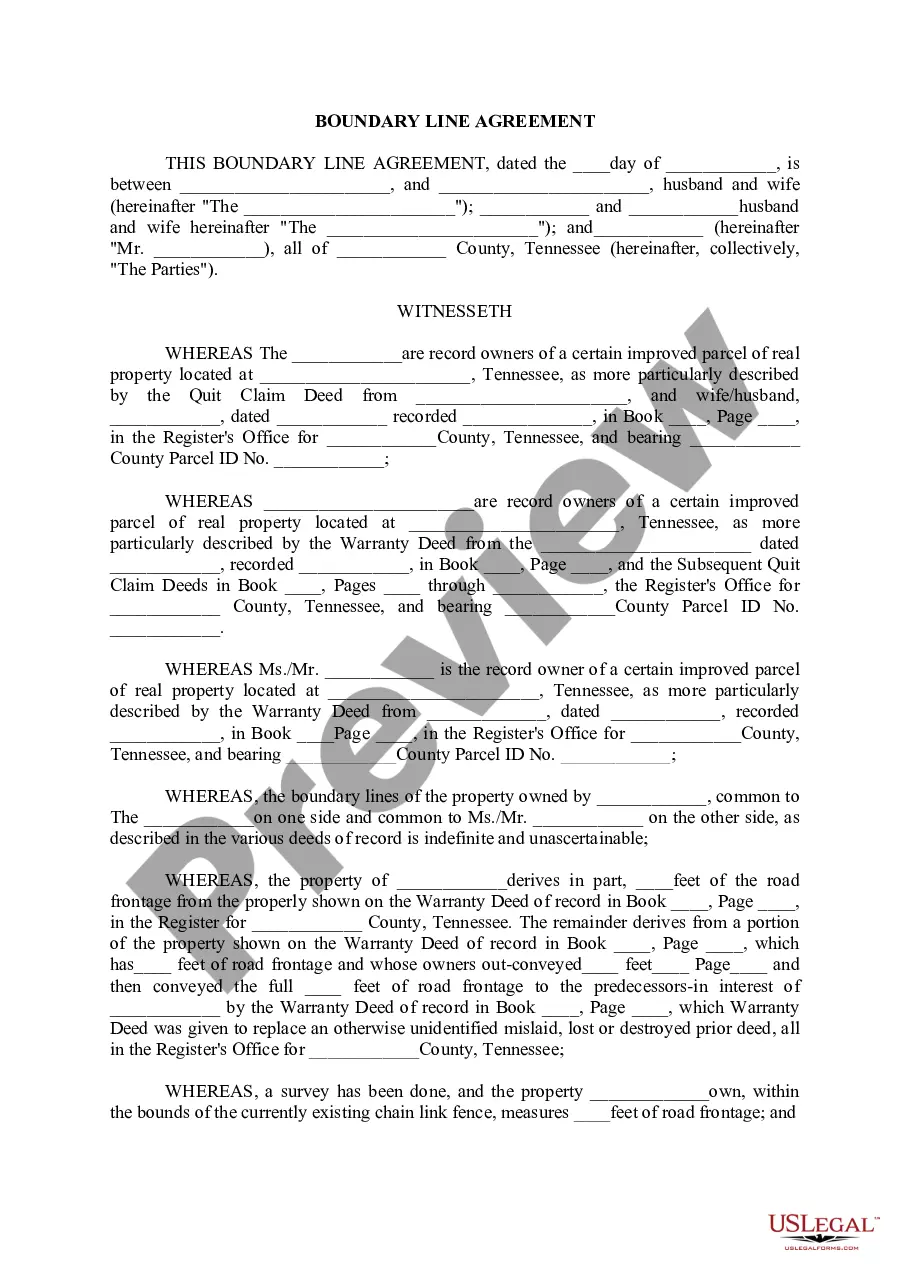
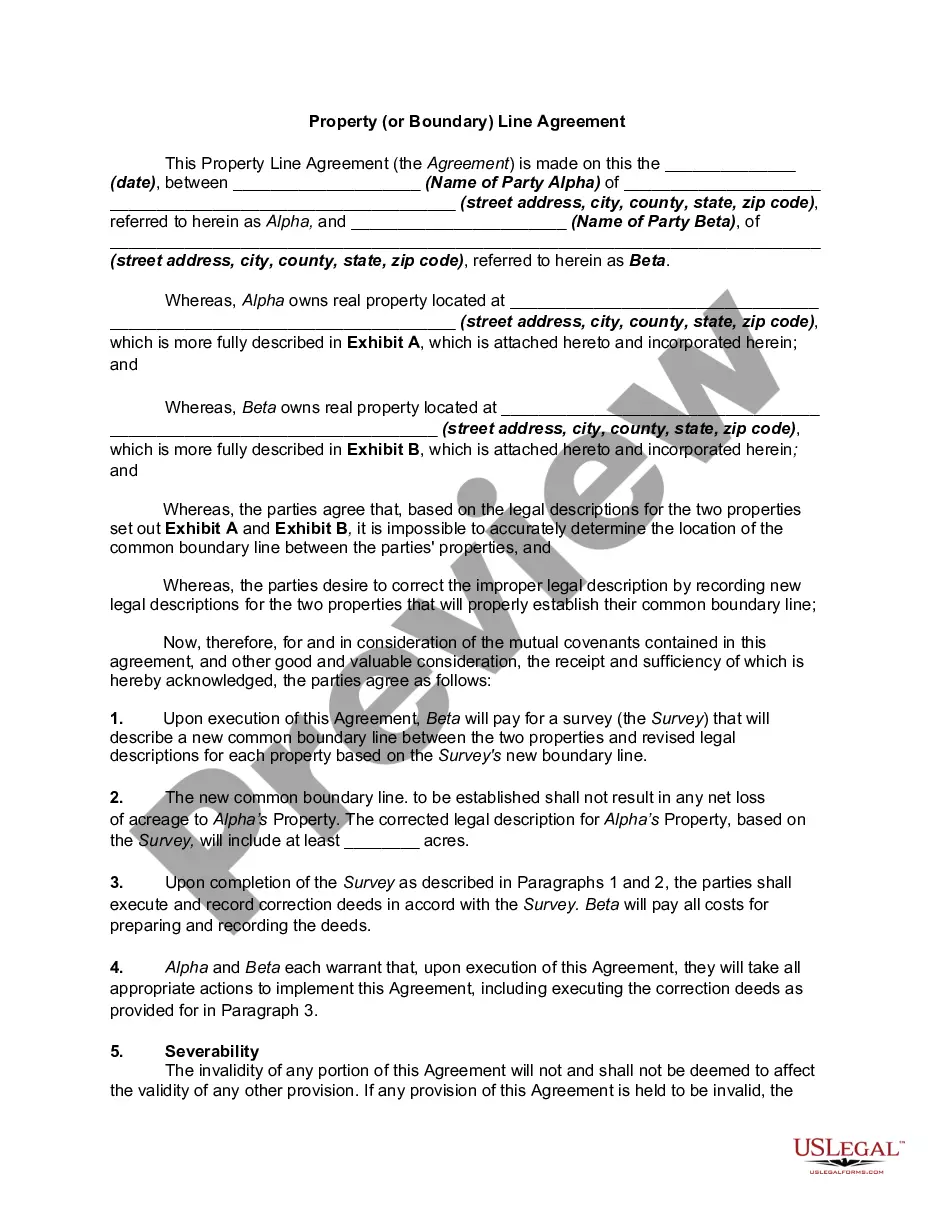
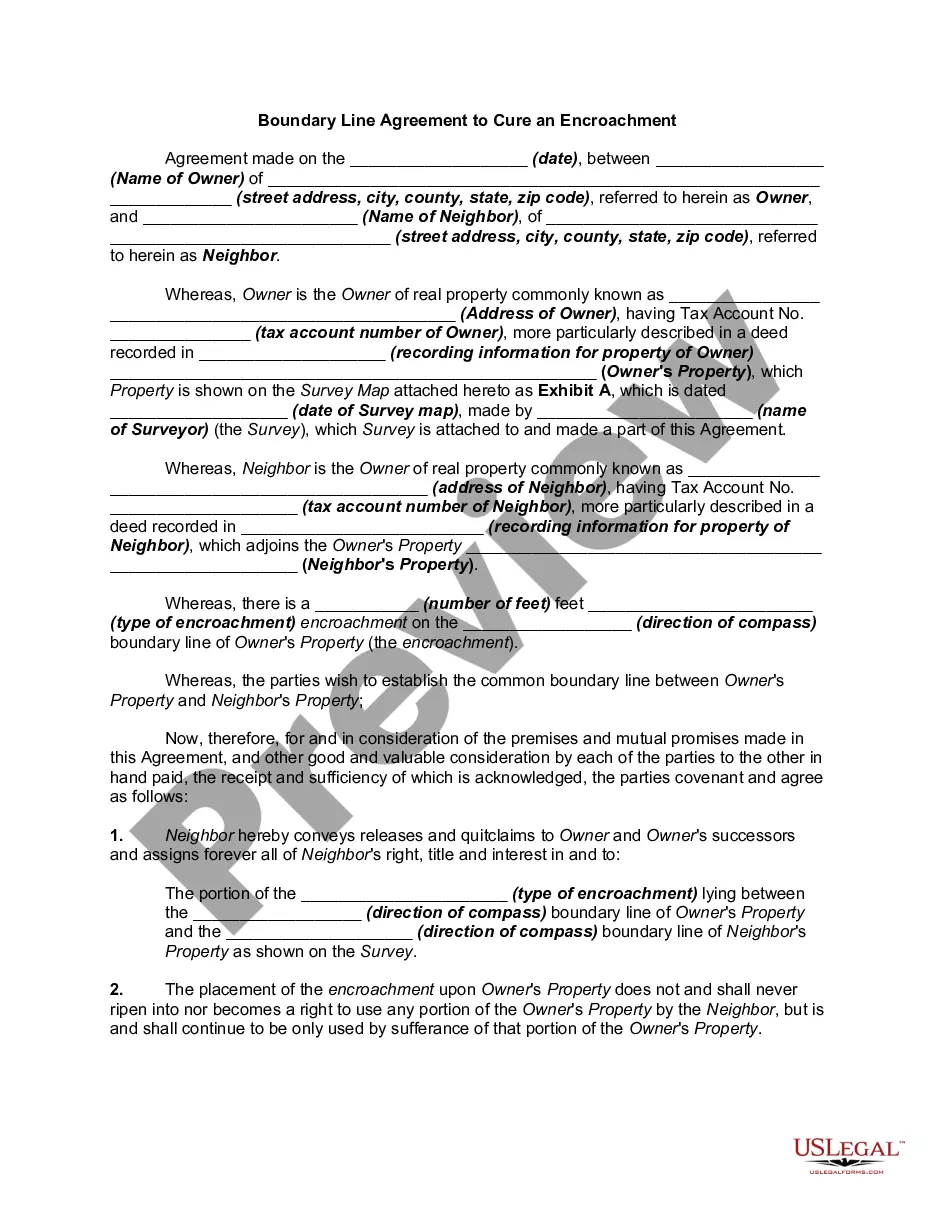
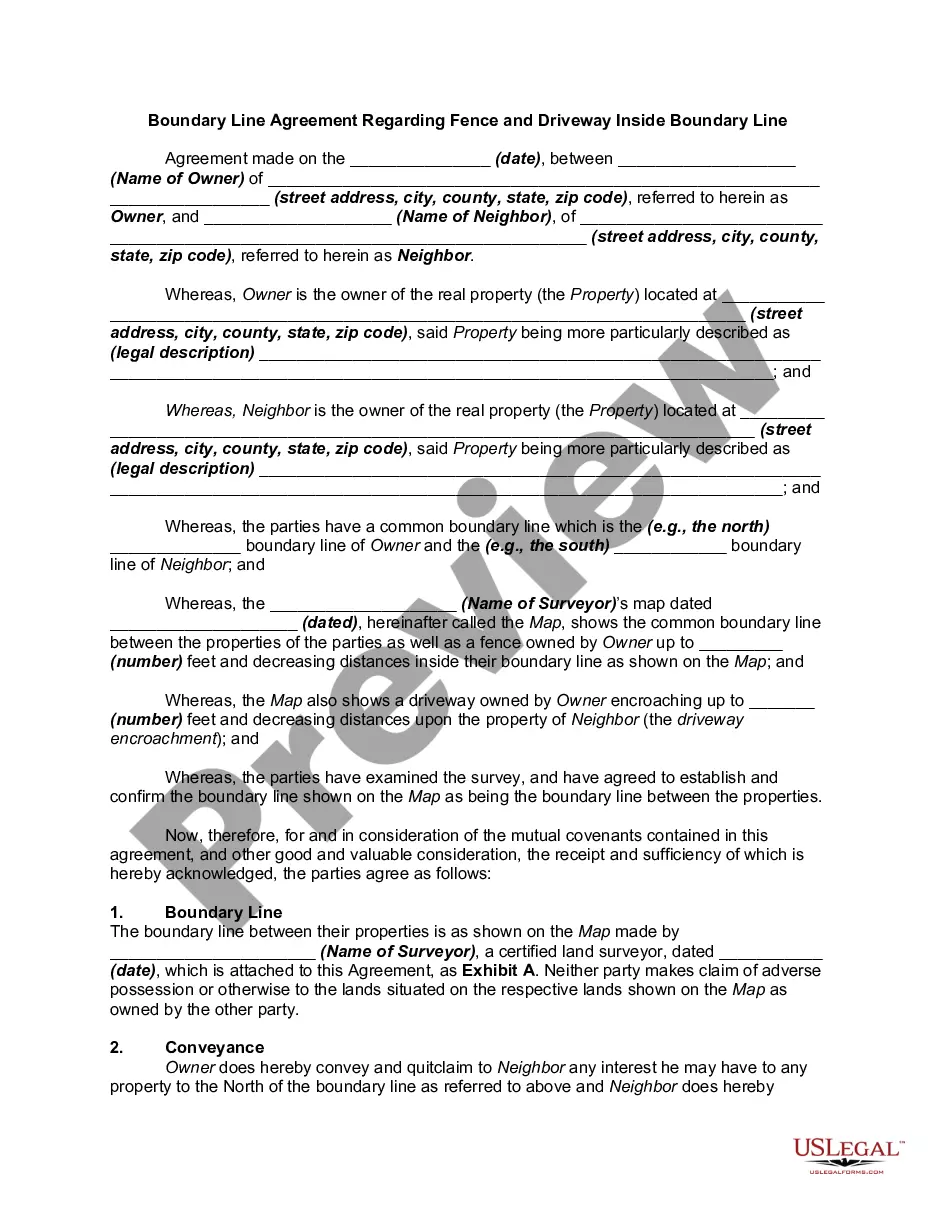
A Boundary Line Agreement is a legal document used by parties who have previously disputed the exact boundary line separating their properties. This agreement formally acknowledges that the parties have reached a consensus regarding their boundary lines and wish to document it in writing. This form serves to clarify property lines and prevent future disputes, differentiating it from other property-related agreements which may not specifically address boundary issues.
Form components explained
- Identification of the parties involved in the agreement.
- Description of the properties and parcel identification numbers.
- Details of the disputed boundary and the agreed-upon boundary lines.
- Inclusion of a survey reference which outlines the boundary lines.
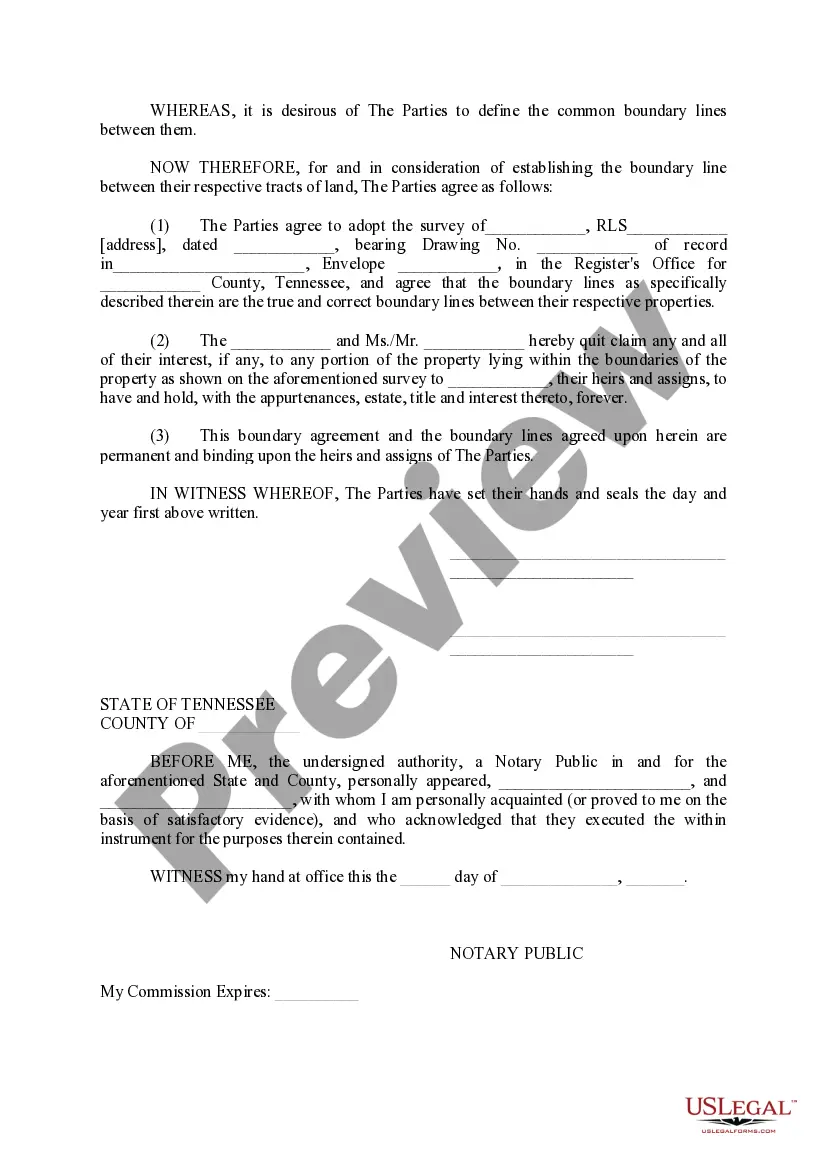
- Quitclaim clauses transferring interests in the property, if any.
- Signatures and notarization requirements to validate the agreement.

When to use this form
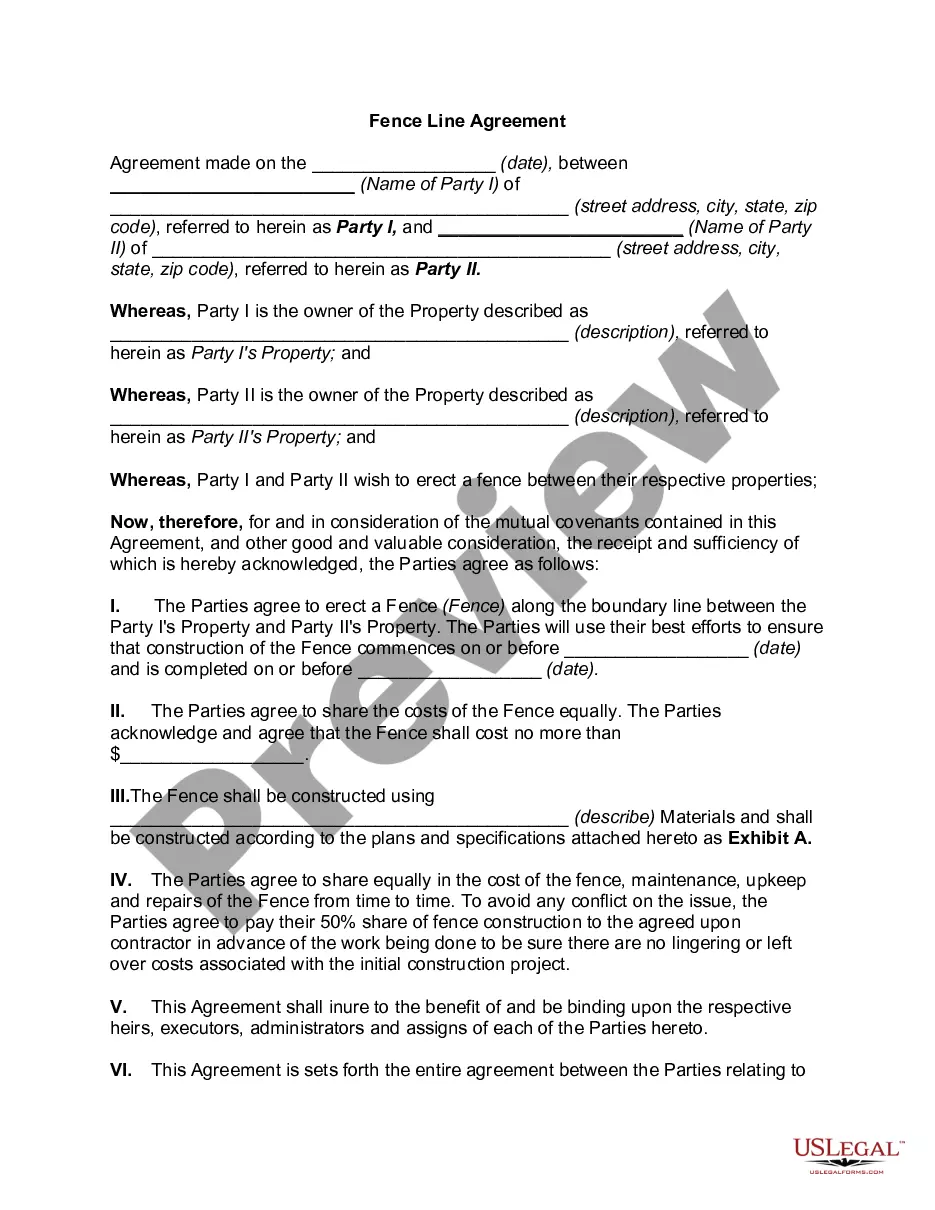
This form should be used when two or more property owners are in disagreement over the exact location of their shared boundary lines. It is particularly useful when a survey has been conducted that clarifies the boundary, or when there are visual markers, like fences, that may not align with legal descriptions. This agreement helps to formalize the understanding between parties and provides legal backing to prevent future disputes.
Who this form is for
This form is intended for:
- Homeowners and landowners with adjoining properties facing boundary disputes.
- Individuals seeking to establish clear property lines with their neighbors.
- Real estate professionals and attorneys representing clients in boundary matters.
Instructions for completing this form
- Identify all parties involved in the boundary dispute and provide their legal names.
- Clearly describe the properties, including addresses and parcel identifiers.
- Enter the agreed-upon boundary lines as established by the survey.
- Include the date of the agreement and the signature of all parties.
- Ensure that the document is notarized to make it legally binding.
Is notarization required?
Yes, this form must be notarized to be legally valid. It is important that all parties sign the document in the presence of a notary public to ensure the agreement is enforceable. US Legal Forms offers integrated online notarization services, allowing you to complete this requirement securely and conveniently via a video call without needing to travel.
Get your form ready online
Our built-in tools help you complete, sign, share, and store your documents in one place.
Make edits, fill in missing information, and update formatting in US Legal Forms—just like you would in MS Word.
Download a copy, print it, send it by email, or mail it via USPS—whatever works best for your next step.
Sign and collect signatures with our SignNow integration. Send to multiple recipients, set reminders, and more. Go Premium to unlock E-Sign.
If this form requires notarization, complete it online through a secure video call—no need to meet a notary in person or wait for an appointment.
We protect your documents and personal data by following strict security and privacy standards.

Make edits, fill in missing information, and update formatting in US Legal Forms—just like you would in MS Word.

Download a copy, print it, send it by email, or mail it via USPS—whatever works best for your next step.

Sign and collect signatures with our SignNow integration. Send to multiple recipients, set reminders, and more. Go Premium to unlock E-Sign.

If this form requires notarization, complete it online through a secure video call—no need to meet a notary in person or wait for an appointment.

We protect your documents and personal data by following strict security and privacy standards.
Typical mistakes to avoid
- Failing to accurately describe the properties involved.
- Not including complete and correct boundary details as per the survey.
- Neglecting to obtain the necessary signatures from all parties.
- Overlooking the notarization requirement, making the agreement unenforceable.
Advantages of online completion
- Immediate access to professionally drafted legal forms.
- The convenience of downloading and editing the form to meet specific needs.
- Ability to store completed forms securely for future reference.
- Cost-effective way to resolve boundary disputes without extensive legal fees.
Looking for another form?



Form popularity
FAQ
The primary structure might have to be 10 feet off the side line and secondary or outbuildings can be within 5 feet. Some areas have restrictions on how close your drive can be to the property line where other's don't care. Most areas don't restrict the proximity of the fence to your line.
Your jurisdiction may have laws about how far back a fence needs to be set on your property, which is typically 2, 4, 6 or 8 inches from the property line. Other areas will allow you to go right up to the property line.
Taking the details from the legal description and plat map, a surveyor carefully measures the legal boundaries of your property. The surveyor will bury survey pins if they're not already there and often mark the spots with stakes or flags for easy use.
Individuals who want complete ownership of fences should place the structure at least 4 feet away from the property line.
Determine ownership by occupancy if the fence lies between or directly on the property line. Whoever uses the land up to the fence is considered the owner. If you have grass and mow the area directly up against the fence but your neighbor allows the weeds to grow on his/her side, then you own the fence by occupancy.
Property boundaries are often identified above ground with the use of stakes to mark the corner points. Years ago, wooden stakes were often used to mark property lines. More recently, long metal posts that are visible about 1 to 2 feet above ground have been used.
Fences. Fences generally do not require permits to be constructed in Nashville. There are several significant restrictions as to where a fence may be constructed on your property as well as how tall a fence can be.
The doctrine provides that when two adjacent owners who are uncertain of the true position of the common boundary between the parcels agree to the true position of the common boundary, mark it on the ground or build it up, and occupy each side for a period equal to the statute of limitations, then such line becomes the
Your jurisdiction may have laws about how far back a fence needs to be set on your property, which is typically 2, 4, 6 or 8 inches from the property line. Other areas will allow you to go right up to the property line.