Tennessee Intercreditor Agreement
What is this form?
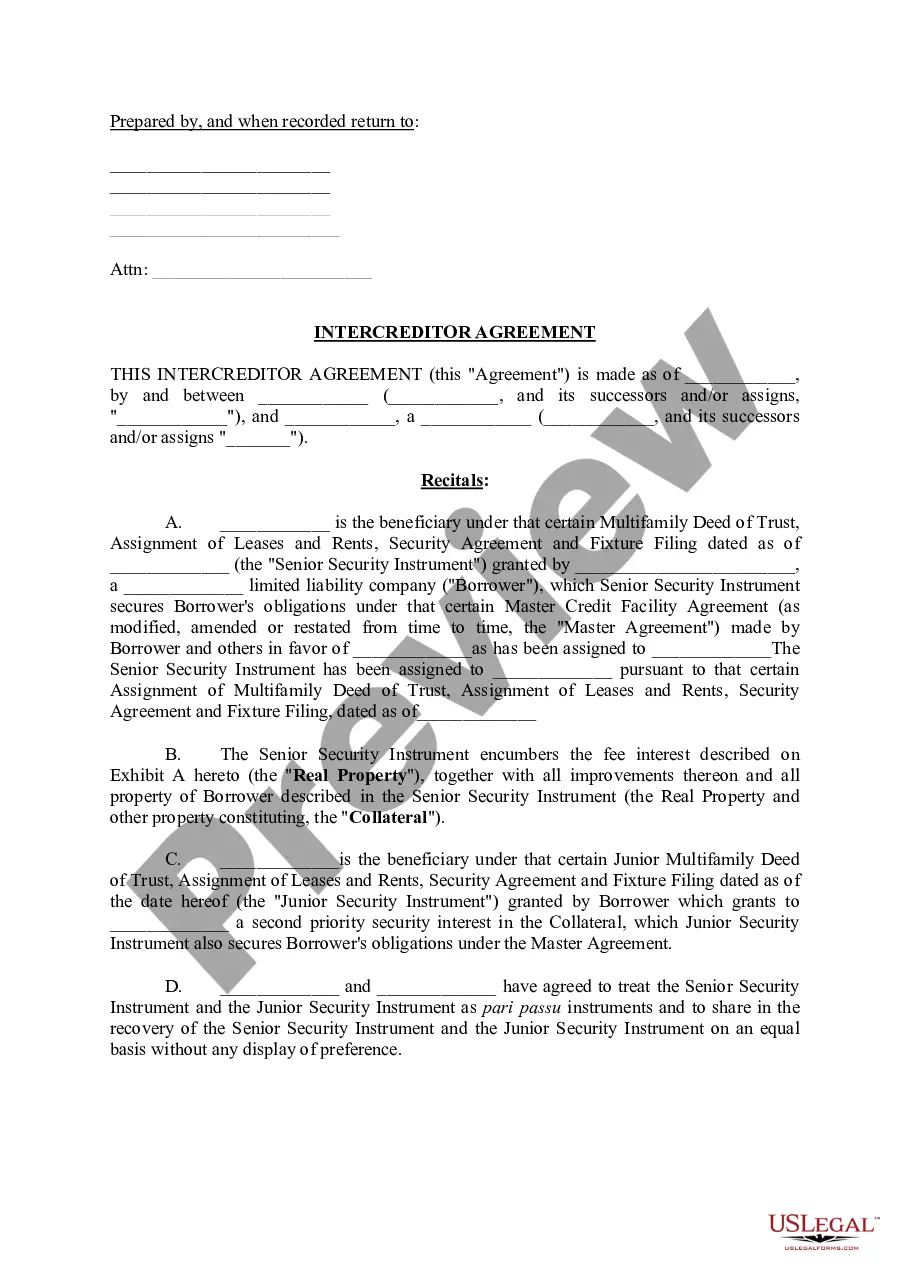
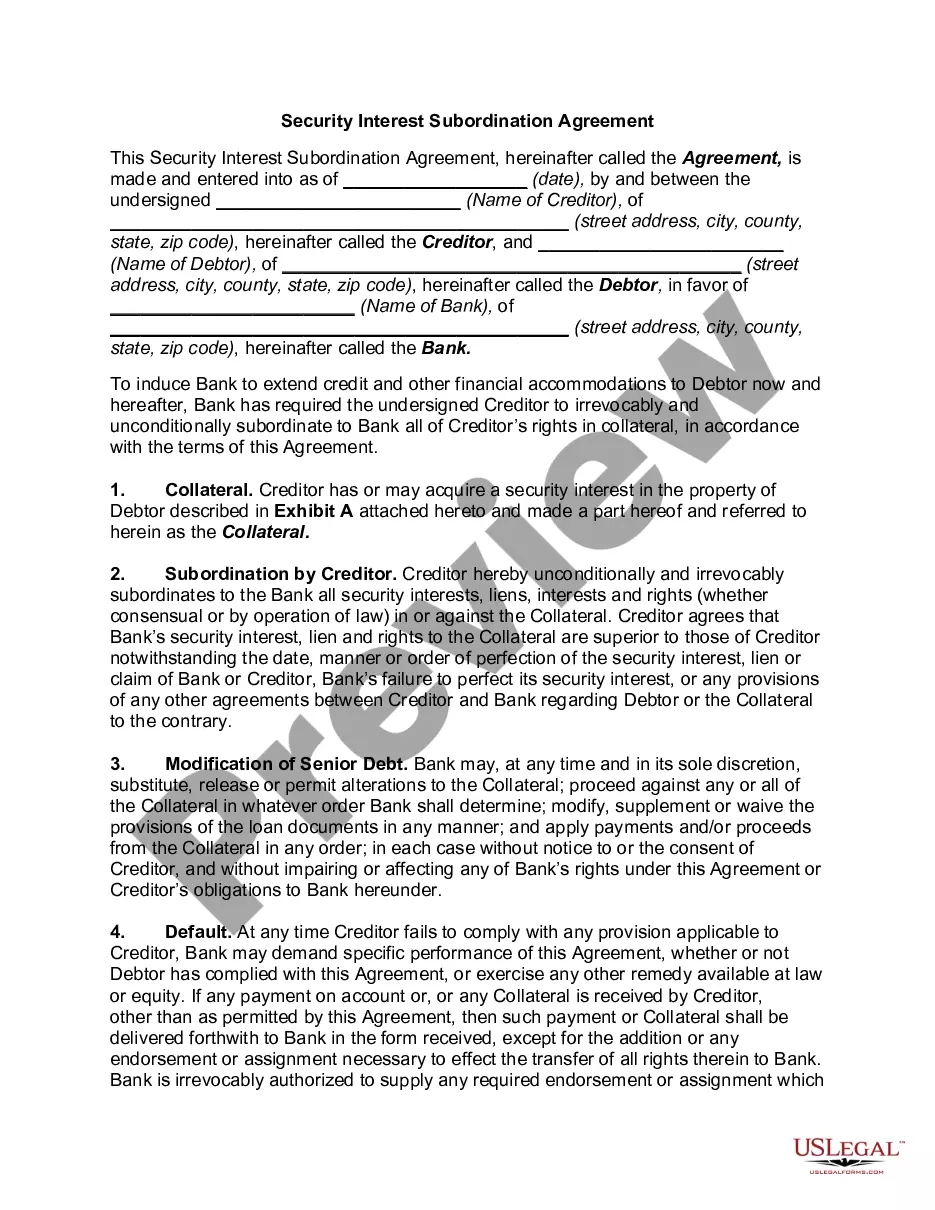
An Intercreditor Agreement is a legal document that defines the relationship and priority of multiple creditors regarding a common debtor's collateral. It outlines the rights, obligations, and lien positions of each creditor, ensuring clarity in financial arrangements and asset claims. This agreement is particularly useful when a senior creditor (holding the primary lien) and a junior creditor (holding a subordinate lien) need to outline their terms and conditions in the event of liquidation or foreclosure, distinguishing it from standard loan agreements or security documents.
Main sections of this form
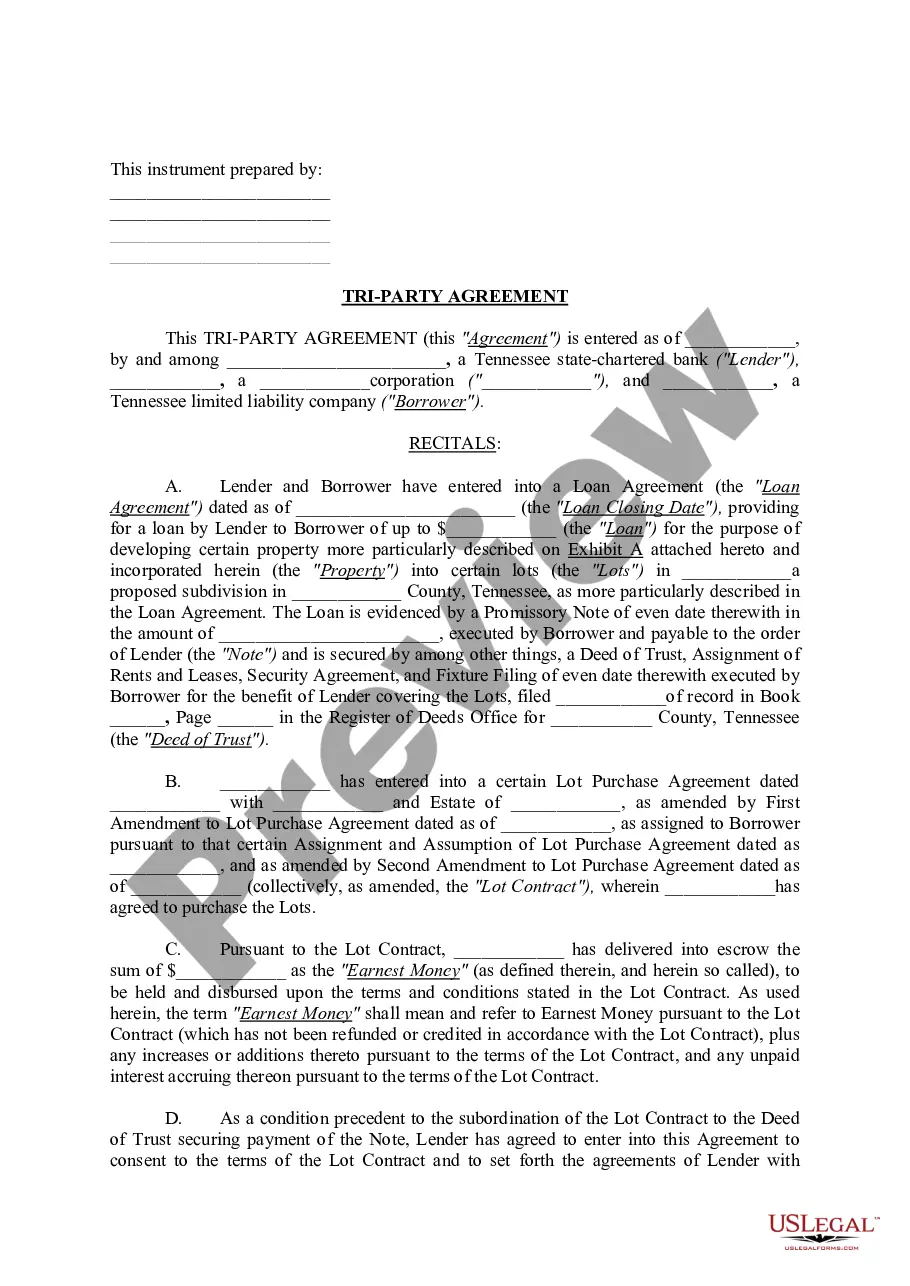
- Parties involved: Identification of the senior and junior creditors.
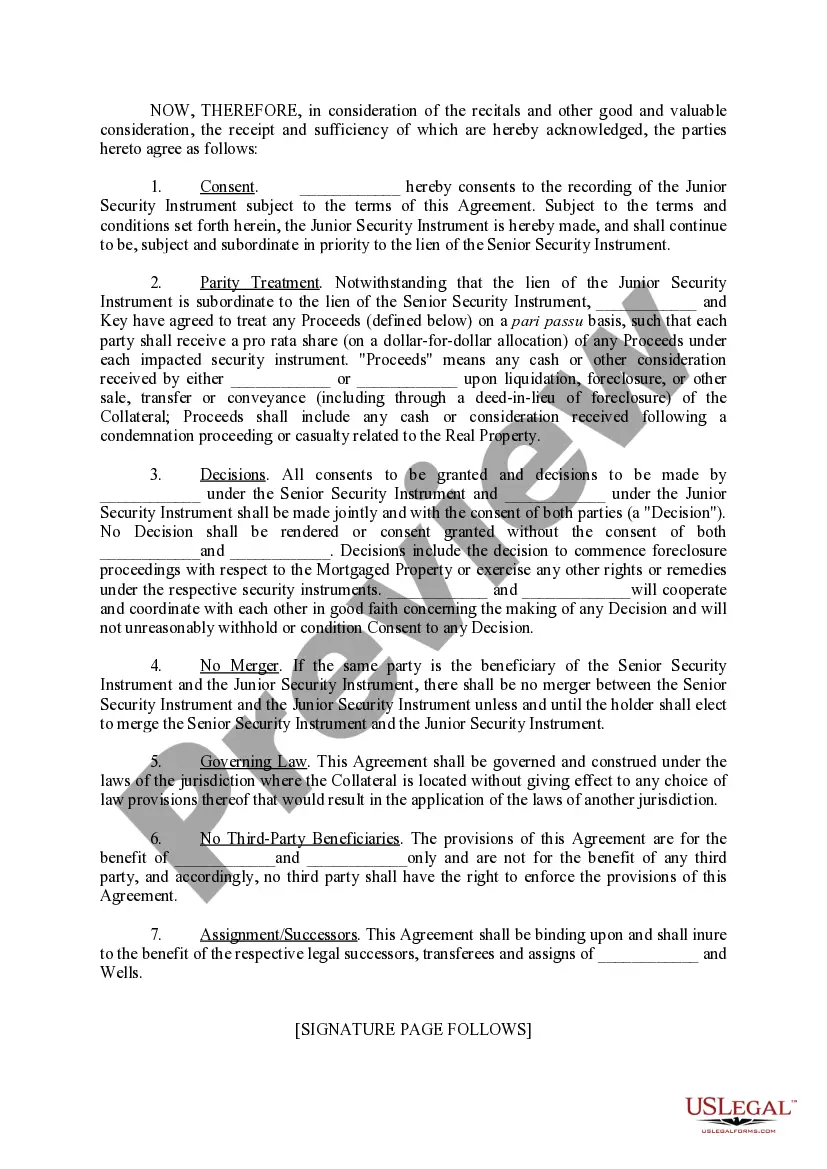
- Consent section: Agreement allowing the junior creditor's lien to be subordinate to the senior creditor's lien.
- Parity treatment: Terms for distributing proceeds from the collateral among creditors.
- Decision making: Clauses outlining how decisions regarding the collateral are made jointly.
- Governing law: Specification of the jurisdiction governing the agreement.
When this form is needed
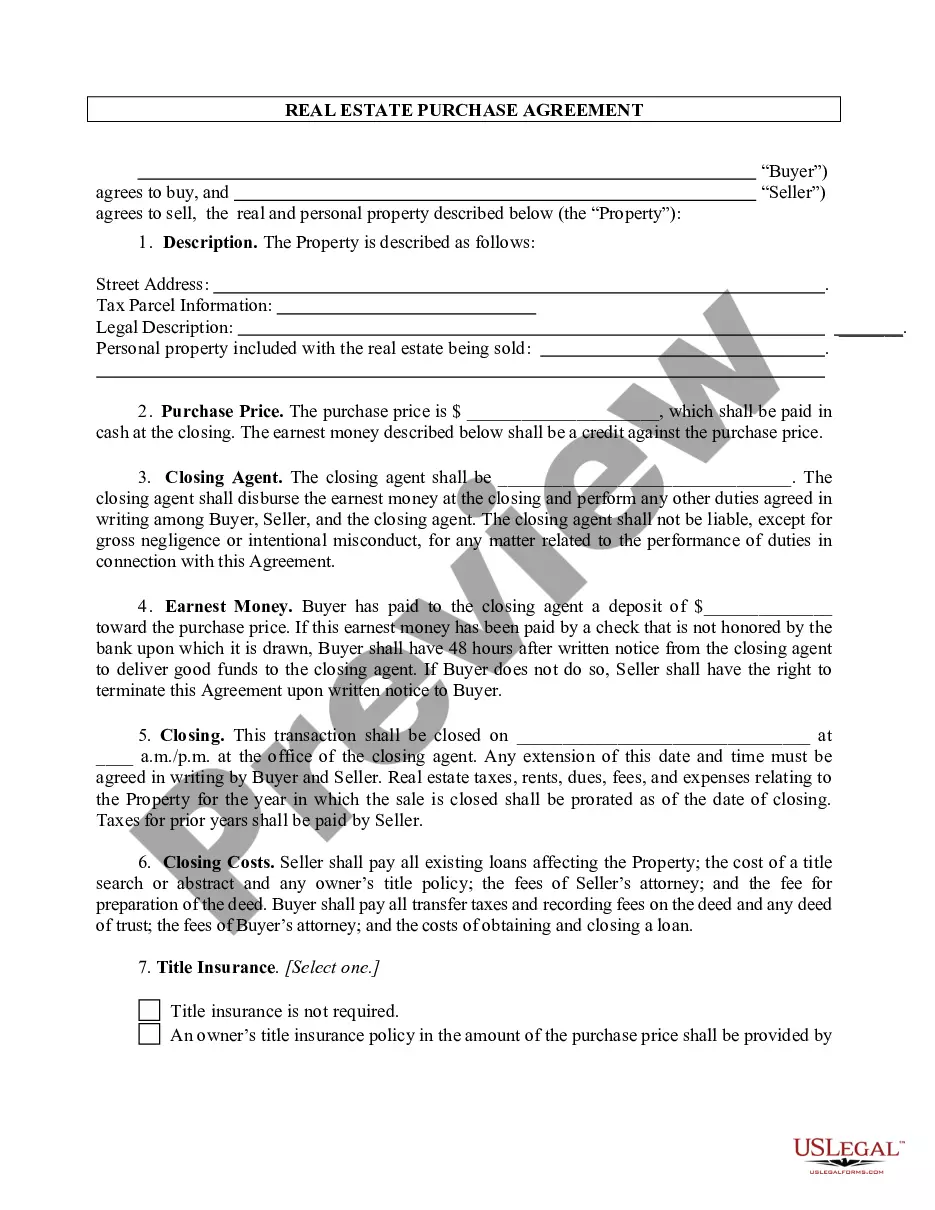
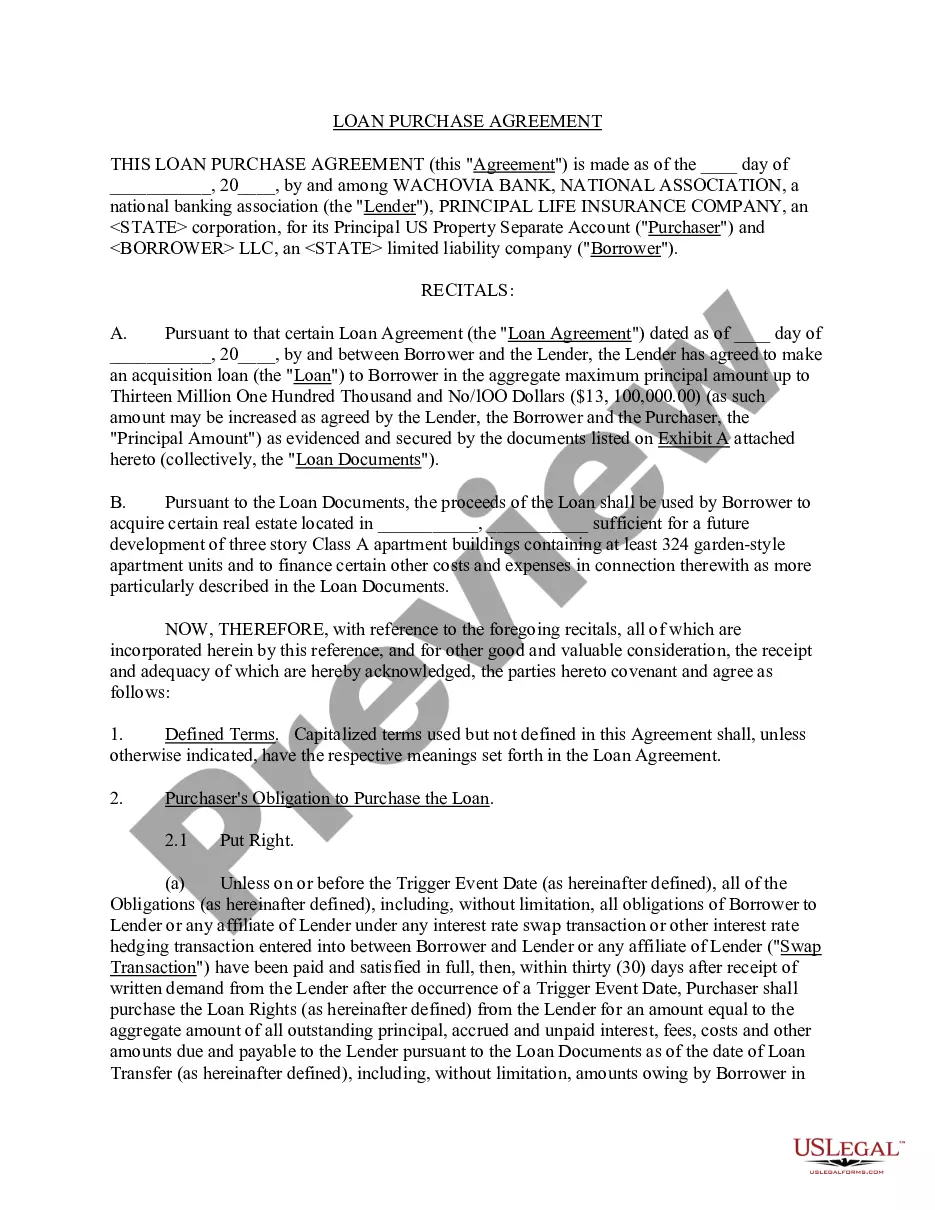
This Intercreditor Agreement is typically used when multiple creditors have an interest in the same collateral provided by a borrower. It is necessary when a senior lender wants to ensure they can recover their loan before a junior lender, while also wanting to maintain the rights of both parties in case of liquidation or foreclosure. Common scenarios include financing arrangements for real estate developments, corporate financing packages, or situations involving complex borrower structures.
Who needs this form
- Financial institutions and banks that lend to borrowers secured by collateral.
- Real estate investors looking to clarify lien positions among multiple lenders.
- Creditors entering into agreements with other creditors regarding a shared debtor.
- Attorneys representing creditors in financial transactions involving shared collateral.
Completing this form step by step
- Identify the parties: Clearly define the senior and junior creditors involved in the agreement.
- Specify the collateral: Describe the property or assets secured by the agreements.
- Outline the terms: Fill in the sections related to lien priority, consent, and decision-making responsibilities.
- Enter relevant dates: Include the date of the agreement and any important deadlines related to the transaction.
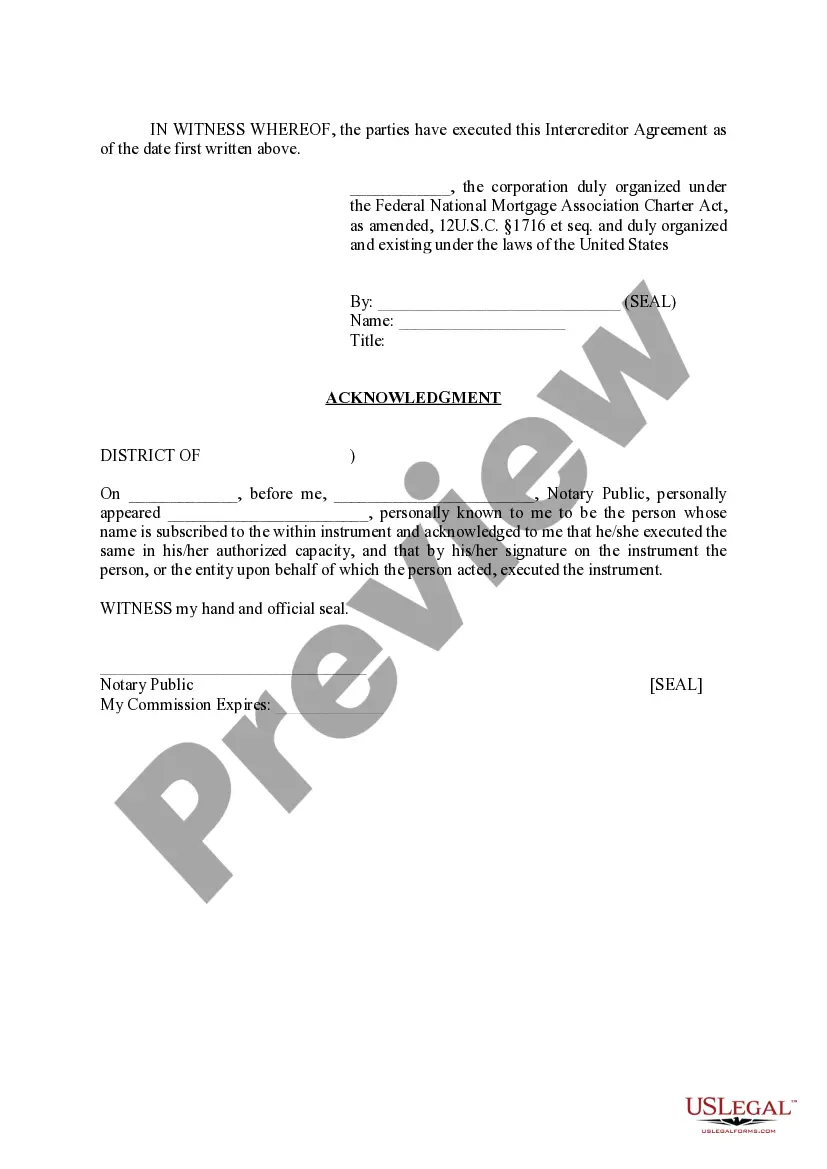
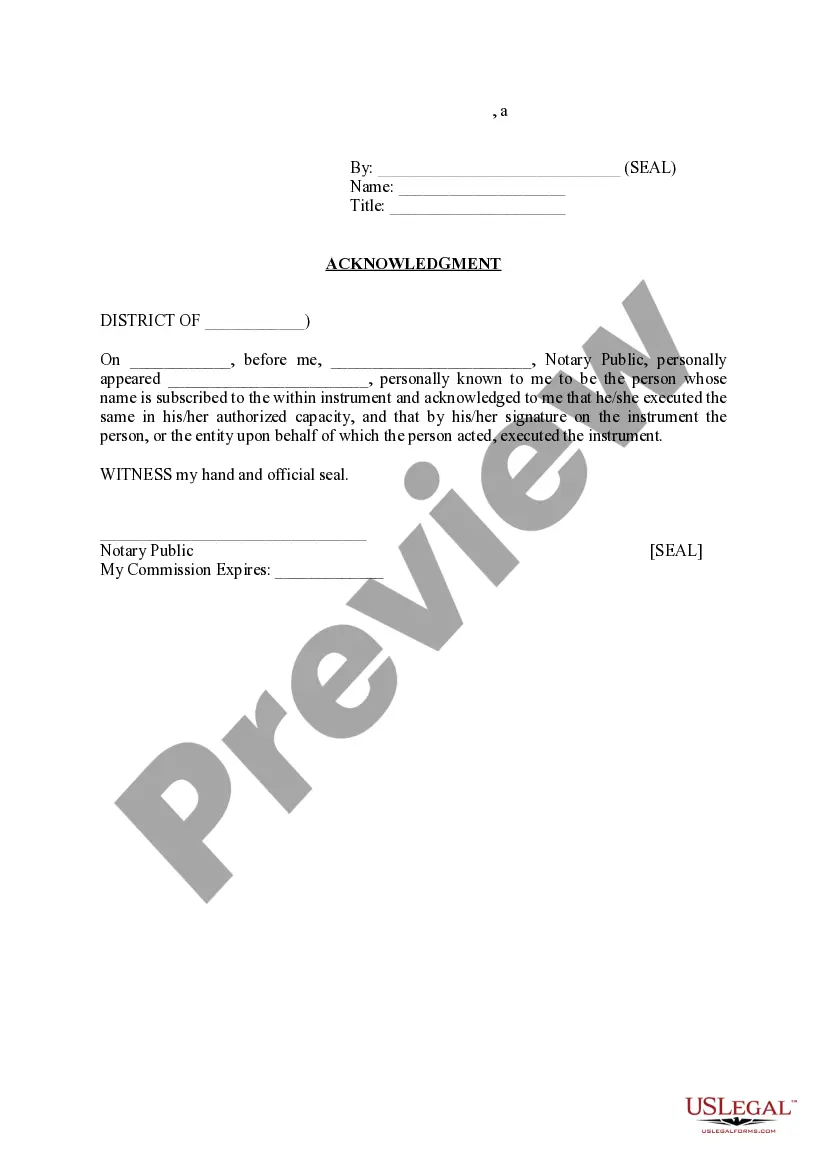
- Sign and notarize: Ensure all parties sign the document and have it appropriately notarized if required.
Does this form need to be notarized?
Yes, this form must be notarized to be legally valid. Notarization serves as a verification of identity and authenticity of the signatures, ensuring that the agreement can be enforced in a court of law. US Legal Forms offers integrated online notarization options, allowing you to complete this step securely and conveniently through a video call.
Get your form ready online
Our built-in tools help you complete, sign, share, and store your documents in one place.
Make edits, fill in missing information, and update formatting in US Legal Forms—just like you would in MS Word.
Download a copy, print it, send it by email, or mail it via USPS—whatever works best for your next step.
Sign and collect signatures with our SignNow integration. Send to multiple recipients, set reminders, and more. Go Premium to unlock E-Sign.
If this form requires notarization, complete it online through a secure video call—no need to meet a notary in person or wait for an appointment.
We protect your documents and personal data by following strict security and privacy standards.

Make edits, fill in missing information, and update formatting in US Legal Forms—just like you would in MS Word.

Download a copy, print it, send it by email, or mail it via USPS—whatever works best for your next step.

Sign and collect signatures with our SignNow integration. Send to multiple recipients, set reminders, and more. Go Premium to unlock E-Sign.

If this form requires notarization, complete it online through a secure video call—no need to meet a notary in person or wait for an appointment.

We protect your documents and personal data by following strict security and privacy standards.
Avoid these common issues
- Failing to clearly identify all parties involved in the agreement.
- Not specifying the collateral in sufficient detail.
- Overlooking joint decision-making clauses, leading to future conflicts.
- Neglecting to obtain notarization when required by state law.
- Using vague language that could lead to misunderstandings about rights and obligations.
Why use this form online
- Convenience: Easily accessible and downloadable at any time.
- Editability: Customize the form to suit specific needs without hassle.
- Reliability: Confidence in using a template drafted by licensed attorneys ensures legal validity.
Looking for another form?


Form popularity
FAQ
The purpose of an intercreditor agreement is to set forth the rights and positions with respect to a borrower's collateral, payment, and priority of payment, inter alia, between Page 2 various creditors.
An Intercreditor Agreement, commonly referred to as an inter-creditor deed, is a document signed between two or more creditors.In a typical scenario, there are two creditors involved in a given agreement a senior(s) and subordinate (junior) lender(s) Capital stack ranks the priority of different sources of financing
A subordination and standstill agreement defines the specific or general collateral used, the junior lender's rights to payments and the priority of those rights.In a subordination and standstill agreement, the junior lender agrees to notify the senior lender in the event of the company's default on the junior loan.
The Intercreditor Deed will seek to additionally regulate the creditors right to receive payment before any enforcement of security from a debtor and the creditors rights to enforce security over the assets of the debtor.
Despite its technical-sounding name, the subordination agreement has one simple purpose. It assigns your new mortgage to first lien position, making it possible to refinance with a home equity loan or line of credit. Signing your agreement is a positive step forward in your refinancing journey.
What was the purpose of Inter-Creditor Agreement signed by Indian banks and financial institutions recently? Explanation: The inter-creditor agreement gives more powers to the lead lender in a consortium and allows a resolution plan to be approved if 66 percent of the banks in the group agree to it.
Fffd There is no provision in the Uniform Commercial Code to file a subordination agreement. Not filing a subordination agreement does not harm any other creditor.
An intercreditor agreement is a bit different than a subordination agreement. They both serve to do the same thing, allow two different lenders to split up the collateral of a business so both can be secured in the first lien on their respective collateral.