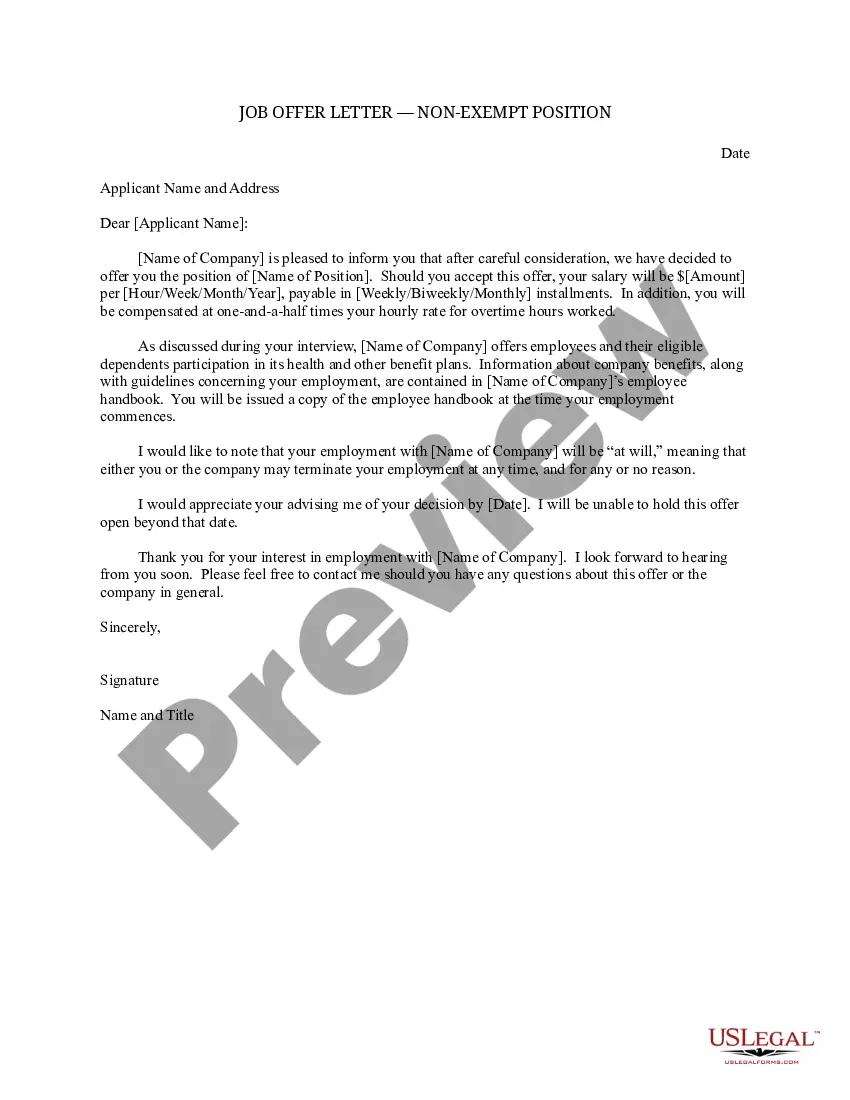
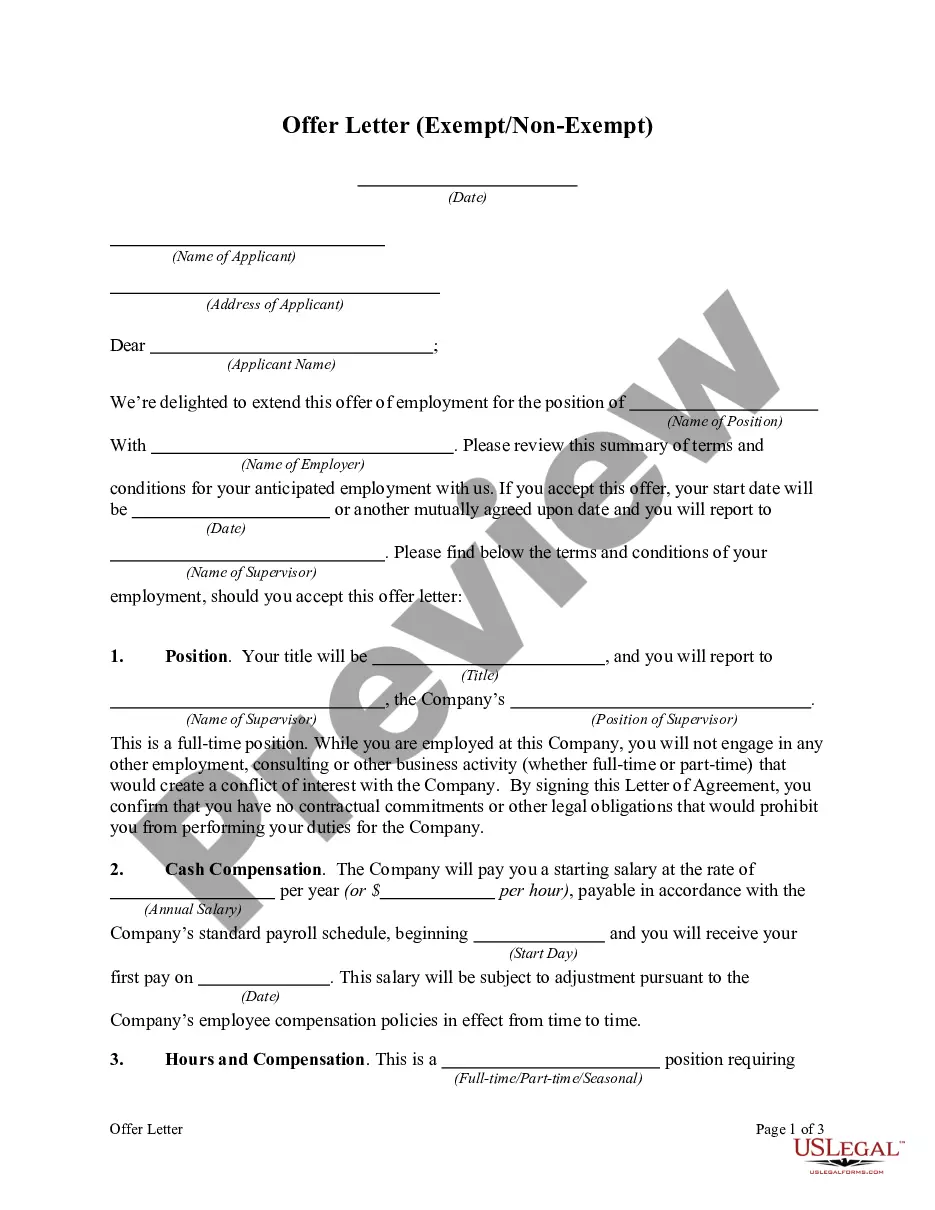
South Dakota Job Offer Letter - Nonexempt Position - Detailed
Description
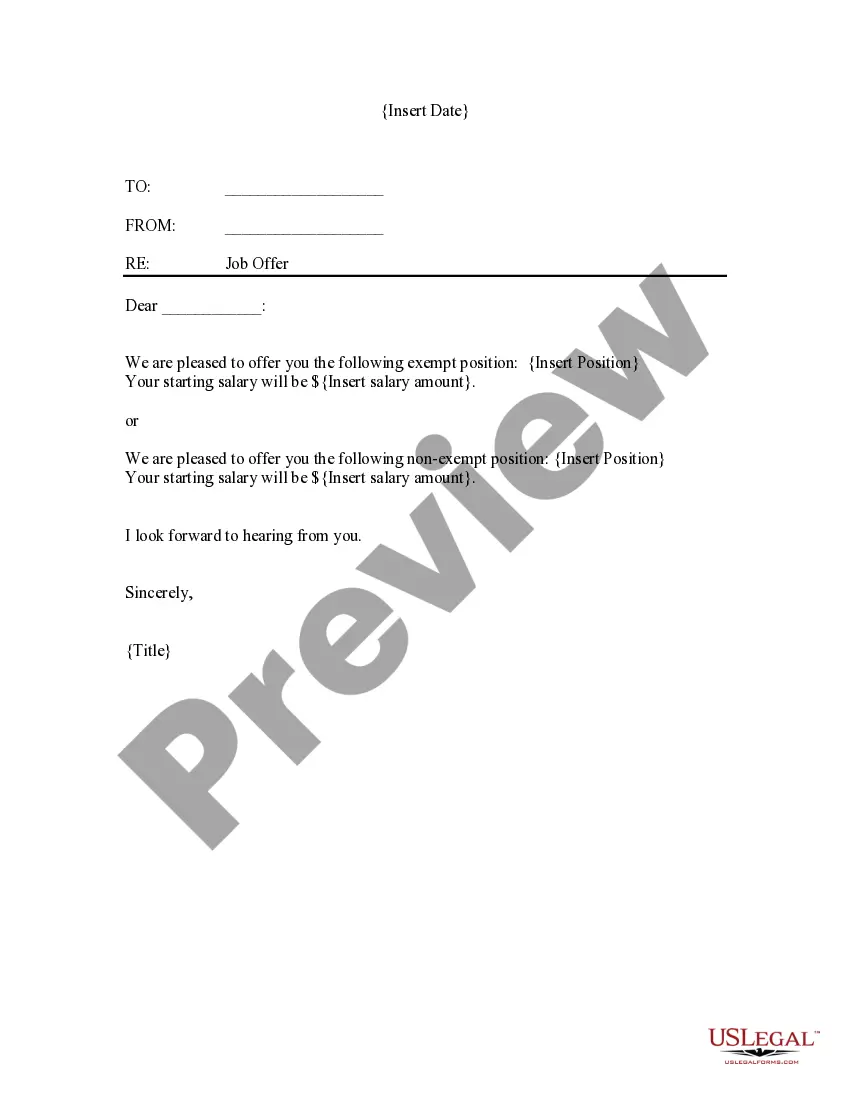
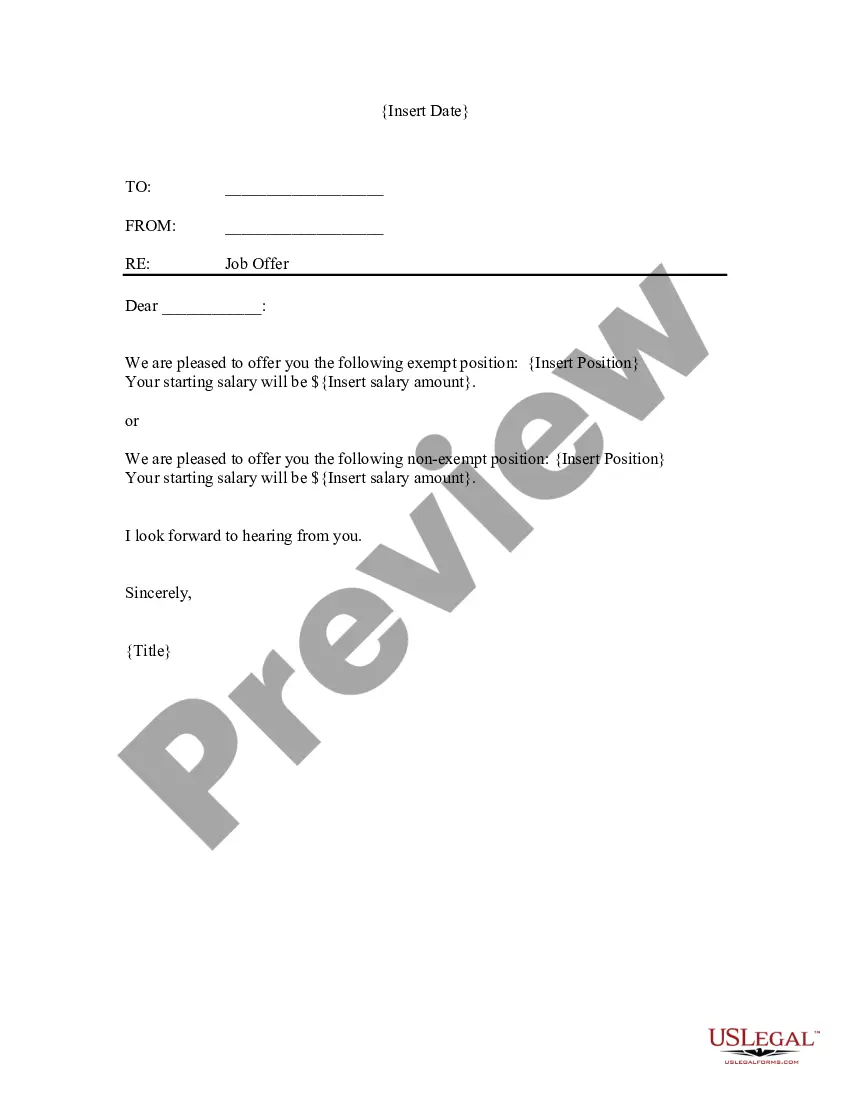
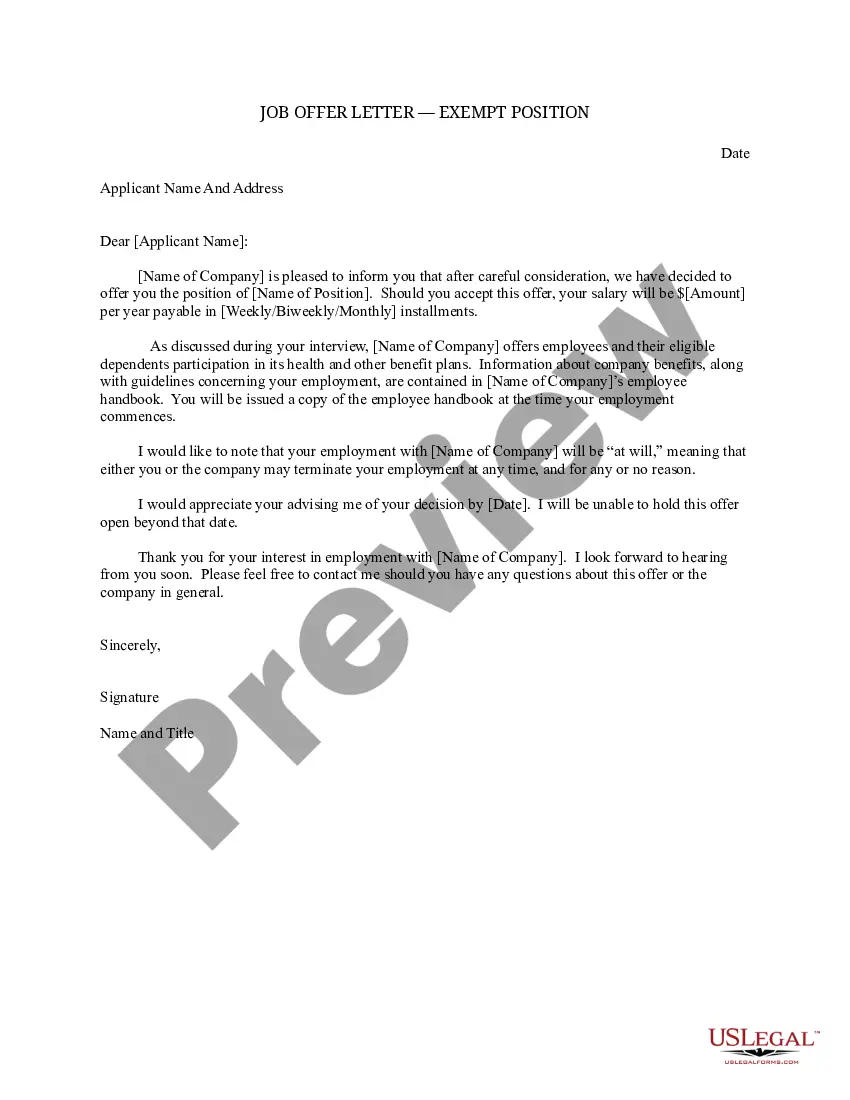
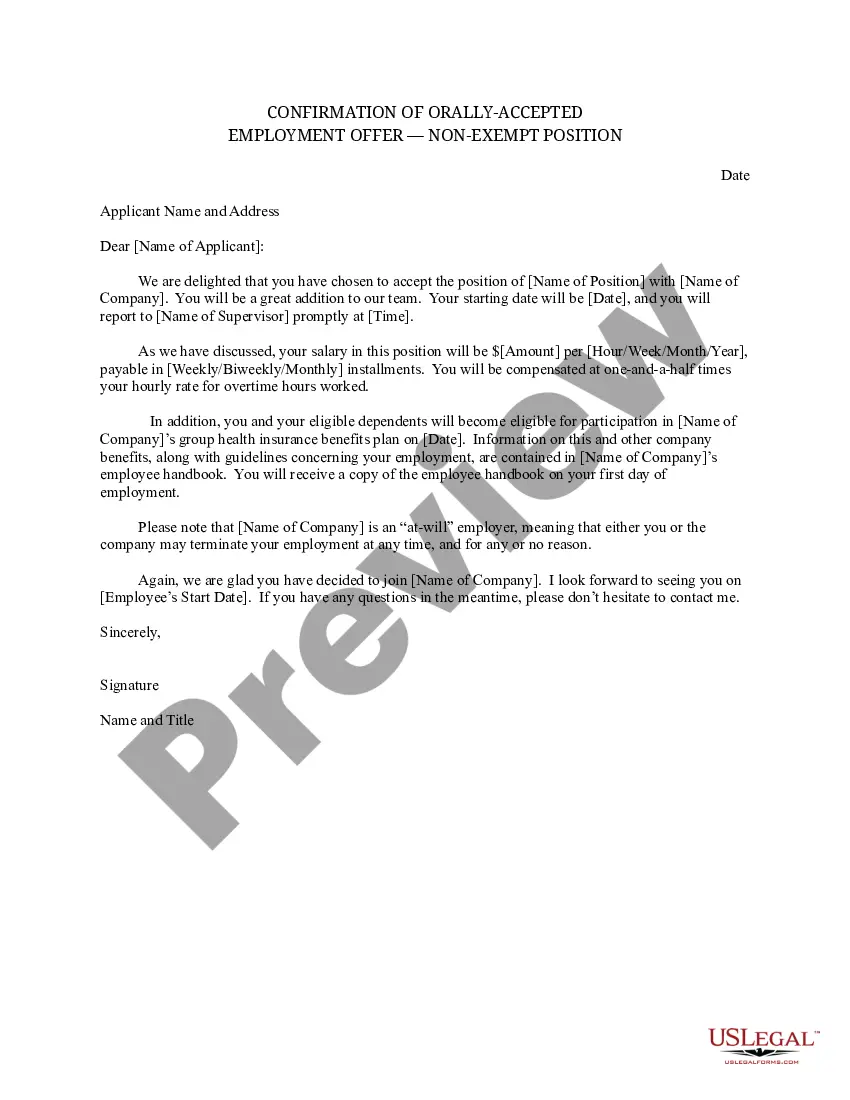



How to fill out Job Offer Letter - Nonexempt Position - Detailed?
It is feasible to spend time online searching for the legal document format that complies with the state and federal regulations you will require.
US Legal Forms provides a multitude of legal templates that are validated by experts.
You can obtain or print the South Dakota Job Offer Letter - Nonexempt Position - Detailed from the services.
First, ensure that you have selected the correct document format for the region/city of your choice. Review the form description to ensure the correct format has been chosen. If available, use the Preview button to view the document format as well.
- If you already possess a US Legal Forms account, you may sign in and click the Download button.
- After that, you may complete, modify, print, or sign the South Dakota Job Offer Letter - Nonexempt Position - Detailed.
- Every legal document format you acquire is yours indefinitely.
- To obtain another copy of a purchased form, visit the My documents section and click the corresponding button.
- For first-time users of the US Legal Forms website, follow the simple instructions outlined below.
Form popularity
FAQ
If a South Dakota Job Offer Letter - Nonexempt Position - Detailed lacks a job description, it might lead to misunderstandings regarding responsibilities. Both the employer and employee should clarify expectations to prevent confusion later on. As a best practice, always include a concise job description to ensure the employee knows what is expected. This will help in creating a smoother working relationship.
Yes, you can sue your employer for false promises. Misleading statements can land an employer in court for negligent misrepresentation, fraudulent inducement, or other legal issues.
With that, every job offer letter should include the following terms:A job title and description.Important dates.Compensation, benefits, and terms.Company policies and culture.A statement of at-will employment.An employee confidentiality agreement and noncompete clause.A list of contingencies.
Unfortunately, your boss is correct. An written offer of employment does not constitue a legal contrat unless it guaranteed your employment in some way (i.e. your compensation, etc.) for a specified period of time. Further, without a written employment contract, you are an "at will" worker.
Some important details about an offer letter are: It is NOT a legally binding contract. It does NOT include promises of future employment or wages. It includes an employment at-will statement.
Can you back out of the job offer? Yes. Technically, anyone can turn down a job offer, back out of a job already started, or renege on an acceptance at any point. Most states operate with what is called at will employment. This means the employee and the employer are not in a binding contract.
Yes, but there could be legal consequences, so an attorney's advice should always be sought before rescinding the offer. Even if an employer has stated on all offers that employment is at will and can be terminated at any time, there is the concept of the employer making a "promise" of a job.
Contrary to what most people think, a signed offer letter, except in very rare instances, is not a legally binding implied contract. Candidates often think that because they have signed and accepted an offer letter, they have some sort of legal right to the job.
Nonexempt: An individual who is not exempt from the overtime provisions of the FLSA and is therefore entitled to overtime pay for all hours worked beyond 40 in a workweek (as well as any state overtime provisions). Nonexempt employees may be paid on a salary, hourly or other basis.
Some important details about an offer letter are: It is NOT a legally binding contract. It does NOT include promises of future employment or wages. It includes an employment at-will statement.