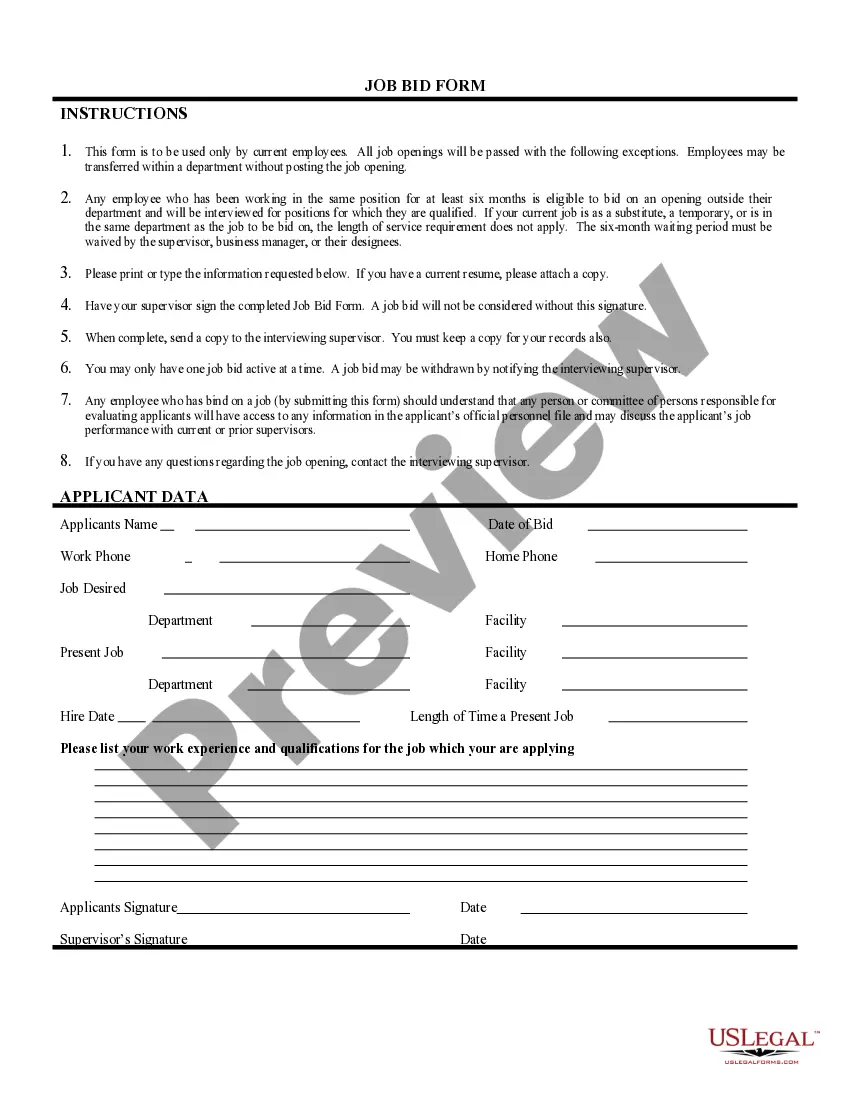
South Dakota Workplace Safety Rules
Description
Get your form ready online
Our built-in tools help you complete, sign, share, and store your documents in one place.
Make edits, fill in missing information, and update formatting in US Legal Forms—just like you would in MS Word.
Download a copy, print it, send it by email, or mail it via USPS—whatever works best for your next step.
Sign and collect signatures with our SignNow integration. Send to multiple recipients, set reminders, and more. Go Premium to unlock E-Sign.
If this form requires notarization, complete it online through a secure video call—no need to meet a notary in person or wait for an appointment.
We protect your documents and personal data by following strict security and privacy standards.

Make edits, fill in missing information, and update formatting in US Legal Forms—just like you would in MS Word.

Download a copy, print it, send it by email, or mail it via USPS—whatever works best for your next step.

Sign and collect signatures with our SignNow integration. Send to multiple recipients, set reminders, and more. Go Premium to unlock E-Sign.

If this form requires notarization, complete it online through a secure video call—no need to meet a notary in person or wait for an appointment.

We protect your documents and personal data by following strict security and privacy standards.
Looking for another form?
How to fill out Workplace Safety Rules?
You might dedicate numerous hours online trying to locate the sanctioned document template that meets the state and federal requirements you necessitate.
US Legal Forms offers thousands of legal templates that have been reviewed by experts.
You can download or print the South Dakota Workplace Safety Rules from my service.
If available, use the Review button to browse through the document template as well.
- If you possess a US Legal Forms account, you can Log In and click on the Download button.
- After that, you can complete, modify, print, or sign the South Dakota Workplace Safety Rules.
- Every legal document template you obtain is yours indefinitely.
- To retrieve another copy of any obtained form, navigate to the My documents tab and click on the corresponding button.
- If you are using the US Legal Forms website for the first time, follow the simple instructions outlined below.
- First, ensure that you have selected the correct document template for your region/area of interest.
- Examine the form description to confirm you have chosen the correct form.
Form popularity
FAQ
The following 22 states or territories have OSHA-approved State Plans that cover both private and state and local government workers:Alaska.Arizona.California.Hawaii.Indiana.Iowa.Kentucky.Maryland.More items...
South Dakota OSHA : What you need to knowSouth Dakota is not a state plan state; that is, it does not have a federally approved occupational safety and health regulatory program. Therefore, private sector workplaces are regulated by the federal standards.
California Rest Breaks The amount of rest time the employee receives corresponds to the length of their shift. Employees must get 10 consecutive minutes for a break every 4 hours. If the employee works a fraction of their work that is 2 hours or more, then they must receive a break.
State Plans are OSHA-approved workplace safety and health programs operated by individual states or U.S. territories. There are currently 22 State Plans covering both private sector and state and local government workers, and there are six State Plans covering only state and local government workers.
A state constitutional amendment passed in 1946 prohibits any person's right to work from being denied or abridged on account of membership or nonmembership in any labor union, or labor organization. Currently, South Dakota is one of the twenty-five states in the country to enact right to work laws.
Federal OSHA has no jurisdiction over State, municipal, or volunteer fire departments.
Employment relationships in South Dakota may be 'terminated at will,' which means an employer does not need a specific reason to fire an employee. This is the same concept as an employee not needing a specific reason to quit a job. Generally, the only exceptions to this rule are when: A contract for employment exists.
Not every state creates their own OSHA plans, but there are 22 states in the U.S. that administer these plans, which cover both public and private sector employees.
A: South Dakota does not have a law that requires an employer to provide rest breaks or meal periods. This is a matter of employer policy. The Fair Labor Standards Act (federal) also does not require breaks.
An employee has the right to an uninterrupted break of at least 20 minutes if they work more than 6 hours in a day. The employee has the right to take this break: away from their workstation (for example, away from their desk) at a time that's not the very start or end of the working day.