South Dakota Living Trust for Husband and Wife with One Child
What is this form?
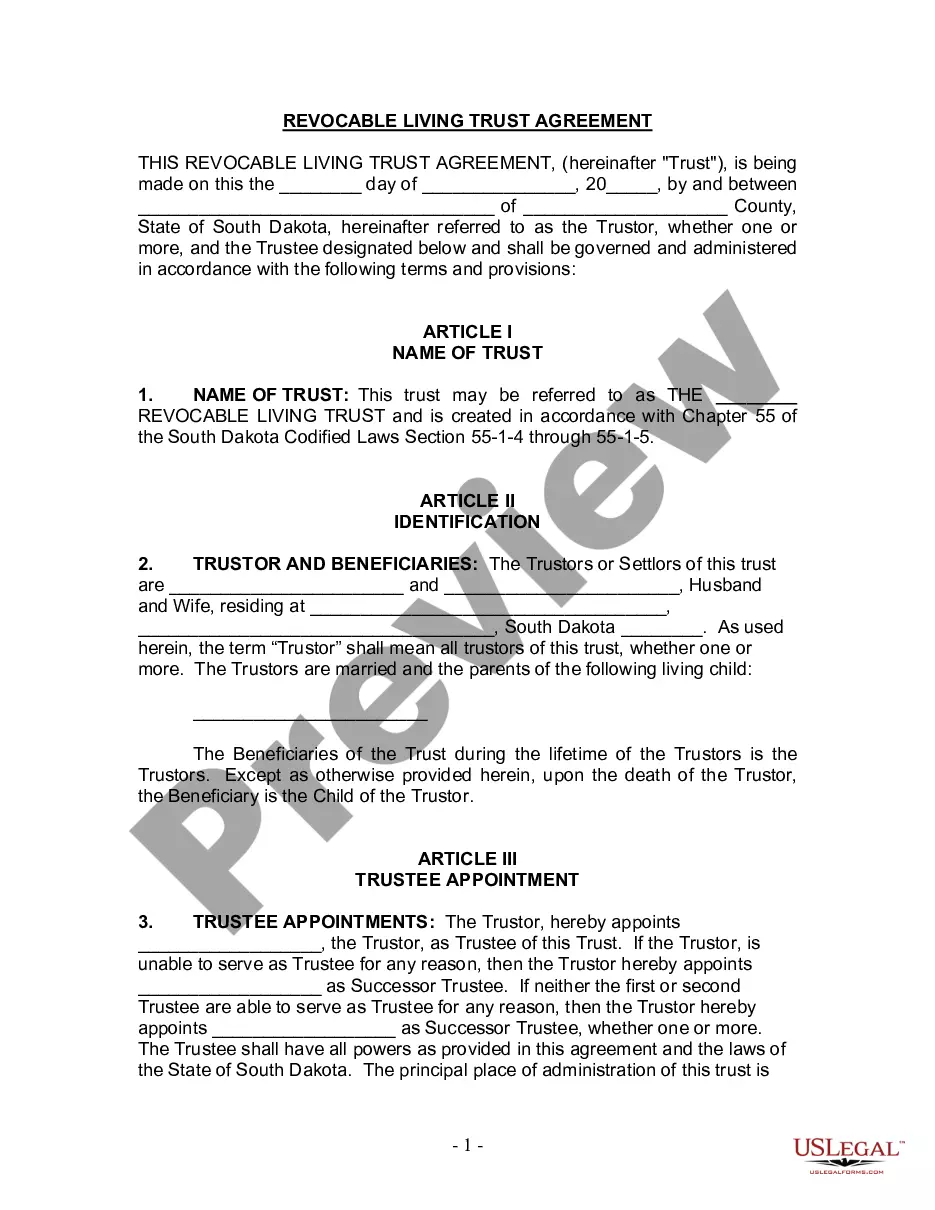
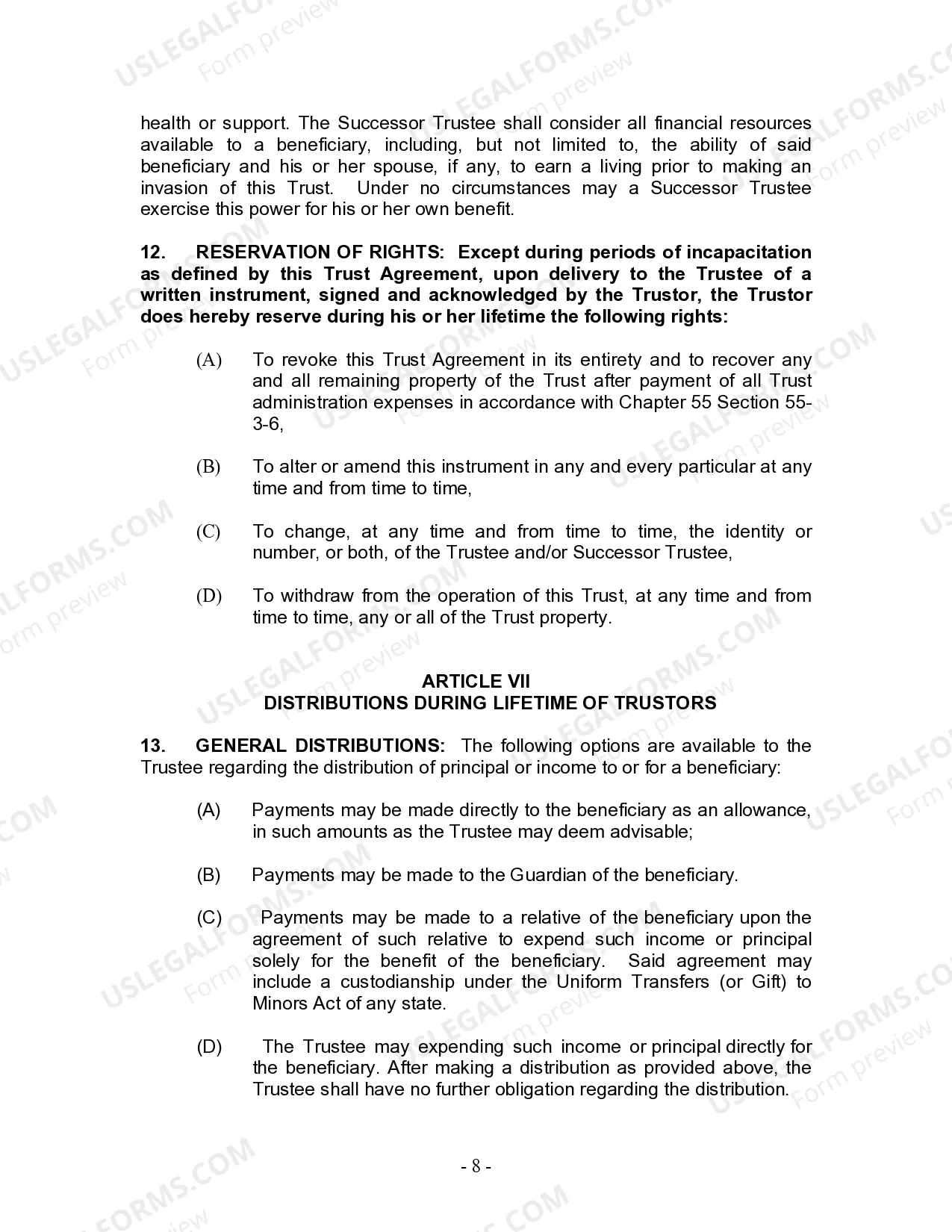
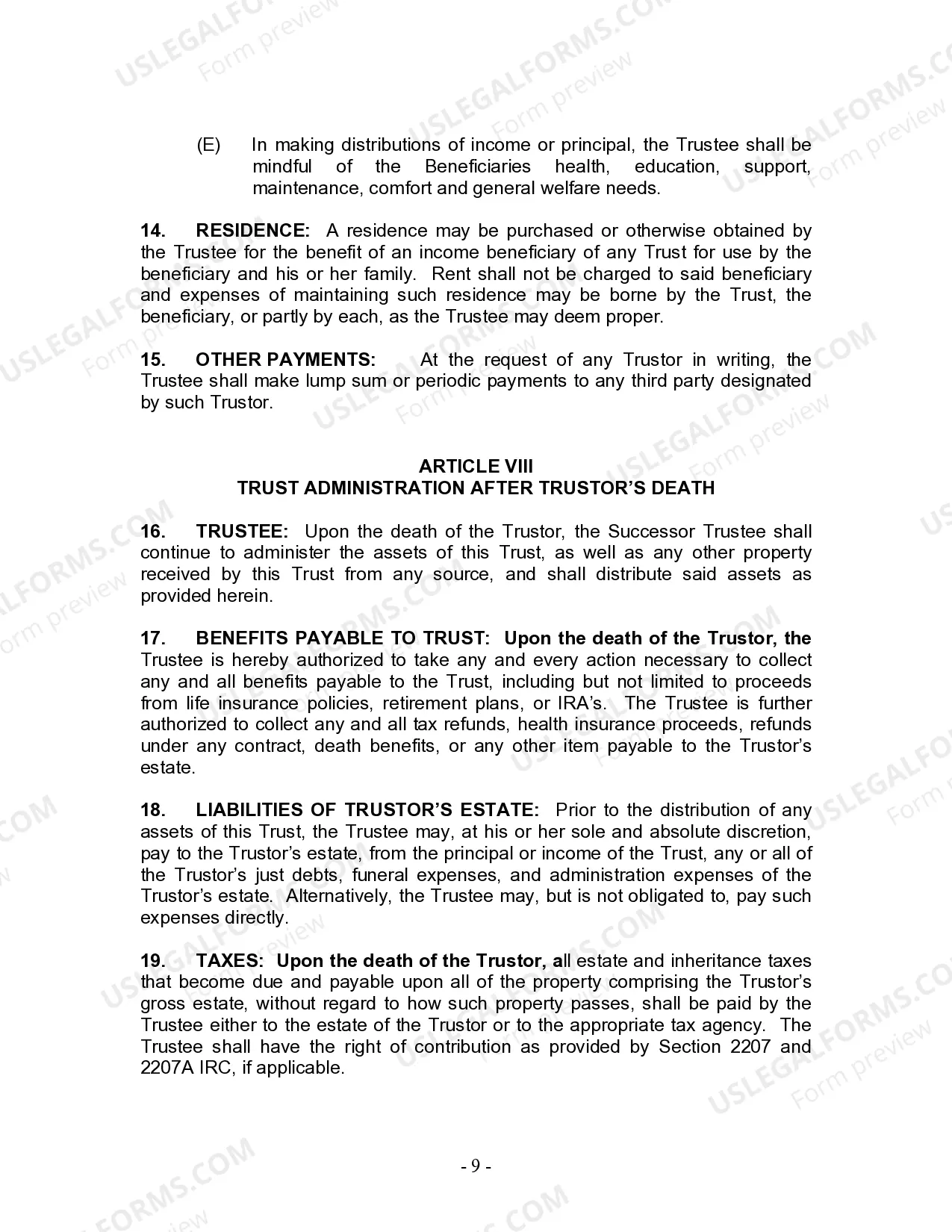
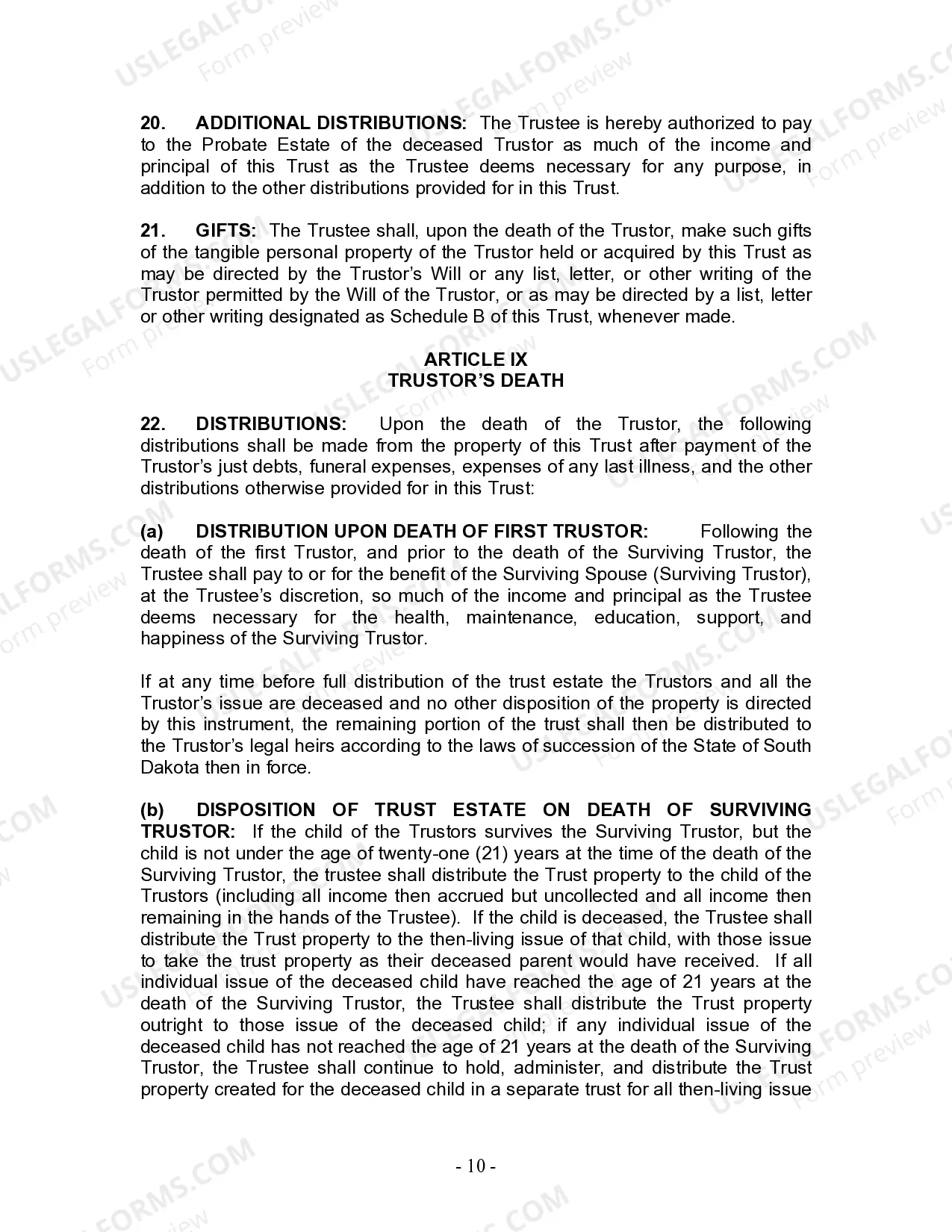
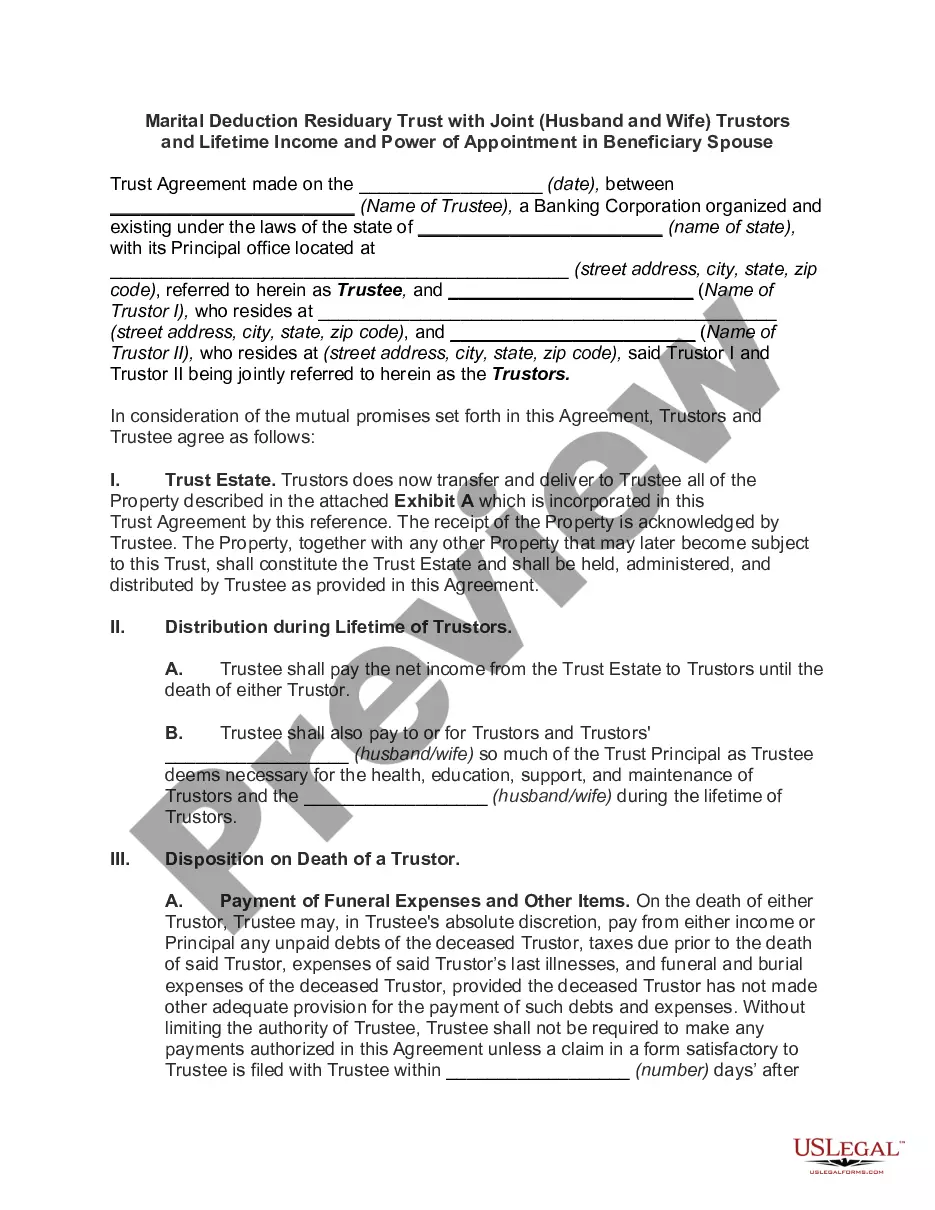
This Living Trust for Husband and Wife with One Child is a legal document established to manage and transfer property during the lifetime of the creators, also known as Trustors. Its primary purpose is to facilitate estate planning and manage assets efficiently. Unlike a will, which goes through probate after death, a living trust allows for direct transfer of assets to beneficiaries, helping to avoid this lengthy process. This form is specifically tailored for couples with one child, allowing them to designate how assets will be handled and distributed to their child while maintaining control over their property during their lives.
Main sections of this form
- Identification of Trustors: This section identifies the husband and wife creating the trust.
- Trustee Appointment: Here, Trustors appoint themselves or another individual as Trustee, responsible for managing the trust.
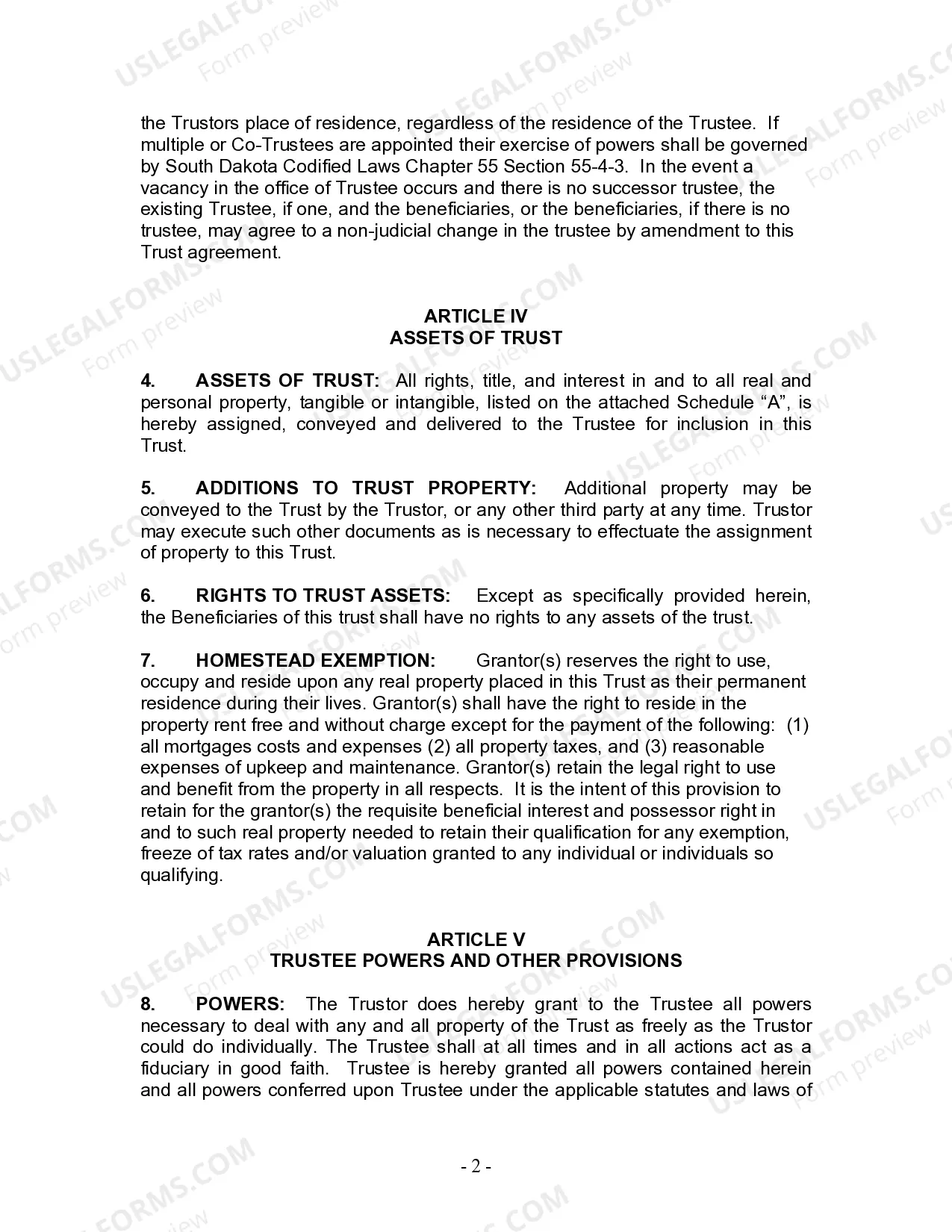
- Assets of Trust: Specifies all property and assets included in the trust.
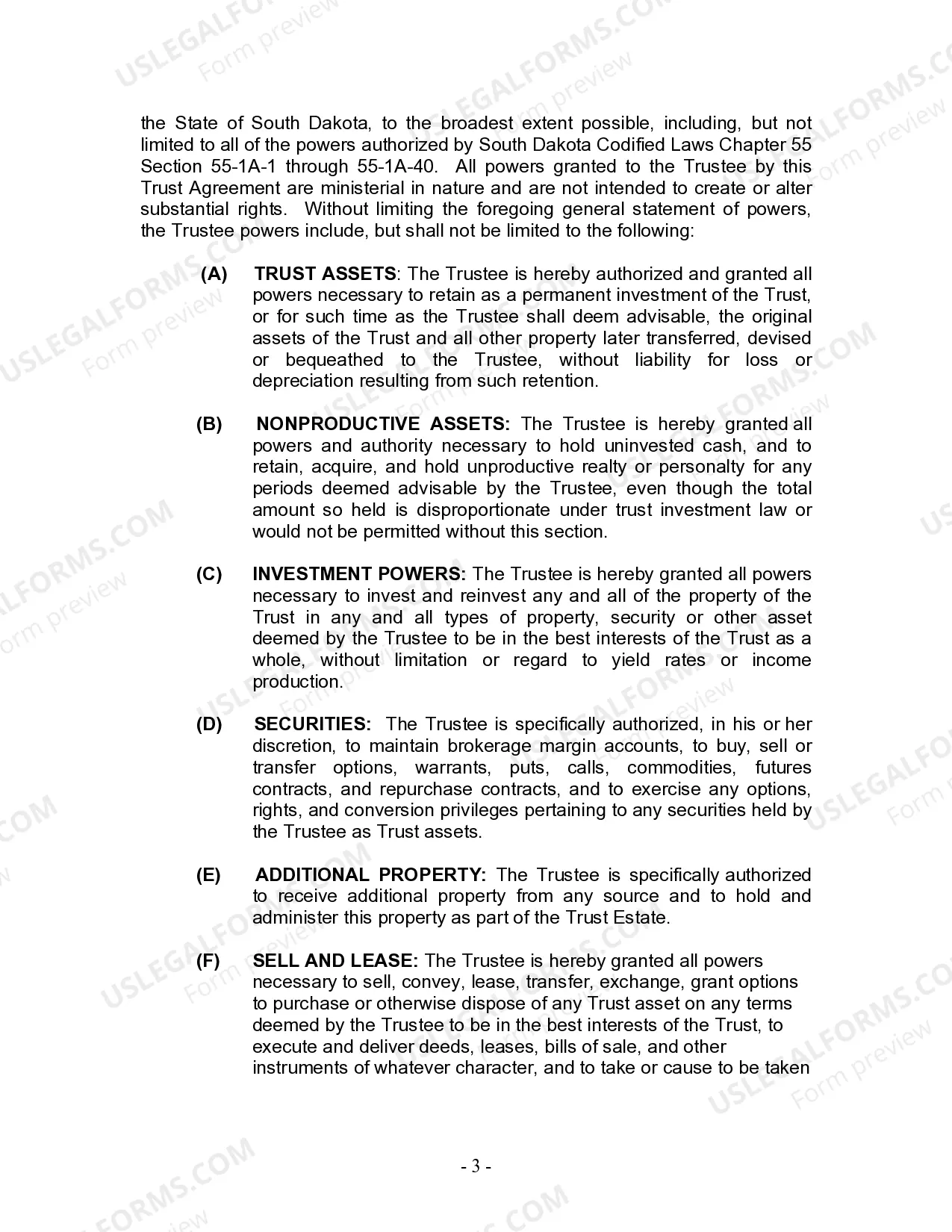
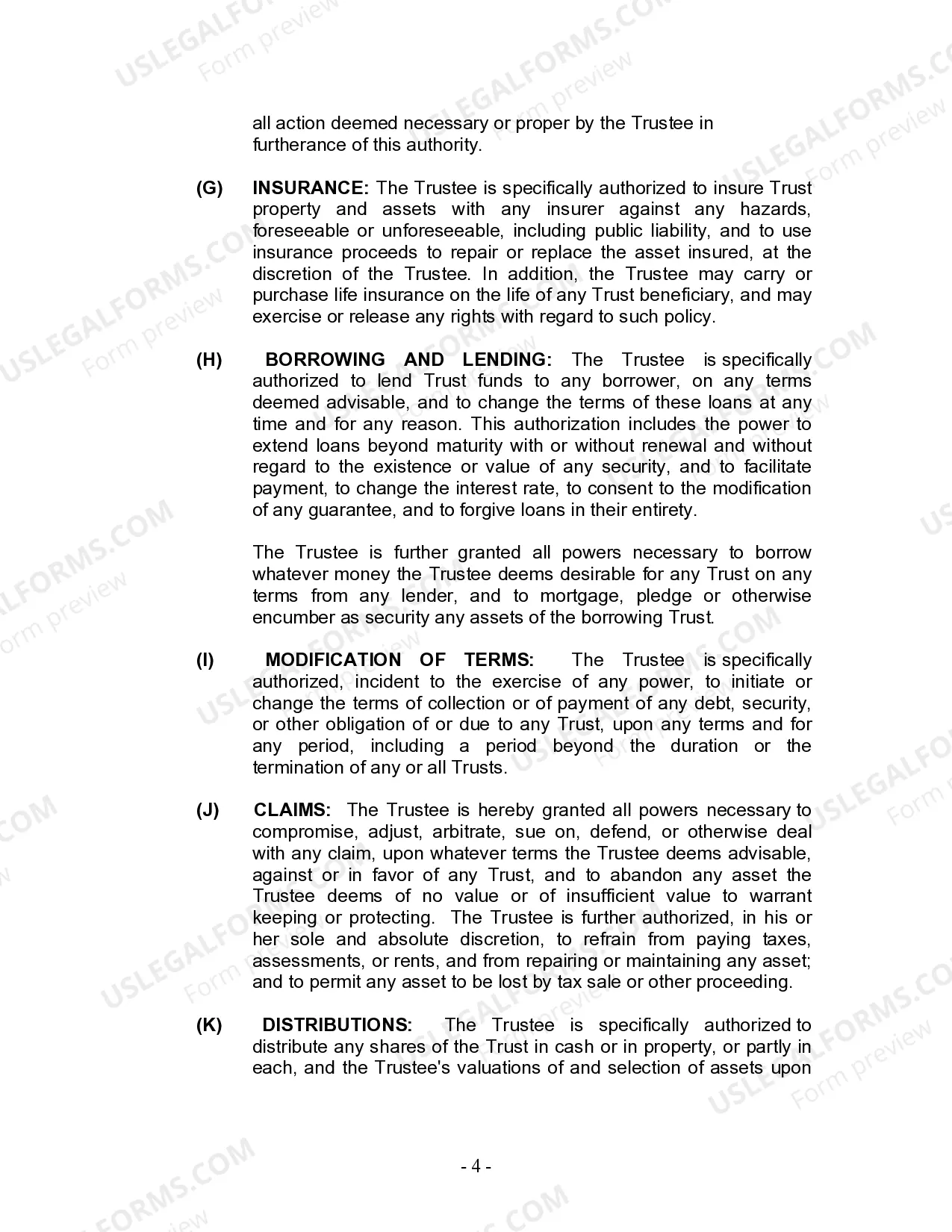
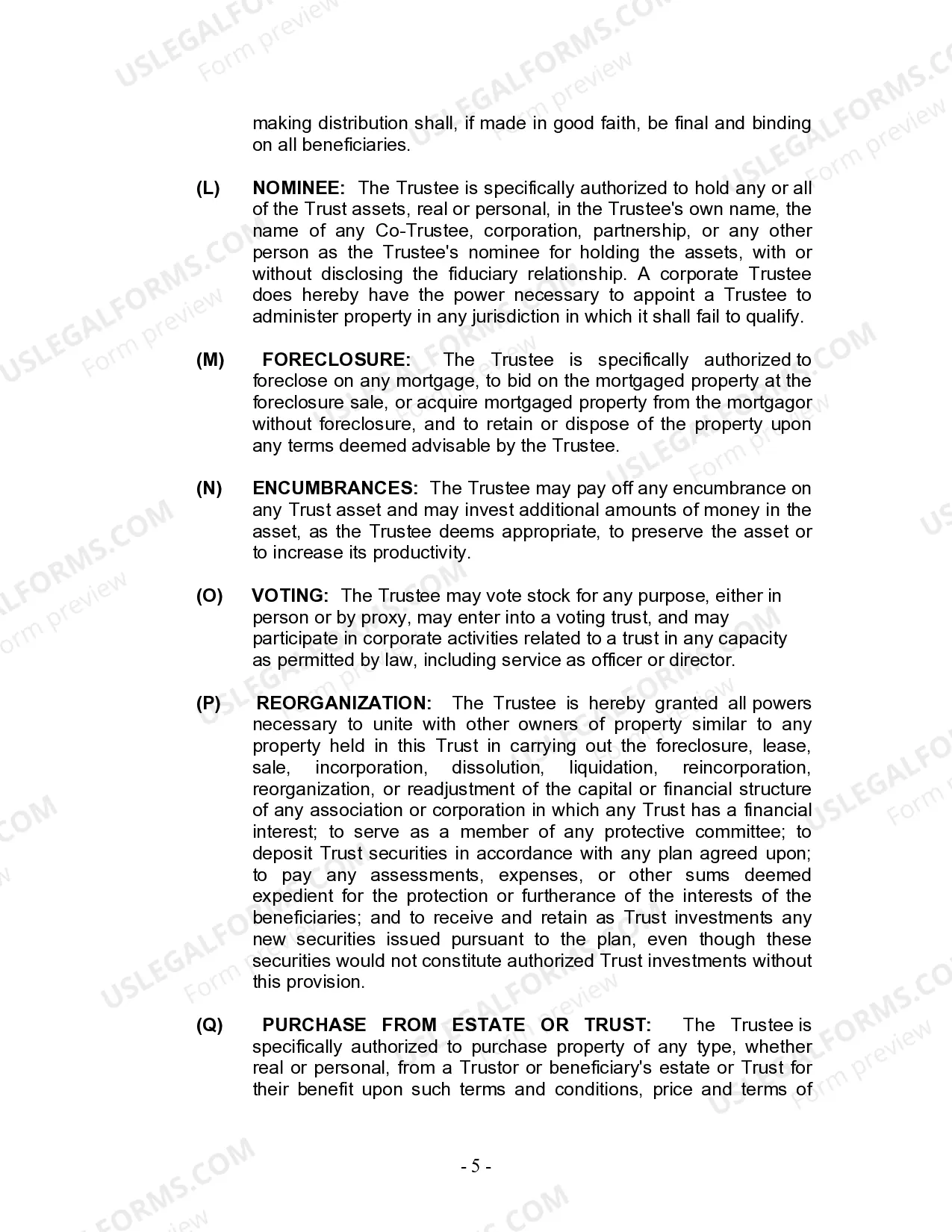
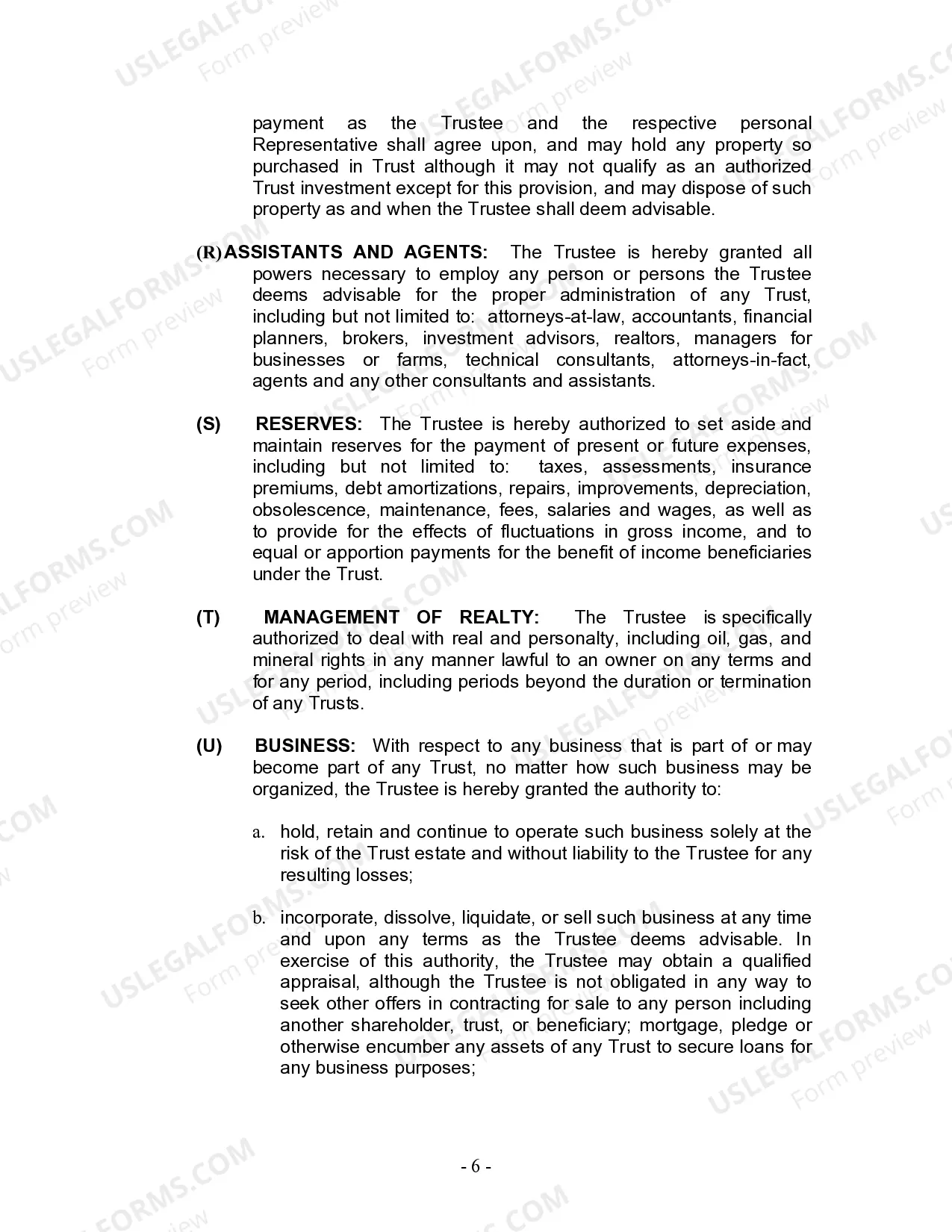
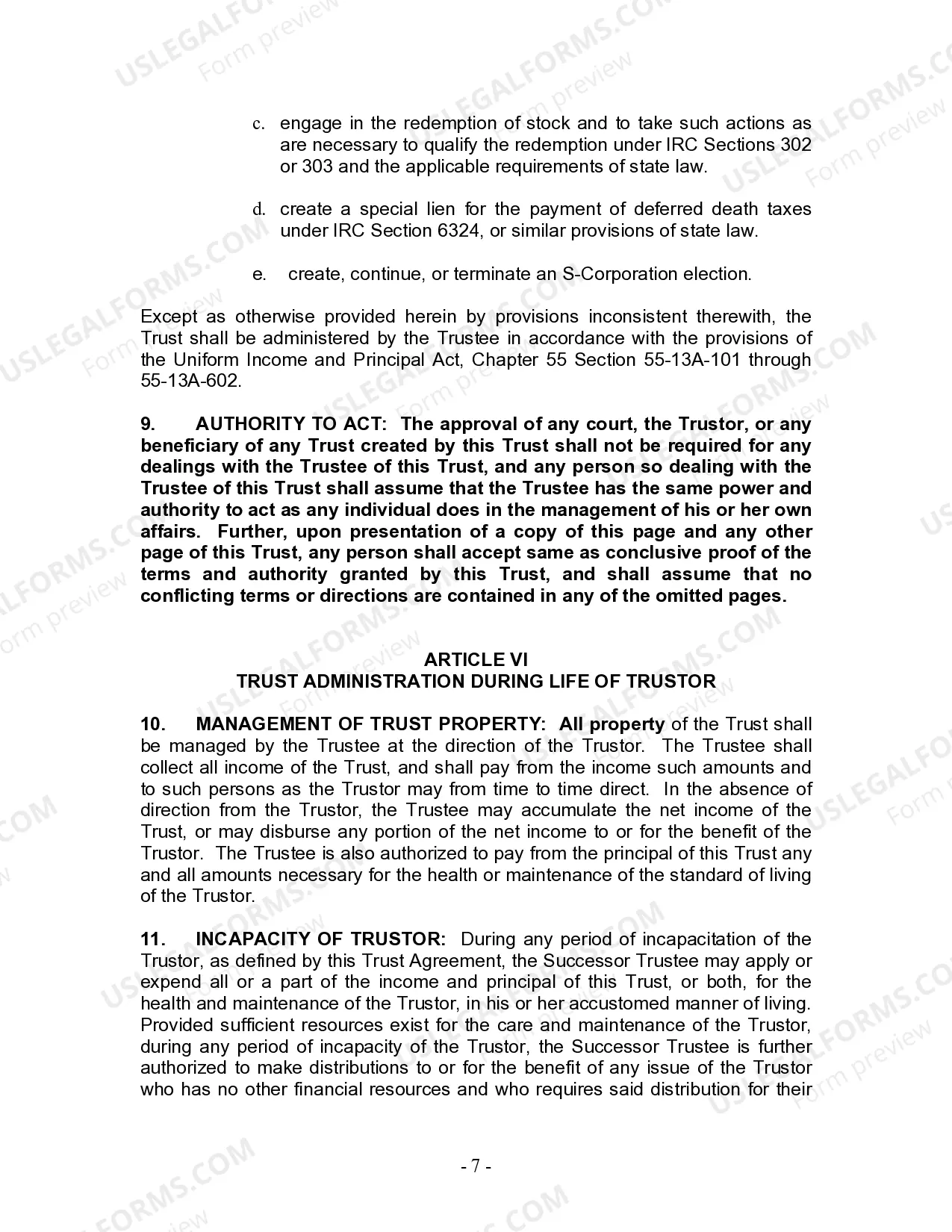
- Trustee Powers: Outlines the powers granted to the Trustee regarding asset management and distributions.
- Distribution Upon Death: Details how the trust assets will be distributed upon the death of the Trustors, particularly to their child.

Situations where this form applies
This living trust form is ideal for couples who want to ensure that their assets are managed according to their wishes while they are alive and smoothly transferred to their child upon their passing. It is particularly beneficial if they wish to avoid the probate process, maintain privacy regarding their estate, or have specific plans for how their assets should be handled in the event of incapacity.
Intended users of this form
- Couples who are married with one child.
- Individuals seeking to protect their estate from probate proceedings.
- Parents who want to ensure specific distributions of their assets to their child after death.
- Those who wish to maintain control over their property management while alive.
Steps to complete this form
- Identify the Trustors: Enter the names of the husband and wife creating the trust.
- Designate a Trustee: Appoint a Trustee who will manage the trust, and include a Successor Trustee if desired.
- Specify the Trust Assets: List all assets and property to be included in the trust in the designated section.
- Detail Powers of the Trustee: Review and agree on the powers granted to the Trustee concerning asset management.
- Establish Distribution Terms: Define how remaining assets will be distributed to your child upon the death of the Trustors.
Does this form need to be notarized?
This form does not typically require notarization unless specified by local law. However, notarizing your living trust can safeguard the documentâs acceptance and validity in legal proceedings.
Get your form ready online
Our built-in tools help you complete, sign, share, and store your documents in one place.
Make edits, fill in missing information, and update formatting in US Legal Forms—just like you would in MS Word.
Download a copy, print it, send it by email, or mail it via USPS—whatever works best for your next step.
Sign and collect signatures with our SignNow integration. Send to multiple recipients, set reminders, and more. Go Premium to unlock E-Sign.
If this form requires notarization, complete it online through a secure video call—no need to meet a notary in person or wait for an appointment.
We protect your documents and personal data by following strict security and privacy standards.

Make edits, fill in missing information, and update formatting in US Legal Forms—just like you would in MS Word.

Download a copy, print it, send it by email, or mail it via USPS—whatever works best for your next step.

Sign and collect signatures with our SignNow integration. Send to multiple recipients, set reminders, and more. Go Premium to unlock E-Sign.

If this form requires notarization, complete it online through a secure video call—no need to meet a notary in person or wait for an appointment.

We protect your documents and personal data by following strict security and privacy standards.
Common mistakes
- Failing to include all assets in the trust documentation.
- Not updating the trust after significant life changes (e.g., additional children, divorce).
- Choosing a Trustee without fully understanding their responsibilities.
- Neglecting to discuss the trust terms with all beneficiaries involved.
Benefits of using this form online
- Convenience: Access and complete your living trust form at any time from anywhere.
- Editability: Easily modify your form to reflect changes in your situation or preferences.
- Reliability: The forms are drafted by licensed attorneys, ensuring compliance with legal standards.
- The Living Trust is legally binding and provides clear instructions for asset management.
- It helps avoid probate, which can be lengthy and costly.
- All terms must comply with South Dakota trust laws to ensure enforceability.
Main things to remember
- A Living Trust provides an effective estate planning solution for couples.
- Proper completion and notarization are necessary for legal validity.
- This trust helps maintain control and manage assets during the Trustorsâ lifetime and beyond.
Looking for another form?
Form popularity
FAQ
Under California law, a marriage automatically invalidates any pre-existing will or trust as to the new spouse's inheritance rights, unless the documents provide for a new spouse, or clearly indicate a new spouse will receive nothing.
Choose the trust that best suits your financial situation. Take inventory of your property to determine what you'd like to include in the trust. Choose a trustee to manage your trust. Create the trust document. Sign the trust in front of a notary public. Transfer property into the trust to fund it.
As the grantor or creator of an irrevocable trust, if you place assets into one before your marriage, these are never marital property and are never at risk in a divorce.You can't get these assets back later if you decide you don't mind sharing them with your spouse or after you divorce.
If you own the property as Tenants in Common and there is a Declaration of Trust document that states the division of shares, the trust deed is still valid after marriage but it will be considered alongside other important factors by the courts.
Yes, and no. Yes, a spouse can be disinherited.The laws vary from state to state, but in a community property state like California, your spouse will have a legal right to one-half of the estate assets acquired during the marriage, otherwise known as community property.
Legally your Trust now owns all of your assets, but you manage all of the assets as the Trustee. This is the essential step that allows you to avoid Probate Court because there is nothing for the courts to control when you die or become incapacitated.
Under California law, a marriage automatically invalidates any pre-existing will or trust as to the new spouse's inheritance rights, unless the documents provide for a new spouse, or clearly indicate a new spouse will receive nothing.
There is a non-refundable application fee of $5,000. A trust must have at least $200,000 of assets to receive a South Dakota charter. The company must file a 12-page application. Once chartered, there is an annual state fee of 7 cents per $10,000 of assets in the trust.
The process of funding your living trust by transferring your assets to the trustee is an important part of what helps your loved ones avoid probate court in the event of your death or incapacity. Qualified retirement accounts such as 401(k)s, 403(b)s, IRAs, and annuities, should not be put in a living trust.