South Dakota Living Trust for Individual Who is Single, Divorced or Widow or Widower with Children
What this document covers
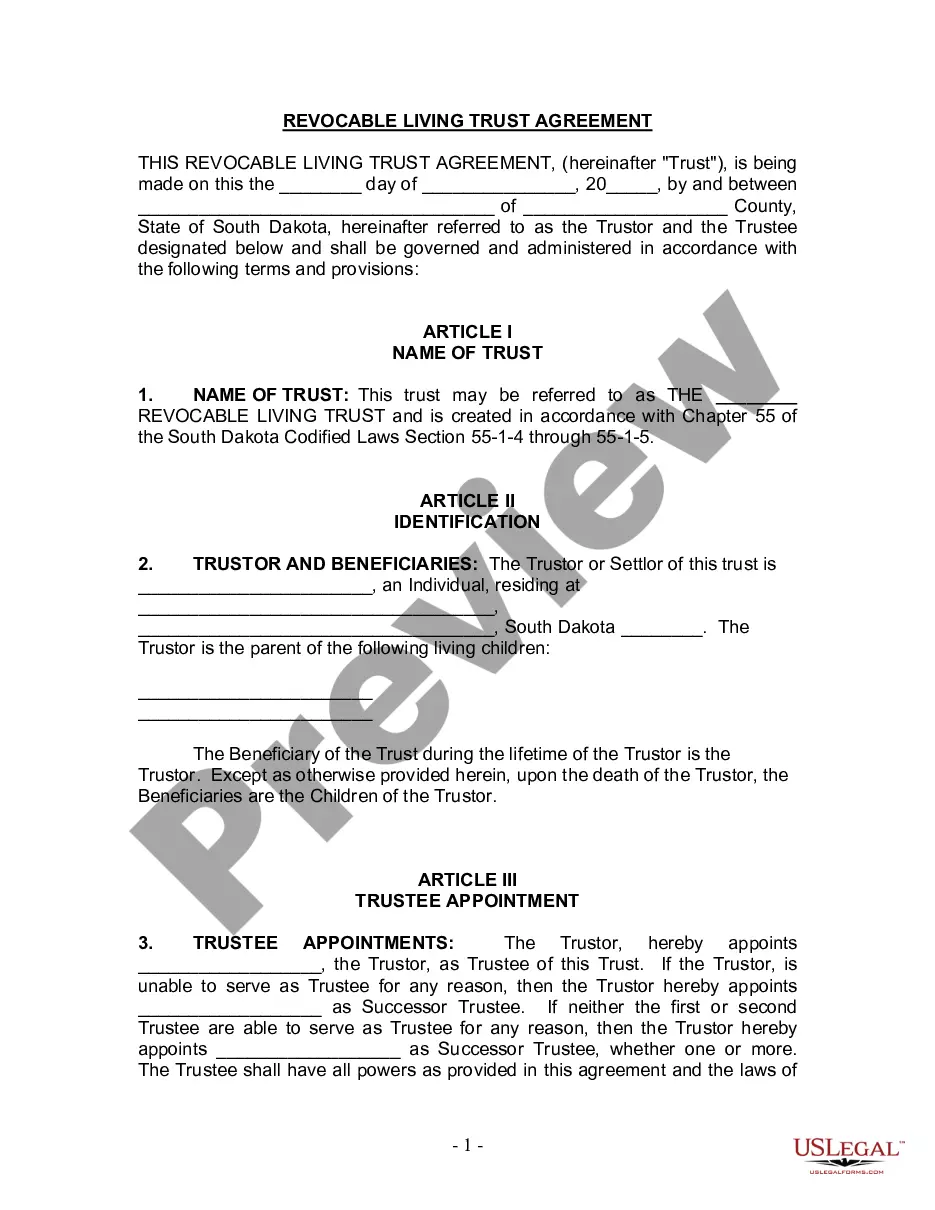
This living trust form is tailored for individuals who are single, divorced, or widowed and have children. A living trust is established during an individual's lifetime to manage and protect their assets. Unlike a will, which goes through probate upon death, a living trust allows assets to be transferred directly to beneficiaries, bypassing probate. This form enables the creator to maintain control as the trustee during their lifetime while ensuring that their children are provided for after their passing.
What’s included in this form
- Identification of the Trustor and Trustee, including their names and addresses.
- Details of the Trust's assets as listed in an attached schedule.
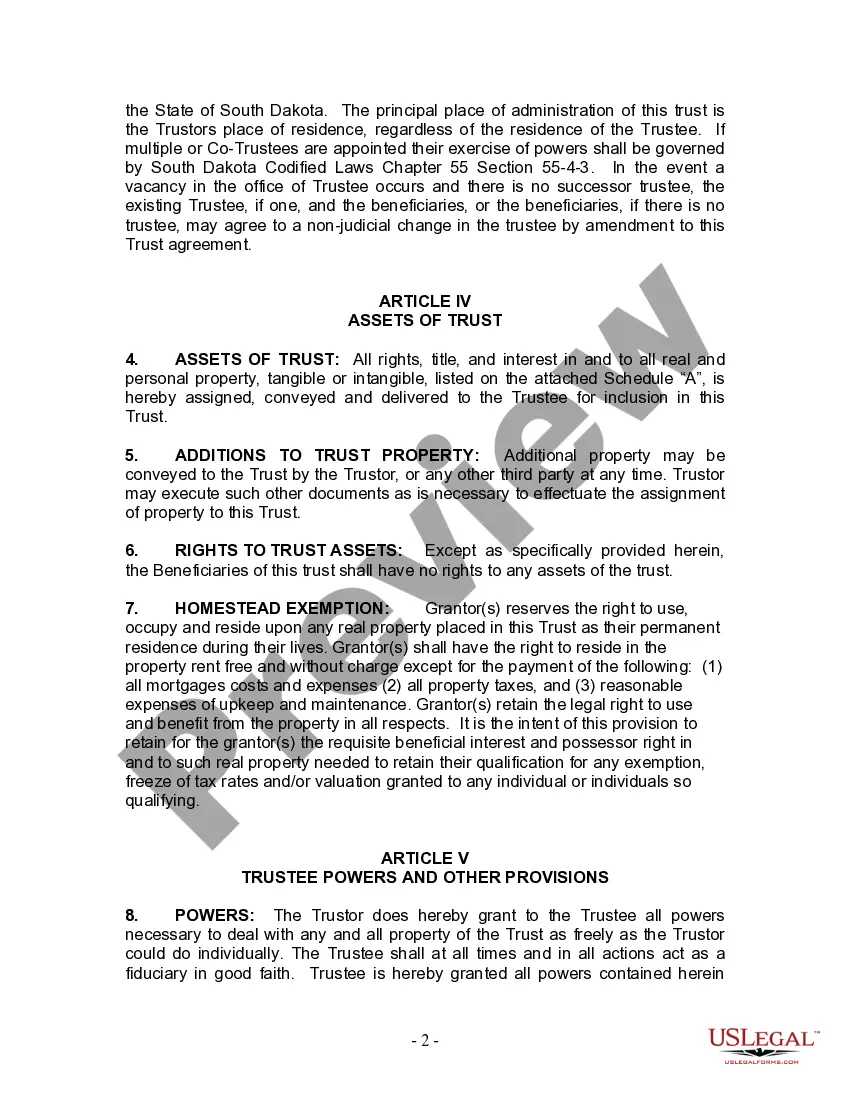
- Appointment of Successor Trustees if the original Trustee cannot serve.
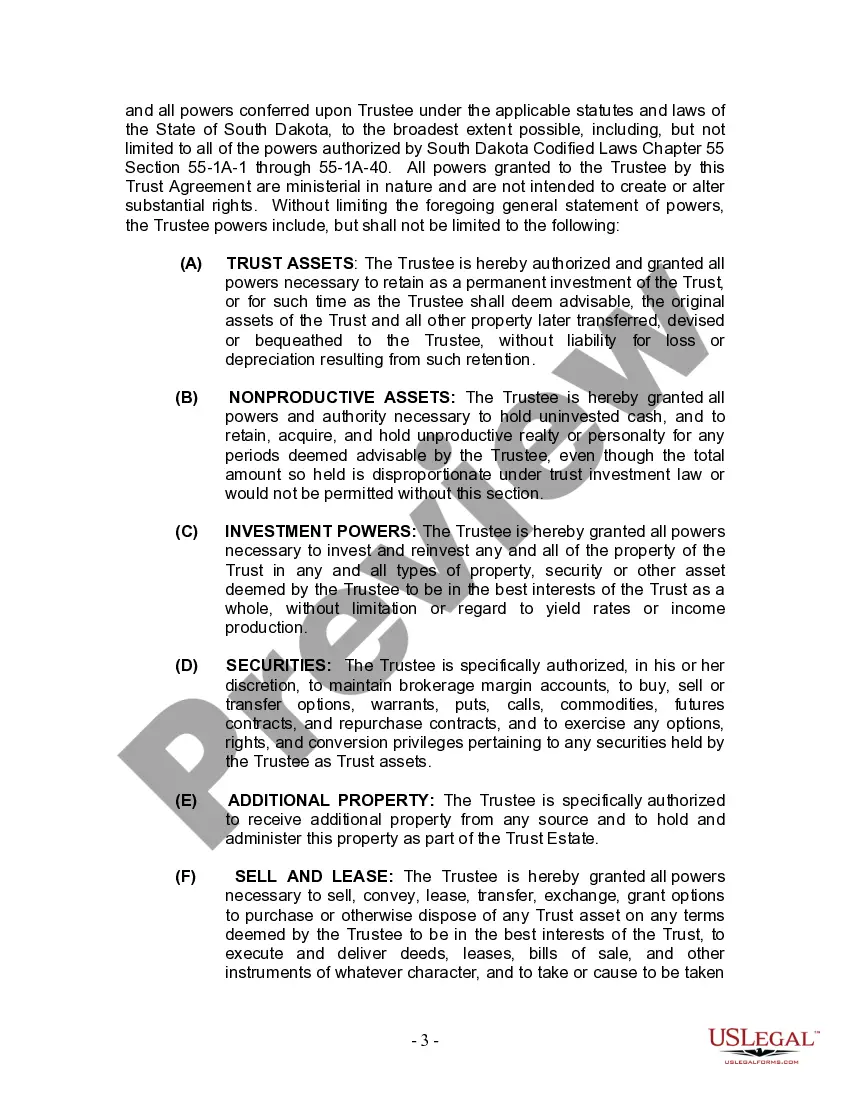
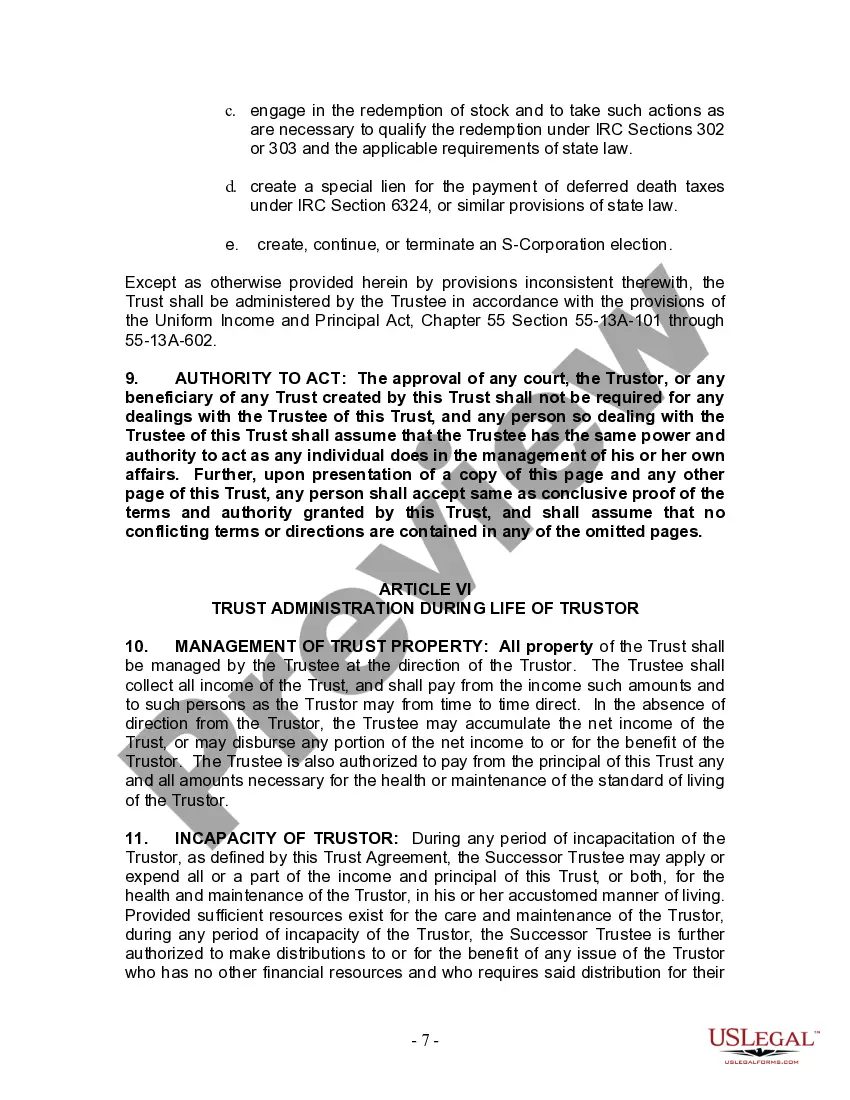
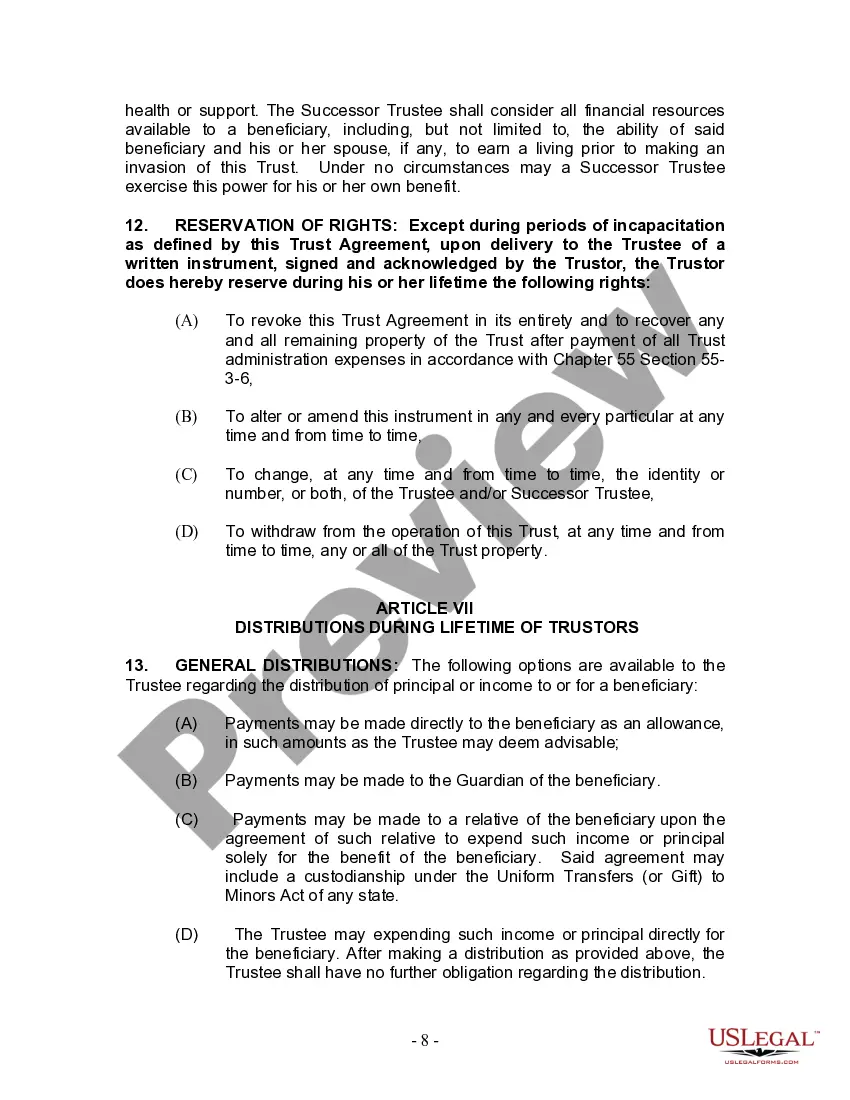
- Provisions regarding the management and distribution of the Trust assets.
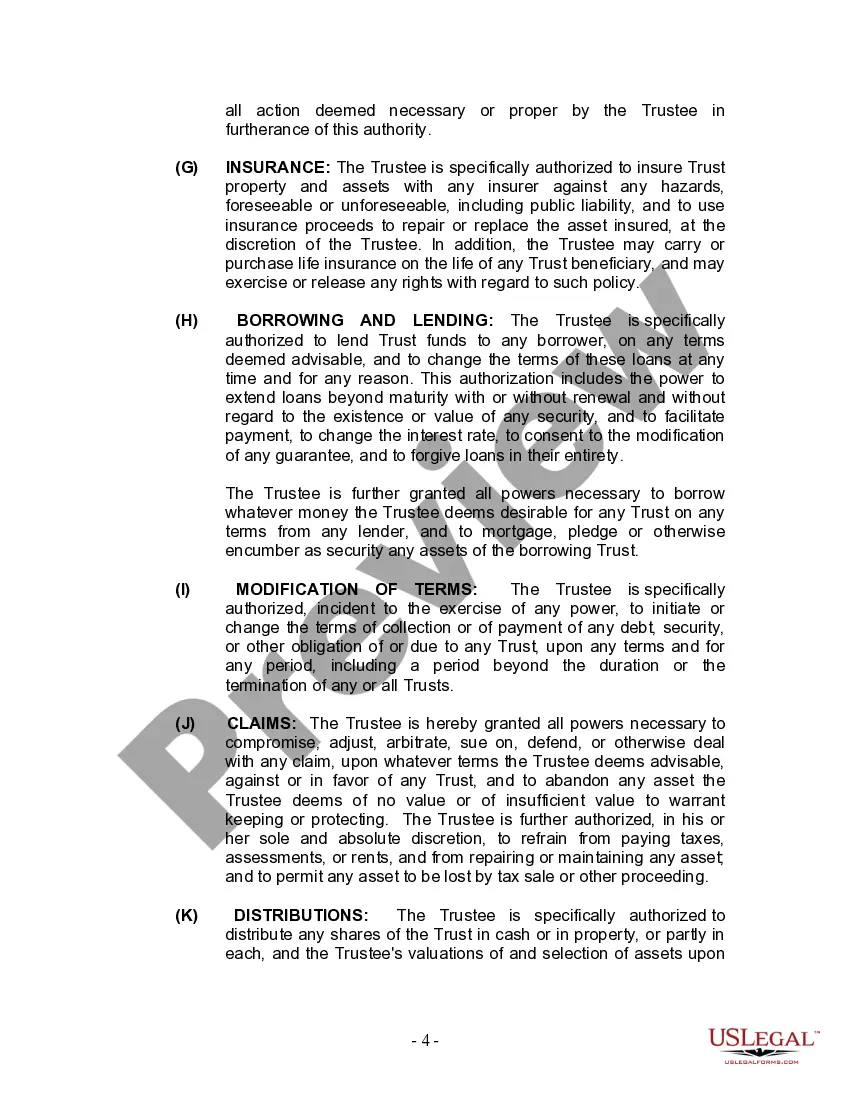
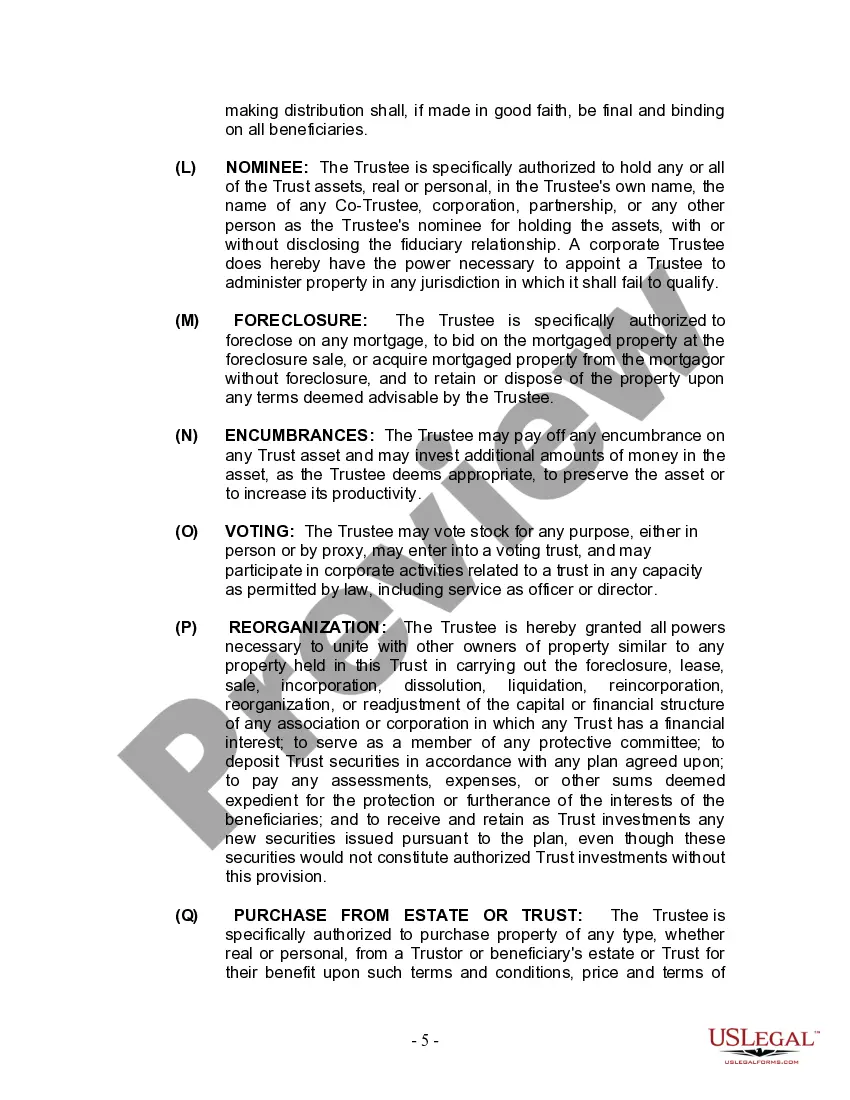
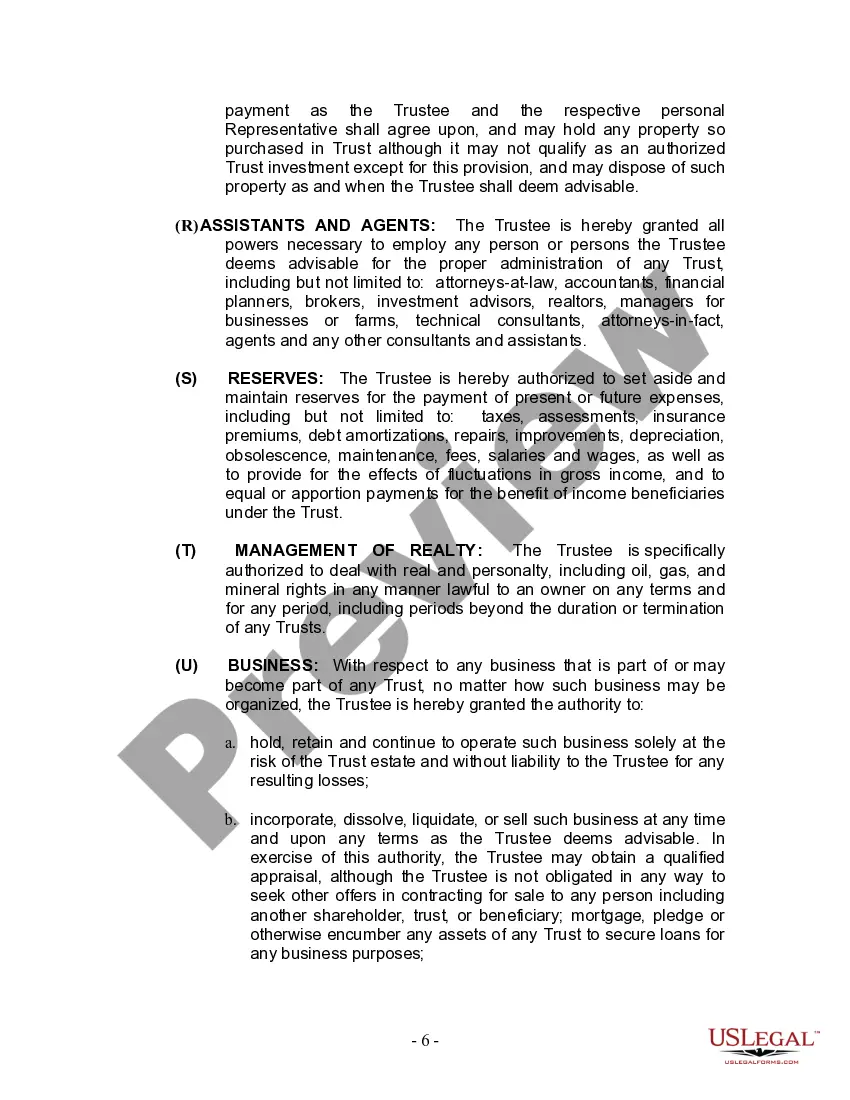
- Rights and powers granted to the Trustee for asset management.
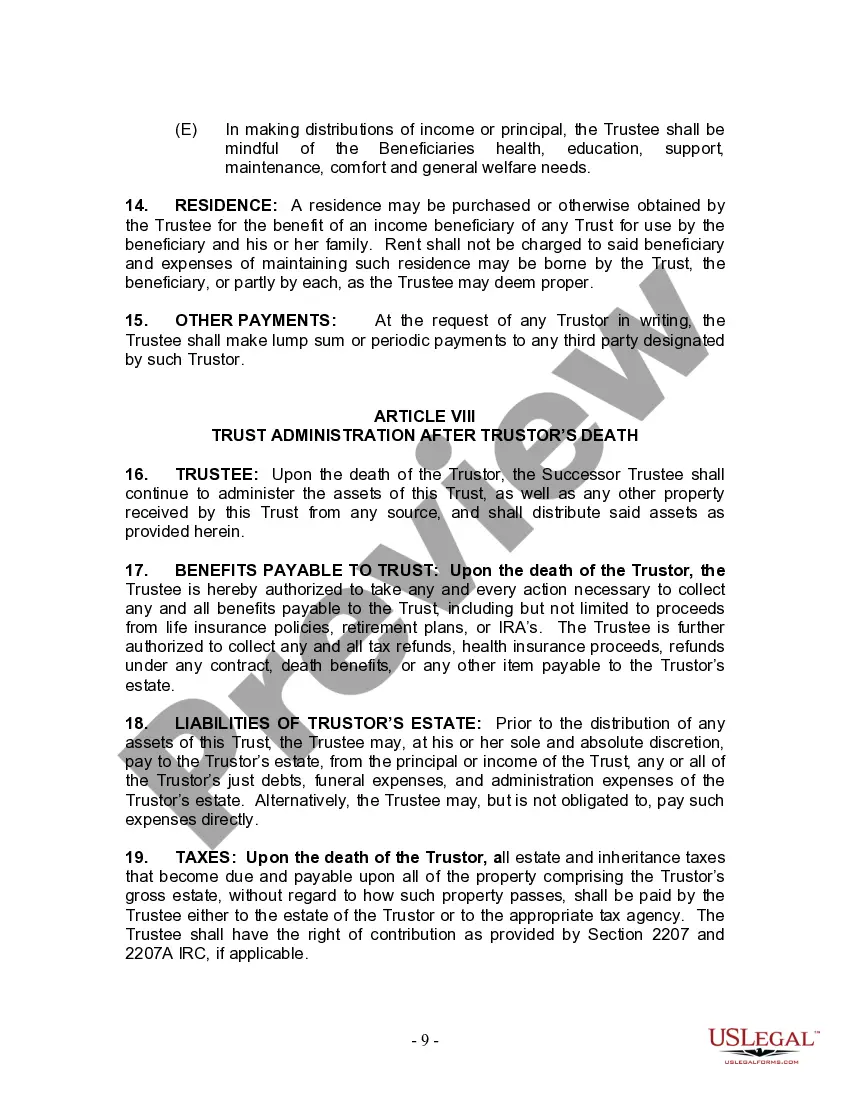
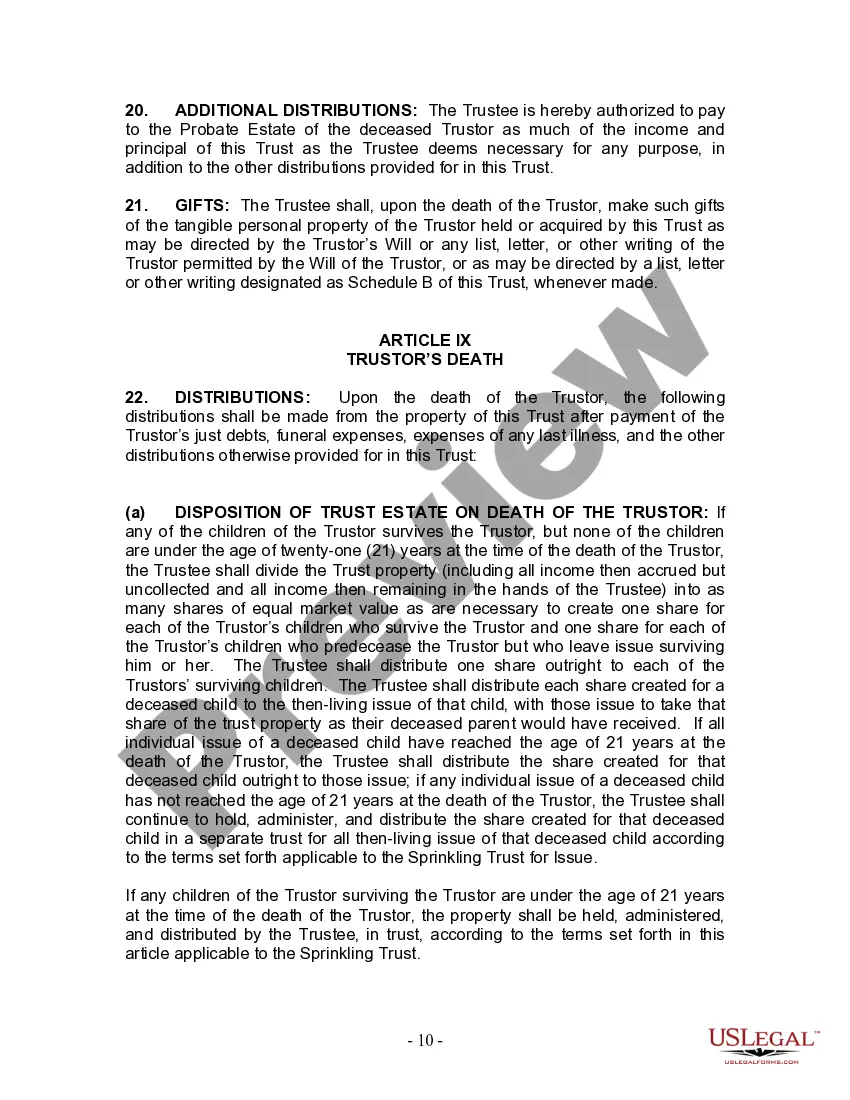
- Instructions on how the Trust assets will be distributed upon the Trustor's death.




Situations where this form applies
This living trust form should be used when an individual wants to establish a trust in their lifetime to manage their assets, particularly if they are single, divorced, or widowed and want to provide for their children. It is ideal for those seeking to avoid probate, manage their property efficiently, and ensure a smooth transition of assets to their beneficiaries after death.
Who needs this form
- Individuals who are single, divorced, or widowed.
- Parents with children who wish to safeguard their financial future.
- Those wanting to avoid the probate process.
- Individuals looking to maintain control over their assets during their lifetime.
How to complete this form
- Identify the Trustor, Trustee, and beneficiaries by providing their names and addresses.
- Outline the assets included in the trust by listing them in Schedule A.
- Designate a Successor Trustee in case the initial Trustee cannot fulfill their role.
- Specify any powers and rights that the Trustee will have concerning management and distribution of the trust assets.
- Sign and date the document in the presence of a notary public, if required.
Notarization requirements for this form
To make this form legally binding, it must be notarized. Our online notarization service, powered by Notarize, lets you verify and sign documents remotely through an encrypted video session.
Get your form ready online
Our built-in tools help you complete, sign, share, and store your documents in one place.
Make edits, fill in missing information, and update formatting in US Legal Forms—just like you would in MS Word.
Download a copy, print it, send it by email, or mail it via USPS—whatever works best for your next step.
Sign and collect signatures with our SignNow integration. Send to multiple recipients, set reminders, and more. Go Premium to unlock E-Sign.
If this form requires notarization, complete it online through a secure video call—no need to meet a notary in person or wait for an appointment.
We protect your documents and personal data by following strict security and privacy standards.

Make edits, fill in missing information, and update formatting in US Legal Forms—just like you would in MS Word.

Download a copy, print it, send it by email, or mail it via USPS—whatever works best for your next step.

Sign and collect signatures with our SignNow integration. Send to multiple recipients, set reminders, and more. Go Premium to unlock E-Sign.

If this form requires notarization, complete it online through a secure video call—no need to meet a notary in person or wait for an appointment.

We protect your documents and personal data by following strict security and privacy standards.
Common mistakes
- Failing to list all assets to be included in the trust.
- Not properly designating a Successor Trustee.
- Ignoring state-specific legal requirements.
- Not updating the trust if personal circumstances change.
- Forgetting to have the document notarized if necessary.
Advantages of online completion
- Convenience of accessing and completing the form at any time.
- Editability allows adjustments as personal circumstances change.
- Reliability provided by legal templates drafted by licensed attorneys.
Main things to remember
- A Living Trust allows for asset management during life and provides a clear distribution plan after death.
- This form is designed for individuals who are single, divorced, or widowed with children.
- Completing the form accurately can help avoid common legal pitfalls and ensure your wishes are honored.
Looking for another form?
Form popularity
FAQ
Funding a Trust Is Expensive... This is the major drawback to using a revocable living trust for many people, but it's not worth the time, money, and effort to create one if the trust isn't fully funded.
Assuming you decide you want a revocable living trust, how much should you expect to pay? If you are willing to do it yourself, it will cost you about $30 for a book, or $70 for living trust software. If you hire a lawyer to do the job for you, get ready to pay between $1,200 and $2,000.
Decide whether you need a shared trust or an individual trust. Decide what items to leave in the trust. Decide who will inherit your trust property. Choose someone to be your successor trustee. Choose someone to manage property for youngsters. Prepare the trust document.
The national average cost for a living trust for an individual is $1,100-1,500 USD. The national average cost for a living trust for a married couple is $1,700-2,500 USD. Part of the reason for this range in prices is the range of services that are available from various estate planning attorneys.
Make a List of All Your Assets. Be sure to include make a list of your assets that includes everything you own. Find the Paperwork for Your Assets. Choose Beneficiaries. Choose a Successor Trustee. Choose a Guardian for Your Minor Children.
When you create a DIY living trust, there are no attorneys involved in the process. You will need to choose a trustee who will be in charge of managing the trust assets and distributing them.You'll also need to choose your beneficiary or beneficiaries, the person or people who will receive the assets in your trust.
Single People Anyone who is single and has assets titled in their sole name should consider a Revocable Living Trust. The two main reasons are to keep you and your assets out of a court-supervised guardianship and to allow your beneficiaries to avoid the costs and hassles of probate.
Many people find that they can successfully set up their own living trust without the help of a lawyer. Making a living trust takes a more work than writing a will because a living trust requires that you take the additional step of transferring property into the trust.
Pick a type of living trust. If you're married, you'll first need to decide whether you want a single or joint trust. Take stock of your property. Choose a trustee. Draw up the trust document. Sign the trust. Transfer your property to the trust.