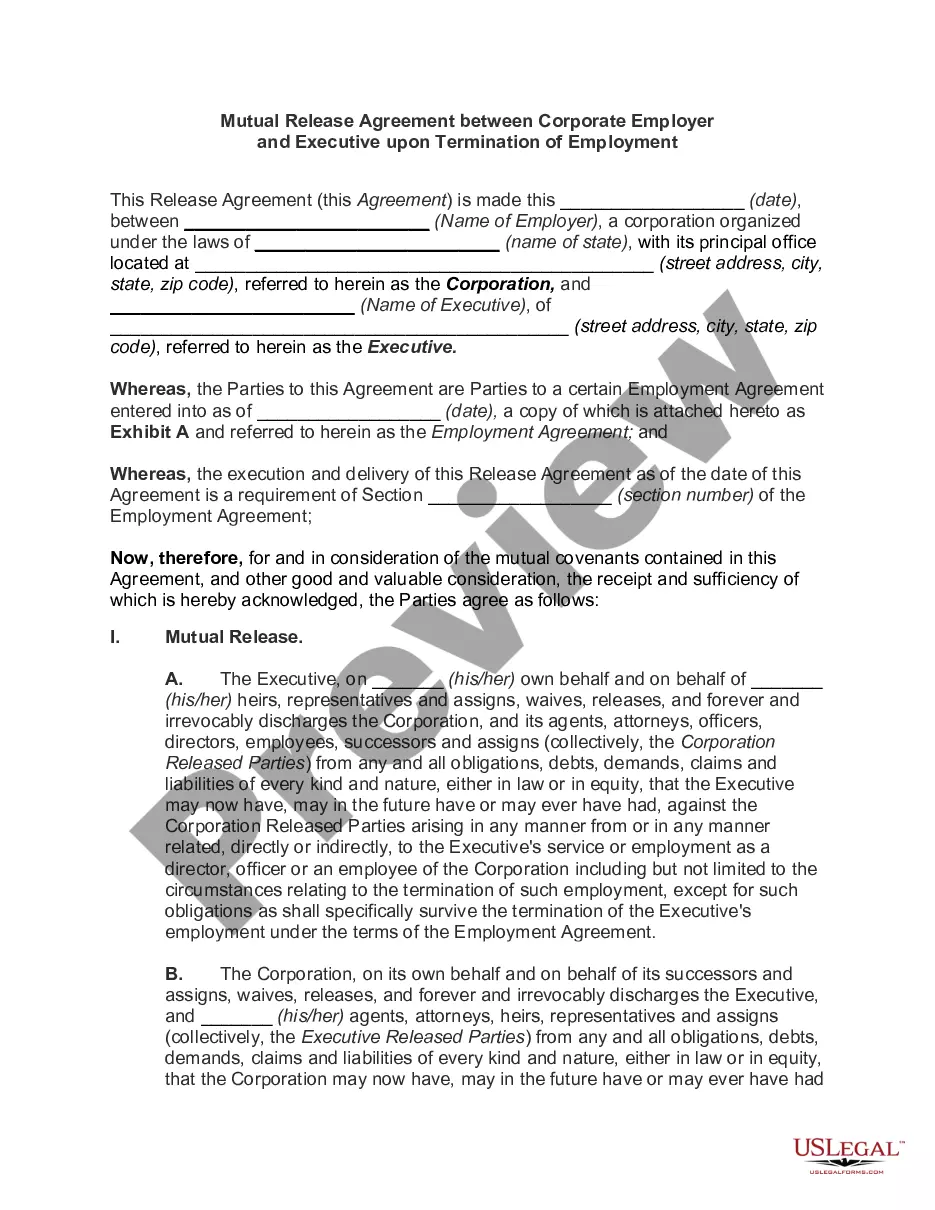
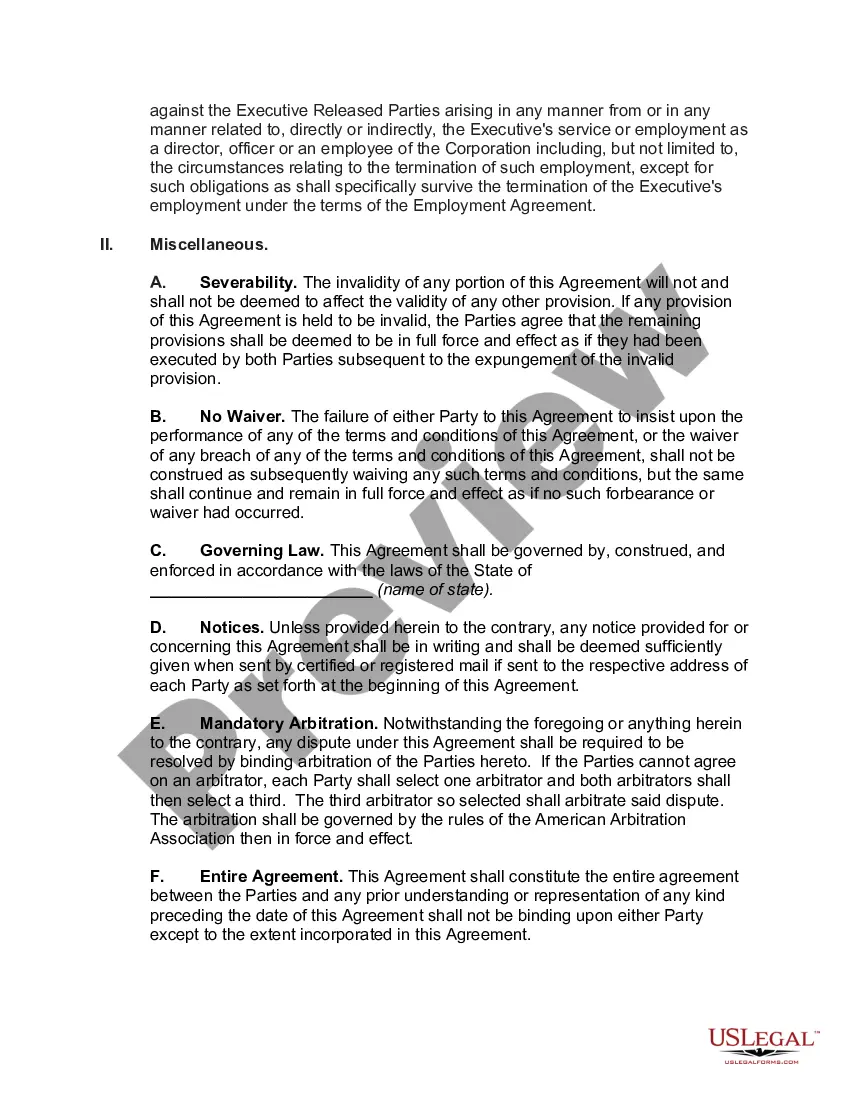
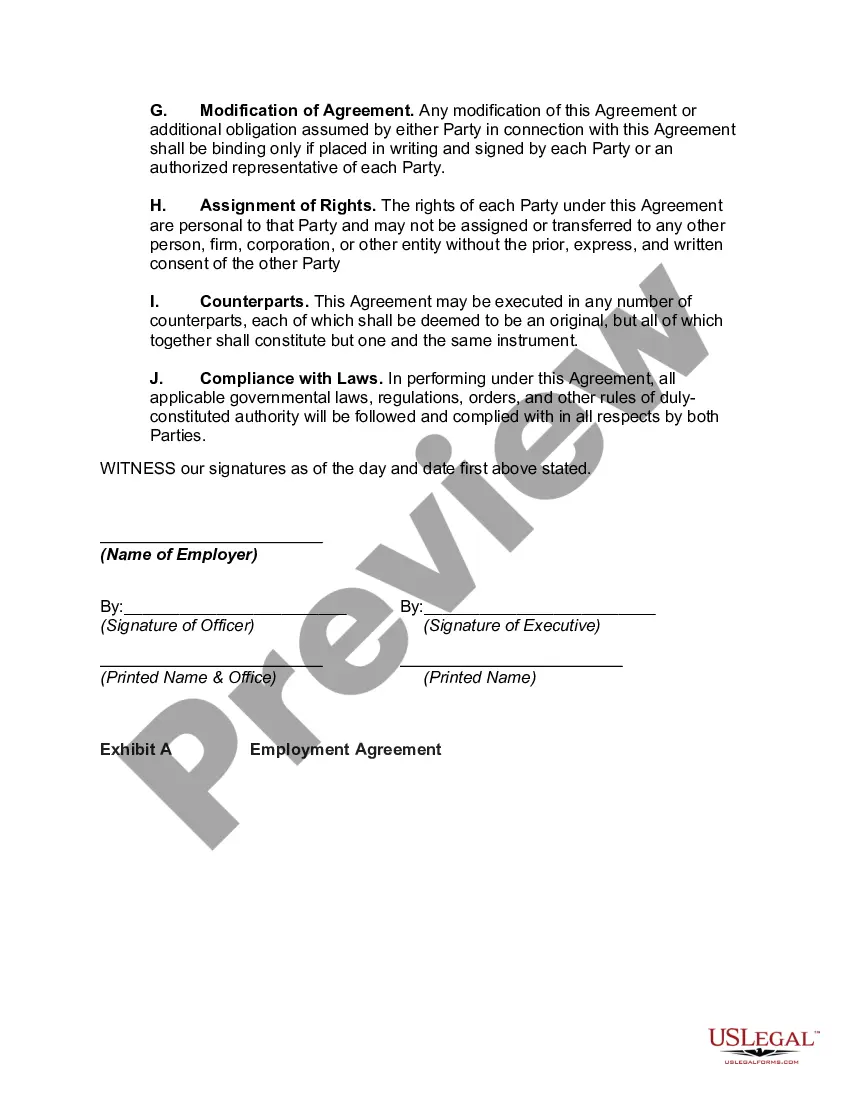
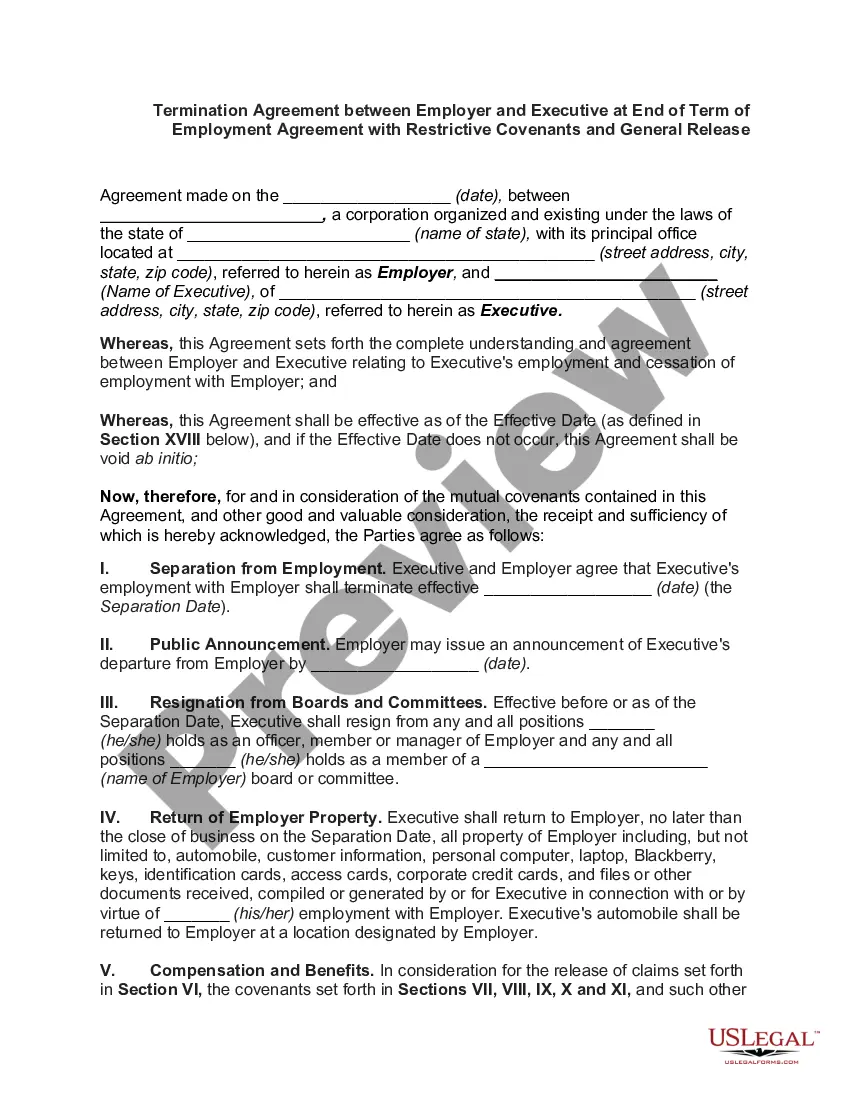
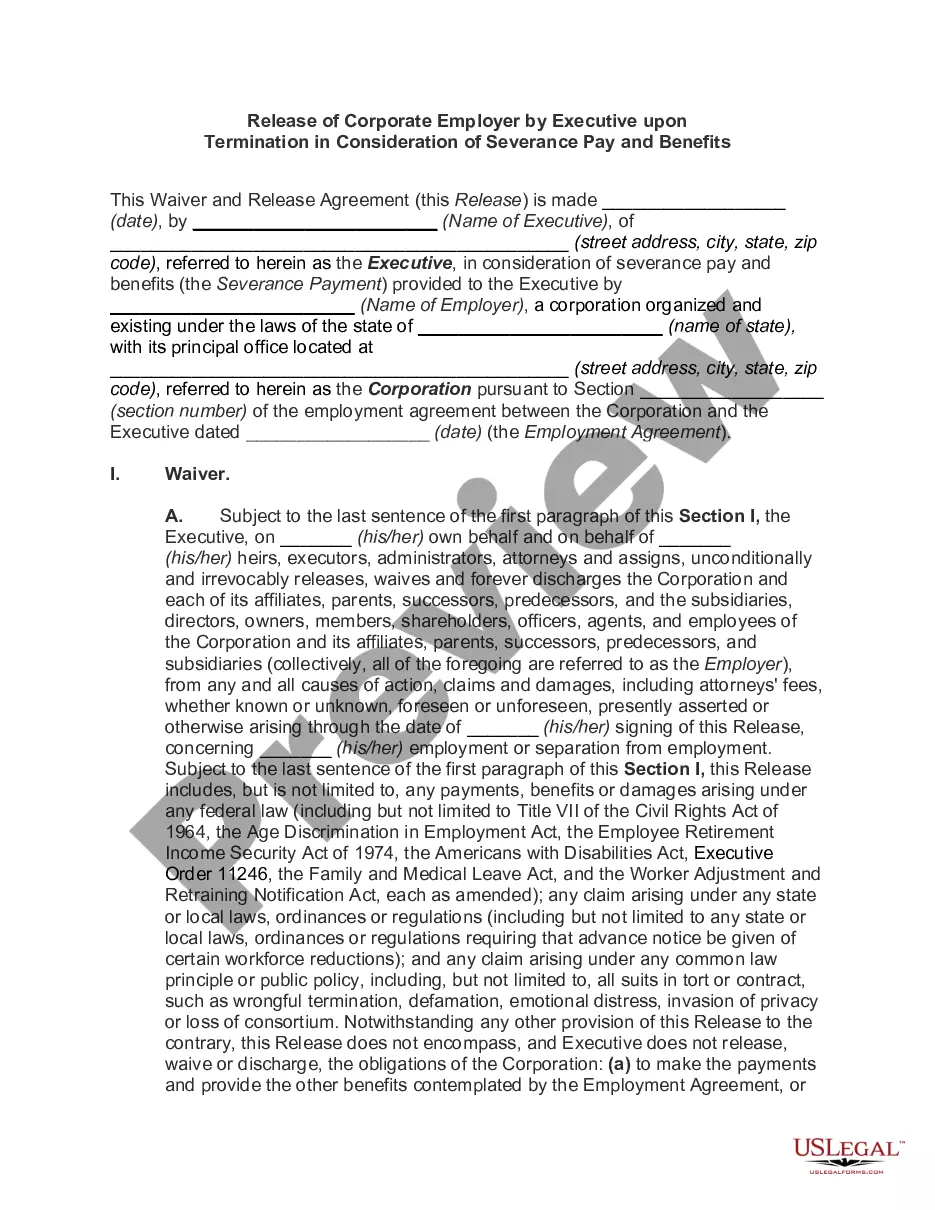
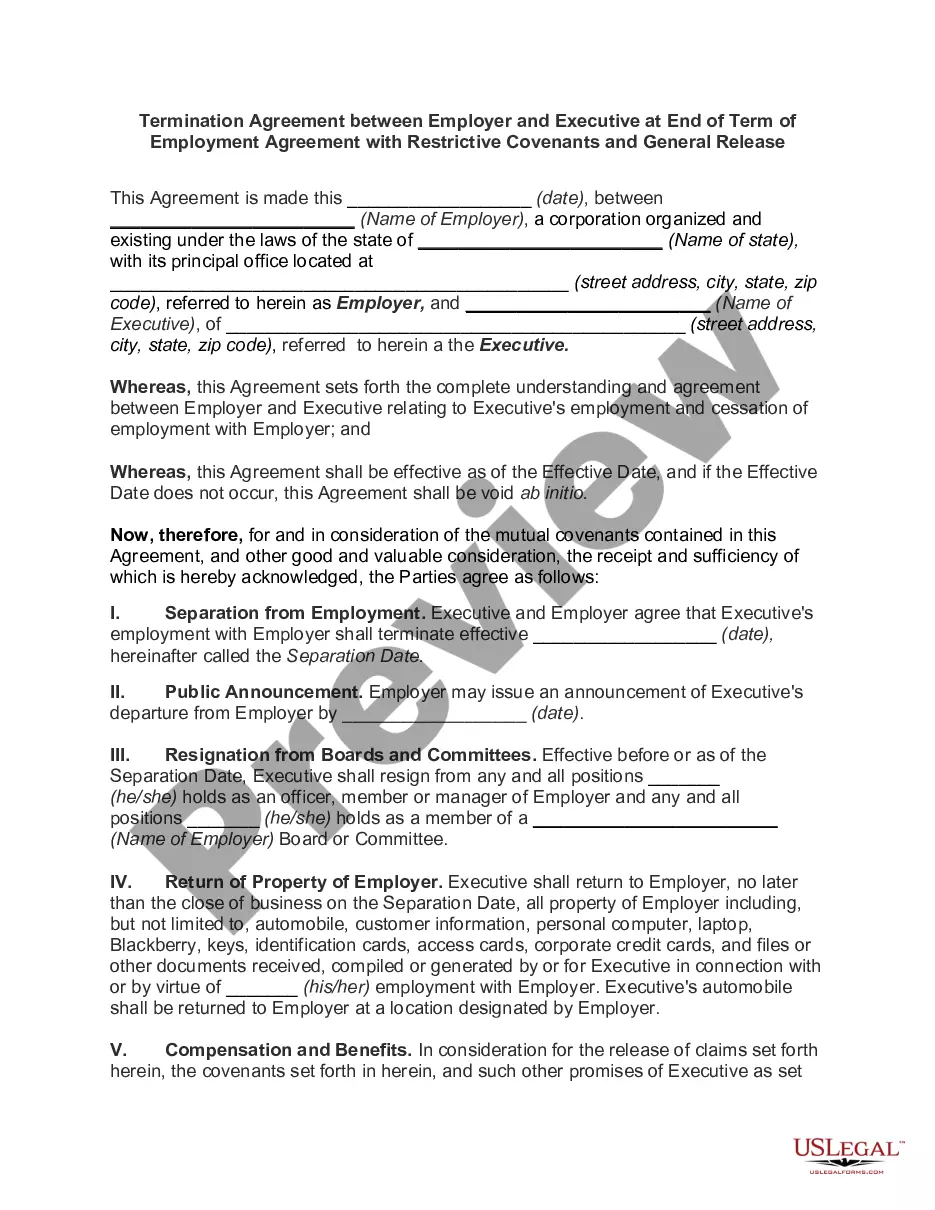
South Carolina Mutual Release Agreement between Corporate Employer and Executive upon Termination of Employment
Description

How to fill out Mutual Release Agreement Between Corporate Employer And Executive Upon Termination Of Employment?
US Legal Forms - one of the largest collections of legal documents in the United States - provides a vast selection of legal templates that you can download or print.
Through the website, you can access thousands of forms for business and personal use, organized by categories, states, or keywords. You can find the latest documents such as the South Carolina Mutual Release Agreement between Corporate Employer and Executive upon Termination of Employment within minutes.
If you already have a subscription, Log In and download the South Carolina Mutual Release Agreement between Corporate Employer and Executive upon Termination of Employment from the US Legal Forms library. The Download button will appear on every document you view. You can access all the previously downloaded documents in the My documents section of your profile.
Complete the transaction. Use your credit card or PayPal account to finish the transaction.
Select the format and download the document to your device. Make edits. Fill out, modify, print, and sign the downloaded South Carolina Mutual Release Agreement between Corporate Employer and Executive upon Termination of Employment. Each template you add to your account has no expiration date and belongs to you indefinitely. Thus, to download or print an additional copy, simply go to the My documents section and click on the form you need. Access the South Carolina Mutual Release Agreement between Corporate Employer and Executive upon Termination of Employment with US Legal Forms, one of the most extensive libraries of legal document templates. Utilize a large number of professional and state-specific templates that fulfill your business or personal needs and requirements.
- If you wish to use US Legal Forms for the first time, here are easy steps to get you started.
- Ensure you have selected the correct form for your area/county.
- Click the Review button to examine the form's content.
- Check the form description to confirm that you have selected the right form.
- If the form does not meet your needs, use the Search field at the top of the screen to find the one that does.
- When you are satisfied with the form, confirm your choice by clicking the Get now button.
- Then, choose the pricing plan you prefer and provide your information to register for an account.
Form popularity
FAQ
It has become a usual occurrence for an employer and employee to conclude what is termed a mutual termination agreement which would result in the termination of an employment relationship between the parties. The rationale to conclude a mutual termination agreement could be for a multitude of reasons.
A mutual agreement is a binding contract between two or more parties and can cover any contingency. The difference between a mutual agreement and a settlement not creating a trust, is determined by the operative words, ie "mutually agrees" or "settles".
A mutual release agreement occurs between two parties that are involved in a legal dispute. By agreeing to mutually release, each party agrees to give up any claims against the other. This includes known claims as well as those that aren't yet known.
If both parties agree to waive the right to hold each other legally responsible for injuries, losses, and damages, it is a mutual release agreement. A Release of Liability Form is also known as a: Liability waiver form. Release of liability waiver.
Termination By Mutual Agreement: Termination by mutual agreement covers situations where both the employer and employee consent to a separation. Examples include contract employees at the end of their agreement, retirement, and forced resignation.
A mutual release is a document designed to be signed by both the buyers and sellers to cancel an agreement of purchase and sale. When executed, this document cancels the agreement and releases all parties from any future liabilities or claims.
For example: Mary has offered her used car to John for a price of $10,000 and they have reached a mutual agreement. This means that Mary and John have mutually agreed on the terms and conditions relating to the sale of Mary's car to John.
A common feature of a deed of release is a mutual release. It involves both parties agreeing to release each other from all: future claims; demands; debts; or.
The landlord and tenant can mutually agree to end the lease at any point. This agreement is called a mutual termination. The mutual termination is a negotiated agreement, and it can end the lease on whatever terms are agreeable to both parties.
After a contract is terminated, the parties to the contract do not have any future obligations to each other. However, one or both parties might be liable for breach of the terms of the contract prior to termination.