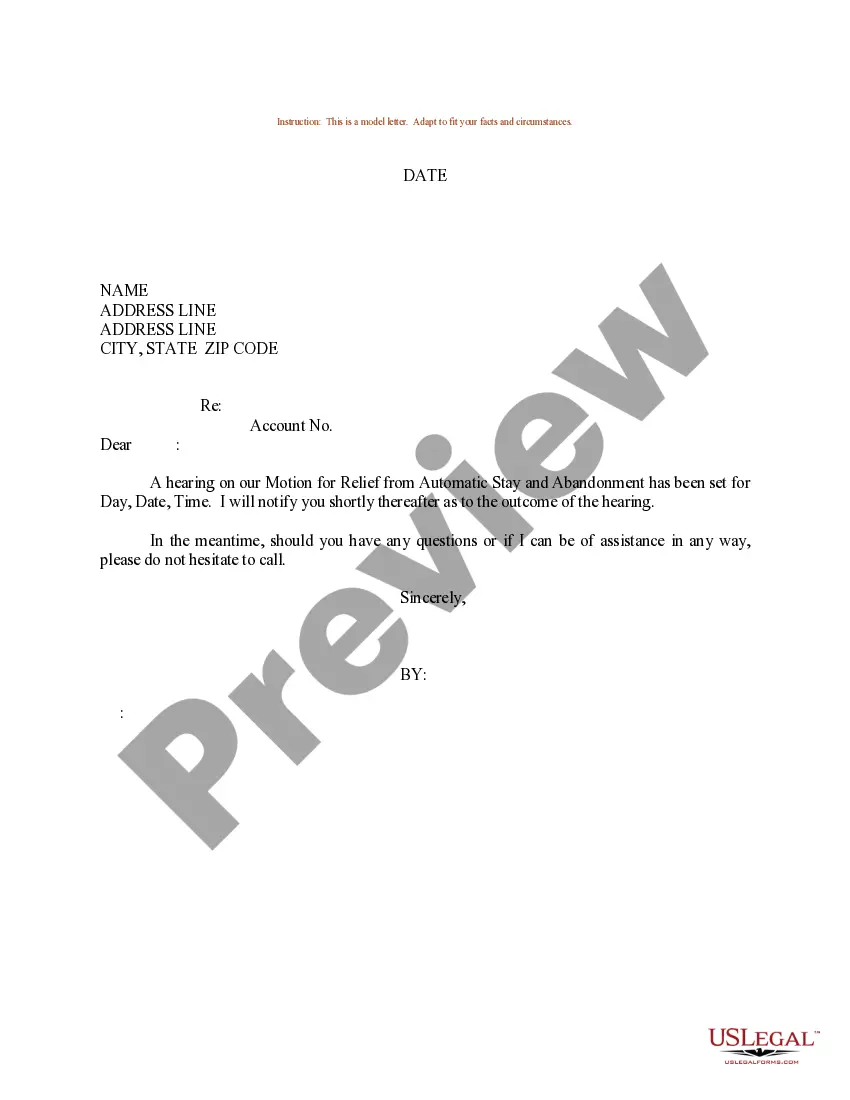
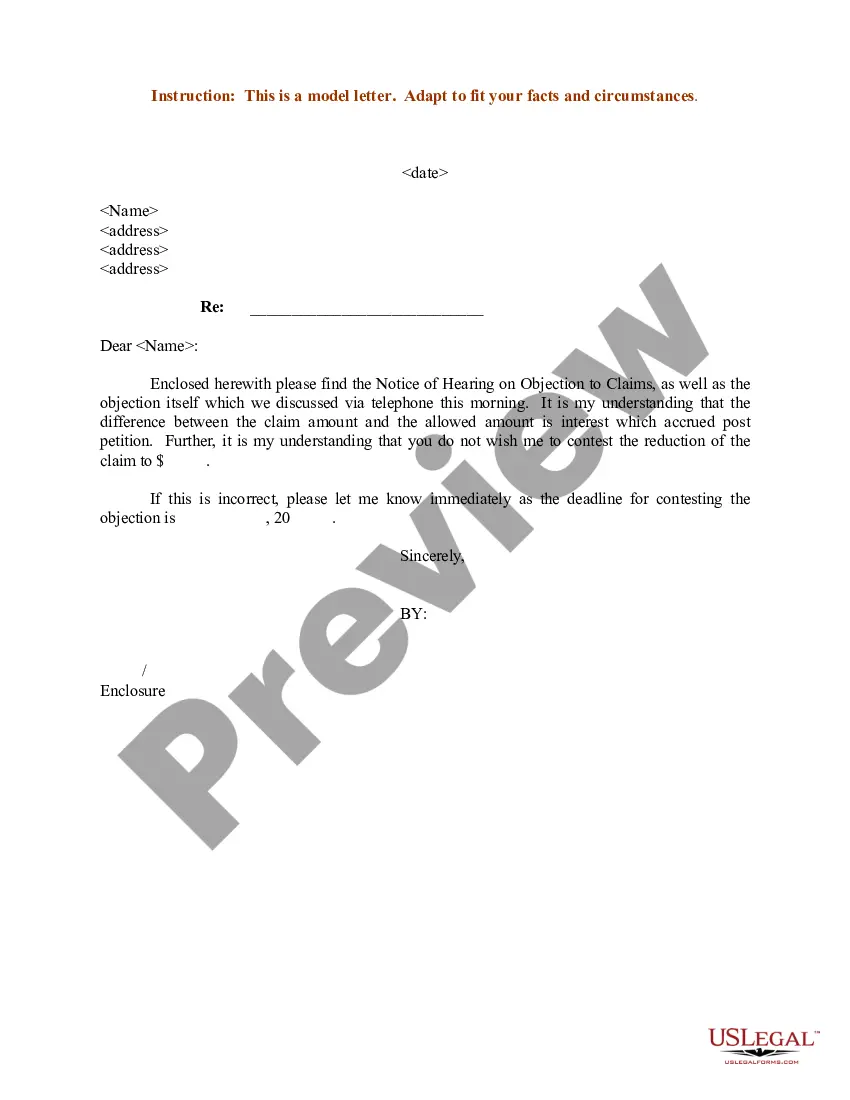
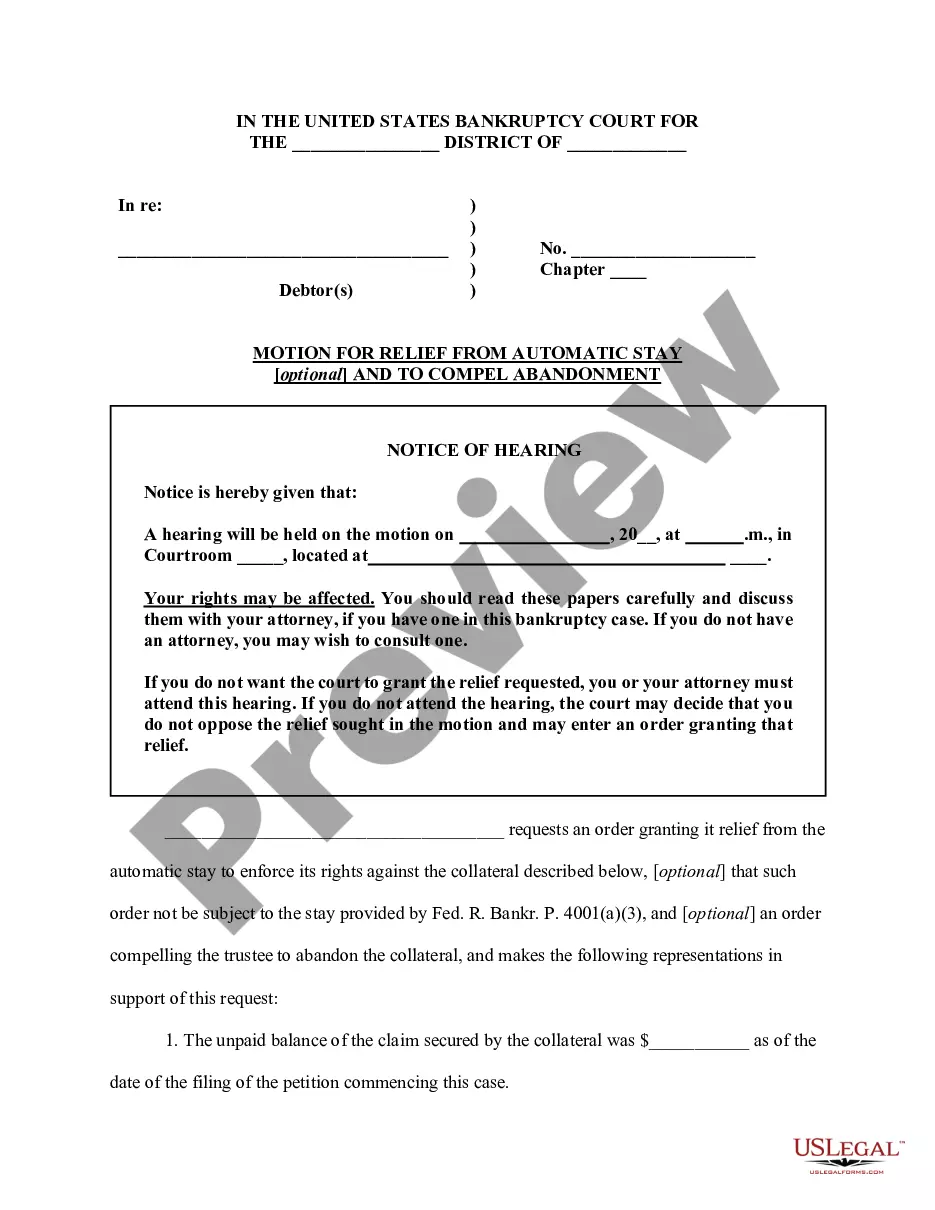
South Carolina Sample Letter for Hearing on Motion for Relief from Automatic Stay
Description
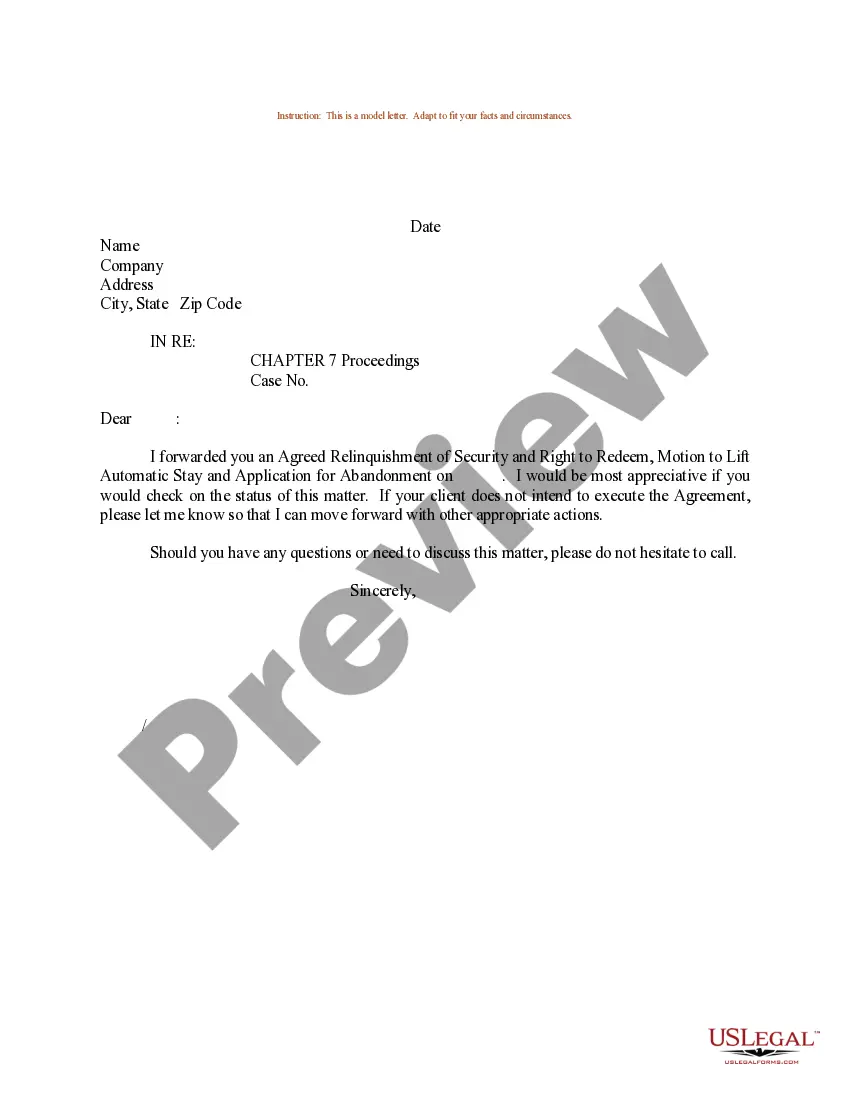
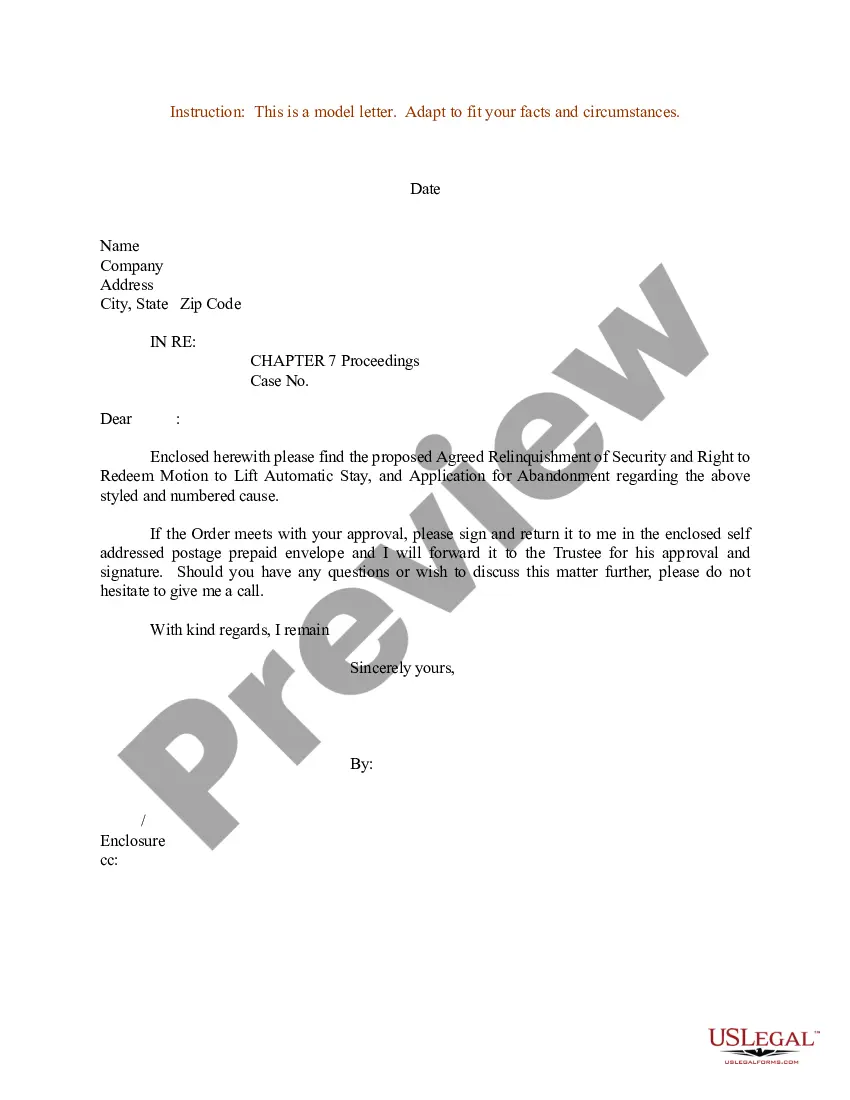
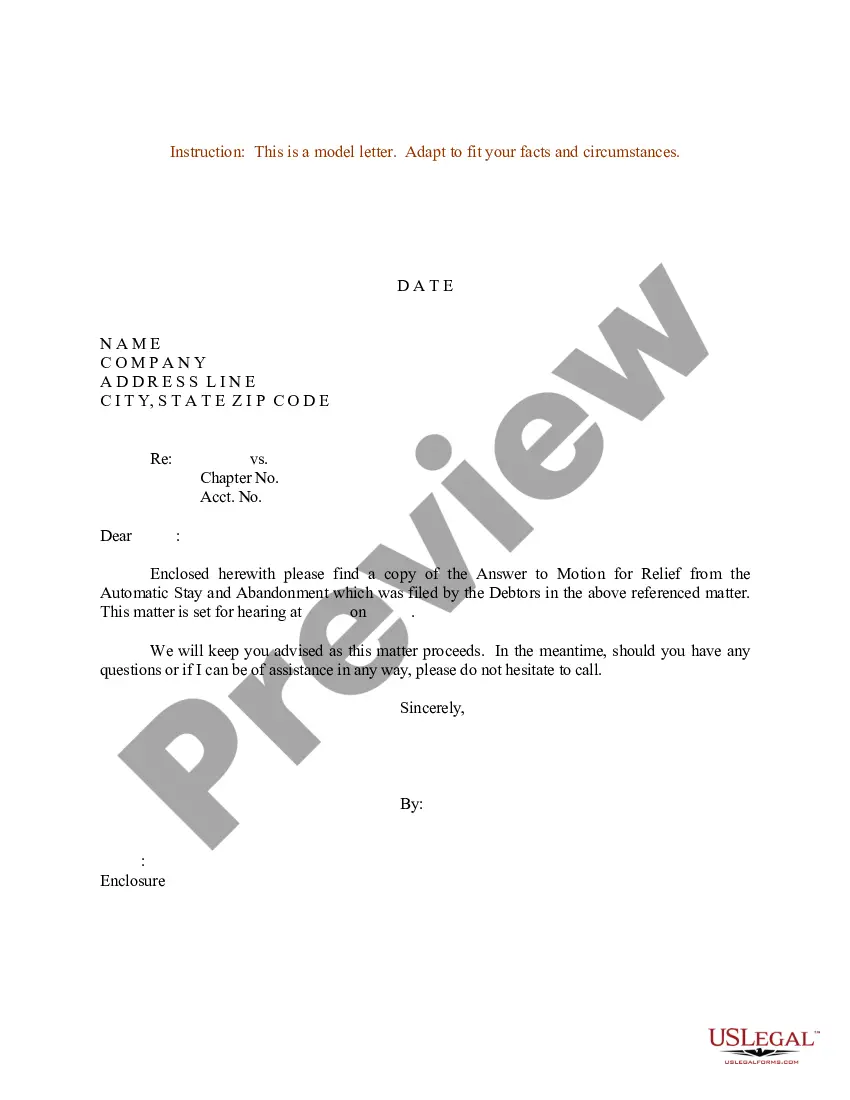
Get your form ready online
Our built-in tools help you complete, sign, share, and store your documents in one place.
Make edits, fill in missing information, and update formatting in US Legal Forms—just like you would in MS Word.
Download a copy, print it, send it by email, or mail it via USPS—whatever works best for your next step.
Sign and collect signatures with our SignNow integration. Send to multiple recipients, set reminders, and more. Go Premium to unlock E-Sign.
If this form requires notarization, complete it online through a secure video call—no need to meet a notary in person or wait for an appointment.
We protect your documents and personal data by following strict security and privacy standards.

Make edits, fill in missing information, and update formatting in US Legal Forms—just like you would in MS Word.

Download a copy, print it, send it by email, or mail it via USPS—whatever works best for your next step.

Sign and collect signatures with our SignNow integration. Send to multiple recipients, set reminders, and more. Go Premium to unlock E-Sign.

If this form requires notarization, complete it online through a secure video call—no need to meet a notary in person or wait for an appointment.

We protect your documents and personal data by following strict security and privacy standards.
Looking for another form?





How to fill out Sample Letter For Hearing On Motion For Relief From Automatic Stay?
Are you currently in a situation where you require documents for either business or personal purposes frequently.
There are numerous legal document templates available online, but finding reliable versions can be challenging.
US Legal Forms offers a vast selection of template layouts, including the South Carolina Sample Letter for Hearing on Motion for Relief from Automatic Stay, which are designed to comply with state and federal regulations.
Utilize US Legal Forms, the most extensive collection of legal forms, to save time and avoid mistakes.
The service provides professionally crafted legal document templates that you can use for a variety of purposes. Create an account on US Legal Forms and start simplifying your life.
- If you are already familiar with the US Legal Forms website and have an account, simply Log In.
- After that, you can download the South Carolina Sample Letter for Hearing on Motion for Relief from Automatic Stay template.
- If you do not have an account and want to start using US Legal Forms, follow these steps.
- Find the form you need and make sure it is for your specific area/region.
- Use the Preview button to review the form.
- Read the description to ensure you have selected the right form.
- If the form is not what you are looking for, utilize the Search field to locate the form that suits your needs and requirements.
- Once you find the correct form, click Acquire now.
- Choose the pricing plan you want, provide the necessary information to create your account, and pay for your order using your PayPal or credit card.
- Select a convenient file format and download your copy.
- Find all the document templates you have purchased in the My documents list. You can obtain an additional copy of South Carolina Sample Letter for Hearing on Motion for Relief from Automatic Stay at any time, if needed. Click the required form to download or print the document template.
Form popularity
FAQ
A borrower's pre-bankruptcy waiver of the automatic stay is more likely to be enforced if contained in a forbearance agreement or an agreement approved by the court in a previous bankruptcy case.
The most sought exceptions are actions by parties to securities contracts to close out open positions; eviction of a debtor by a landlord where the lease has been fully terminated prior to the bankruptcy filing; actions by taxing authorities to conduct tax audits, issue deficiency notices, demand tax returns and make ...
What Does "Post-Petition" Mean? Post-petition refers to anything that occurs after you've filed for bankruptcy. Conversely, the term ?pre-petition? is used to refer to anything that happened before you filed for bankruptcy. Only ?pre-petition? debts are dischargeable in bankruptcy.
A proof of claim is a form submitted by a creditor in order to receive money from a debtor who has filed for bankruptcy. The document provides notice of the claim to all of the other relevant parties involved in the bankruptcy, including the court, the debtor, and any other creditors.
Creditors Obtaining Relief From the Automatic Stay -- If a creditor properly files and serves a Motion for Relief from the Automatic Stay, and a bankruptcy judge grants the Motion, the Automatic Stay will either be removed or modified so that the creditor can resume collection efforts against the debtor.
Creditors must submit a written request to the bankruptcy court detailing why they request that the automatic stay be lifted, and they must include supporting documentation and evidence. The motion must also be served on all the parties involved in the case, including the debtor, giving them a chance to respond.
Two main methods exist for fighting a motion for relief from automatic stay. These types are ?procedural? and ?substantive? objections. Basically, procedural objections challenge the manner in which the motion was filed, while substantive objections challenge the actual substance of the motion.
If the debtor is unable or unwilling to provide adequate protection to a secured creditor, there is sufficient cause for the court to order relief from the stay (§ 362(d)(1), Bankruptcy Code). The creditor can then foreclose on the collateral and realize an amount sufficient to recover the balance due on the debt.