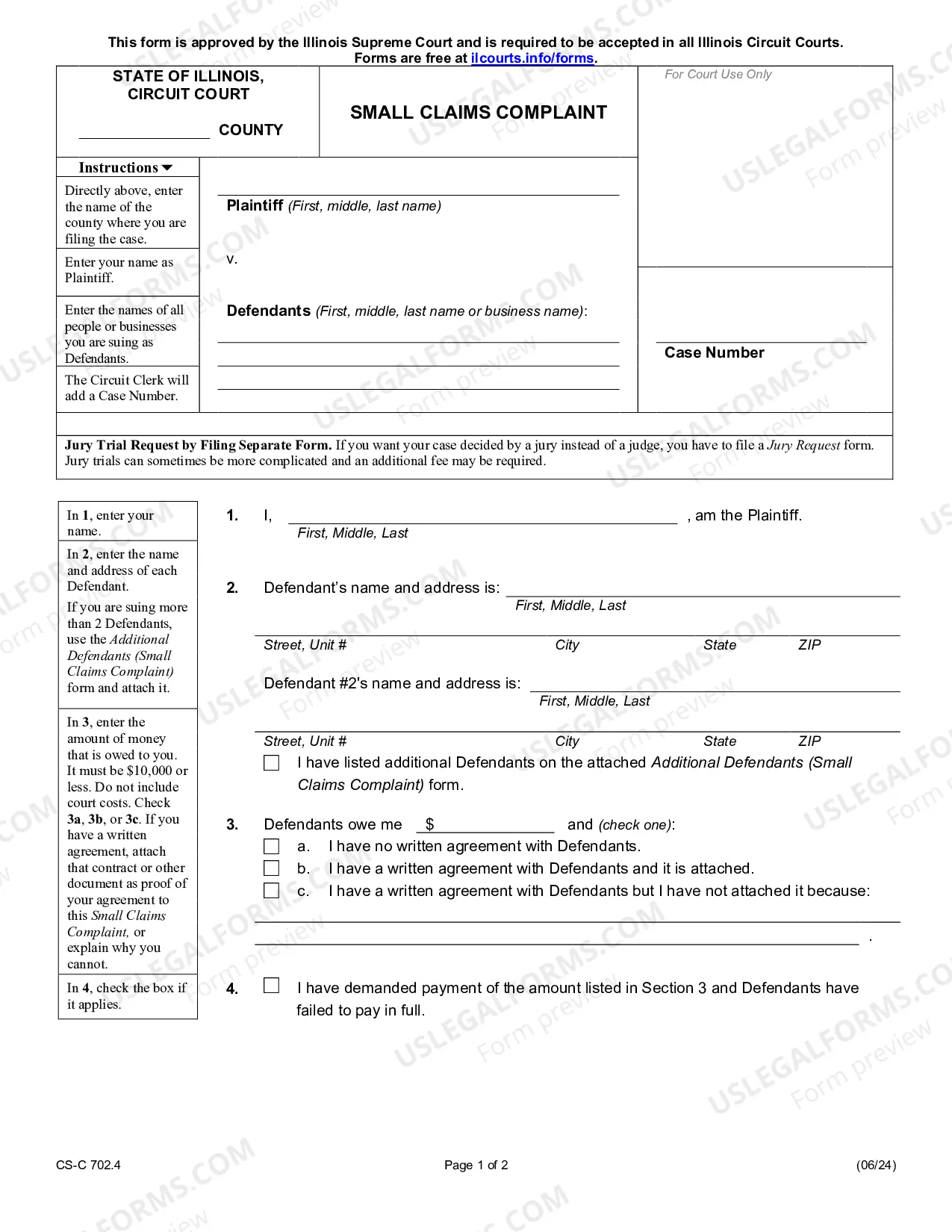
Joint-Venture Agreement Regarding the Construction and Sale of Condominium Units
What this document covers
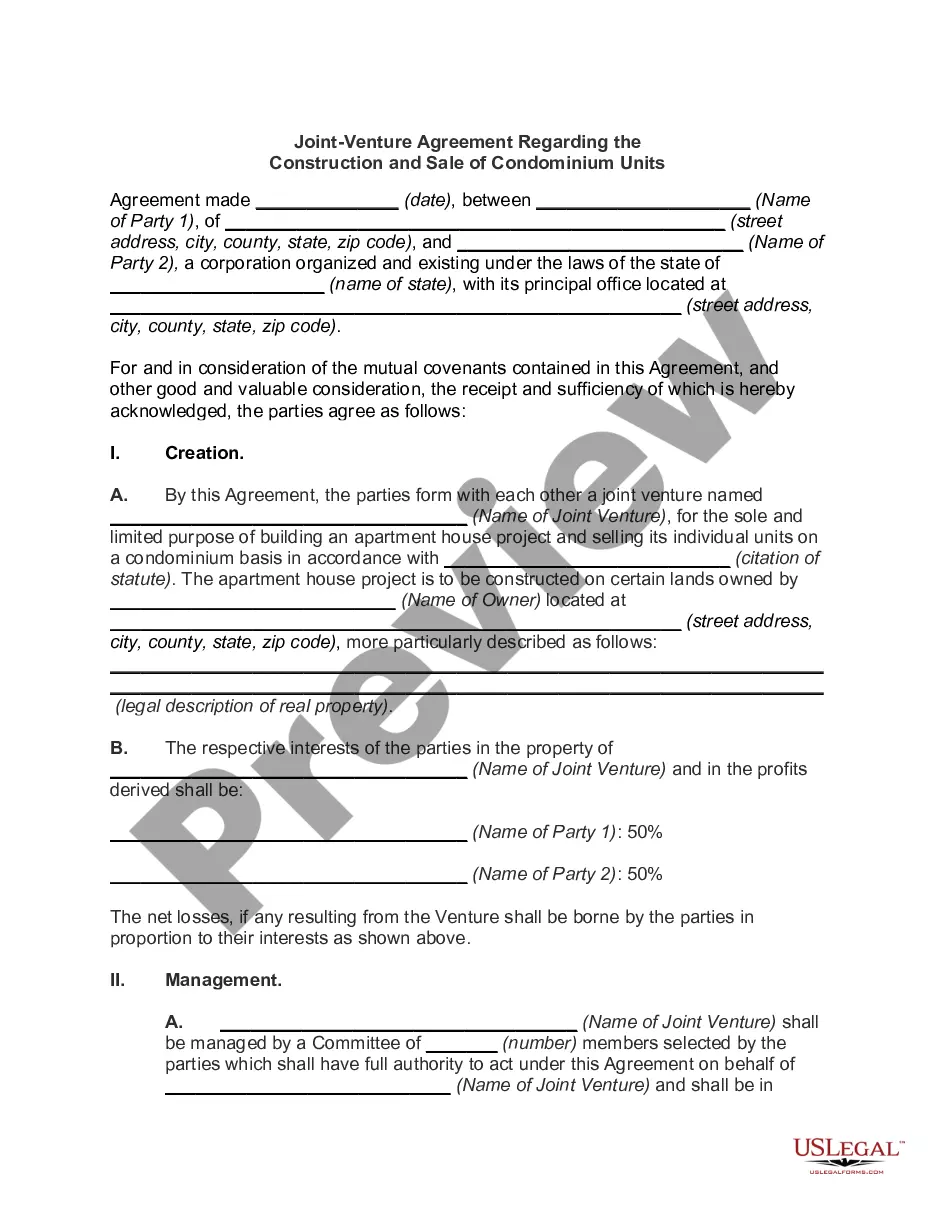
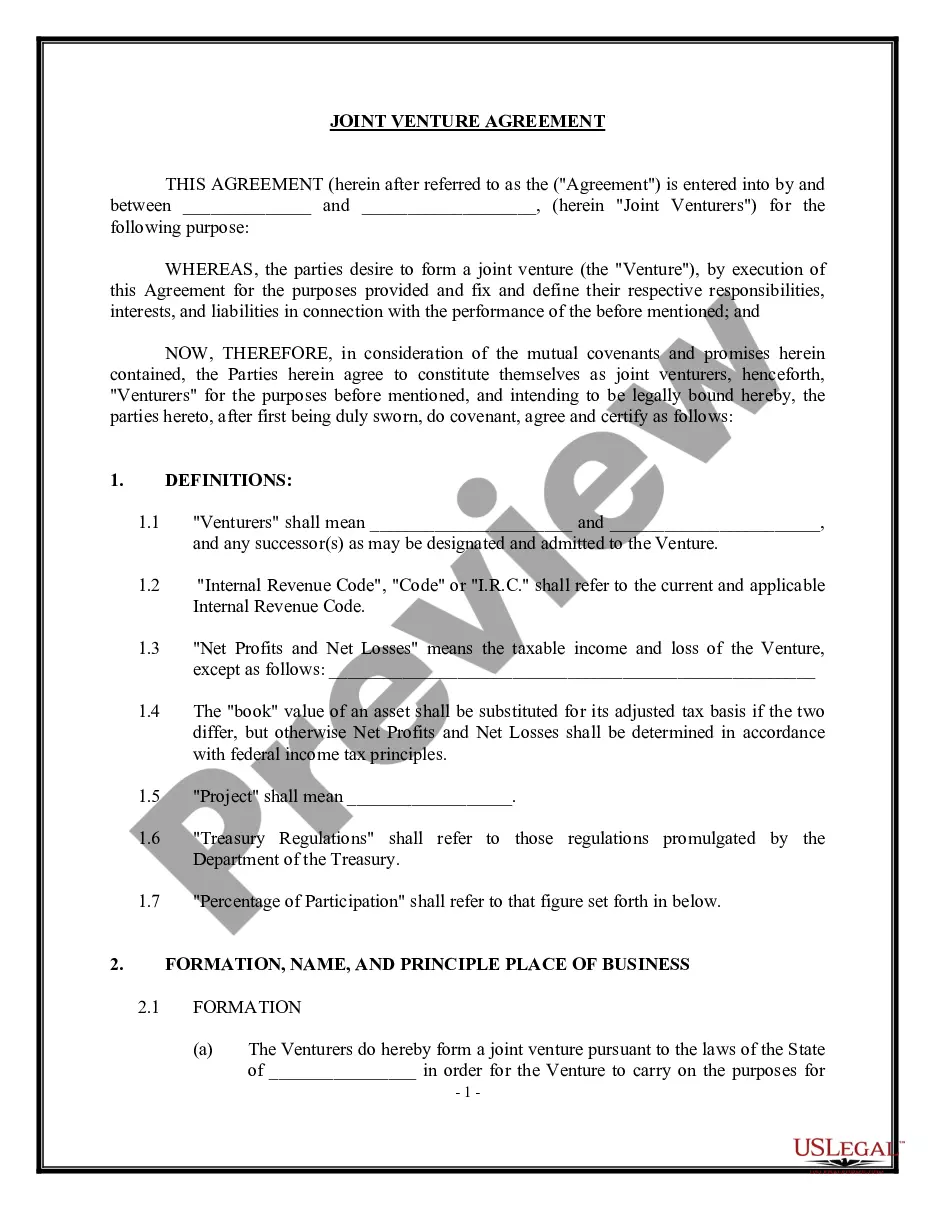
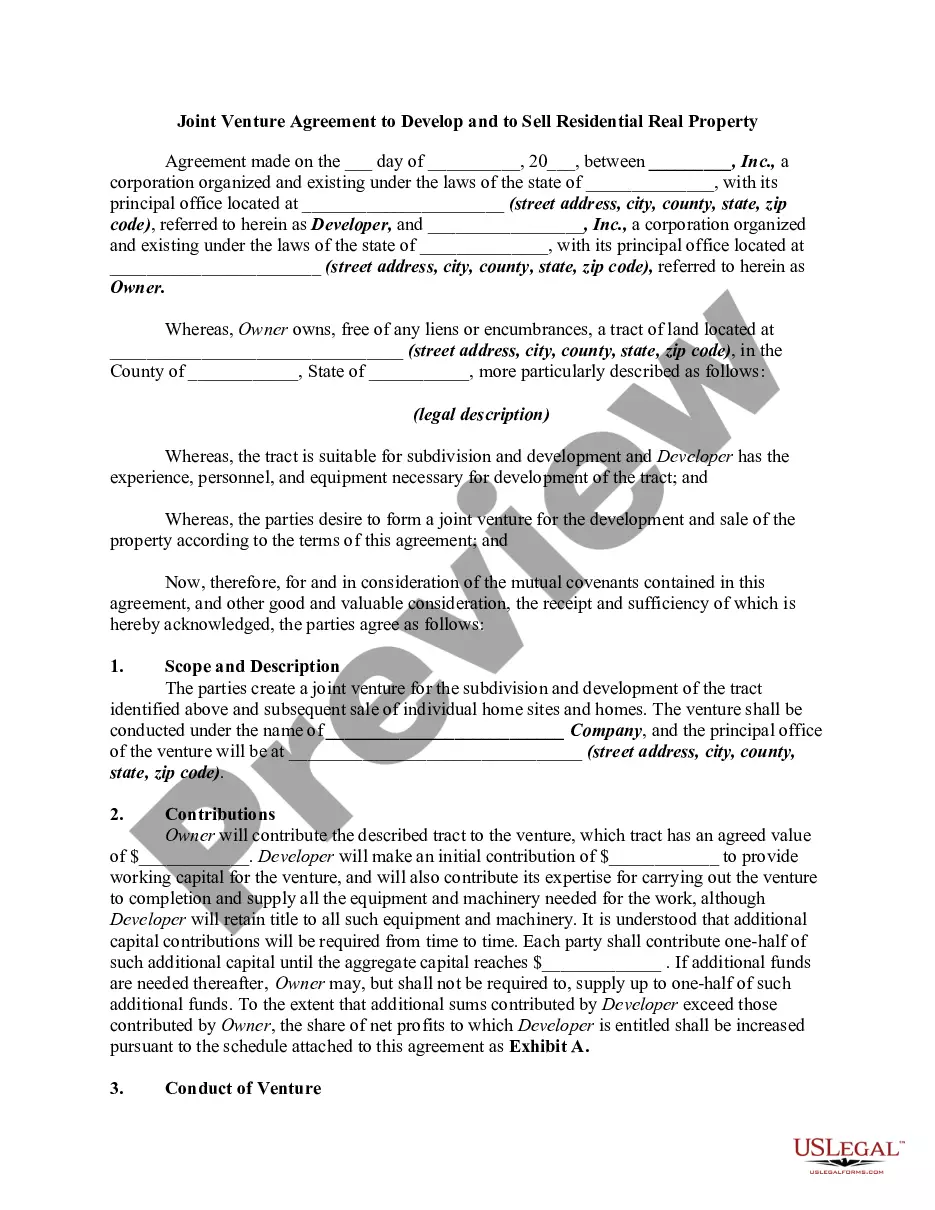
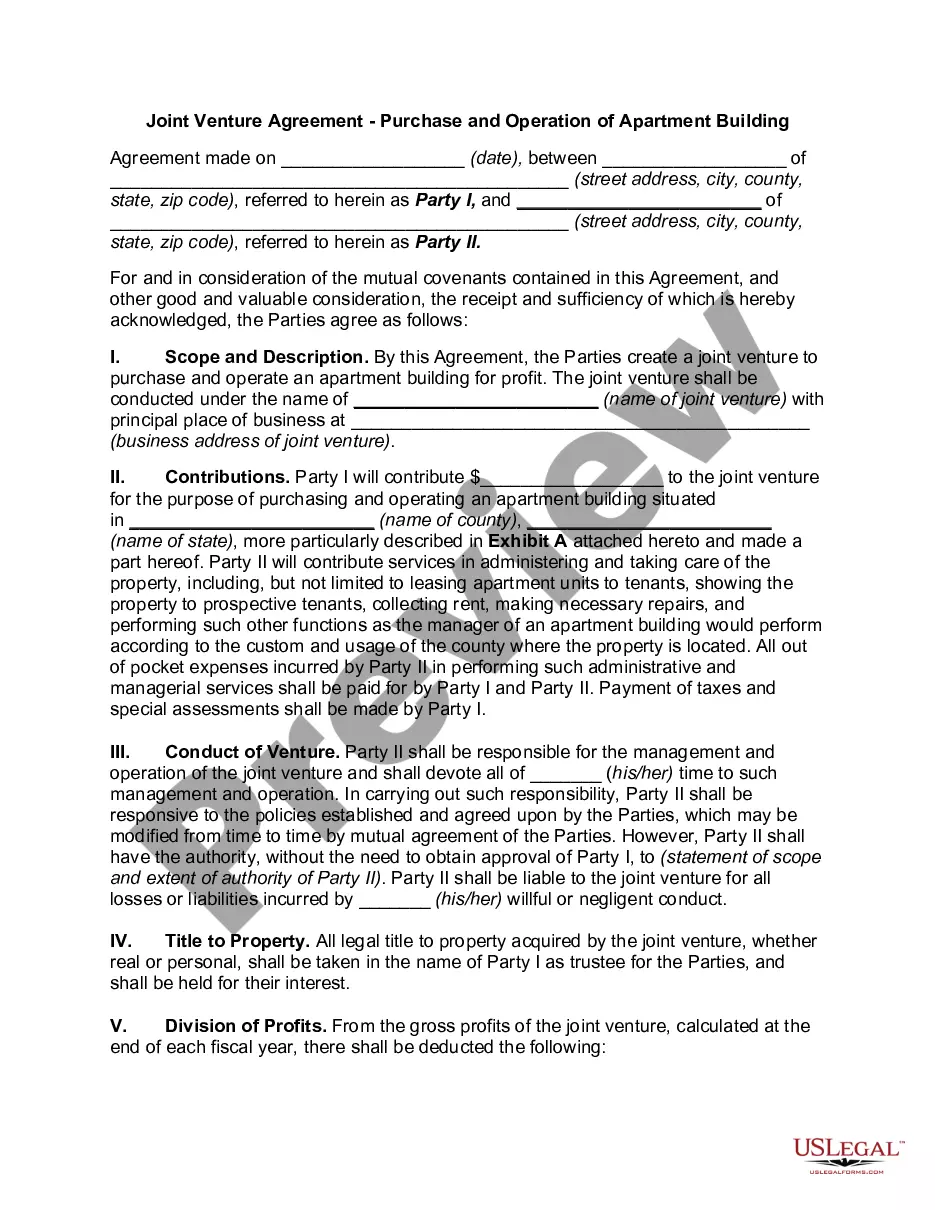
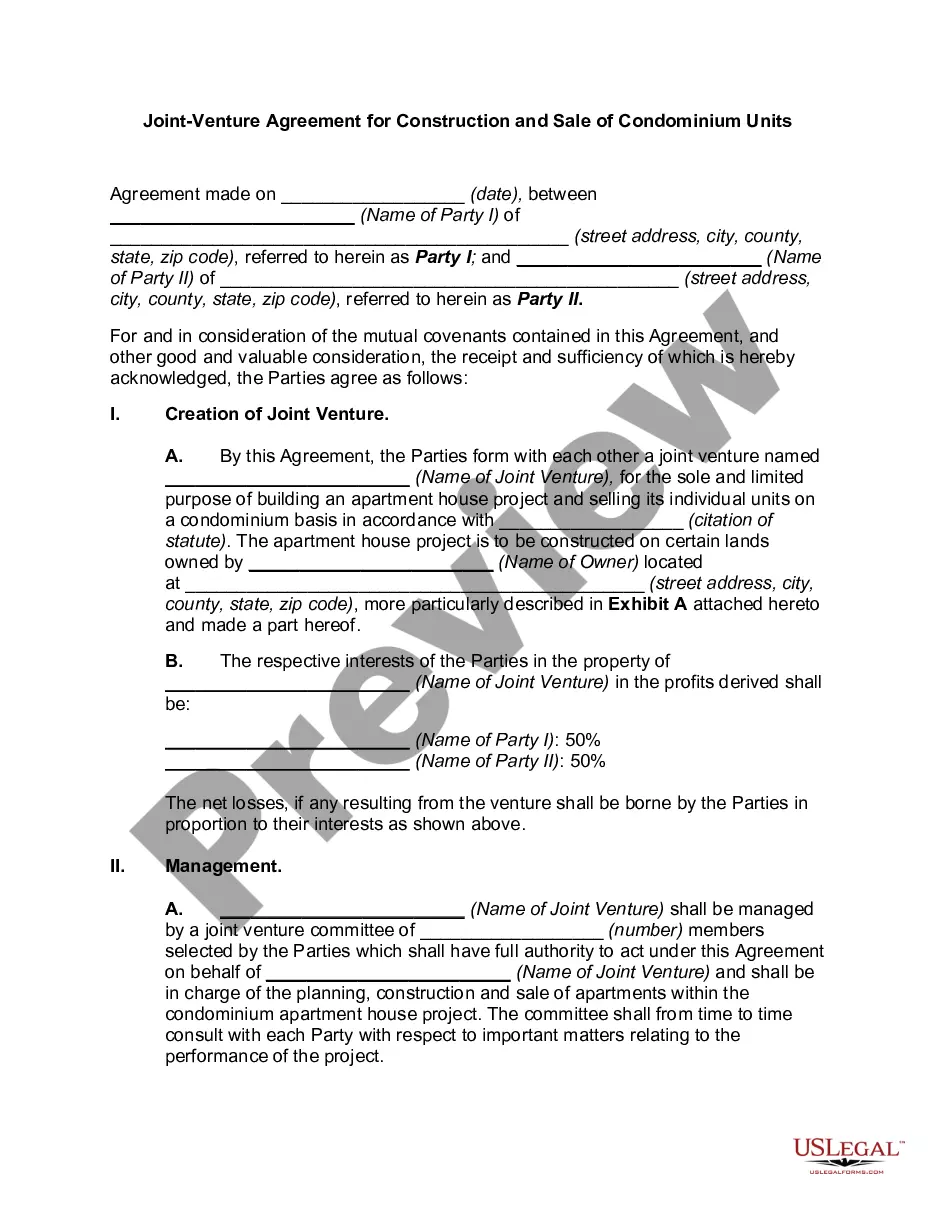
The Joint-Venture Agreement Regarding the Construction and Sale of Condominium Units is a legal document that establishes a partnership between two or more parties for the specific purpose of constructing and selling condominium units. This agreement outlines the rights and responsibilities of each party, including how profits and losses will be shared. It is distinct from a general partnership, as it is typically focused on a single project rather than ongoing business operations. This form helps formalize the joint venture, ensuring clear expectations and reducing the potential for disputes.
Main sections of this form
- Creation of Joint Venture: Defines the ventureâs name and purpose related to building and selling condominium units.
- Management Structure: Details the governance of the joint venture, including the formation of a management committee.
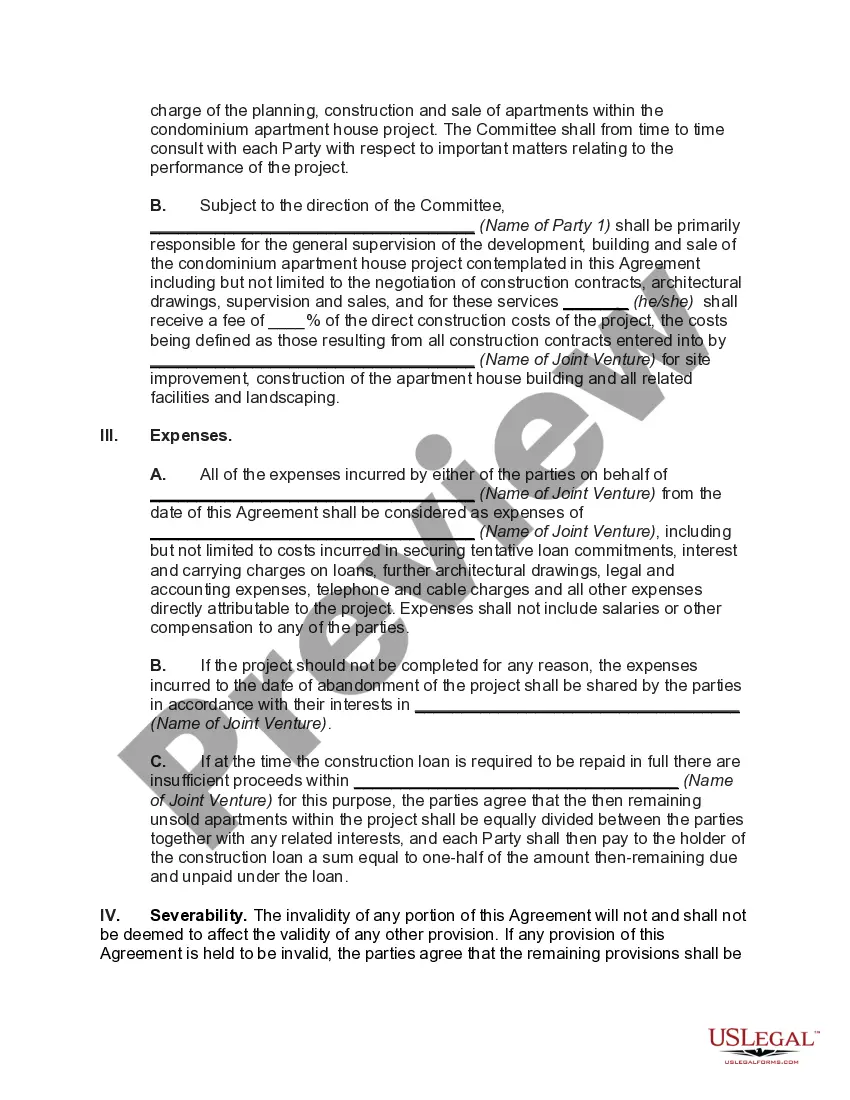
- Financial Contributions: Specifies how profits, losses, and expenses are shared among the parties involved.
- Key Responsibilities: Allocates specific duties to each party regarding project management and execution.
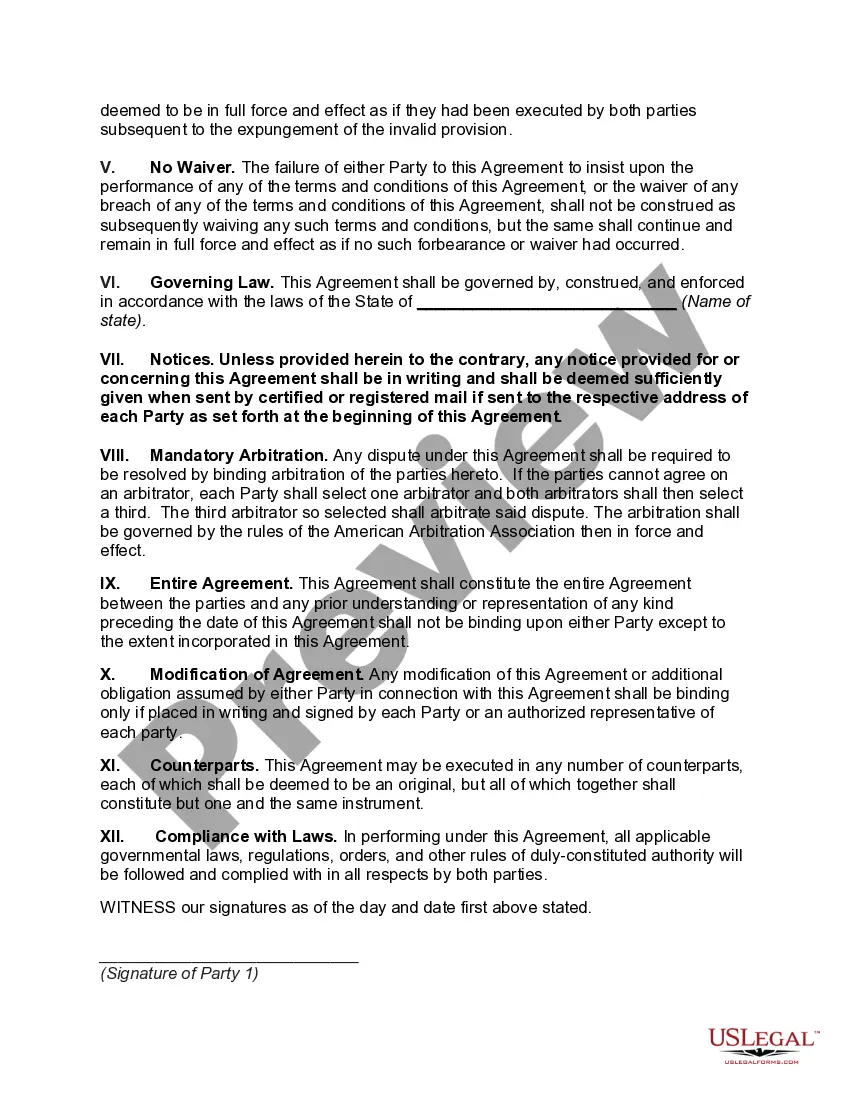
- Dispute Resolution: Includes provisions for mandatory arbitration in case of disagreements.
- Governing Law: States that the agreement will be governed by the laws of a specified state.
When this form is needed
This form is ideal for situations where two or more parties wish to collaborate on a construction project specifically aimed at developing and selling condominium units. Typical scenarios include real estate developers teaming up to undertake significant projects, investors pooling resources to share risks and rewards, or businesses looking to combine their expertise to enhance project outcomes. This agreement helps facilitate clear communication and accountability among parties involved.
Who should use this form
This form is suitable for:
- Real estate developers seeking to partner with others on condominium projects.
- Investors looking to combine resources for a single construction project.
- Business entities wanting to clarify responsibilities and financial obligations related to a joint venture.
- Individuals or companies planning to undertake significant construction projects that require collaboration.
How to complete this form
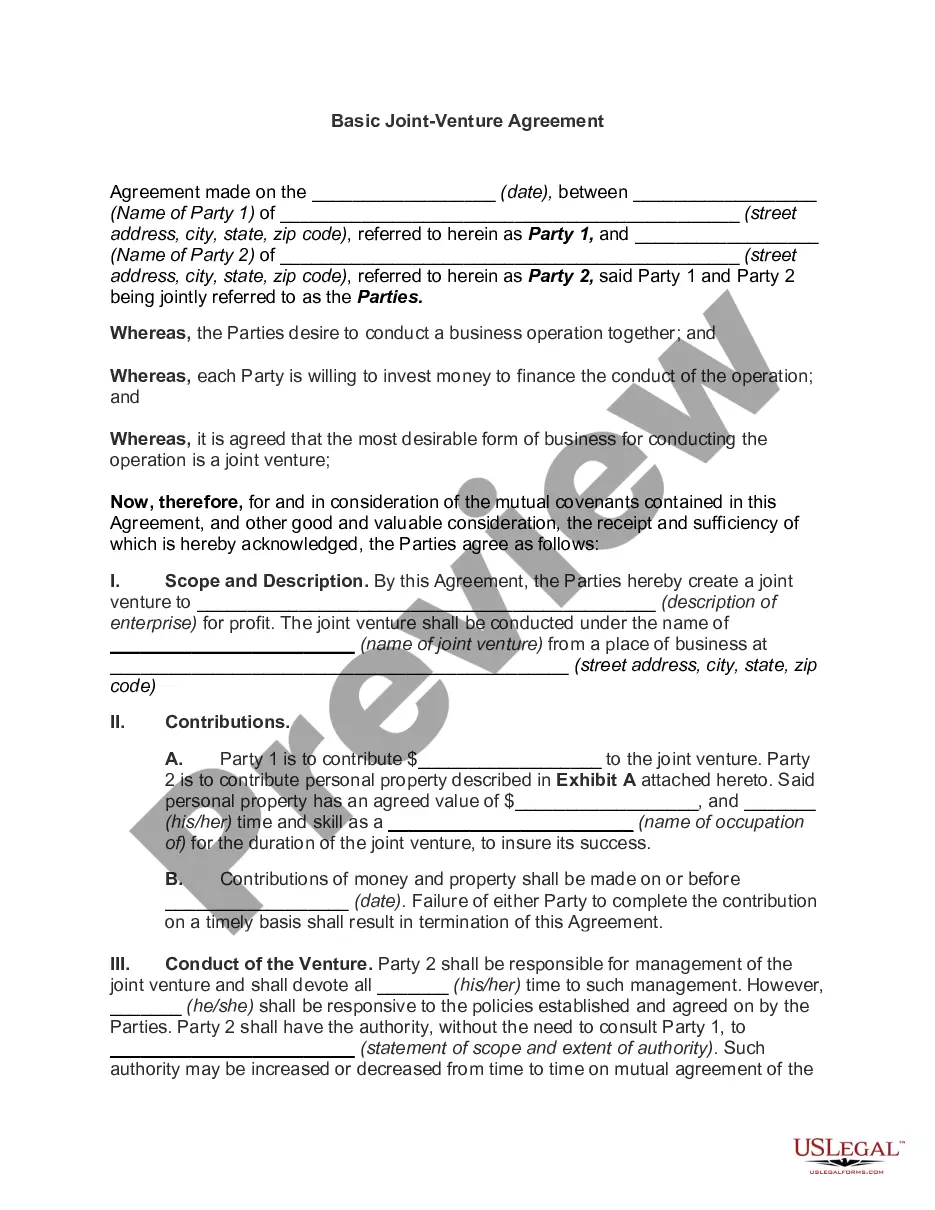
- Identify the parties involved: Fill in the names and addresses of all parties entering the joint venture.
- Name the joint venture: Specify the name that will be used for the joint venture.
- Specify the project details: Enter information regarding the property where the condominium units will be constructed.
- Define financial interests: Clearly outline how profits and losses will be shared among the parties.
- Establish the management structure: Indicate the number of committee members and their responsibilities in overseeing the project.
- Review and sign the agreement: All parties must sign and date the agreement, ensuring it is executed properly.
Does this document require notarization?
This form does not typically require notarization unless specified by local law. However, having the agreement notarized can provide an extra layer of validation and protection for all parties involved.
Get your form ready online
Our built-in tools help you complete, sign, share, and store your documents in one place.
Make edits, fill in missing information, and update formatting in US Legal Forms—just like you would in MS Word.
Download a copy, print it, send it by email, or mail it via USPS—whatever works best for your next step.
Sign and collect signatures with our SignNow integration. Send to multiple recipients, set reminders, and more. Go Premium to unlock E-Sign.
If this form requires notarization, complete it online through a secure video call—no need to meet a notary in person or wait for an appointment.
We protect your documents and personal data by following strict security and privacy standards.

Make edits, fill in missing information, and update formatting in US Legal Forms—just like you would in MS Word.

Download a copy, print it, send it by email, or mail it via USPS—whatever works best for your next step.

Sign and collect signatures with our SignNow integration. Send to multiple recipients, set reminders, and more. Go Premium to unlock E-Sign.

If this form requires notarization, complete it online through a secure video call—no need to meet a notary in person or wait for an appointment.

We protect your documents and personal data by following strict security and privacy standards.
Typical mistakes to avoid
- Failing to clearly define the roles and responsibilities of each party, which can lead to confusion.
- Not specifying how disputes will be resolved, which may result in lengthy legal battles.
- Neglecting to outline financial contributions and profit-sharing arrangements, leading to potential disputes later on.
- Leaving out essential details about the property and project, which can affect the validity of the agreement.
Why use this form online
- Convenience: Easily fill out and manage the form from any device without needing to visit a physical location.
- Editability: Make amendments to the form as needed before finalizing the agreement.
- Reliability: Access professionally drafted templates that ensure adherence to legal standards.
- Time-efficiency: Download and complete the form at your own pace, expediting the process of launching your joint venture.
Legal use & context
- Joint ventures are legally recognized entities, making this agreement enforceable in court.
- The agreement should comply with state laws regarding partnerships and joint ventures.
- Not abiding by the terms specified in the agreement can lead to legal consequences, including potential financial liability.
Key takeaways
- The Joint-Venture Agreement outlines the roles, responsibilities, and profit-sharing arrangements for a specific construction project.
- It serves to clarify the legal relationship between parties, distinguishing it from a general partnership.
- Proper completion and execution of this agreement are crucial for protecting all parties involved in the joint venture.
Looking for another form?
Form popularity
FAQ
Such joint Venture Agreement shall set out among others: The name and capital structure of the joint Venture company; Constitution of the Board of Directors of the joint Venture company: Protection of minority interests; Scope of the project and its financing.
An oral agreement to form a partnership or joint venture for an indefinite period creates a partnership or joint venture at will (see Foster v Kovner, 44 AD3d 23 1st Dept 2007).
Your joint venture agreement must be in writing and follow SBA requirements. The joint venture must be separately identified with its own name and have both a Unique Entity Identifier (UEI) and a Commercial And Government Entity (CAGE) code in the federal government's System for Award Management at SAM.gov .
What is a joint venture (JV) in real estate? Simply put, a joint venture in real estate is when two or more investors pool their resources and knowledge for a development project or investment. Each party maintains their own unique business identity while working together.
12 Things to Include in a Joint Venture Agreement Business Information. Member Names and Addresses. Joint Venture Type. Purpose of the Agreement. Duties and Obligations. Voting and Formal Meeting Requirements. Percentage of Ownership Assignment. Intellectual Property Rights.
JV agreements are common in construction contracting because they allow entities with varying specialties, experiences and financial resources to come together as JV partners to meet the specific demands of a construction project.