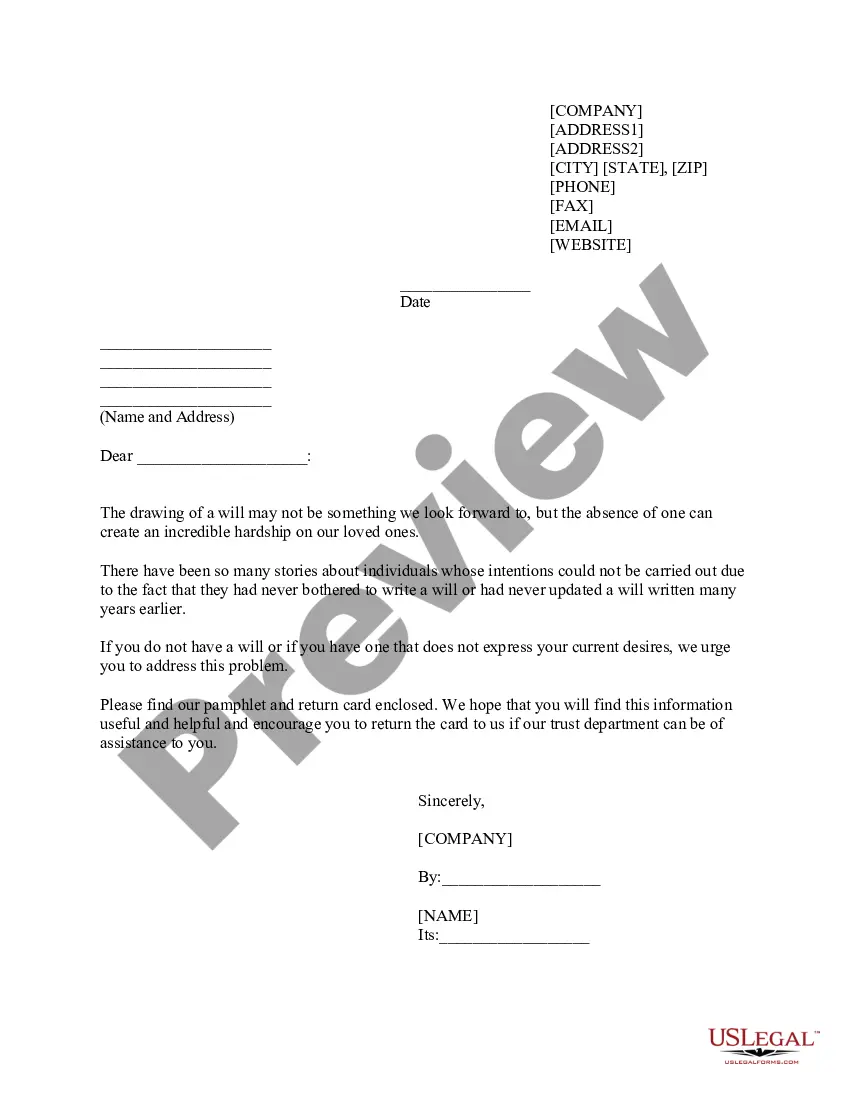
Plaintiff brings an action for a declaratory judgment arguing that he/she has fulfilled certain contractual duties and is now free from a non-competition restriction placed upon him/her in the contract.
South Carolina Complaint For Declaratory Judgment Of Validity of Separate Noncompetition Agreements
Category:
State:
Multi-State
Control #:
US-000288
Format:
Word;
Rich Text
Instant download
Description
Free preview
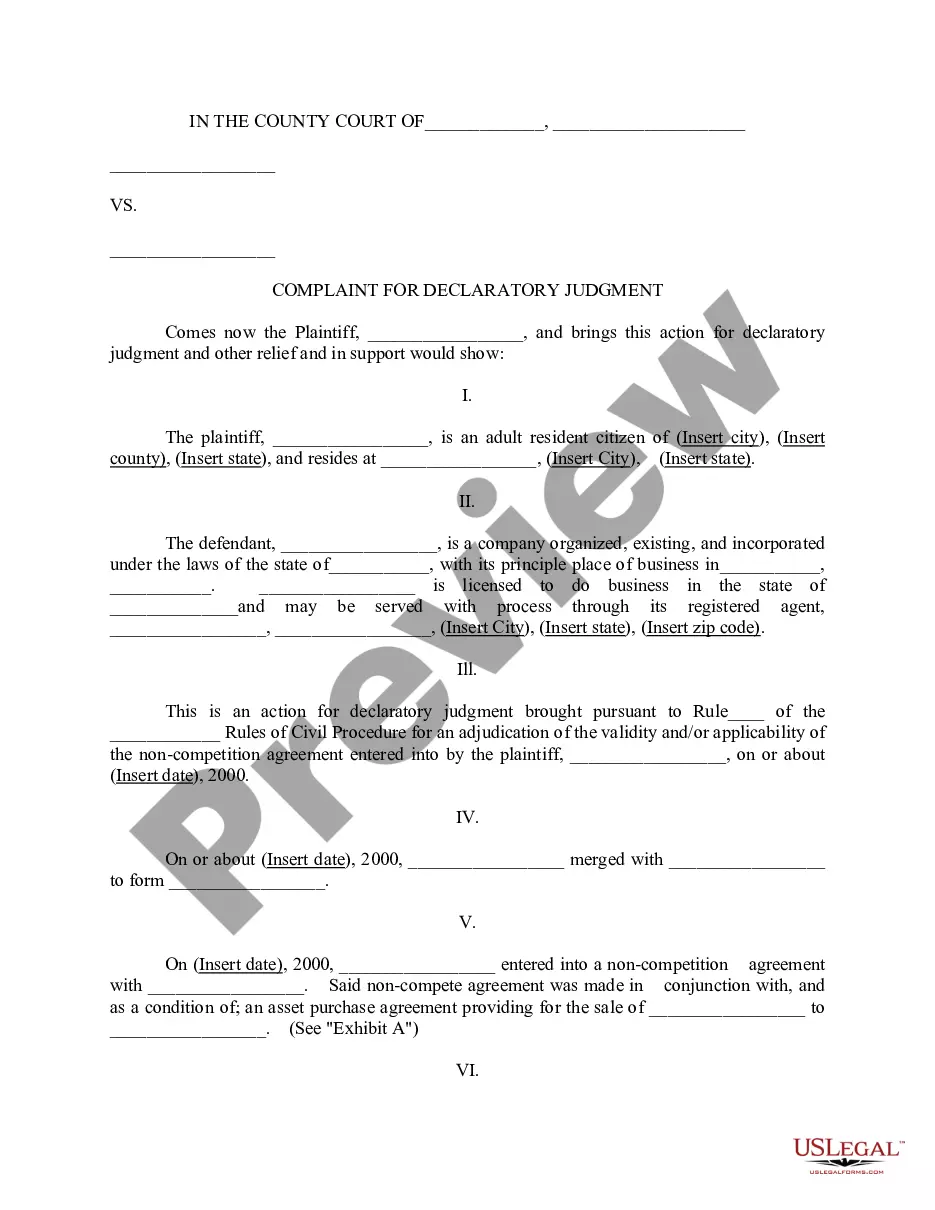
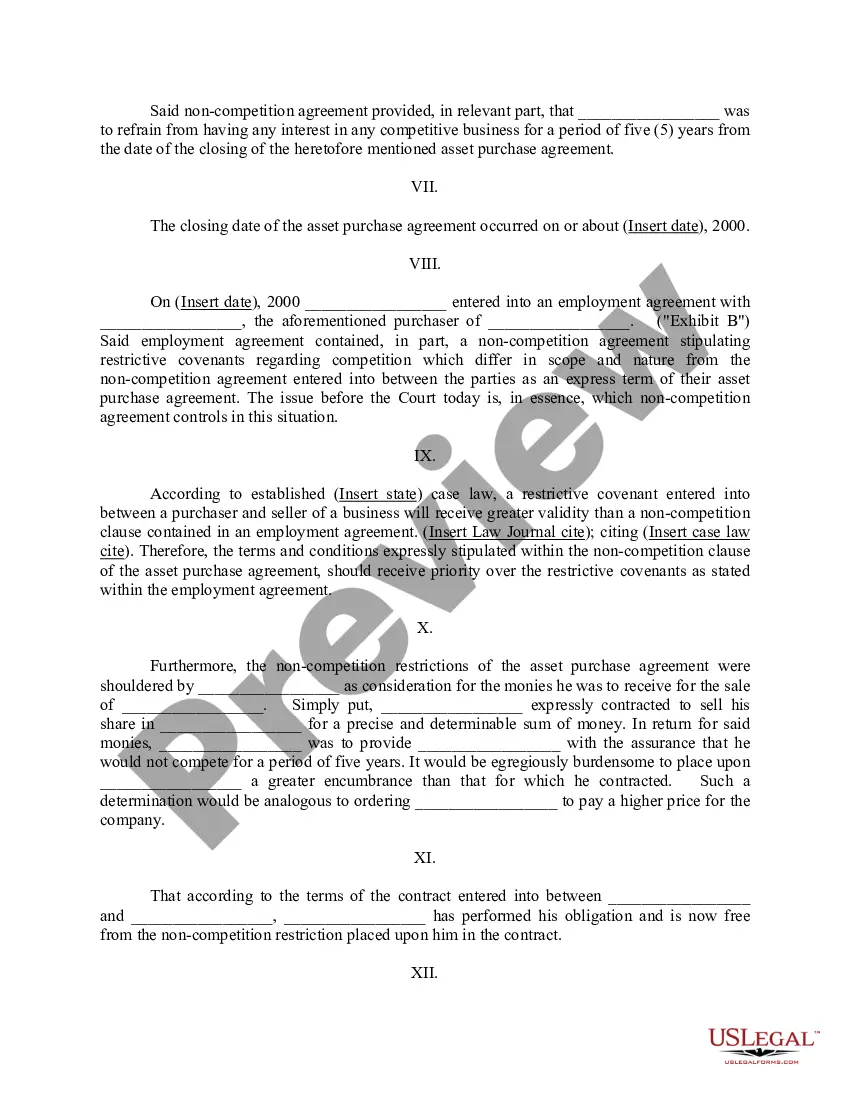
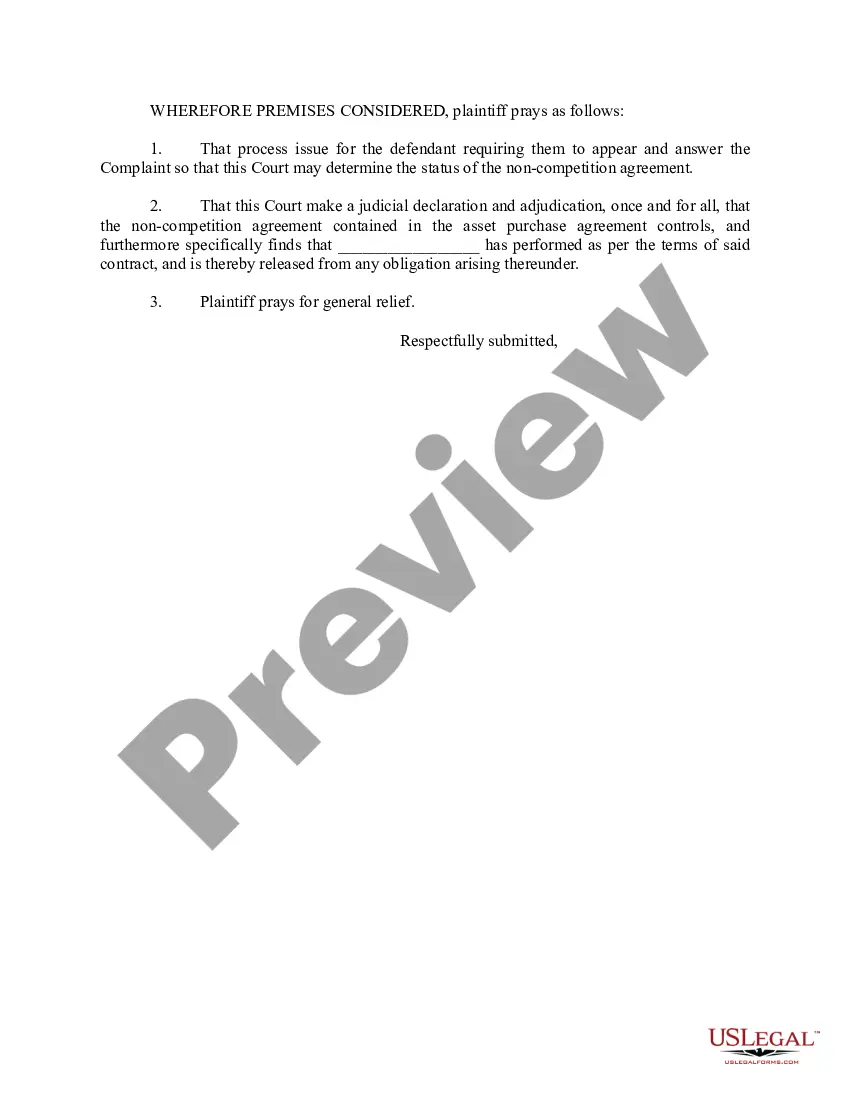


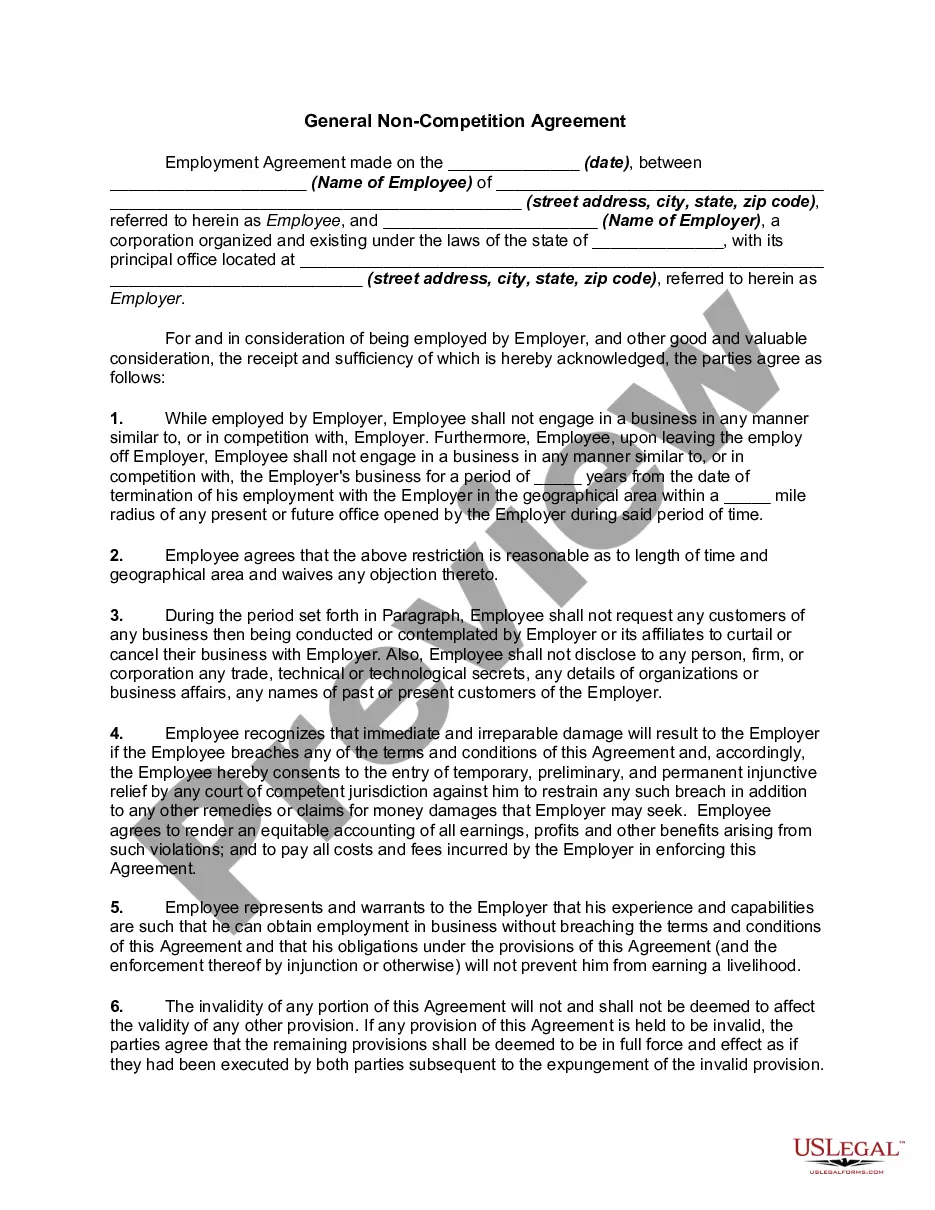
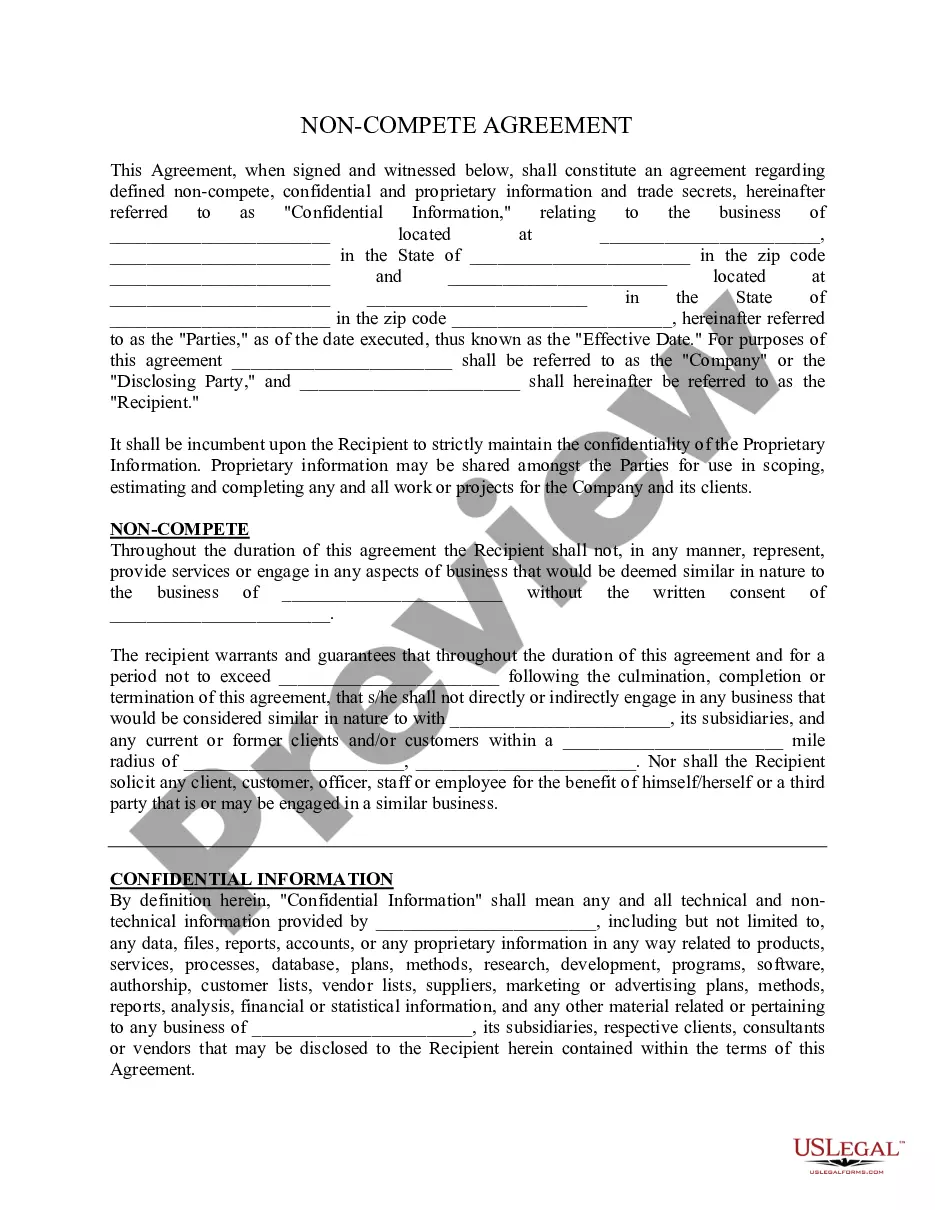

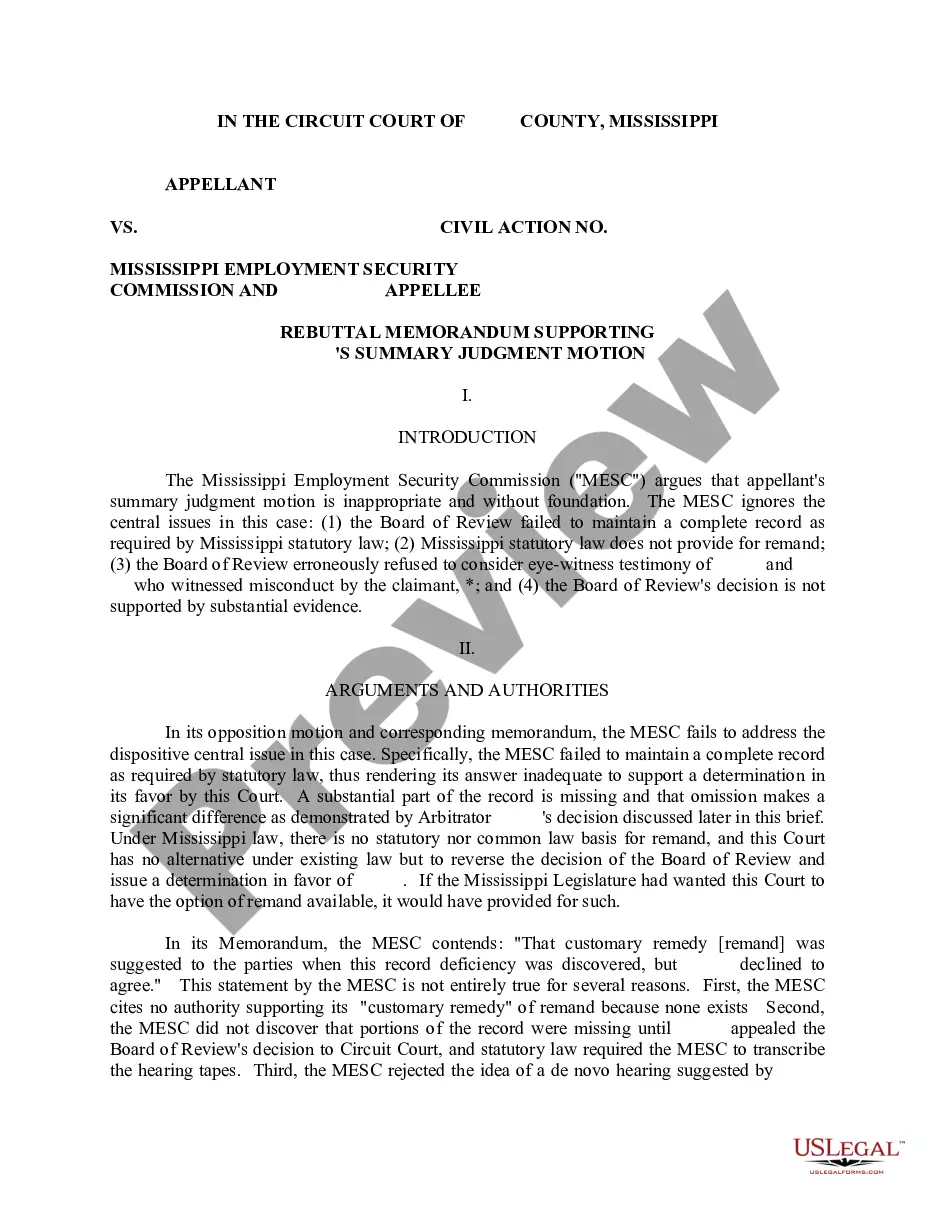


How to fill out Complaint For Declaratory Judgment Of Validity Of Separate Noncompetition Agreements?
It is feasible to spend several hours online searching for the valid document template that fulfills the federal and state requirements you need.
US Legal Forms provides a vast array of legal documents that have been reviewed by experts.
You can download or print the South Carolina Complaint For Declaratory Judgment Of Validity of Separate Noncompetition Agreements from the service.
If available, utilize the Review button to view the document template at the same time. To find another version of the form, use the Search field to locate the template that meets your needs and specifications. Once you have found the template you wish to use, click Purchase now to proceed. Select the pricing plan you desire, enter your details, and register for your account on US Legal Forms. Complete the transaction. You can use your credit card or PayPal account to pay for the legal document. Choose the format of the document and download it to your device. Make adjustments to your document if necessary. You can complete, edit, sign, and print the South Carolina Complaint For Declaratory Judgment Of Validity of Separate Noncompetition Agreements. Download and print numerous document templates using the US Legal Forms site, which offers the largest selection of legal forms. Utilize professional and state-specific templates to address your business or personal needs.
- If you already have a US Legal Forms account, you can Log In and click on the Download button.
- Then, you can complete, modify, print, or sign the South Carolina Complaint For Declaratory Judgment Of Validity of Separate Noncompetition Agreements.
- Every legal document template you purchase is yours indefinitely.
- To obtain another copy of any purchased form, go to the My documents tab and click on the appropriate button.
- If you are using the US Legal Forms website for the first time, follow the simple instructions below.
- First, ensure that you have selected the correct document template for the area/region of your choice.
- Review the form description to confirm you have chosen the right form.
Form popularity
FAQ
Yes, non-compete agreements can be enforceable in South Carolina, but they must meet specific legal standards. The agreements must be reasonable in duration, geographic scope, and must protect a legitimate business interest. If you are unsure about the enforceability of a non-compete agreement, filing a South Carolina Complaint For Declaratory Judgment Of Validity of Separate Noncompetition Agreements can help you obtain a legal opinion on the matter, ensuring your rights are protected.
Several factors can void a non-compete agreement in South Carolina, including lack of consideration, overly broad restrictions, or failure to protect a legitimate business interest. If the agreement imposes unreasonable limitations on an individual's ability to work, it may be deemed unenforceable. Understanding these factors is essential when drafting or challenging a South Carolina Complaint For Declaratory Judgment Of Validity of Separate Noncompetition Agreements.
A declaratory judgment complaint is a legal request for a court to clarify the rights and obligations of parties under a specific agreement. In the context of noncompetition agreements, this type of complaint seeks a judicial determination of the agreement's validity and enforceability. Filing a South Carolina Complaint For Declaratory Judgment Of Validity of Separate Noncompetition Agreements can provide clarity and prevent future disputes.
Code 15-3-640 in South Carolina addresses the statute of limitations for initiating legal actions related to noncompetition agreements. Specifically, it outlines the time frame in which a party may file a complaint regarding the validity of these agreements. Understanding this code is crucial when preparing a South Carolina Complaint For Declaratory Judgment Of Validity of Separate Noncompetition Agreements, as it helps ensure compliance with legal timelines.
To file a complaint against the Department of Social Services (DSS) in South Carolina, you can contact their office directly or use their online complaint form. Provide detailed information about your concerns, including any relevant documentation. If your situation involves a South Carolina Complaint For Declaratory Judgment Of Validity of Separate Noncompetition Agreements, it is crucial to clearly outline how DSS's actions have impacted your case.
Rule 5.5 in South Carolina outlines the restrictions against unauthorized practice of law, meaning that only licensed attorneys can perform legal services or give legal advice. This rule protects the public from unqualified individuals providing legal assistance. If you are considering filing a South Carolina Complaint For Declaratory Judgment Of Validity of Separate Noncompetition Agreements, knowing this rule can help you navigate your legal options effectively.
In South Carolina, the Office of Disciplinary Counsel investigates complaints against lawyers, while the Judicial Standards Commission handles complaints against judges. Both entities ensure accountability within the legal profession. If your concern relates to a South Carolina Complaint For Declaratory Judgment Of Validity of Separate Noncompetition Agreements, it may be beneficial to understand how these investigations operate.
Rule 5.5 in South Carolina refers to the prohibition against unauthorized practice of law. It clarifies the boundaries for legal professionals and ensures that only licensed attorneys provide legal services. Understanding Rule 5.5 is important if you are navigating legal matters, such as a South Carolina Complaint For Declaratory Judgment Of Validity of Separate Noncompetition Agreements, to ensure you are receiving proper legal representation.
To file a complaint with the Attorney General of South Carolina, you can visit their official website, where you will find a complaint form. Fill out the form with accurate details about your issue, and submit it online or via mail. If your complaint involves a South Carolina Complaint For Declaratory Judgment Of Validity of Separate Noncompetition Agreements, ensure that you include all relevant information to support your case.
In South Carolina, to establish adverse possession, a claimant must meet five criteria: actual possession of the property, open and notorious use, exclusive control, continuous use for a specified period, and adverse or hostile claim. Each of these elements must be clearly demonstrated in a case. If you are considering a South Carolina Complaint For Declaratory Judgment Of Validity of Separate Noncompetition Agreements, it is crucial to understand these requirements, as they can impact your legal standing.