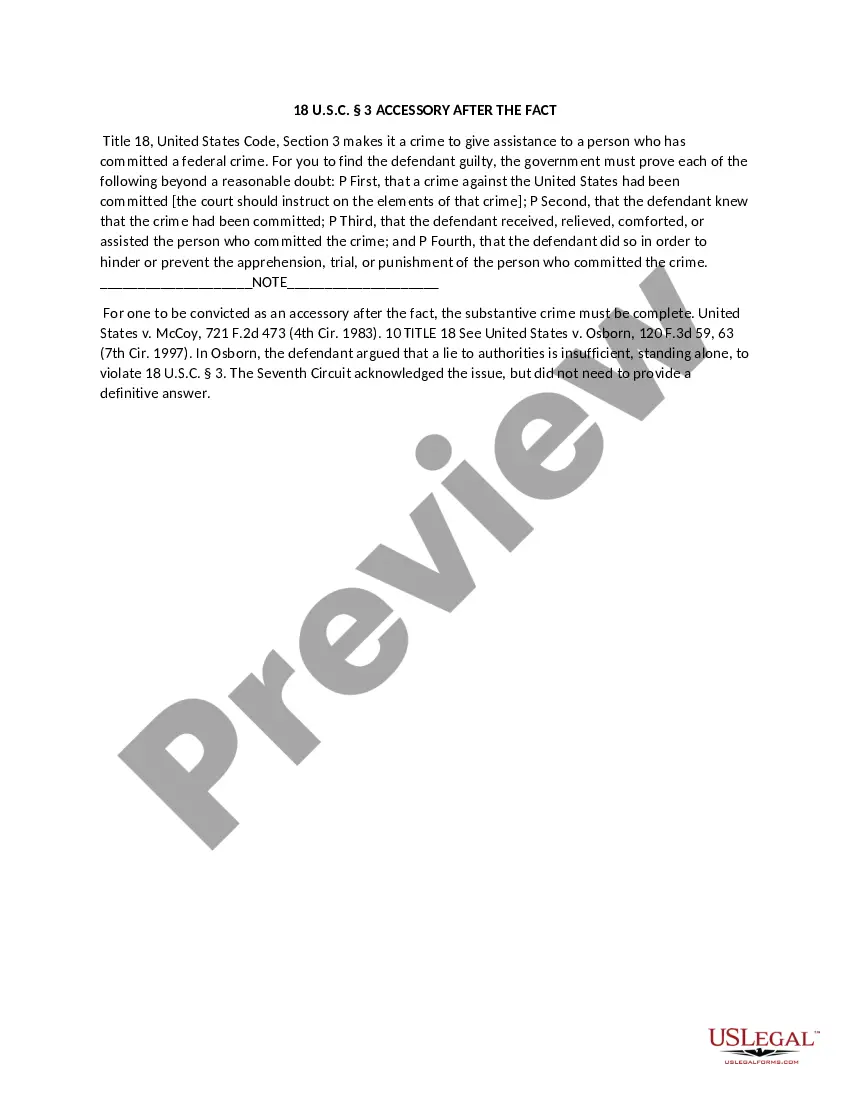
South Carolina ACCESSORY AFTER THE FACT
Understanding this form
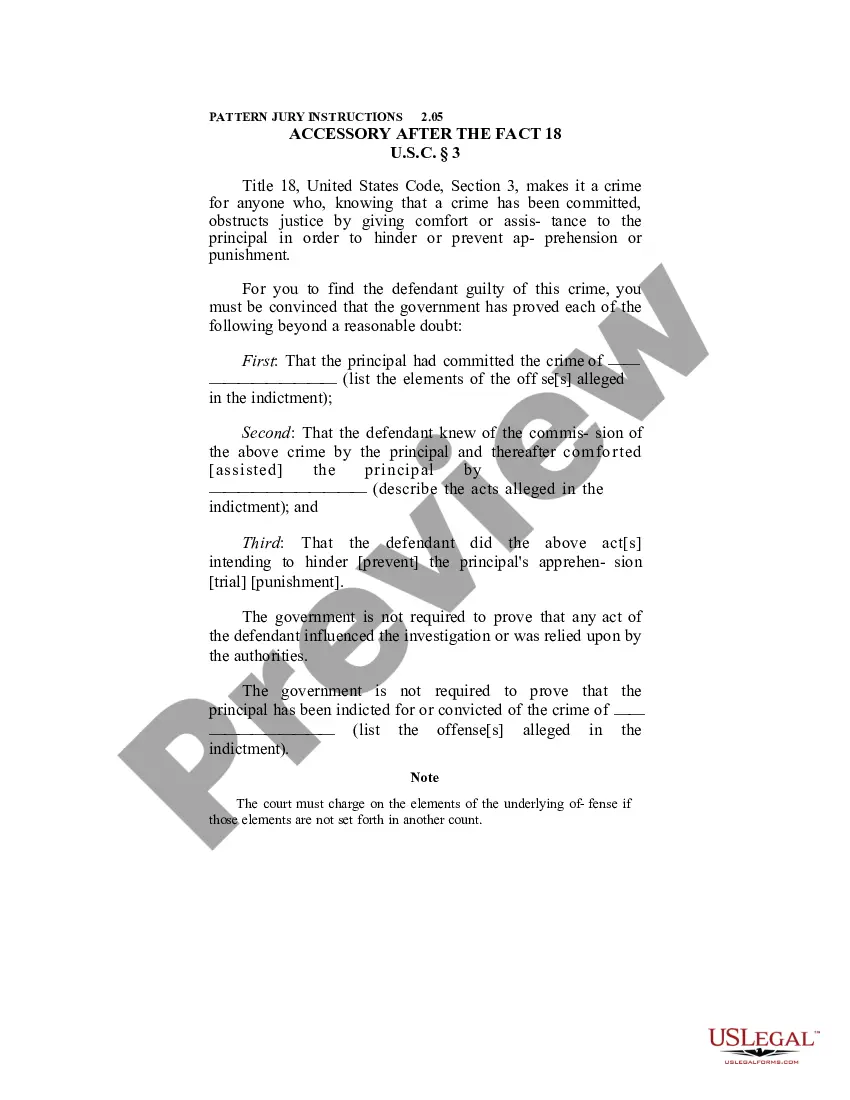
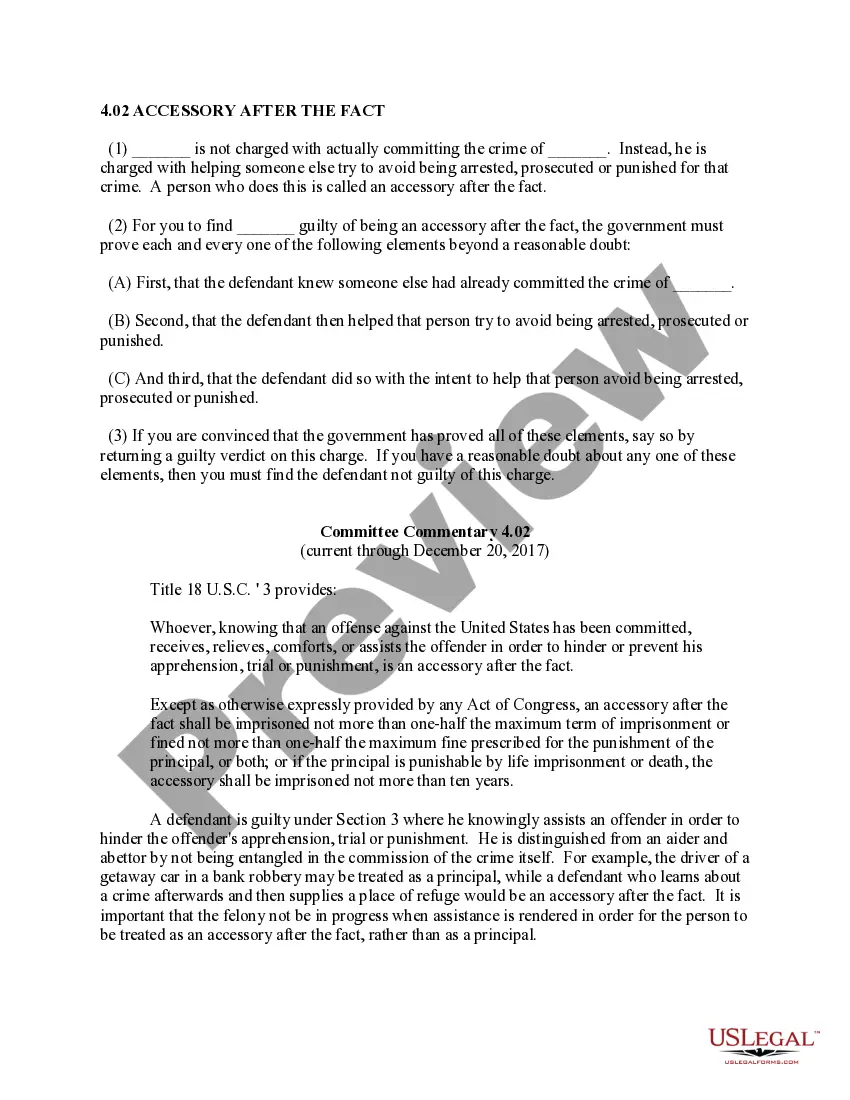
The accessory after the fact form pertains to Title 18, United States Code, Section 3. This legal document outlines the parameters that define the crime of assisting a person who has committed a federal offense to evade justice. It is essential for those involved in federal criminal cases as it details the requirements that must be met for a defendant to be found guilty as an accessory after the fact, offering a clear distinction from other criminal charges.
Main sections of this form
- Identification of the crime against the United States that has been committed.
- Evidence that the defendant knew a crime had occurred.
- Documentation of any assistance provided to the perpetrator of the crime.
- Establishment that such assistance was intended to hinder justice.
- Clarification that conviction requires the underlying crime to be complete.
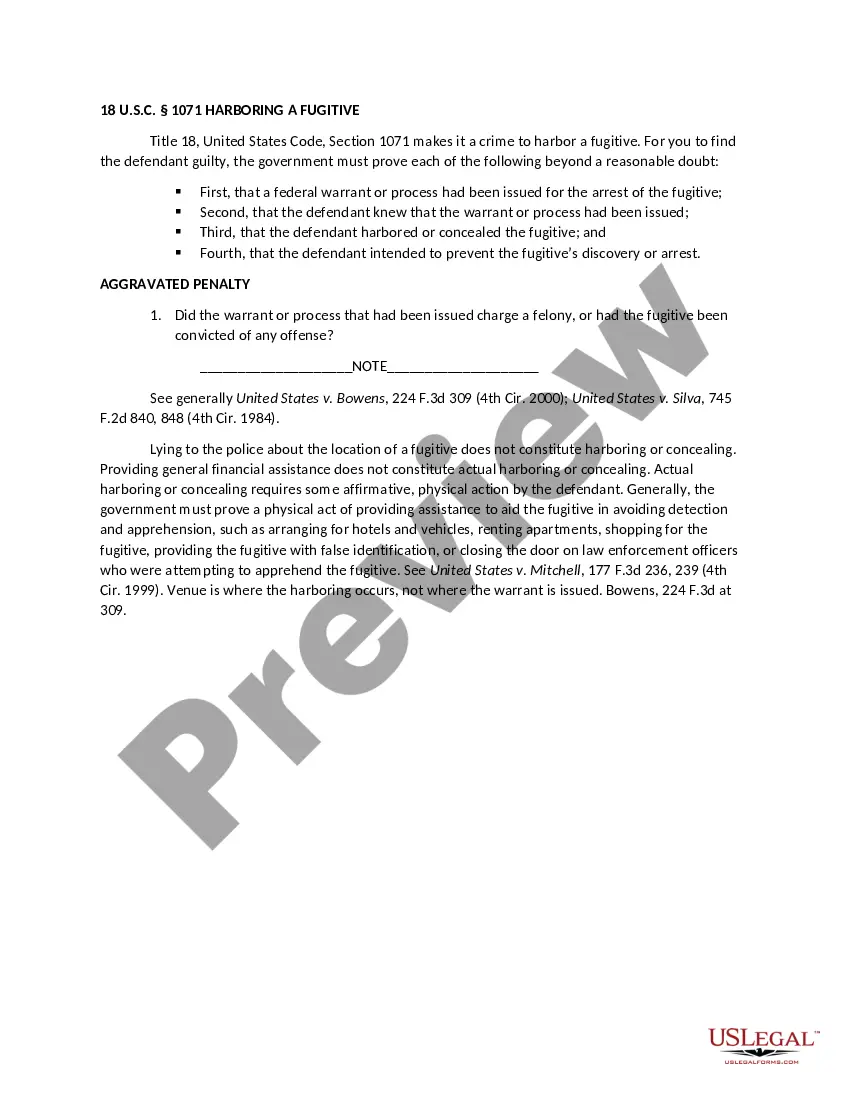
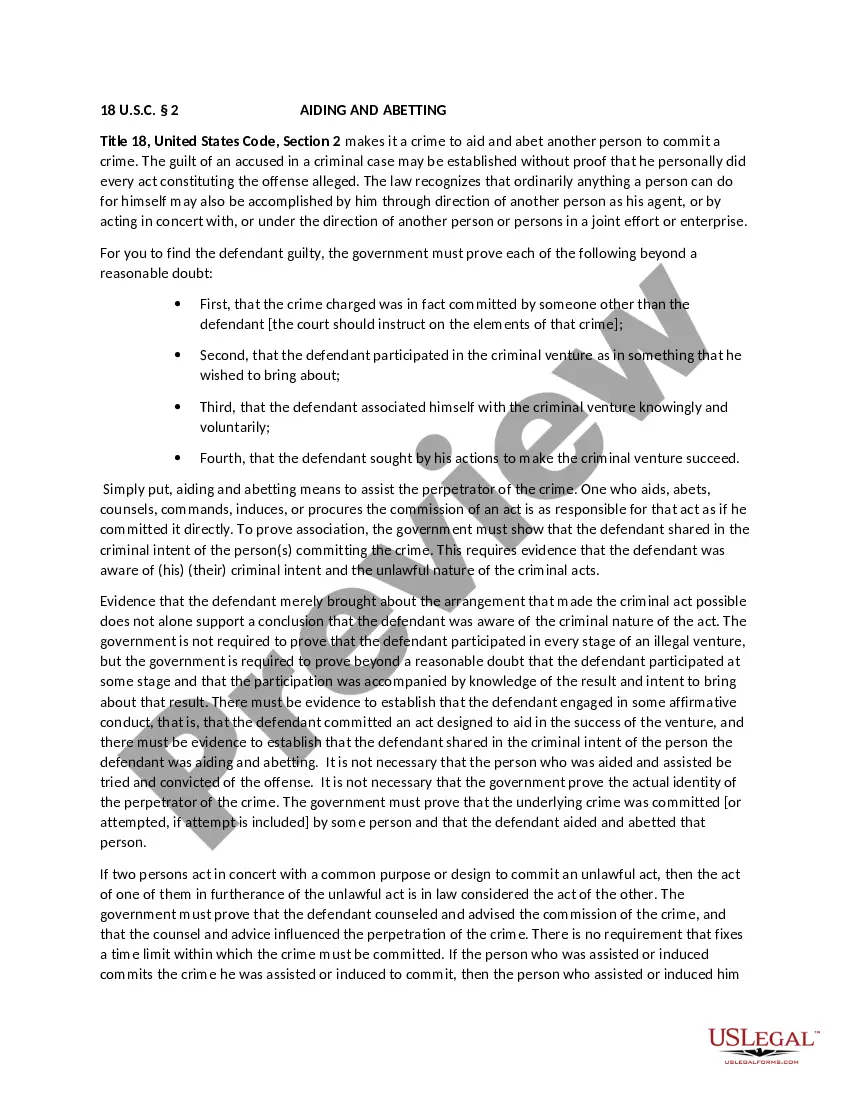
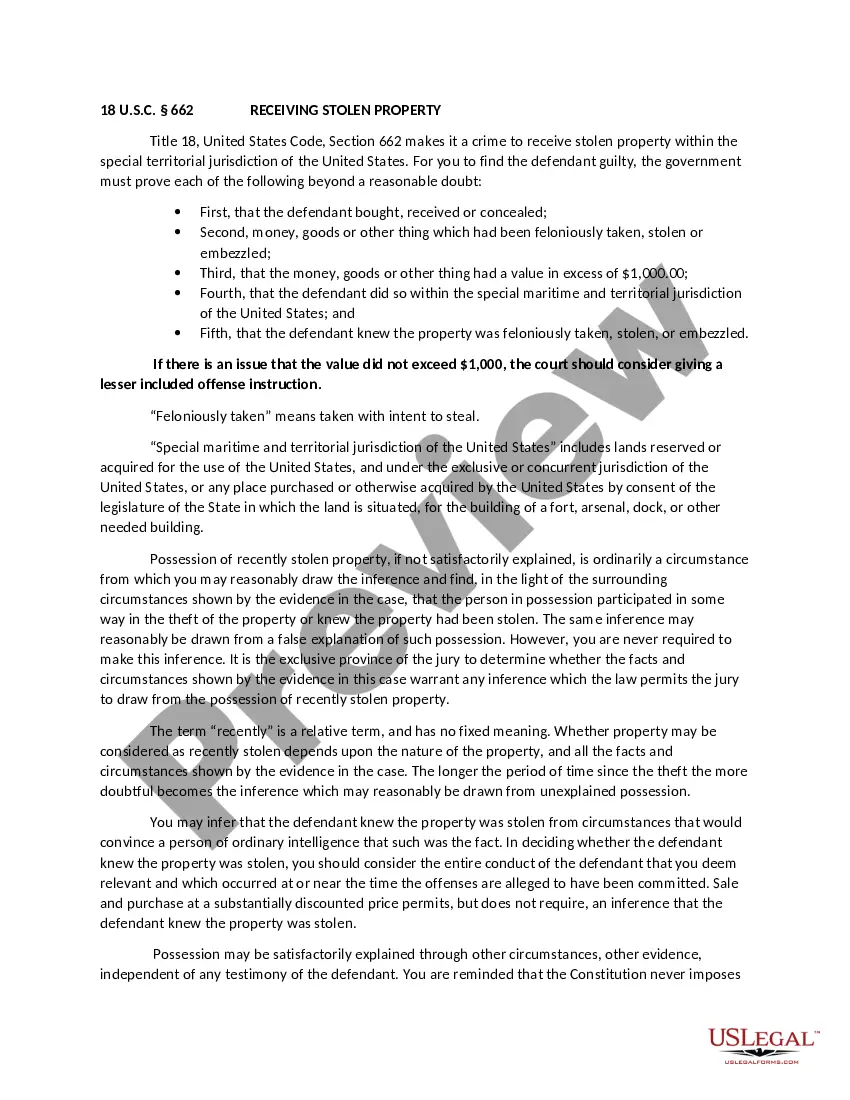
When to use this form
This form is necessary in scenarios involving federal criminal cases where an individual is accused of aiding a criminal to avoid capture or punishment. It is particularly relevant when the prosecution seeks to establish that someone knowingly assisted a federal offender after the crime was committed, highlighting the legal implications of such actions.
Who should use this form
- Defense attorneys representing clients accused of being accessories after the fact.
- Prosecutors building a case against individuals who provided assistance to criminals.
- Individuals seeking to understand the legal definitions and implications of accessory after the fact charges.
Completing this form step by step
- Identify the crime allegedly committed by the primary defendant.
- Document specific knowledge the defendant had regarding the crime.
- Specify the assistance that was provided to the perpetrator.
- Clarify the intent behind the assistance offered.
- Review the information to ensure it meets the legal requirements before submission.
Does this form need to be notarized?
This form does not typically require notarization unless specified by local law. Users should verify the requirements depending on their specific jurisdiction and situation.
Get your form ready online
Our built-in tools help you complete, sign, share, and store your documents in one place.
Make edits, fill in missing information, and update formatting in US Legal Forms—just like you would in MS Word.
Download a copy, print it, send it by email, or mail it via USPS—whatever works best for your next step.
Sign and collect signatures with our SignNow integration. Send to multiple recipients, set reminders, and more. Go Premium to unlock E-Sign.
If this form requires notarization, complete it online through a secure video call—no need to meet a notary in person or wait for an appointment.
We protect your documents and personal data by following strict security and privacy standards.

Make edits, fill in missing information, and update formatting in US Legal Forms—just like you would in MS Word.

Download a copy, print it, send it by email, or mail it via USPS—whatever works best for your next step.

Sign and collect signatures with our SignNow integration. Send to multiple recipients, set reminders, and more. Go Premium to unlock E-Sign.

If this form requires notarization, complete it online through a secure video call—no need to meet a notary in person or wait for an appointment.

We protect your documents and personal data by following strict security and privacy standards.
Common mistakes
- Failing to establish that the substantive crime was already completed.
- Not documenting all forms of assistance provided.
- Neglecting to clarify the intent behind providing assistance.
- Assuming state laws will apply when using a federal form.
Why complete this form online
- Immediate access to a legally valid document tailored for federal cases.
- Editability allows users to customize the form as needed.
- Convenience of downloading and printing the form securely from any location.
Legal use & context
Understanding the legal context is crucial when dealing with accessory after the fact accusations. The form serves to clarify the roles of those providing assistance to criminals while ensuring compliance with federal laws. Legal enforceability hinges on thorough documentation and an accurate depiction of the defendant's relationship to the initial crime.
What to keep in mind
- The Accessory After the Fact form addresses federal crimes involving assistance to offenders.
- Proving intent and knowledge are crucial components for a conviction.
- Understanding the legal context and requirements is vital for all parties involved.
Looking for another form?

Form popularity
FAQ
Unannotated. SECTION 16-1-10. Categorization of felonies and misdemeanors; exemptions. (C) All offenses with a term of imprisonment of less than one year are misdemeanors and exempt from the classification system.
SECTION 16-3-10. "Murder" defined. "Murder" is the killing of any person with malice aforethought, either express or implied.
SECTION 16-11-311. Burglary; first degree. (3) the entering or remaining occurs in the nighttime. (B) Burglary in the first degree is a felony punishable by life imprisonment.
Pursuant to South Carolina Code Annotated 16-3-300(B)(1), the crime of assault and battery of a high and aggravated nature occurs when the Defendant unlawfully injures another individual resulting in: (1) great bodily injury to the other person OR (2) the act is accomplished by methods that are likely to cause death or
Accessory after the fact. Any person subject to this code who, knowing that an offense punishable by the code has been committed, receives, comforts, or assists the offender in order to hinder or prevent his apprehension, trial, or punishment may be punished as a court-martial may direct.
Examples of an accessory after the fact include: intentionally misleading or lying to police, giving a false alibi for another person, helping another person hide evidence, and destroying evidence related to a crime.
Under the South Carolina Criminal Laws (Code of Laws) Section 16-1-40, accessory before the fact involves allegations that the Defendant hired, procured, or counseled another individual (the principal, i.e., main actor) to commit a felony and the principal, thereafter, commits the felony crime.
SECTION 16-13-10. Forgery. (4) willingly act or assist in any of the premises, with an intention to defraud any person.