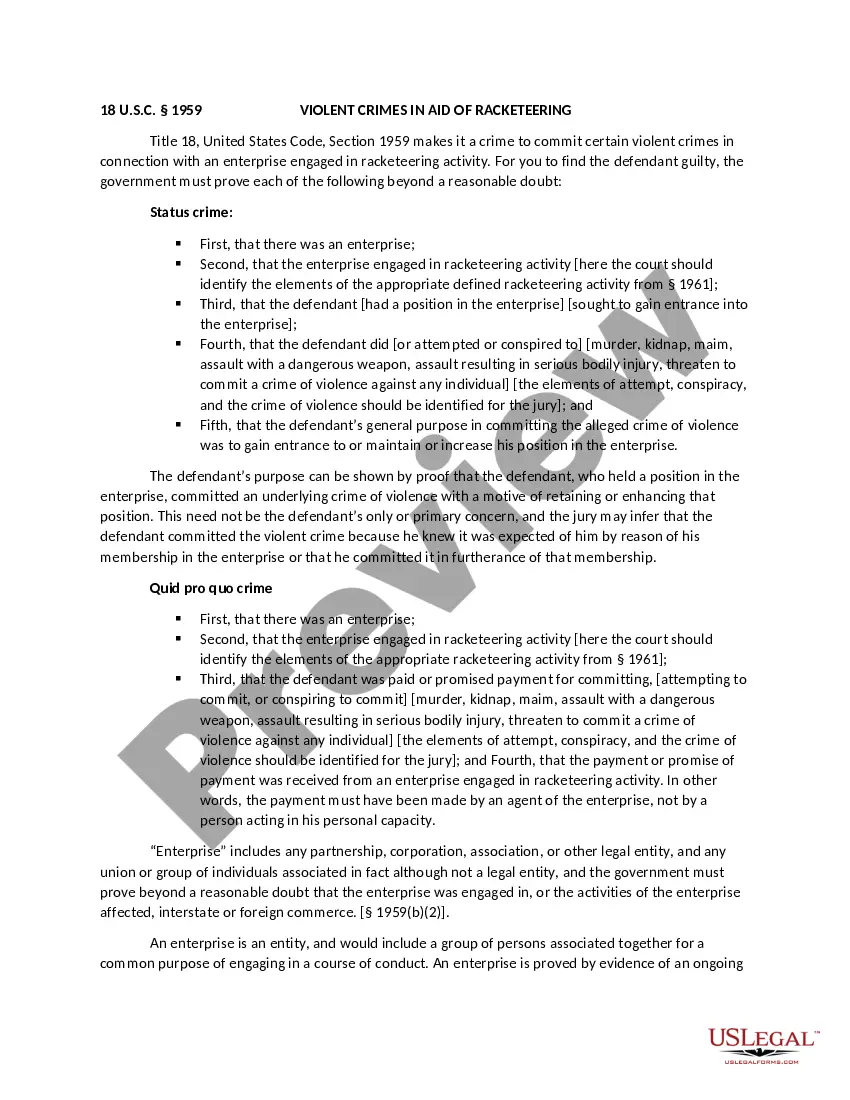
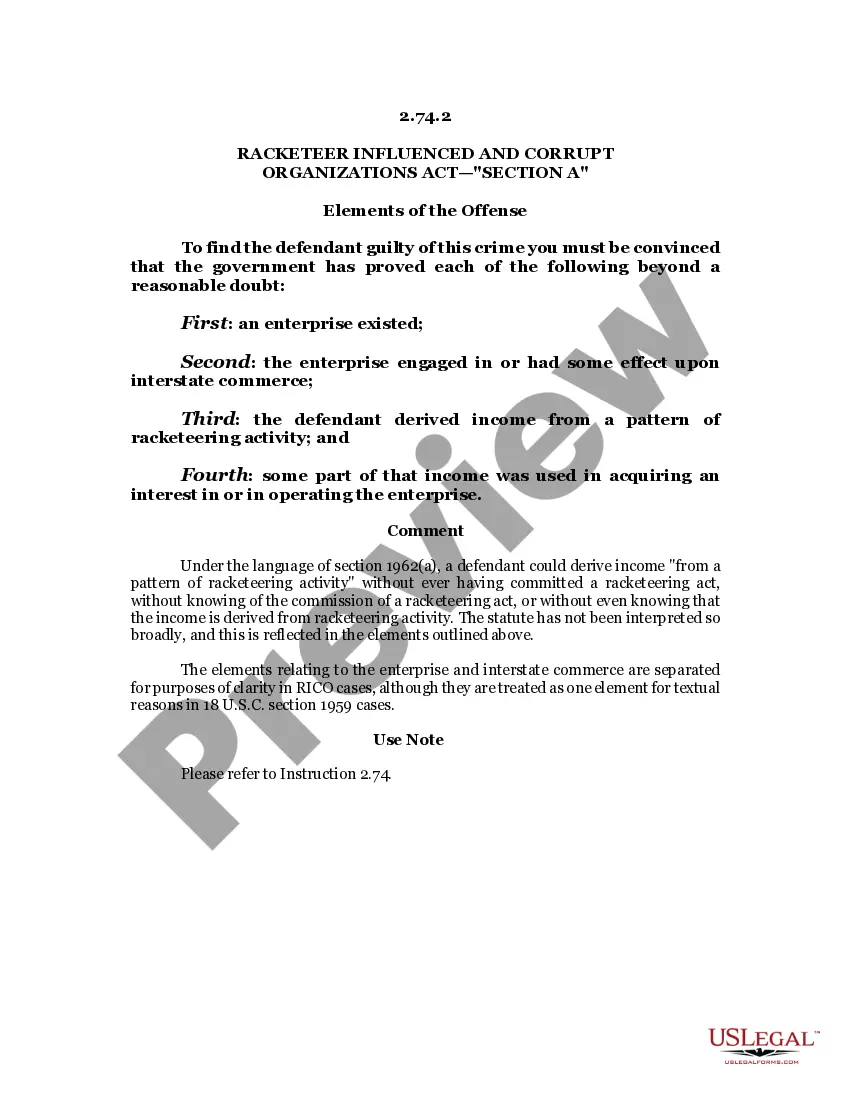
South Carolina RACKETEER INFLUENCED AND CORRUPT ORGANIZATIONS (RICO) are groups or individuals who use illegal methods such as bribery, extortion, fraud, and other criminal activities to gain economic or political power. RICO offenses in South Carolina are typically organized around a common purpose and involve a pattern of related criminal activities. Types of South Carolina RICO organizations include: 1. Drug Trafficking Organizations: This type of RICO organization typically involves large-scale illegal drug distribution networks. The illicit profits from the sale of drugs are used to finance the operations of the organization. 2. Money Laundering Organizations: This type of RICO organization is used to hide or disguise the origin of proceeds from illegal activities. Money laundering organizations typically use sophisticated methods to move money from one jurisdiction to another, avoiding detection. 3. Political Corruption Organizations: This type of RICO organization uses the power of political offices to gain economic and political advantage. Political corruption organizations often use bribery, extortion, and fraud to gain access to public funds or resources. 4. Organized Crime Organizations: This type of RICO organization is commonly associated with the mafia or other organized crime groups. Organized crime organizations use intimidation, violence, and other illegal methods to gain control over certain industries or markets.
South Carolina RACKETEER INFLUENCED AND CORRUPT ORGANIZATIONS
Description



How to fill out South Carolina RACKETEER INFLUENCED AND CORRUPT ORGANIZATIONS?
US Legal Forms is the most straightforward and affordable way to find appropriate legal templates. It’s the most extensive online library of business and individual legal paperwork drafted and verified by attorneys. Here, you can find printable and fillable blanks that comply with national and local regulations - just like your South Carolina RACKETEER INFLUENCED AND CORRUPT ORGANIZATIONS.
Getting your template takes just a few simple steps. Users that already have an account with a valid subscription only need to log in to the website and download the document on their device. Later, they can find it in their profile in the My Forms tab.
And here’s how you can get a professionally drafted South Carolina RACKETEER INFLUENCED AND CORRUPT ORGANIZATIONS if you are using US Legal Forms for the first time:
- Look at the form description or preview the document to guarantee you’ve found the one corresponding to your requirements, or locate another one utilizing the search tab above.
- Click Buy now when you’re sure of its compatibility with all the requirements, and select the subscription plan you like most.
- Create an account with our service, log in, and purchase your subscription using PayPal or you credit card.
- Decide on the preferred file format for your South Carolina RACKETEER INFLUENCED AND CORRUPT ORGANIZATIONS and save it on your device with the appropriate button.
Once you save a template, you can reaccess it anytime - just find it in your profile, re-download it for printing and manual completion or upload it to an online editor to fill it out and sign more efficiently.
Take full advantage of US Legal Forms, your reliable assistant in obtaining the corresponding formal paperwork. Try it out!
Form popularity
FAQ
South Carolina Racketeering and RICO Violation Defense Lawyers. Racketeering is a serious crime, punishable under federal and state RICO laws designed to crack down on organized crime.
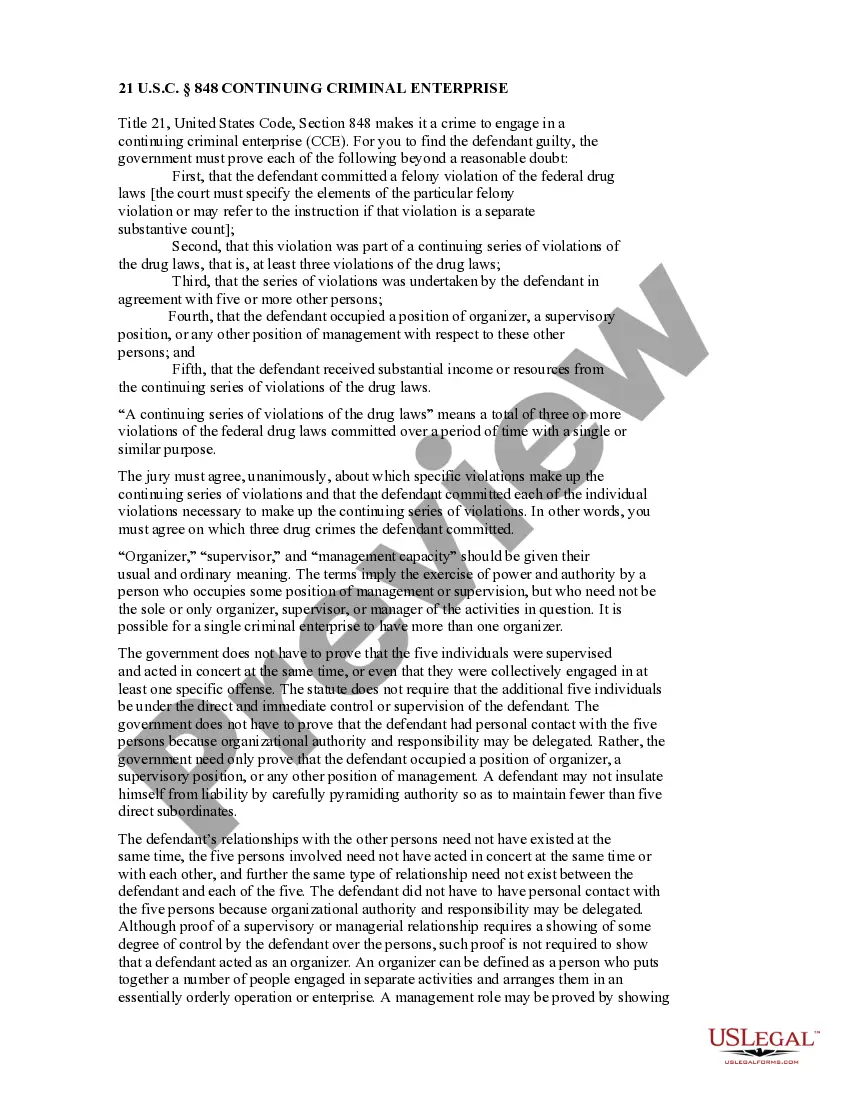
The mandatory minimum sentence for someone who is convicted under the CCE statute is at least 20 years in federal prison along with a maximum fine of up to $2 million. The defendant must also forfeit all assets gained in commission of the crimes and relinquish all ties to the criminal enterprise.
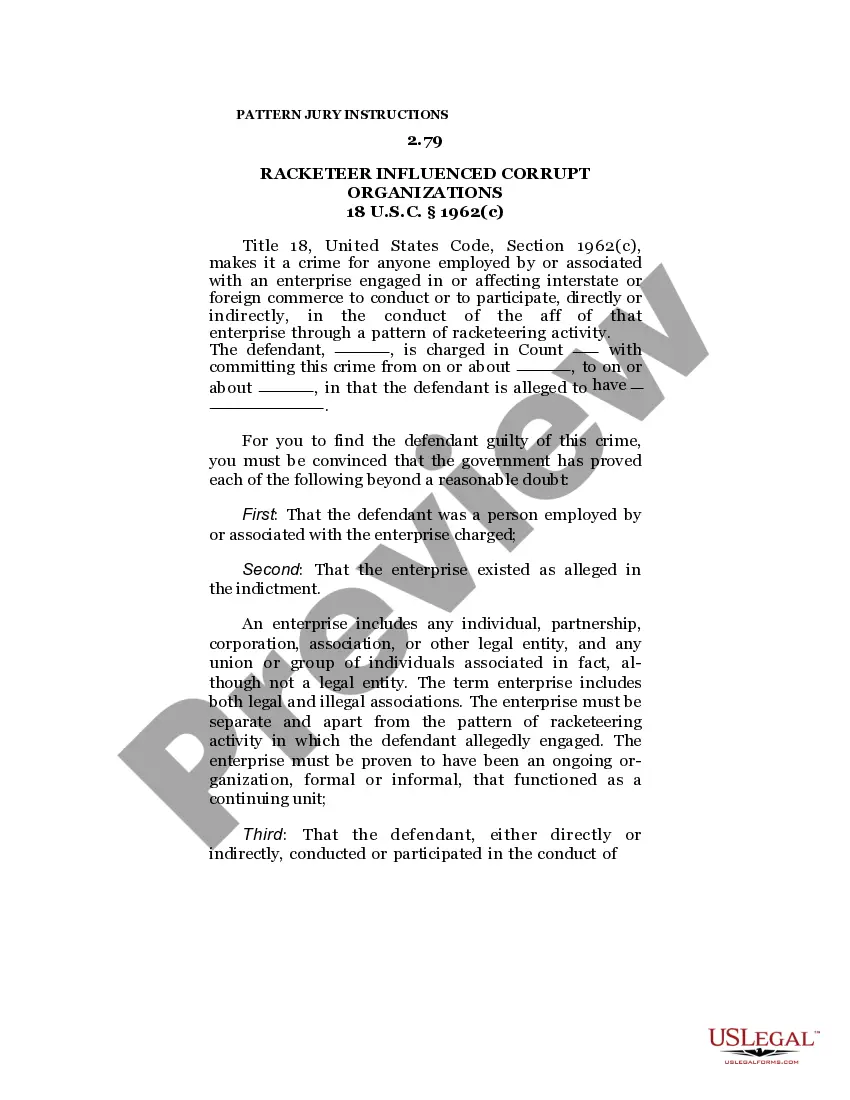
Racketeering Penalties Under the RICO statute, the maximum penalty for racketeering includes a fine, and up to 20 years in federal prison. An individual may also have to turn over illegal profits or other property gained from racketeering.
There are a number of potential defense strategies a skilled criminal defense attorney can use to defeat a RICO charge, including the following: You did not commit or conspire to commit the crimes in question. Your actions were not of a criminal nature.
These guidelines do not limit the authority of the Federal Bureau of Investigation to conduct investigations of suspected violations of RICO. The authority to conduct such investigations is governed by the FBI Guidelines on the Investigation of General Crimes.
Beating a RICO charge is tough, but it isn't impossible. If you or your organization is under investigation for RICO charges, you don't just need any lawyer, you need a federal criminal defense lawyer who isn't afraid to go to trial in a federal court.
A conviction under RICO has serious consequences. Not only does the RICO statute provide for criminal penalties including 20 years of prison, but the financial penalties are severe. A person convicted can face a fine of either $250,000 or double the amount of proceeds earned from illicit activity.