Bank Robbery 18 U.S.C. Sec. 2113 (Subsection E Only - Alleged in a Separate Count)
Overview of this form
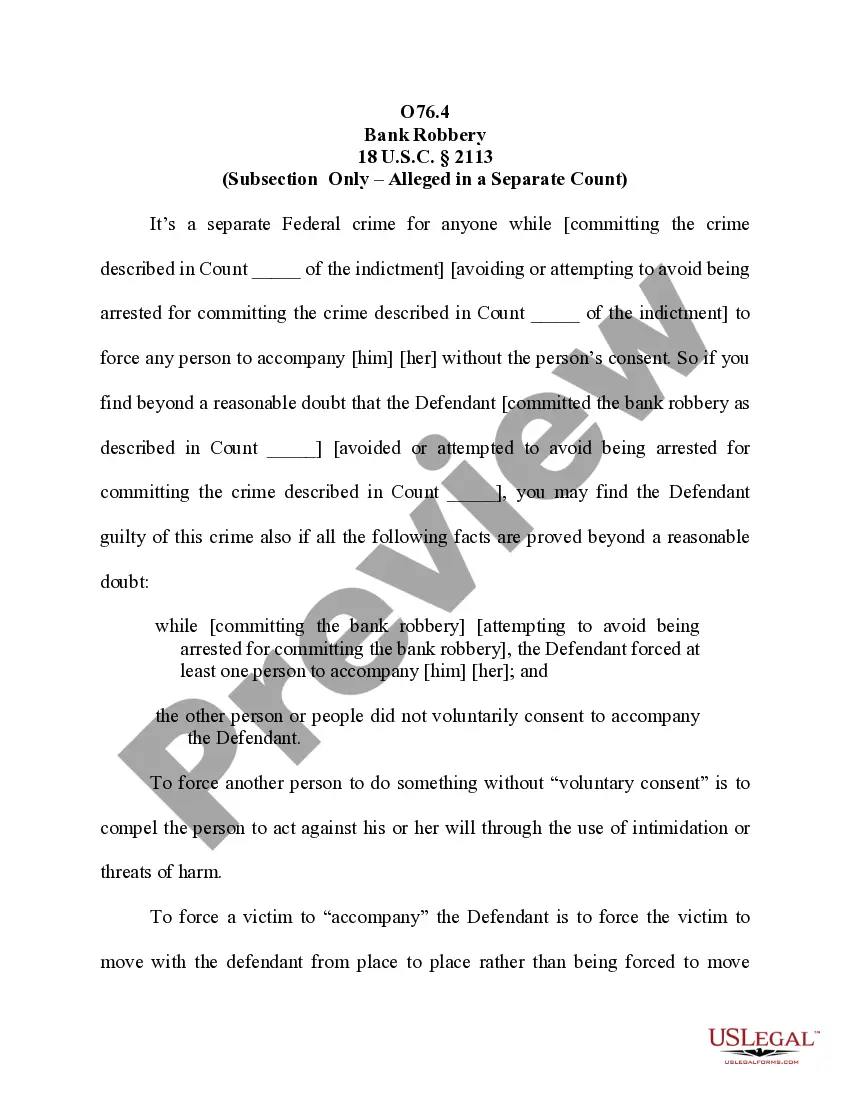
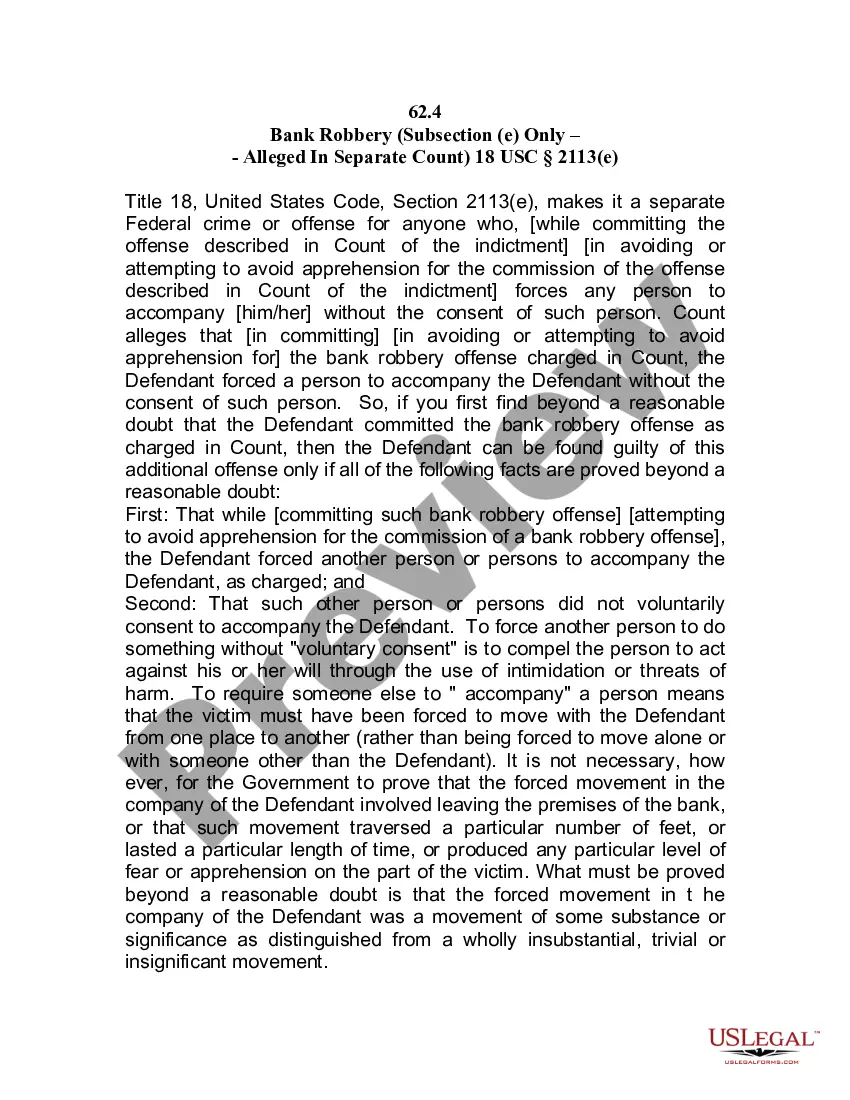
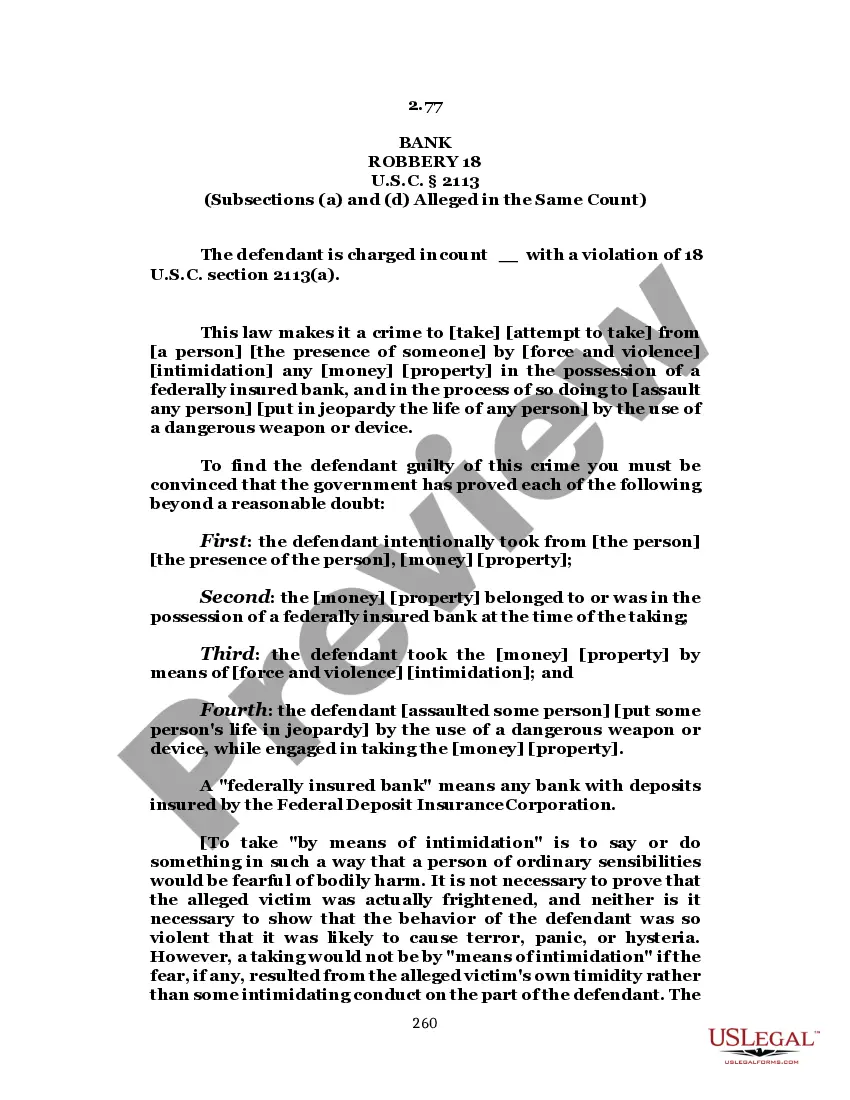
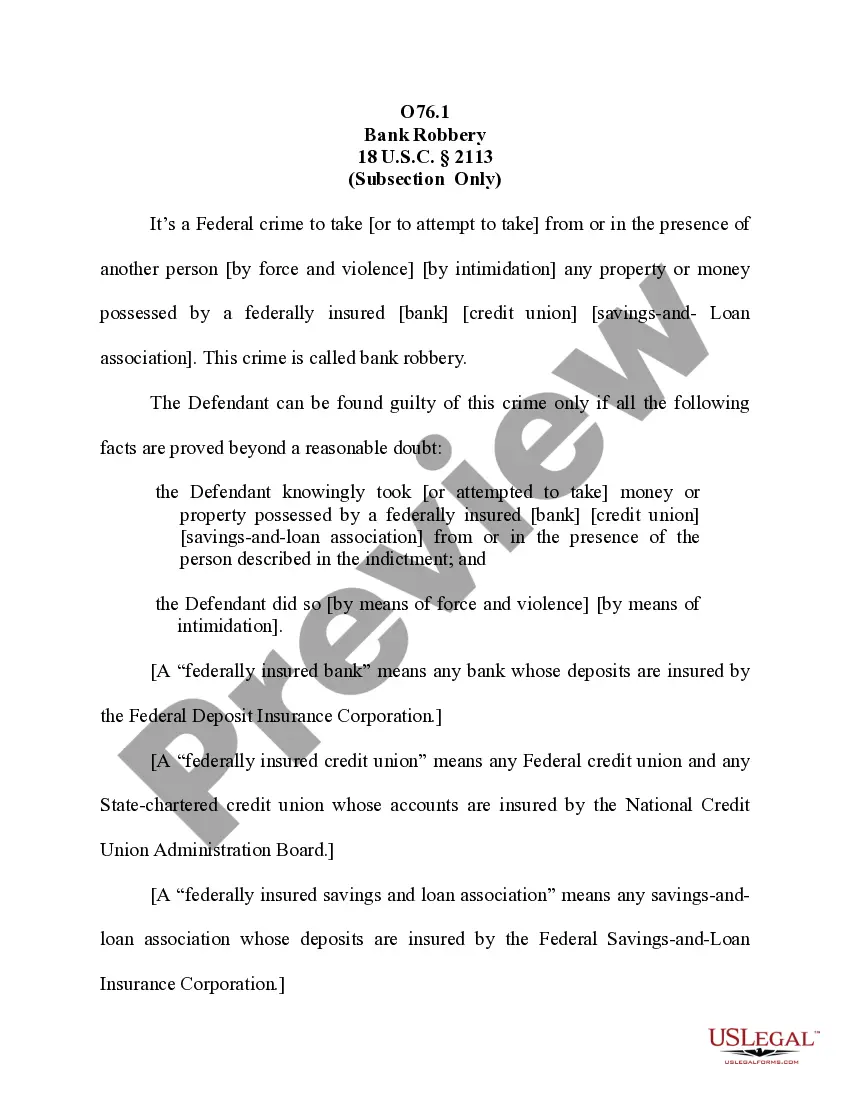
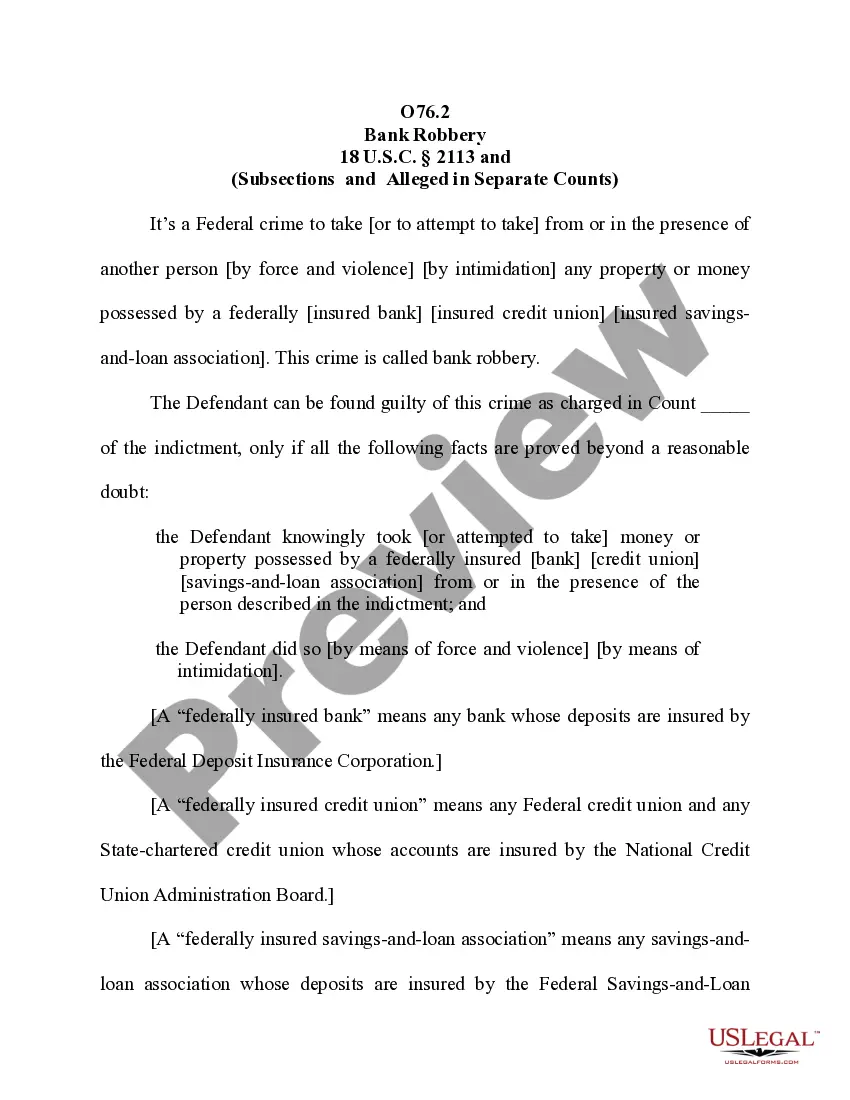
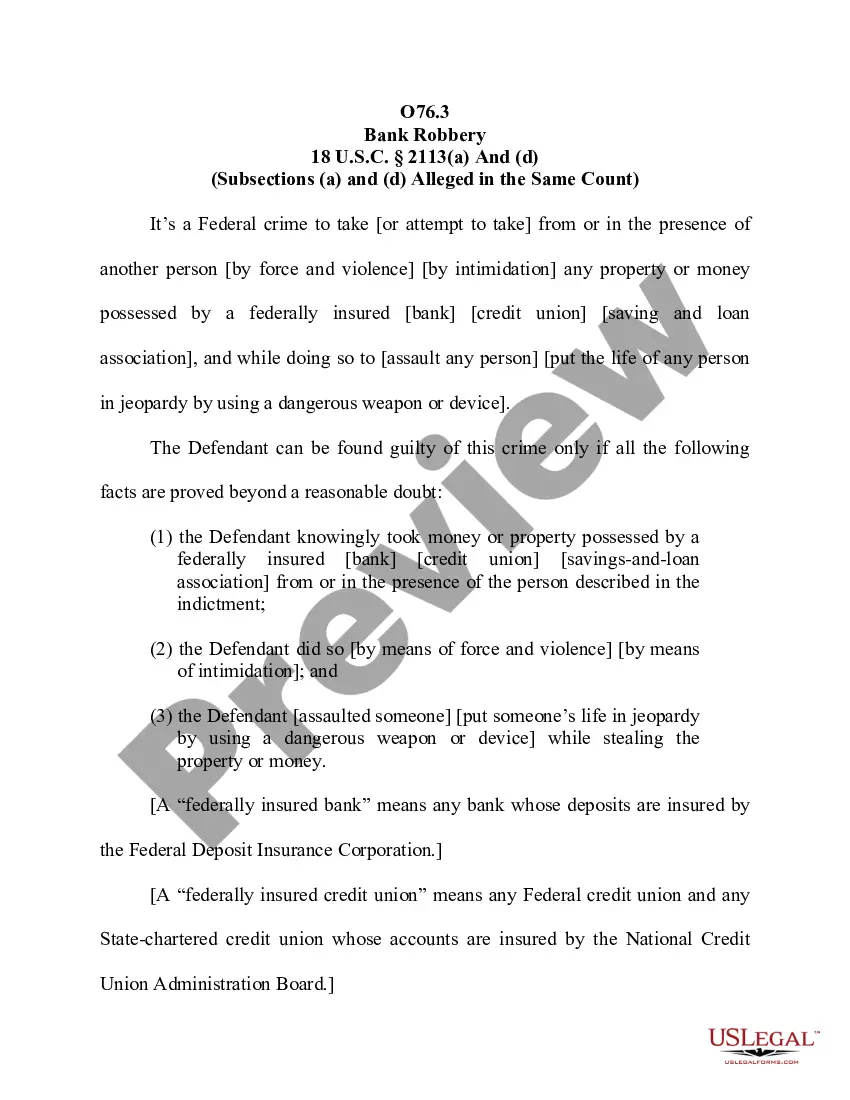
The Bank Robbery form under 18 U.S.C. Sec. 2113 (Subsection E Only - Alleged in a Separate Count) serves as a legal guideline in federal court for juries to understand the components of the crime of bank robbery that involves forcing a person to move without their consent. This specific form outlines the conditions necessary to prove guilt and differentiate it from other robbery-related crimes, ensuring that jurors are fully informed on how to evaluate the evidence presented in court.
Form components explained
- Definition of bank robbery under 18 U.S.C. § 2113, highlighting the forced movement of a victim.
- Criteria for determining if the defendant compelled a victim to accompany them without consent.
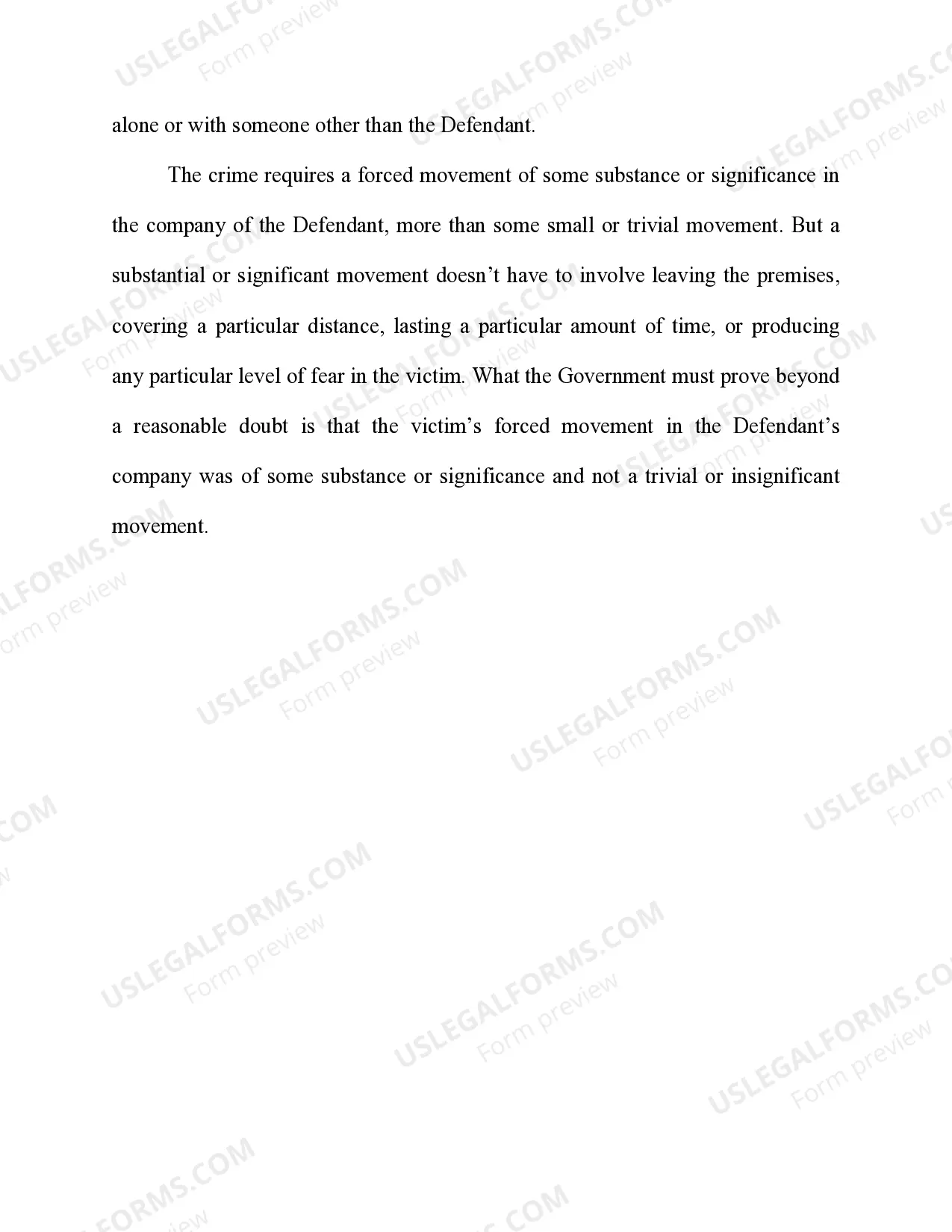
- Explanation of what constitutes âvoluntary consentâ and forced movement.
- Clarification of the requirement for the movement to be significant and not trivial.
When this form is needed
This form should be used in legal cases involving allegations of bank robbery under federal law, specifically when the prosecution includes a count alleging that the defendant forced a victim to accompany them without consent during or in connection with the robbery. Legal professionals will rely on this form to instruct jurors accurately on their decision-making processes regarding the case.
Who needs this form
- Legal practitioners and attorneys involved in federal bank robbery cases.
- Judges presiding over trials relevant to the allegations outlined in the form.
- Members of a jury tasked with evaluating evidence related to bank robbery cases.
Completing this form step by step
- Identify the specific bank robbery events described in the indictment.
- Establish the evidence of forced movement of the victim by the defendant.
- Determine whether consent was given voluntarily by the victim during the incident.
- Prepare the jury instructions based on the criteria outlined in this form.
- Review all applicable legal standards to ensure compliance with federal law.
Is notarization required?
Notarization is generally not required for this form. However, certain states or situations might demand it. You can complete notarization online through US Legal Forms, powered by Notarize, using a verified video call available anytime.
Get your form ready online
Our built-in tools help you complete, sign, share, and store your documents in one place.
Make edits, fill in missing information, and update formatting in US Legal Forms—just like you would in MS Word.
Download a copy, print it, send it by email, or mail it via USPS—whatever works best for your next step.
Sign and collect signatures with our SignNow integration. Send to multiple recipients, set reminders, and more. Go Premium to unlock E-Sign.
If this form requires notarization, complete it online through a secure video call—no need to meet a notary in person or wait for an appointment.
We protect your documents and personal data by following strict security and privacy standards.

Make edits, fill in missing information, and update formatting in US Legal Forms—just like you would in MS Word.

Download a copy, print it, send it by email, or mail it via USPS—whatever works best for your next step.

Sign and collect signatures with our SignNow integration. Send to multiple recipients, set reminders, and more. Go Premium to unlock E-Sign.

If this form requires notarization, complete it online through a secure video call—no need to meet a notary in person or wait for an appointment.

We protect your documents and personal data by following strict security and privacy standards.
Mistakes to watch out for
- Failing to clearly define what constitutes âforced movement."
- Neglecting to establish the lack of voluntary consent sufficiently.
- Overlooking the necessity of proving the significance of the forced movement.
Benefits of using this form online
- Convenient access to structured legal guidance for jurors and judges.
- Editable format to accommodate specific case details and requirements.
- Instant access to reliable resources developed by licensed attorneys.
Legal use & context
- This form outlines the parameters under which a defendant may be found guilty of bank robbery with forced accompaniment.
- The jury must be convinced beyond a reasonable doubt of all required elements for a conviction.
- Understanding the legal contexts of coercion can lead to more informed jury deliberations.
Quick recap
- This form addresses the specific conditions of bank robbery under federal law.
- It is crucial for jurors to understand the definitions of forced movement and consent.
- The form provides a framework for legal professionals to present and evaluate evidence effectively.
Looking for another form?

Form popularity
FAQ
Under federal law, bank robbery is a serious offense and you could be sentenced for up to 20 years in a federal prison, a fine up to $250,000, or both. If you used violence to accomplish the bank robbery, you could face more severe penalties.
In 1934, it became a federal crime to rob any national bank or state member bank of the Federal Reserve System. The law soon expanded to include bank burglary, larceny, and similar crimes, with jurisdiction delegated to the FBI.
Robbing a bank is a federal crime because they are government property and are involved in interstate commerce and trade. The resulting penalties are stricter because of this and the perpetrators may see the back of prison bars for many years with elevated fines on top of this.
If you are convicted of federal bank robbery in California, you face up to 20 years in state prison. If you are found guilty of felony bank robbery, you may face the following penalties: Up to 20 years in federal prison. Up to $250,000 in fines.
§ 2113 of the United States Code. Under section (a) of this statute, bank robbery is defined as: ?using force, violence, or intimidation to take, attempt to take, or extort any property or money in the possession of any bank, credit union, or savings and loan association.?
Shall be fined under this title or imprisoned not more than twenty years, or both.
The average amount of money stolen in a bank robbery in the United States is about $10,000. What percentage of bank robbers are eventually apprehended? Approximately 70% of bank robbers are eventually apprehended, either through the efforts of law enforcement agencies or as a result of public tips.
3, 4, or 6 years in prison. if the defendant committed first-degree robbery in an inhabited structure, in concert with 2 or more other people, 3, 6, or 9 years in prison. If it involves serious bodily injury, 6, 7, 9, 10, or 12 years in prison. If a firearm was used, 13, 14, or 16 years.