South Carolina FALSE STATEMENT TO HUD
Overview of this form
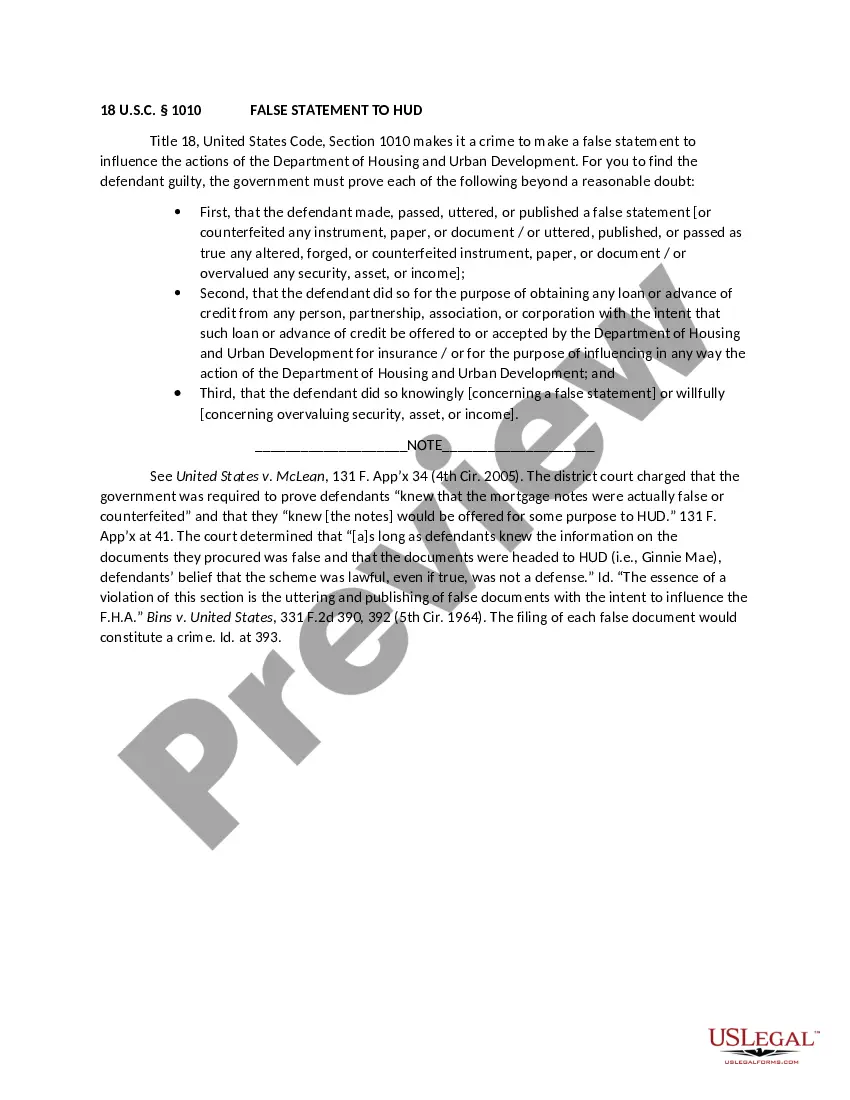
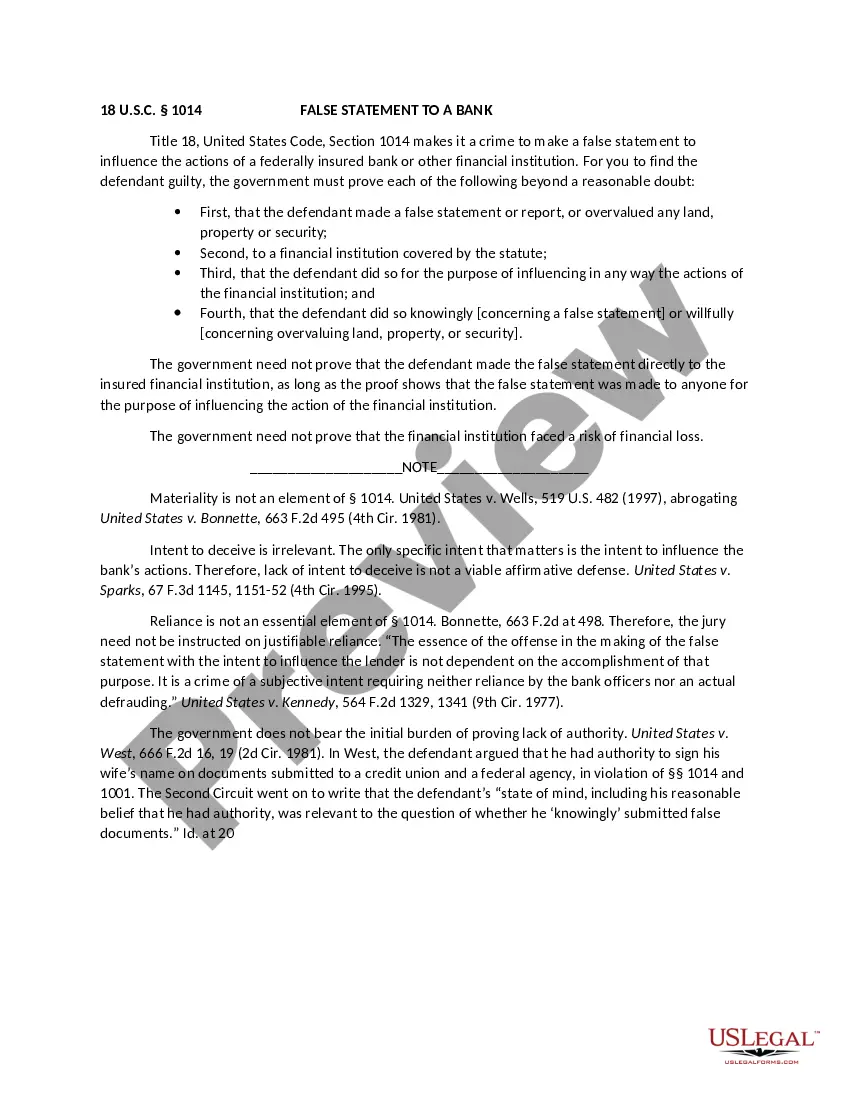
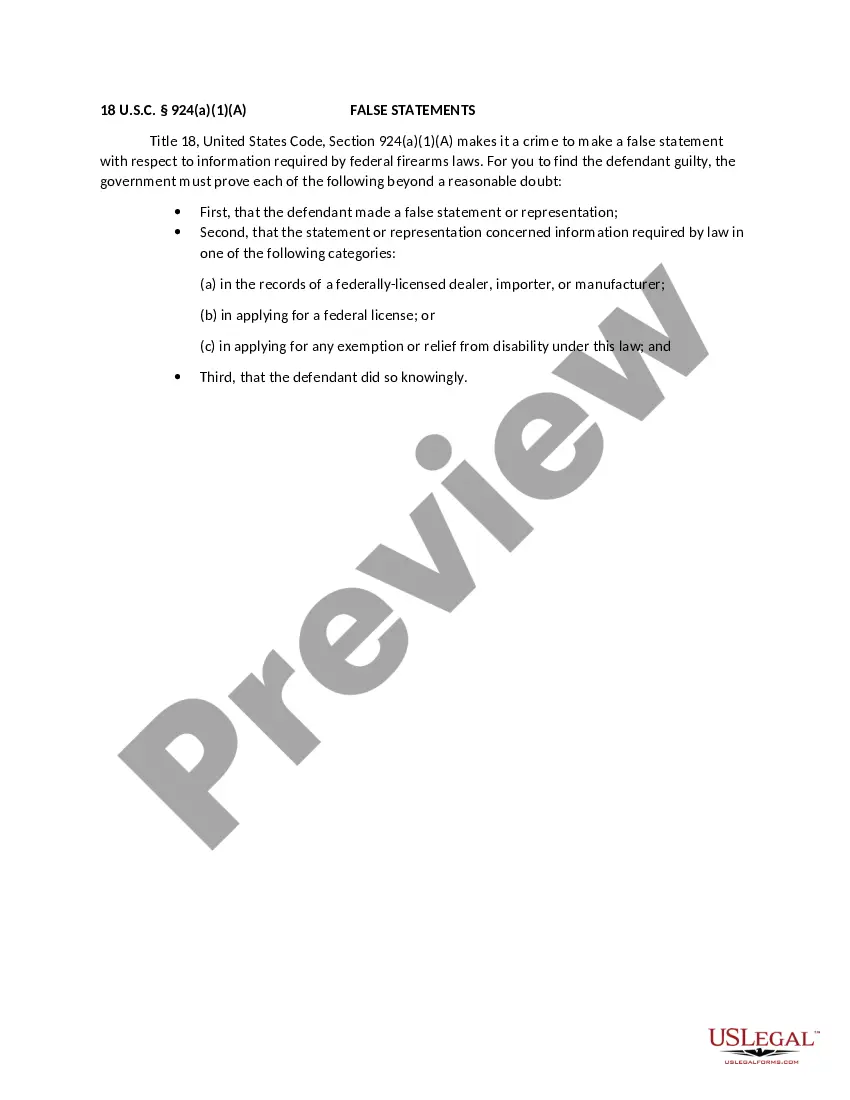
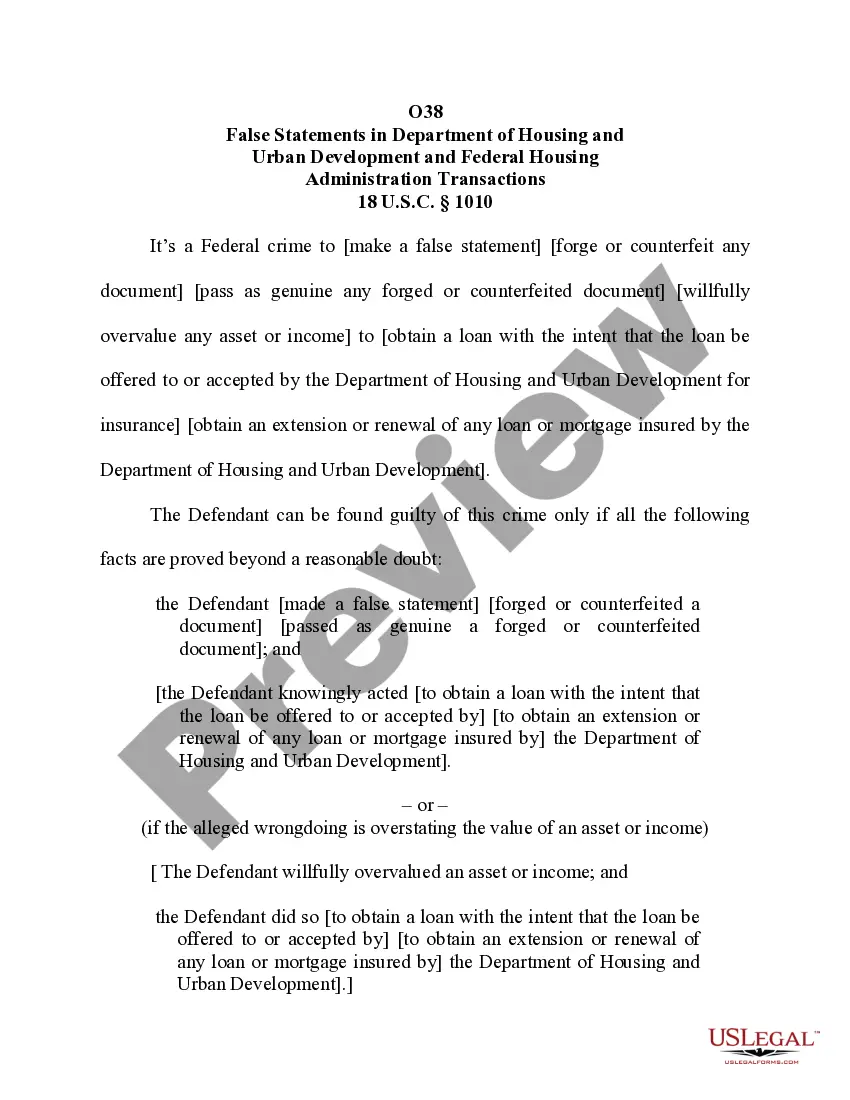
The False Statement to HUD form is a legal document used in cases involving false statements made to the Department of Housing and Urban Development. This form is specifically tied to Title 18, United States Code, Section 1010, which criminalizes false statements that are intended to influence HUD's actions regarding loans or advances of credit. Unlike other legal forms, this document focuses on the intent to deceive government entities in housing-related financial matters.
Main sections of this form
- Definition of false statements, including counterfeited instruments and documents.
- Intent required for the crime, focusing on attempts to influence HUD's actions.
- Requirements for proving knowledge of falsehood or willfulness in overvaluing assets.
- Legal precedents influencing interpretation and enforcement of the statute.
When this form is needed
This form is necessary when an individual is accused of making false statements or submitting fraudulent documents to HUD for the purpose of obtaining financial benefits such as loans or advances. It is relevant in legal proceedings where the accuracy of financial information is crucial, or when contesting allegations related to mortgage fraud.
Who can use this document
- Defendants in federal criminal cases related to HUD.
- Legal representatives or attorneys handling cases of mortgage fraud.
- Individuals who require an understanding of their rights and obligations under relevant federal laws.
How to prepare this document
- Review the legal definitions of offenses outlined in the associated statutes.
- Gather all relevant financial documents to ensure accuracy and validity.
- Determine the intent behind the statements made or documents submitted to HUD.
- Consult legal counsel if uncertain about any clerical entries or legal implications.
- Submit the completed form with all necessary documentation to the appropriate legal authorities.
Notarization guidance
This form usually doesn’t need to be notarized. However, local laws or specific transactions may require it. Our online notarization service, powered by Notarize, lets you complete it remotely through a secure video session, available 24/7.
Get your form ready online
Our built-in tools help you complete, sign, share, and store your documents in one place.
Make edits, fill in missing information, and update formatting in US Legal Forms—just like you would in MS Word.
Download a copy, print it, send it by email, or mail it via USPS—whatever works best for your next step.
Sign and collect signatures with our SignNow integration. Send to multiple recipients, set reminders, and more. Go Premium to unlock E-Sign.
If this form requires notarization, complete it online through a secure video call—no need to meet a notary in person or wait for an appointment.
We protect your documents and personal data by following strict security and privacy standards.

Make edits, fill in missing information, and update formatting in US Legal Forms—just like you would in MS Word.

Download a copy, print it, send it by email, or mail it via USPS—whatever works best for your next step.

Sign and collect signatures with our SignNow integration. Send to multiple recipients, set reminders, and more. Go Premium to unlock E-Sign.

If this form requires notarization, complete it online through a secure video call—no need to meet a notary in person or wait for an appointment.

We protect your documents and personal data by following strict security and privacy standards.
Typical mistakes to avoid
- Failing to fully understand the legal definitions of false statements.
- Not collecting all relevant documentation prior to form submission.
- Forgetting to clarify intent behind any statements made.
Why complete this form online
- Convenience of downloading and completing the form from any location.
- Editability ensures that the form can be tailored to specific circumstances.
- Access to professional legal templates drafted by licensed attorneys, ensuring reliability.
Looking for another form?

Form popularity
FAQ
(A)(1) It is unlawful for a person to wilfully give false, misleading, or incomplete testimony under oath in any court of record, judicial, administrative, or regulatory proceeding in this State.
Potential Consequences Providing false information in an affidavit or other legal document is a misdemeanor in South Carolina. This may result in a maximum of six months' incarceration, a minimum fine of $100, or both.
False pretenses involves an intent to obtain property or money by means of fraud or misrepresentation. For example: False pretenses occur in situations when a salesperson/contractor promises to provide specified goods or services, receives payment, but intentionally fails to deliver on the promise.
The charge of providing false information to law enforcement is a serious public corruption crime in South Carolina. The offense is detailed in South Carolina Code of Laws §16-17-725 (2011), which makes it a misdemeanor criminal offense with a maximum penalty of up to 30 days in jail.
What are False Pretenses? Under California Penal Code §532, anyone who provides false statements, withholds important information, or makes promises they don't intend to keep to another person in order to obtain property is guilty of theft by false pretense.
The crime of False Pretenses requires: a false representation. of a material fact (past or present) with the intent to defraud. that causes the victim to pass possession and title of his or her property.
As laid out in South Carolina General Code Section 16-13-240, it is a crime to obtain a signature, money, or property from someone under false pretenses or misrepresentation of a fact with ?intent to cheat and defraud a person of that property.? Simply put, if you obtain money, property, or the title to property from
Penal Code 532 PC prohibits theft by false pretenses ? which is defined as defrauding someone of money or property by way of false promises or representations. The offense may be prosecuted as a misdemeanor or a felony and carries a penalty of up to 3 years in jail or prison.