New York Codicil to Will Form for Amending Your Will - Will Changes or Amendments
About this form
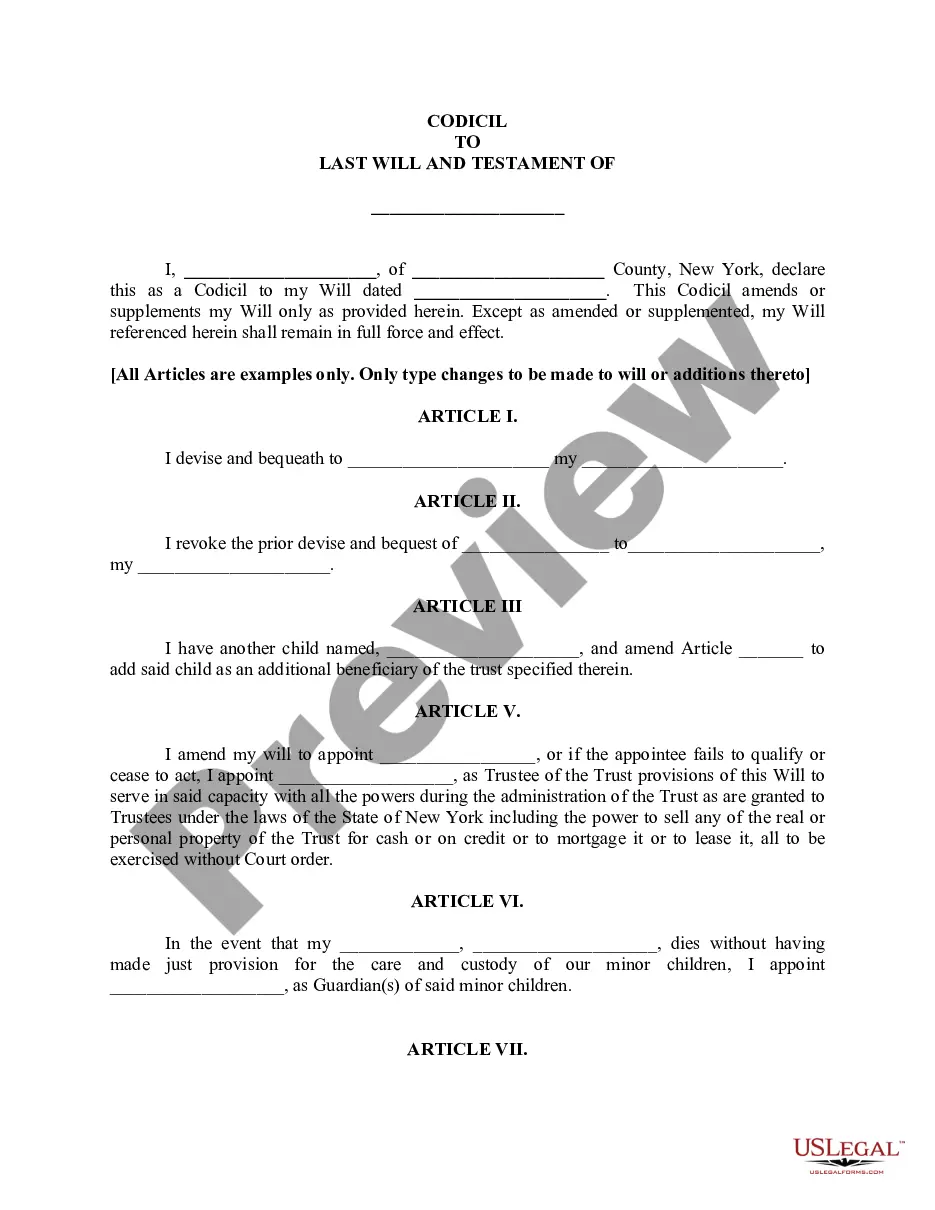
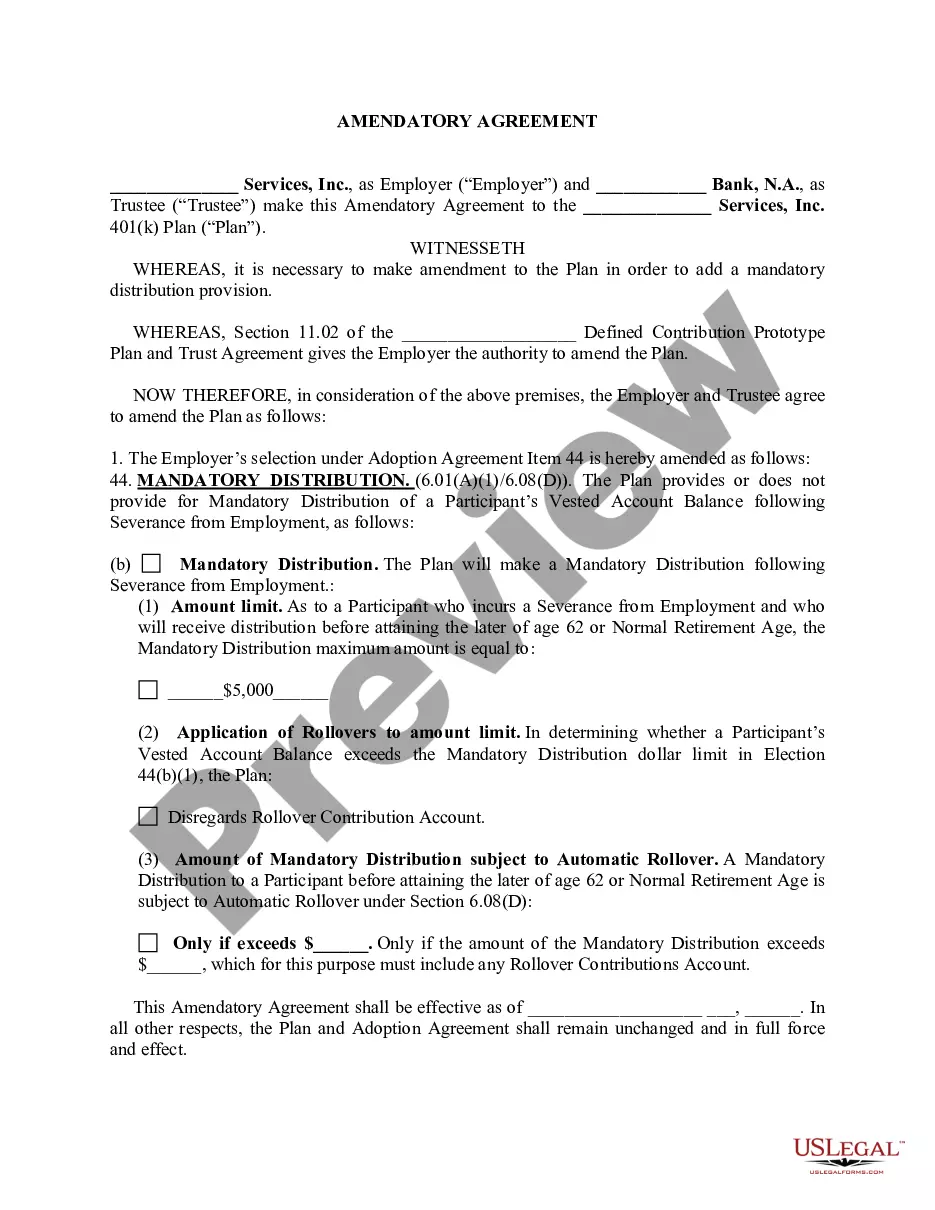
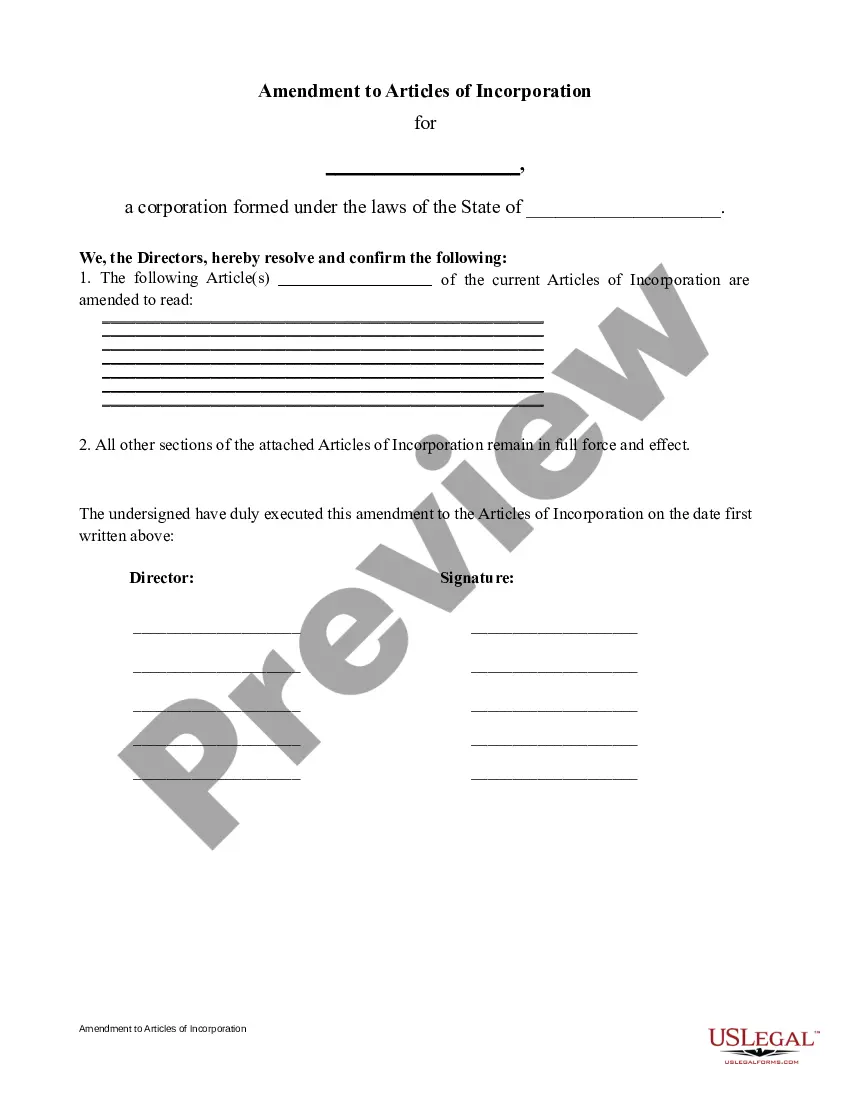
The Codicil to Will Form allows individuals to make amendments to an existing will without creating a new document. This form preserves the validity of the original will while implementing specific changes, such as adding or removing beneficiaries, appointing a new executor, or altering trust provisions. It is a practical option for those who wish to modify their will in a straightforward manner instead of starting over. This form is essential for anyone looking to amend their will in compliance with New York state laws.
Key components of this form
- Identification of the testator and reference to the original will.
- Provisions for amending or supplementing specific articles.
- Sections for specifying new beneficiaries or changes to existing bequests.
- Instructions for appointing a new executor or trustee.
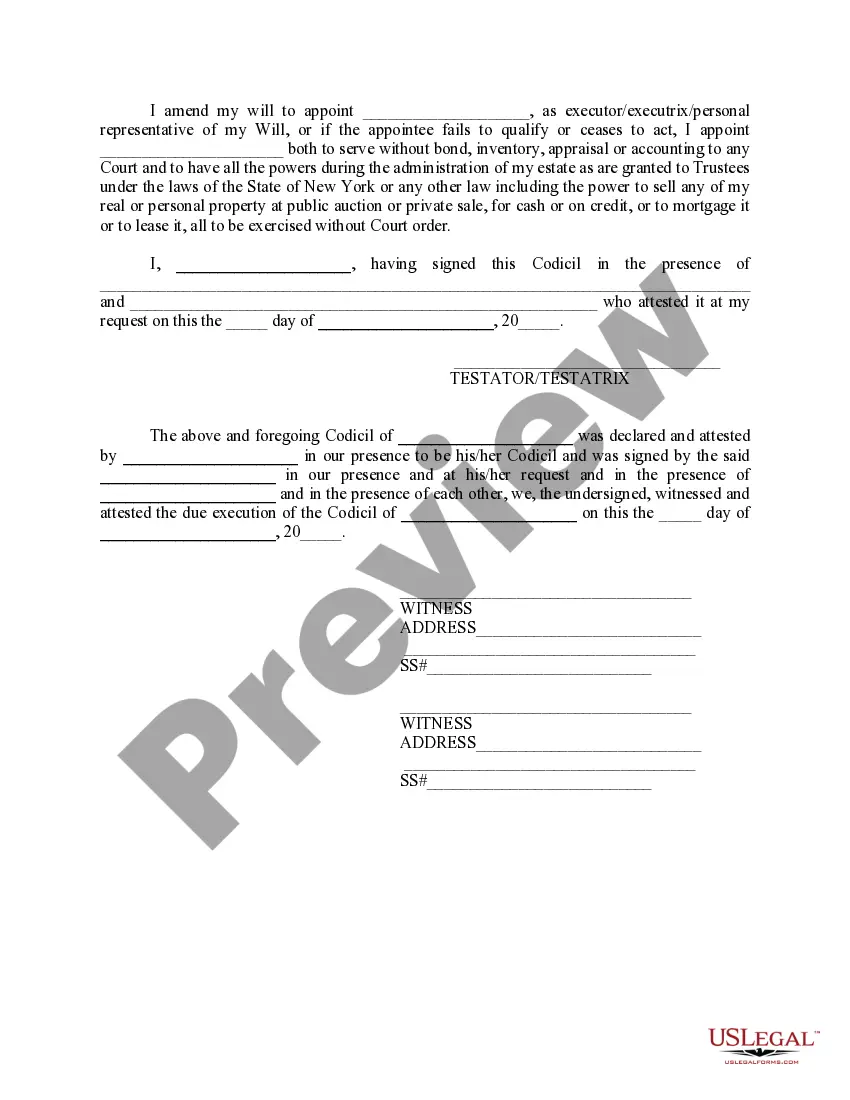
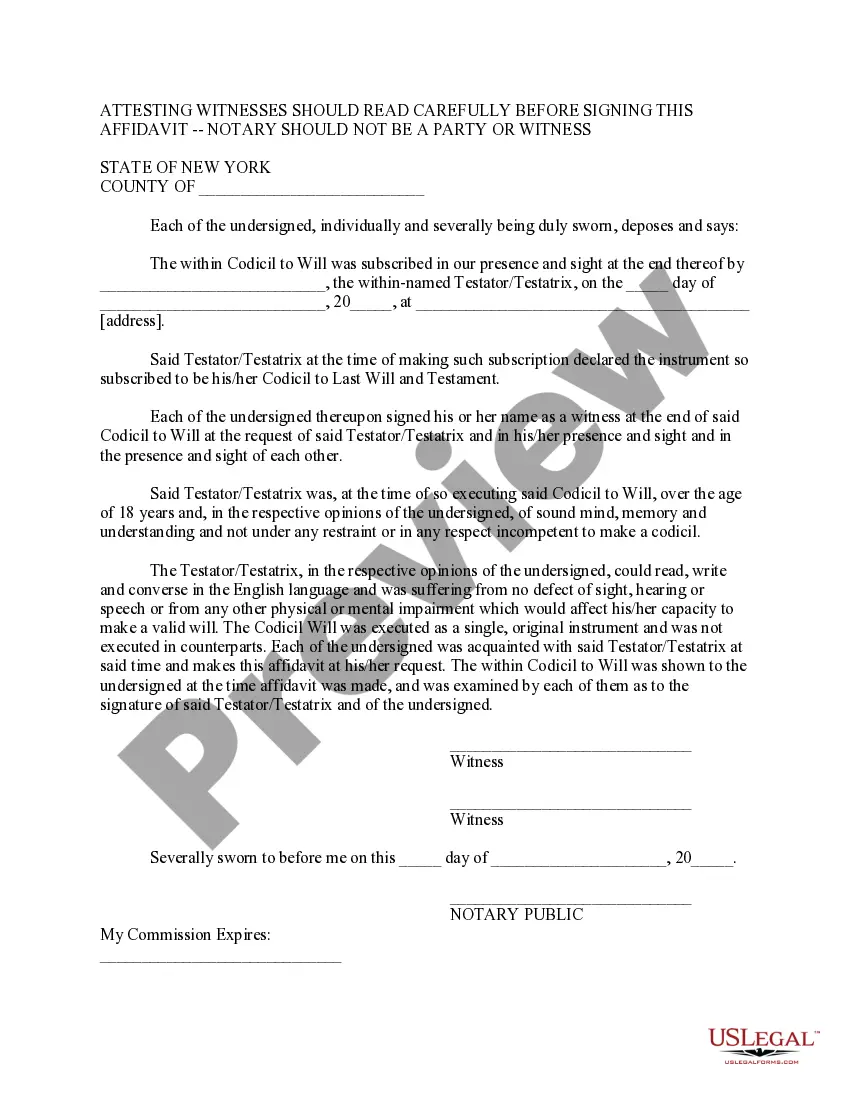
- Witness signatures and notary requirements for legal validity.

Situations where this form applies
This form should be used when a testator wants to amend their existing will due to life changes, such as the birth of a child, marriage, divorce, or the desire to change beneficiaries. It is particularly useful for those who want to make minor adjustments without the need for a completely new will. Using this codicil can save time and resources while ensuring that the will reflects the testator's current intentions.
Intended users of this form
- Individuals who have previously created a will and need to make changes.
- Those looking to clarify or update bequests and beneficiaries.
- Anyone interested in legally documenting changes without drafting a new will.
- Residents of New York wishing to ensure compliance with state-specific laws on will amendments.
How to prepare this document
- Identify yourself as the testator and reference the date of your original will.
- Specify the changes you wish to make, including any new beneficiaries or executors.
- Ensure the document is signed in the presence of two witnesses as required by New York law.
- Have the document notarized to add legal credibility to the amendments.
- Keep a copy of the codicil alongside your original will for future reference.
Does this document require notarization?
This form must be notarized to be legally valid. US Legal Forms provides secure online notarization powered by Notarize, allowing you to complete the process through a verified video call.
Get your form ready online
Our built-in tools help you complete, sign, share, and store your documents in one place.
Make edits, fill in missing information, and update formatting in US Legal Forms—just like you would in MS Word.
Download a copy, print it, send it by email, or mail it via USPS—whatever works best for your next step.
Sign and collect signatures with our SignNow integration. Send to multiple recipients, set reminders, and more. Go Premium to unlock E-Sign.
If this form requires notarization, complete it online through a secure video call—no need to meet a notary in person or wait for an appointment.
We protect your documents and personal data by following strict security and privacy standards.

Make edits, fill in missing information, and update formatting in US Legal Forms—just like you would in MS Word.

Download a copy, print it, send it by email, or mail it via USPS—whatever works best for your next step.

Sign and collect signatures with our SignNow integration. Send to multiple recipients, set reminders, and more. Go Premium to unlock E-Sign.

If this form requires notarization, complete it online through a secure video call—no need to meet a notary in person or wait for an appointment.

We protect your documents and personal data by following strict security and privacy standards.
Typical mistakes to avoid
- Failing to properly identify the original will, leading to confusion in the amendments.
- Not including all necessary witness signatures, which can invalidate the codicil.
- Neglecting to specify all desired amendments clearly, causing ambiguity later.
- Forgetting to notarize the document, even if not a requirement, it can enhance its validity.
Benefits of completing this form online
- Convenient access to downloadable forms that save time and effort.
- Editable templates allow users to personalize their codicil easily.
- Professional guidance ensures compliance with legal standards.
- Secure platform for managing sensitive legal documents.
Looking for another form?
Form popularity
FAQ
Making changes to your will You cannot amend your will after it's been signed and witnessed. The only way you can change a will is by making an official alteration called a codicil. You must sign a codicil and get it witnessed in the same way as witnessing a will.
In short, no a codicil to a Will does not have to be notarized. However, laws and requirements vary from state to state. A codicil does have to be signed in front of at least two witnesses who are not listed as beneficiaries, guardians, or executors in your Will.
Rather than taking the will to an attorney, you may attempt to change the will yourself. Not all handwritten changes to a will may be valid, however.A codicil is a legal document, added to your will, through which you can make valid changes to your estate plan.
You cannot amend your will after it's been signed and witnessed. The only way you can change a will is by making an official alteration called a codicil. You must sign a codicil and get it witnessed in the same way as witnessing a will. There's no limit on how many codicils you can add to a will.
The Codicil cross-refers to the original Will and gives details of the amendments or additions you want to make to it. The Codicil must then be executed in the same way as for the Will i.e. signed with two witnesses (although the witnesses do not need to be the same people as the witnesses on the Will).
Identify the section and content you want to change. The first step in amending your will is to review it. Type up the changes. Take the time to type up the codicil. Sign and date the codicil. Store your codicil in a safe place.