Rhode Island Acknowledgment for an individual
About this form
The Acknowledgment for an individual is a legal document that serves as proof that a person has voluntarily signed a document in the presence of a notary public. This form is crucial in authenticating the identity of the signer and ensuring that the signature is legally binding. It differs from other forms, such as affidavits or powers of attorney, by focusing specifically on acknowledging the act of signing rather than granting authority or asserting facts.
Form components explained
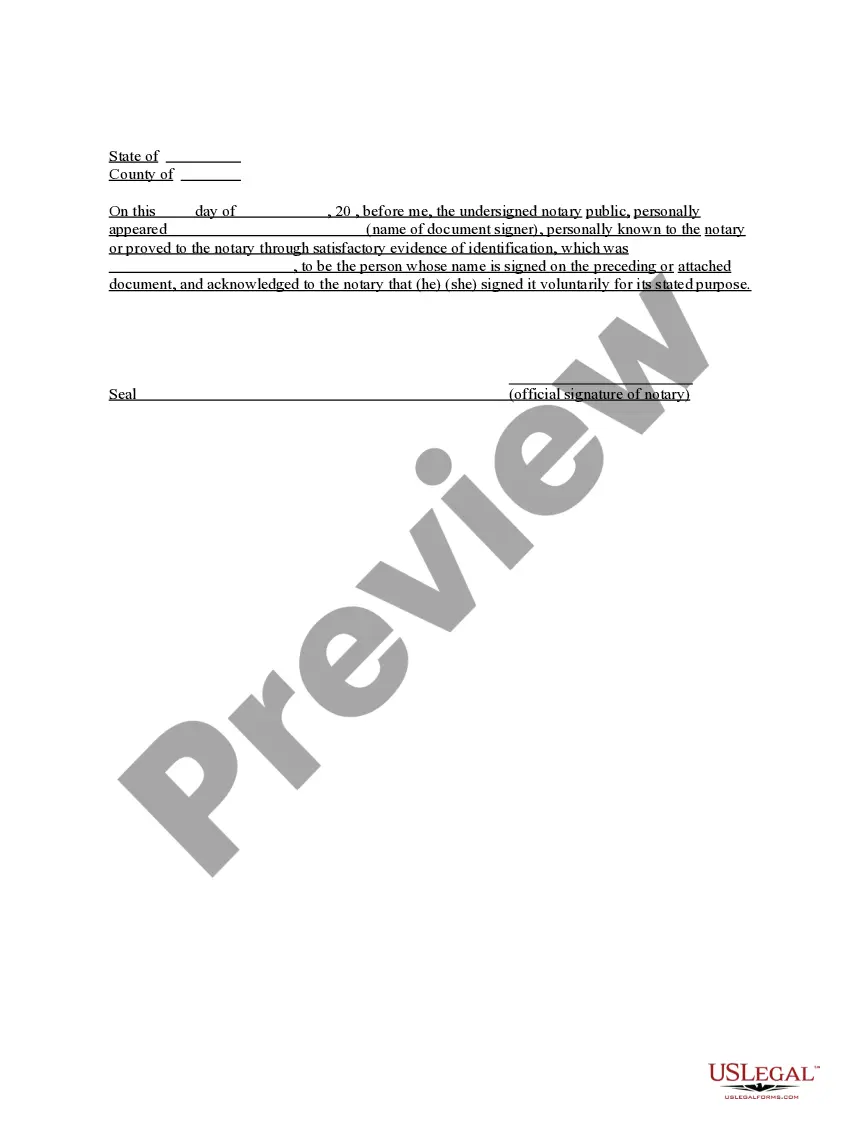
- Name of the signer: The person who is acknowledging their signature.
- Date of acknowledgment: The specific day the acknowledgment is made.
- Notary public details: Information including the official signature and seal of the notary.
- Statement of acknowledgment: A declaration that the signer appeared in front of the notary and signed voluntarily.
- State and county information: The location where the acknowledgment takes place.
When this form is needed
You should use the Acknowledgment for an individual when you need to provide assurance that a person has signed a legal document in front of a notary. This is often required in transactions involving property transfers, legal agreements, or any document where verification of signature authenticity is necessary. It may also be used for wills and trusts to establish the intent of the signer.
Who needs this form
- Individuals needing to verify their signature on a legal document.
- Notaries public who require a formal acknowledgment process.
- Legal professionals assisting clients with document execution.
- Anyone involved in real estate transactions or other agreements requiring notarization.
How to complete this form
- Identify the parties: Enter the name of the signer who will acknowledge their signature.
- Specify the date: Fill in the date when the acknowledgment is performed.
- Fill in signer's details: Include any additional information about the signer's identity or status.
- Notary section: The notary must sign and seal the document to affirm the acknowledgment.
- Review for accuracy: Ensure all fields are correctly filled out and that the document is signed where required.
Does this form need to be notarized?
Yes, this form must be notarized to be legally valid. A notary public will confirm the identity of the signer and witness the signing process. US Legal Forms offers integrated online notarization, providing 24/7 availability through secure video calls, ensuring that your document is recognized legally without the need for travel.
Get your form ready online
Our built-in tools help you complete, sign, share, and store your documents in one place.
Make edits, fill in missing information, and update formatting in US Legal Forms—just like you would in MS Word.
Download a copy, print it, send it by email, or mail it via USPS—whatever works best for your next step.
Sign and collect signatures with our SignNow integration. Send to multiple recipients, set reminders, and more. Go Premium to unlock E-Sign.
If this form requires notarization, complete it online through a secure video call—no need to meet a notary in person or wait for an appointment.
We protect your documents and personal data by following strict security and privacy standards.

Make edits, fill in missing information, and update formatting in US Legal Forms—just like you would in MS Word.

Download a copy, print it, send it by email, or mail it via USPS—whatever works best for your next step.

Sign and collect signatures with our SignNow integration. Send to multiple recipients, set reminders, and more. Go Premium to unlock E-Sign.

If this form requires notarization, complete it online through a secure video call—no need to meet a notary in person or wait for an appointment.

We protect your documents and personal data by following strict security and privacy standards.
Mistakes to watch out for
- Failing to have the signer present during the acknowledgment.
- Leaving out crucial details, such as the date or notary signature.
- Using an unclear or incorrect form for the specific state requirements.
- Not properly identifying the signer with acceptable identification.
Benefits of completing this form online
- Convenience: Easily download the form from your location without needing a physical visit.
- Editability: Fill in the required information digitally, minimizing mistakes.
- Reliability: Obtain a professionally drafted form that adheres to legal standards.
Looking for another form?

Form popularity
FAQ
It depends. You may notarize a document that does not have pre-printed notarial wording as long as the signer tells you what type of notarization is needed.As nonattorneys, Notaries cannot decide the type of notarization to perform on a document because the choice can have important legal ramifications.
What Is An Acknowledgment? The purpose of an acknowledgment is for a signer, whose identity has been verified, to declare to a Notary or notarial officer that he or she has willingly signed a document.The signer may either sign the document before appearing before you, or in your presence.
This is a form that shows that a notary public has established the identity of the signer(s) and witnessed the signature of a document. It only demonstrates that the document has been signed and does not make any claims about the information in the document.
The Individual Acknowledgment certificate is used when an individual is signing and acknowledging on his or her own behalf.
What Is An Acknowledgment? The purpose of an acknowledgment is for a signer, whose identity has been verified, to declare to a Notary or notarial officer that he or she has willingly signed a document.The signer may either sign the document before appearing before you, or in your presence.
The purpose of an acknowledgment is for a signer, whose identity has been verified, to declare to a Notary or notarial officer that he or she has willingly signed a document.The signer may either sign the document before appearing before you, or in your presence.
An acknowledgment is a formal declaration before an authorized official such as a notary, by a person who has signed a document, that the document is his or her act. Acknowledgments are governed by the Uniform Acknowledgment Act. The person acknowledging the document must personally appear before the notary.
Stelk, known to me to be the person nained in and who executed the above Mutual Release and Settlement Agreement, and he acknowledged to me that he executed the same as his free act and deed.
Unlike jurats, an acknowledgment does not need to be signed in the presence of a notary. However, the affiant does need to swear or affirm that they signed under their own free will.