West Virginia Performance Horse Lease Agreement
What this document covers
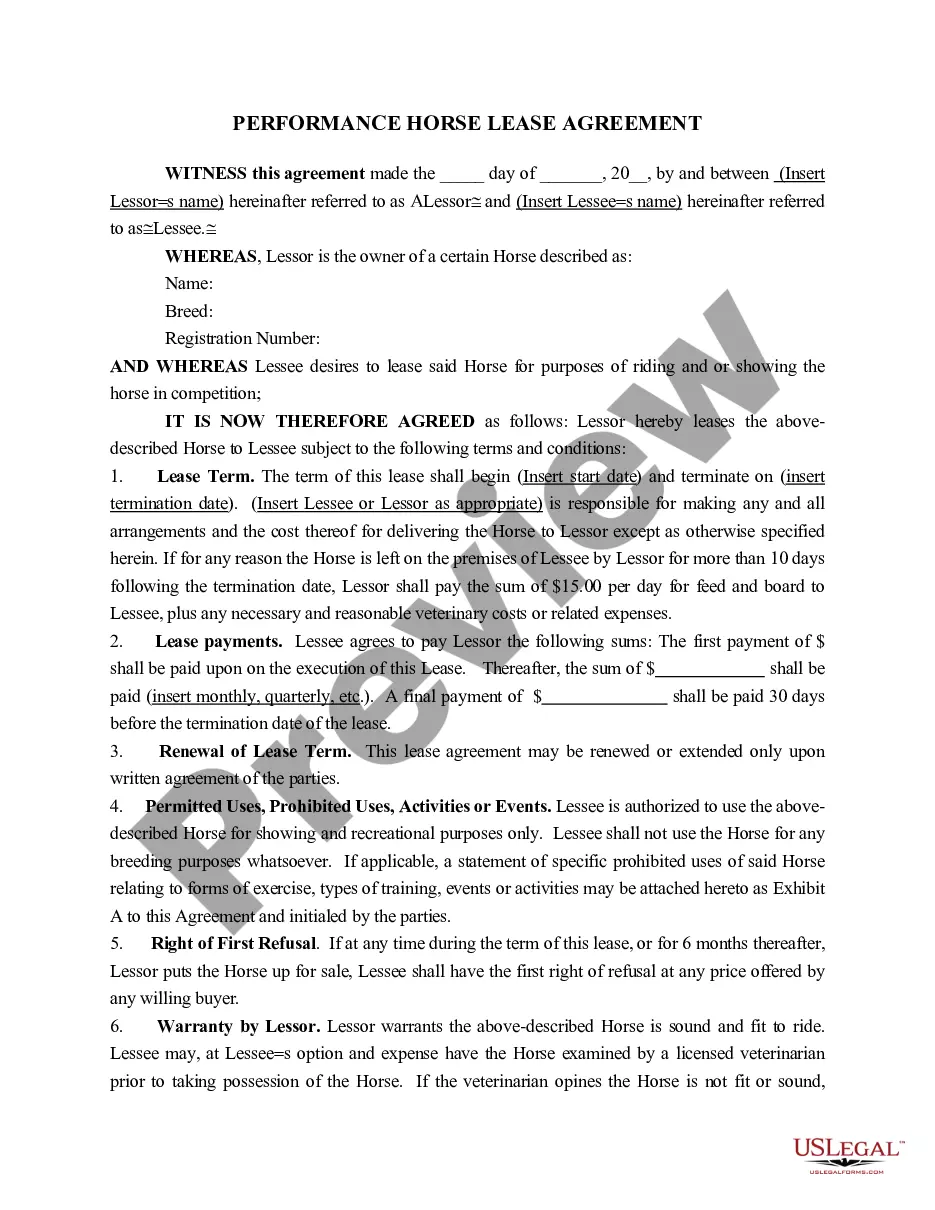
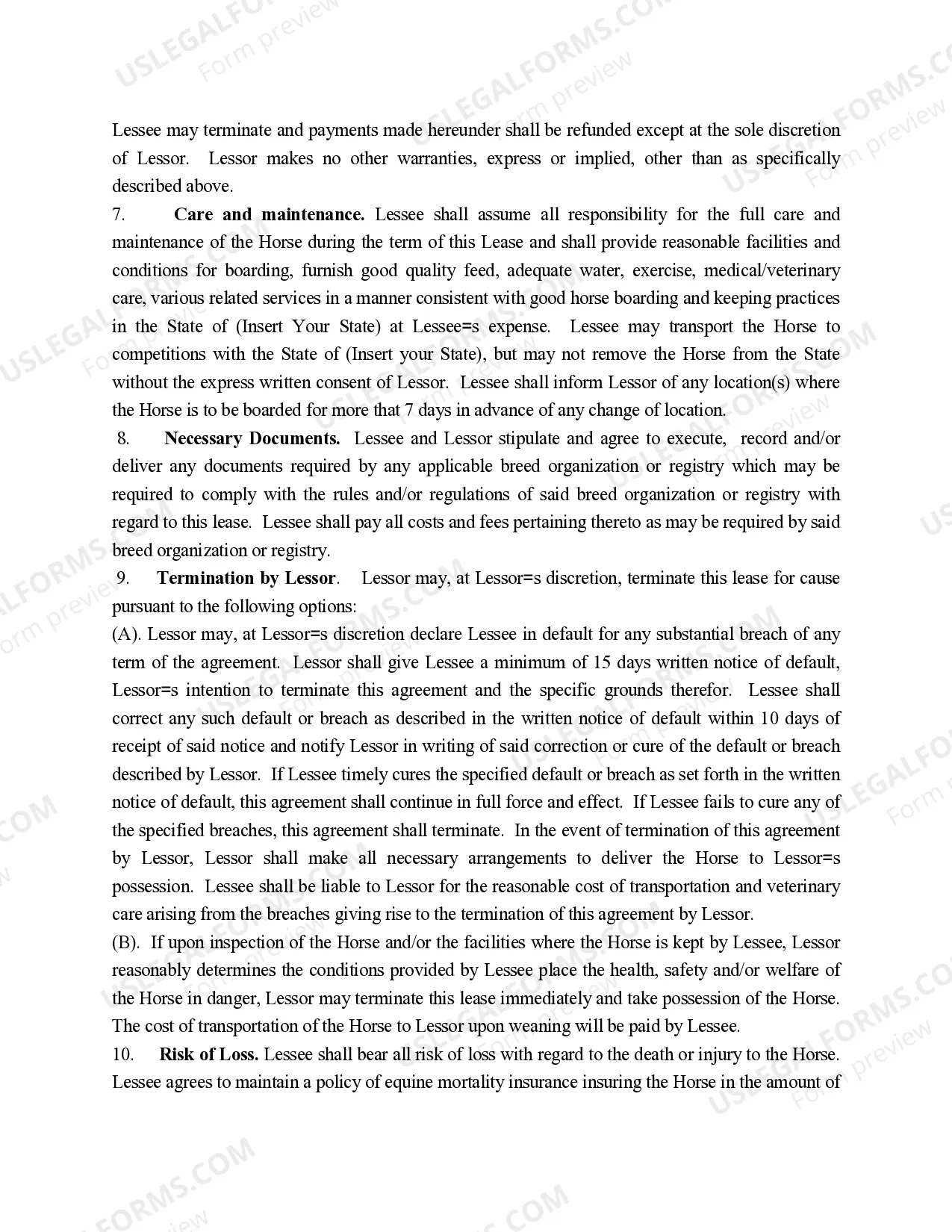
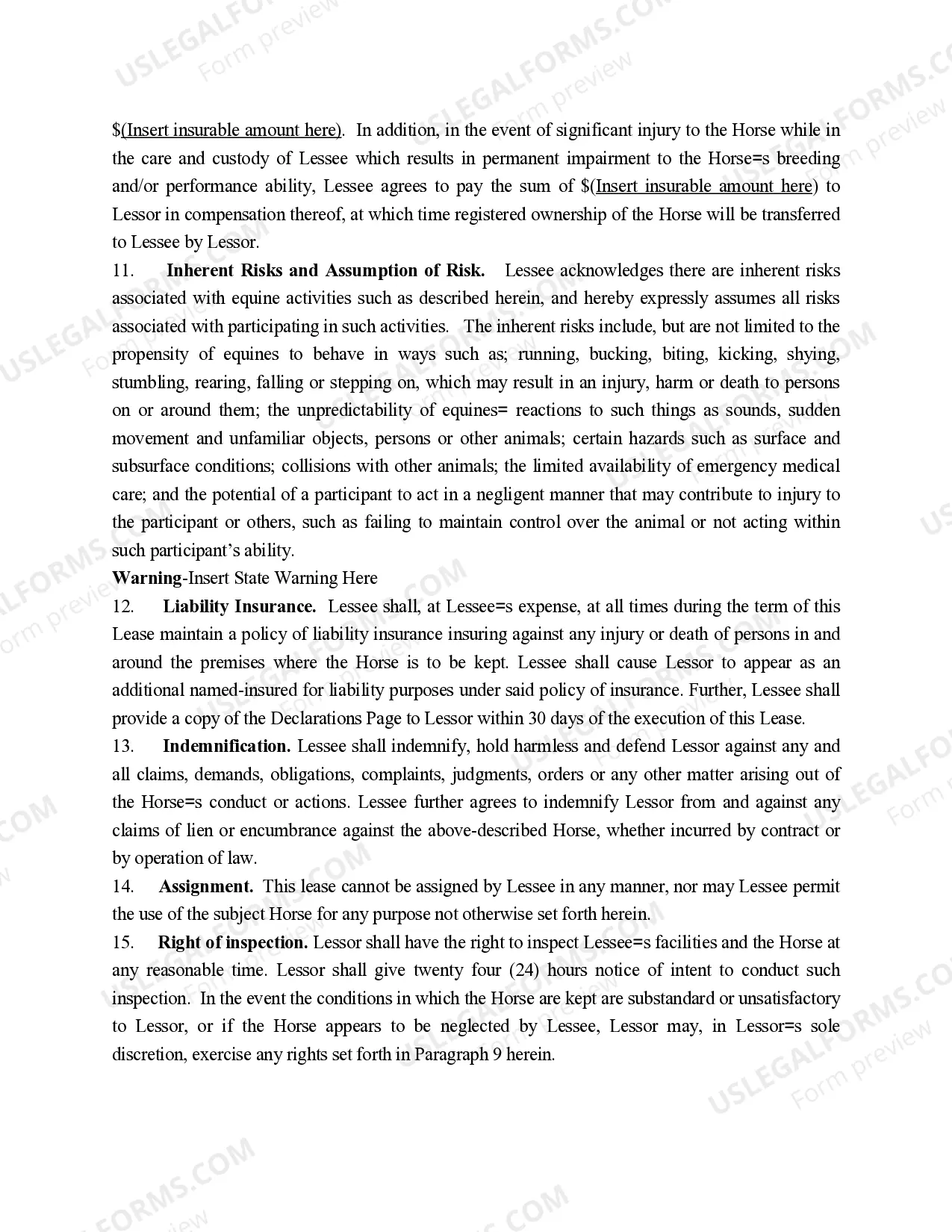
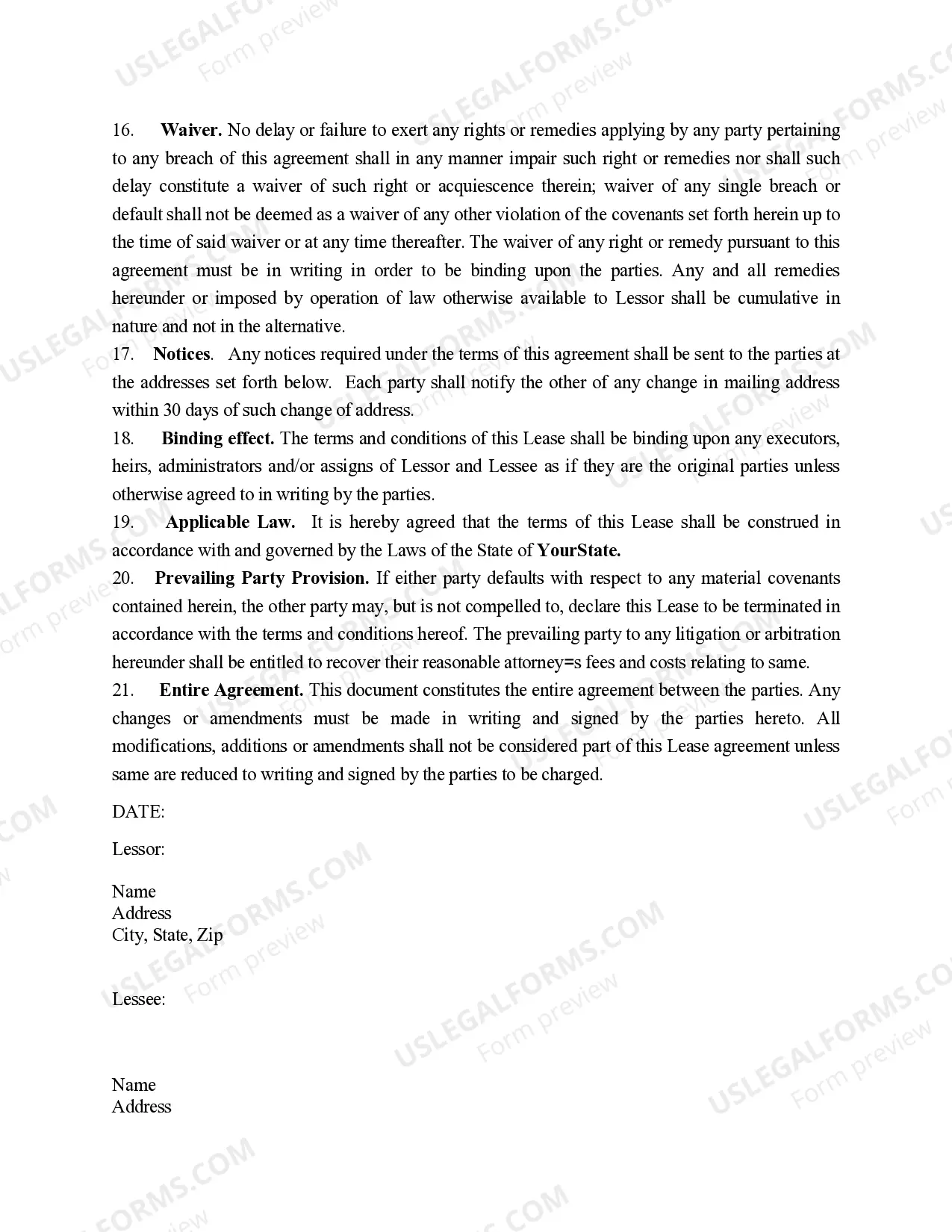
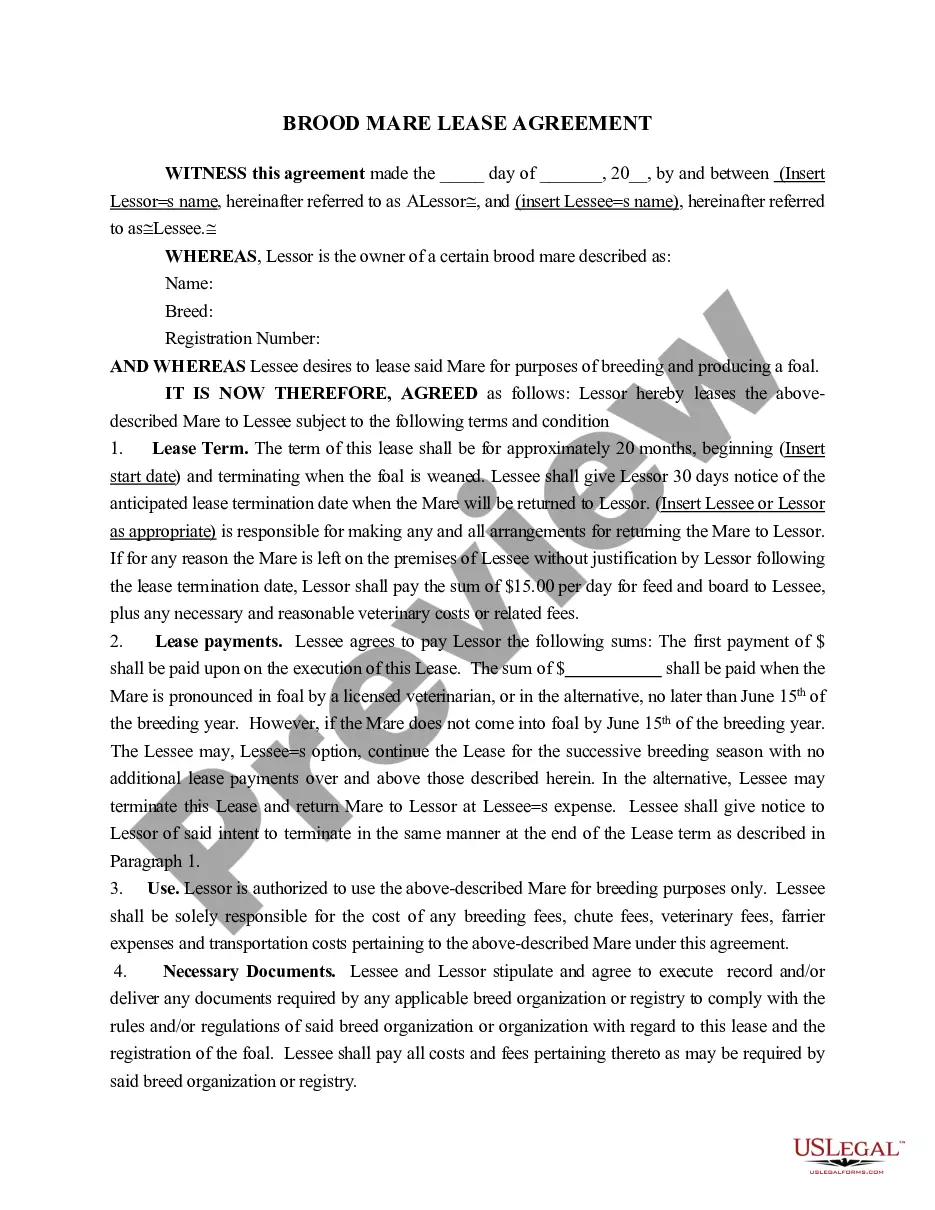
The Performance Horse Lease Agreement is a legal document used to formalize the leasing of a horse for riding and showing purposes. This agreement outlines the rights and responsibilities of both the lessor (horse owner) and the lessee (individual leasing the horse). It ensures that both parties understand the terms regarding lease payments, care and maintenance of the horse, and other important provisions. This form differs from other equine agreements, such as sale contracts, as it specifically pertains to leased equine services rather than ownership transfer.
Main sections of this form
- Lease Term: Specifies the lease duration with start and end dates.
- Lease Payments: Outlines payment amounts, schedules, and conditions.
- Permitted Uses: Clearly states approved uses of the horse, such as showing and recreational riding.
- Rights and Obligations: Details the responsibilities for care, maintenance, and handling of the horse.
- Right of First Refusal: Provisions if the lessor decides to sell the horse during the lease term.
- Applicable Law: Indicates the governing laws for the agreement depending on the state.

Situations where this form applies
This form is needed when an individual wishes to lease a horse for competitive events or recreational riding. It's beneficial for riders participating in competitions who may not have the budget to purchase a horse or those needing a specific breed or capability for their riding goals. The agreement protects both parties by establishing clear terms and conditions for the lease arrangement.
Intended users of this form
- Horse owners looking to lease their horses for riding or showing.
- Individuals or trainers interested in leasing a horse for competition or recreational use.
- Equestrian facilities facilitating horse leasing arrangements.
- Anyone needing a structured agreement to outline leasing terms and conditions.
Instructions for completing this form
- Identify the parties involved: Enter the names and addresses of the lessor and lessee.
- Specify the horse details: Fill in the horse's name, breed, and registration number.
- Enter lease term: Provide the start and end dates for the lease agreement.
- Detail payment terms: Clearly outline the payment amounts and schedule.
- List permitted and prohibited uses: Make sure both parties agree on how the horse may and may not be used.
- Sign and date the agreement: Ensure both parties sign the document to make it legally binding.
Does this document require notarization?
Notarization is not commonly needed for this form. However, certain documents or local rules may make it necessary. Our notarization service, powered by Notarize, allows you to finalize it securely online anytime, day or night.
Get your form ready online
Our built-in tools help you complete, sign, share, and store your documents in one place.
Make edits, fill in missing information, and update formatting in US Legal Forms—just like you would in MS Word.
Download a copy, print it, send it by email, or mail it via USPS—whatever works best for your next step.
Sign and collect signatures with our SignNow integration. Send to multiple recipients, set reminders, and more. Go Premium to unlock E-Sign.
If this form requires notarization, complete it online through a secure video call—no need to meet a notary in person or wait for an appointment.
We protect your documents and personal data by following strict security and privacy standards.

Make edits, fill in missing information, and update formatting in US Legal Forms—just like you would in MS Word.

Download a copy, print it, send it by email, or mail it via USPS—whatever works best for your next step.

Sign and collect signatures with our SignNow integration. Send to multiple recipients, set reminders, and more. Go Premium to unlock E-Sign.

If this form requires notarization, complete it online through a secure video call—no need to meet a notary in person or wait for an appointment.

We protect your documents and personal data by following strict security and privacy standards.
Common mistakes to avoid
- Failing to specify the full terms of payment or lease duration.
- Neglecting to detail permitted and prohibited uses of the horse.
- Not obtaining signatures from both parties.
- Omitting to include the right of first refusal clause.
- Using vague language that may lead to misunderstandings.
Why use this form online
- Convenient access to downloadable templates at any time.
- Easy to customize for specific lease arrangements and horse details.
- Reliability from forms drafted by licensed attorneys.
- Streamlined process to ensure all necessary information is included.
Key takeaways
- The Performance Horse Lease Agreement is essential for both owners and lessees to outline roles, responsibilities, and payment terms.
- It's important to specify allowed uses of the horse to avoid miscommunication.
- Careful completion and clarity of the agreement can help prevent future disputes.
- Consult state regulations to ensure the agreement meets any local legal requirements.
Looking for another form?


Form popularity
FAQ
The Lease Must be in Writing It does not matter if the lease is handwritten or typed.
Collect each party's information. Include specifics about your property. Consider all of the property's utilities and services. Know the terms of your lease. Set the monthly rent amount and due date. Calculate any additional fees. Determine a payment method. Consider your rights and obligations.
When Does a Rental Lease Become Legally Binding? The lease becomes legally binding when all parties have signed: the landlord and all tenants living in the unit who are 18 and older. If you're worried about situations where a lease needs to end early, learn about breaking a lease and grounds for eviction.
The lease becomes legally binding when all parties have signed: the landlord and all tenants living in the unit who are 18 and older. If you're worried about situations where a lease needs to end early, learn about breaking a lease and grounds for eviction.
Option #1: The person leasing the horse is responsible for all of the horse's expenses (board, feed, veterinary, farrier, etc). The person leasing the horse may ride or use the horse any time they'd like. Full leases rarely restrict riding days, times, or horse-related events, like attending a horse show.
A written agreement can act as a roadmap for the landlord-tenant relationship, especially if a dispute arises. Also, real estate (land) leases for more than one year must be in writing. If a lease for over one year is not in writing, it will generally not be enforceable in court.
The Lease Must be in Writing It does not matter if the lease is handwritten or typed. If the lease is for more than one year, it must be in written form and contain the following terms.
A free lease means that the horse is leased to someone without any payment to the owner. When you have a free lease you retain ownership and control of your horse but your horse, in best case scenarios, is still cared for and loved. Everyone wins. The owner has good care for the horse they love.
Names of all tenants. Limits on occupancy. Term of the tenancy. Rent. Deposits and fees. Repairs and maintenance. Entry to rental property. Restrictions on tenant illegal activity.