Rhode Island Demand For Direct Payment
What is this form?
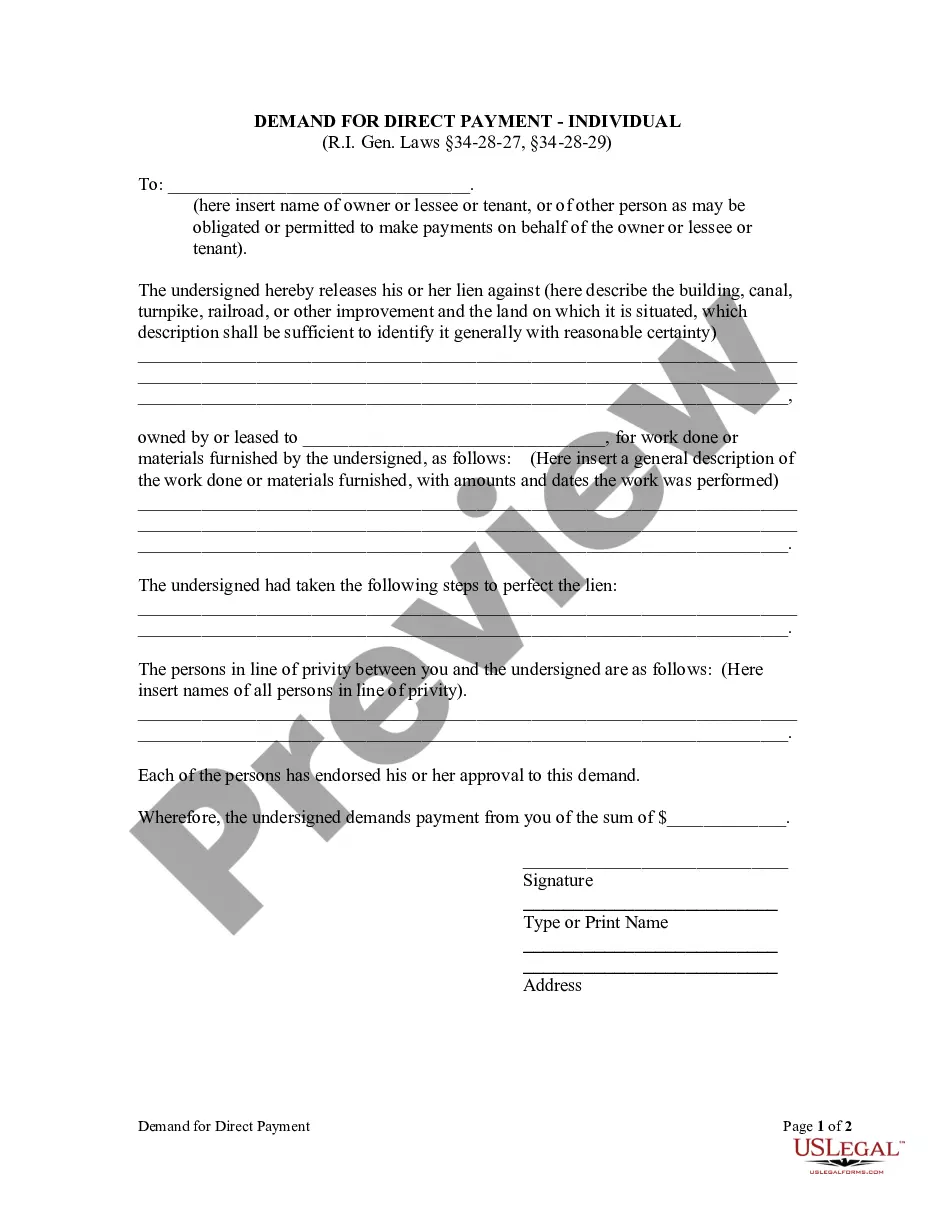
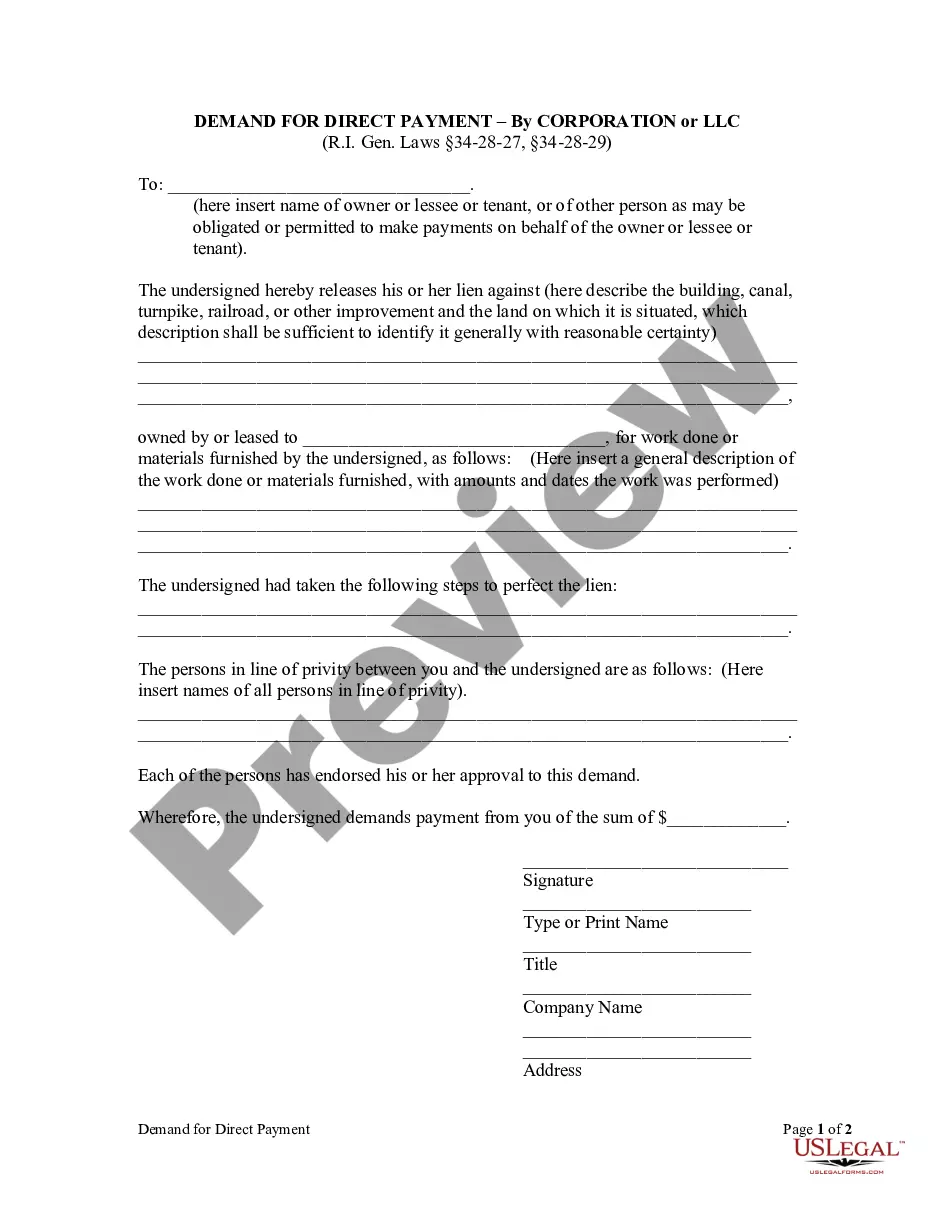
The Demand for Direct Payment is a legal form that enables individuals who hold a lien to request direct payment for work completed or materials provided. This form is essential for lien holders who, despite releasing their lien, wish to ensure they receive payment directly from the property owner or tenant. It differs from other collection methods by formalizing the demand for payment while establishing a clear record of consent from all parties involved in the transaction.
Form components explained
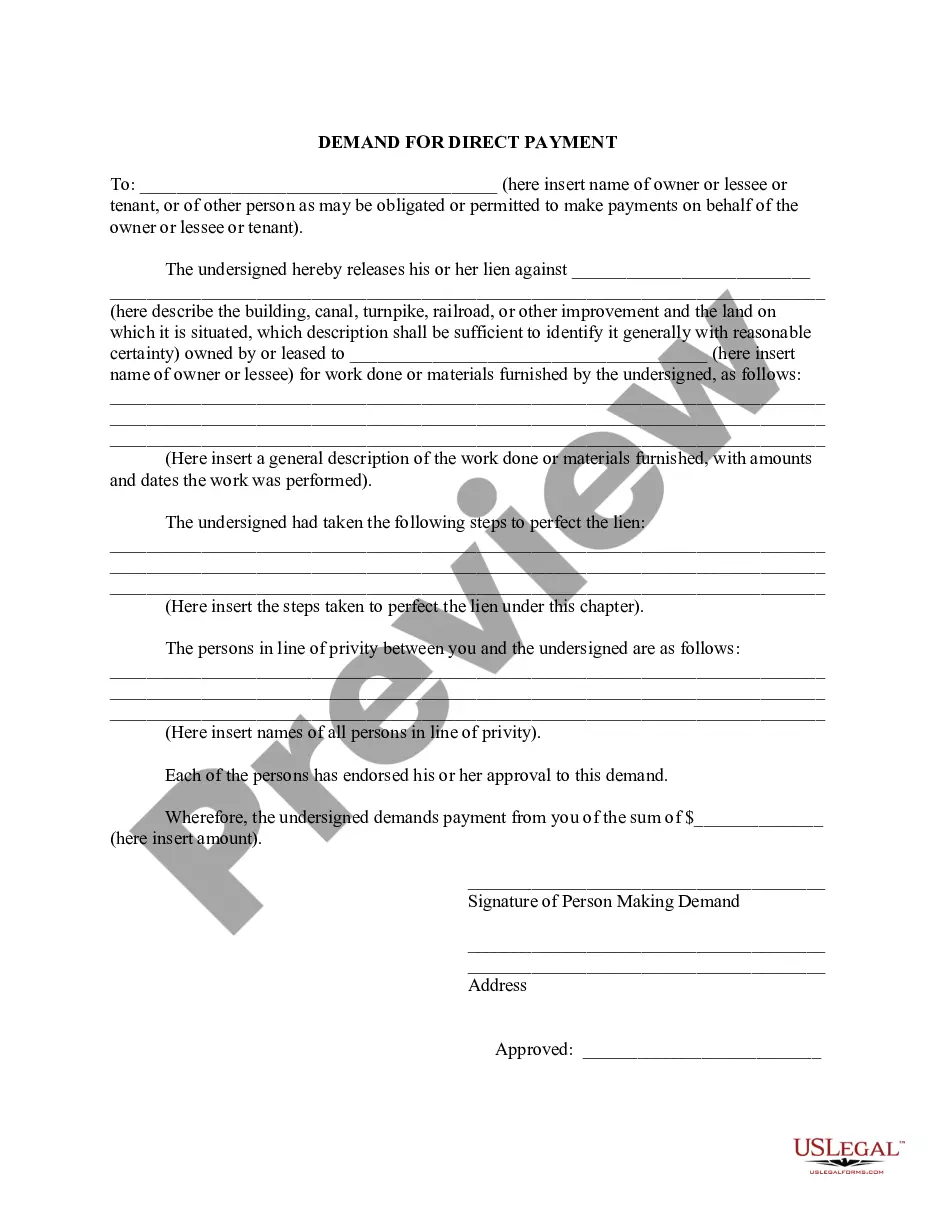
- Identification of the property owner, lessee, or authorized person responsible for payment.
- Description of the property where work was performed or materials were supplied.
- Details of the work done or materials provided, including amounts and dates.
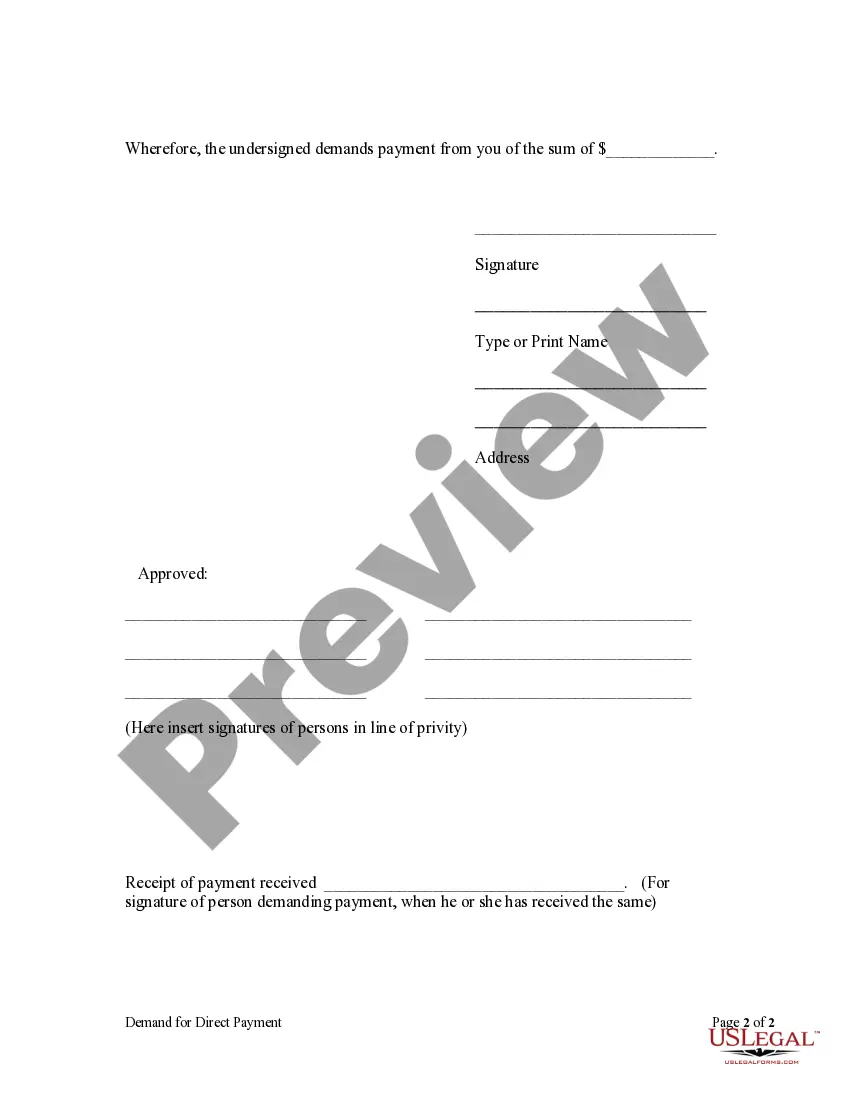
- List of persons in line of privity who consent to the demand for payment.
- Signature of the lien holder, along with their printed name and address.
- Approval signatures from all parties in line of privity.
Situations where this form applies
This form should be used when a lien holder has completed their work or supplied materials but has not received payment. It is appropriate after they have released their lien but still want to ensure they receive the owed amount directly from the owner, lessee, or tenant. Ideal scenarios include construction projects, renovation work, or any situation where lien rights have been established.
Who should use this form
- Contractors or subcontractors seeking payment for completed work.
- Suppliers of materials who have placed a lien on a property.
- Any legal representative managing lien claims for clients in construction or renovation.
- Property owners or lessees needing a formal demand for payment process.
Instructions for completing this form
- Identify the owner, lessee, or authorized person by inserting their name at the beginning of the form.
- Provide a clear and sufficient description of the property and improvements where the work was performed.
- Detail the scope of work done or materials provided, including amounts due and completion dates.
- Input the names of all persons in line of privity and ensure they consent to the demand by obtaining their signatures.
- Finalize the form by signing it, including the printed name and address of the demandant.
- Ensure all parties acknowledge receipt of payment by signing in the designated section.
Does this form need to be notarized?
This form does not typically require notarization unless specified by local law. However, having the signatures notarized could provide additional legal protection.
Get your form ready online
Our built-in tools help you complete, sign, share, and store your documents in one place.
Make edits, fill in missing information, and update formatting in US Legal Forms—just like you would in MS Word.
Download a copy, print it, send it by email, or mail it via USPS—whatever works best for your next step.
Sign and collect signatures with our SignNow integration. Send to multiple recipients, set reminders, and more. Go Premium to unlock E-Sign.
If this form requires notarization, complete it online through a secure video call—no need to meet a notary in person or wait for an appointment.
We protect your documents and personal data by following strict security and privacy standards.

Make edits, fill in missing information, and update formatting in US Legal Forms—just like you would in MS Word.

Download a copy, print it, send it by email, or mail it via USPS—whatever works best for your next step.

Sign and collect signatures with our SignNow integration. Send to multiple recipients, set reminders, and more. Go Premium to unlock E-Sign.

If this form requires notarization, complete it online through a secure video call—no need to meet a notary in person or wait for an appointment.

We protect your documents and personal data by following strict security and privacy standards.
Avoid these common issues
- Failing to obtain signatures from all parties in line of privity.
- Not clearly describing the work done or materials supplied.
- Missing the property owner's name or failing to properly identify the real estate.
- Not specifying amounts due or failing to include payment dates.
Benefits of using this form online
- Convenient access to download and complete the form at any time.
- Editability allows for quick adjustments to the document as needed.
- Forms are drafted by licensed attorneys, ensuring reliability and compliance with legal standards.
Key takeaways
- The Demand for Direct Payment form is crucial for securing payment after work has been performed under a lien.
- Ensure all approvals and signatures are obtained from relevant parties to validate the demand.
- This form adheres to special requirements set forth by Rhode Island law regarding liens.
Looking for another form?
Form popularity
FAQ
Submit a new claim. You can do this via telephone/internet/mail. Wait for a response. Once your claim is taken up, the the State Unemployment Agency will check you remaining benefit balance and examine if you still continue to qualify for the benefits.
We strongly recommend payment via direct deposit to reduce delays in receiving your benefit. Once a payment has been authorized, it is generally deposited in 48 hours.
While it's unlikely that just anyone can put a lien on your home or land, it's not unheard of for a court decision or a settlement to result in a lien being placed against a property.
Someone who is owed money is generally not able to just put a lien on property without first securing a judgment. Securing a judgment requires the creditor to sue the debtor. This may be through circuit court in many jurisdictions. If under a certain dollar amount, this suit may be through the small claims court.
Claimants can reach the call center by calling 401-415-6772.
File a Claim By Phone Contact us at (401) 415-6772 to file a new claim or refile your claim during normal business hours.
How does a creditor go about getting a judgment lien in Rhode Island? To attach the lien, the creditor must request execution of attachment within 48 hours after entry of the judgment, then file the execution with the town clerk or recorder of deeds in the Rhode Island town where the debtor's property is located.
If you are collecting UI, please click here to change your payment method. If you are collecting TDI/TCI, you can change from direct deposit to EPC by contacting the Temporary Disability Customer Service Center at 401-462-8420 or visit www.dlt.ri.gov/tdi/.
Can a lien be placed on your property without you knowing? Yes, it happens. Sometimes a court decision or settlement results in a lien being placed on a property, and for some reason the owner doesn't know about it initially.