Rhode Island Demand For Direct Payment in connection with lien
About this form
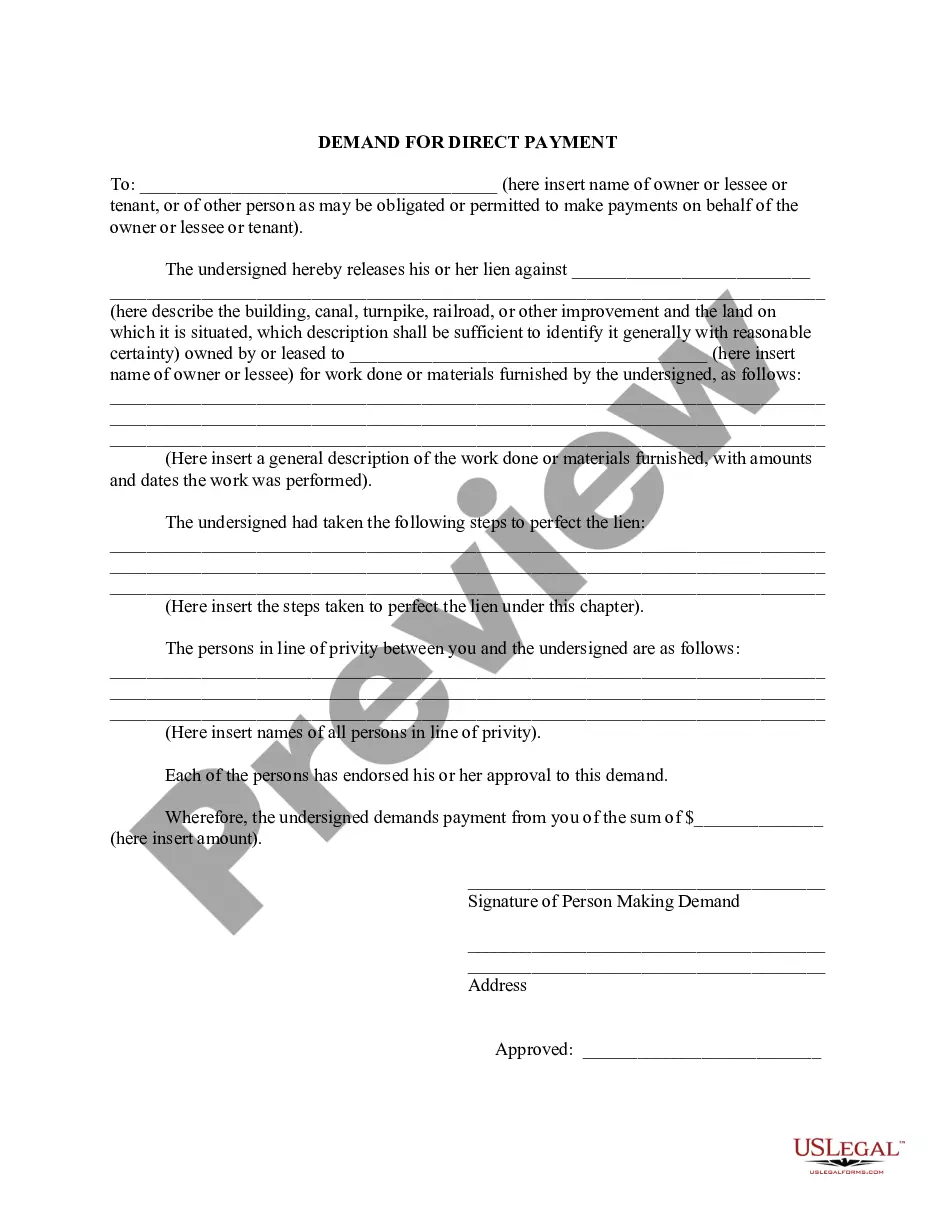
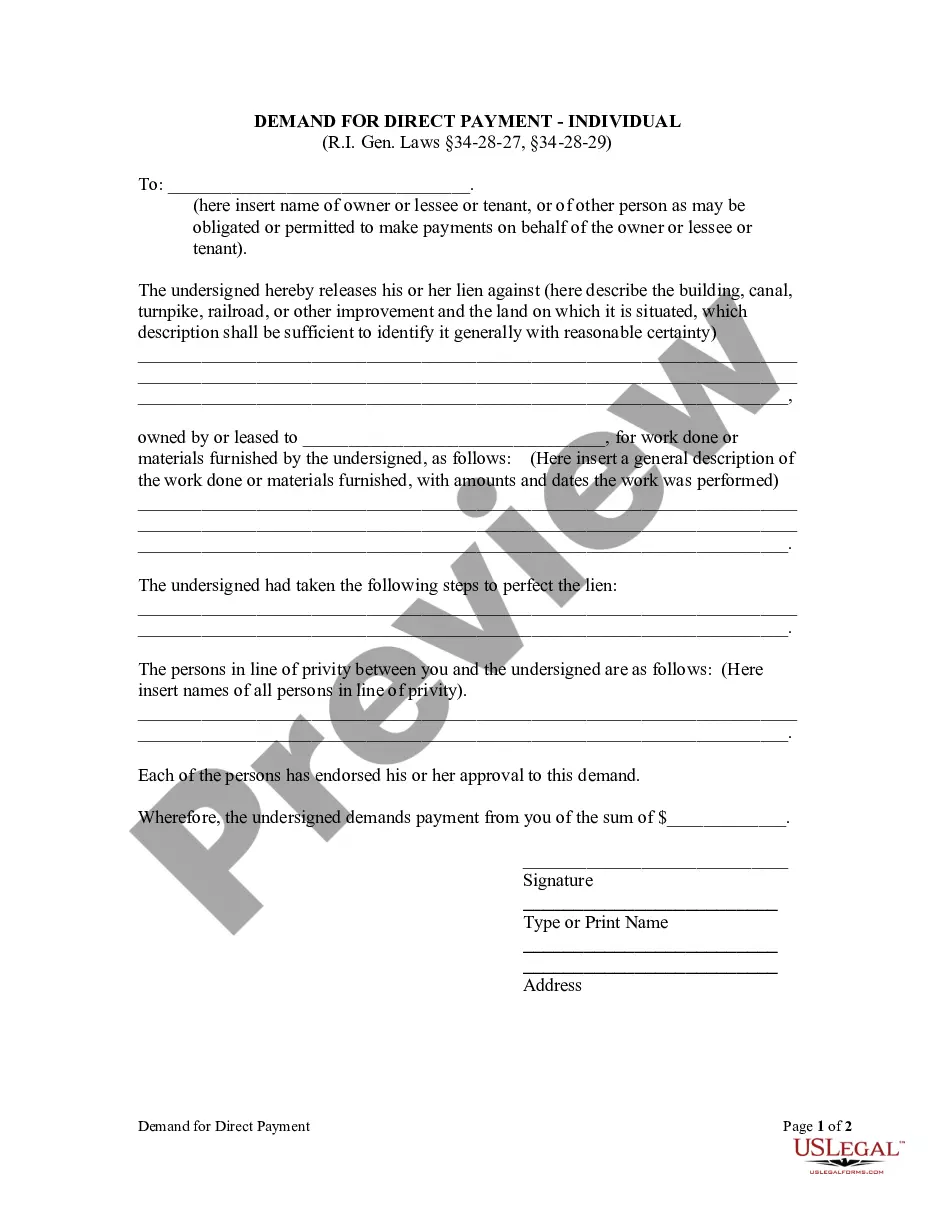
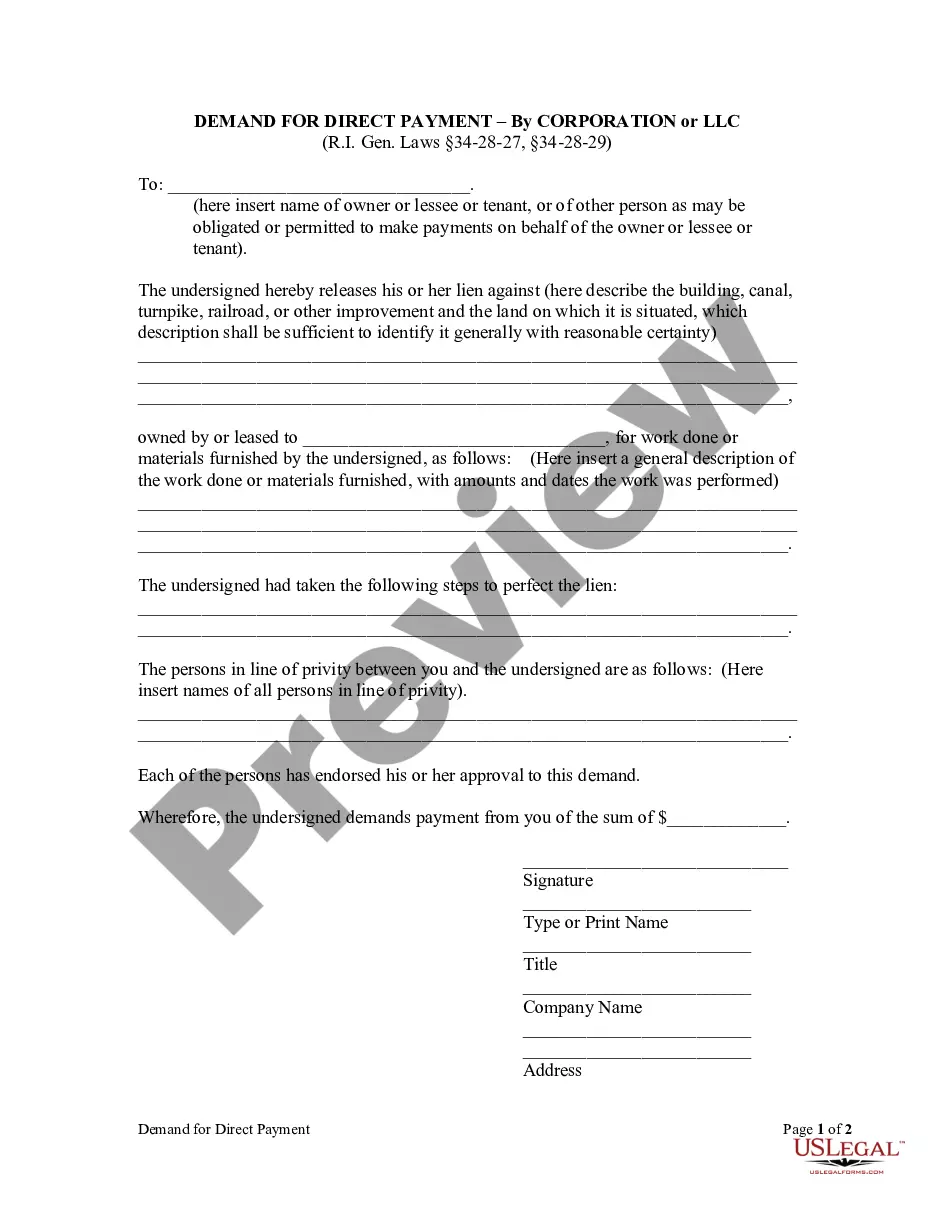
The Demand for Direct Payment in Connection with Lien is a legal document used in Rhode Island to request payment from an owner or lessee regarding a lien. This form is specifically designed to be adaptable to various situations involving construction or material supply disputes, distinguishing it from other debt collection forms by its focus on lien-related claims.
Form components explained
- The name of the owner or lessee responsible for payment.
- A description of the property involved, ensuring it is identifiable.
- A detailed account of the work done or materials provided, including dates and amounts.
- Steps taken to perfect the lien under Rhode Island law.
- The names of all parties in line of privity with the undersigned.
- The demand for a specific payment amount.
When to use this document
This form should be used when a contractor or supplier has performed work or provided materials but has not received payment, and a lien has been filed against the property. It is particularly relevant in scenarios where legal recourse is necessary to facilitate direct payment from the property owner or lessee, especially when multiple parties are in question regarding privity of contract.
Who needs this form
- Contractors seeking payment for completed work.
- Suppliers of materials who have issued a lien.
- Owners or agents representing different contractors or suppliers.
- Individuals involved in property disputes related to payments and liens.
How to prepare this document
- Identify the party making the demand and the party obligated to make the payment.
- Describe the property related to the lien accurately.
- List the work completed or materials provided, along with relevant dates and amounts.
- Detail the steps taken to establish the lien rights.
- Include names of all individuals in privity in relation to the lien.
- Sign the form and provide the requested payment amount before submitting it to the relevant party.
Does this document require notarization?
This form does not typically require notarization unless specified by local law. However, it is crucial to ensure all parties endorse the demand to strengthen validity.
Get your form ready online
Our built-in tools help you complete, sign, share, and store your documents in one place.
Make edits, fill in missing information, and update formatting in US Legal Forms—just like you would in MS Word.
Download a copy, print it, send it by email, or mail it via USPS—whatever works best for your next step.
Sign and collect signatures with our SignNow integration. Send to multiple recipients, set reminders, and more. Go Premium to unlock E-Sign.
If this form requires notarization, complete it online through a secure video call—no need to meet a notary in person or wait for an appointment.
We protect your documents and personal data by following strict security and privacy standards.

Make edits, fill in missing information, and update formatting in US Legal Forms—just like you would in MS Word.

Download a copy, print it, send it by email, or mail it via USPS—whatever works best for your next step.

Sign and collect signatures with our SignNow integration. Send to multiple recipients, set reminders, and more. Go Premium to unlock E-Sign.

If this form requires notarization, complete it online through a secure video call—no need to meet a notary in person or wait for an appointment.

We protect your documents and personal data by following strict security and privacy standards.
Mistakes to watch out for
- Failing to accurately describe the property involved.
- Not including sufficient details about the work performed or materials furnished.
- Neglecting to list all parties in line of privity, which can complicate claims.
- Leaving out required signatures or the payment amount.
Why complete this form online
- Convenient access to a legally drafted template from anywhere.
- Editability allows for customization to fit specific circumstances.
- Reliable format compliant with Rhode Island legal standards.
Legal use & context
- The Demand for Direct Payment establishes a formal request that can be legally enforced.
- It is essential for protecting lien rights in Rhode Island, adhering to state laws governing construction and supply contracts.
- Using this form correctly may increase the chances of receiving owed payments promptly.
Key takeaways
- This form is crucial for contractors and suppliers to secure payments along with lien rights in Rhode Island.
- Accurate completion and submission can lead to more effective resolutions in payment disputes.
- Awareness of state-specific lien laws is important when utilizing this form.
Looking for another form?
Form popularity
FAQ
Someone who is owed money is generally not able to just put a lien on property without first securing a judgment. Securing a judgment requires the creditor to sue the debtor. This may be through circuit court in many jurisdictions. If under a certain dollar amount, this suit may be through the small claims court.
Can a lien be placed on your property without you knowing? Yes, it happens. Sometimes a court decision or settlement results in a lien being placed on a property, and for some reason the owner doesn't know about it initially.
How does a creditor go about getting a judgment lien in Rhode Island? To attach the lien, the creditor must request execution of attachment within 48 hours after entry of the judgment, then file the execution with the town clerk or recorder of deeds in the Rhode Island town where the debtor's property is located.
The short answer is, yes. If you want to dispute the work, then you're going to have to fight it over in court. Meanwhile, now the plumber has a lien on your building. If you want to remove the lien quickly, you will have to post a bond.
Subject to some exceptions, a lien for materials, services, or wages may be registered any time up to 45 days from the day the last materials, services, or wages were provided, or since the contract was abandoned. After those 45 days elapse, the lien expires.
It basically states that you've paid the subcontractor what is owed, they accept the payment in full, and they waive the right to put a lien on your property. Simply present this form to the subcontractor with your payment and ask them to sign it. Make sure you get their signature!
While it's unlikely that just anyone can put a lien on your home or land, it's not unheard of for a court decision or a settlement to result in a lien being placed against a property.
Prepare your Rhode Island Notice of Intention form. Serve the Rhode Island Notice of Intention as a preliminary notice. Record the Rhode Island Notice of Intention as a mechanics lien. File Notice of Lis Pendens and enforce the mechanics lien.
To enforce the lien, the contractor must file a lawsuit within 90 days from the date of recording the lien. If this deadline is passed, the contractor may not be able to enforce the lien and may be required to remove the lien.