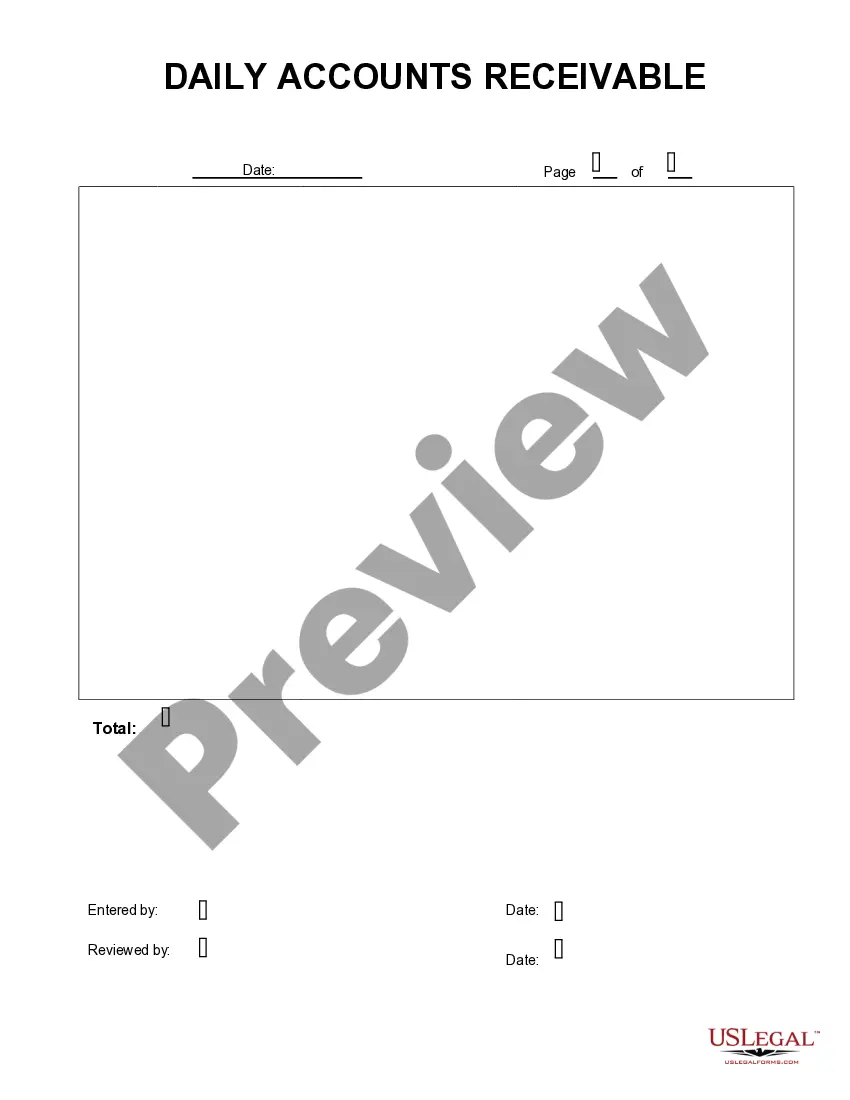
Puerto Rico Daily Accounts Receivable
Description
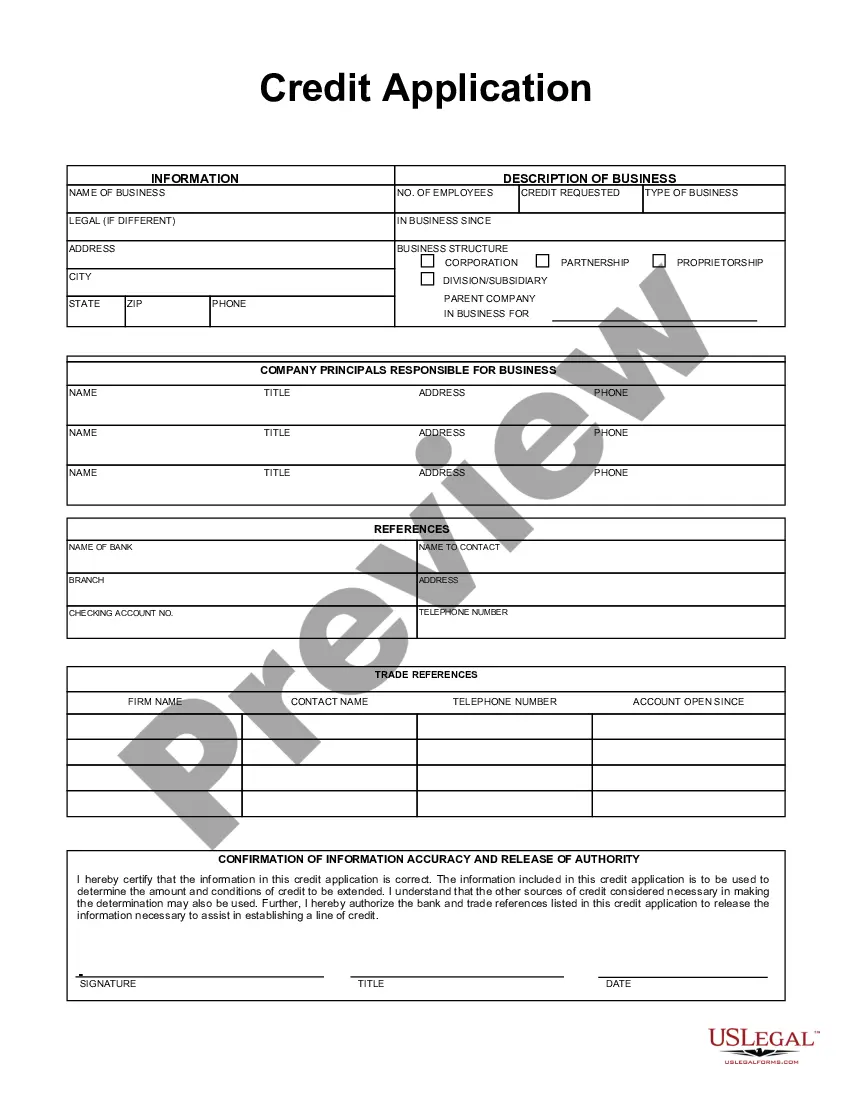
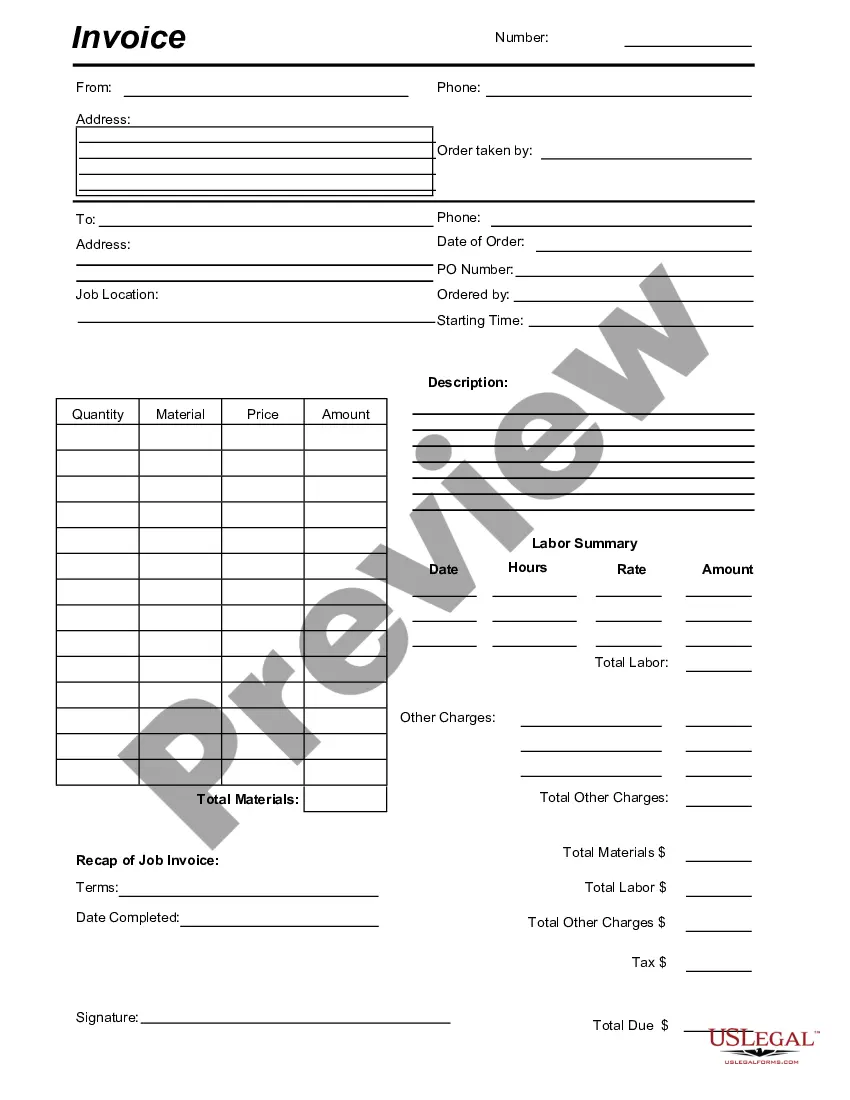
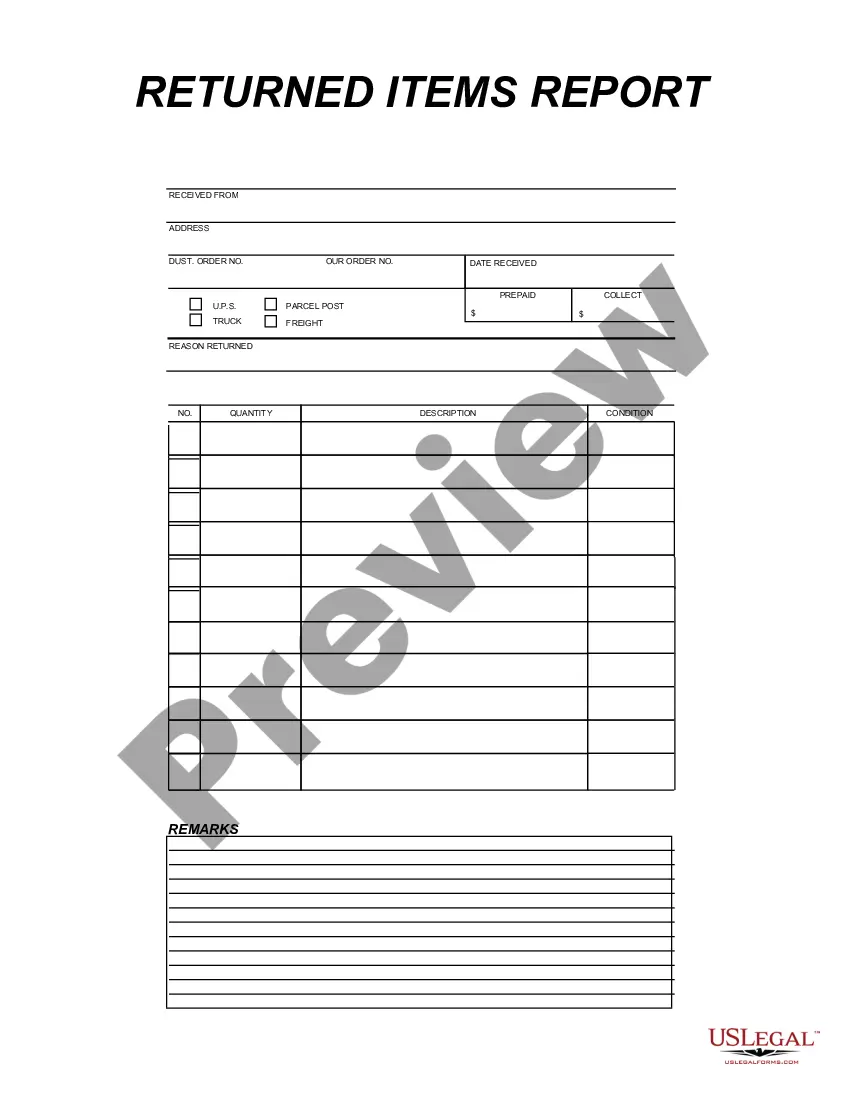
Get your form ready online
Our built-in tools help you complete, sign, share, and store your documents in one place.
Make edits, fill in missing information, and update formatting in US Legal Forms—just like you would in MS Word.
Download a copy, print it, send it by email, or mail it via USPS—whatever works best for your next step.
Sign and collect signatures with our SignNow integration. Send to multiple recipients, set reminders, and more. Go Premium to unlock E-Sign.
If this form requires notarization, complete it online through a secure video call—no need to meet a notary in person or wait for an appointment.
We protect your documents and personal data by following strict security and privacy standards.

Make edits, fill in missing information, and update formatting in US Legal Forms—just like you would in MS Word.

Download a copy, print it, send it by email, or mail it via USPS—whatever works best for your next step.

Sign and collect signatures with our SignNow integration. Send to multiple recipients, set reminders, and more. Go Premium to unlock E-Sign.

If this form requires notarization, complete it online through a secure video call—no need to meet a notary in person or wait for an appointment.

We protect your documents and personal data by following strict security and privacy standards.
Looking for another form?
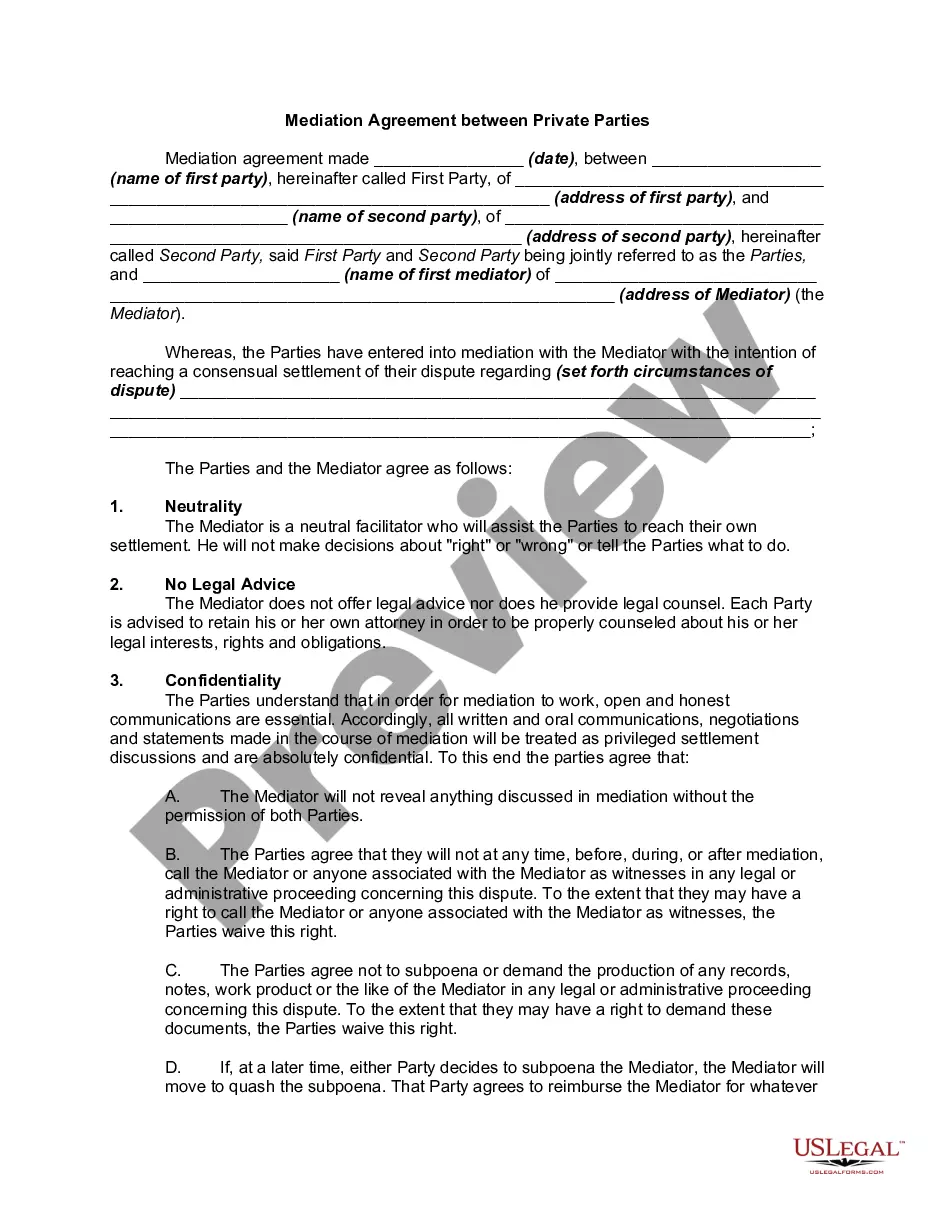


How to fill out Daily Accounts Receivable?
If you require to compile, acquire, or print authentic document templates, utilize US Legal Forms, the largest collection of legal forms available online.
Take advantage of the site's easy and user-friendly search to find the documents you need.
Different templates for business and personal purposes are categorized by types and states, or keywords.
Every legal document template you purchase is yours permanently. You have access to every form you downloaded in your account. Click on the My documents section and select a form to print or download again.
Act quickly and download and print the Puerto Rico Daily Accounts Receivable with US Legal Forms. There are thousands of professional and state-specific forms available for your business or personal needs.
- Use US Legal Forms to locate the Puerto Rico Daily Accounts Receivable with just a few clicks.
- If you are already a US Legal Forms customer, Log In to your account and click the Download button to obtain the Puerto Rico Daily Accounts Receivable.
- You can also access forms you previously downloaded from the My documents section of your account.
- If you are using US Legal Forms for the first time, follow the instructions below.
- Step 1. Ensure you have chosen the form for the correct region/country.
- Step 2. Utilize the Preview option to review the form's details. Don't forget to check the information.
- Step 3. If you are not satisfied with the form, use the Search box at the top of the screen to find other templates of the legal form type.
- Step 4. Once you have found the form you need, click the Purchase now button. Select the pricing plan you prefer and input your credentials to register for an account.
- Step 5. Process the transaction. You can use your credit card or PayPal account to complete the transaction.
- Step 6. Choose the format of your legal form and download it to your device.
- Step 7. Fill out, edit, and print or sign the Puerto Rico Daily Accounts Receivable.
Form popularity
FAQ
Acronym. Definition. AR/AP. Accounts Receivable/Accounts Payable.
Account receivables are classified as current assets assuming that they are due within one year. To record a journal entry for a sale on account, one must debit a receivable and credit a revenue account. When the customer pays off their accounts, one debits cash and credits the receivable in the journal entry.
A company's accounts payable (AP) ledger lists its short-term liabilities obligations for items purchased from suppliers, for example, and money owed to creditors. Accounts receivable (AR) are funds the company expects to receive from customers and partners.
Account Receivable is an account created by a company to record the journal entry of credit sales of goods and services, for which the amount has not yet been received by the company. The journal entry is passed by making a debit entry in Account Receivable and corresponding credit entry in Sales Account.
"Accounts payable" (AP) refers to an account within the general ledger that represents a company's obligation to pay off a short-term debt to its creditors or suppliers.
AR is Accounts Receivable. AP is Accounts Payable. GL is General Ledger. In Bank, there are two counter, one is for Cash Receipt and another one is for Cash Payment. It is like that in company, all receits will be taken care by Accounts Receivable=AR.
You can find your accounts receivable balance under the 'current assets' section on your balance sheet or general ledger. Accounts receivable are classified as an asset because they provide value to your company. (In this case, in the form of a future cash payment.)
Best Practices for Accounts Receivable ManagementUse Electronic Billing & Payment.Outline Clear Billing Procedures.Set Credit & Collection Policies and Stick to Them.Be Proactive.Set up Automations.Make It Easy for Customers.Use the Right KPIs.Involve All Teams in the Process.
Accounts Receivable (A/R) is defined as payments owed to a company by its customers for products and/or services already delivered to them i.e. an IOU from customers who paid on credit.
How a transaction is recorded in the General Ledger (GL) depends upon the nature of the transaction. Accounts Payable (AP) is recorded in the AP sub-ledger when an invoice is approved for transactions where the company must pay money to vendors for the purchase services or goods.