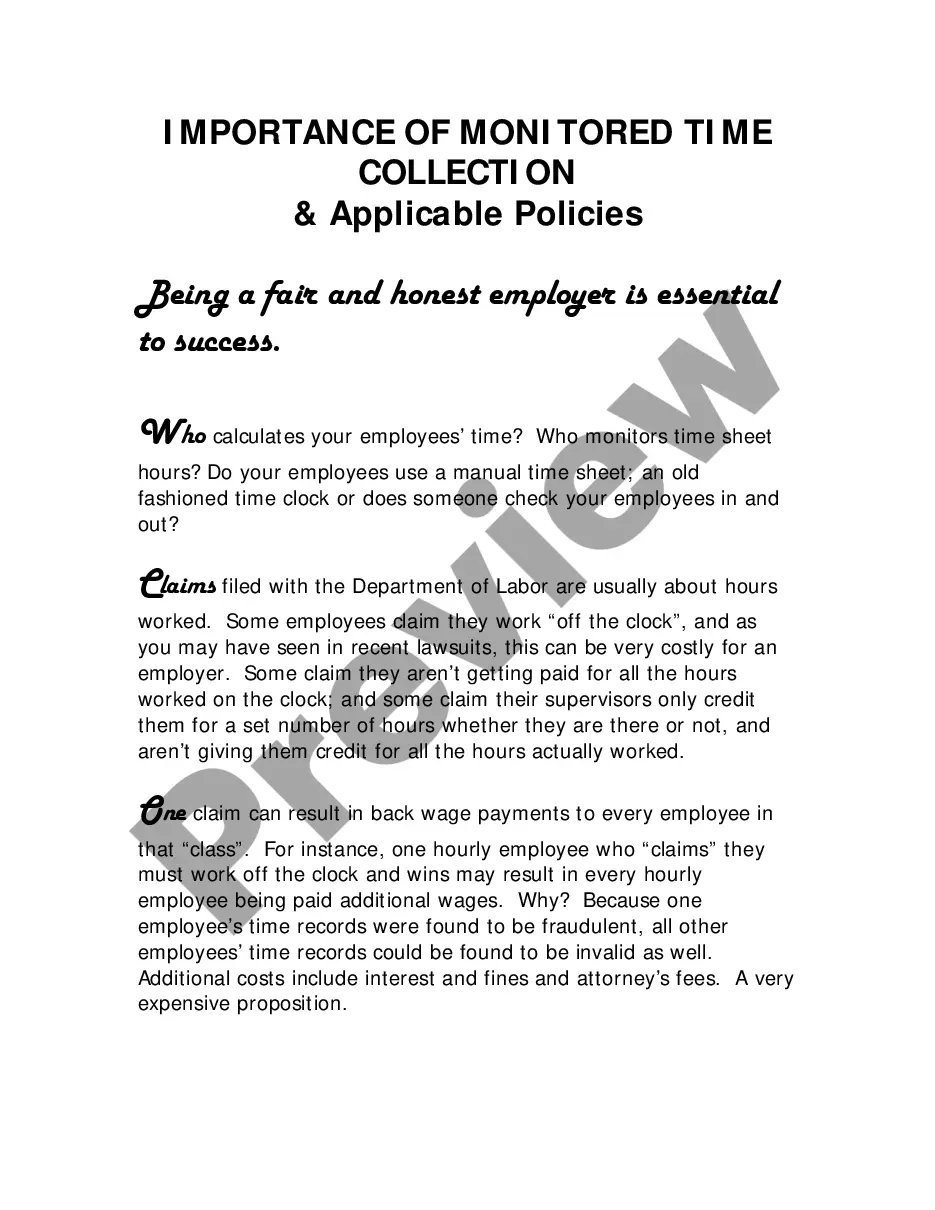
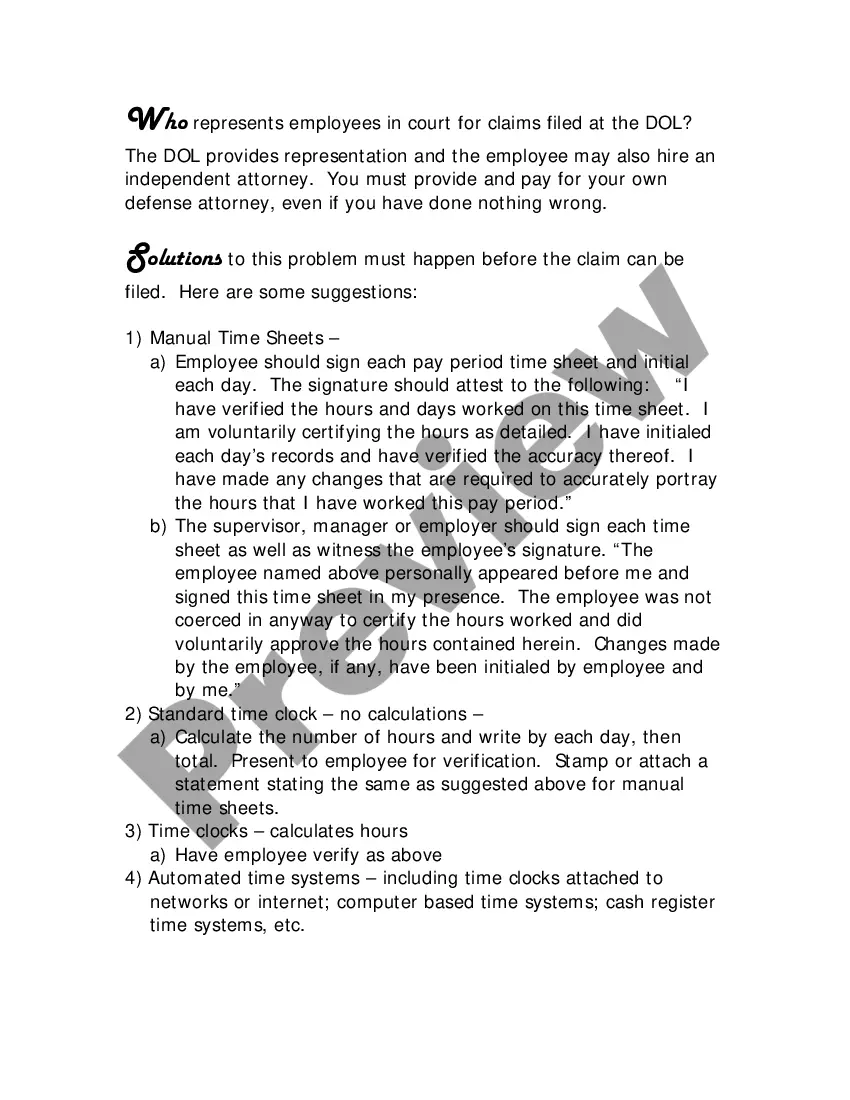
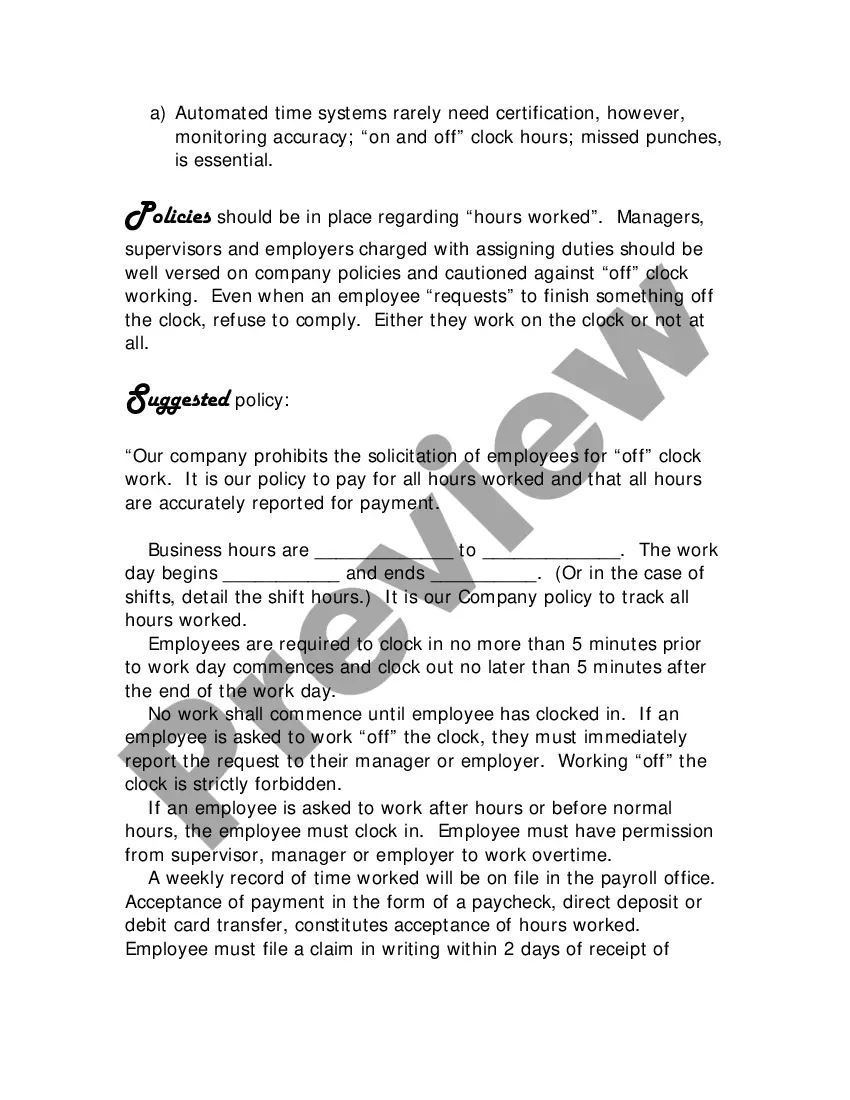
Information regarding "Off Clock" pitfalls & Policies to combat claims regarding time sheets and time cards.
Pennsylvania Monitored Time Info and Pamphlet - Off Clock Pitfalls
Instant download
Description
Free preview
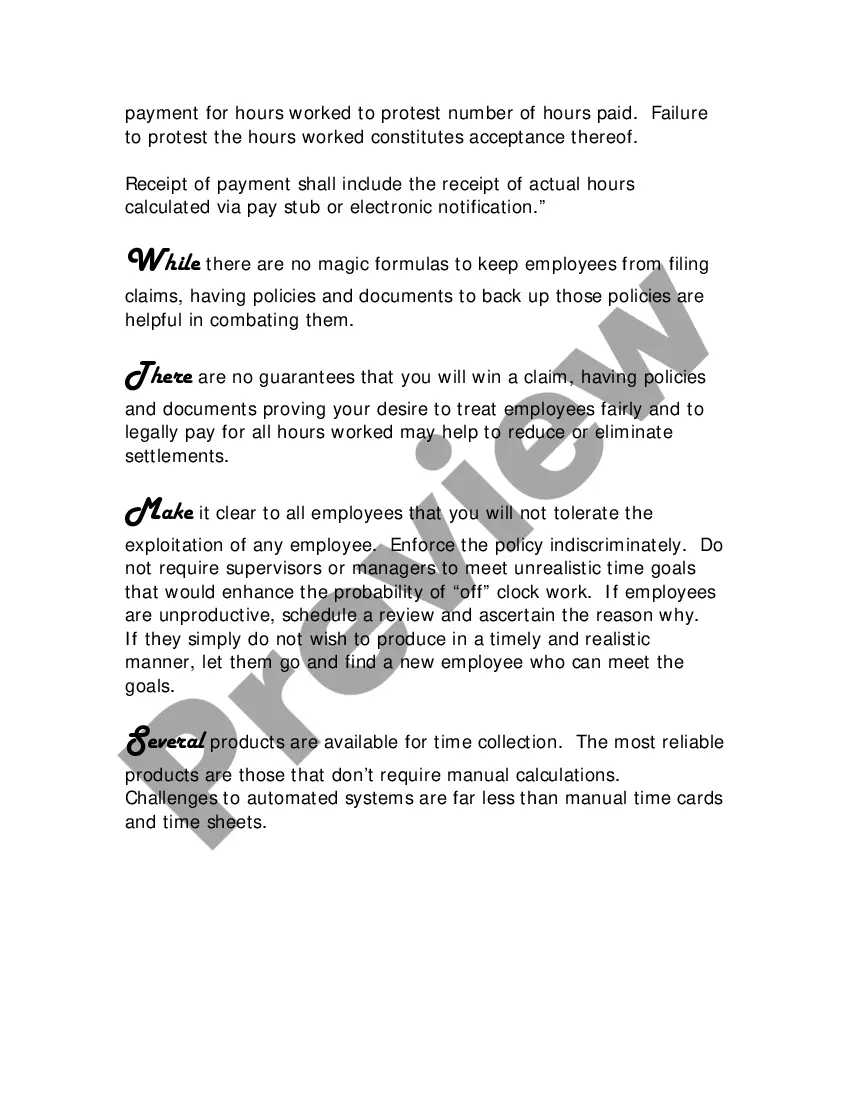
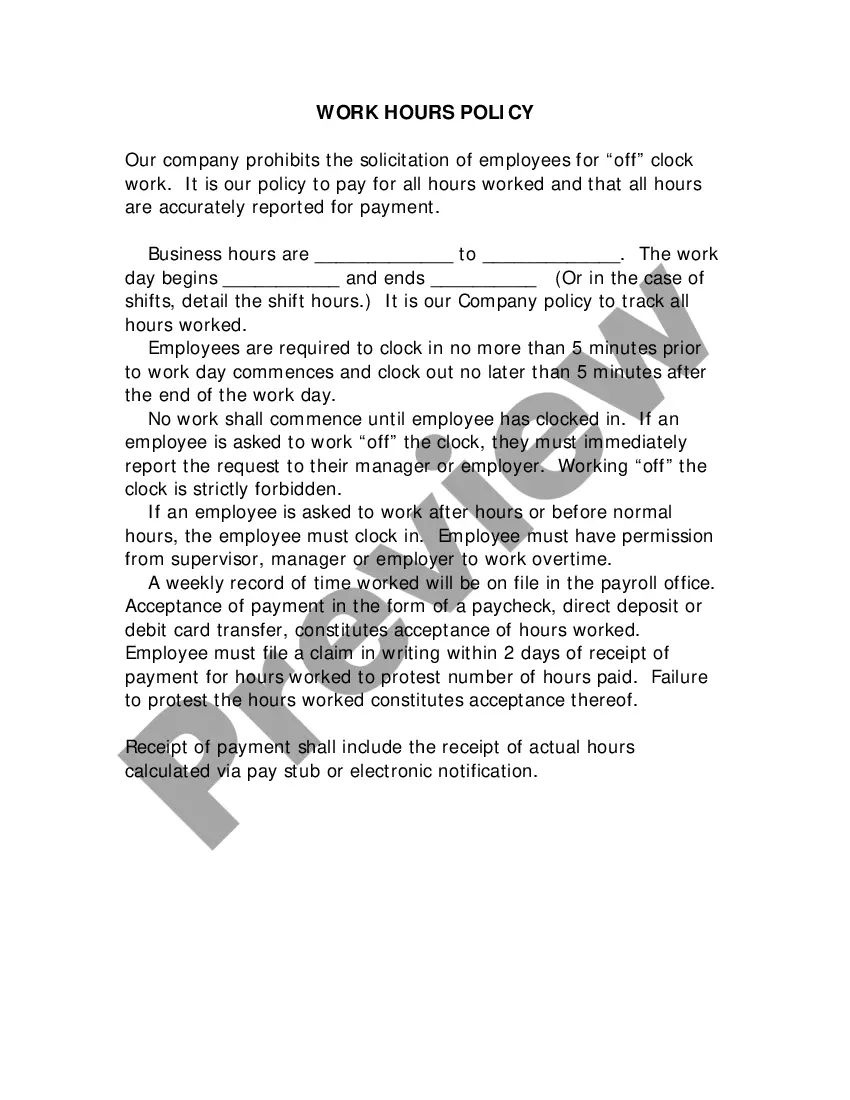
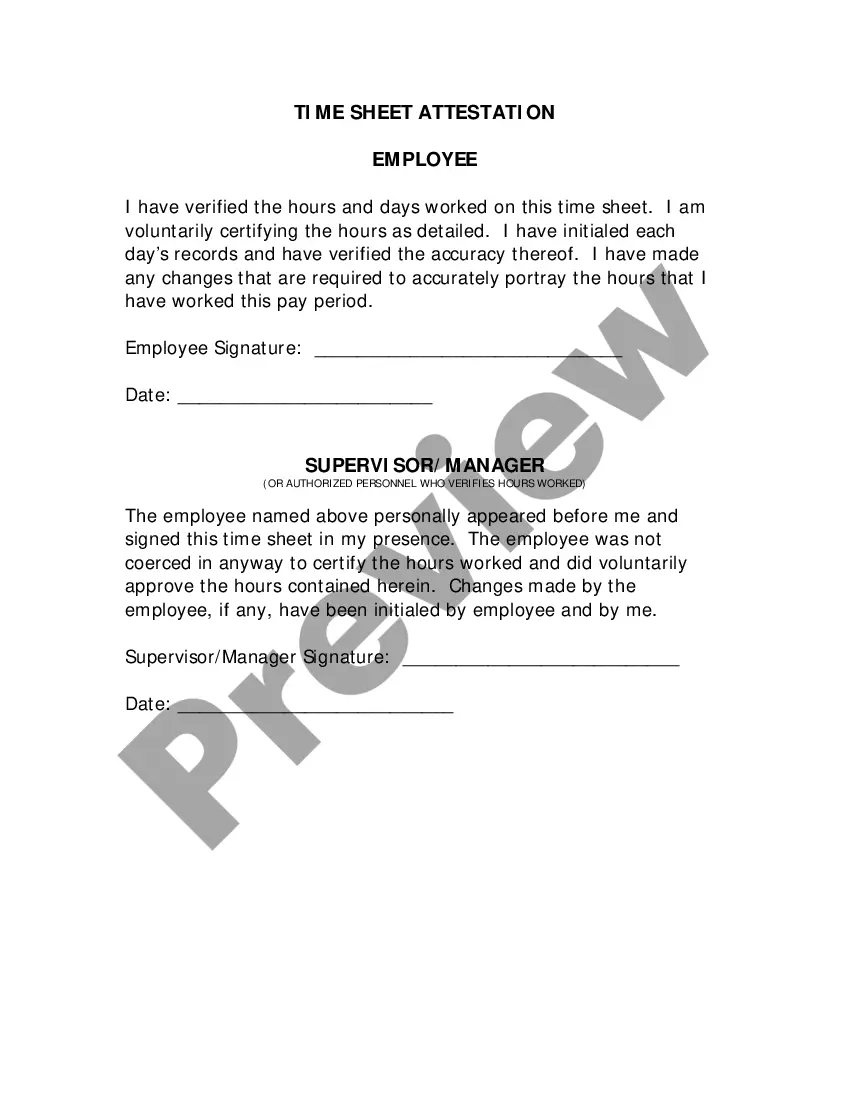
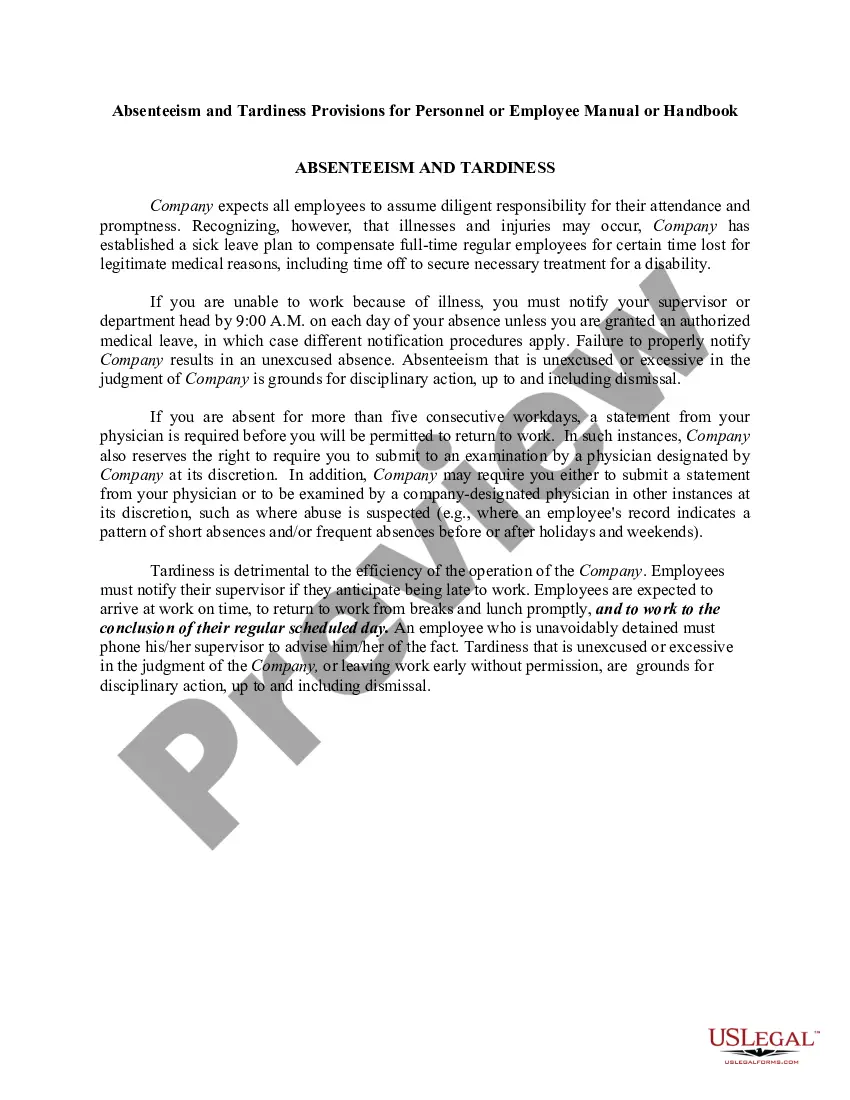
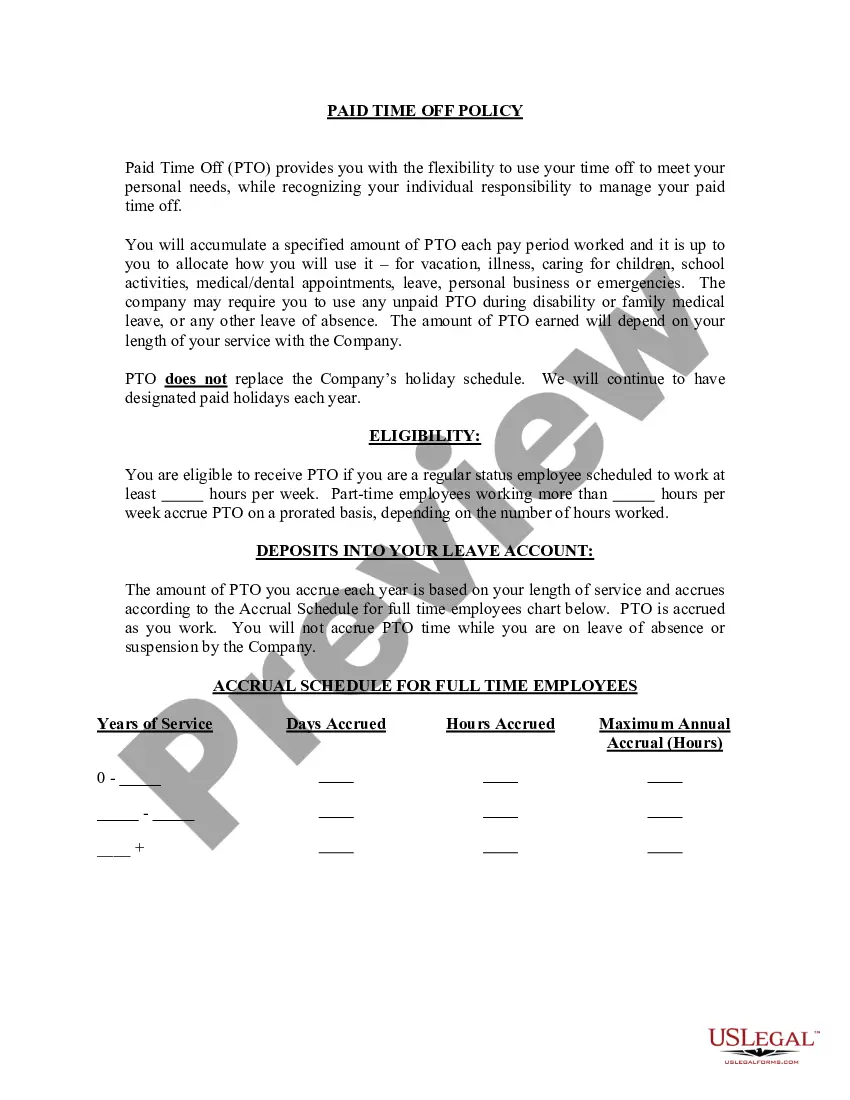
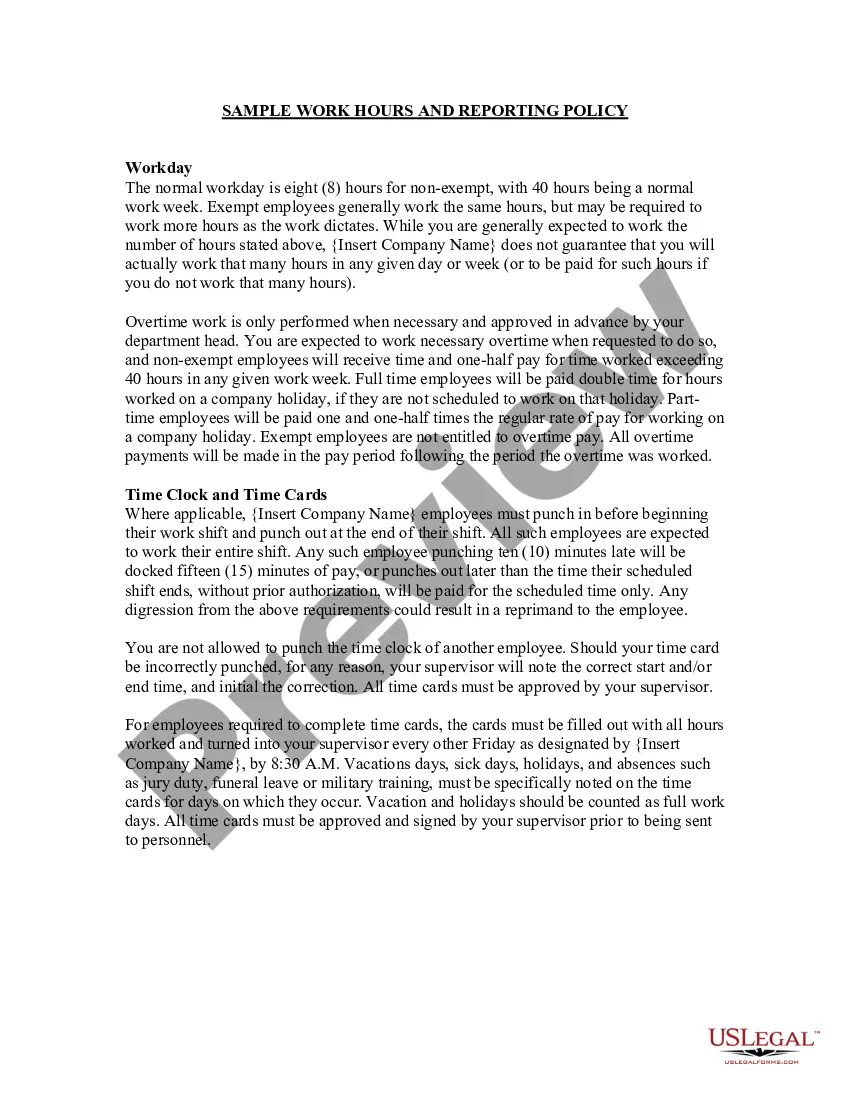
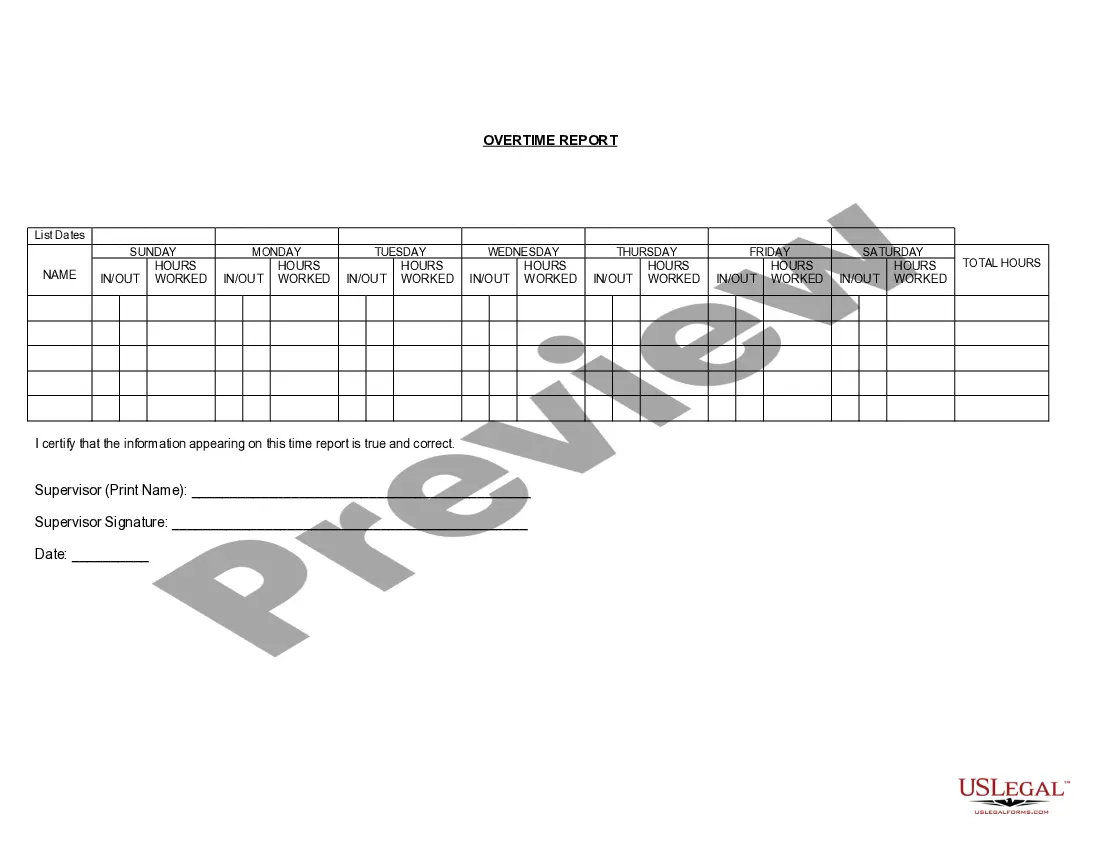
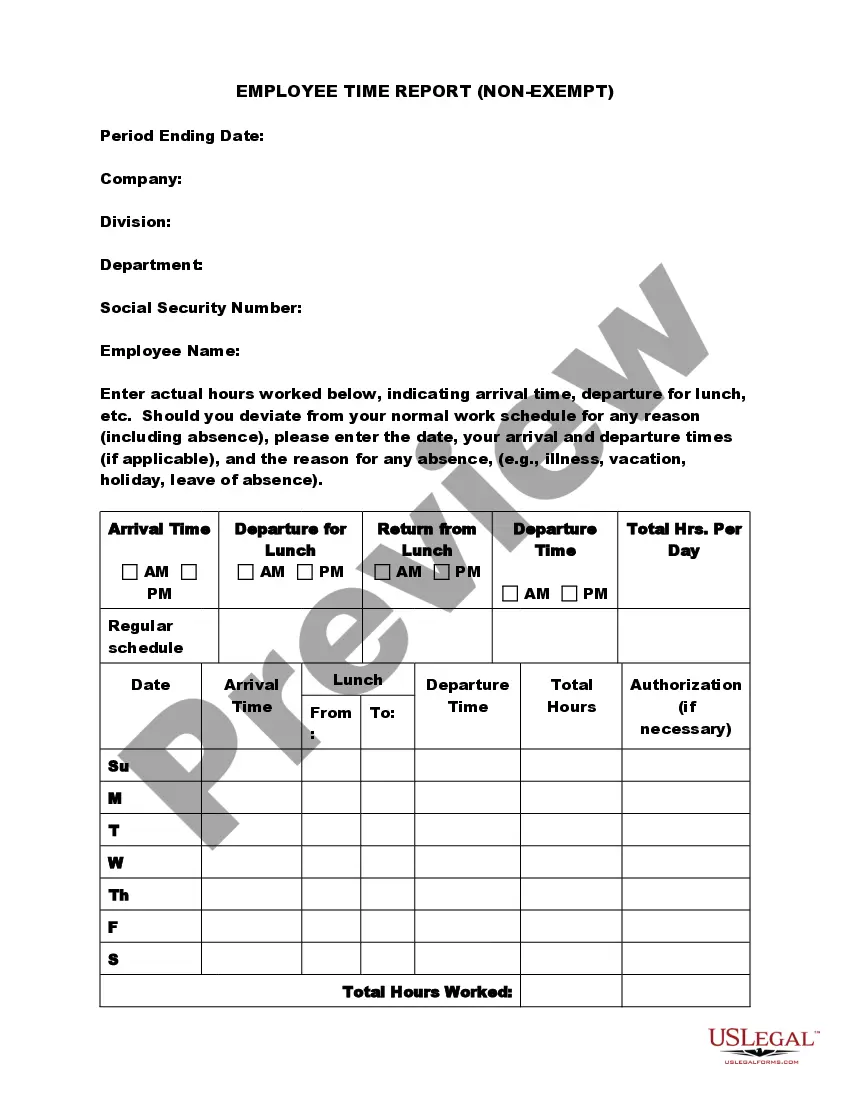

How to fill out Monitored Time Info And Pamphlet - Off Clock Pitfalls?
If you aim to finalize, download, or print legal document templates, utilize US Legal Forms, the leading compilation of legal documents available online.
Take advantage of the site's straightforward and user-friendly navigation to obtain the forms you require.
Various templates for business and personal applications are organized by categories and states, or keywords.
Step 4. Once you have found the necessary form, click the Get Now button. Choose your preferred payment plan and provide your information to register for the account.
Step 5. Complete the transaction. You may use your credit card or PayPal account to finalize the payment. Step 6. Choose the format of your legal form and download it to your device. Step 7. Complete, edit, and print or sign the Pennsylvania Monitored Time Information and Pamphlet - Off Clock Issues.
- Use US Legal Forms to download the Pennsylvania Monitored Time Information and Pamphlet - Off Clock Issues with just a few clicks.
- If you are currently a US Legal Forms member, Log In to your account and click on the Get button to access the Pennsylvania Monitored Time Information and Pamphlet - Off Clock Issues.
- Additionally, you can retrieve forms you previously obtained in the My documents tab of your account.
- If you are using US Legal Forms for the first time, follow the instructions below.
- Step 1. Ensure you have selected the form for the correct city/state.
- Step 2. Use the Preview option to review the form's content. Remember to read the details.
- Step 3. If you are not satisfied with the form, use the Search field at the top of the page to find alternative versions of the legal document template.
Form popularity
FAQ
In Pennsylvania, there is no specific law that mandates how far in advance a work schedule must be posted. However, employers typically provide schedules to employees at least a week in advance to promote better planning. For clarity on scheduling and rights, consult the Pennsylvania Monitored Time Info and Pamphlet - Off Clock Pitfalls. This resource can help you understand your entitlements and ensure you receive fair notice regarding your work hours.
Pennsylvania does not adhere to a 'use it or lose it' policy concerning vacation time. Employers can choose to establish their own policies on vacation accrual, but once earned, employees generally have the right to use their vacation time. It's beneficial to refer to the Pennsylvania Monitored Time Info and Pamphlet - Off Clock Pitfalls to understand your entitlements clearly. This knowledge allows you to negotiate your terms effectively with your employer.
No, managers cannot legally change your clock time without your knowledge. The Fair Labor Standards Act, alongside Pennsylvania regulations, protects employees from unauthorized time changes. It's crucial to monitor your hours and bring any discrepancies to light. The Pennsylvania Monitored Time Info and Pamphlet - Off Clock Pitfalls can guide you in understanding how to track your time accurately and what to do if you find any inconsistencies.
In Pennsylvania, there is no specific state law that limits the number of hours an employee can work in a day. However, employers must comply with federal regulations regarding overtime for hours worked beyond 40 hours in a week. It's important to understand the Pennsylvania Monitored Time Info and Pamphlet - Off Clock Pitfalls to navigate work hours properly. Knowing your rights ensures you prevent potential violations that may arise from extended work periods.
Travel time is not considered work when employees are given the choice, or an agreement between the employer and employee or union is in place, to: provide their own transportation to or from the work location, or. report to a certain point from which the employee may access transportation provided by the employer.
The rise in remote work has led to an increase in companies using electronic monitoring software. Billed as a way to maintain productivity outside the office, these programs offer employers a range of features, including keystroke logging, screenshots of workers' computers and, in some cases, access to webcams.
Should travel time for mobile workers be counted as working time? Yes. The outcome of this ruling was that any workers without a fixed place of work, who travel between clients and appointments from their home, should have that travel counted as part of their working time.
Time spent traveling during normal work hours is considered compensable work time.
Surveillance. In many work environments, employers may physically visit your workstation to monitor the tasks you are performing. Video surveillance is a common method used by employers to monitor employee workstations. Strategically placed video cameras can record and archive your daily computer usage.
Working time includes travelling where it is an integral part of the job, for example in the case of a travelling sales executive or a mobile repair person. This includes travel during normal working hours and travel between sites or clients since the travelling is an essential part of the work.