Pennsylvania Last Will and Testament Package

What this form package covers
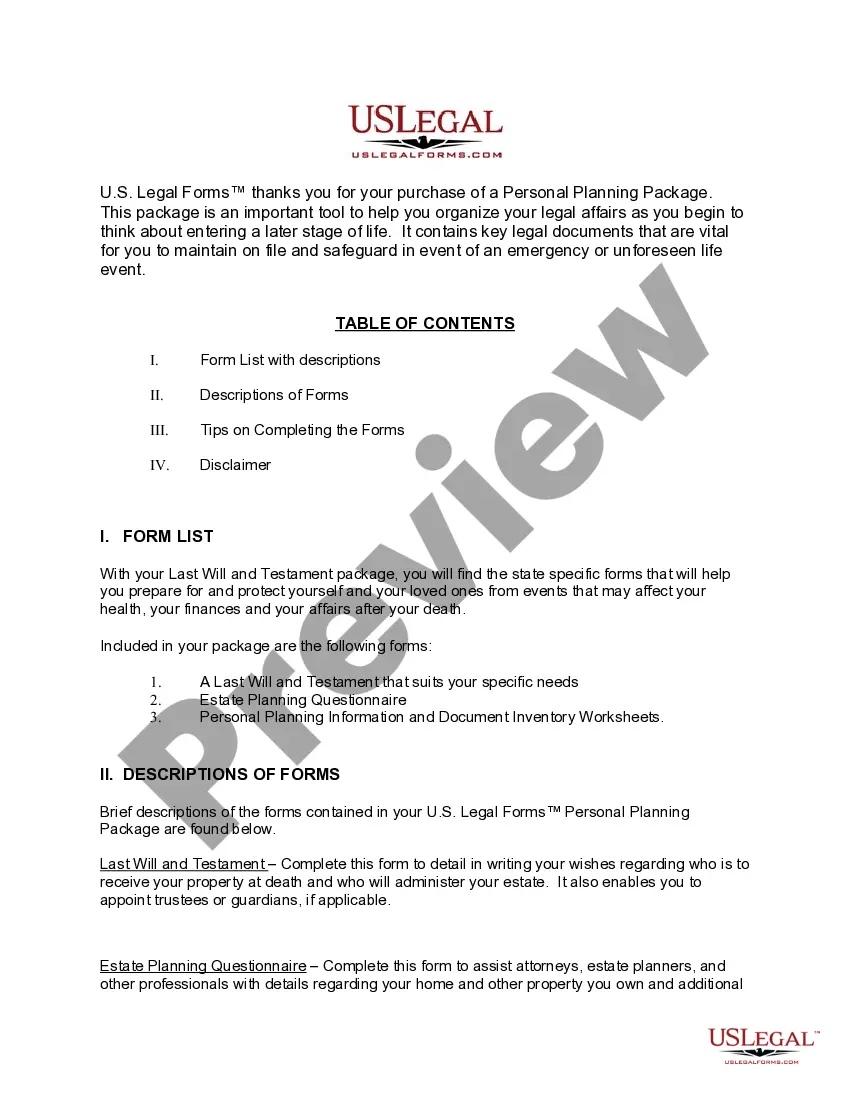
The Pennsylvania Last Will and Testament Package is a comprehensive collection of essential legal forms designed to help individuals create an effective last will and testament that meets their specific needs. This package differs from others by offering tailored options for various life situations, including provisions for married, divorced, or single individuals, with or without children. You'll also receive a completed sample of the Will at no extra charge, guiding you as you create your own legally binding document.
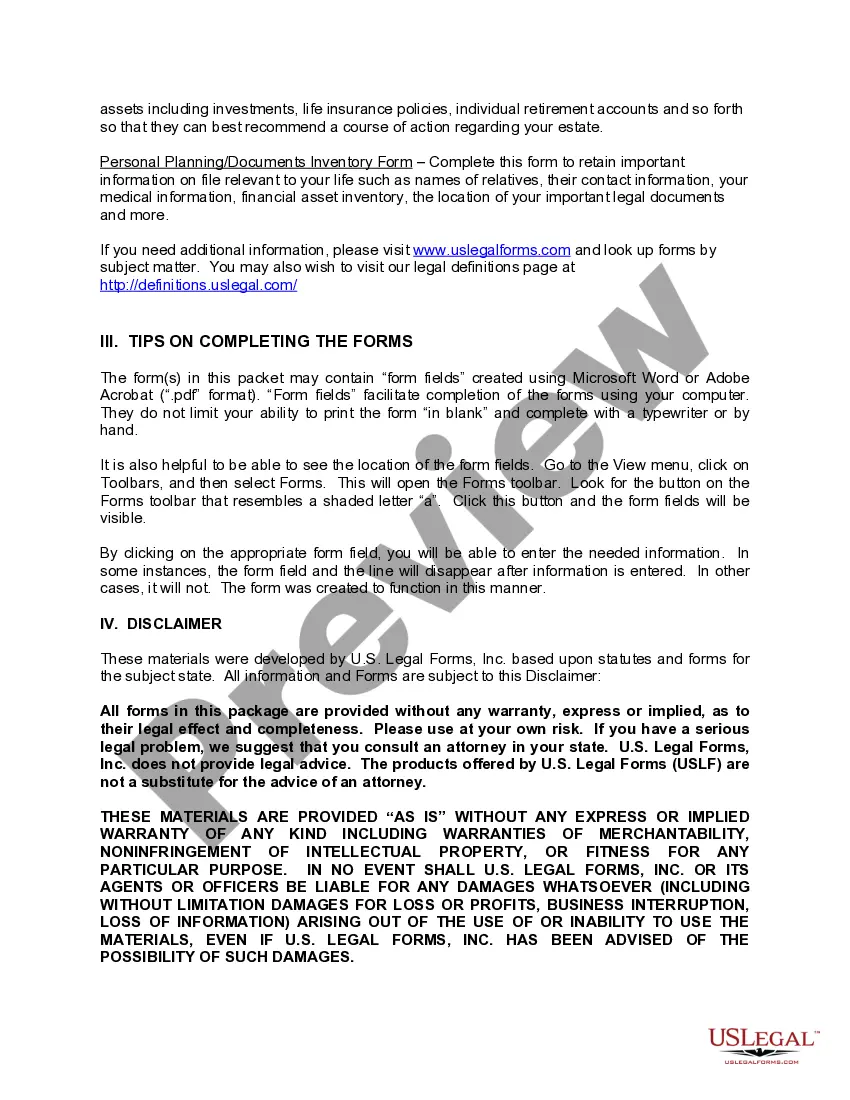
Forms included in this package

When this form package is needed
This form package is suitable when you want to ensure your wishes regarding asset distribution are legally documented. You should consider using it when:
- You are planning your estate and want to minimize disputes among heirs.
- You are experiencing life changes such as marriage, divorce, or the birth of children.
- You wish to outline guardianship for minor children.
- You want to specify funeral and burial wishes.
Who this form package is for
- Individuals who have assets they wish to bequeath upon death.
- Parents looking to establish guardianship for their children.
- Recently married or divorced individuals needing to update their estate plans.
- Anyone who wants clarity and peace of mind regarding their final wishes.
How to complete these forms
- Review the included forms to understand their purpose and requirements.
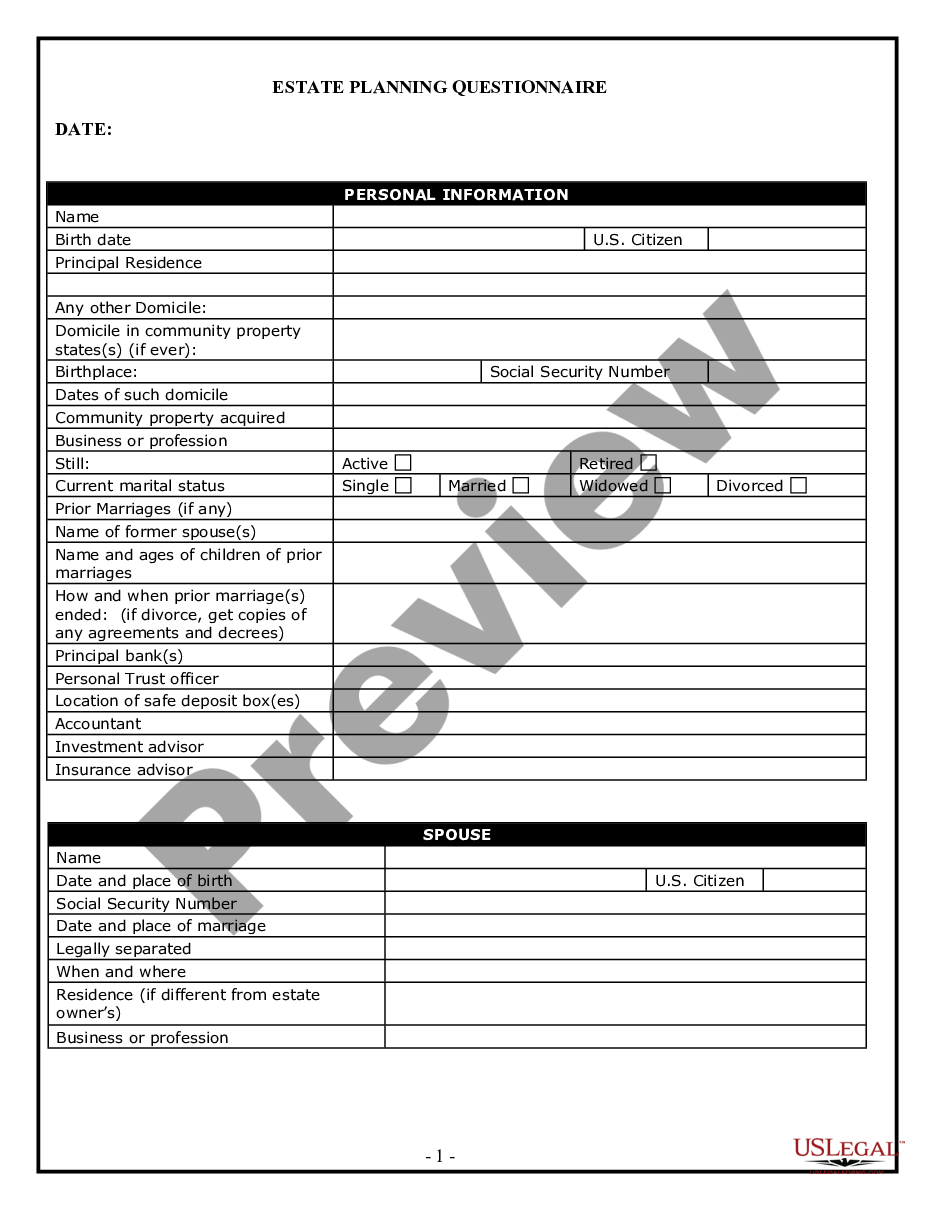
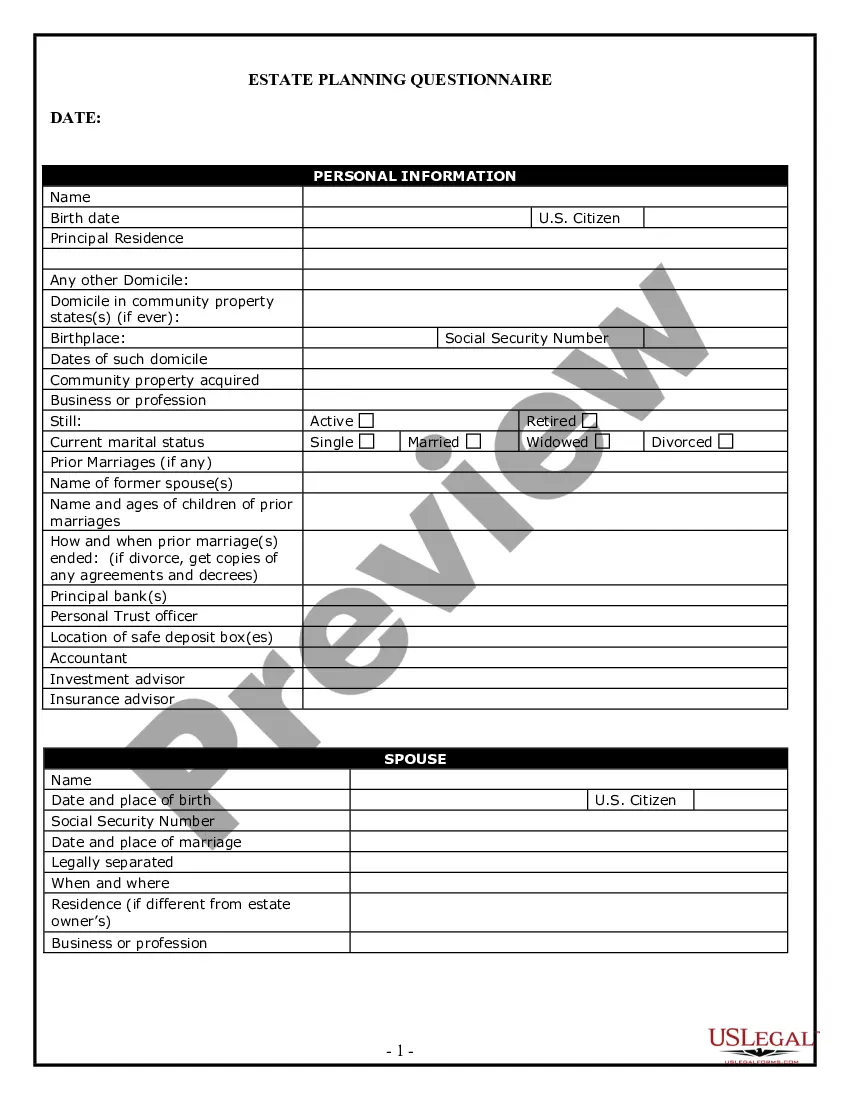
- Complete the Estate Planning Questionnaire to provide necessary information about your assets and wishes.
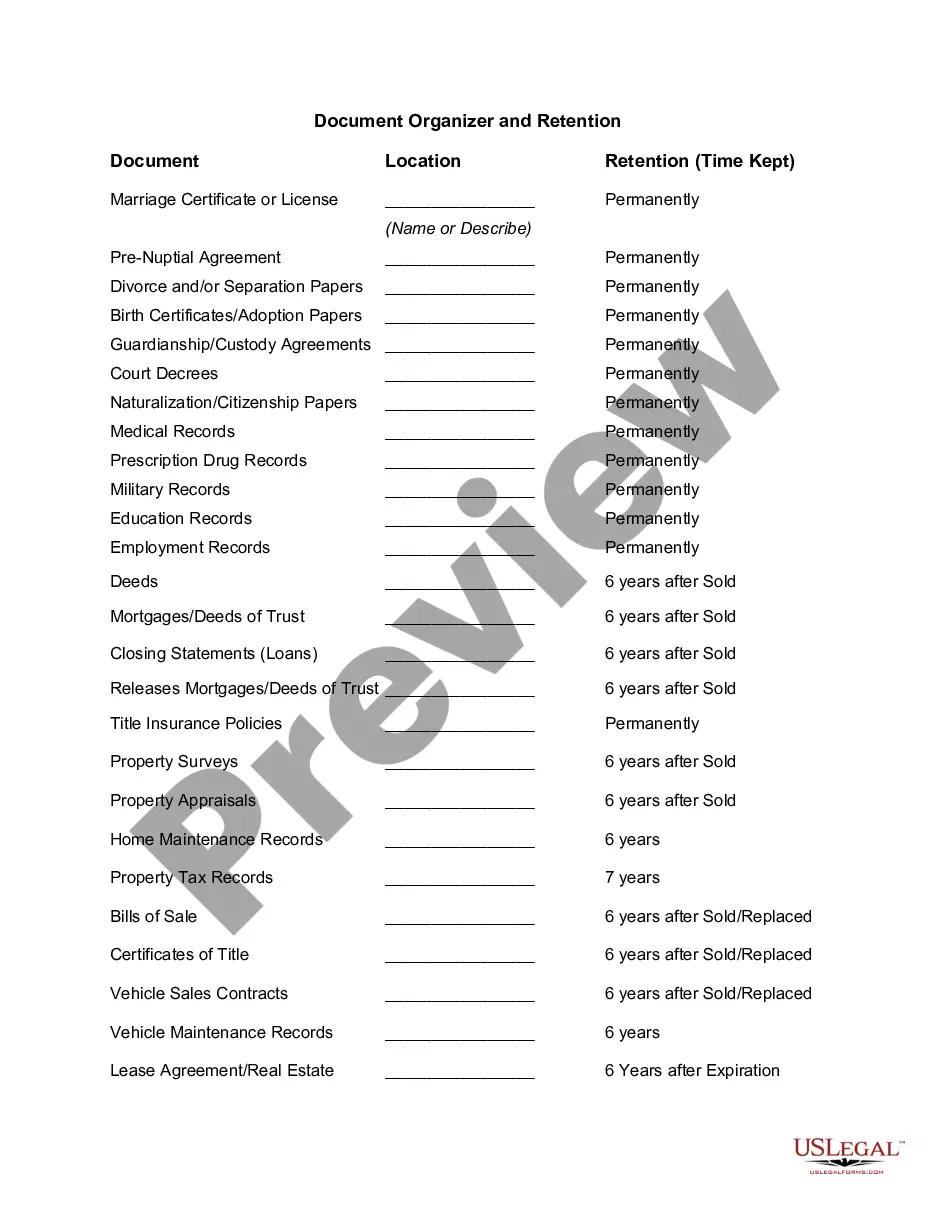
- Use the Personal Planning Information and Document Inventory Worksheets to compile important details and documents.
- Select the type of Will that fits your situation (married, single, etc.) during the download process.
- Fill out the chosen Last Will and Testament form based on your completed questionnaire and worksheets.
- Sign and, if necessary, have the Will witnessed according to Pennsylvania law.
Do forms in this package need to be notarized?
Forms in this package typically do not require notarization unless required by local law. However, to enhance the validity of your Last Will and Testament, it is advisable to have it notarized to ensure compliance with Pennsylvania legal standards.
Get your form ready online
Our built-in tools help you complete, sign, share, and store your documents in one place.
Make edits, fill in missing information, and update formatting in US Legal Forms—just like you would in MS Word.
Download a copy, print it, send it by email, or mail it via USPS—whatever works best for your next step.
Sign and collect signatures with our SignNow integration. Send to multiple recipients, set reminders, and more. Go Premium to unlock E-Sign.
If this form requires notarization, complete it online through a secure video call—no need to meet a notary in person or wait for an appointment.
We protect your documents and personal data by following strict security and privacy standards.

Make edits, fill in missing information, and update formatting in US Legal Forms—just like you would in MS Word.

Download a copy, print it, send it by email, or mail it via USPS—whatever works best for your next step.

Sign and collect signatures with our SignNow integration. Send to multiple recipients, set reminders, and more. Go Premium to unlock E-Sign.

If this form requires notarization, complete it online through a secure video call—no need to meet a notary in person or wait for an appointment.

We protect your documents and personal data by following strict security and privacy standards.
Mistakes to watch out for
- Not specifying clear wishes regarding asset distribution.
- Failing to name an executor or guardian for minor children.
- Overlooking necessary witness signatures, which can invalidate a Will.
- Neglecting to update the Will after significant life changes.
Advantages of online completion
- Convenience of downloading forms immediately after purchase.
- Editability allows you to customize each form to reflect your wishes accurately.
- Reliability of forms drafted by licensed attorneys to comply with state laws.
- A comprehensive package ensures all necessary documentation is included.
Looking for another form?
Form popularity
FAQ
No, in Pennsylvania, you do not need to notarize your will to make it legal. However, you must go to a notary to make your will self-proving, see above.
Identify beneficiaries. One of the main purposes of a last will is distributing your assets to certain people upon your death. Perform an inventory of property. Decide who gets what. Designate a personal representative. Draft the final will.
Bank accounts. Brokerage or investment accounts. Retirement accounts and pension plans. A life insurance policy.
A valid will in Pennsylvania must be in writing, either typed or handwritten. Pennsylvania only accepts oral wills in very narrow circumstances. In all cases, the testator, or person drafting the document, must also sign it.
A person's last will and testament outlines what to do with possessions, whether the deceased will leave them to another person, a group or donate them to charity, and what happens to other things that they are responsible for, such as custody of dependents and management of accounts and financial interests.
Generally, probating a will costs between $200 $1,000 depending on the size of the estate. Although probate is generally easier in Pennsylvania compared to other states, an Executor still has legal obligations and a fiduciary duty to beneficiaries of the estate.
No, in Pennsylvania, you do not need to notarize your will to make it legal. However, you must go to a notary to make your will self-proving, see above.
In Pennsylvania, you must be at least 18 years of age and sound mind to make a will. Your will must be in writing and signed at the end by the testator.Pennsylvania does accept self-proved wills. Such a will includes a separate page which is notarized and signed by the testator and witnesses.
In Pennsylvania, the law requires that the testator be at least 18 years old and of sound mind (mentally competent). In addition, the testator must declare that the will is his or hers in front of two witnesses -- and these witnesses must then sign the will in front of the testator.