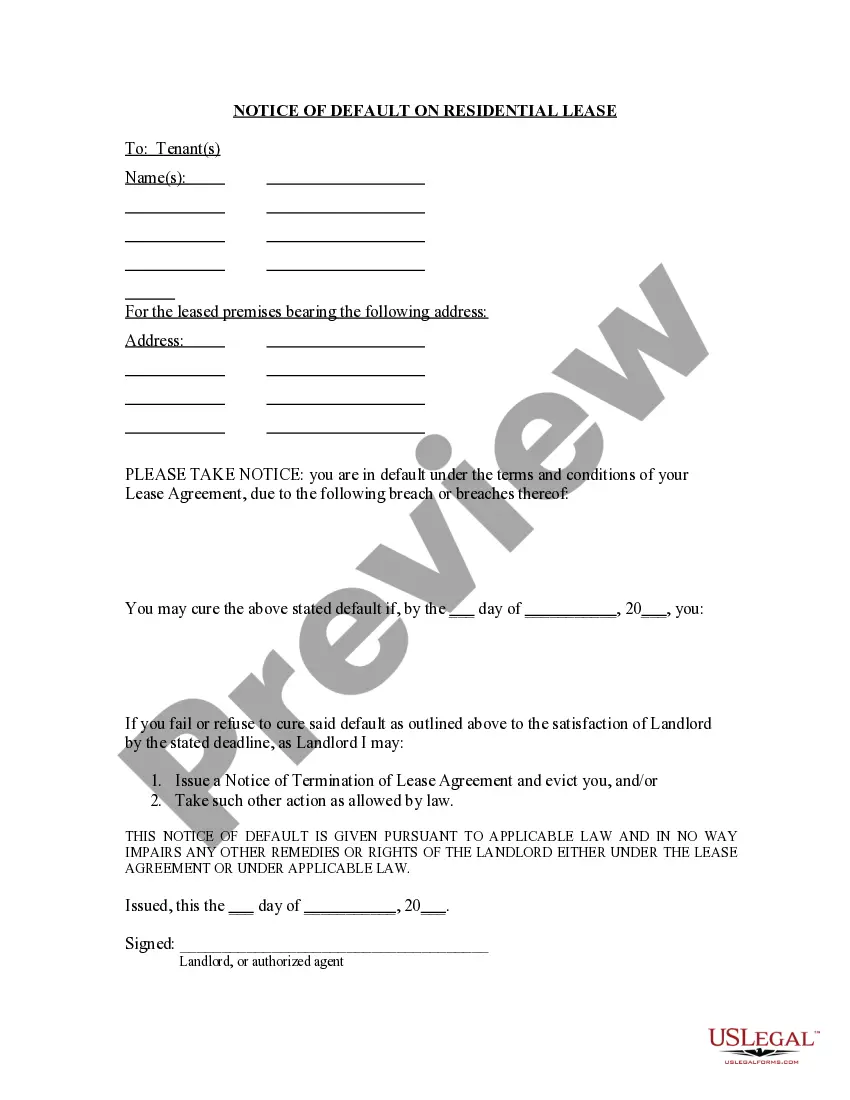
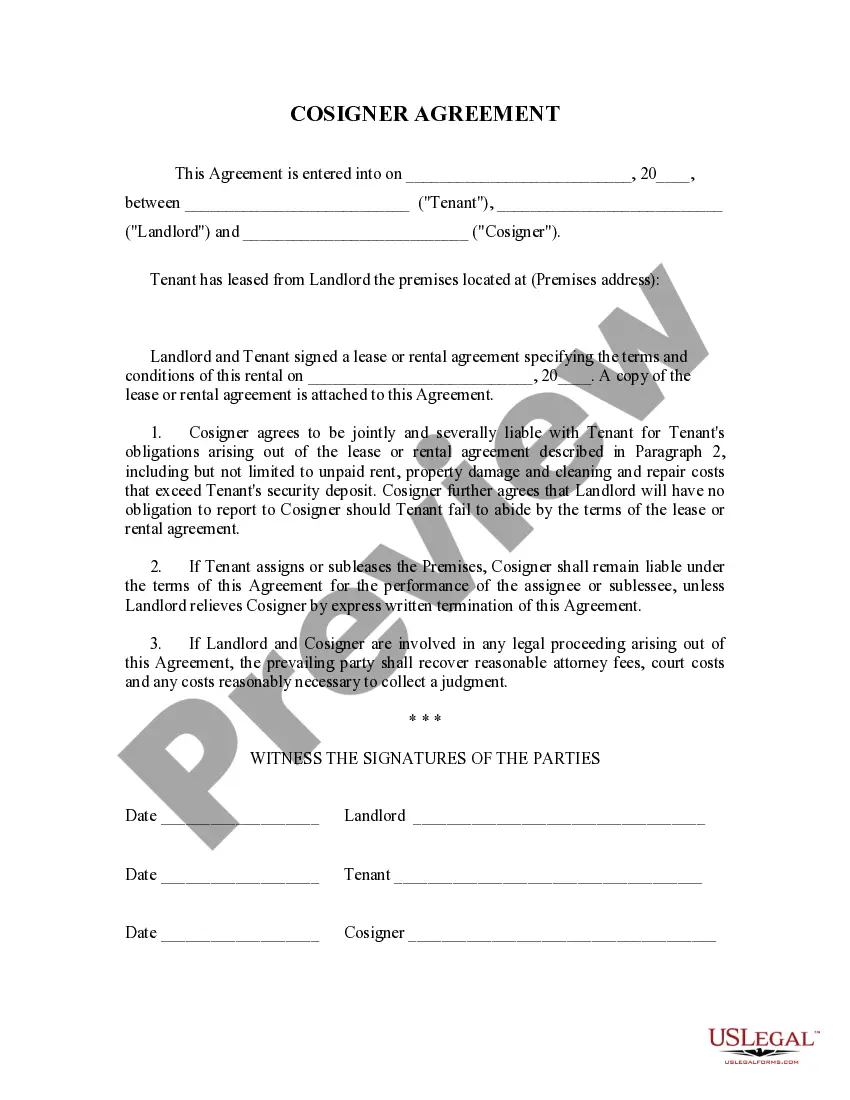
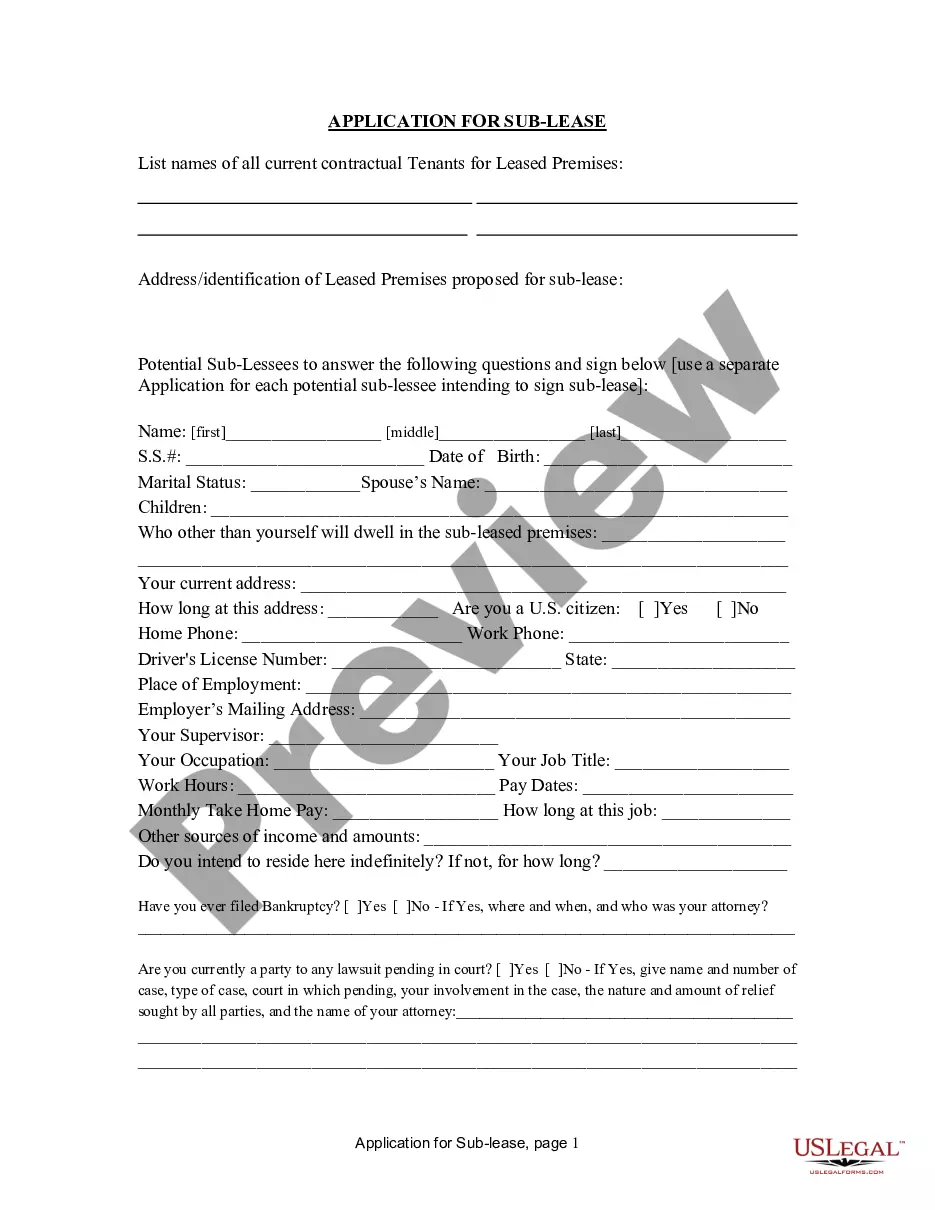
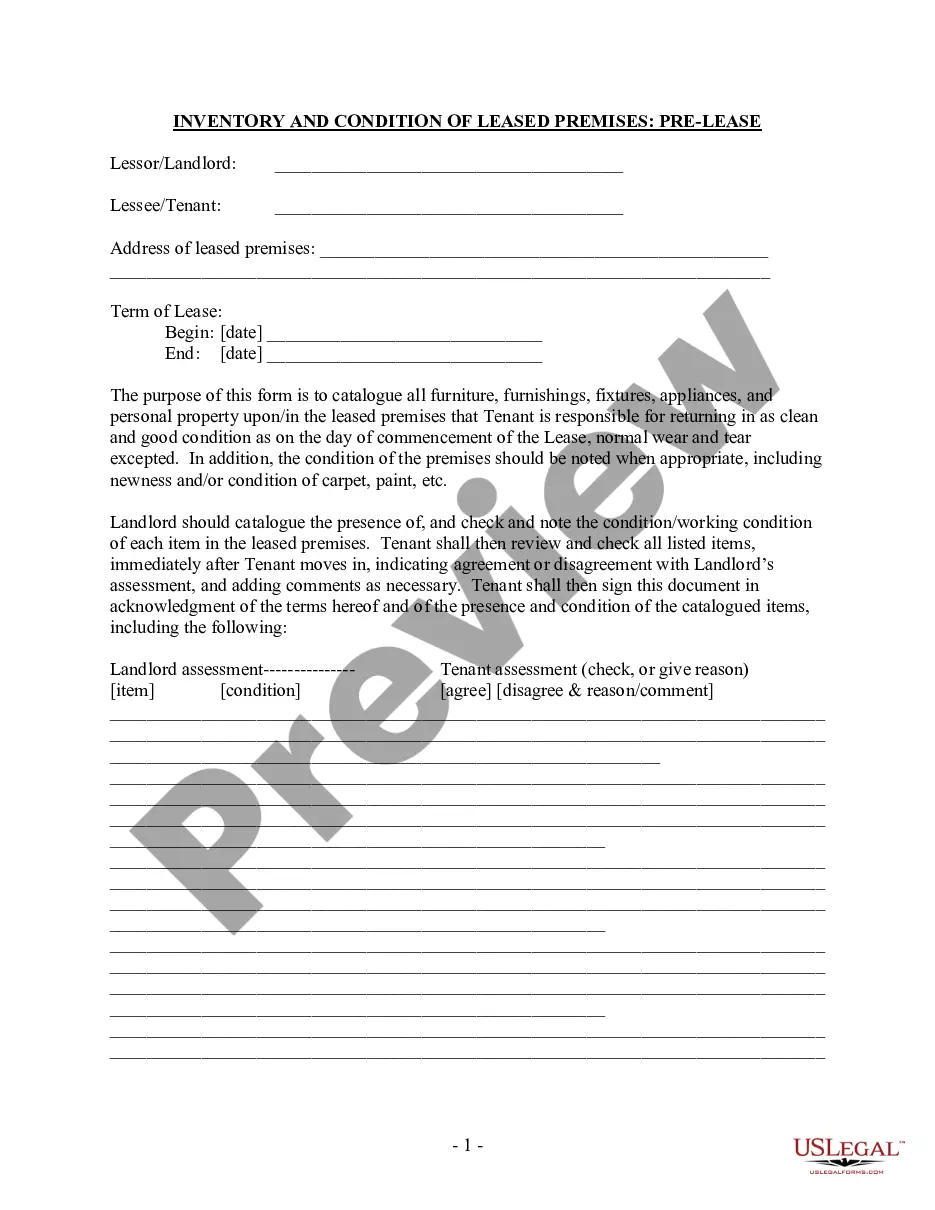
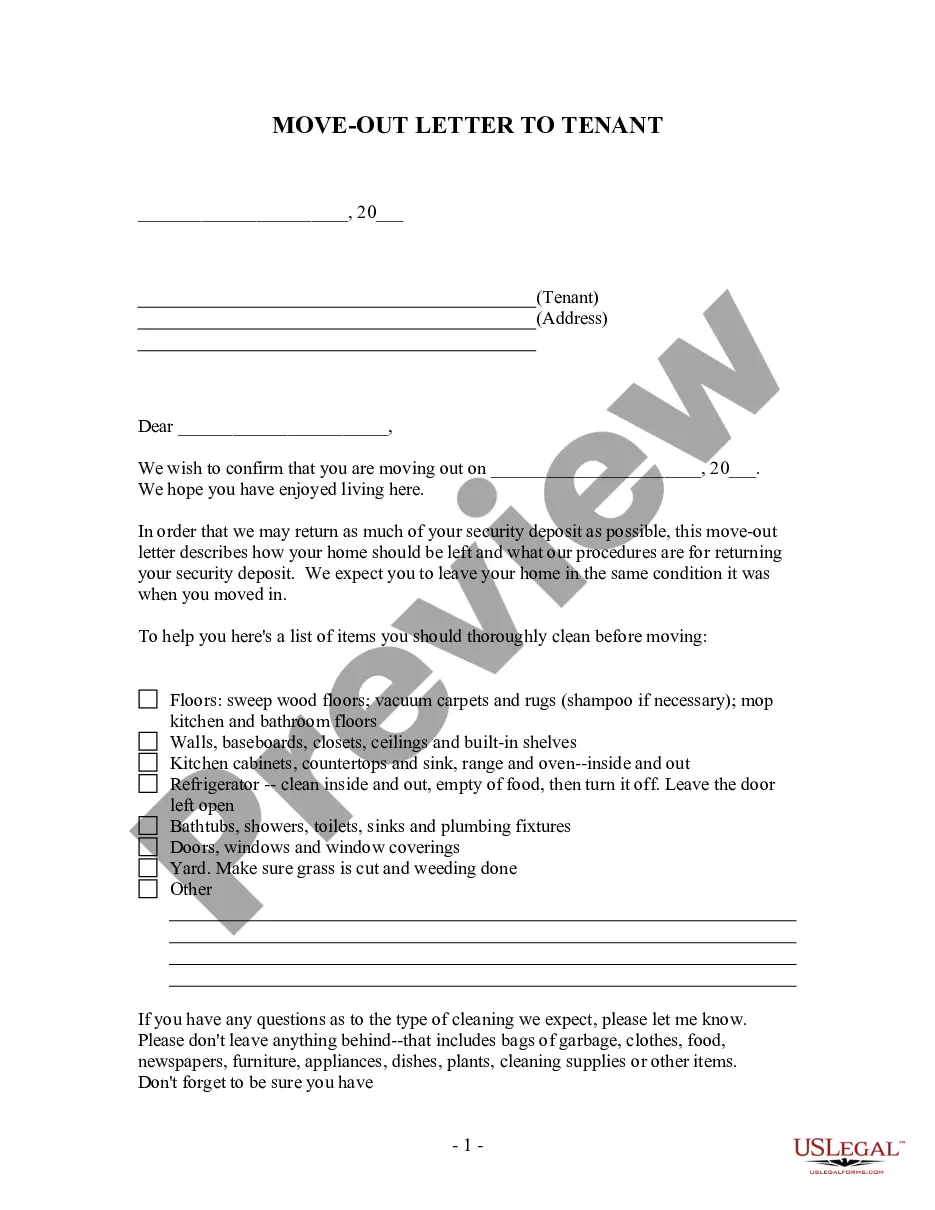
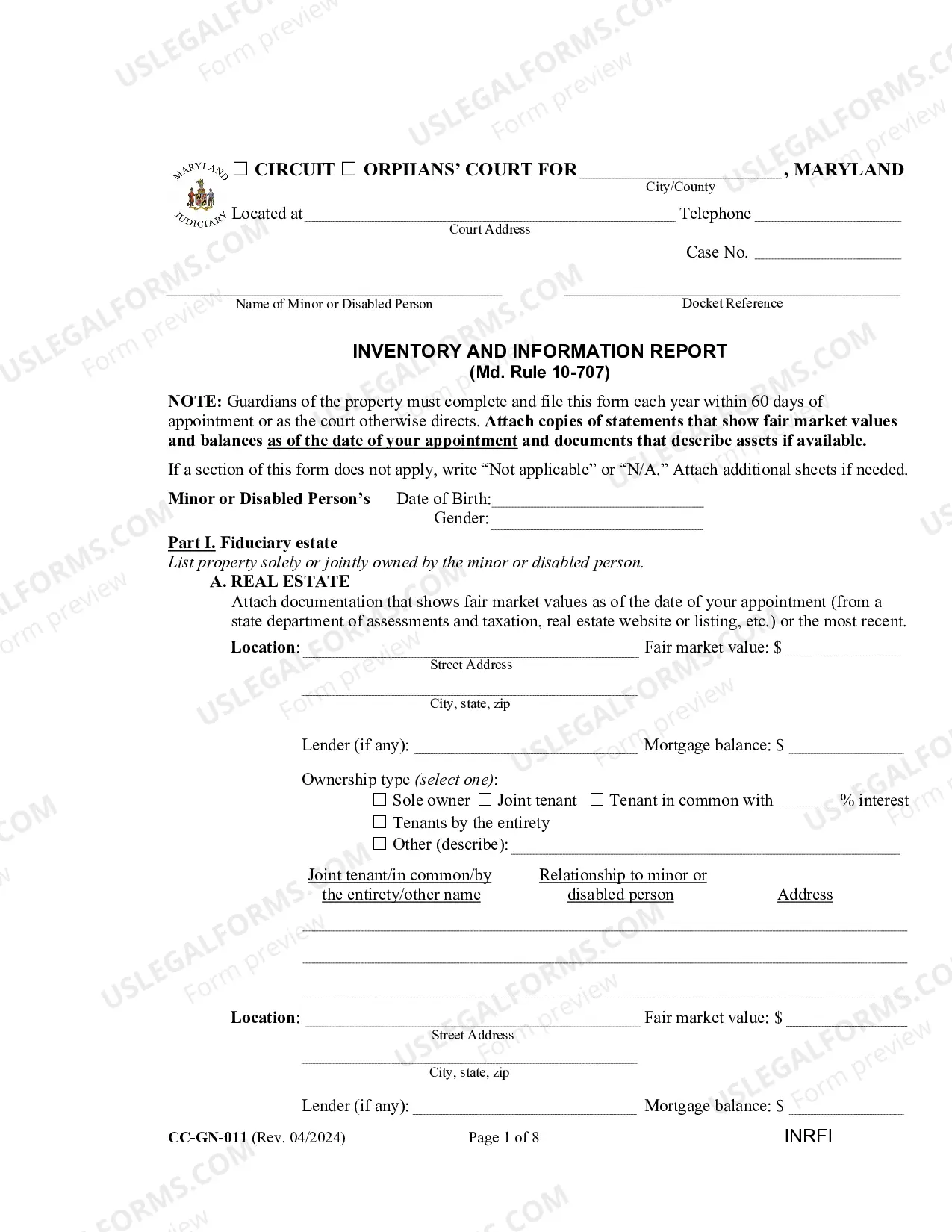
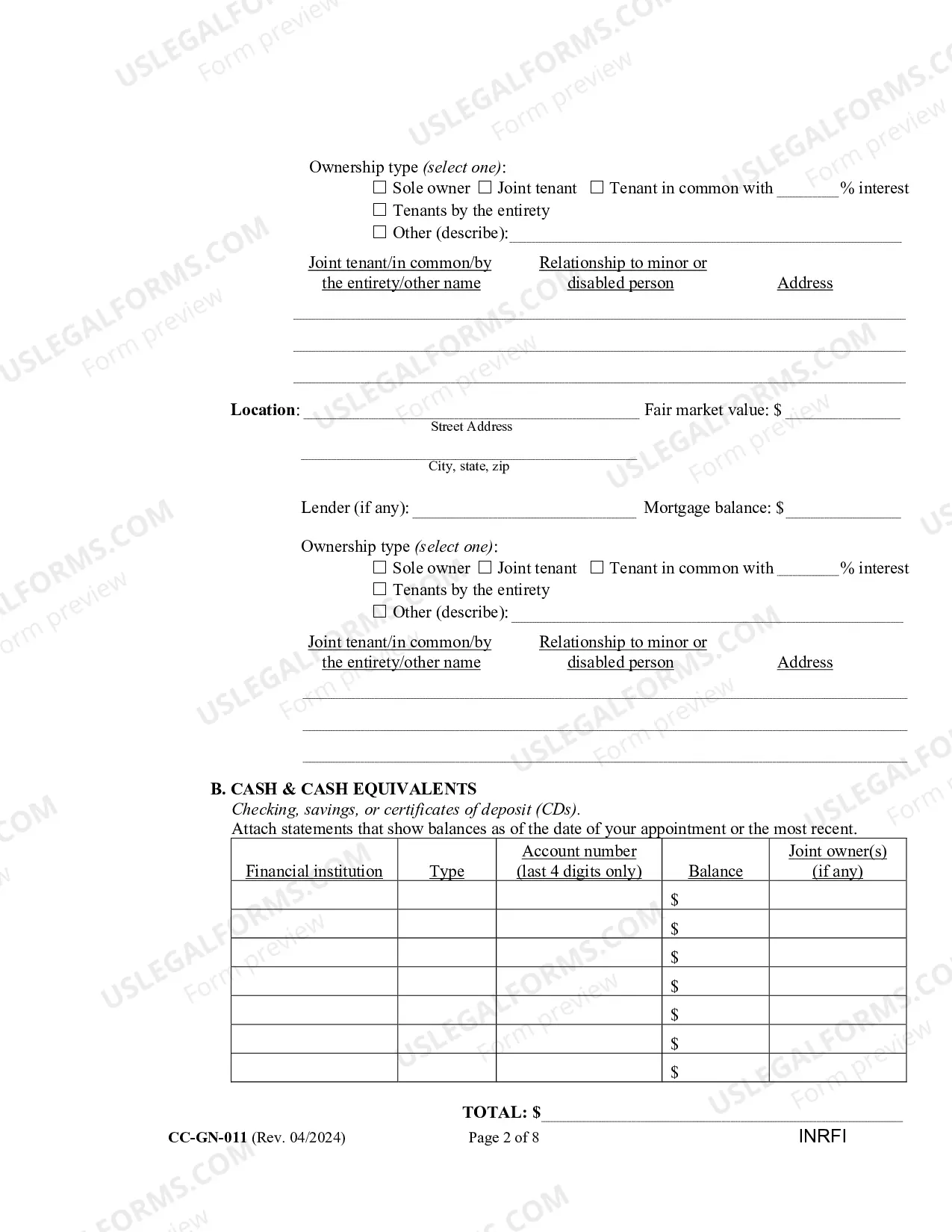
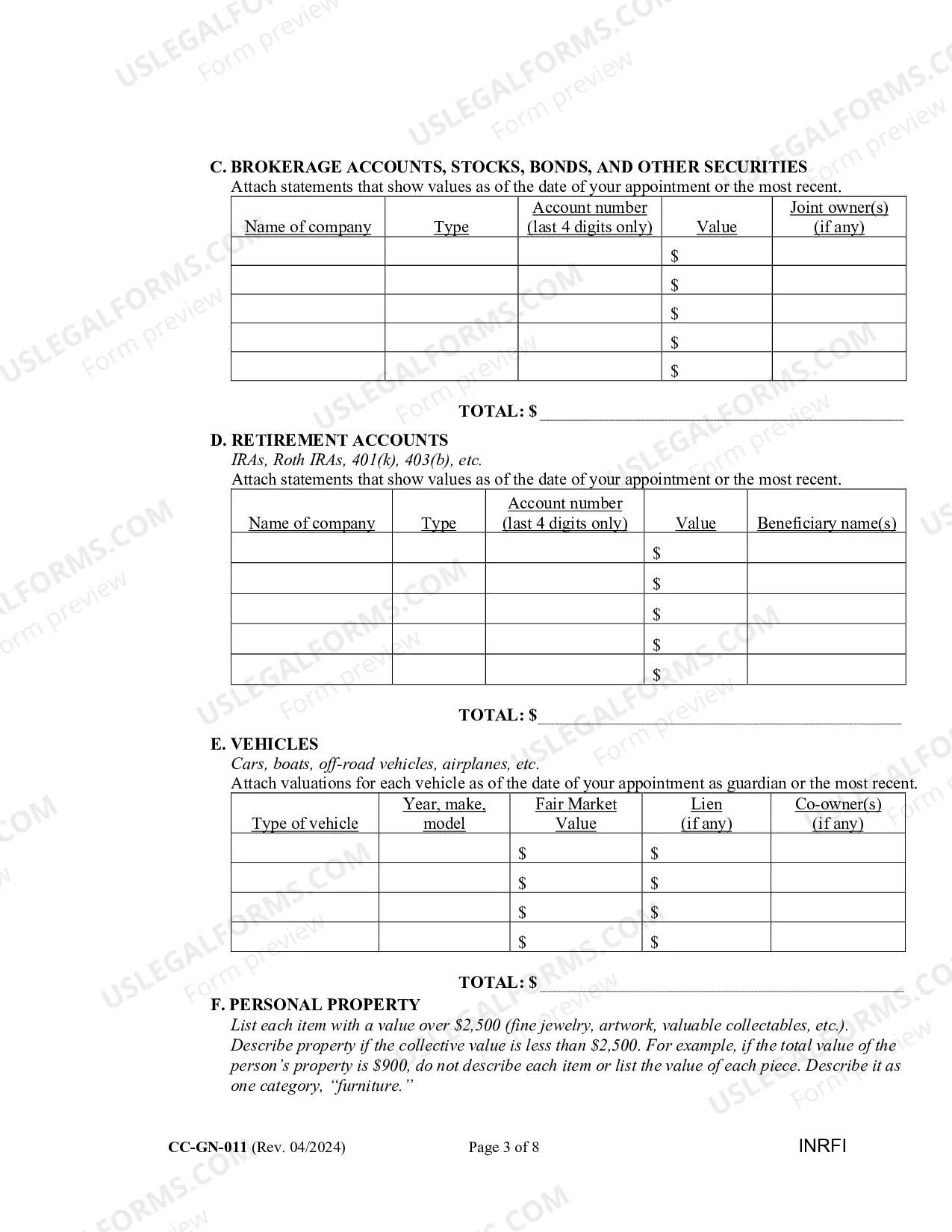
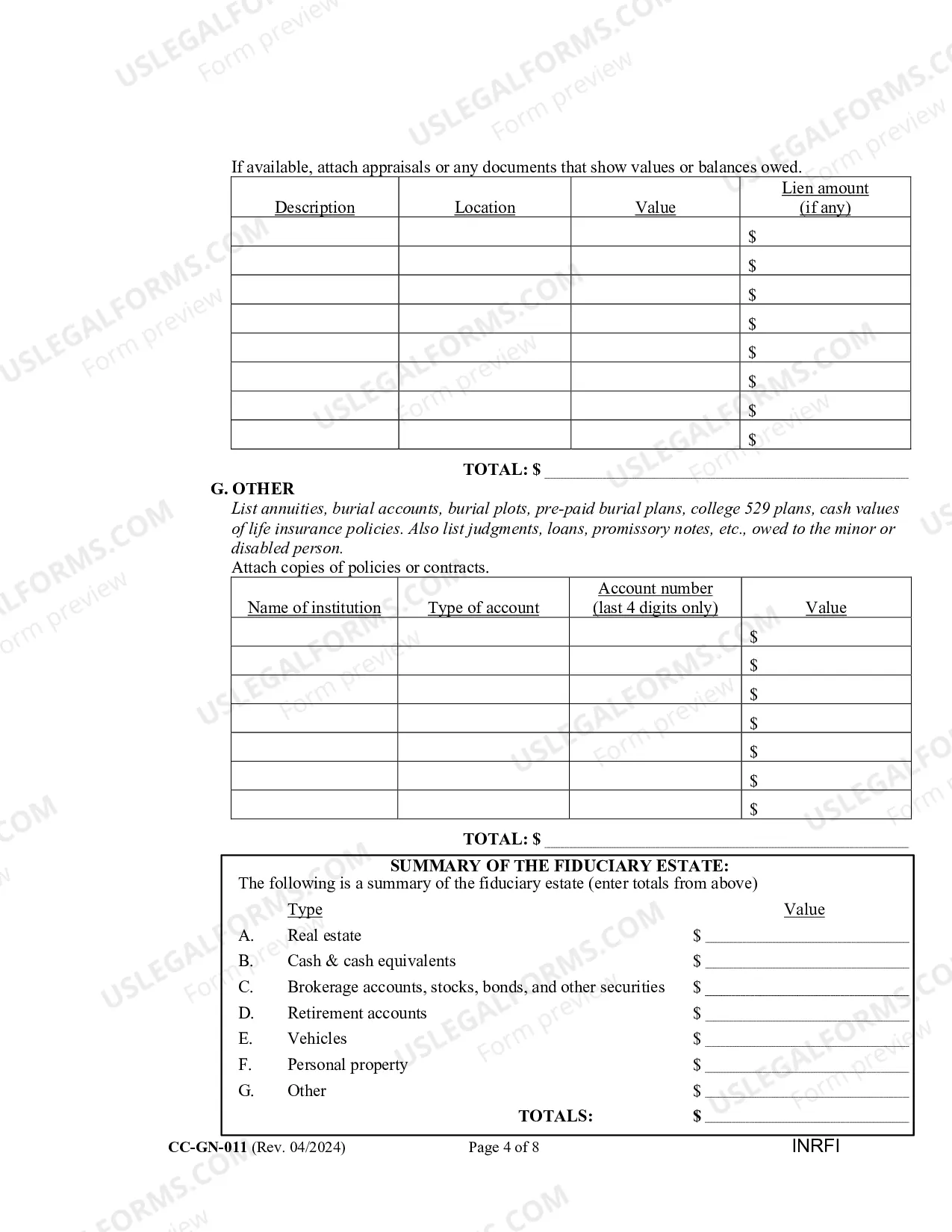
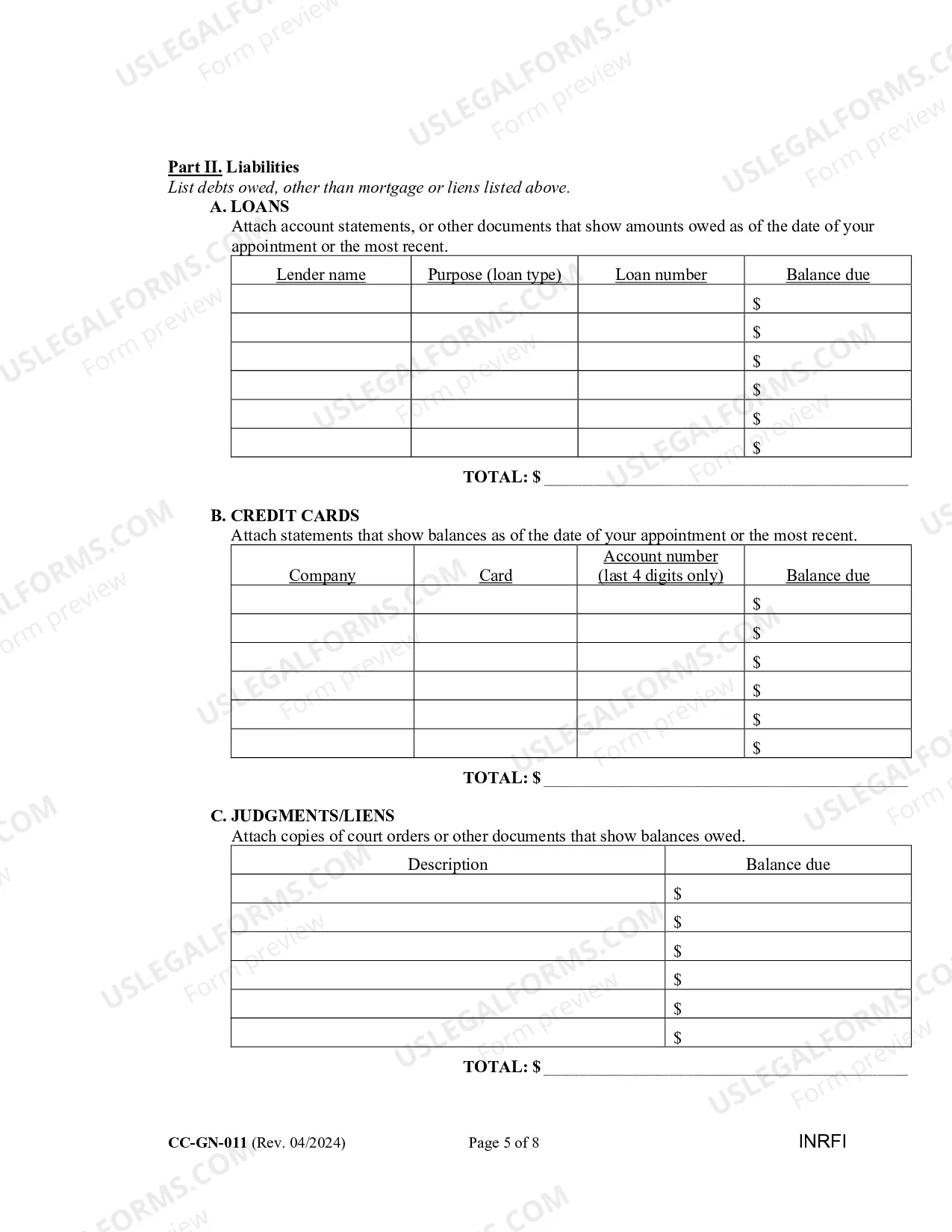
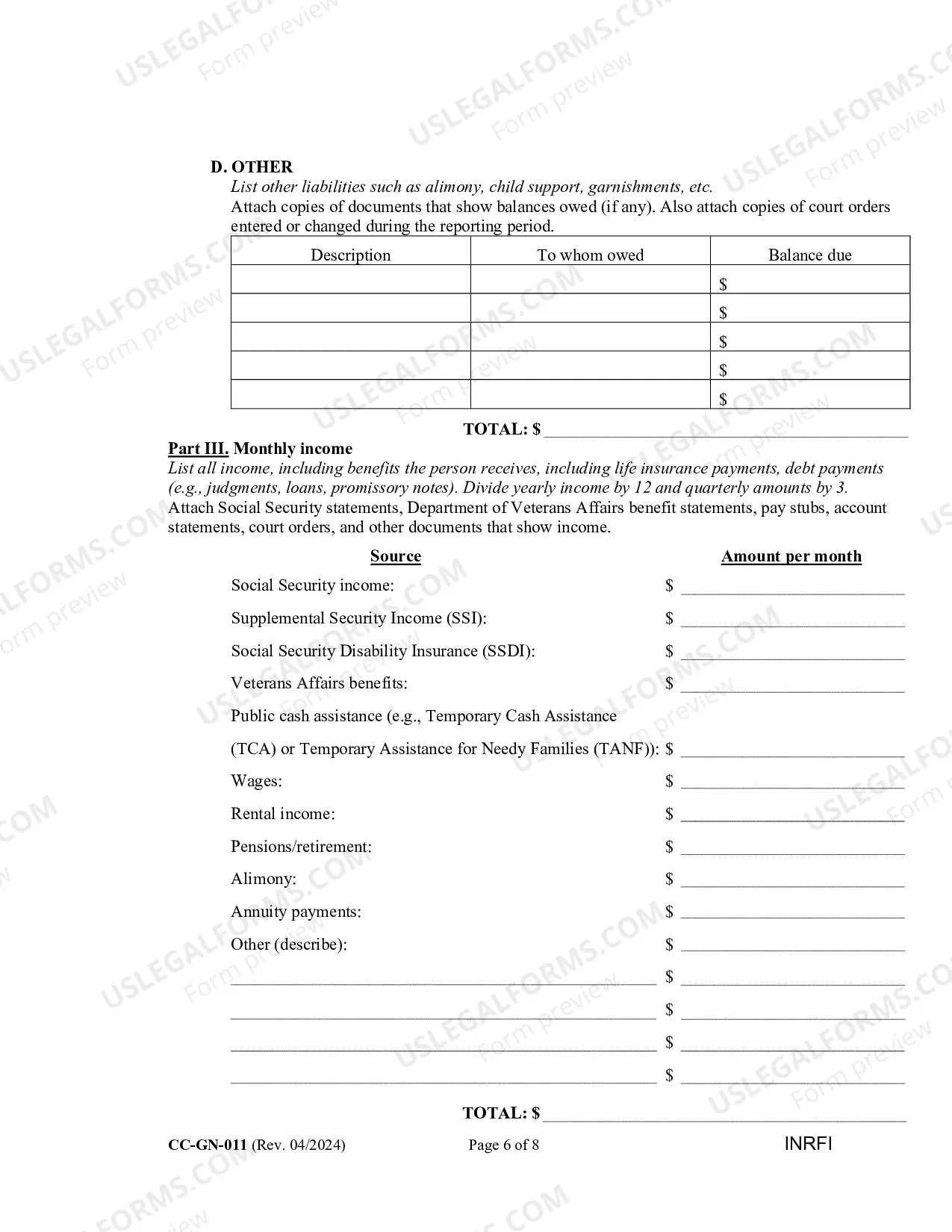
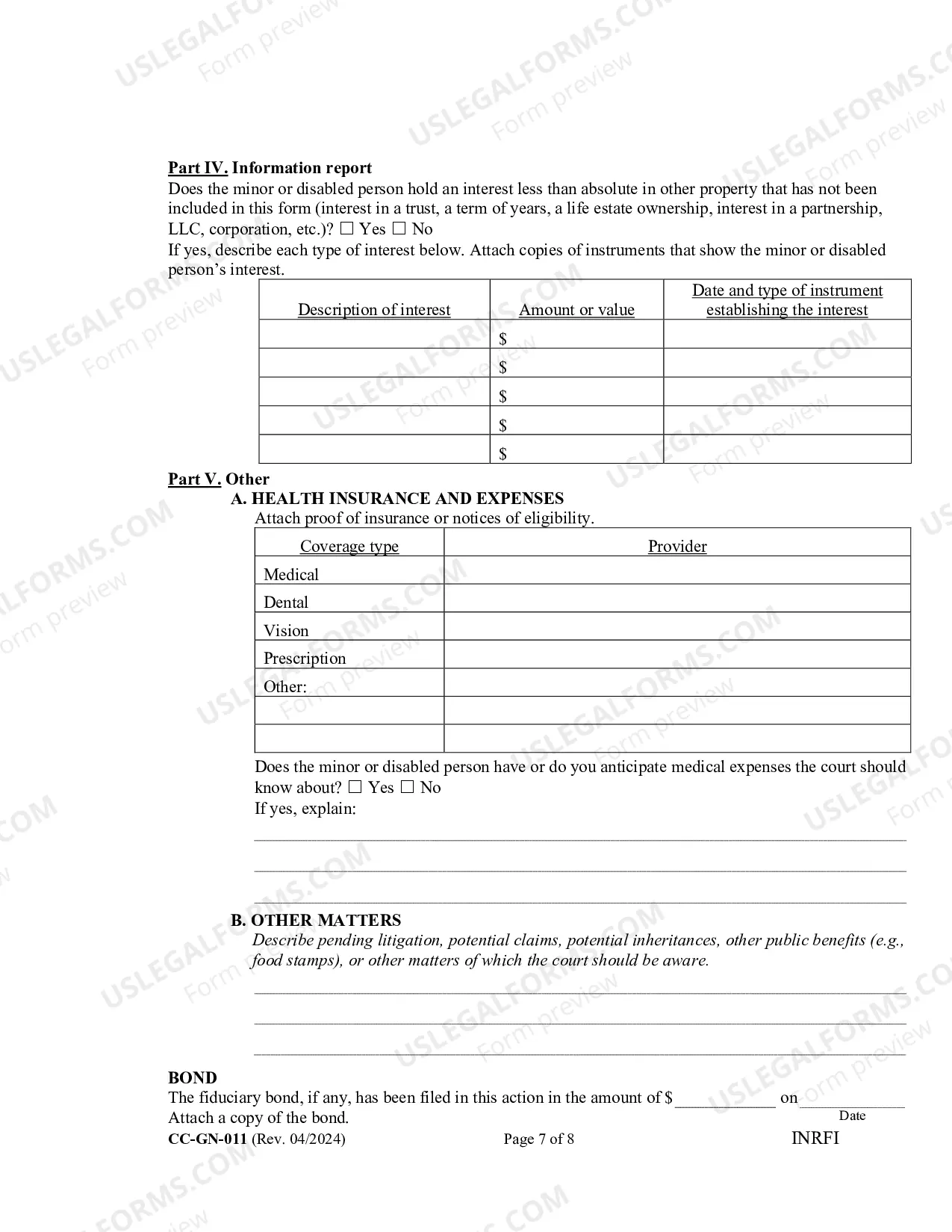
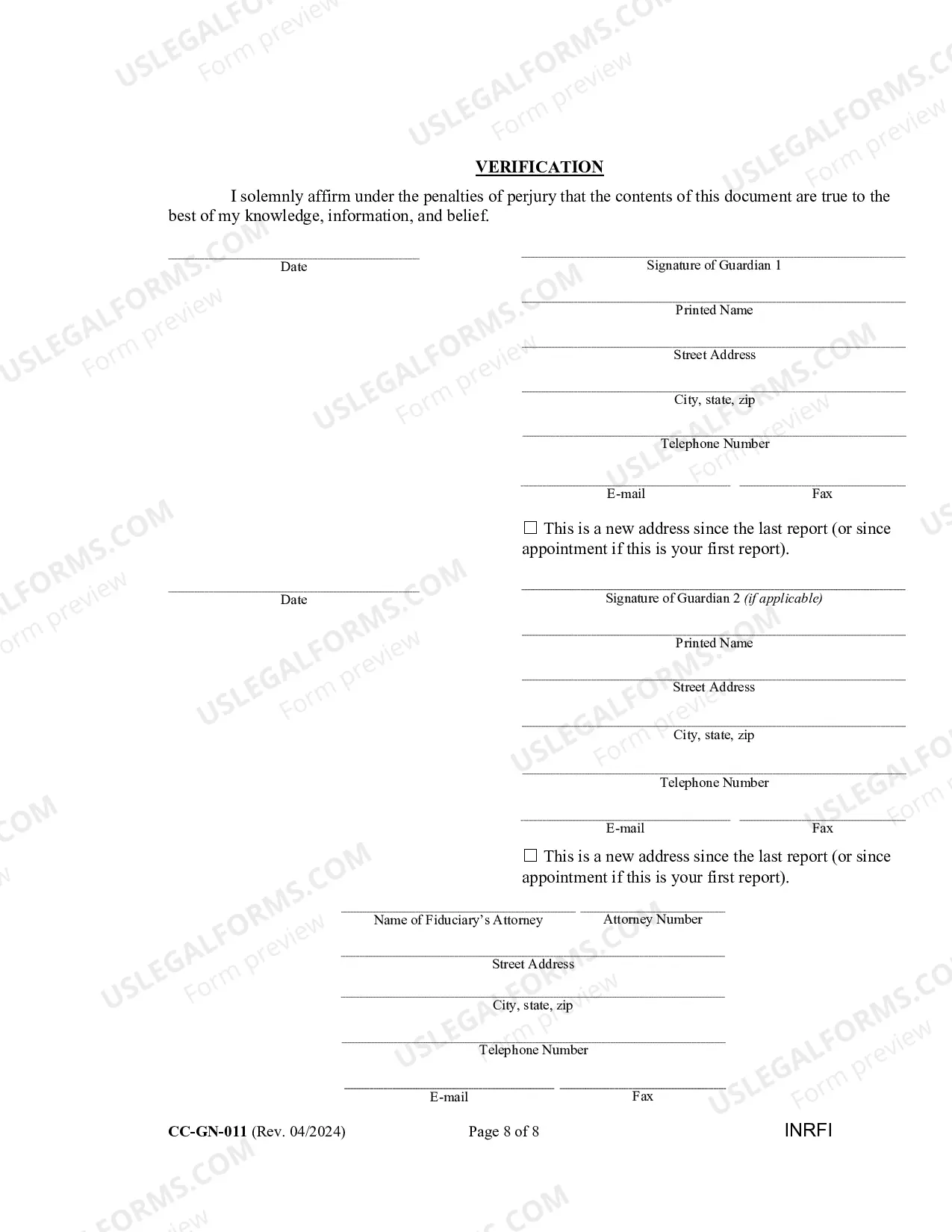
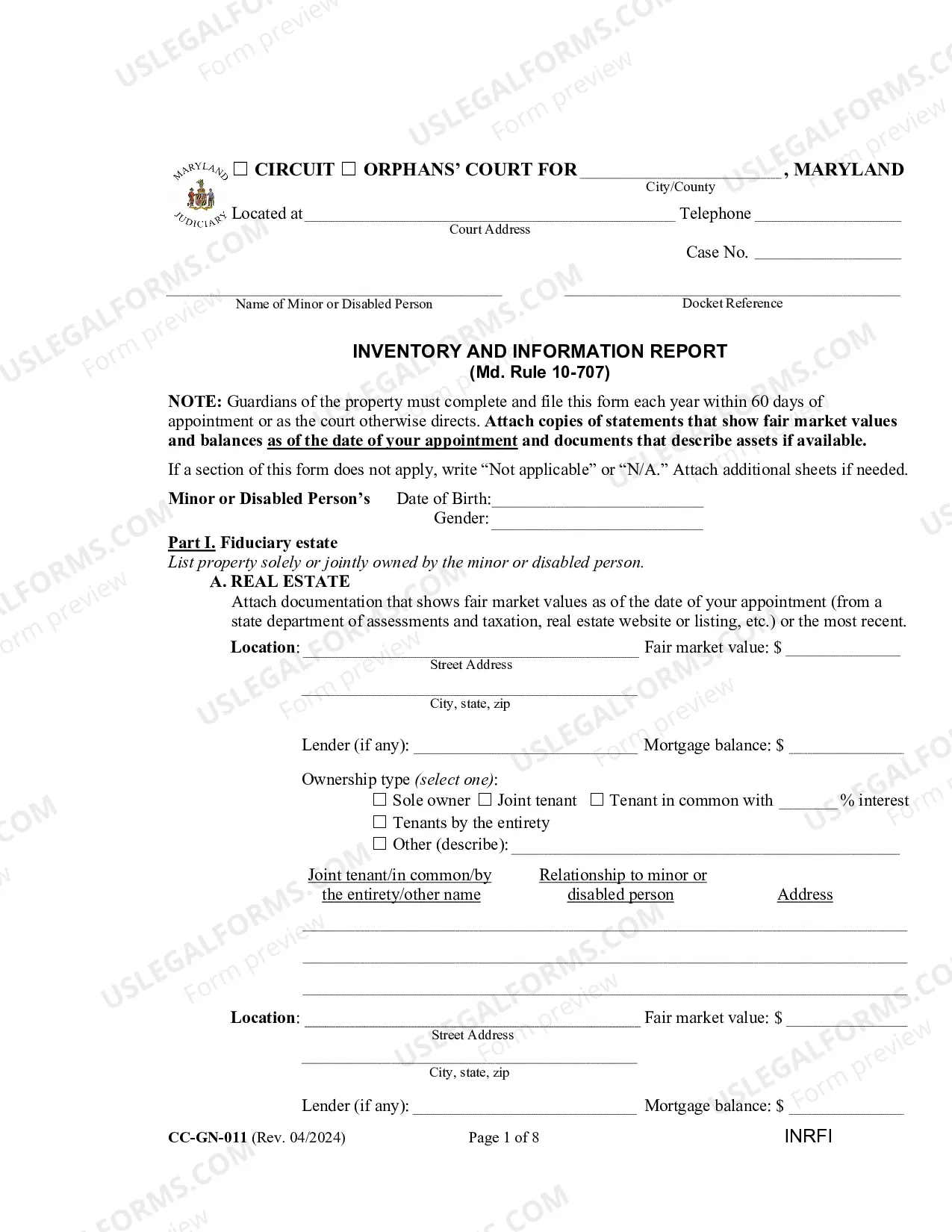
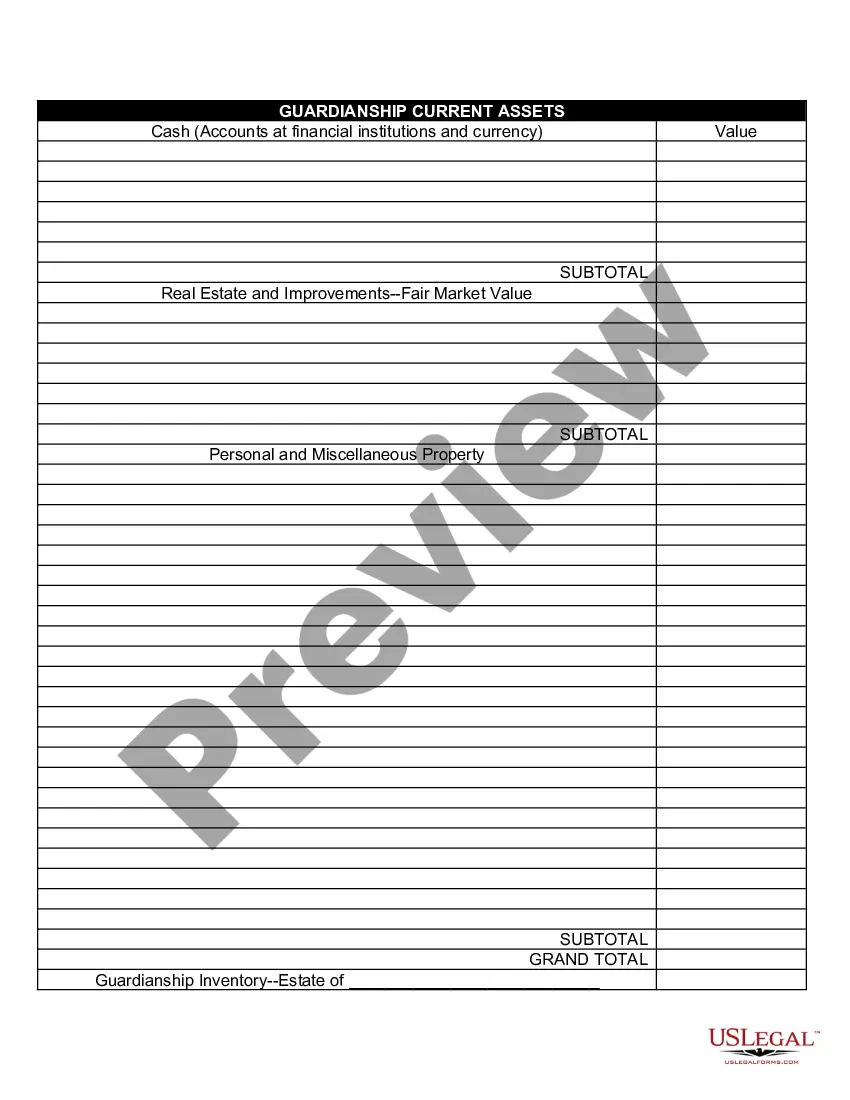
Maryland Inventory Instructions are specific guidelines for conducting an inventory of property in the state of Maryland. These instructions provide information on how to properly complete the inventory form and submit it to the Maryland Department of Assessments and Taxation. There are two types of Maryland Inventory Instructions: land and personal property. Land inventory instructions provide guidance on how to properly identify, describe, and value land and buildings for assessment purposes. Personal property inventory instructions provide guidance on how to properly identify, describe, and value movable property such as fixtures, furniture, machinery, and equipment. Both types of instructions provide detailed information about the procedures and requirements for conducting an inventory in Maryland.
Maryland Inventory Instructions
Description
Get your form ready online
Our built-in tools help you complete, sign, share, and store your documents in one place.
Make edits, fill in missing information, and update formatting in US Legal Forms—just like you would in MS Word.
Download a copy, print it, send it by email, or mail it via USPS—whatever works best for your next step.
Sign and collect signatures with our SignNow integration. Send to multiple recipients, set reminders, and more. Go Premium to unlock E-Sign.
If this form requires notarization, complete it online through a secure video call—no need to meet a notary in person or wait for an appointment.
We protect your documents and personal data by following strict security and privacy standards.

Make edits, fill in missing information, and update formatting in US Legal Forms—just like you would in MS Word.

Download a copy, print it, send it by email, or mail it via USPS—whatever works best for your next step.

Sign and collect signatures with our SignNow integration. Send to multiple recipients, set reminders, and more. Go Premium to unlock E-Sign.

If this form requires notarization, complete it online through a secure video call—no need to meet a notary in person or wait for an appointment.

We protect your documents and personal data by following strict security and privacy standards.
Looking for another form?
How to fill out Maryland Inventory Instructions?
Managing official documentation necessitates focus, accuracy, and utilizing well-structured samples.
US Legal Forms has been assisting individuals nationwide in this regard for 25 years, so when you select your Maryland Inventory Instructions template from our platform, you can be assured it adheres to federal and state regulations.
All documents are crafted for multi-purpose use, such as the Maryland Inventory Instructions showcased on this page. If you require them again in the future, you can complete them without additional payment - simply access the My documents section in your account and finalize your document whenever necessary. Experience US Legal Forms and prepare your business and personal paperwork swiftly and in full legal compliance!
- Be sure to carefully review the document content and its alignment with general and legal standards by previewing it or examining its summary.
- Search for an alternative formal template if the previously accessed one does not fit your needs or state requirements (the option for that is in the upper corner of the main page).
- Log in to your account and obtain the Maryland Inventory Instructions in your desired format. If it’s your first visit to our site, click Buy now to proceed.
- Establish an account, select your subscription tier, and make payment using your credit card or PayPal account.
- Decide on which format you would like to save your document and click Download. Print the blank copy or upload it to a professional PDF editor for a paperless preparation.
Form popularity
FAQ
In most cases, no. If a person owns assets in his or her individual name and dies without a Will, assets remaining after payment of administration expenses, debts and taxes (if any) are distributed to the person's heirs as provided under Maryland Intestacy Laws (the person is said to have died ?intestate?).
For estates with a value of at least $50,000, there is probate fee to cover the processing costs. The probate fee is based on the value of the assets. Please see the Fees Page for more information. Unless exempted under Maryland statute, there is also an inheritance tax due on distribution of remaining assets.
Length of Probate Process in Maryland The administration of an estate often takes approximately one year. This includes marshaling all of the assets, valuing the assets as of the date of death and then making the distribution.
6 months from the date of the decedent's death; or. 2 months after the personal representative delivers a copy of the ?Notice of Appointment, Notice to Creditors, Notice to Unknown Heirs? form.
The Maryland Probate Process: What Is It? Probate is the court-supervised process of identifying the assets, debts, and beneficiaries of the person who passed away (the ?decedent?). If the decedent had a will, the will tells us how to ultimately distribute their property.
In Maryland, you can make a living trust to avoid probate for virtually any asset you own?real estate, bank accounts, vehicles, and so on. You need to create a trust document (it's similar to a will), naming someone to take over as trustee after your death (called a successor trustee).