Oak Ridge Temple Employee Handbook
What this document covers
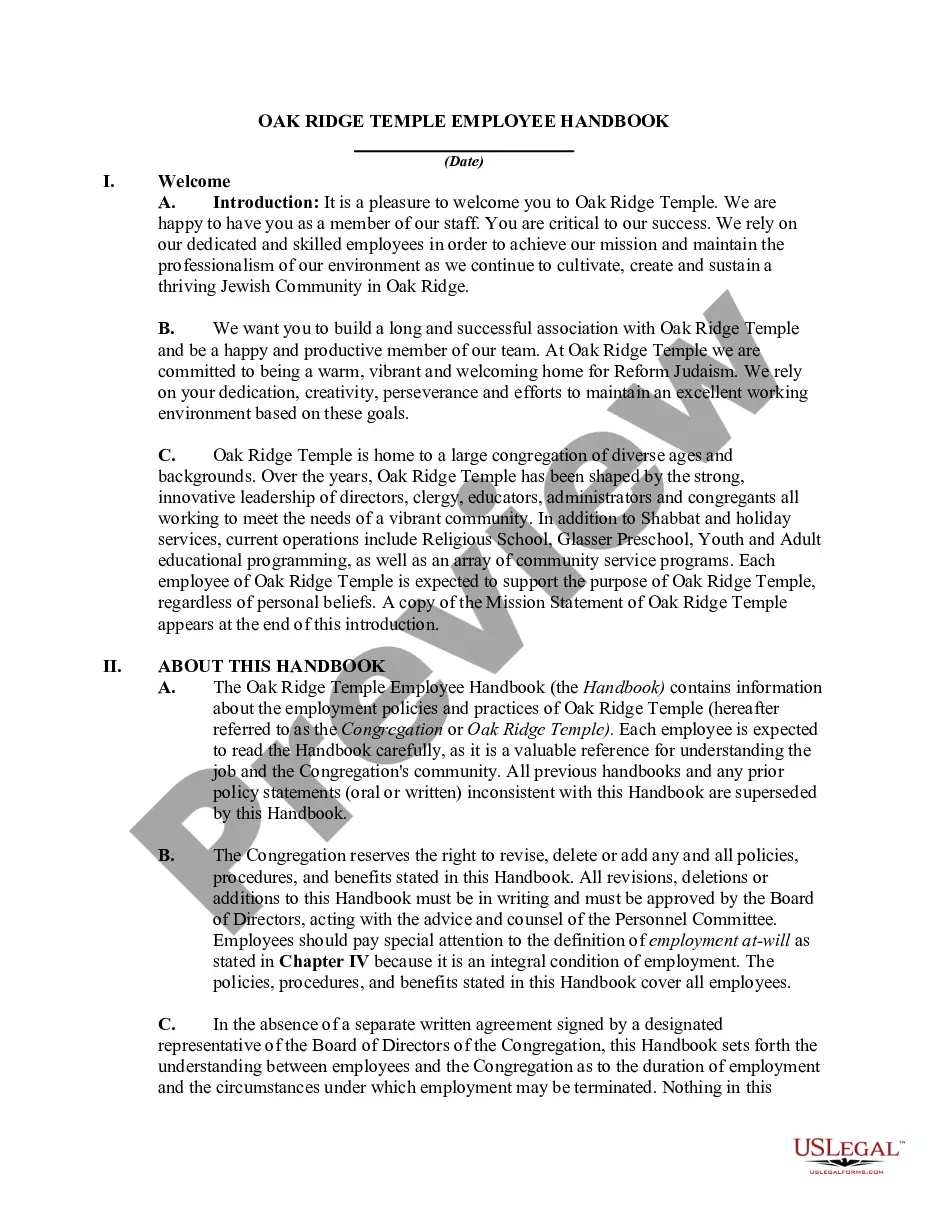
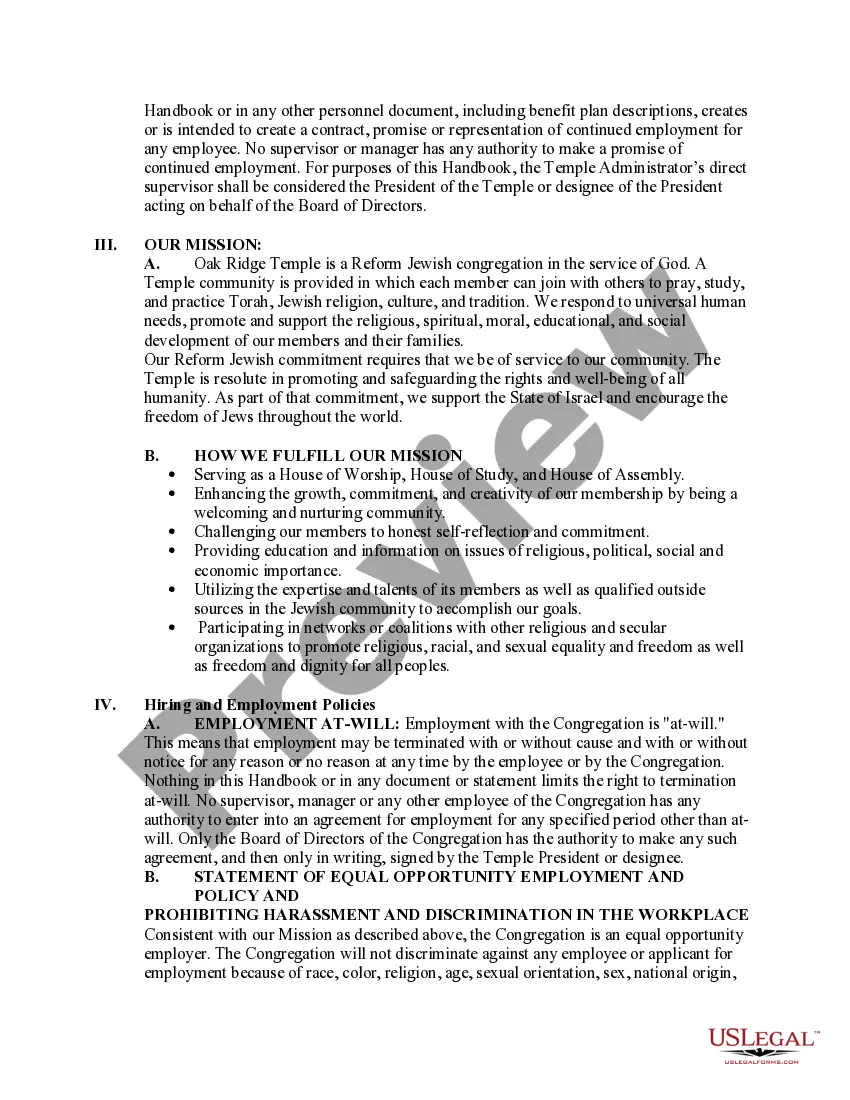
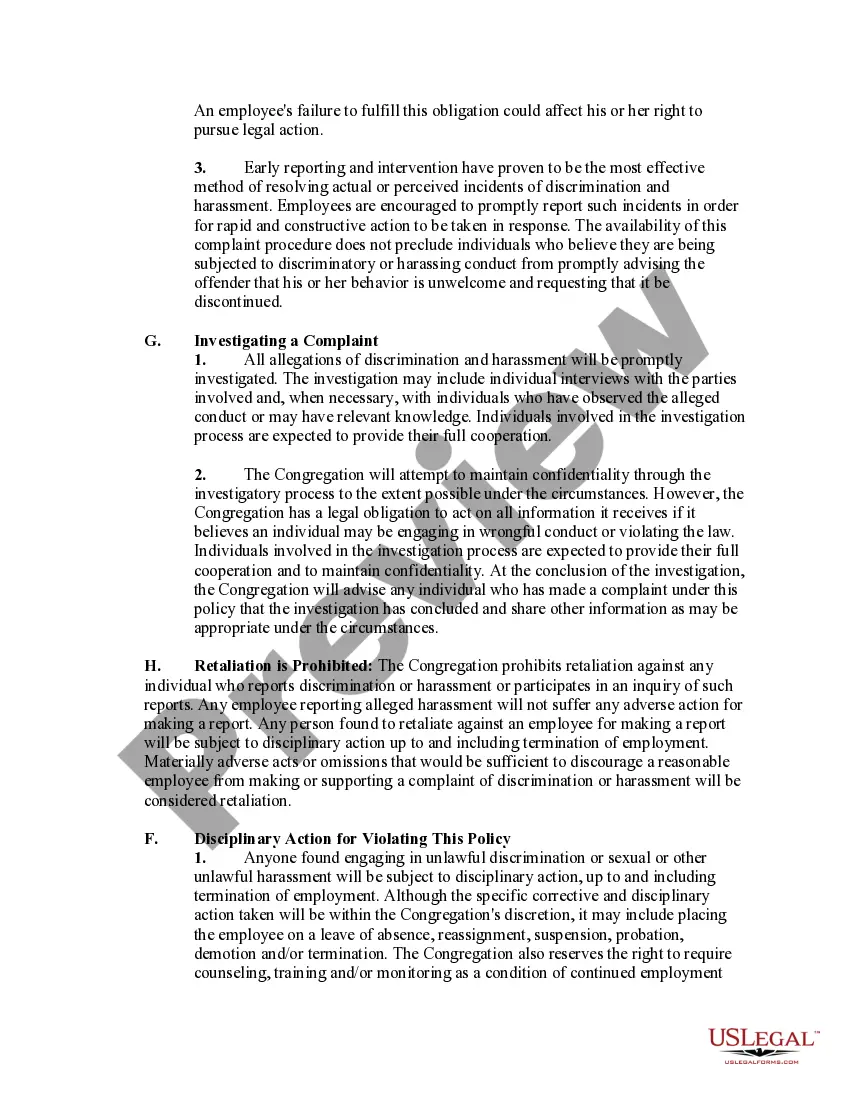
The Oak Ridge Temple Employee Handbook is a comprehensive manual that outlines the work rules, policies, and benefits for employees at Oak Ridge Temple. Its primary purpose is to serve as a guide to help employees understand their roles within the organization, the congregation's mission, and the expectations of conduct and performance. This handbook is specifically tailored for employees of the Oak Ridge Temple and differs from generic employee handbooks by incorporating specific policies reflective of the Reform Jewish values and the unique operational context of the Temple.
Key parts of this document
- Introduction outlining the mission and vision of the Oak Ridge Temple.
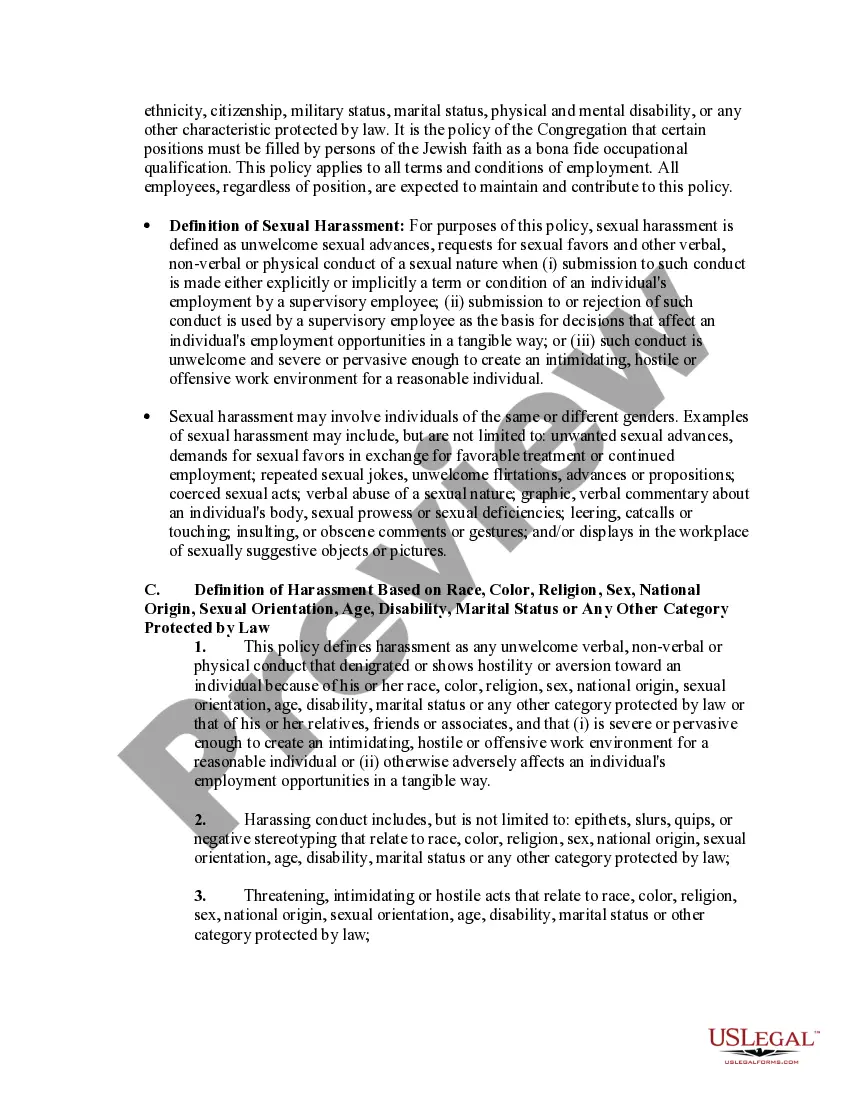
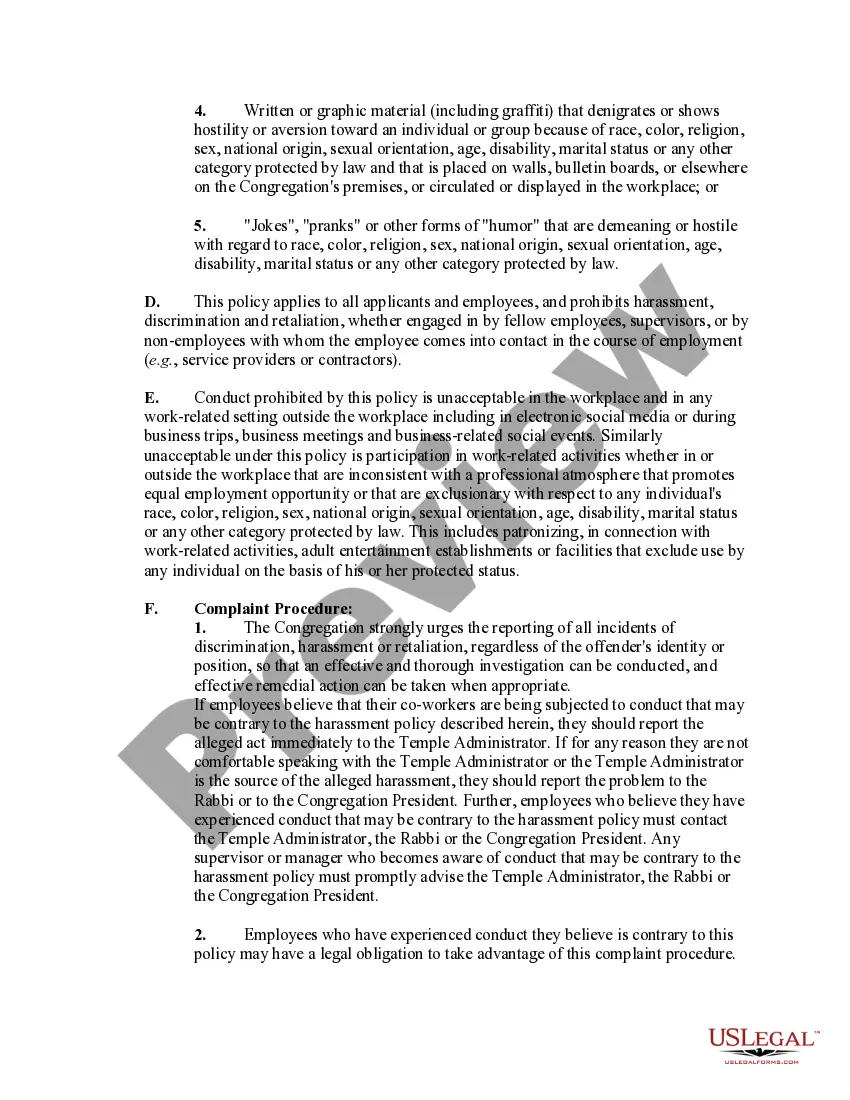
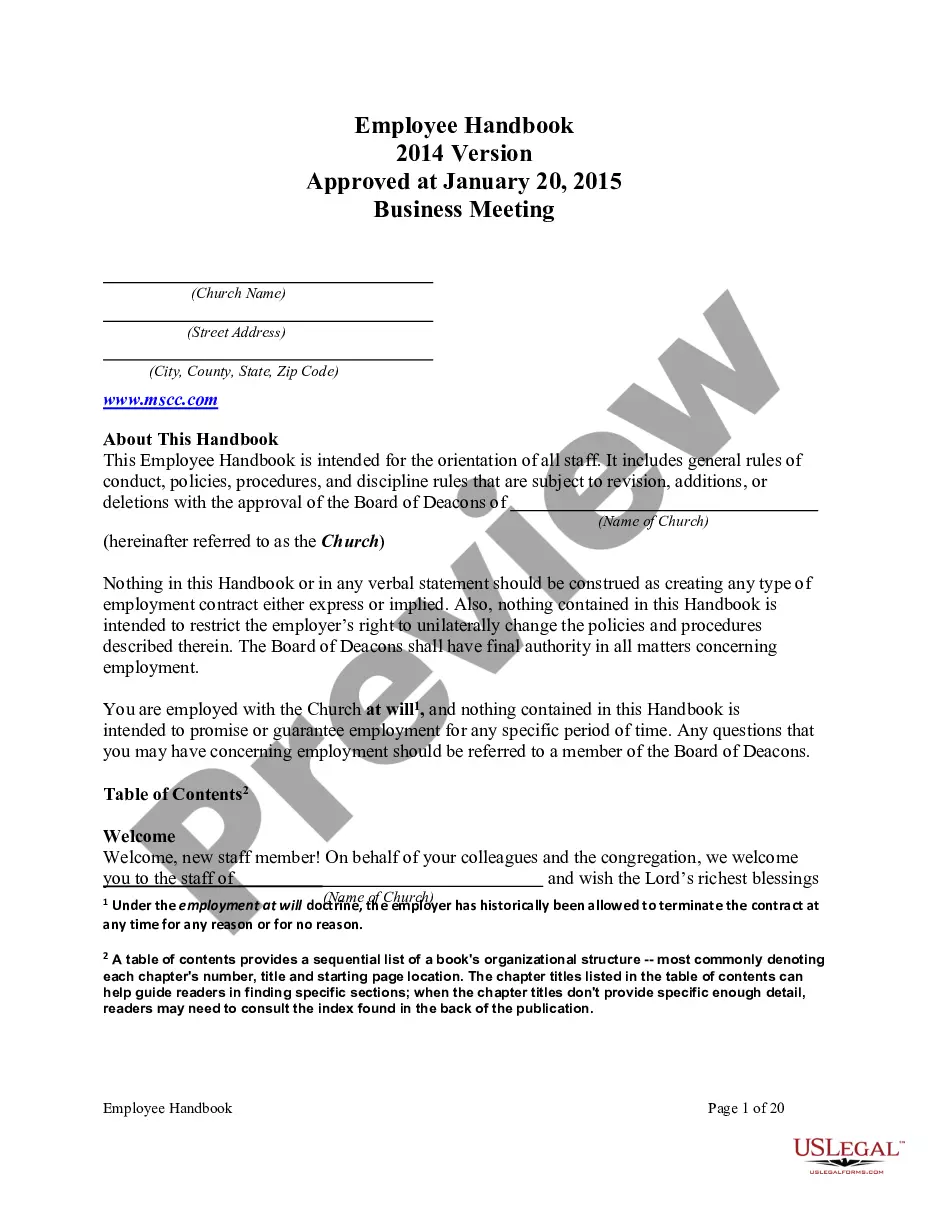
- Employment policies including the at-will employment clause and equal opportunity statement.
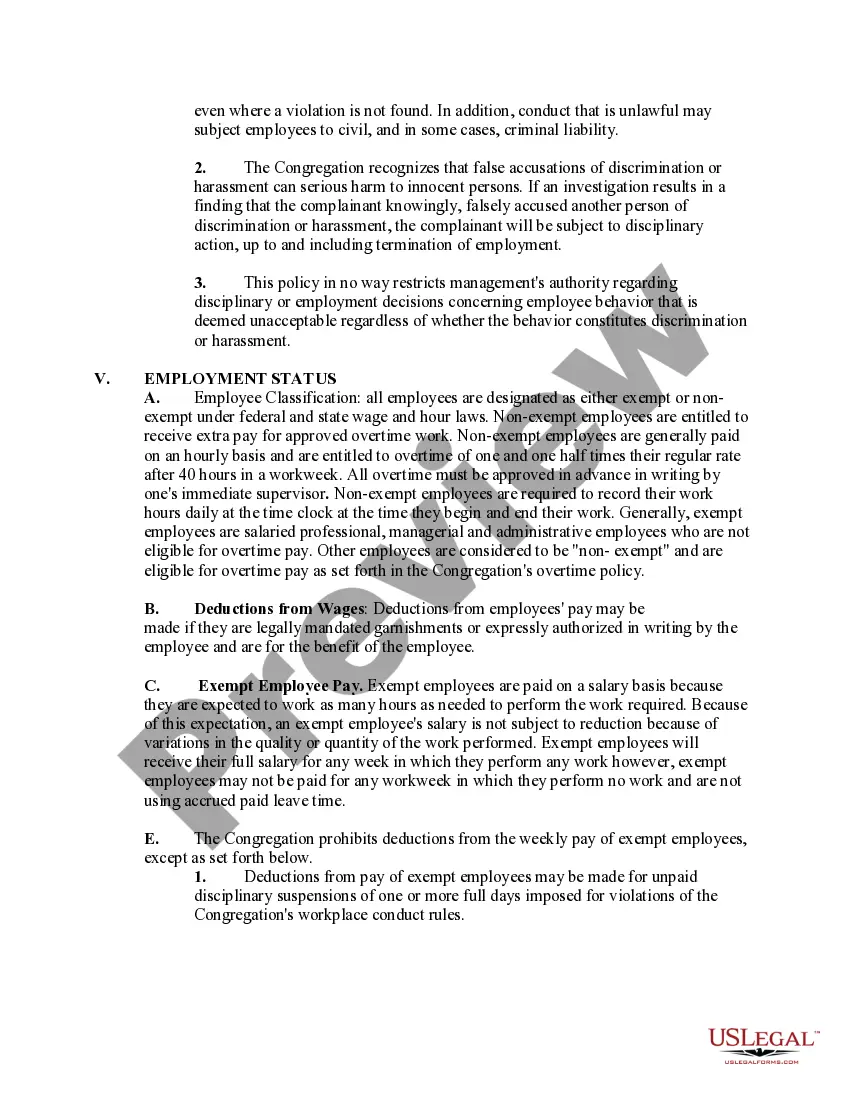
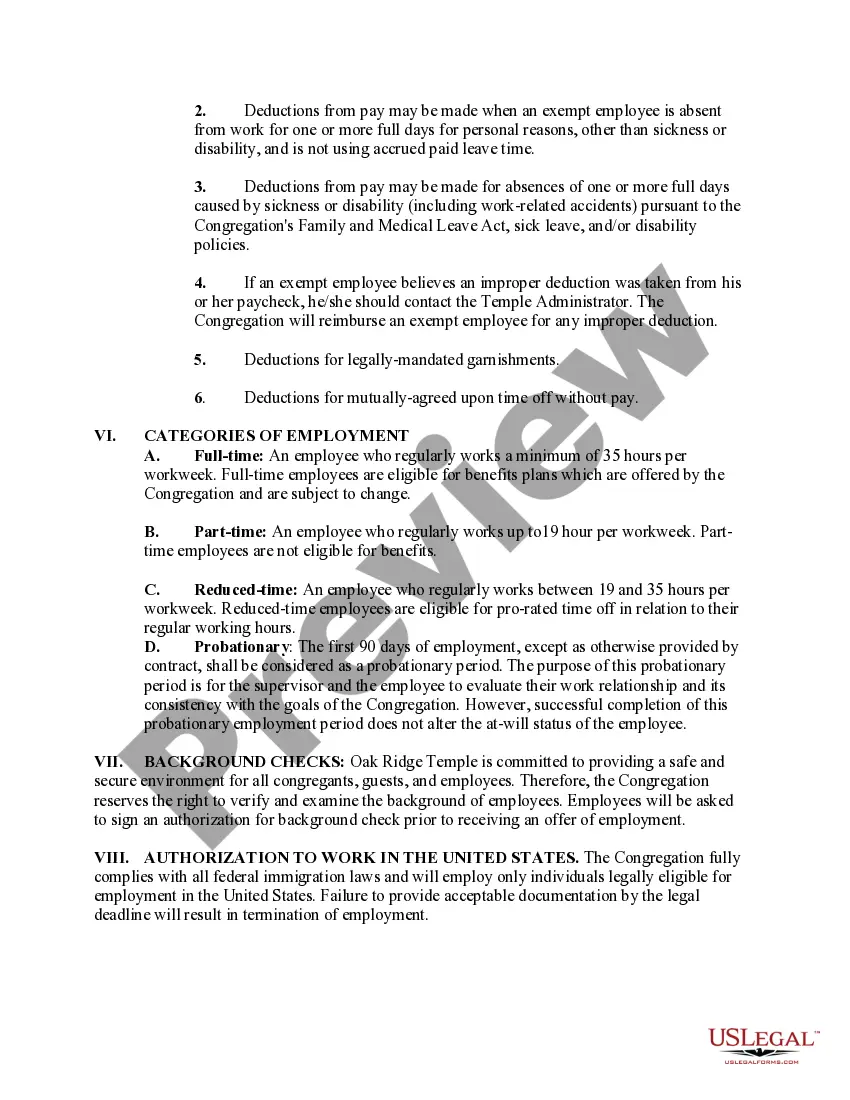
- Details about employee classification, including full-time, part-time, and probationary status.
- Compensation policies such as salary structure, overtime pay, and deductions.
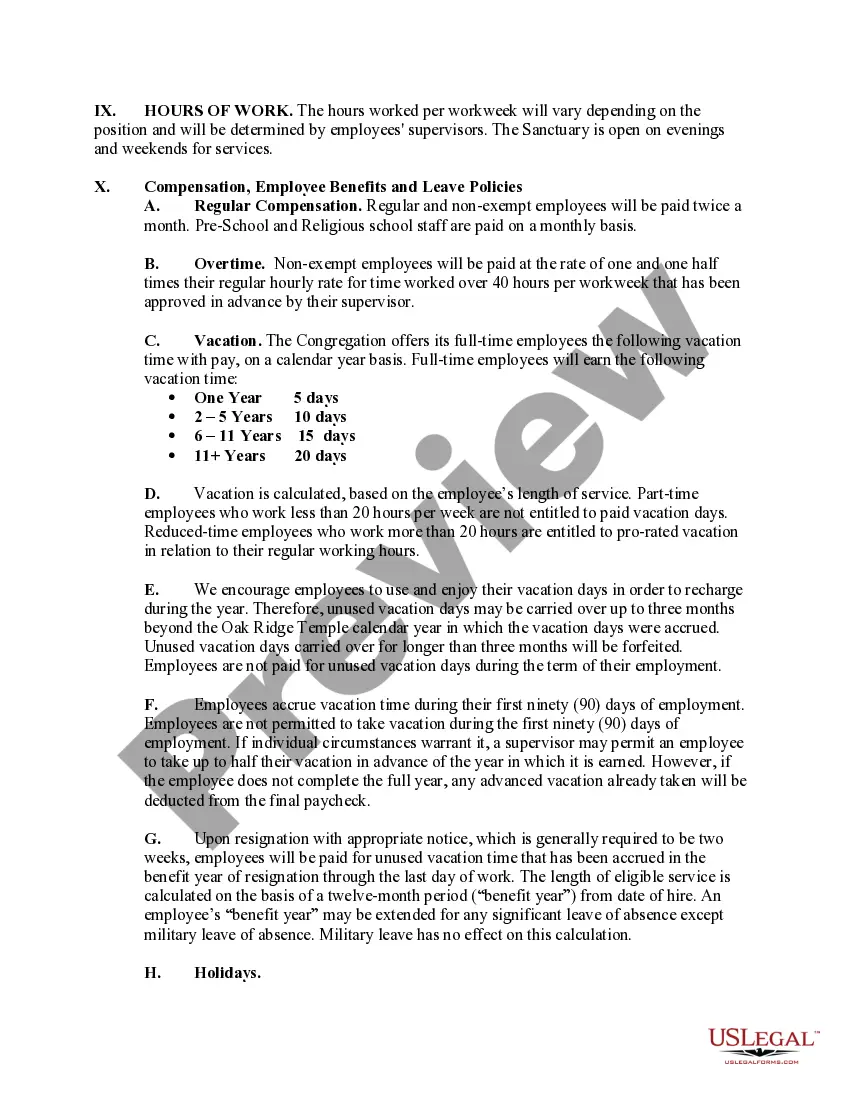
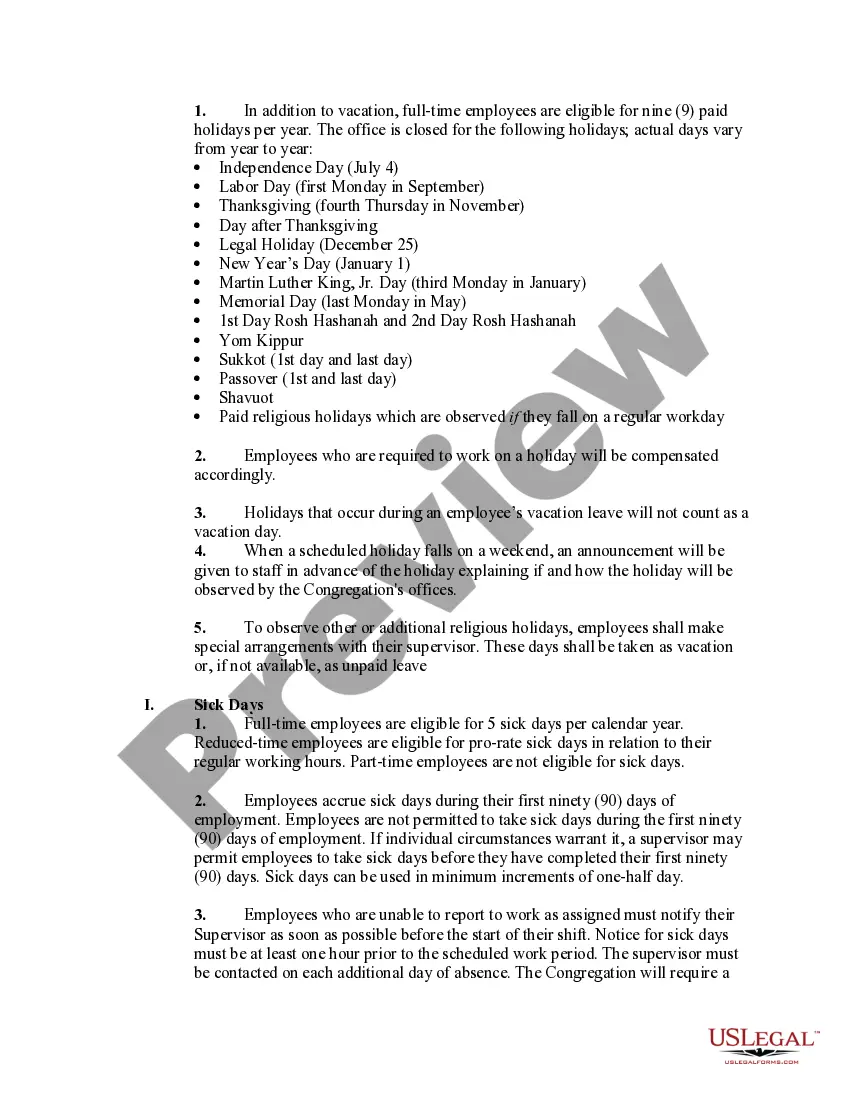
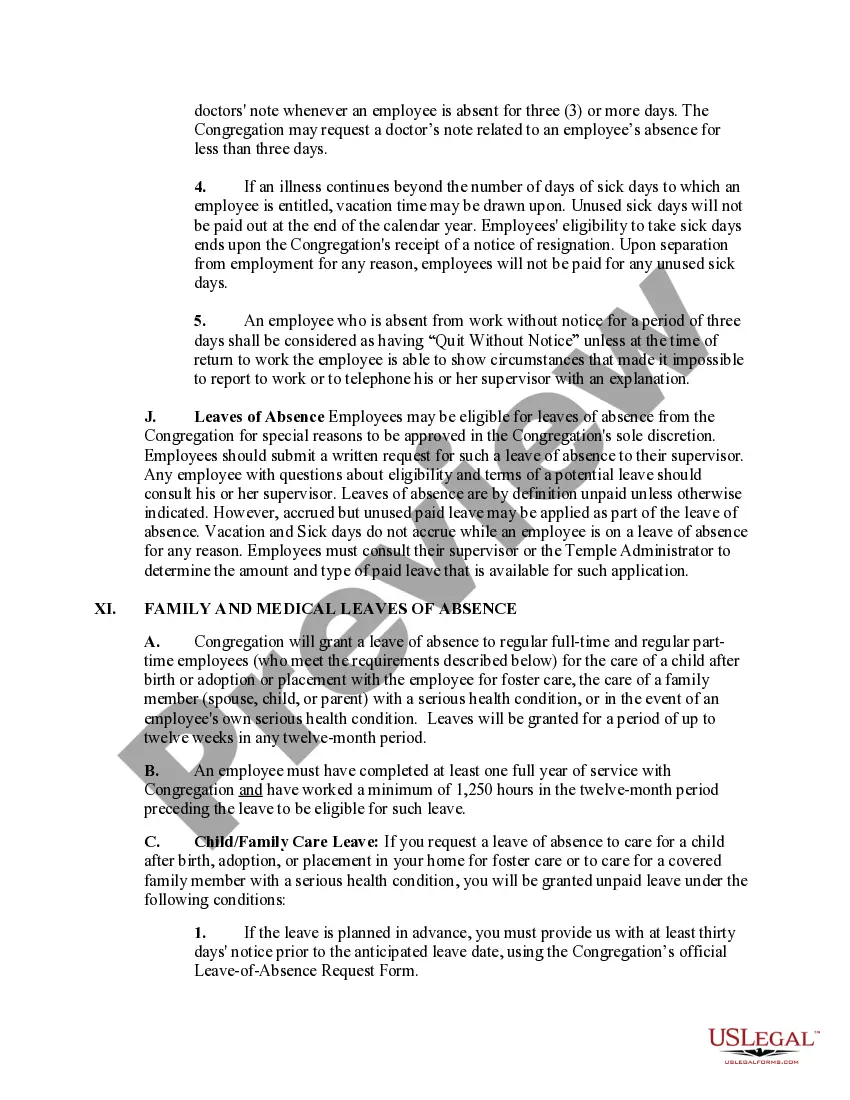
- Leave and benefits policies detailing vacation, sick leave, and family medical leave entitlements.
- An employee acknowledgment requiring signatures to confirm understanding of the handbook's contents.

When to use this form
This handbook should be used by all employees at Oak Ridge Temple as a reference tool for understanding workplace policies, procedures, and benefits. It is particularly useful when onboarding new employees to familiarize them with the Temple's mission and employment standards. Employees should consult the handbook when they have questions about their rights and responsibilities, workplace conduct, leave entitlements, and other employment-related queries.
Who needs this form
This handbook is intended for:
- All current employees of Oak Ridge Temple.
- New hires seeking guidance on employment policies and practices.
- Supervisors and management to ensure compliance with established policies.
- Volunteers and contractors who need to understand the Temple's operational standards.
How to prepare this document
To complete the acknowledgment section of this handbook, follow these steps:
- Read the entire handbook to understand policies and procedures.
- Discuss any questions with your supervisor or the Temple Administrator.
- Sign the acknowledgment form included at the end of the handbook.
- Date the form to indicate when you received and reviewed the handbook.
- Submit the signed acknowledgment form to the Temple Administrator for record keeping.
Is notarization required?
This form does not typically require notarization unless specified by local law.
Get your form ready online
Our built-in tools help you complete, sign, share, and store your documents in one place.
Make edits, fill in missing information, and update formatting in US Legal Forms—just like you would in MS Word.
Download a copy, print it, send it by email, or mail it via USPS—whatever works best for your next step.
Sign and collect signatures with our SignNow integration. Send to multiple recipients, set reminders, and more. Go Premium to unlock E-Sign.
If this form requires notarization, complete it online through a secure video call—no need to meet a notary in person or wait for an appointment.
We protect your documents and personal data by following strict security and privacy standards.

Make edits, fill in missing information, and update formatting in US Legal Forms—just like you would in MS Word.

Download a copy, print it, send it by email, or mail it via USPS—whatever works best for your next step.

Sign and collect signatures with our SignNow integration. Send to multiple recipients, set reminders, and more. Go Premium to unlock E-Sign.

If this form requires notarization, complete it online through a secure video call—no need to meet a notary in person or wait for an appointment.

We protect your documents and personal data by following strict security and privacy standards.
Common mistakes
- Not reading the entire handbook before signing the acknowledgment form.
- Failing to consult with a supervisor regarding unclear policies.
- Ignoring updates or revisions to the handbook outside of the initial acknowledgment.
Why use this form online
- Conveniently accessible as a downloadable PDF for easy reference.
- Helps ensure all employees are informed about their rights and obligations.
- Provides clear guidelines to reduce misunderstandings and conflicts in the workplace.
Legal use & context
- The handbook serves as a guideline for employment policies within Oak Ridge Temple.
- Compliance with the policies outlined is expected for all employees, contributing to a harmonious workplace.
- Understanding and adhering to the handbook ensures workers' rights and responsibilities are respected and protected.
Key takeaways
- The Oak Ridge Temple Employee Handbook serves as an essential resource for all employees.
- It outlines key employment policies and benefits that are specific to the Temple's operations.
- All employees must familiarize themselves with the handbook and submit a signed acknowledgment.
Looking for another form?


Form popularity
FAQ
Welcome Message. How do you communicate your values and mission to employees? Your At-Will Relationship. Equal Employment Opportunity. Conduct. Compensation & Performance. Benefits & Leaves. Health & Safety. Workplace Guidelines.
Employee handbooks can go by different names, such as an employee field guide or staff manual. Whatever you call them, employee handbooks are documents that all employees at a company should receive, often on their first day. They are designed to cover everything a new hire needs to know to get started at their job.
The topics included in the employee handbook should cover the employer's mission statement, equal employment opportunity statement, contractual disclaimer and at-will employment statement, purpose of the employee handbook, and background information on the company.
Company History. While not required, a brief section discussing the company's history and its mission can help set the tone for an employee handbook. Paid Time-Off Policy. Employee Behavior. Pay and Promotions. Benefits.
At-will employer/disclaimer. injury reporting. equal employment opportunity. harassment/discrimination. hours of work/meal breaks. FMLA. Internet/e-mail. reasonable accommodation.
EQUAL OPPORTUNITIES. HEALTH AND SAFETY POLICY. STAFF DRUG AND ALCOHOL POLICY. STAFF EMAIL AND INTERNET POLICY. DATA PROTECTION POLICY. MATERNITY / PATERNITY / ADOPTION / PARENTAL LEAVE. FLEXIBLE WORKING. SICKNESS POLICY.
Unless the text of an employee handbook clearly indicates otherwise, an employee handbook can be considered a legally binding document between an employer and its employees.In most cases, courts consider an employee handbook to be an extension of the employee contract.
Use the handbook as a communication tool. Employees can be full of legal agreements and notices, which important as they are, can be daunting. Safety and security. Get a legal review. Outline your expectations/Code of conduct. Hours, benefits, and compensation. Don't be redundant. Make it readable. Leave room for change.