Employee Handbook 2014 Version Approved at January 20, 2015 Business Meeting
Overview of this form
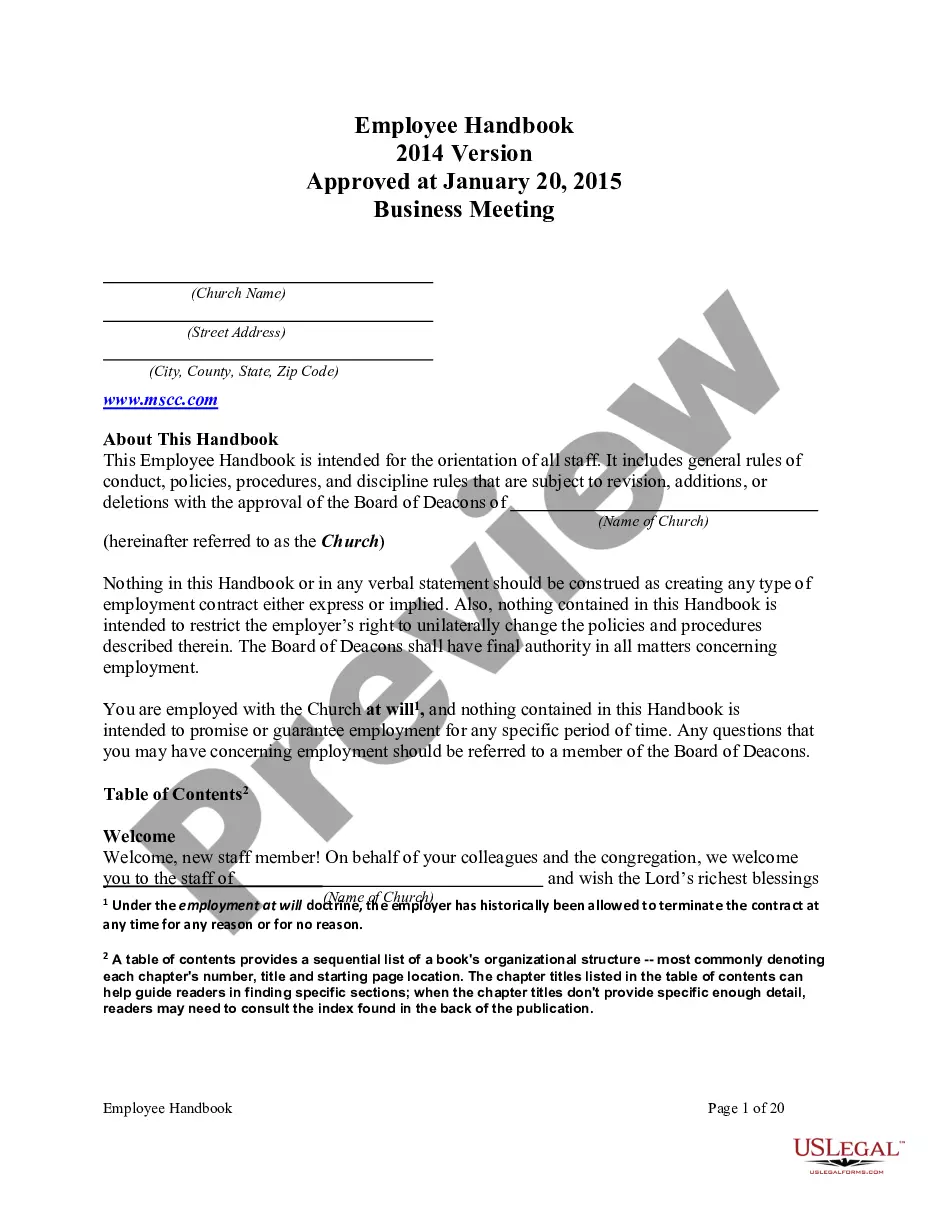
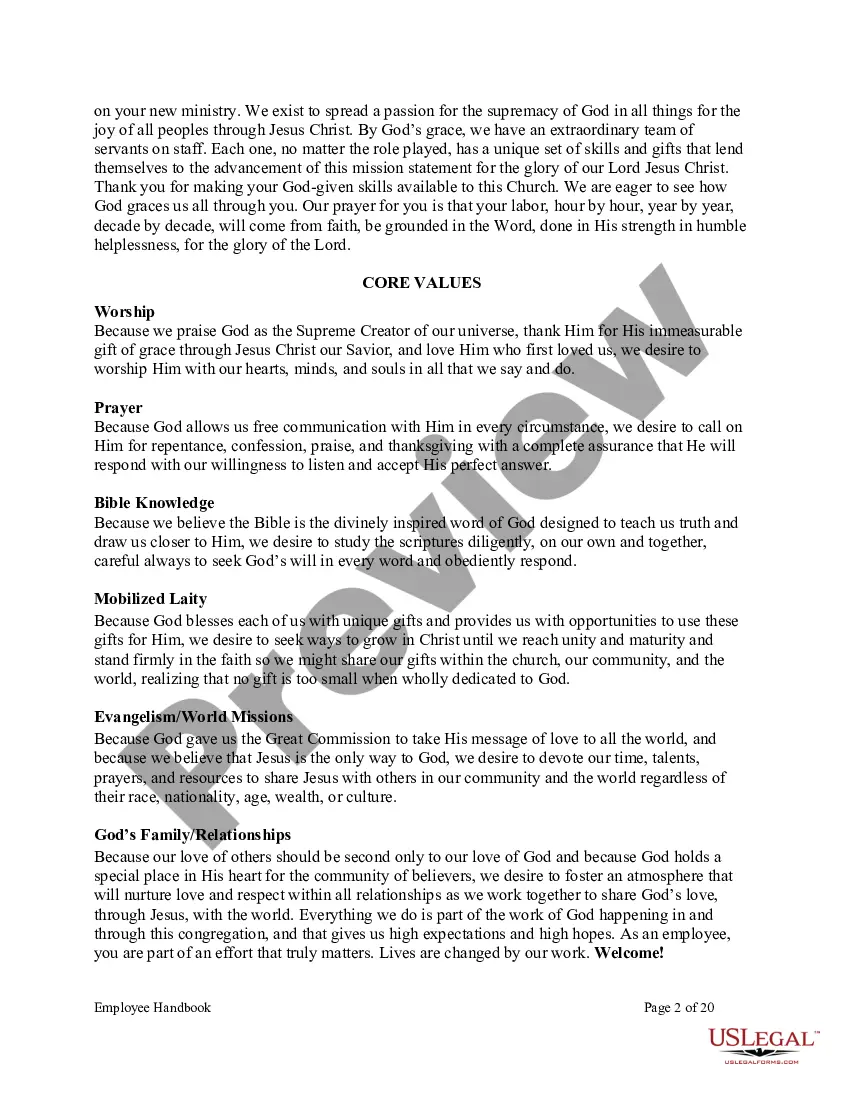
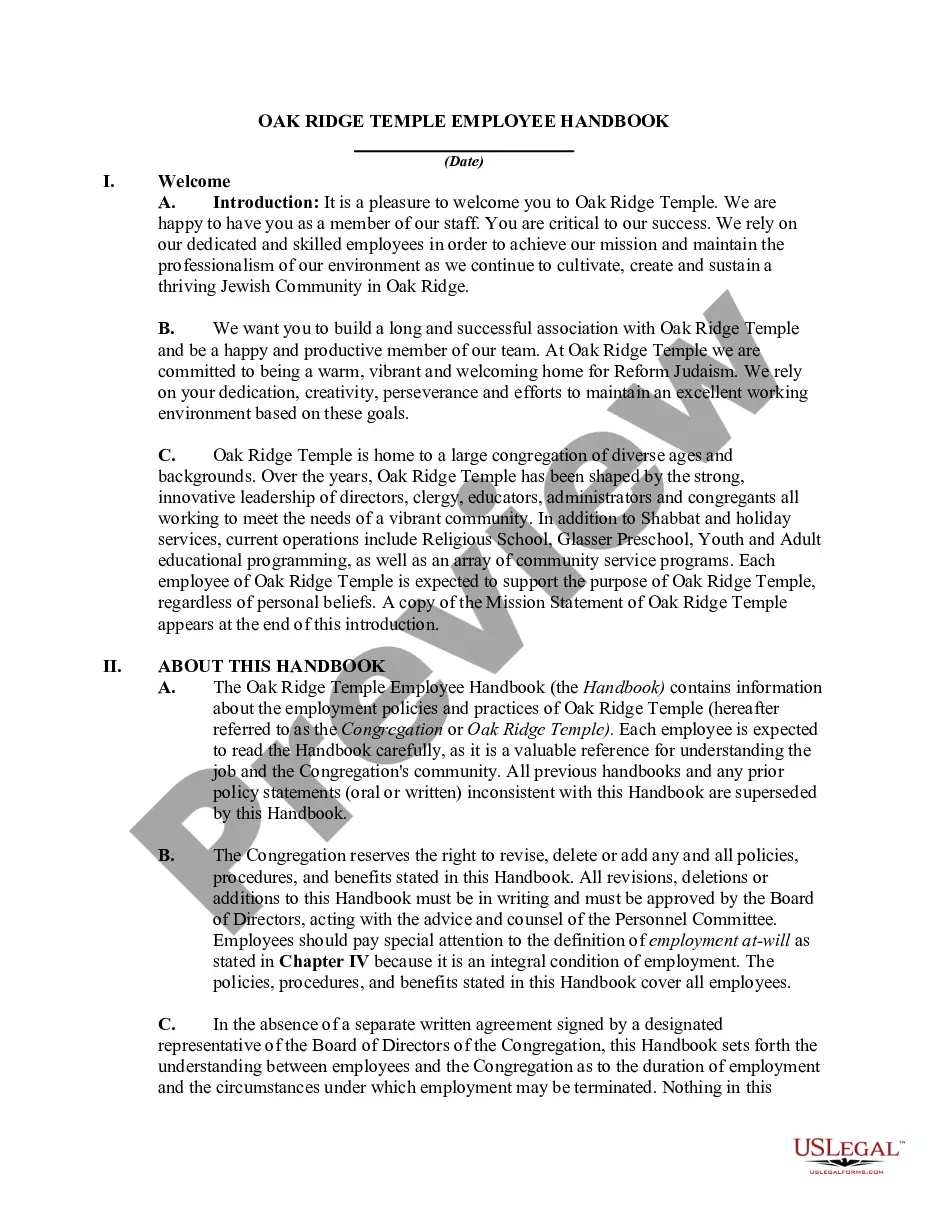
The Employee Handbook serves as a comprehensive manual outlining a business's policies, work rules, and expectations for employees. It is essential for fostering a clear understanding between the employer and employees about their rights and responsibilities. This handbook specifically caters to the needs of organizations, including churches, by incorporating both workplace regulations and the organization's mission and values.
Form components explained
- Welcome message and orientation procedures
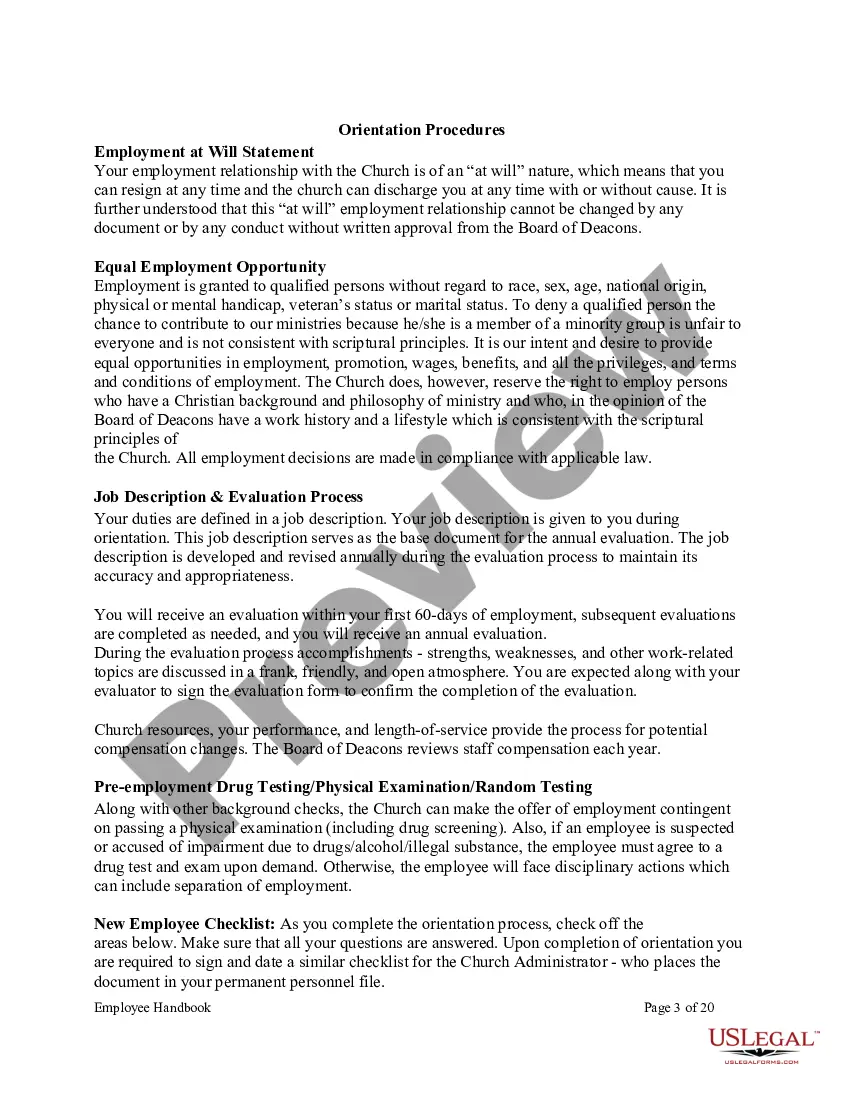
- Employment at will statement
- Equal employment opportunity policy
- Job descriptions and evaluation processes
- Employee benefits programs
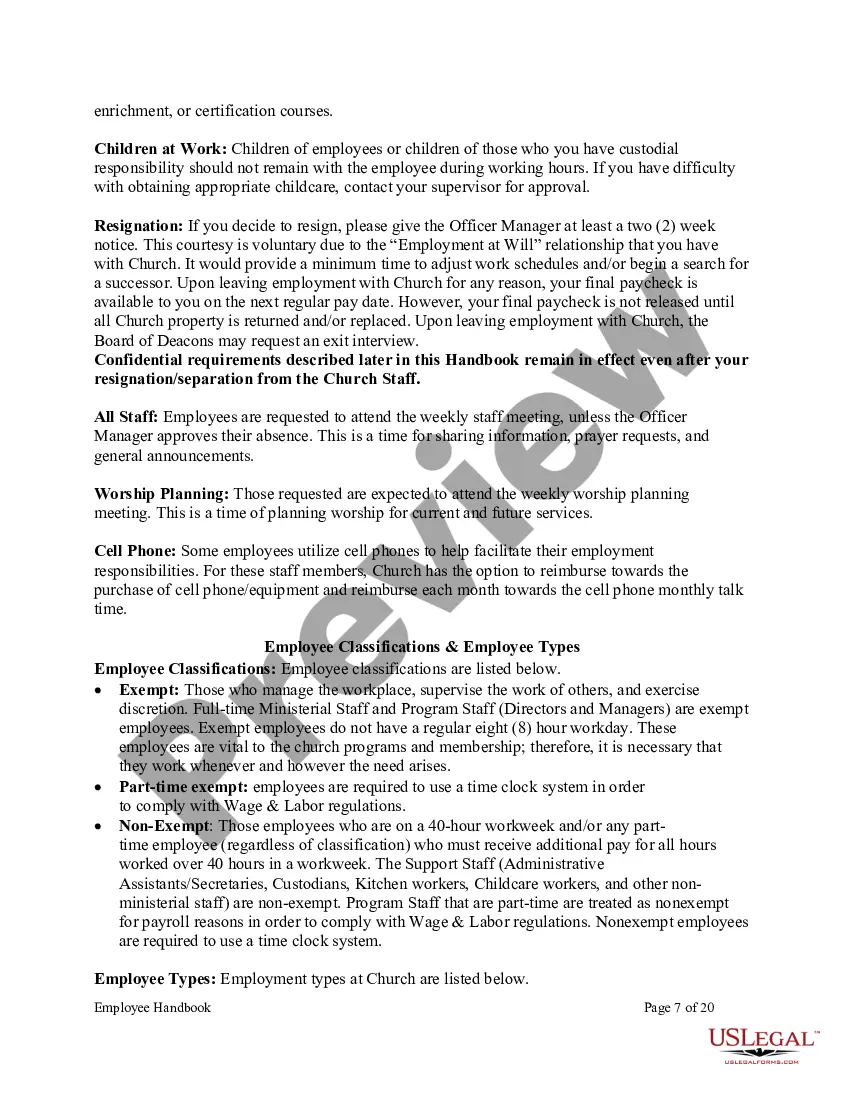
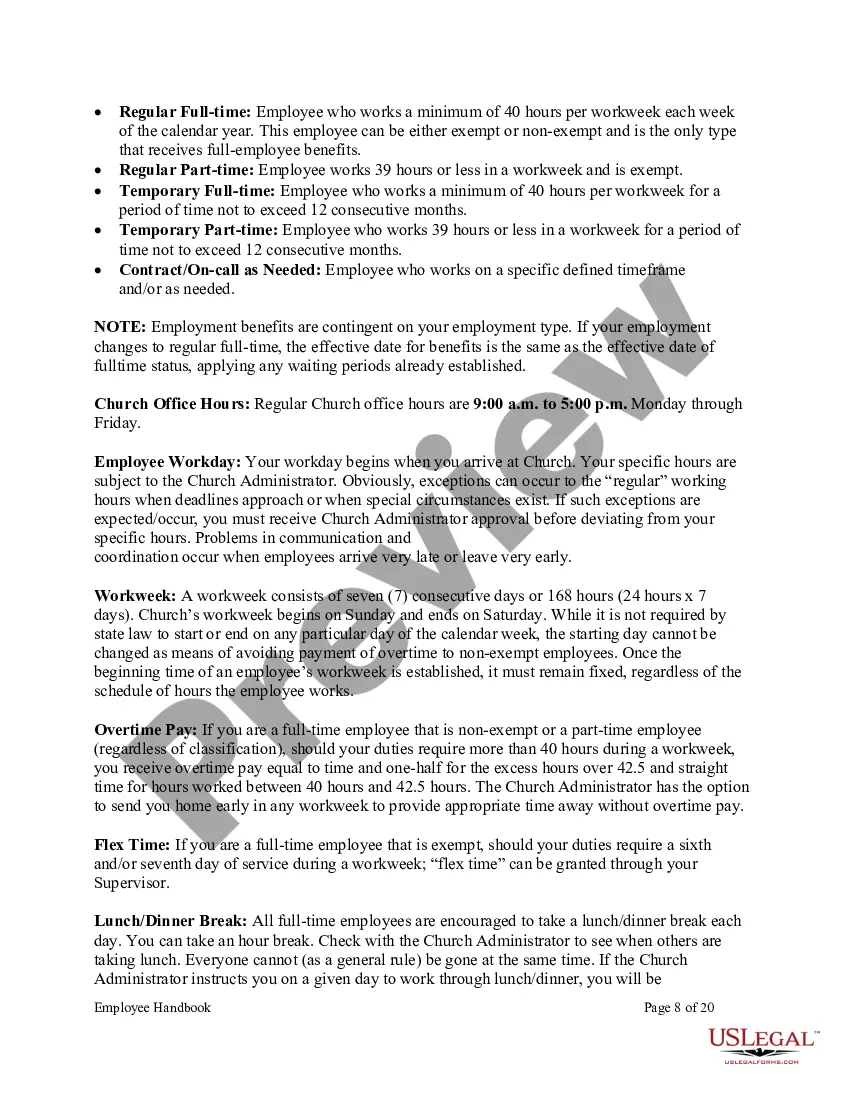
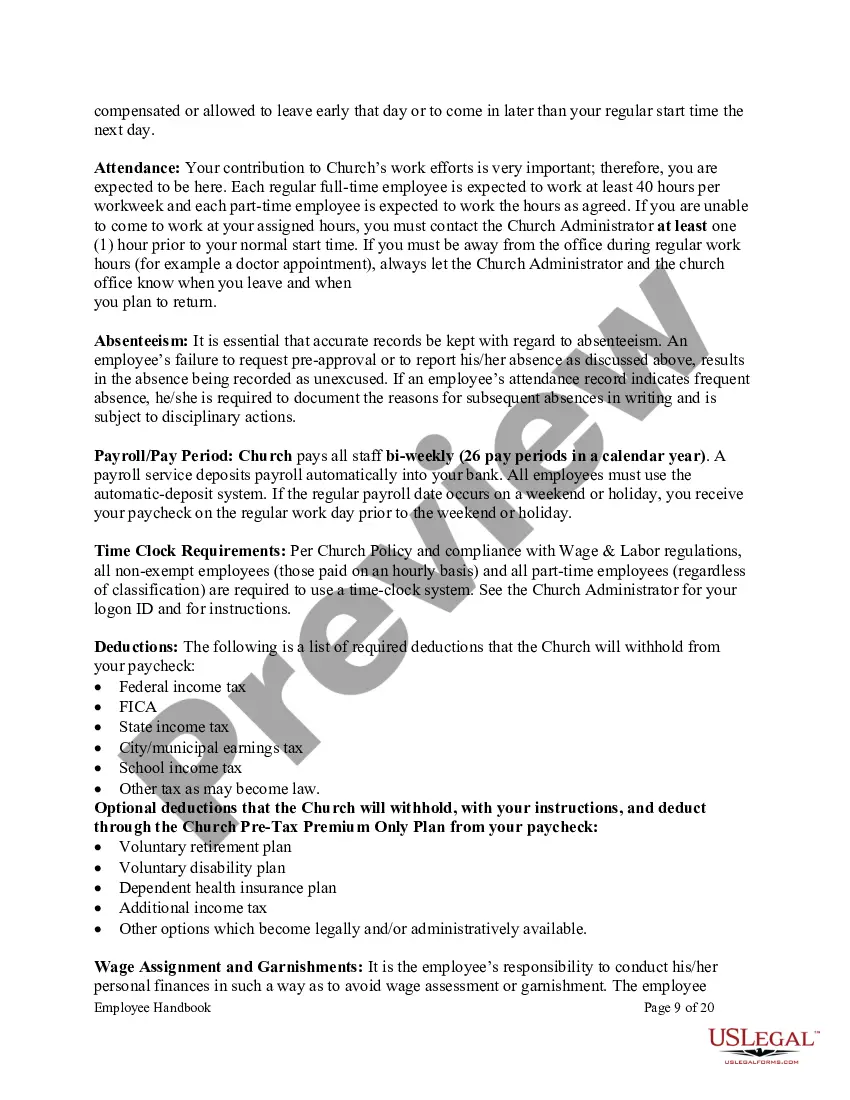
- Attendance and leave policies
- Confidentiality agreement


When to use this form
This Employee Handbook should be used when an organization is onboarding new employees or updating current staff on policies, benefits, and workplace expectations. It serves as a vital resource for ensuring all employees are informed about their roles and the organizationâs commitment to maintaining a respectful and productive work environment.
Intended users of this form
The following individuals should utilize this Employee Handbook:
- Employers or organization leaders wishing to establish clear guidelines for employees
- Human resources personnel involved in employee onboarding
- Current employees seeking to understand organizational policies and expectations
- New hires aiming to familiarize themselves with company culture and procedures
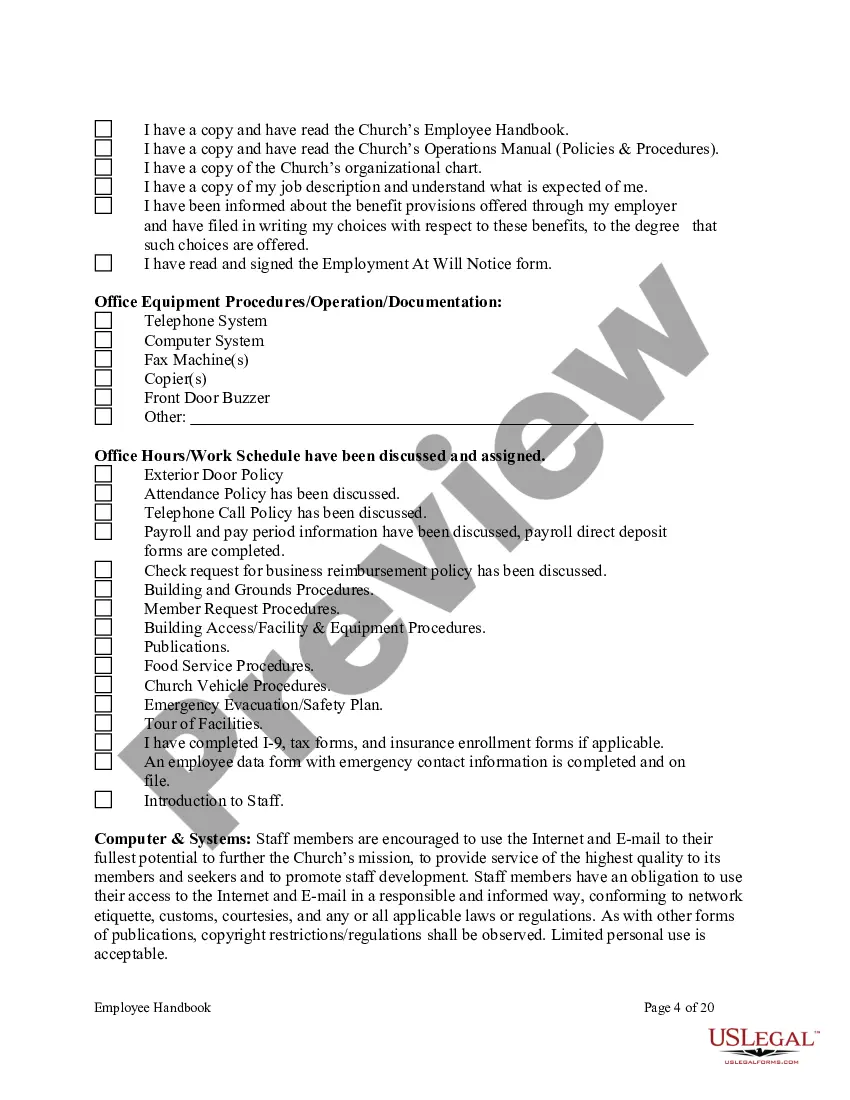
Completing this form step by step
- Review the entire handbook and ensure all policies align with the organization's values and applicable laws.
- Customize sections to reflect specific operational procedures and benefits offered by the organization.
- Ensure a welcome message is included to engage new employees right from the start.
- Distribute the handbook to all employees and request them to read and acknowledge their understanding.
- Update the handbook regularly to reflect any changes in policies or employment laws.
Notarization requirements for this form
This form does not typically require notarization unless specified by local law. It serves as an internal document derived from organizational policies and does not need to be signed in front of a notary to be valid.
Get your form ready online
Our built-in tools help you complete, sign, share, and store your documents in one place.
Make edits, fill in missing information, and update formatting in US Legal Forms—just like you would in MS Word.
Download a copy, print it, send it by email, or mail it via USPS—whatever works best for your next step.
Sign and collect signatures with our SignNow integration. Send to multiple recipients, set reminders, and more. Go Premium to unlock E-Sign.
If this form requires notarization, complete it online through a secure video call—no need to meet a notary in person or wait for an appointment.
We protect your documents and personal data by following strict security and privacy standards.

Make edits, fill in missing information, and update formatting in US Legal Forms—just like you would in MS Word.

Download a copy, print it, send it by email, or mail it via USPS—whatever works best for your next step.

Sign and collect signatures with our SignNow integration. Send to multiple recipients, set reminders, and more. Go Premium to unlock E-Sign.

If this form requires notarization, complete it online through a secure video call—no need to meet a notary in person or wait for an appointment.

We protect your documents and personal data by following strict security and privacy standards.
Mistakes to watch out for
- Failing to customize the handbook to reflect specific policies and procedures of the organization.
- Neglecting to regularly update the handbook to comply with changing laws and guidelines.
- Not distributing the handbook properly to ensure all employees receive and understand it.
- Omitting important sections like the equal employment opportunity policy or confidentiality agreements.
Benefits of using this form online
- Convenience of downloading and printing directly from your device.
- Easy editability allows for tailored policies that fit the organizationâs needs.
- Access to legally vetted content drafted by licensed attorneys for enhanced reliability.
- Ability to store and update the handbook digitally for easy access by all employees.
Main things to remember
- The Employee Handbook is essential for clearly communicating policies and expectations.
- Employers should regularly update the handbook and ensure all employees acknowledge receipt.
- This handbook serves as a vital reference for both employers and employees.
Looking for another form?
Form popularity
FAQ
California does not require employers to have a handbook.
Employee handbooks should be reviewed and updated at least on an annual basis, and an employer may want to consider reviewing the handbook every six months.
Clarify your business policies. Establish clear work expectations. Inform employees of their rights and benefits. Simplify on-boarding of new hires. Signal to employees that the same rules apply to everyone equally.
Company culture, values, and a mission statement. Human resource and legal information as well as rights and obligations related to employment. Realistic expectations; both what the company expects to see from its employees and what employees can expect from the company.
The law behind employee handbooks Whilst a handbook is not a legal requirement, it is a convenient way of housing legally required terms and conditions of employment.
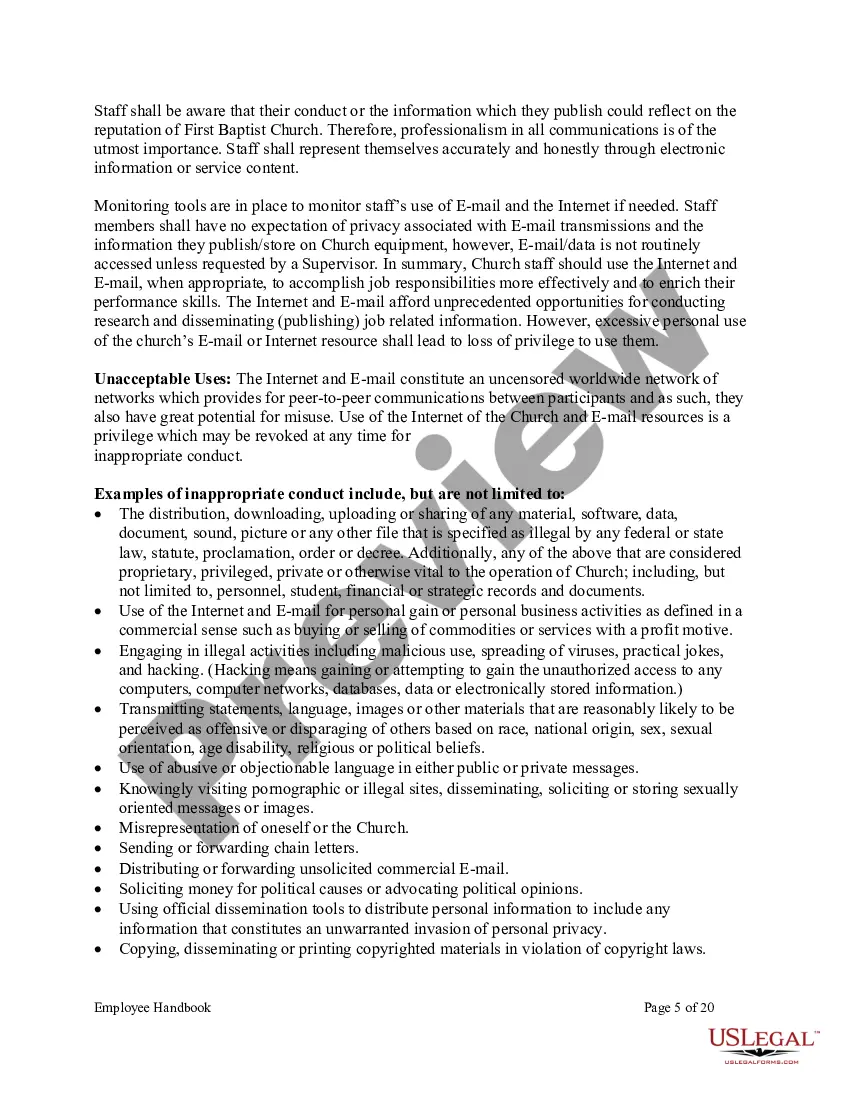
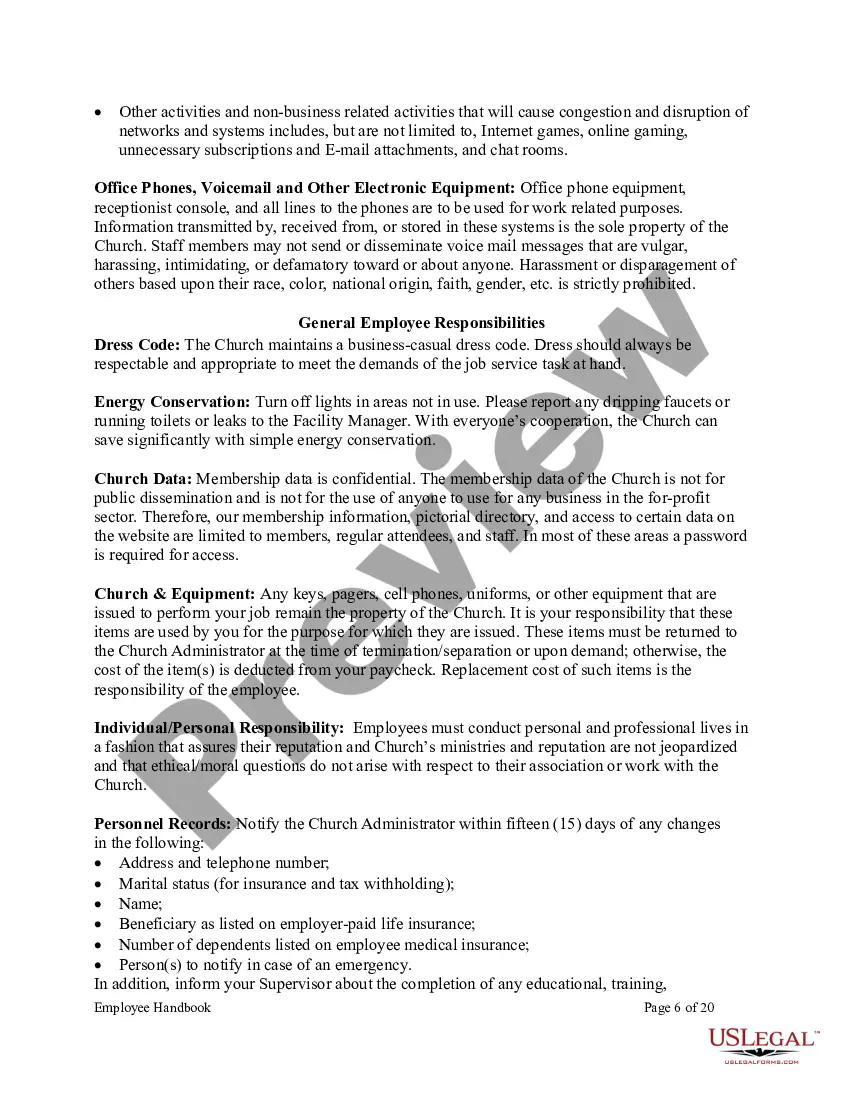
At-will employer/disclaimer. injury reporting. equal employment opportunity. harassment/discrimination. hours of work/meal breaks. FMLA. Internet/e-mail. reasonable accommodation.
A great employee handbook should communicate your core values, house rules, procedures, and company culture as directly as possible.From company mission statement and company history to company values, vacation policy, sick leave and employee benefits, a good HR company handbook should have it all.
Step 1: Review and Make Required Revisions to the Current Company Policies. Step 2: Create an Outline of What to Include in the Employee Handbook. Step 3: Create Summarized Versions of Each Policy and Procedure. Step 4: Add Each Summary Statement in the Appropriate Sections According to the Outline.
Your company's history, mission, vision and goals. Your company's core values and culture. Human resources and legal information related to employment. Your company's policies. Employee benefits and perks.