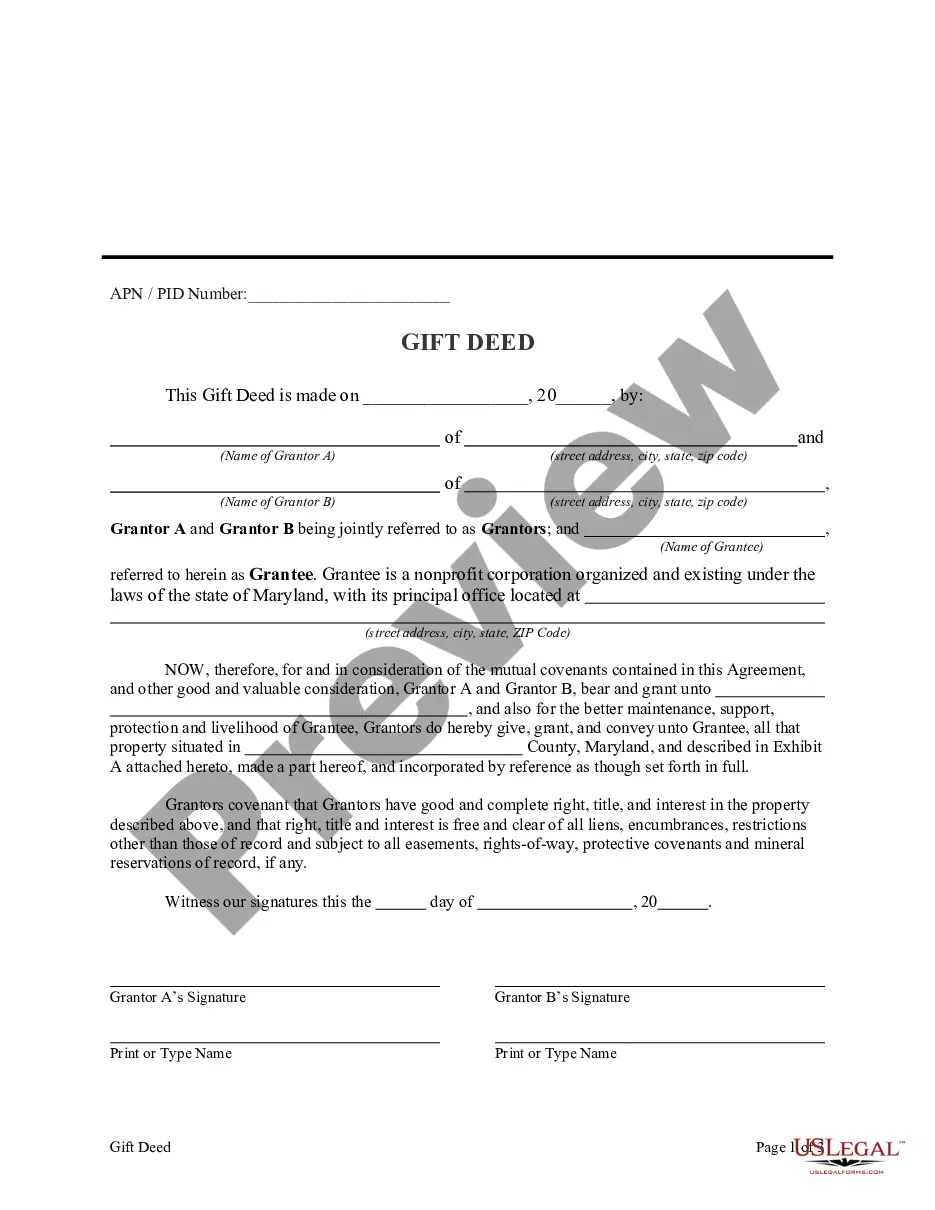
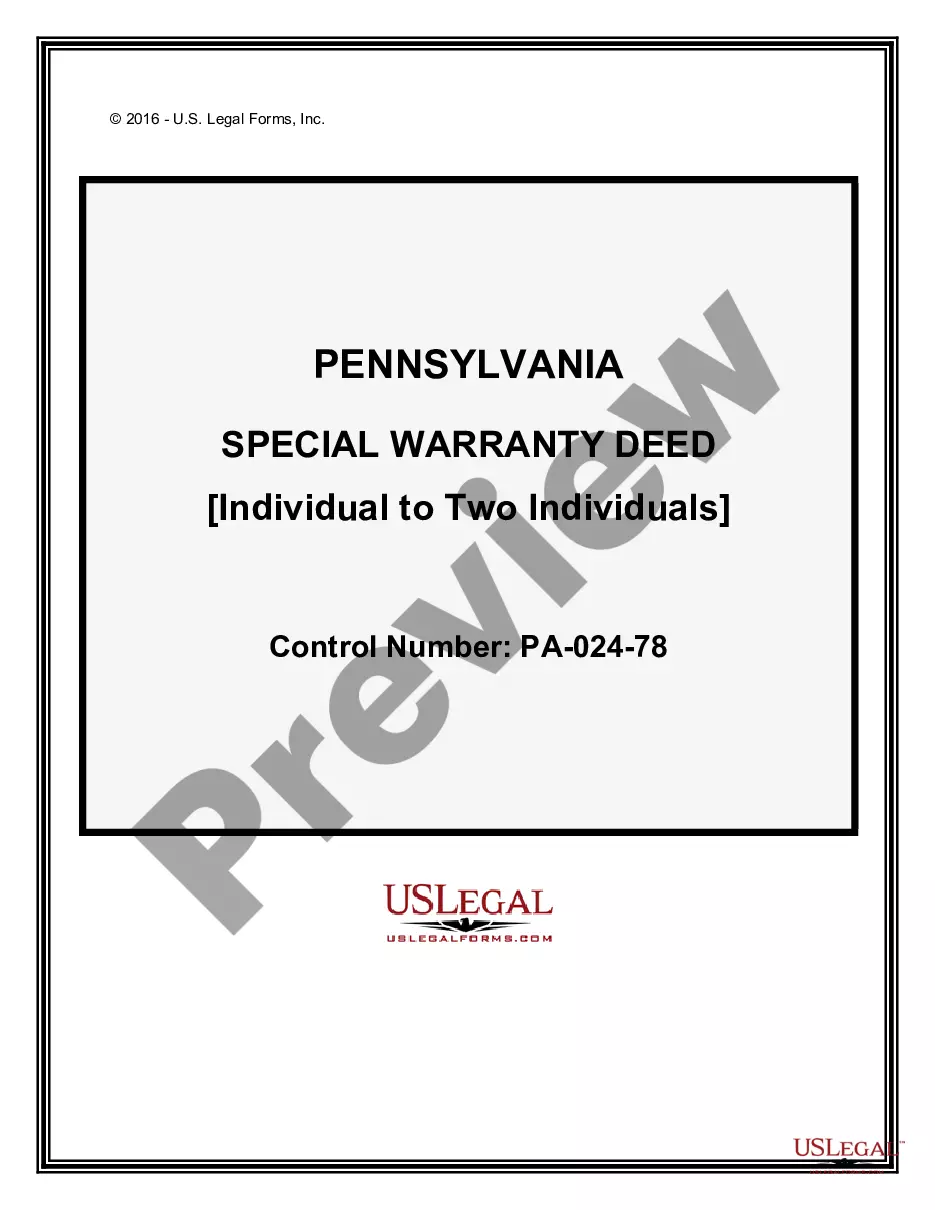
Pennsylvania Special Warranty Deed - Individual to Two Individuals
What is this form?
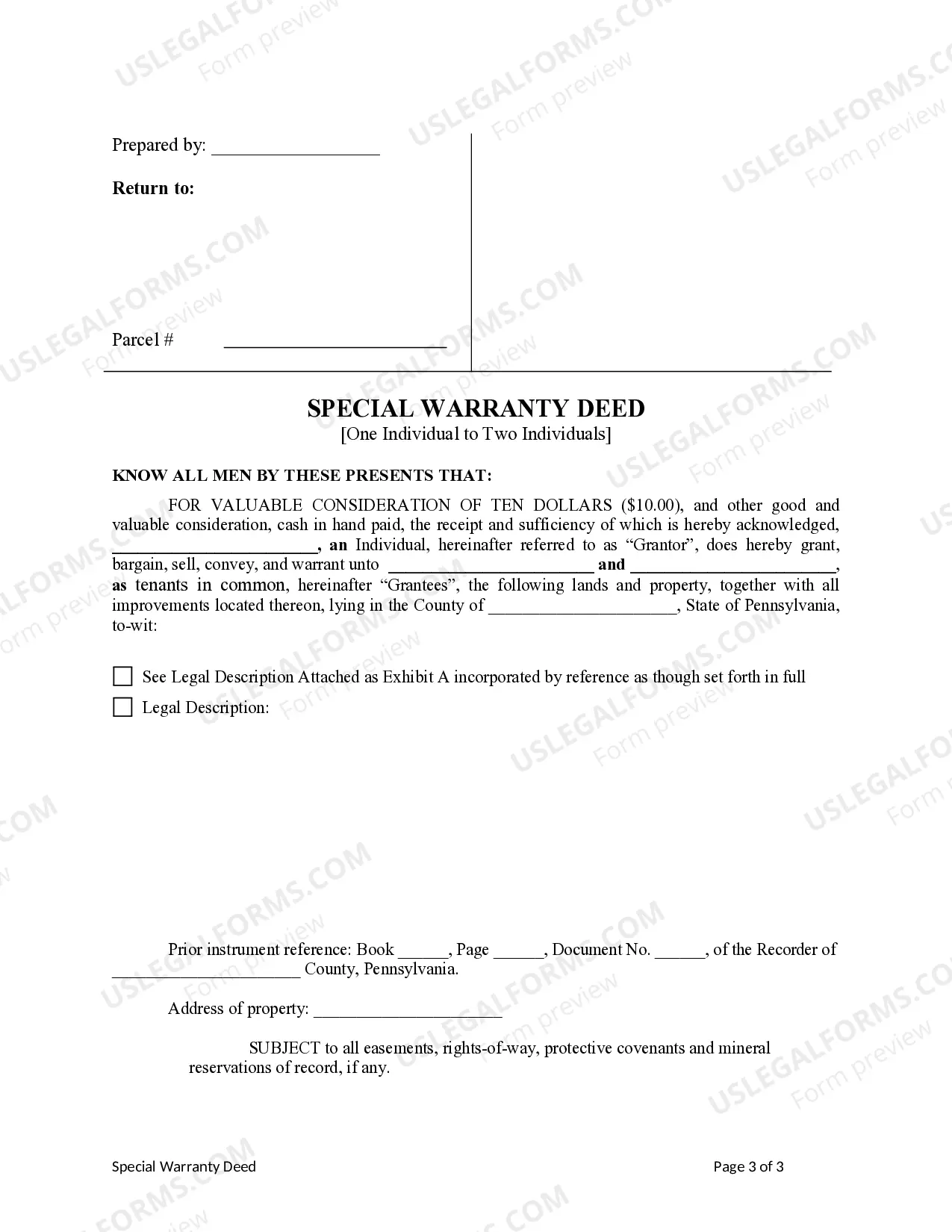
This Special Warranty Deed is a legal document used to convey property from one individual (the grantor) to two individuals (the grantees). Unlike a general warranty deed, this form provides limited guarantees about the property. The grantor only warrants the title against claims made by persons claiming through them, offering less protection than a general warranty deed. This form complies with Pennsylvania state laws, ensuring its legality for use in property transactions.
Main sections of this form
- Identification of the grantor and grantees.
- Description of the property being transferred.
- Covenant of seisin, indicating that the grantor holds title to the property.
- Statement of the grantor's limited warranty against claims related to the property.
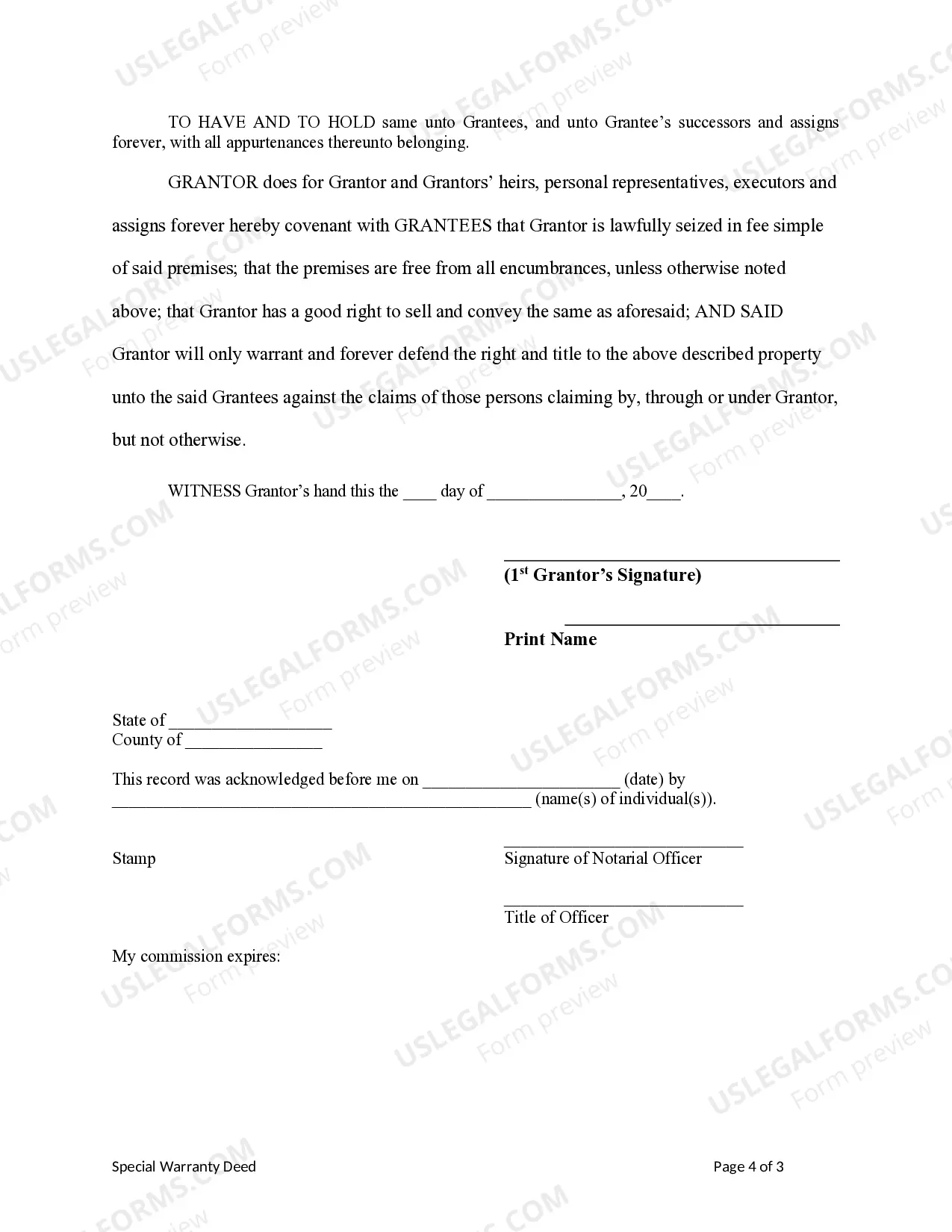
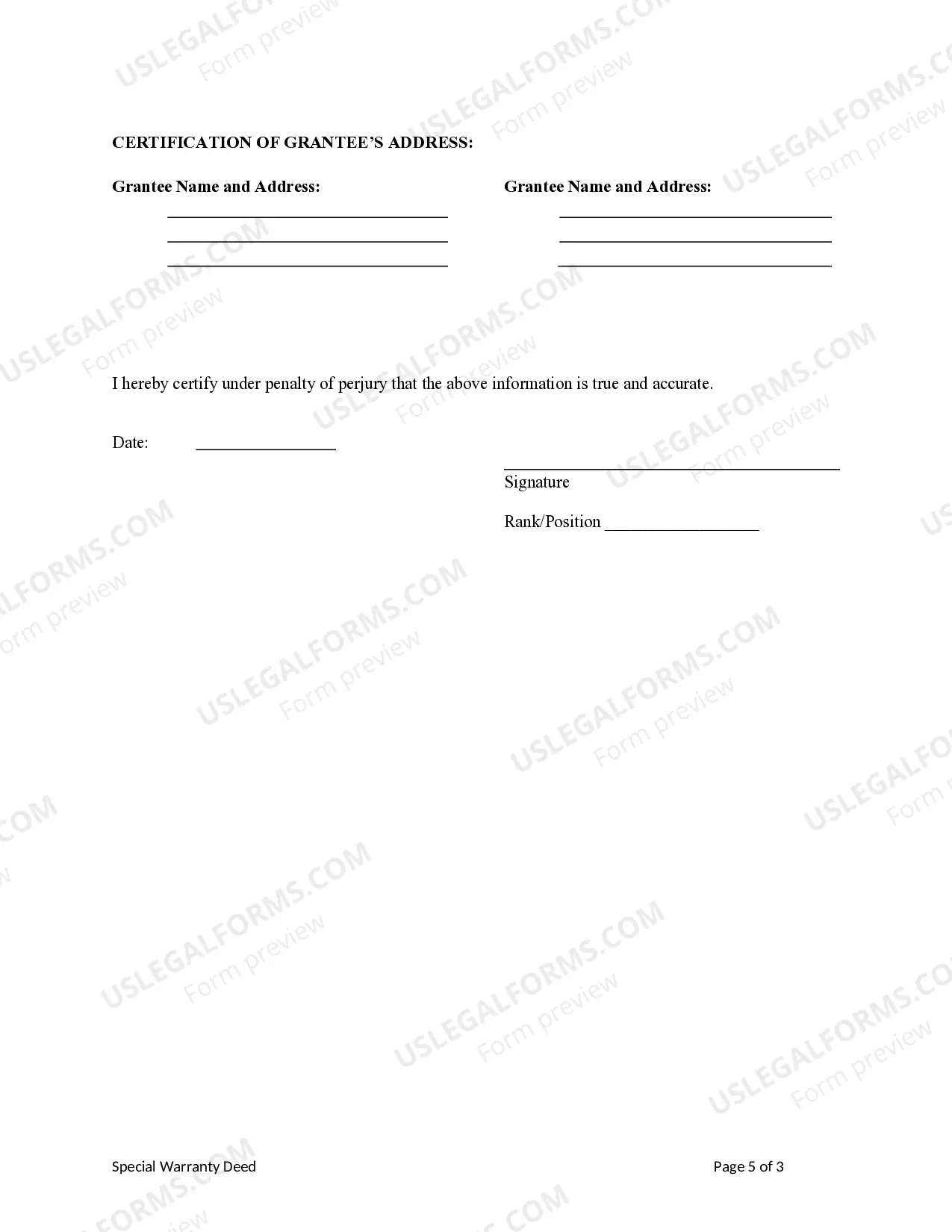
- Signatures of the grantor, with a space for notary acknowledgment if needed.





When to use this form
This form is ideal when an individual wishes to transfer property ownership to two other individuals while limiting their liability regarding the title. It is commonly used in real estate transactions, especially when the grantor may not want to provide full warranties due to past claims or encumbrances on the property.
Intended users of this form
- Individuals transferring property to two other parties.
- Real estate professionals assisting clients in property transactions.
- Property owners who want to limit their legal liability concerning the property title.
Completing this form step by step
- Identify the grantor's full name and the names of the two grantees.
- Clearly describe the real estate property being conveyed, including its legal description.
- Specify any encumbrances, easements, or covenants affecting the property.
- Enter the date of the transfer and the signatures of all parties involved.
- If applicable, arrange for notarization of the deed for legal validity.
Notarization requirements for this form
This form does not typically require notarization unless specified by local law. However, having the deed notarized can help prevent disputes and provide an extra layer of authenticity during property transfers.
Get your form ready online
Our built-in tools help you complete, sign, share, and store your documents in one place.
Make edits, fill in missing information, and update formatting in US Legal Forms—just like you would in MS Word.
Download a copy, print it, send it by email, or mail it via USPS—whatever works best for your next step.
Sign and collect signatures with our SignNow integration. Send to multiple recipients, set reminders, and more. Go Premium to unlock E-Sign.
If this form requires notarization, complete it online through a secure video call—no need to meet a notary in person or wait for an appointment.
We protect your documents and personal data by following strict security and privacy standards.

Make edits, fill in missing information, and update formatting in US Legal Forms—just like you would in MS Word.

Download a copy, print it, send it by email, or mail it via USPS—whatever works best for your next step.

Sign and collect signatures with our SignNow integration. Send to multiple recipients, set reminders, and more. Go Premium to unlock E-Sign.

If this form requires notarization, complete it online through a secure video call—no need to meet a notary in person or wait for an appointment.

We protect your documents and personal data by following strict security and privacy standards.
Typical mistakes to avoid
- Failing to include the correct legal description of the property.
- Not supplying the full names of all parties involved.
- Omitting required signatures or dates.
- Assuming the form does not need notarization; check state requirements.
Why use this form online
- Convenience of downloading and completing the form at your own pace.
- Edit the document easily to ensure all information is accurate before printing.
- Access to forms prepared by licensed attorneys, enhancing reliability.
- Ability to save and retrieve the form as needed, reducing paperwork clutter.
Looking for another form?
Form popularity
FAQ
Yes you can. This is called a transfer of equity but you will need the permission of your lender. If you are not married or in a civil partnership you may wish to consider creating a deed of trust and a living together agreement which we can explain to you.
To add a name to a house deed in Pennsylvania, a new deed is prepared. The owner can prepare his own deed or contact an attorney or document service to provide one. Using an attorney is the best route because the attorney ensures that the deed is prepared per the requirements of the state.
It is possible to be named on the title deed of a home without being on the mortgage. However, doing so assumes risks of ownership because the title is not free and clear of liens and possible other encumbrances.If a mortgage exists, it's best to work with the lender to make sure everyone on the title is protected.
Special warranties allow the transfer of property title between seller and buyer. The purchase of title insurance can mitigate the risk of prior claims to the special warranty deed.
The name and address of the seller (called the grantor) The name and address of the buyer (called the grantee) A legal description of the property (found on the previous deed) A statement that the grantor is transferring the property to the grantee.
It will not protect against title issues that arose prior to the time the seller took occupancy. Consequently, it offers less protection to buyers, and more protection to sellers, than a general warranty deed, which is the most common option for selling or buying a property.
A special warranty deed to real estate offers protection to the buyer through the seller's guarantee that the title has been free and clear of encumbrances during their ownership of the property. It does not guarantee clear title beyond their ownership.
Today's question is is it possible to deed real estate to someone without them knowing it? Strictly speaking, the answer is no. Because it does not meet the acceptance element of a valid deed transfer. Us lawyers must learn to speak in elements because it governs everything that we do.
A: A "special warranty" deed is the type of deed used most frequently in Pennsylvania real estate sales. It essentially represents that the seller did nothing to weaken the status of title from the time that he/she received it.A "quit-claim" deed is a deed that contains no warranties at all.