Pennsylvania Special Warranty Deed - Three Individuals to Two Individuals
What this document covers
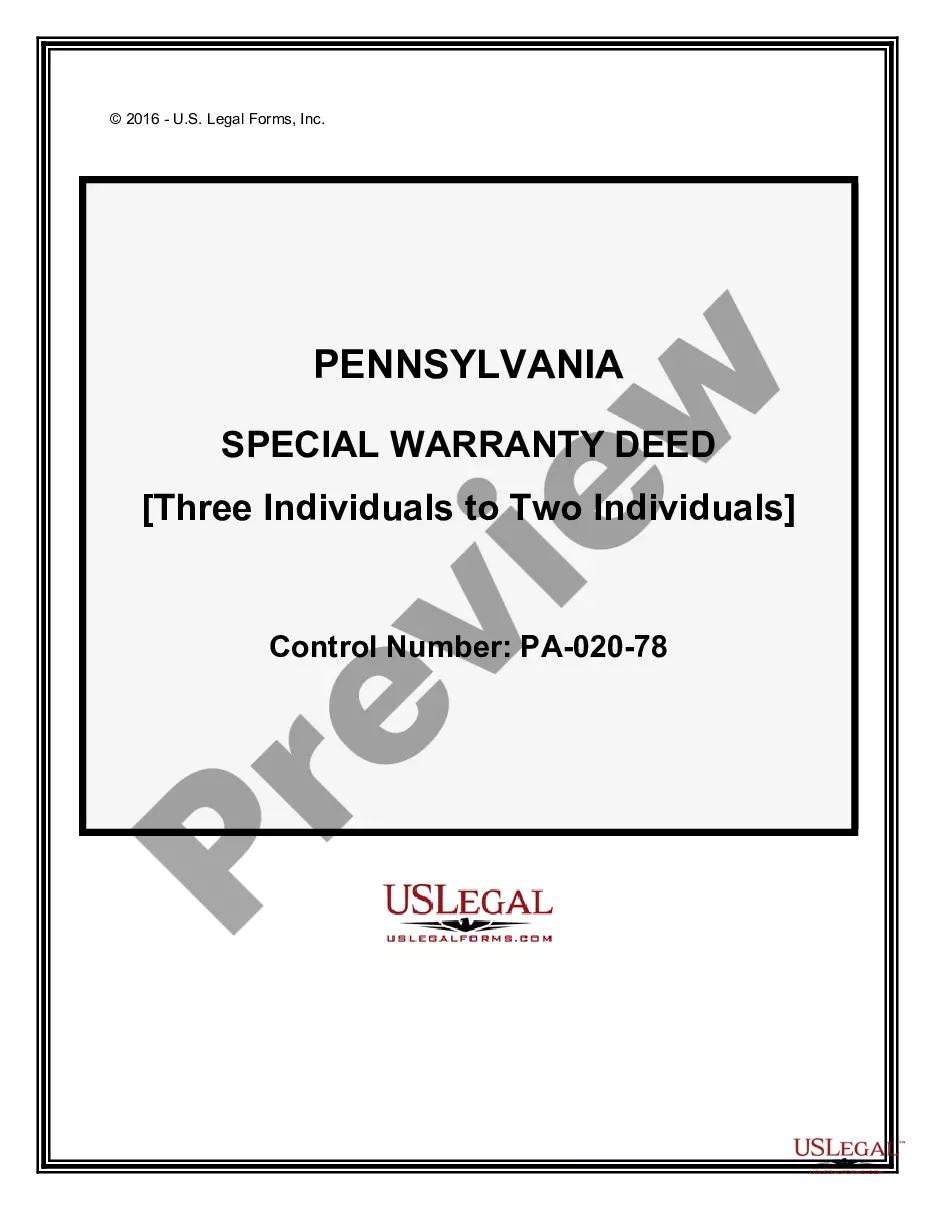
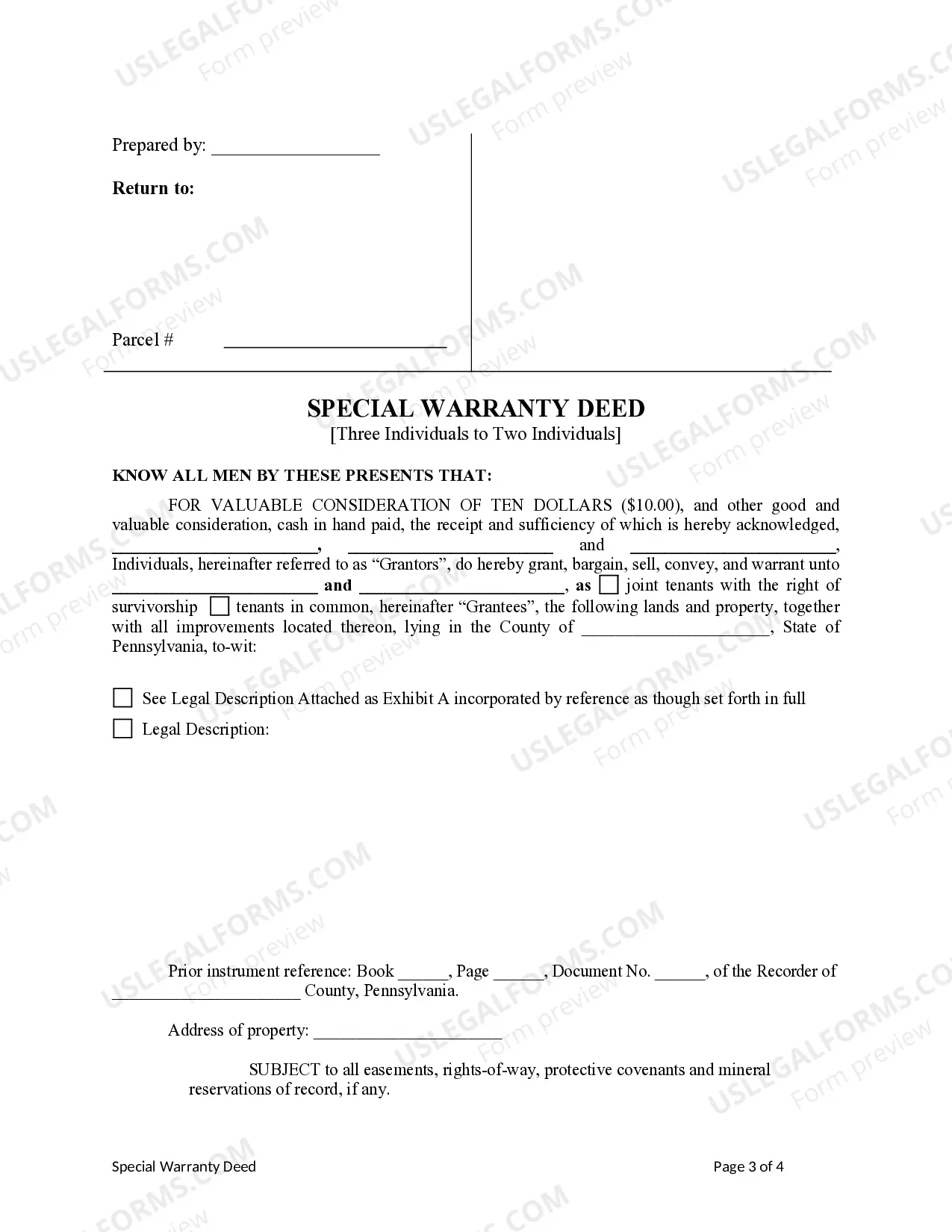
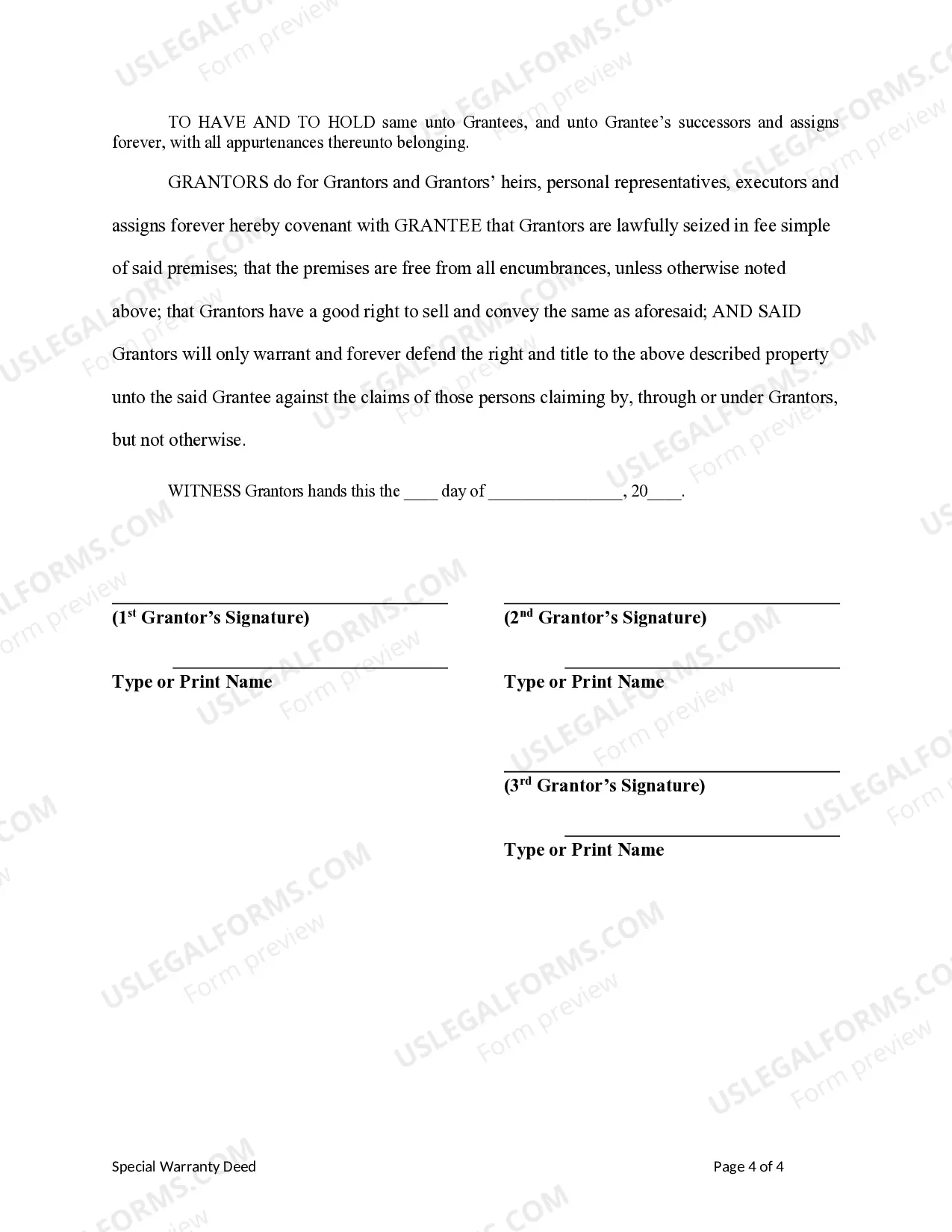
The Special Warranty Deed - Three Individuals to Two Individuals is a legal document that facilitates the transfer of property ownership from three grantors (sellers) to two grantees (buyers). This form assures the grantees that the grantors have the right to sell the property and will protect against any claims made against the title that arise from the grantors themselves, but not from previous owners. Unlike a general warranty deed, this form limits the warranty to claims made by or through the grantors only.
Key components of this form
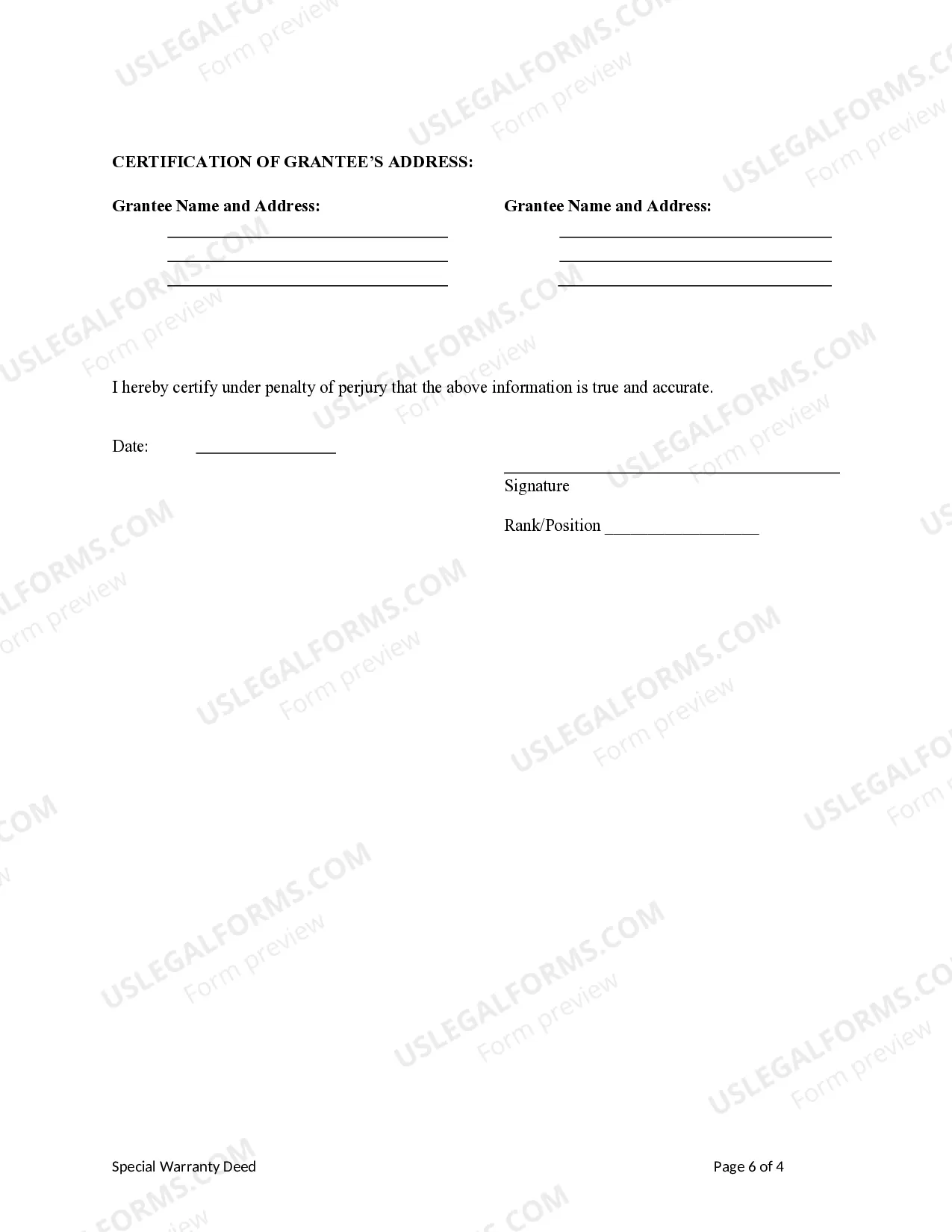
- Grantors and Grantees: Identifies the individuals transferring and receiving ownership.
- Property Description: Details the specific property being conveyed, often including a legal description.
- Warranties Provided: Specifies the extent of the grantors' warranty to defend the title.
- Signatures: Requires signatures from all grantors to finalize the transfer.
- Date of Transfer: Indicates the date on which the deed is executed.





When this form is needed
This form should be used when three individuals wish to transfer ownership of a property to two individuals. It is particularly useful in situations involving family property sales, joint ownership arrangements, or business partners wishing to formalize a property transfer with limited warranties. The use of a special warranty deed provides some assurance to grantees while limiting the obligations of the grantors.
Who can use this document
- Individuals or groups acting as grantors who wish to sell their property.
- Buyers who are receiving the property from multiple sellers.
- Parties involved in joint ownership or familial transfers of real estate.
Steps to complete this form
- Identify the parties involved as grantors and grantees.
- Provide a detailed legal description of the property being transferred.
- Specify the consideration amount, usually determined as a nominal value.
- Include the date when the transfer is taking place.
- Ensure all grantors sign the deed to validate the transfer.
Does this document require notarization?
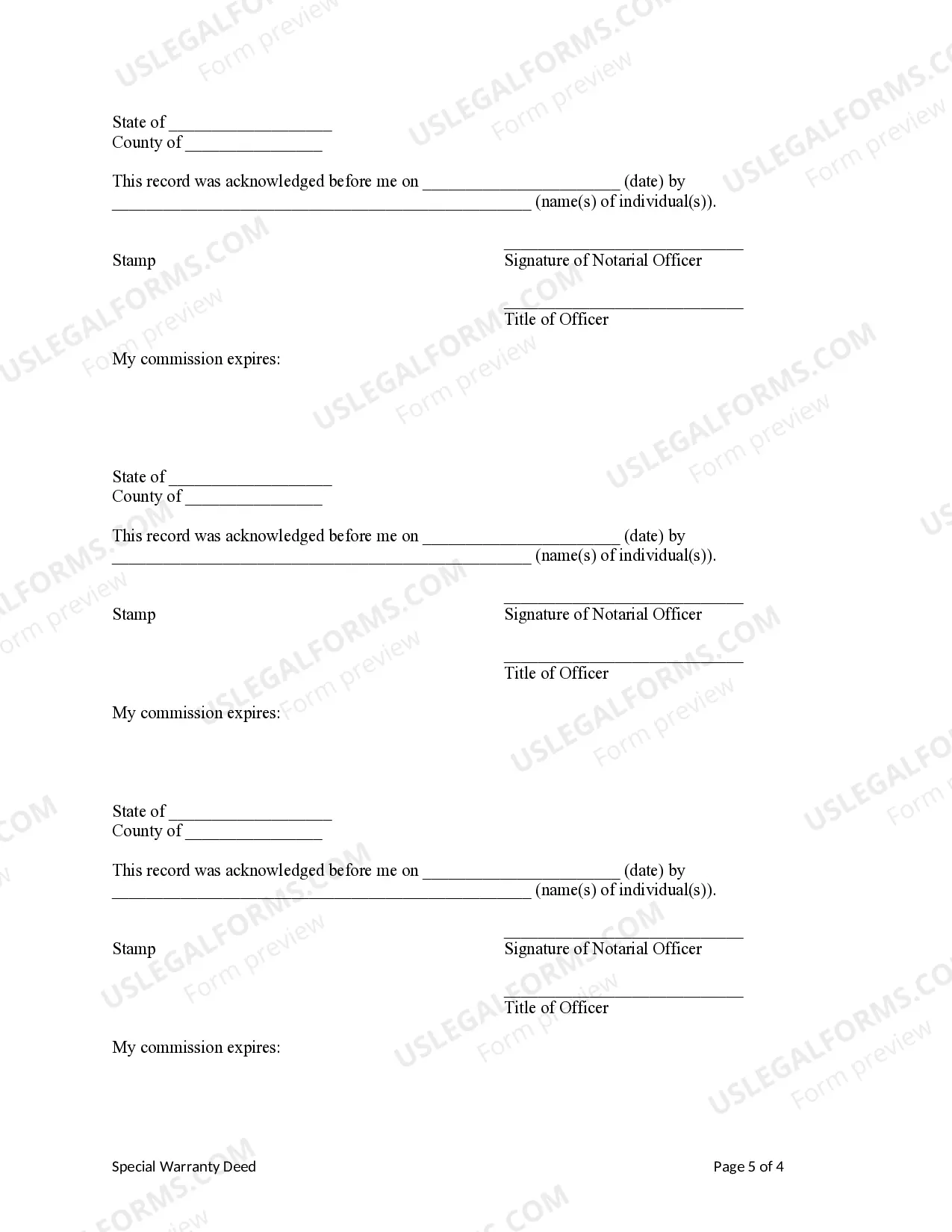
This form needs to be notarized to ensure legal validity. US Legal Forms provides secure online notarization powered by Notarize, allowing you to complete the process through a verified video call, available anytime.
Get your form ready online
Our built-in tools help you complete, sign, share, and store your documents in one place.
Make edits, fill in missing information, and update formatting in US Legal Forms—just like you would in MS Word.
Download a copy, print it, send it by email, or mail it via USPS—whatever works best for your next step.
Sign and collect signatures with our SignNow integration. Send to multiple recipients, set reminders, and more. Go Premium to unlock E-Sign.
If this form requires notarization, complete it online through a secure video call—no need to meet a notary in person or wait for an appointment.
We protect your documents and personal data by following strict security and privacy standards.

Make edits, fill in missing information, and update formatting in US Legal Forms—just like you would in MS Word.

Download a copy, print it, send it by email, or mail it via USPS—whatever works best for your next step.

Sign and collect signatures with our SignNow integration. Send to multiple recipients, set reminders, and more. Go Premium to unlock E-Sign.

If this form requires notarization, complete it online through a secure video call—no need to meet a notary in person or wait for an appointment.

We protect your documents and personal data by following strict security and privacy standards.
Common mistakes
- Failing to properly describe the property or attaching an incomplete legal description.
- Not obtaining the required signatures from all grantors.
- Leaving the date field blank or incorrectly filled out.
- Confusing a special warranty deed with a general warranty deed.
Why use this form online
- Convenience of completing the form from anywhere at any time.
- Editability allows users to make adjustments easily before finalizing.
- Access to legal expertise ensures that forms meet state requirements.
- Instant downloads provide immediate access to needed documentation.
Looking for another form?
Form popularity
FAQ
Special warranties allow the transfer of property title between seller and buyer. The purchase of title insurance can mitigate the risk of prior claims to the special warranty deed.
The law doesn't forbid adding people to a deed on a home with an outstanding mortgage. Mortgage lenders are familiar and frequently work with deed changes and transfers.When you "deed" your home to someone, you've effectively transferred part ownership, which could activate the "due-on-sale" clause.
Six people can be on title. It can cause a lot of problems when it comes time to sell though. If even one of the six won't sign, you have a problem. They can sign at different times and from different locations depending on the closing attorney or escrow company.
Before adding your spouse to the deed, speak with your attorney. The easiest way to grant your spouse title to your home is via a quitclaim deed (Californians generally use an interspousal grant deed). With a quitclaim deed, you can name your spouse as the property's joint owner.
In most cases, the surviving owner or heir obtains the title to the home, the former owner's death certificate, a notarized affidavit of death, and a preliminary change of ownership report form. When all these are gathered, the transfer gets recorded, the fees are paid, and the county issues a new title deed.
Yes you can. This is called a transfer of equity but you will need the permission of your lender. If you are not married or in a civil partnership you may wish to consider creating a deed of trust and a living together agreement which we can explain to you.
Adding someone to your house deed requires the filing of a legal form known as a quitclaim deed. When executed and notarized, the quitclaim deed legally overrides the current deed to your home. By filing the quitclaim deed, you can add someone to the title of your home, in effect transferring a share of ownership.
It is possible to be named on the title deed of a home without being on the mortgage. However, doing so assumes risks of ownership because the title is not free and clear of liens and possible other encumbrances.If a mortgage exists, it's best to work with the lender to make sure everyone on the title is protected.
To add a name to a house deed in Pennsylvania, a new deed is prepared. The owner can prepare his own deed or contact an attorney or document service to provide one. Using an attorney is the best route because the attorney ensures that the deed is prepared per the requirements of the state.