Oregon UTCR 2.100 Co-Petitioner (with minor children) Affidavit with Request to Segregate Social Security Numbers Only (Short Form)
About this form
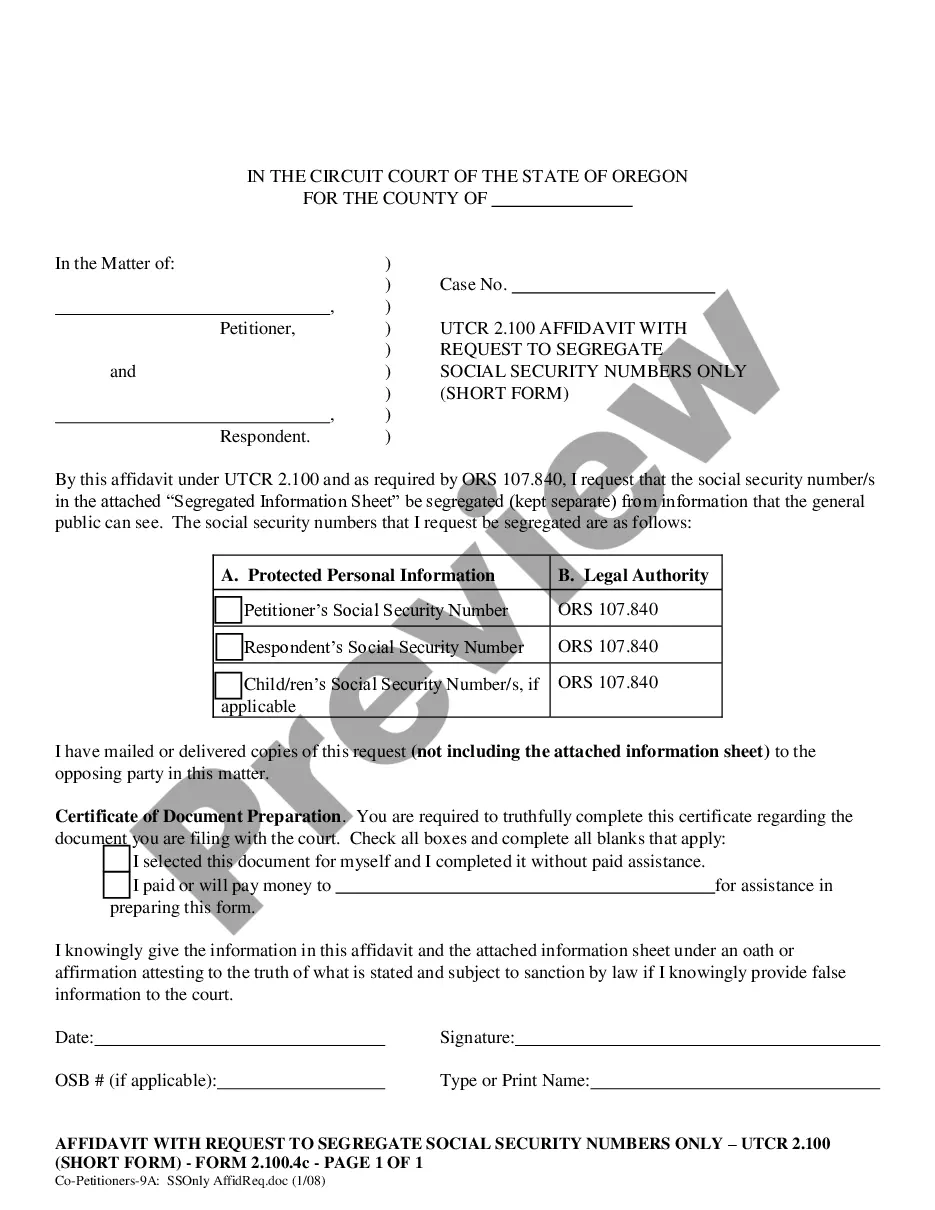
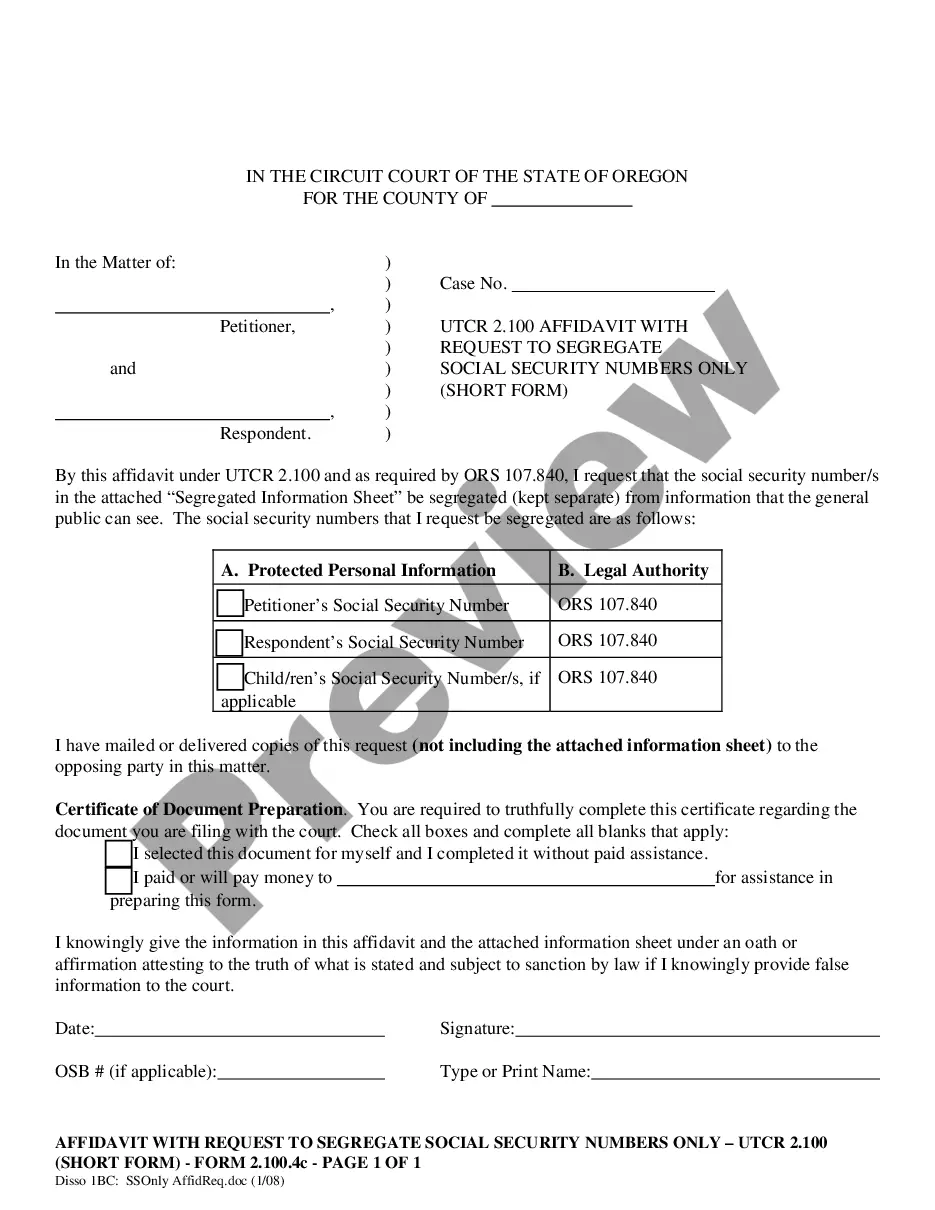
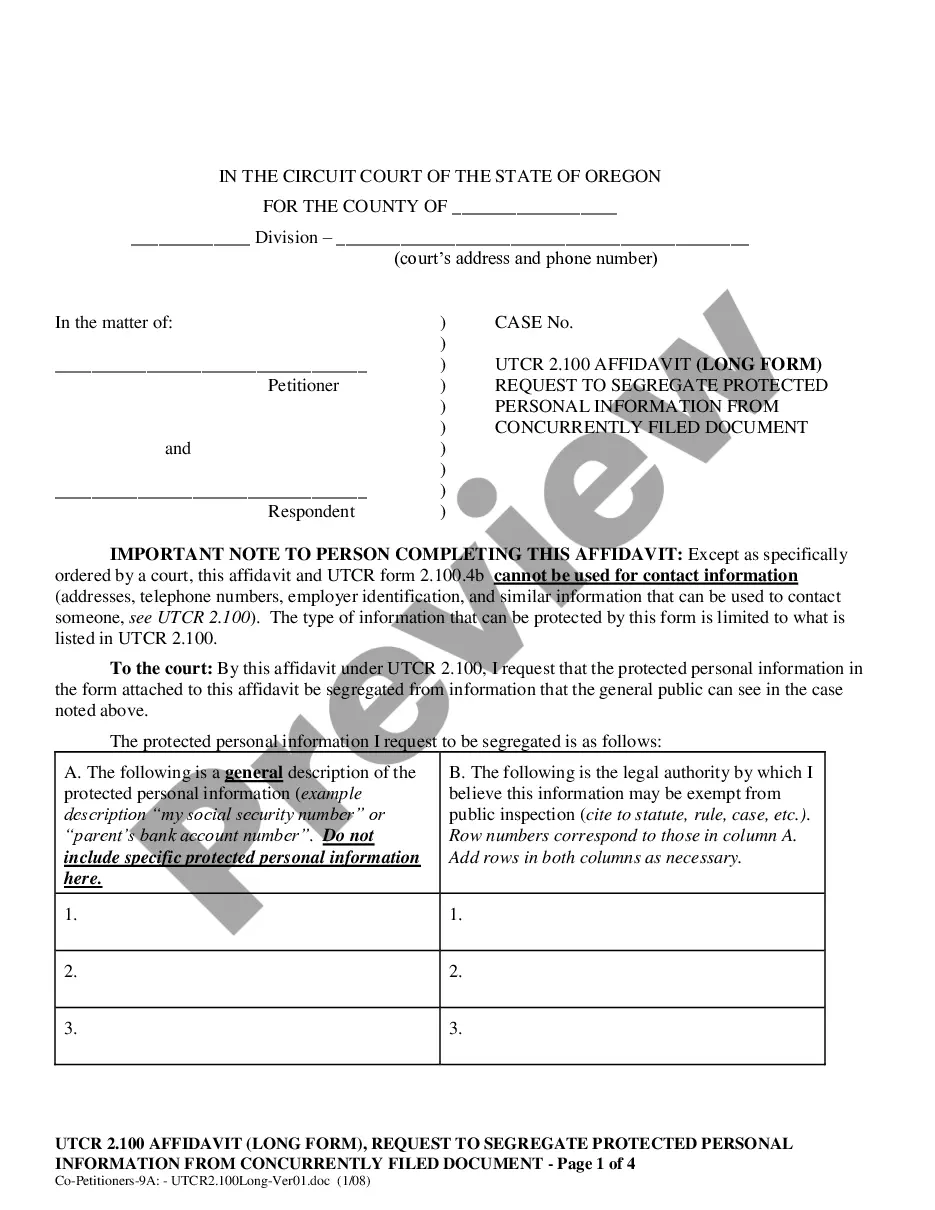
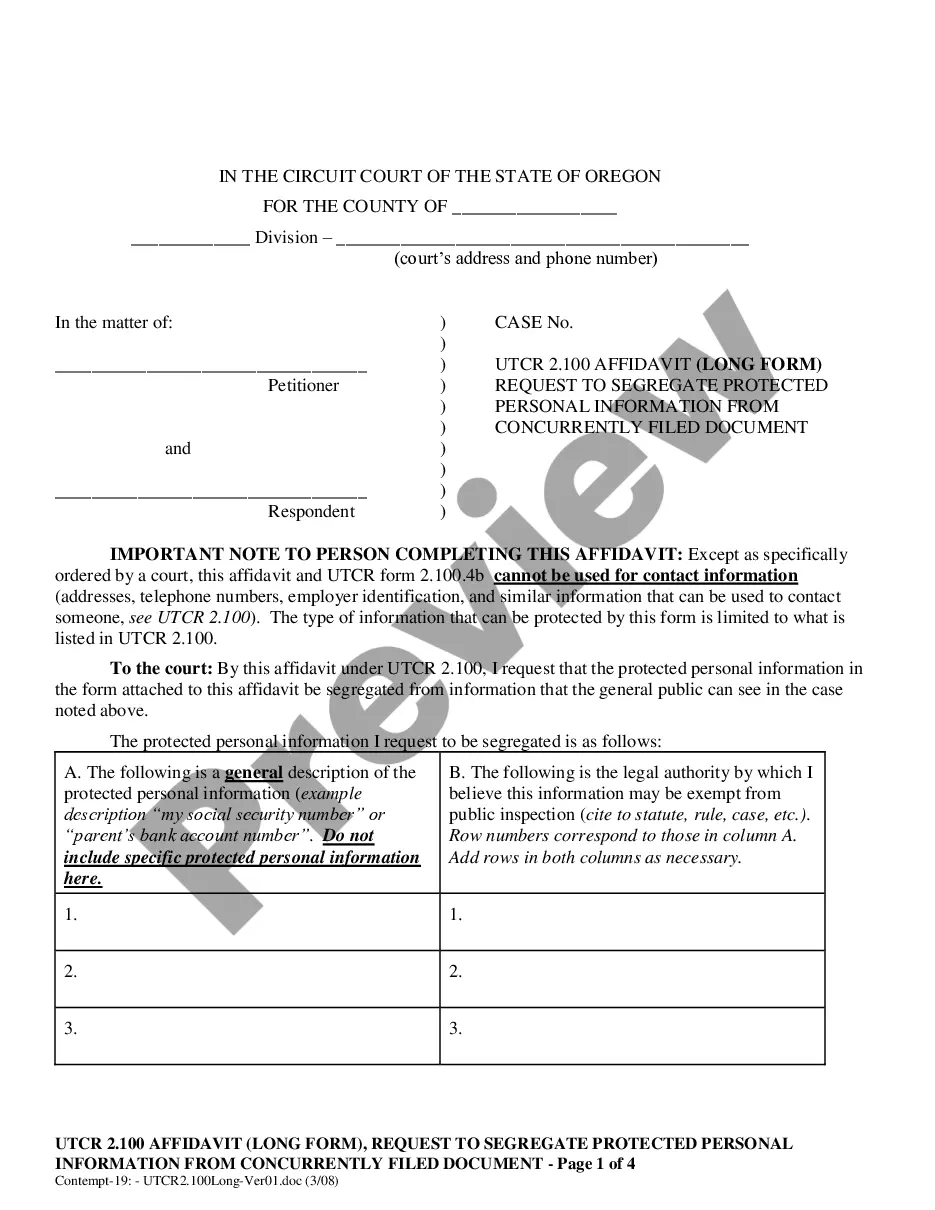
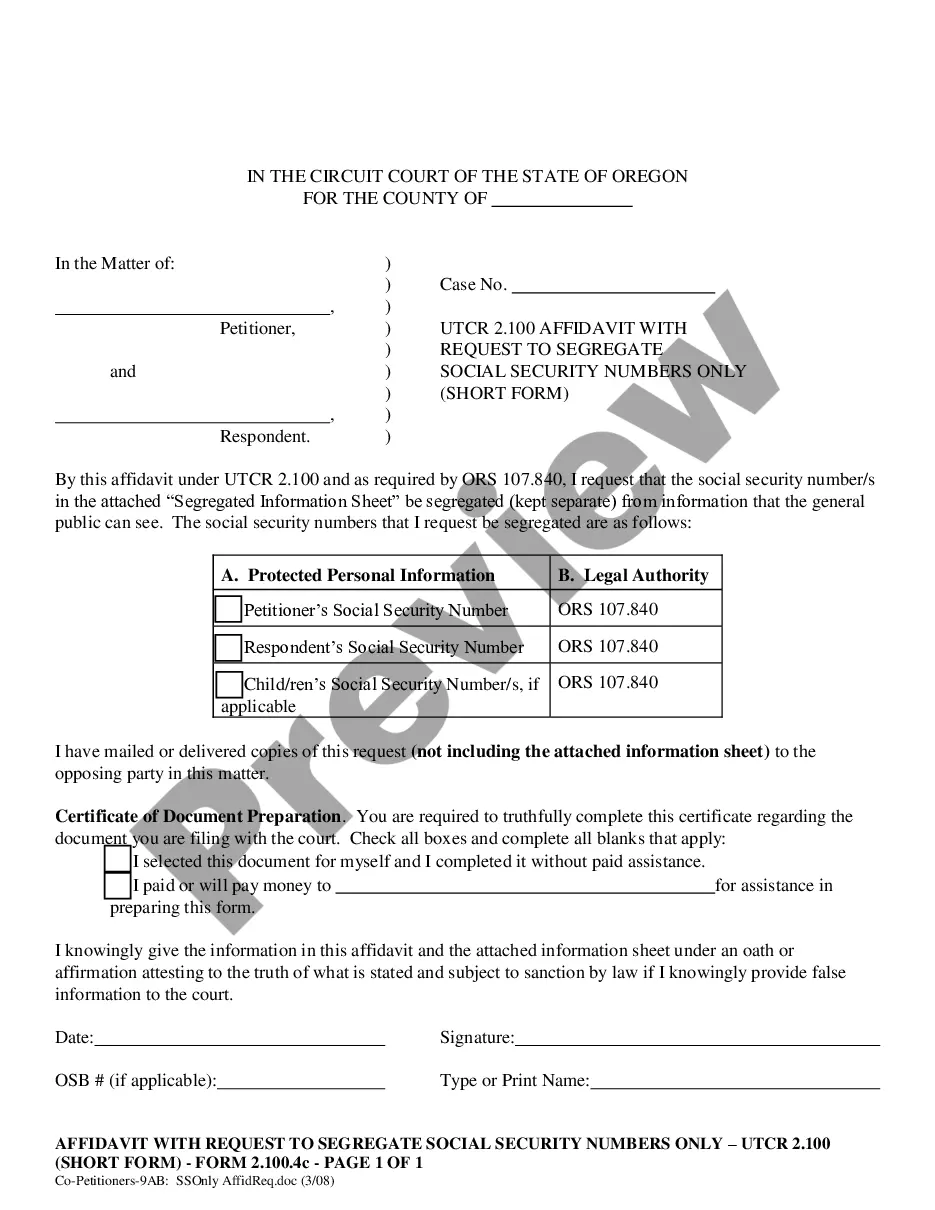
The UTCR 2.100 Co-Petitioner Affidavit with Request to Segregate Social Security Numbers Only (Short Form) is designed for co-petitioners with minor children involved in dissolution, separation, or annulment proceedings in Oregon. This form allows the parties to request that their Social Security numbers be kept confidential from public access, as mandated by Oregon law (ORS 107.840). It differs from similar forms by focusing specifically on the segregation of Social Security numbers without addressing other sensitive information.
Form components explained
- Request for segregation of Social Security numbers for the petitioner, respondent, and minor children.
- Certificate of Document Preparation to ensure the accuracy and truthfulness of filings.
- Affidavit section where the requestor affirms the truth of the provided information.
- Segregated Information Sheet that gathers and protects the necessary Social Security numbers.
- Space for contact information and relationship to the case.

When to use this form
This form should be utilized during legal proceedings such as divorces or separations when minor children are involved, and the parties seek to keep their Social Security numbers private. It is specifically useful in cases filed in Oregon after January 1, 2004, ensuring compliance with state laws regarding confidentiality.
Intended users of this form
- Co-petitioners who are filing for divorce, separation, or annulment in Oregon.
- Individuals with minor children who require protection of their Social Security numbers.
- Any party concerned about the public disclosure of sensitive personal information during legal proceedings.
How to complete this form
- Identify the parties involved in the case and include their names and contact information.
- Fill in the Social Security numbers for the petitioner, respondent, and any minor children.
- Sign the affidavit, affirming that the information provided is true and accurate.
- Complete the Certificate of Document Preparation section, indicating your role in completing the form.
- Submit the affidavit along with the segregated information sheet to the court.
Notarization requirements for this form
This form does not typically require notarization unless specified by local law. However, verifying with your local court about any specific requirements is advisable.
Get your form ready online
Our built-in tools help you complete, sign, share, and store your documents in one place.
Make edits, fill in missing information, and update formatting in US Legal Forms—just like you would in MS Word.
Download a copy, print it, send it by email, or mail it via USPS—whatever works best for your next step.
Sign and collect signatures with our SignNow integration. Send to multiple recipients, set reminders, and more. Go Premium to unlock E-Sign.
If this form requires notarization, complete it online through a secure video call—no need to meet a notary in person or wait for an appointment.
We protect your documents and personal data by following strict security and privacy standards.

Make edits, fill in missing information, and update formatting in US Legal Forms—just like you would in MS Word.

Download a copy, print it, send it by email, or mail it via USPS—whatever works best for your next step.

Sign and collect signatures with our SignNow integration. Send to multiple recipients, set reminders, and more. Go Premium to unlock E-Sign.

If this form requires notarization, complete it online through a secure video call—no need to meet a notary in person or wait for an appointment.

We protect your documents and personal data by following strict security and privacy standards.
Avoid these common issues
- Failing to accurately document the Social Security numbers to be segregated.
- Not completing the Certificate of Document Preparation properly.
- Omitting signatures or dates, which can render the form invalid.
- Failing to serve the opposing party with copies of the filed documents.
Benefits of using this form online
- Convenient access to legal forms from anywhere, without needing to visit a law office.
- Edit and customize the form to suit your specific needs.
- Reliable legal templates drafted by licensed attorneys, ensuring compliance with Oregon law.
Key takeaways
- The UTCR 2.100 Co-Petitioner Affidavit is essential for protecting sensitive information during legal proceedings.
- Correct completion and submission of this form is vital to ensure compliance with Oregon law.
- Utilizing this form online streamlines the process and enhances accessibility.
Looking for another form?
Form popularity
FAQ
A party may make one motion to dismiss for lack of jurisdiction over the person or insufficiency of summons or process or insufficiency of service of summons or process without consolidation of defenses required by this section.
(1) Notice required. Summons shall be served, either within or without this state, in any manner reasonably calculated, under all the circumstances, to apprise the defendant of the existence and pendency of the action and to afford a reasonable opportunity to appear and defend.
Under Oregon law, the majority of civil actions must be filed within two years, including claims related to personal injury, defamation, fraud, and medical malpractice. There is a six-year statute of limitations for injury to personal property, trespassing, contracts, and debt collection.
Uniform Trial Court Rule (UTCR) 5.1001 allows you to object to the proposed judgment or order.
The Uniform Trial Court Rules (UTCR) are statewide rules that apply in each of Oregon's 36 circuit courts. The UTCR promote the just, speedy and inexpensive resolution of cases, the efficient use of court resources and a uniform, consistent practice across the state.
Every pleading must consist of plain and concise statements in paragraphs consecutively numbered throughout the pleading with Arabic numerals, the contents of which must be limited as far as practicable to a statement of a single set of circumstances, and a paragraph may be referred to by number in all succeeding
The Uniform Trial Court Rules (UTCR) are statewide rules that apply in each of Oregon's 36 circuit courts. The UTCR promote the just, speedy and inexpensive resolution of cases, the efficient use of court resources and a uniform, consistent practice across the state.