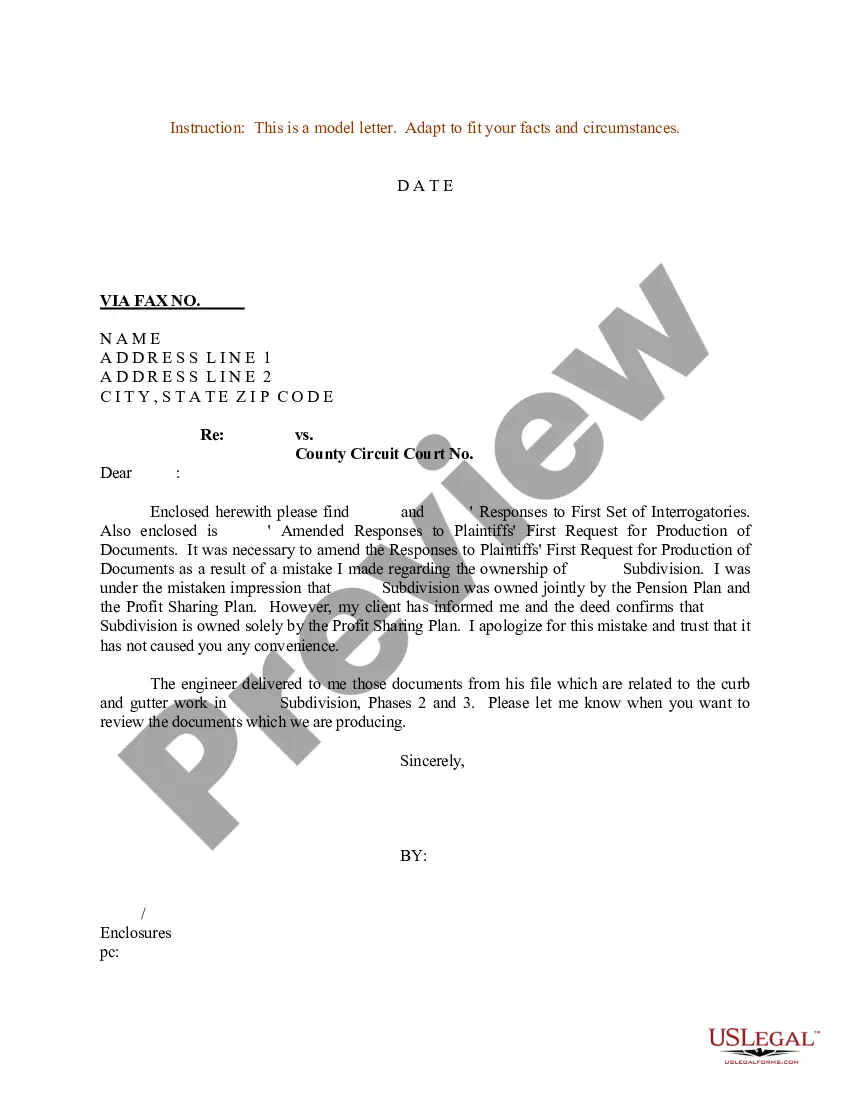
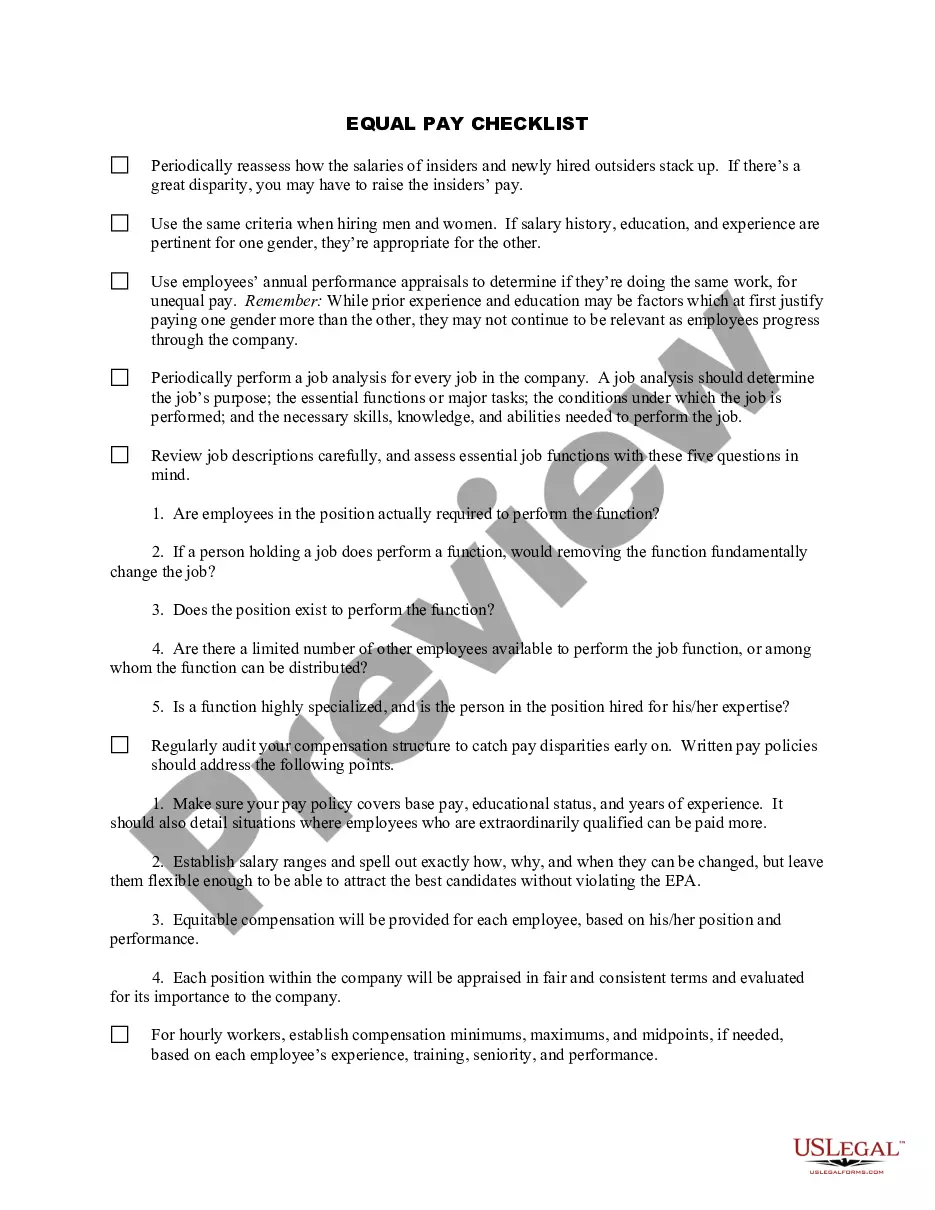
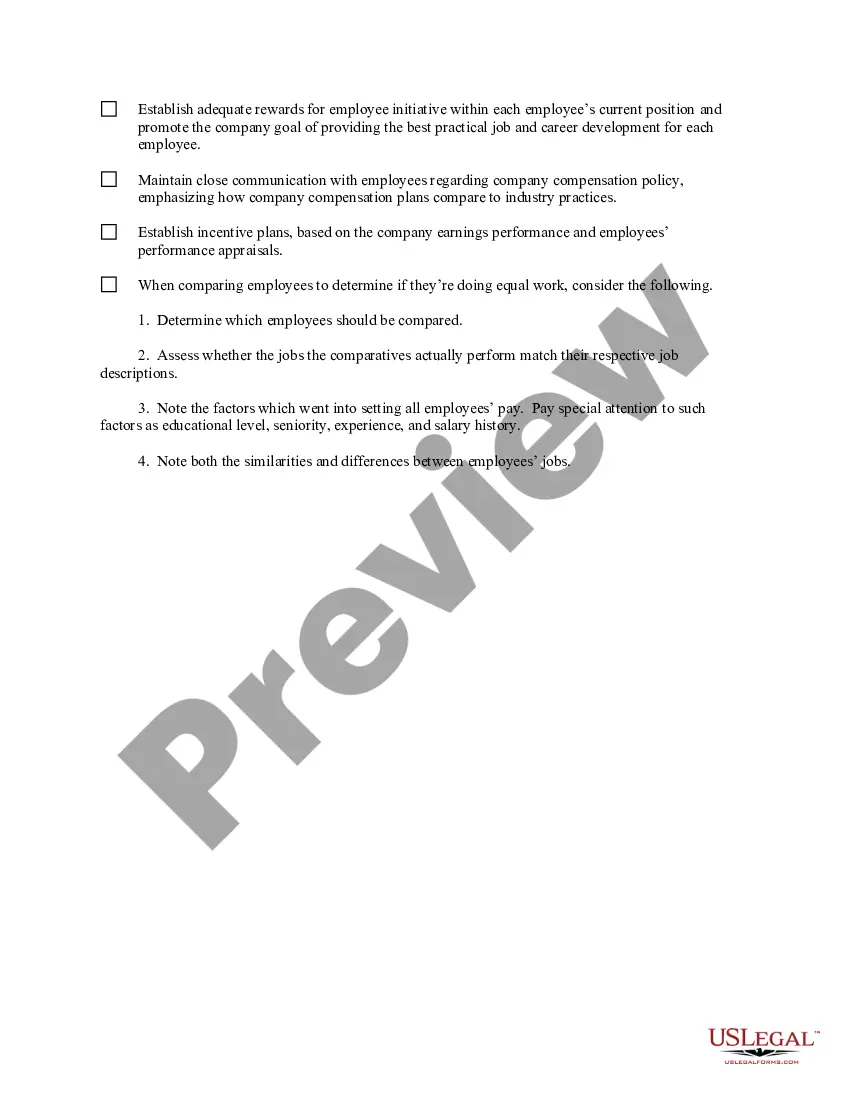
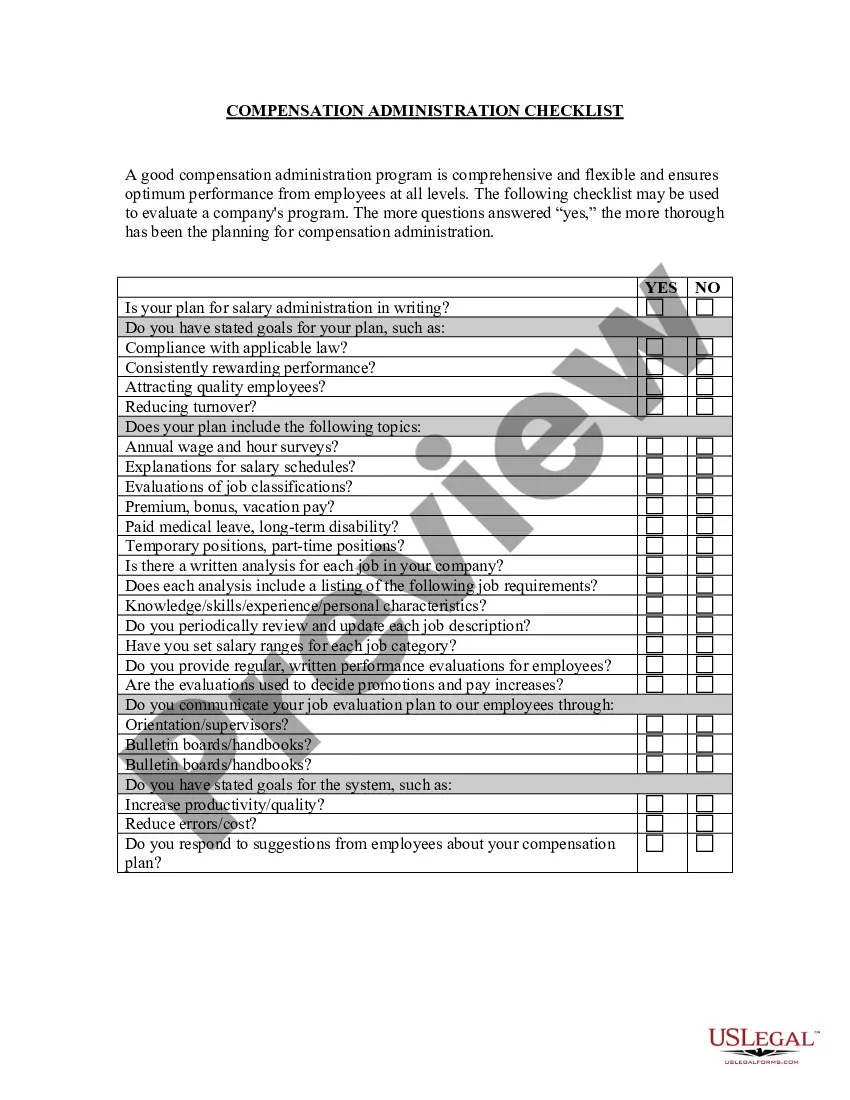
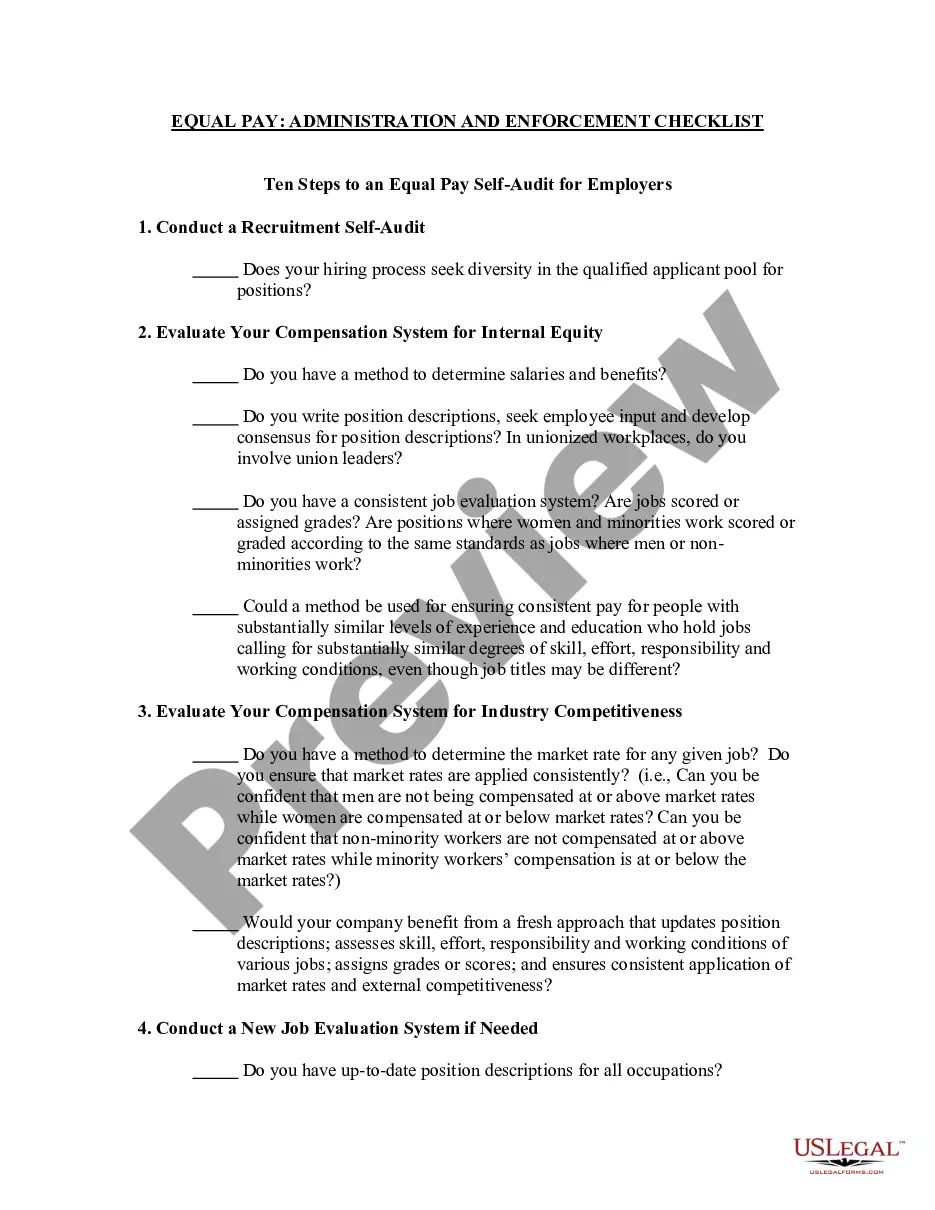
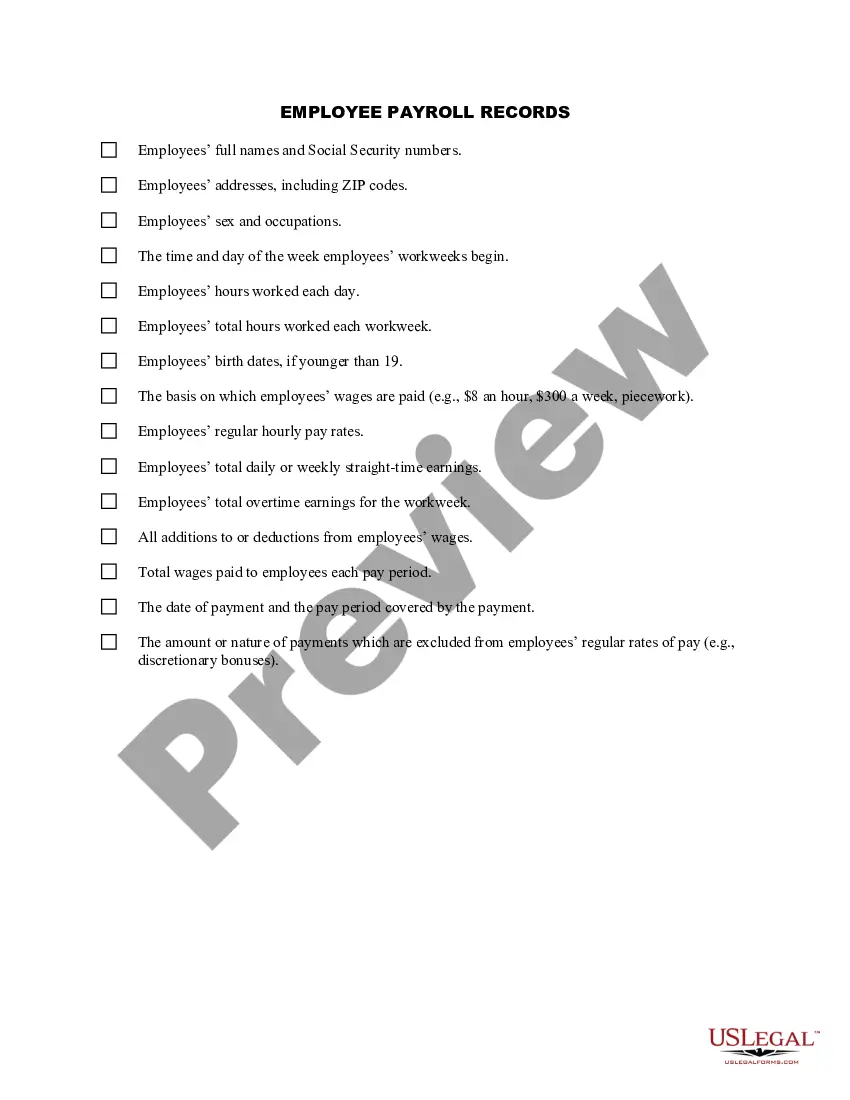
Oregon Equal Pay Checklist
Description
Get your form ready online
Our built-in tools help you complete, sign, share, and store your documents in one place.
Make edits, fill in missing information, and update formatting in US Legal Forms—just like you would in MS Word.
Download a copy, print it, send it by email, or mail it via USPS—whatever works best for your next step.
Sign and collect signatures with our SignNow integration. Send to multiple recipients, set reminders, and more. Go Premium to unlock E-Sign.
If this form requires notarization, complete it online through a secure video call—no need to meet a notary in person or wait for an appointment.
We protect your documents and personal data by following strict security and privacy standards.

Make edits, fill in missing information, and update formatting in US Legal Forms—just like you would in MS Word.

Download a copy, print it, send it by email, or mail it via USPS—whatever works best for your next step.

Sign and collect signatures with our SignNow integration. Send to multiple recipients, set reminders, and more. Go Premium to unlock E-Sign.

If this form requires notarization, complete it online through a secure video call—no need to meet a notary in person or wait for an appointment.

We protect your documents and personal data by following strict security and privacy standards.
Looking for another form?
How to fill out Equal Pay Checklist?
If you need to total, obtain, or print genuine document templates, utilize US Legal Forms, the largest repository of legitimate forms available online.
Leverage the site's simple and convenient search feature to find the documents you require.
An array of templates for business and personal purposes are organized by categories and states, or keywords.
Step 4. Once you have found the form you desire, click on the Get now option. Choose your preferred payment plan and enter your details to create an account.
Step 5. Complete the payment process. You may use your Visa or MasterCard or your PayPal account to make the payment.
- Utilize US Legal Forms to locate the Oregon Equal Pay Checklist in just a few clicks.
- If you are already a US Legal Forms user, Log In to your account and click the Download button to access the Oregon Equal Pay Checklist.
- You can also find forms you previously downloaded in the My documents section of your account.
- For first-time users of US Legal Forms, refer to the following instructions.
- Step 1. Ensure you have chosen the form for the correct city/state.
- Step 2. Use the Preview option to review the form’s content. Do not forget to read the description.
- Step 3. If you are unsatisfied with the form, use the Search bar at the top of the page to discover alternative types of the legal form format.
Form popularity
FAQ
The Equality Act in Oregon enhances protections against discrimination based on gender identity and sexual orientation. This law aligns with the commitment to equal rights, encouraging a more inclusive environment in workplaces. Utilizing resources like the Oregon Equal Pay Checklist can help employers align with the act's guidelines effectively. Ensuring compliance not only helps in fostering diversity but also enhances organizational reputation.
The new payroll law in Oregon mandates equal pay for employees performing comparable work. This legislation aims to close wage gaps and promote fairness in the workplace. To comply with this law, businesses should use the Oregon Equal Pay Checklist, ensuring they evaluate salaries and make necessary adjustments. This checklist serves as a practical tool for employers, helping them navigate the new requirements with ease.
Yes, there are specific exceptions to the Equality Act which may apply in certain situations. For instance, the Act allows for limited disparities in pay based on seniority, merit, or a system that measures earnings by production. It's important to understand these nuances as they relate to the Oregon Equal Pay Checklist. Utilizing tools from UsLegalForms can help you navigate these exceptions and ensure compliance with state laws.
To prove discrimination under the Oregon Equal Pay Checklist, you need to gather various forms of documentation. Start with pay records that show how your compensation compares to your coworkers doing similar work. Also, collect emails or internal communications that highlight discrepancies in pay or promotions. Testimonies from colleagues who can confirm similar roles and responsibilities can further strengthen your case.
The Equal Pay Act (EPA) protects both men and women. All forms of compensation are covered, including salary, overtime pay, bonuses, life insurance, vacation and holiday pay, cleaning or gasoline allowances, hotel accommodations, reimbursement for travel expenses, and benefits.
Equal pay for equal work is the concept of labour rights that individuals in the same workplace be given equal pay. It is most commonly used in the context of sexual discrimination, in relation to the gender pay gap.
The Equal Pay Act requires that men and women in the same workplace be given equal pay for equal work. The jobs need not be identical, but they must be substantially equal. Job content (not job titles) determines whether jobs are substantially equal.
1. Equal Pay for Comparable Work. The OEPA prohibits Oregon employers from discriminating against employees when paying wages based on various protected classes. These include sex, race, color, national origin, age, religion, marital status, sexual orientation, disability, or veteran status.
The Equal Pay Act requires that men and women in the same workplace be given equal pay for equal work. The jobs need not be identical, but they must be substantially equal. Job content (not job titles) determines whether jobs are substantially equal.
How to implement equal payProduce an equal pay policy.Create clear and transparent job descriptions and titles.Follow a job evaluation scheme.Look at your grading structures.Consider more action for a fair pay system.