Oregon Merchandising License Agreement
Description
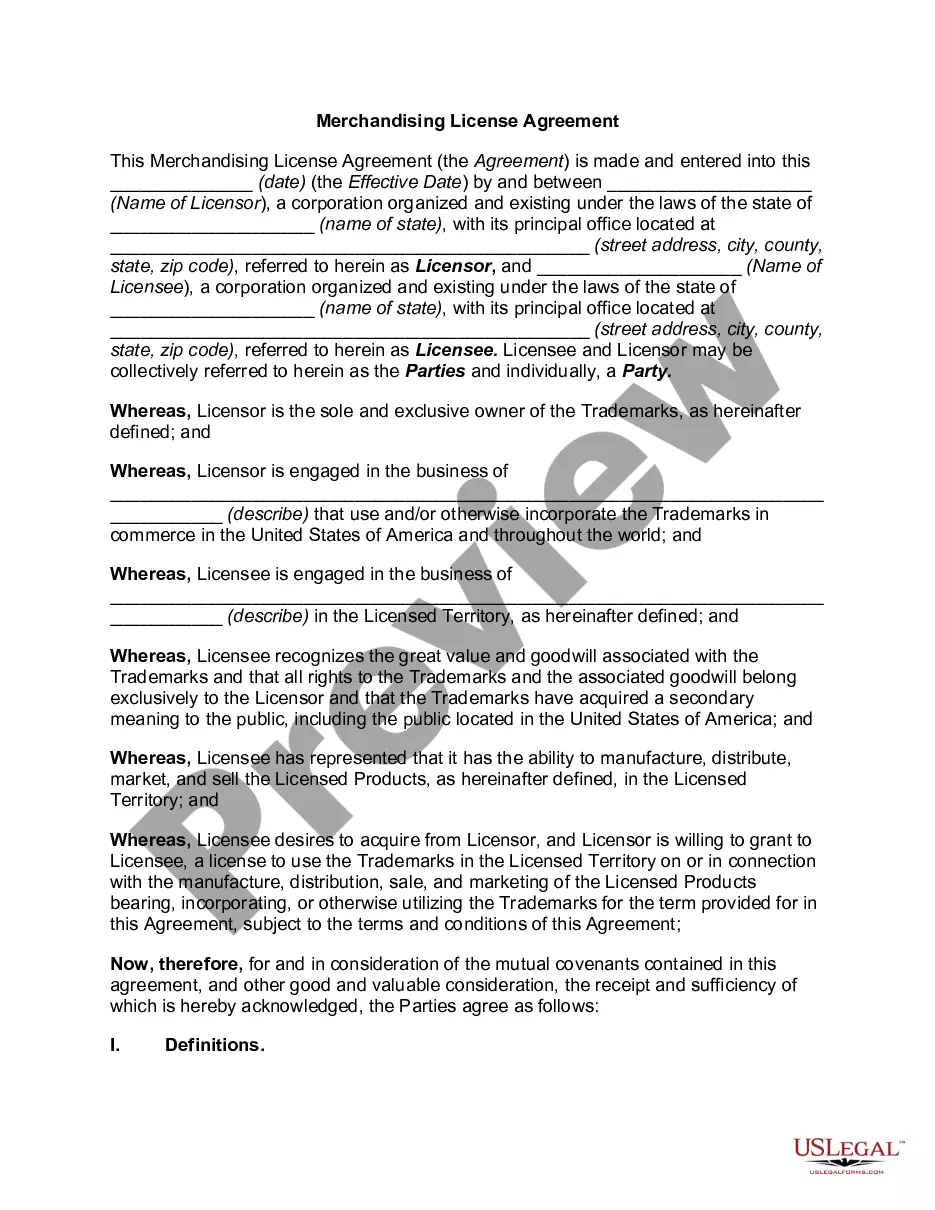
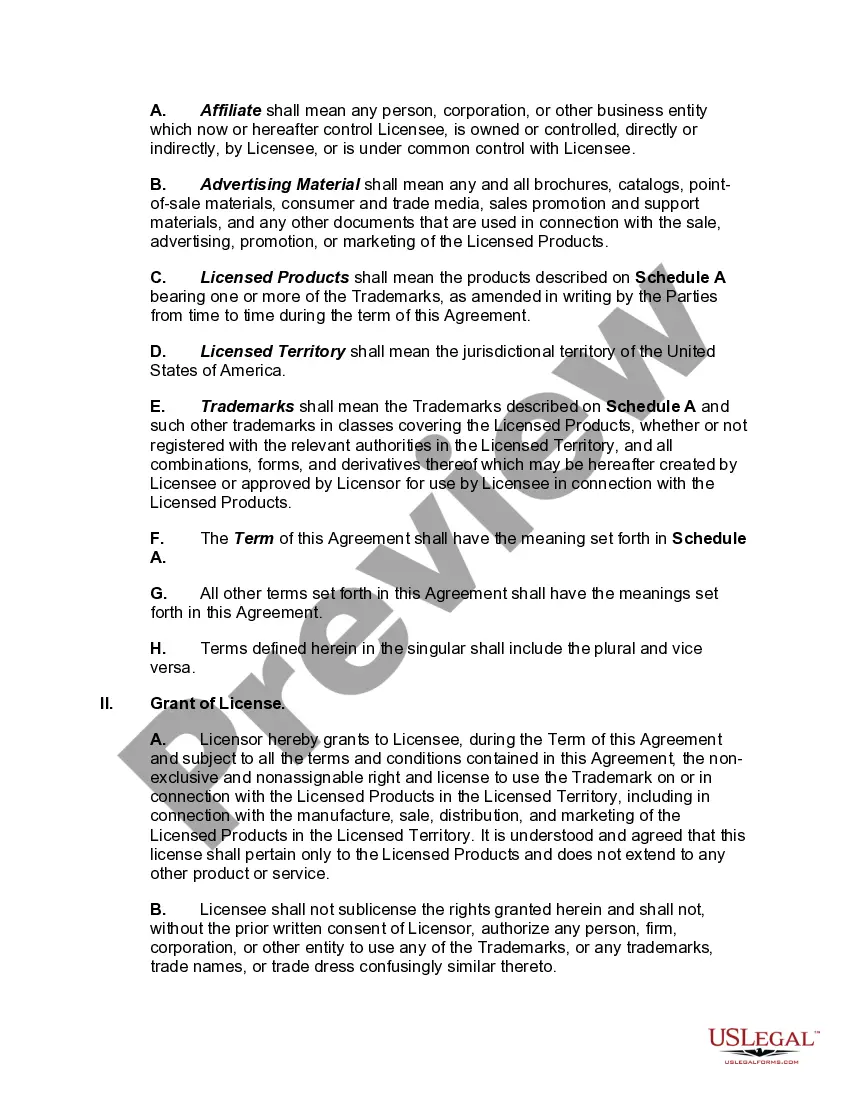
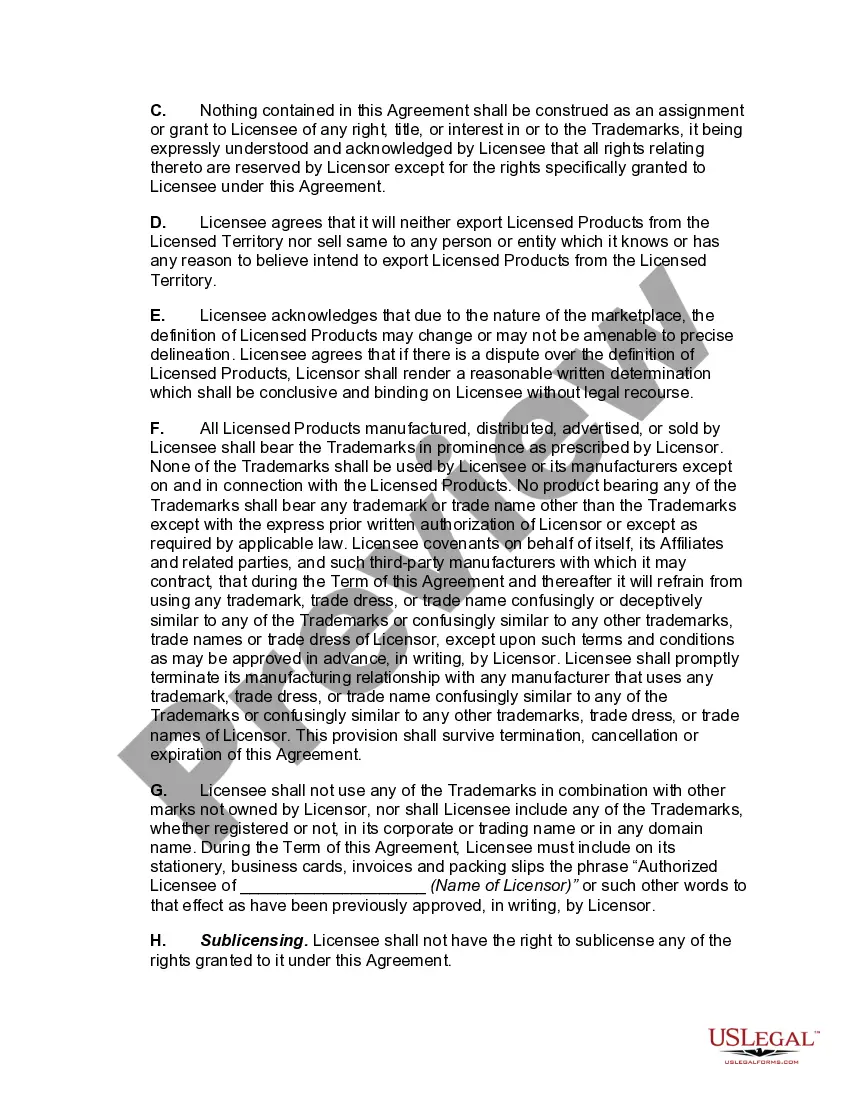





How to fill out Merchandising License Agreement?
Finding the correct legal document format can be challenging.
Obviously, there are numerous templates accessible online, but how can you find the legal form you require.
Utilize the US Legal Forms website. This service provides thousands of templates, including the Oregon Merchandising License Agreement, suitable for both business and personal purposes.
If the form does not meet your requirements, use the Search feature to find the appropriate form. Once you are confident that the form is suitable, click the Get now button to obtain the form. Choose your desired pricing plan and provide the necessary details. Create your account and complete the purchase using your PayPal account or credit card. Select the download format and save the legal document format to your device. Complete, edit, print, and sign the downloaded Oregon Merchandising License Agreement. US Legal Forms is the largest repository of legal forms where you can explore various document templates. Utilize the service to obtain properly crafted paperwork that adheres to state requirements.
- All of the forms are reviewed by experts and comply with federal and state regulations.
- If you are already a registered user, sign in to your account and select the Download button to get the Oregon Merchandising License Agreement.
- Use your account to browse the legal forms you have previously purchased.
- Navigate to the My documents section of your account and obtain another copy of the document you require.
- If you are a new user of US Legal Forms, here are simple steps you can follow.
- First, ensure you have selected the correct form for your area/state. You can review the form using the Review option and read the form description to confirm it is the right fit for you.
Form popularity
FAQ
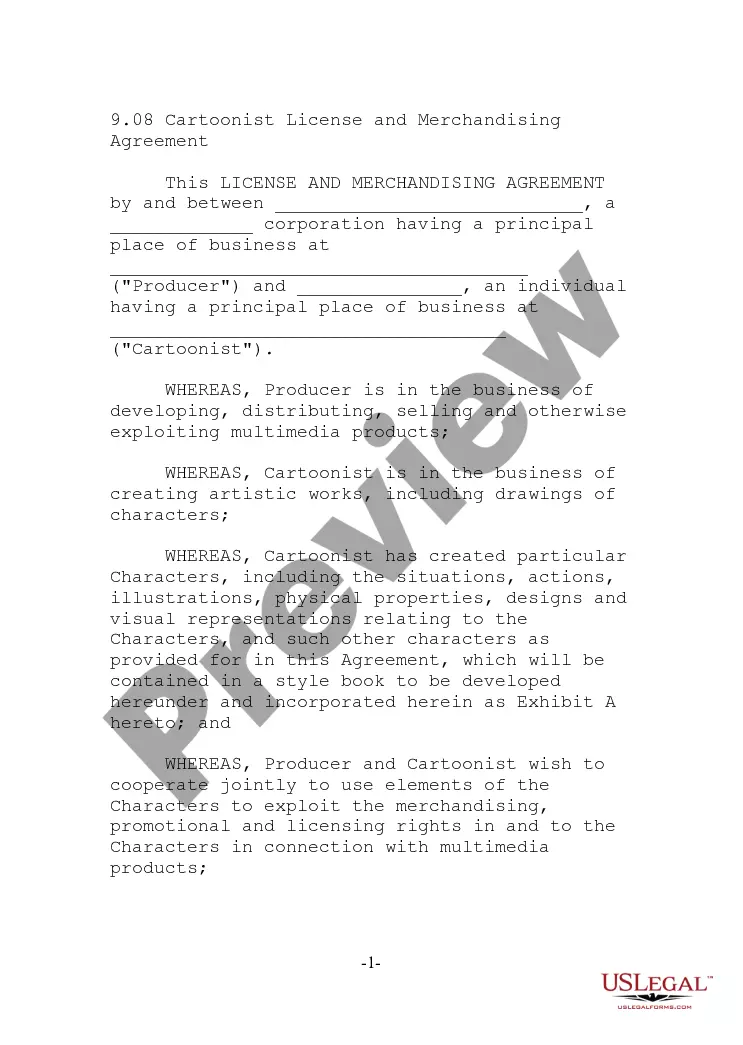
A merchandising agreement is a legal contract between two parties in which the first party agrees to sell specific goods or services to the second party. In this case, "merchandise" refers not only to physical items but also intangible products such as intellectual property.
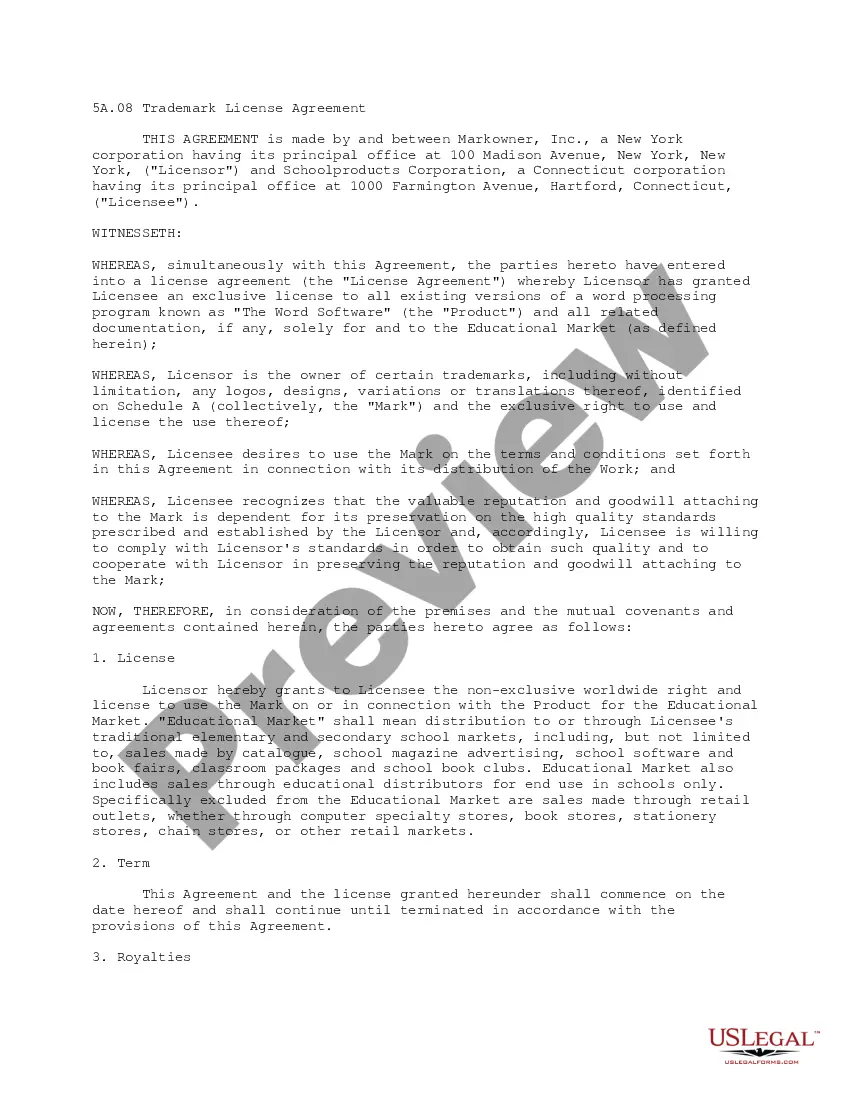
A licensing agreement is a legal contract between two parties, known as the licensor and the licensee. In a typical licensing agreement, the licensor grants the licensee the right to produce and sell goods, apply a brand name or trademark, or use patented technology owned by the licensor.
To expand trademark rights, the owner can register the trademark with either the state or federal government, or both. State registration is typically done through the secretary of state's office and provides the owner with the right to exclusive use of the trademark throughout the state.
Practitioners and licensing executives often refer to three basic types of voluntary licenses: non-exclusive, sole, and exclusive. A non-exclusive licence allows the licensor to retain the right to use the licensed property and the right to grant additional licenses to third parties.
Strategic licensing, by which the developer of intellectual property, technology or a product embeds it in the licensee's product for distribution, is typically a win-win for the companies involved.
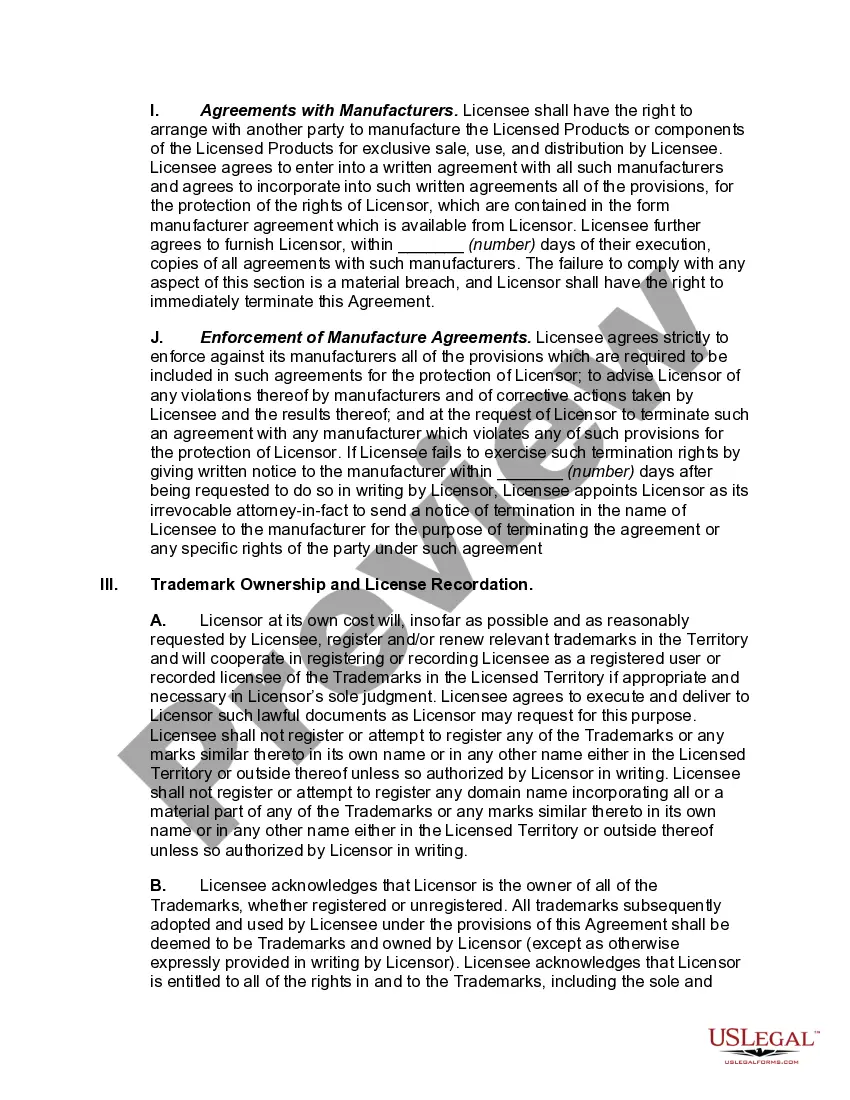
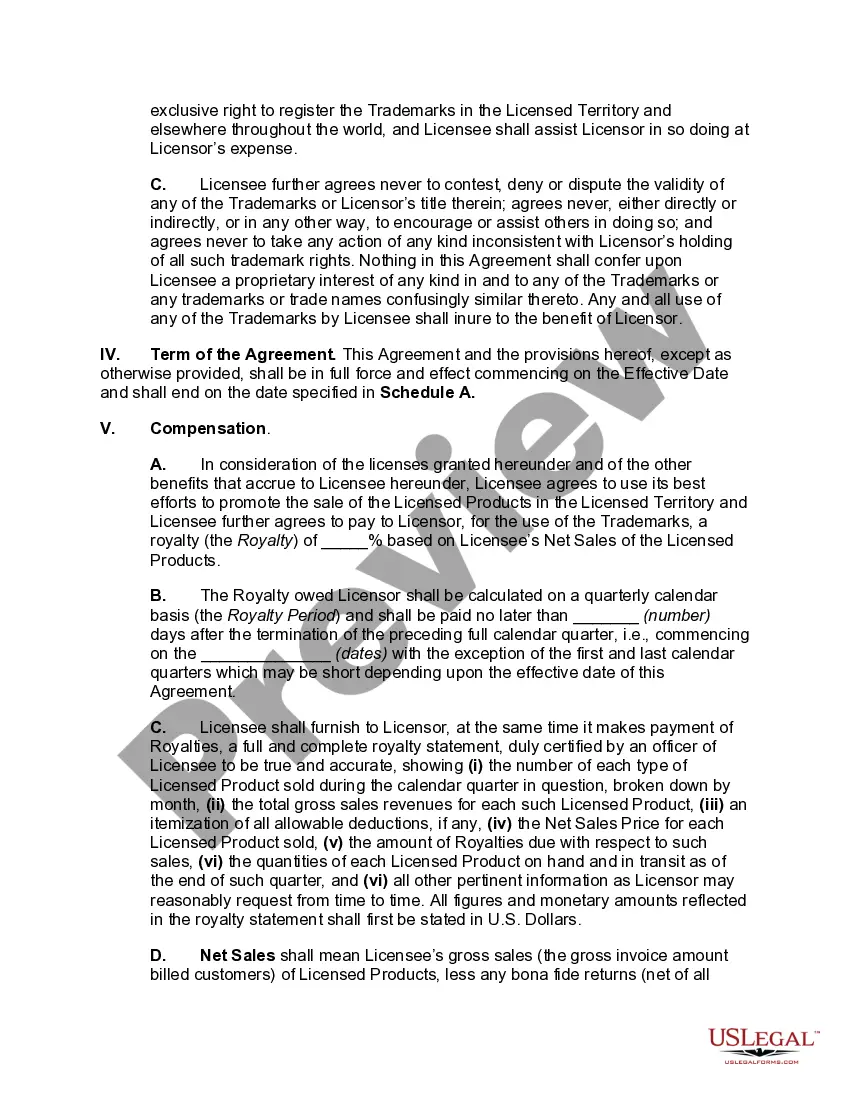
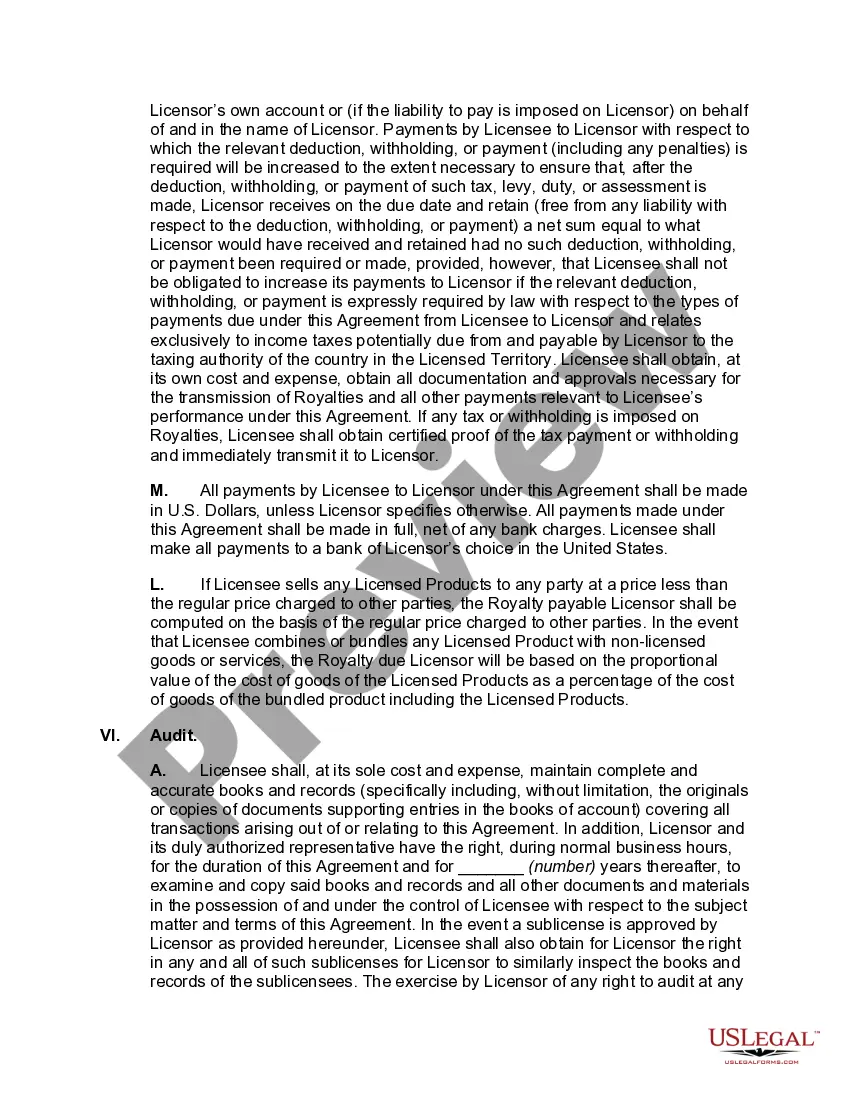
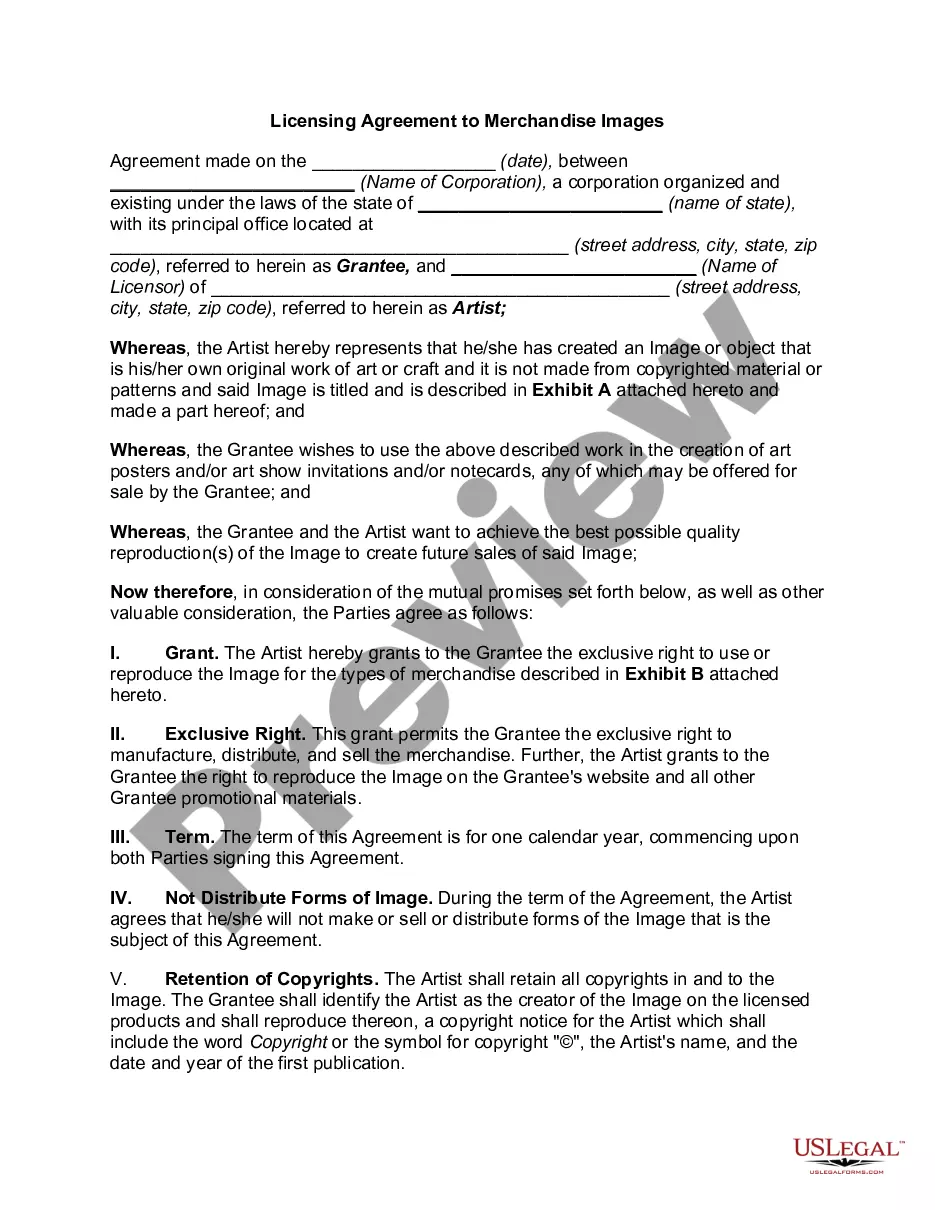
A merchandise license agreement describes the terms through which the owner of intellectual property, notably in the form of a trademark, service mark or copyright, grants a party, called the licensee, the right to use the property for distribution, marketing, and sale.
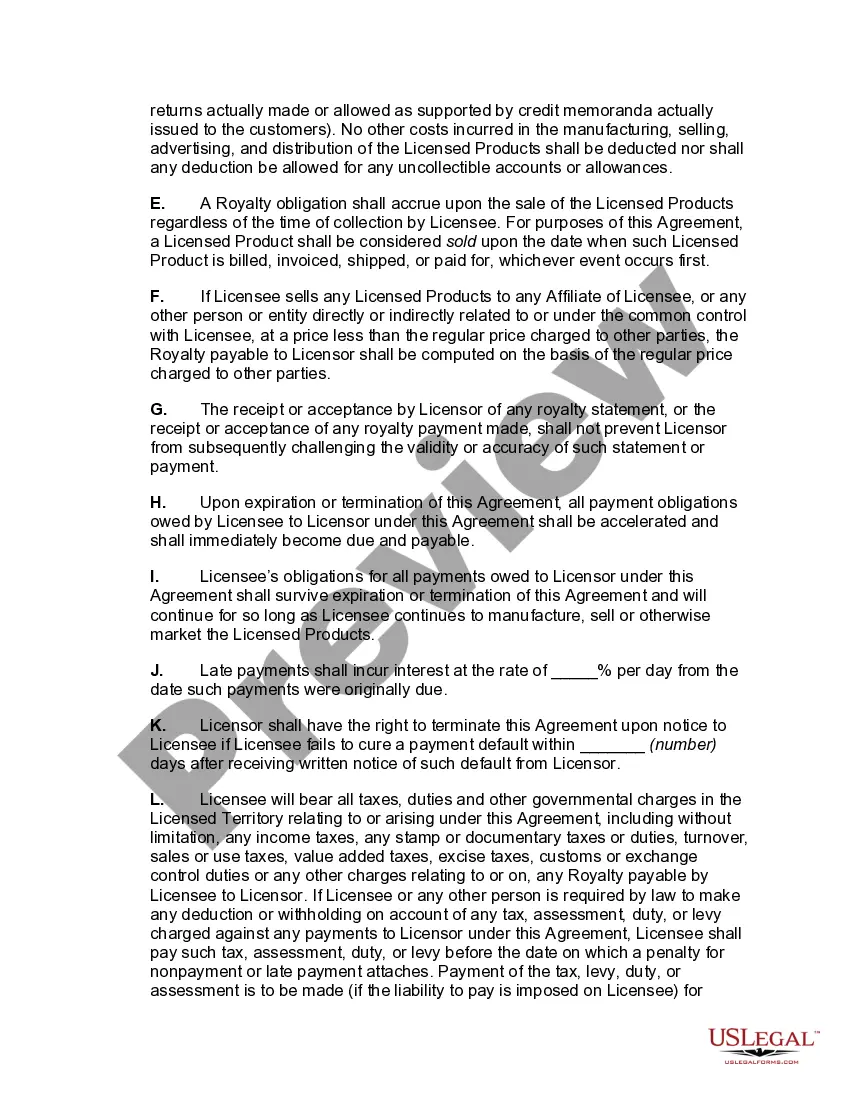
A licensing agreement allows one party (the licensee) to use and/or earn revenue from the property of the owner (the licensor). Licensing agreements generate revenues, called royalties, earned by a company for allowing its copyrighted or patented material to be used by another company.
Types of licensing agreement The unique feature of this type of agreement is that even the licensor is excluded to use or exploit the licensed property during the term of the agreement. Copyright, trademark and patent licenses are the best examples of an exclusive license agreement.
Licensing agreements are found in many different industries. An example of a licensing agreement is a contract between the copyright holders of software and another company, allowing the latter to use the computer software for their daily business operations.