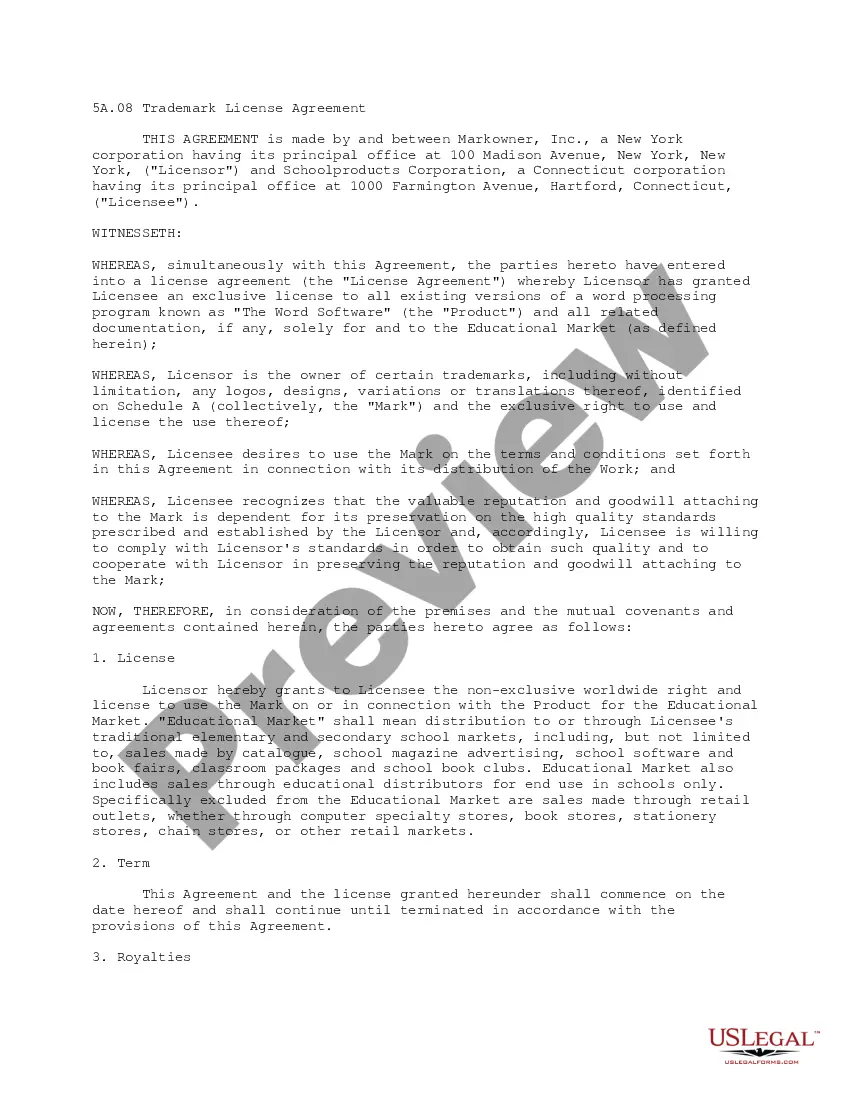
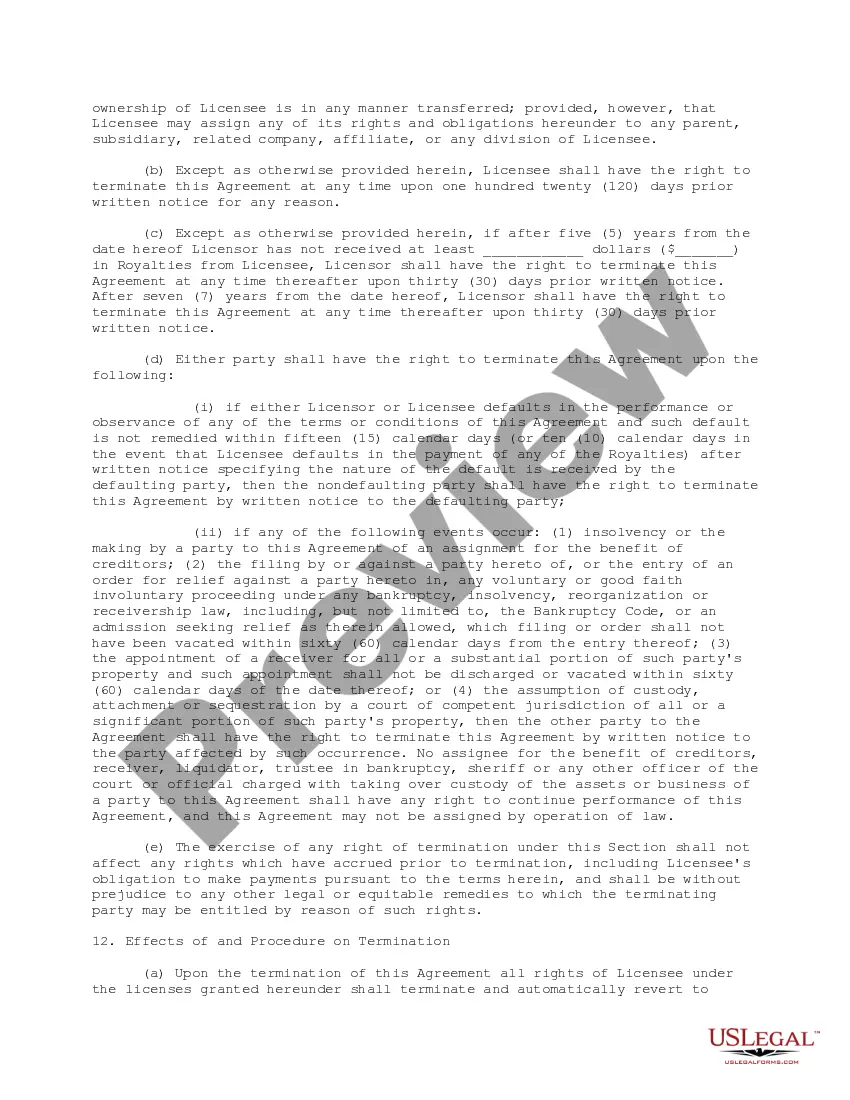
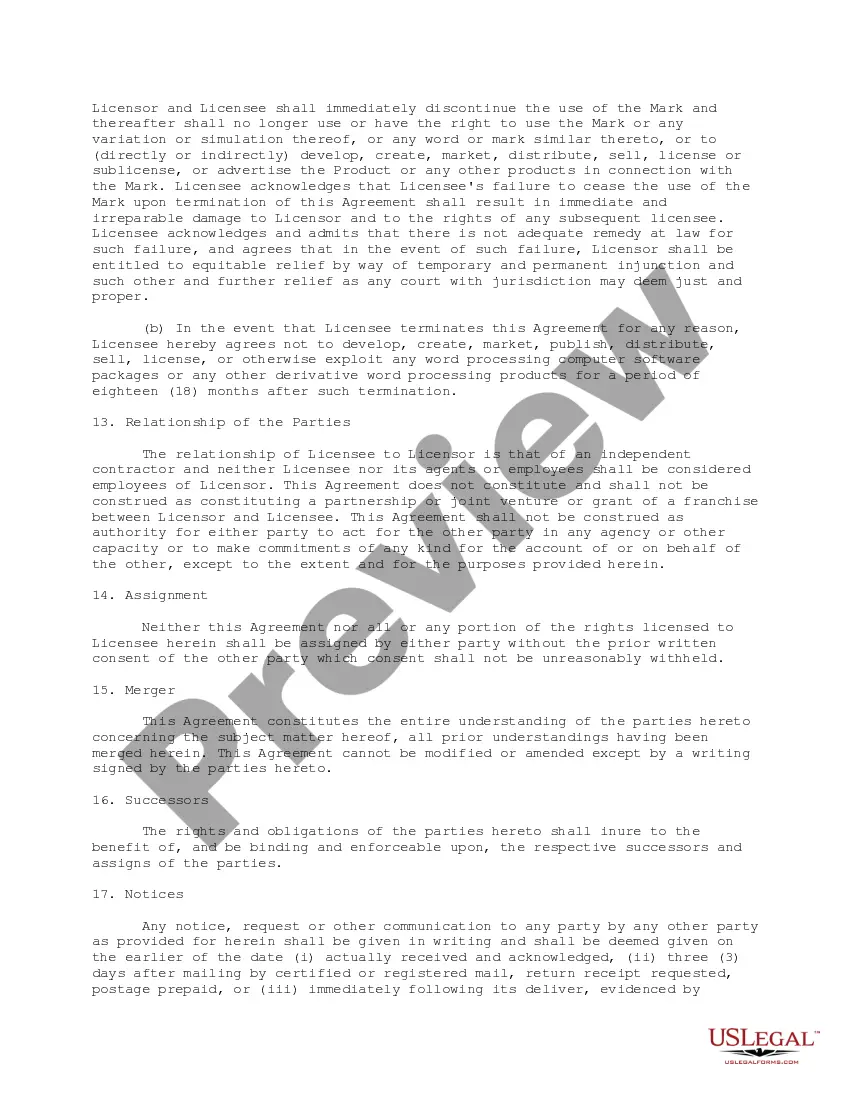
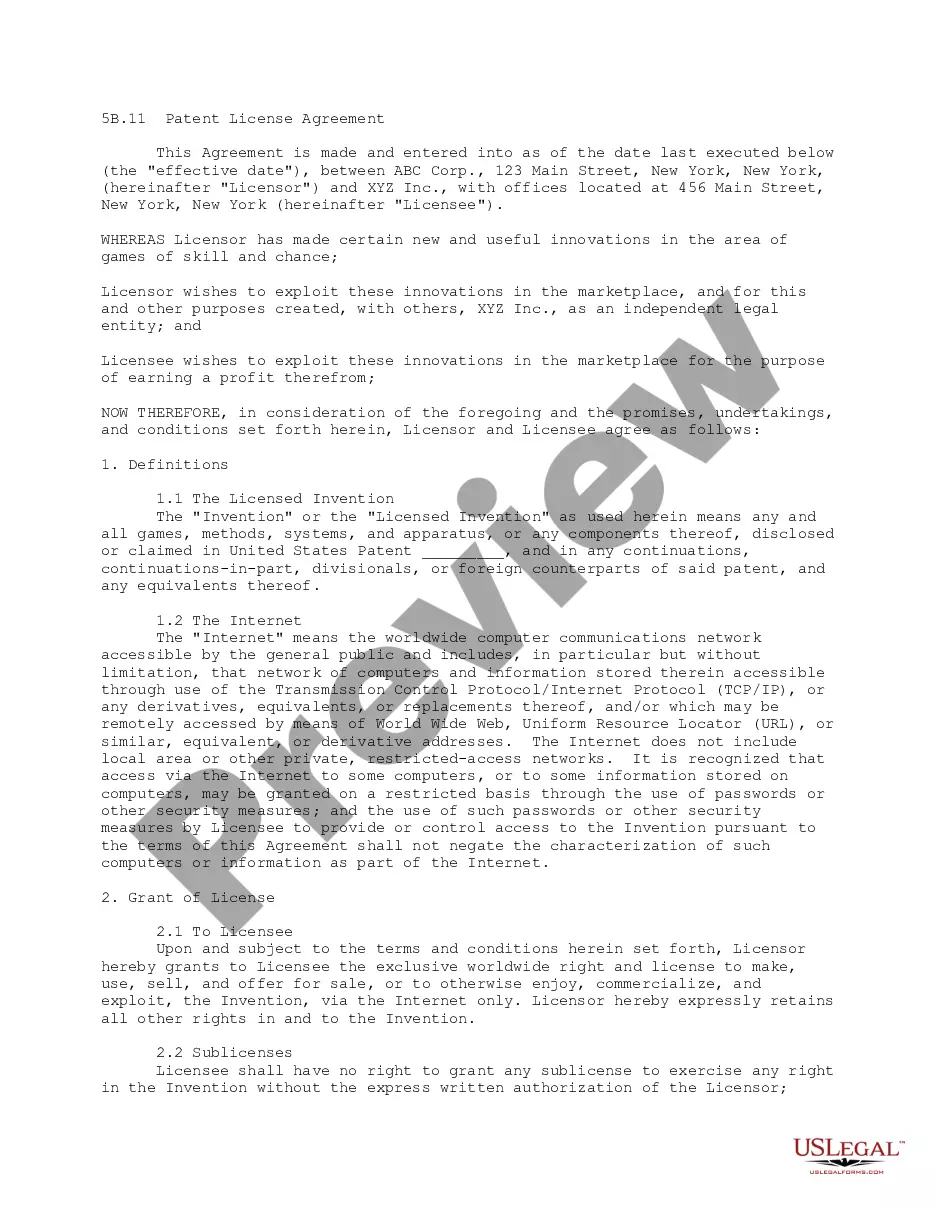
This agreement is used when a Licensor wishes to give the Licensee an exclusive license to all existing versions of a software program and all related documentation, if any, solely for a specific purpose.
Oregon Trademark License Agreement
State:
Multi-State
Control #:
US-CP5A08
Format:
Word;
PDF;
Rich Text
Instant download
Description
Free preview

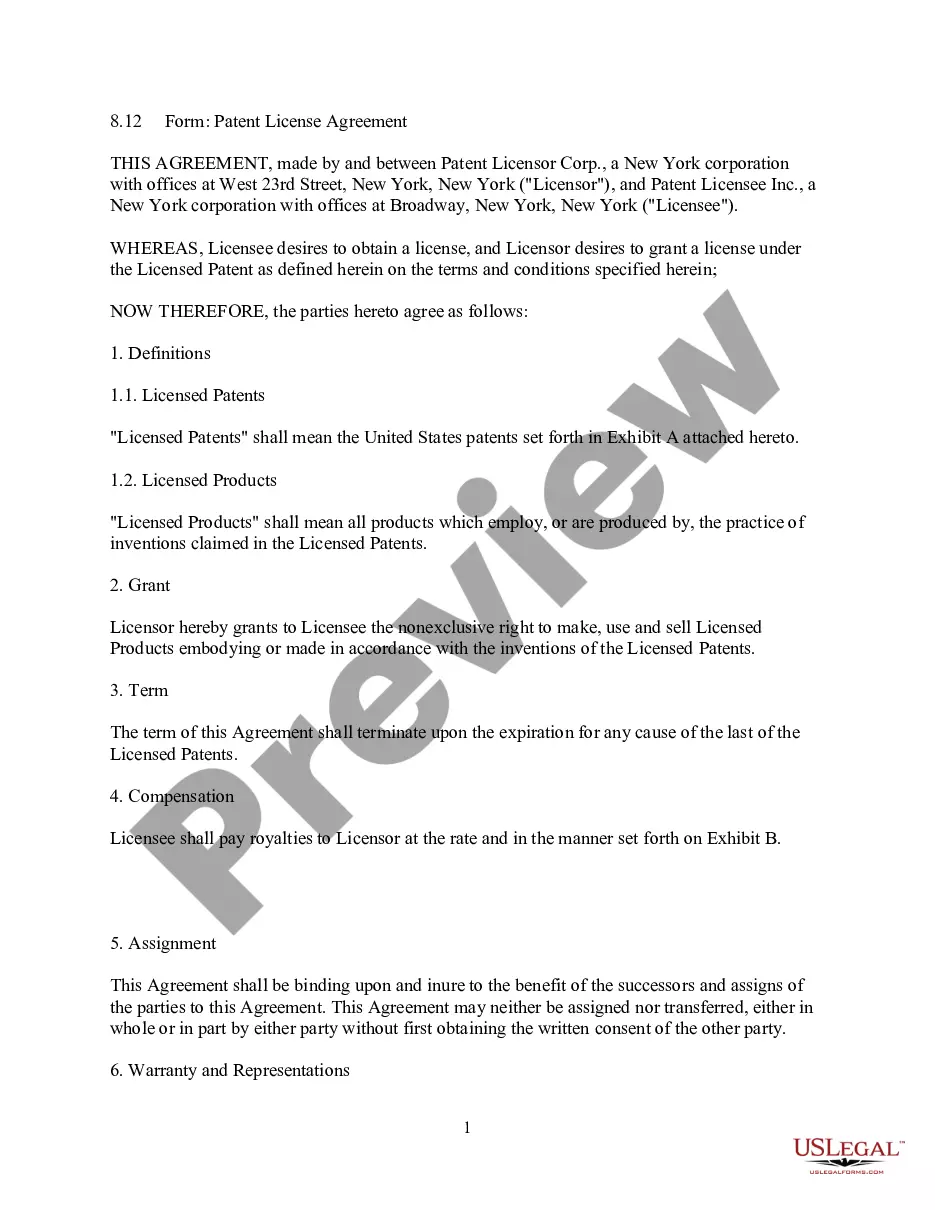
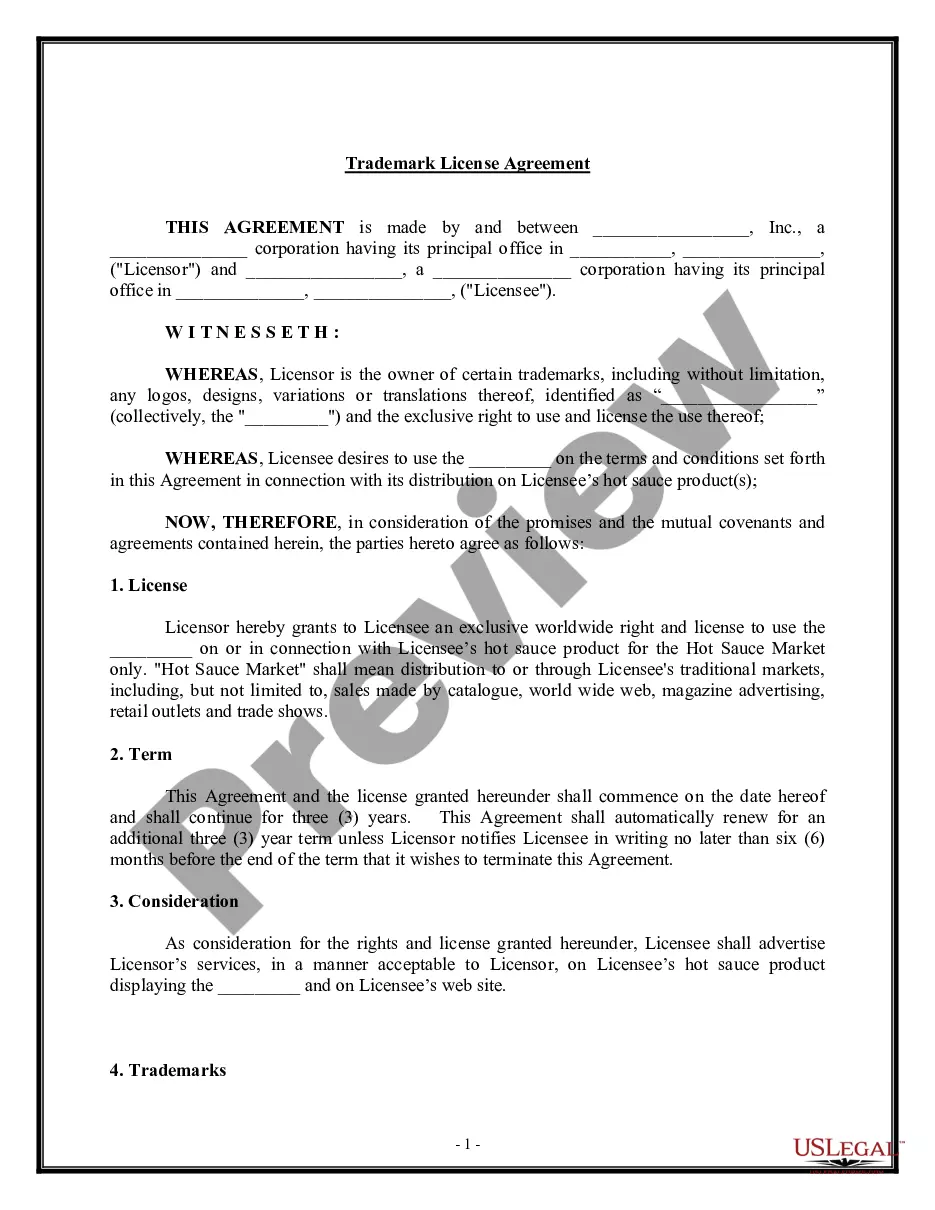
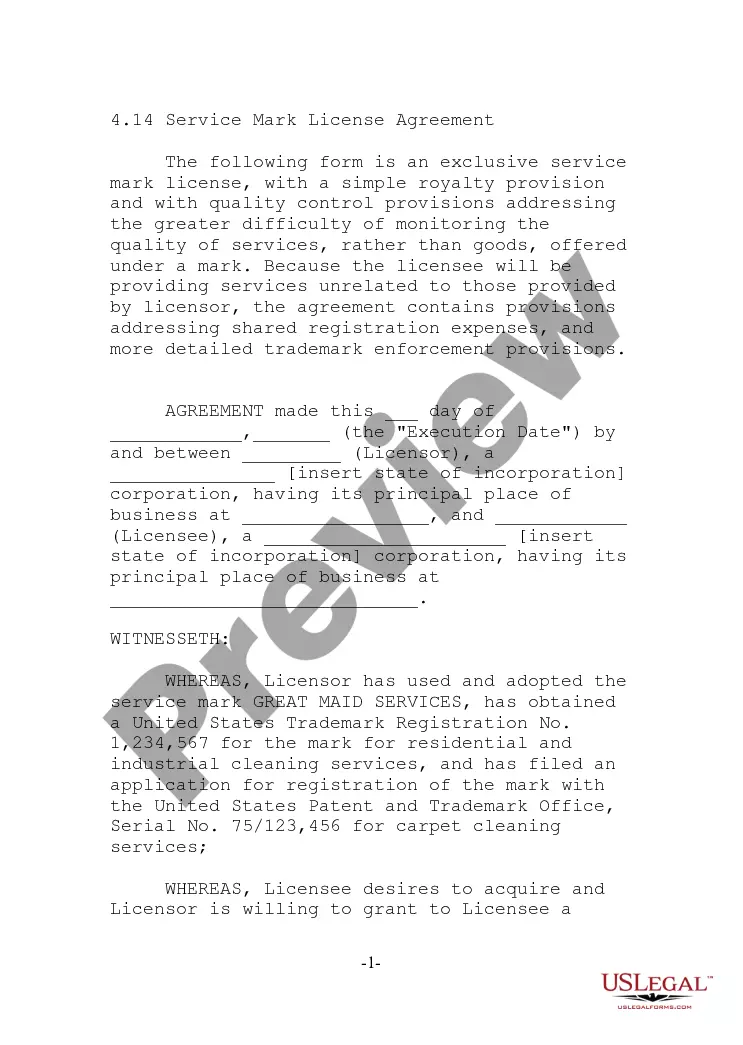
Get your form ready online
Our built-in tools help you complete, sign, share, and store your documents in one place.
Built-in online Word editor
Make edits, fill in missing information, and update formatting in US Legal Forms—just like you would in MS Word.
Export easily
Download a copy, print it, send it by email, or mail it via USPS—whatever works best for your next step.
E-sign your document
Sign and collect signatures with our SignNow integration. Send to multiple recipients, set reminders, and more. Go Premium to unlock E-Sign.
Notarize online 24/7
If this form requires notarization, complete it online through a secure video call—no need to meet a notary in person or wait for an appointment.
Store your document securely
We protect your documents and personal data by following strict security and privacy standards.

Make edits, fill in missing information, and update formatting in US Legal Forms—just like you would in MS Word.

Download a copy, print it, send it by email, or mail it via USPS—whatever works best for your next step.

Sign and collect signatures with our SignNow integration. Send to multiple recipients, set reminders, and more. Go Premium to unlock E-Sign.

If this form requires notarization, complete it online through a secure video call—no need to meet a notary in person or wait for an appointment.

We protect your documents and personal data by following strict security and privacy standards.
Looking for another form?
How to fill out Trademark License Agreement?
If you require to compile, obtain, or print sanctioned document templates, utilize US Legal Forms, the foremost assortment of legal forms available online.
Employ the site's user-friendly and convenient search tool to find the documents you need.
A range of templates for business and personal purposes are organized by categories and states, or keywords.
Step 4. Once you have located the form you need, click the Purchase now button. Choose your preferred pricing plan and input your details to sign up for an account.
Step 5. Complete the transaction. You can use your credit card or PayPal account to finalize the payment.
- Utilize US Legal Forms to find the Oregon Trademark License Agreement with just a few clicks.
- If you are already a US Legal Forms user, Log In to your account and click on the Download button to retrieve the Oregon Trademark License Agreement.
- You can also access forms you previously obtained in the My documents section of your account.
- If you are using US Legal Forms for the first time, follow the instructions outlined below.
- Step 1. Ensure you have selected the form for the correct city/state.
- Step 2. Use the Preview option to review the form's content. Do not forget to read the description.
- Step 3. If you are not satisfied with the form, take advantage of the Search bar at the top of the screen to find alternative versions of the legal form template.
Form popularity
FAQ
Most trademark license agreements aren't assignable, transferable or perpetual, and when you add in exclusive you get an agreement that looks much more like a transfer of all rights rather than a license.
How to create a copyright license agreementThe names of the parties and the description and name of the licensed work: Write out the full legal names of the parties to the agreement.The name(s) and description(s) of the work(s) being licensed: List out the work or the works you're licensing to the licensee.More items...
Exclusive license allows a licensor to share intellectual property with a licensee for a specific period of time that usually binds the licensor to not share the property with anyone else.
A perpetual license is one where a software application is sold on a one-time basis and the licensee can then use a copy of the software forever. A perpetual license model offers a customer access to a software application in perpetuity, hence the name.
A perpetual license agreement is a legal contract between a customer and software provider where the customer purchases a license to use the software indefinitely. This type of licensing agreement does not have an expiration date and the licensee can continue using the product or service indefinitely.
It is permissible to license an unregistered Trade mark. Permitted use without recordal of Registered User is permissible under the Trade Marks Act 1999, which came into force on September 15, 2003.
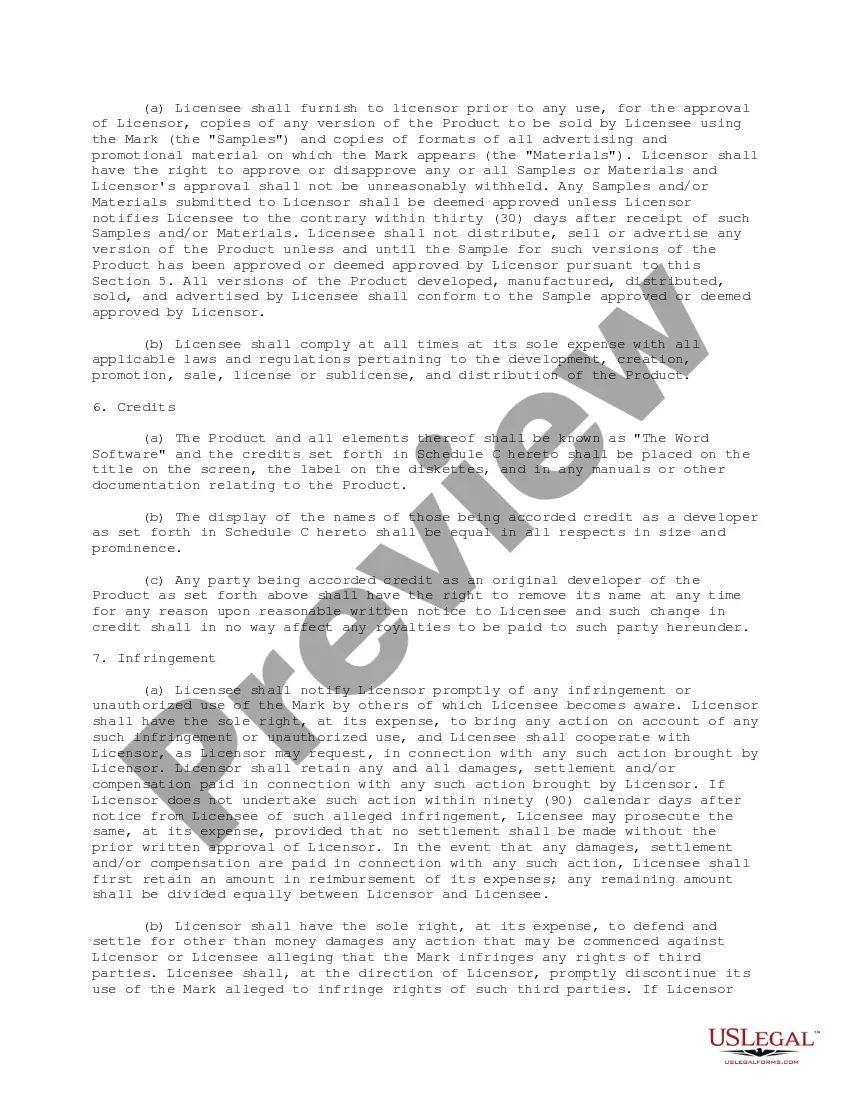
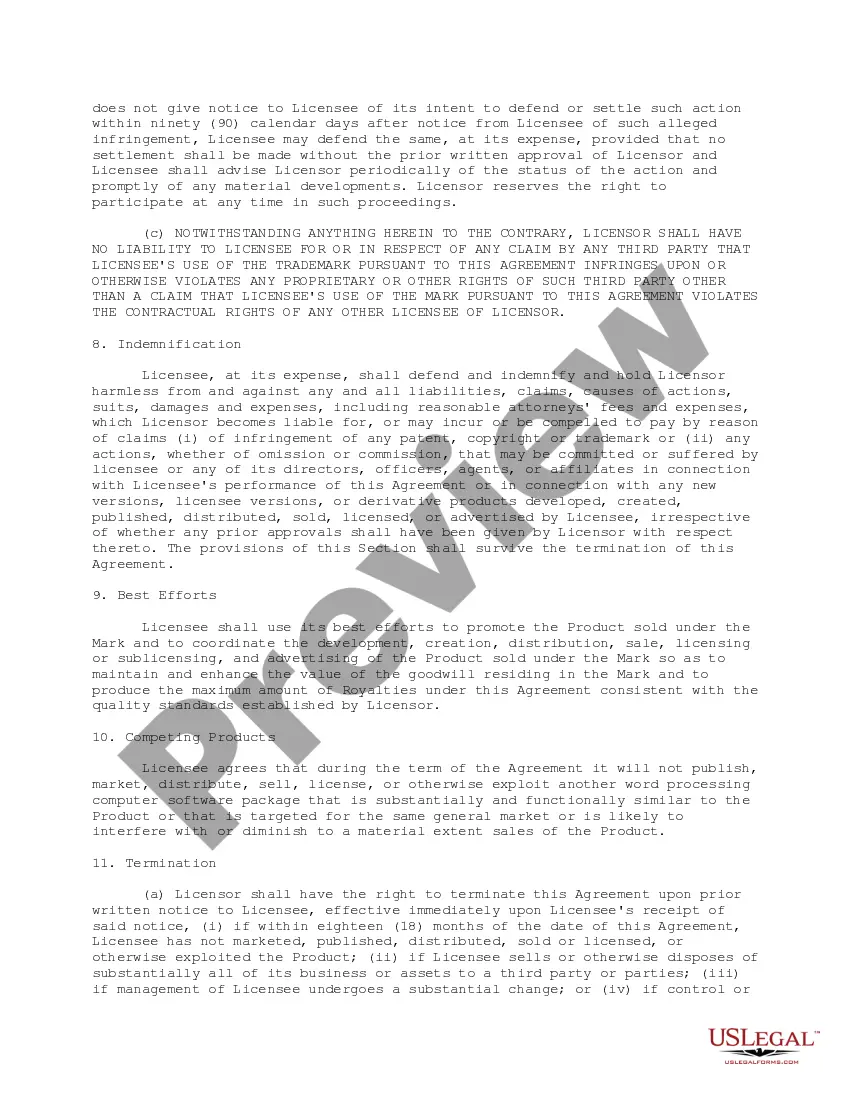
A licensing agreement allows one party (the licensee) to use and/or earn revenue from the property of the owner (the licensor). Licensing agreements generate revenues, called royalties, earned by a company for allowing its copyrighted or patented material to be used by another company.
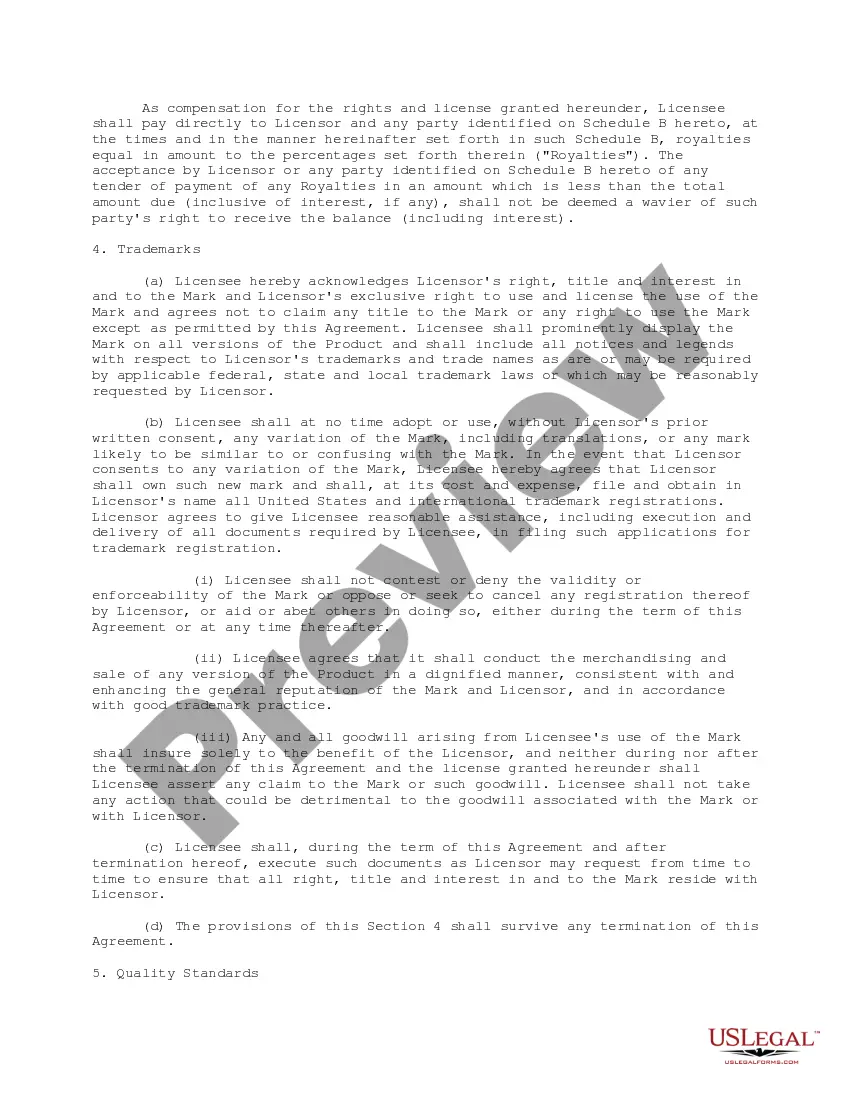
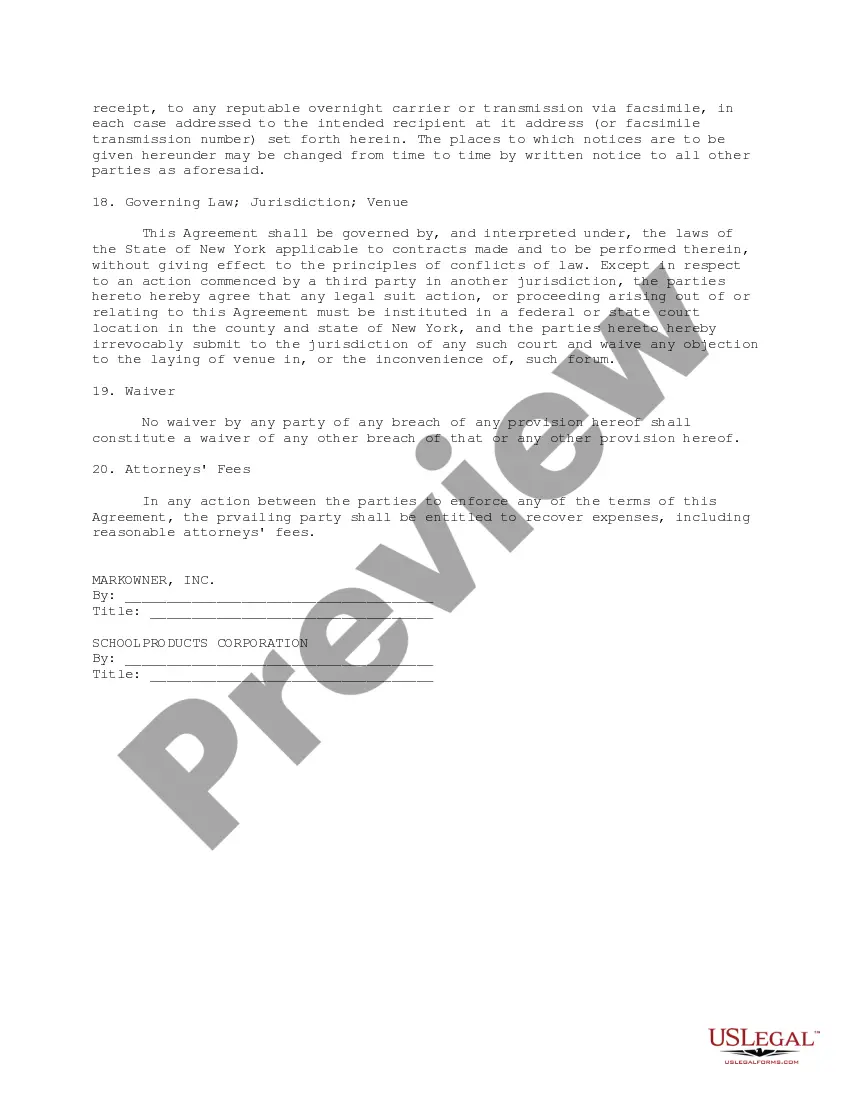
A trademark licensing agreement is a legal contract between a trademark owner and another party that have agreed to use the trademark on preapproved terms decided between the contracting parties.
A trademark licence is an agreement between a trademark owner (the licensor) and another entity (the licensee) in which the licensor permits the licensee to use its trademark for commercial purposes.