Oregon Tax Free Exchange Package
About this form package
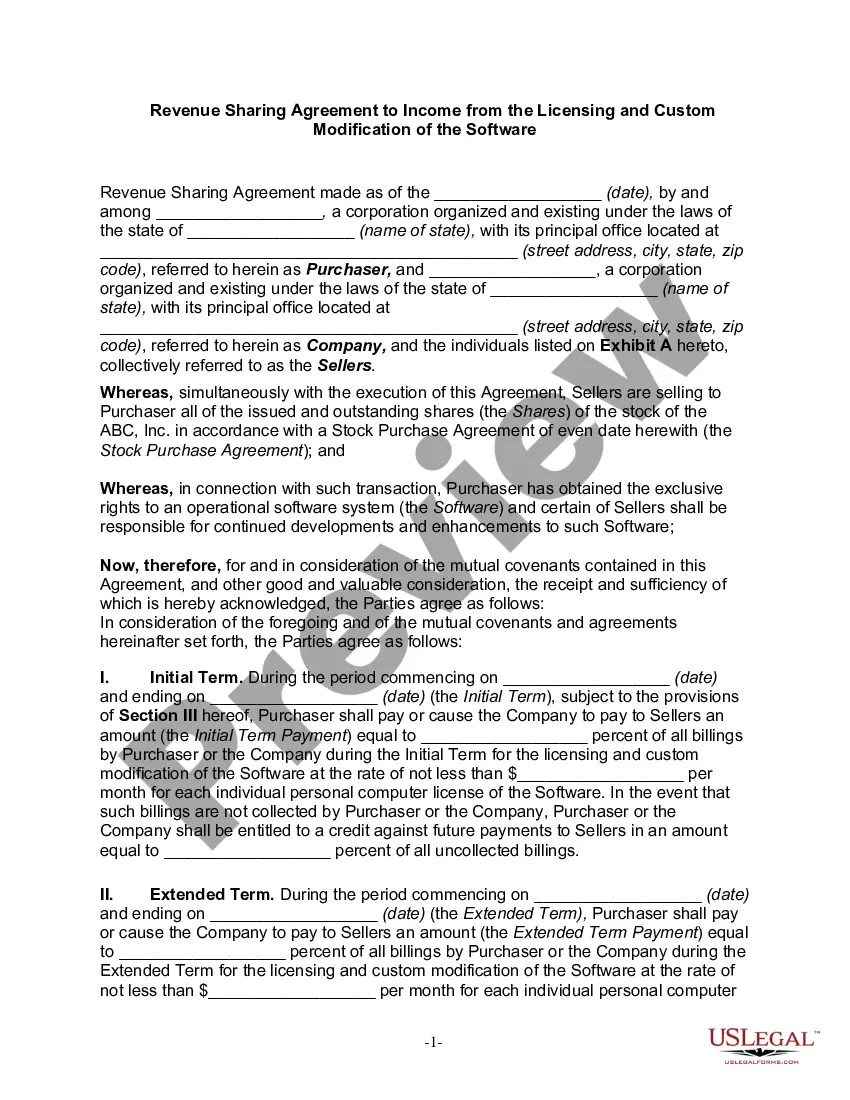
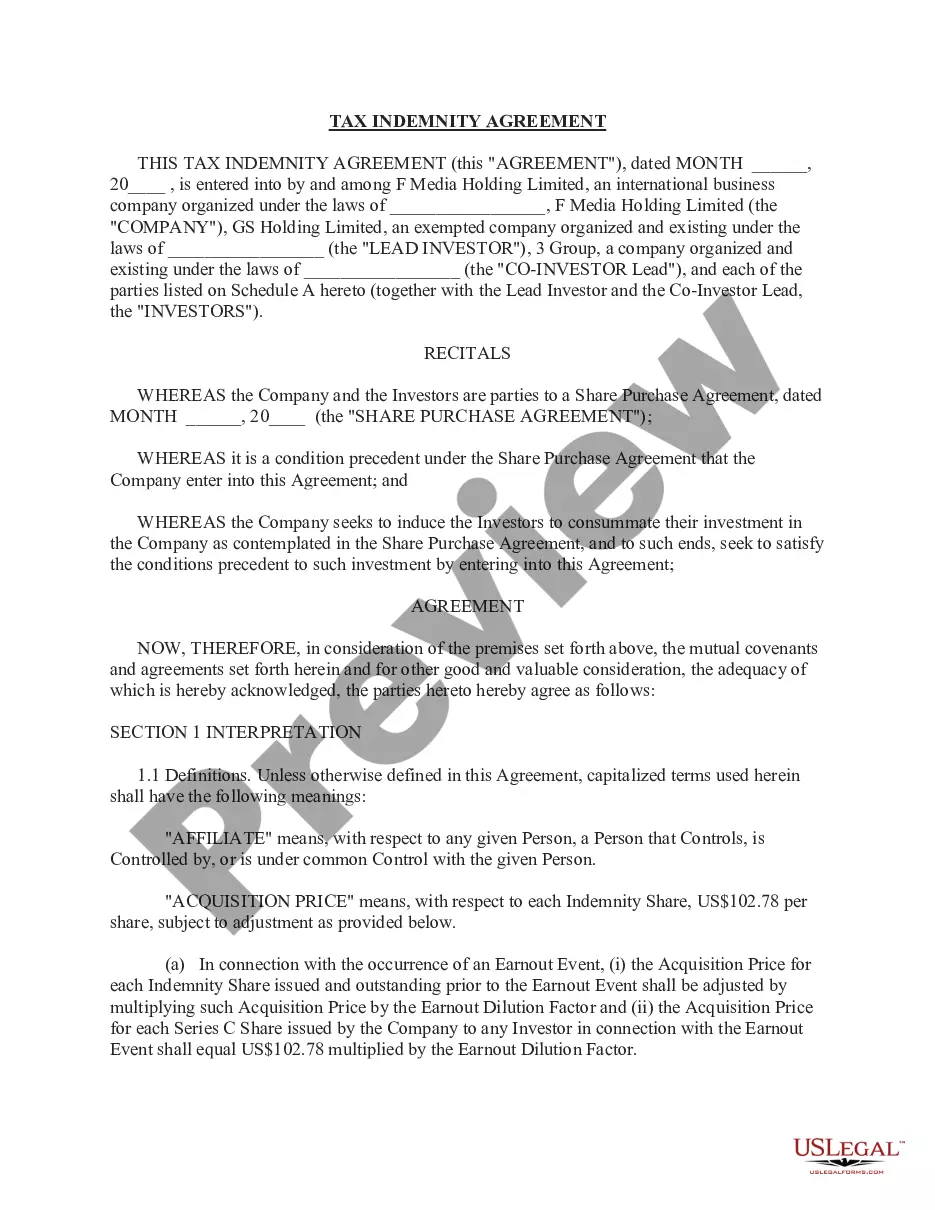
The Oregon Tax Free Exchange Package is a comprehensive collection of essential forms designed to facilitate a tax-free exchange of like-kind property in compliance with IRS regulations. This package stands out by providing not just the exchange agreement but also supporting documents needed for the entire process, ensuring users have everything required to complete their exchanges accurately and efficiently.
Forms included in this package
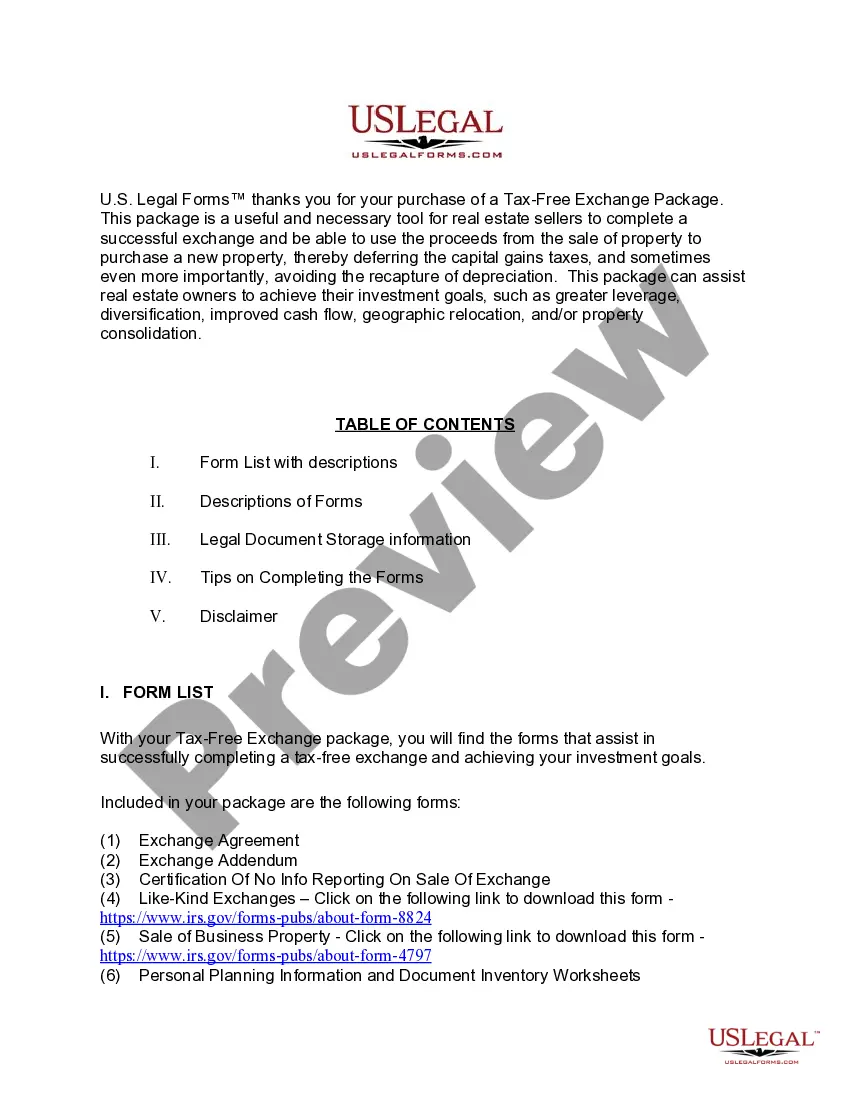
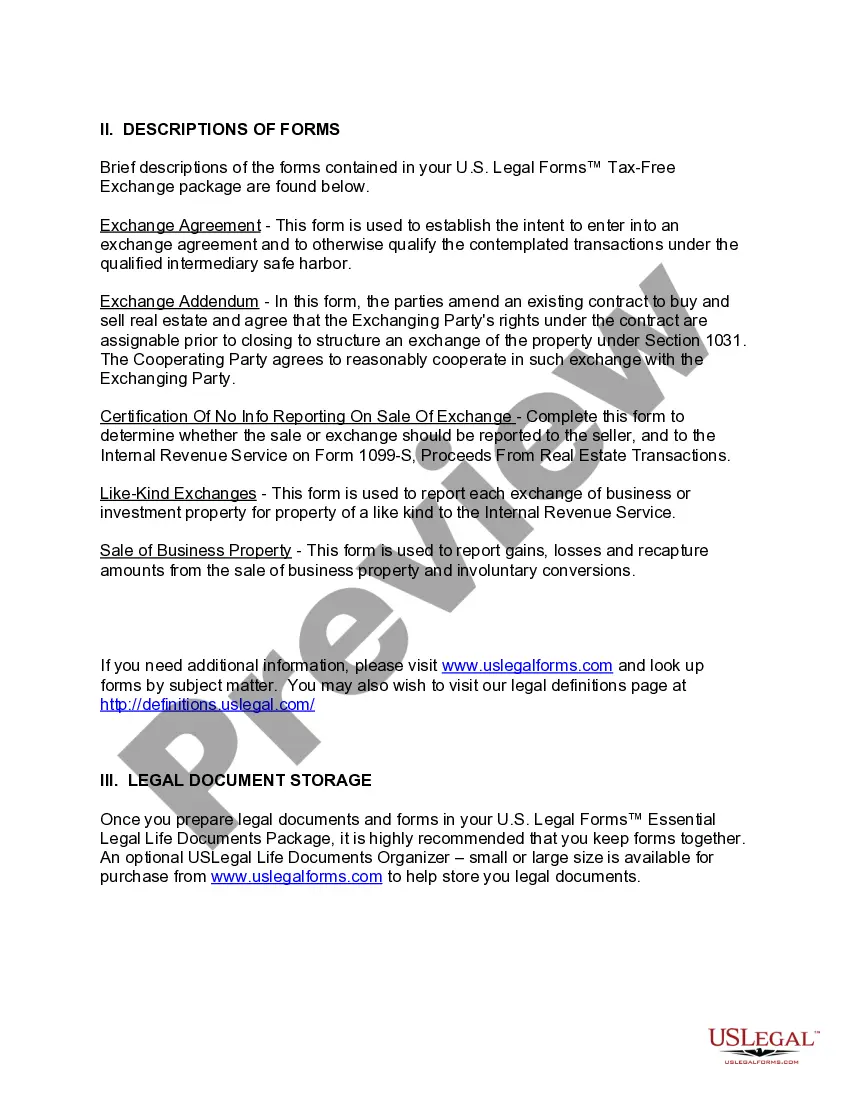
Situations where these forms applies
This package is ideal when you are looking to:
- Exchange real estate or other business properties without incurring immediate tax liabilities.
- Structure an exchange involving properties of similar types under Section 1031 of the IRS code.
- Amend existing contracts to facilitate a property exchange.
- Report exchanges to the IRS properly and maintain compliance with tax laws.
Who can use this document
- Property owners and investors engaged in real estate transactions.
- Businesses looking to exchange assets and defer tax liabilities.
- Real estate professionals and agents facilitating exchanges for clients.
- Individuals seeking to understand and complete like-kind exchanges.
Completing these forms step by step
- Review the included forms to understand their purpose and how they interrelate.
- Identify the parties involved in the exchange and fill in their details on the relevant forms.
- Complete the Exchange Agreement by specifying the properties involved and terms of the exchange.
- Amend existing contracts using the Exchange Addendum if necessary, making sure to have all parties sign.
- Submit the necessary forms to the IRS and retain copies for your records.
Notarization guidance for this package
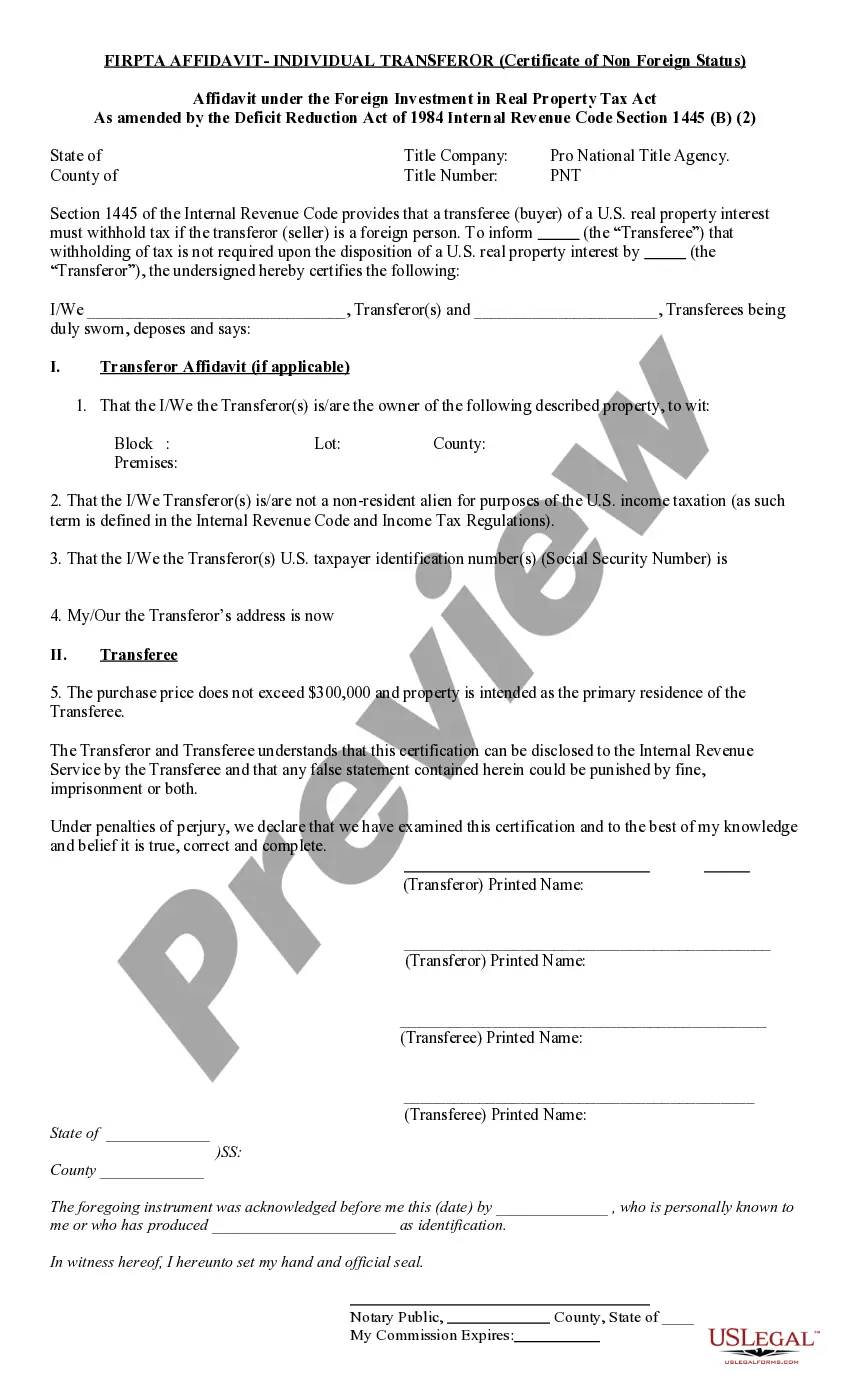
Some forms in this package need notarization to be legally binding. Our online notarization service, powered by Notarize, lets you verify and sign documents remotely through an encrypted video session, available 24/7.
Get your form ready online
Our built-in tools help you complete, sign, share, and store your documents in one place.
Make edits, fill in missing information, and update formatting in US Legal Forms—just like you would in MS Word.
Download a copy, print it, send it by email, or mail it via USPS—whatever works best for your next step.
Sign and collect signatures with our SignNow integration. Send to multiple recipients, set reminders, and more. Go Premium to unlock E-Sign.
If this form requires notarization, complete it online through a secure video call—no need to meet a notary in person or wait for an appointment.
We protect your documents and personal data by following strict security and privacy standards.

Make edits, fill in missing information, and update formatting in US Legal Forms—just like you would in MS Word.

Download a copy, print it, send it by email, or mail it via USPS—whatever works best for your next step.

Sign and collect signatures with our SignNow integration. Send to multiple recipients, set reminders, and more. Go Premium to unlock E-Sign.

If this form requires notarization, complete it online through a secure video call—no need to meet a notary in person or wait for an appointment.

We protect your documents and personal data by following strict security and privacy standards.
Typical mistakes to avoid
- Failing to accurately complete the Exchange Agreement, which could invalidate the exchange.
- Not reporting the exchange timely to the IRS, leading to possible penalties.
- Misunderstanding the definition of like-kind property, resulting in ineligible exchanges.
- Overlooking the need for cooperation from all parties involved in the transaction.
Benefits of completing this package online
- Convenience of accessing and downloading necessary forms at any time.
- Editability of forms allows customization to fit specific transaction details.
- Forms drafted by licensed attorneys ensuring compliance with current laws.
- Secure digital storage options are available for all completed documents.
Looking for another form?



Form popularity
FAQ
Unless an excep- tion applies, if you are deducting investment interest, you must complete federal Form 4952, Investment Interest Expense Deduction. Keep a copy of this form with your tax records; don't include it with your Oregon return.
Investment management fees and financial planning fees could be taken as a miscellaneous itemized deduction on your tax return, like tax preparation fees, but only to the extent that they exceeded 2% of your adjusted gross income (AGI).
These expenses may include mortgage interest, property tax, operating expenses, depreciation, and repairs. You can deduct the ordinary and necessary expenses for managing, conserving and maintaining your rental property.
Scammers send lettersLetters are usually in the form of a fake tax bill or claim an error with your account. Letters from the Department of Revenue will have information that is verifiable through our website using the identification number printed on each letter.
On July 1, 2018, employers must start withholding the statewide transit tax which is one-tenth of 1 percentfrom: Wages of Oregon residents (regardless of where the work is performed). Wages of nonresidents who perform services in Oregon.
A 1031 Exchange is also an important estate planning tool to minimize capital gains tax when the replacement property passes to their heirs. To completely defer taxes, the replacement property must be at a value that's equal to or greater than your original property's sale price.
The tax rate is 0.10 percent. There is no maximum wage base. This tax must be withheld on: (1) wages paid to residents of Oregon regardless where they work; (2) wages paid to nonresidents of Oregon while they are working in Oregon; and (3) periodic pension payments made to Oregon residents.
The IRS allows a deduction for investment interest expenses, which includes any margin interest expense you pay for money borrowed to purchase investments such as stocks and bonds. There are very, very strict rules for this particular investment tax deduction, however.
Investment Fees and ExpensesInvestment fees, custodial fees, trust administration fees, and other expenses you paid for managing your invest- ments that produce taxable income are miscellaneous itemized deductions and are no longer deductible.