Oregon Claim of LienClaim of Lien
Understanding this form
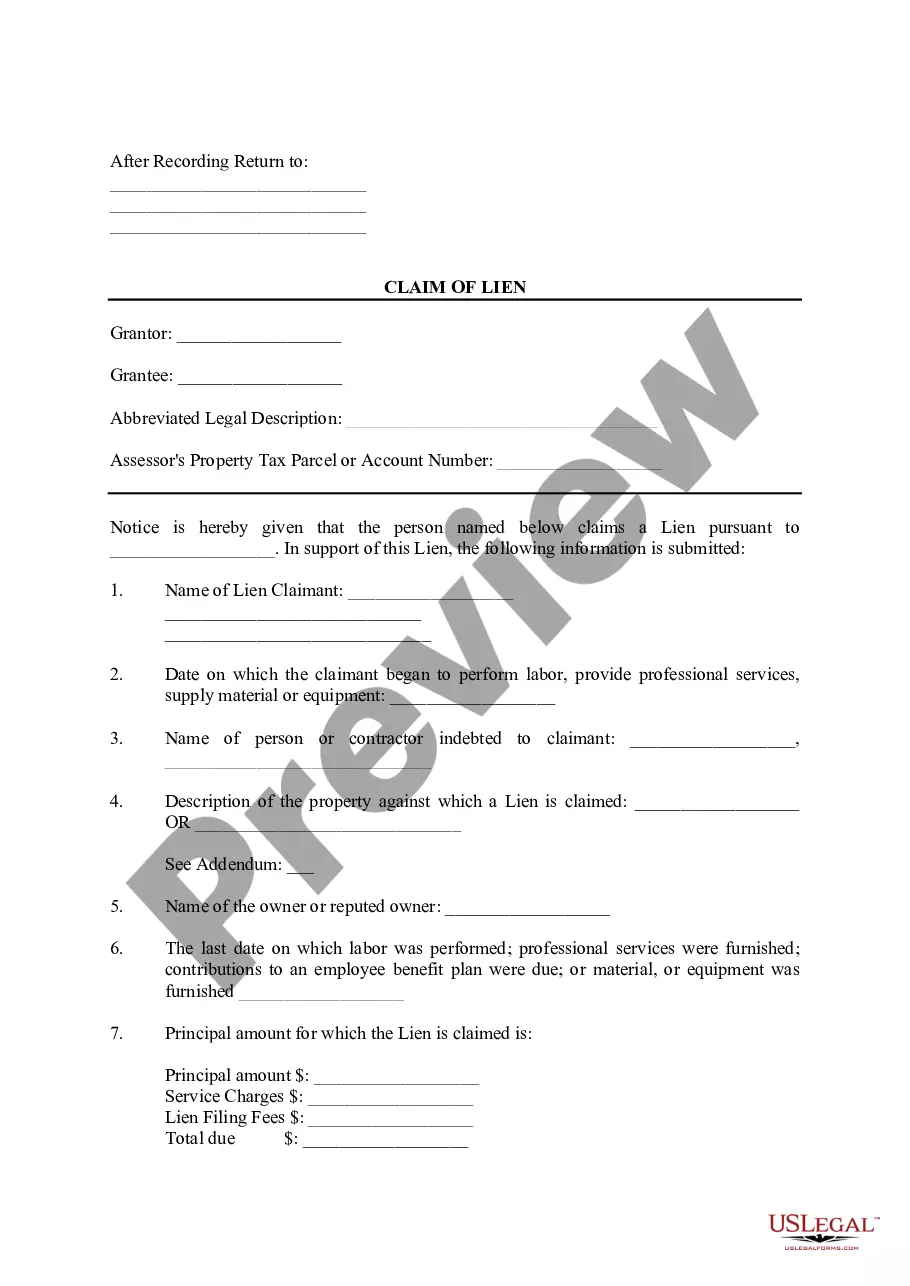
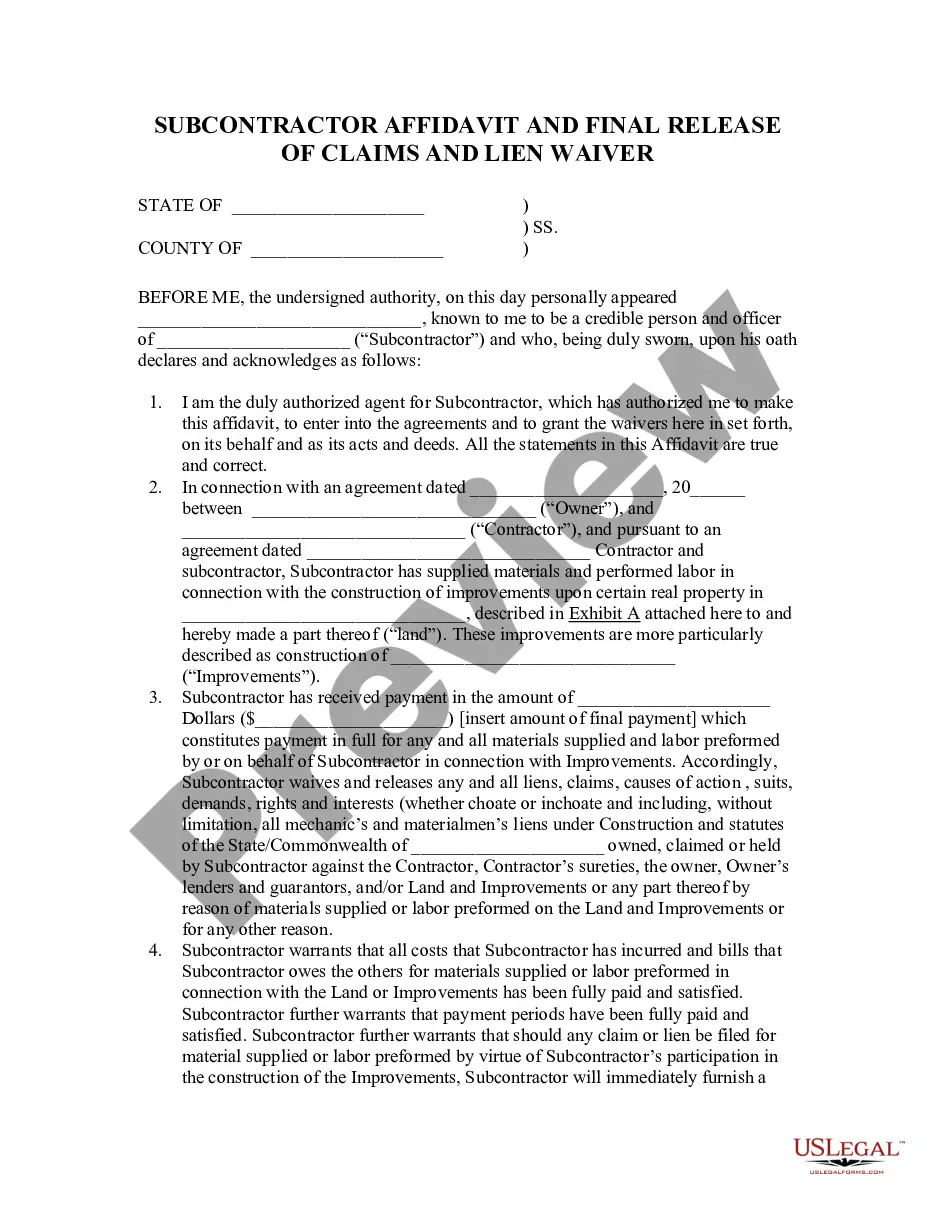
The Claim of Lien is a legal document used by contractors, subcontractors, employees, laborers, workers, or suppliers to file and record a claim against a property when they are owed payment for services rendered or materials provided. This form establishes a legal right to the property until the debt is settled, distinguishing it from other types of claims or notices related to property debts.
Key components of this form
- Grantor and grantee information to identify the parties involved.
- Legal description of the property against which the lien is claimed.
- Date when labor or services began and the last date services were provided.
- Details about the person or contractor who owes money.
- Principal amount claimed, including service charges and filing fees.
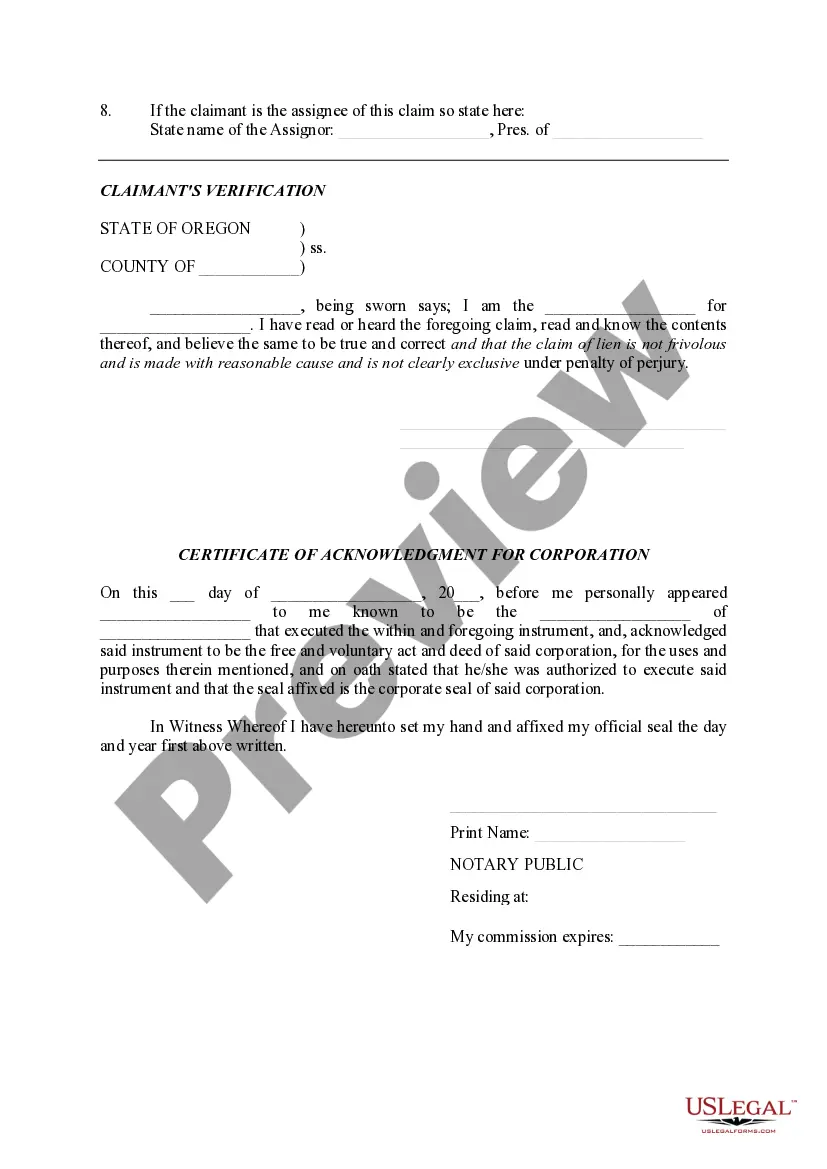
- Claimant's verification, including an acknowledgement section for corporations.
When this form is needed
This form is needed when a contractor, subcontractor, or supplier has provided labor or materials for a project but has not received payment. By filing a Claim of Lien, they can protect their right to get paid by establishing a legal claim against the property involved, which must be settled before the property can be sold or refinanced.
Who can use this document
- Contractors who have not been compensated for completed work.
- Subcontractors or suppliers who have provided materials or services.
- Employees or workers who are owed wages related to a specific project.
- Anyone involved in a labor or service agreement where payment is overdue.
Completing this form step by step
- Identify the grantor and grantee by filling in their names.
- Provide a brief legal description of the property and the tax parcel number.
- Fill in the dates when the work was performed and the last date services were provided.
- List the amount owed, including any additional charges and filing fees.
- Sign the verification section, including the appropriate title and date.
Notarization guidance
Yes, this form must be notarized to be legally valid. US Legal Forms offers an integrated online notarization service that is available 24/7. You can complete your notarization via a secure video call, ensuring convenience and legal equivalence without the need to travel.
Get your form ready online
Our built-in tools help you complete, sign, share, and store your documents in one place.
Make edits, fill in missing information, and update formatting in US Legal Forms—just like you would in MS Word.
Download a copy, print it, send it by email, or mail it via USPS—whatever works best for your next step.
Sign and collect signatures with our SignNow integration. Send to multiple recipients, set reminders, and more. Go Premium to unlock E-Sign.
If this form requires notarization, complete it online through a secure video call—no need to meet a notary in person or wait for an appointment.
We protect your documents and personal data by following strict security and privacy standards.

Make edits, fill in missing information, and update formatting in US Legal Forms—just like you would in MS Word.

Download a copy, print it, send it by email, or mail it via USPS—whatever works best for your next step.

Sign and collect signatures with our SignNow integration. Send to multiple recipients, set reminders, and more. Go Premium to unlock E-Sign.

If this form requires notarization, complete it online through a secure video call—no need to meet a notary in person or wait for an appointment.

We protect your documents and personal data by following strict security and privacy standards.
Typical mistakes to avoid
- Failing to include all required dates, which can invalidate the claim.
- Incorrectly identifying the property or not detailing the legal description properly.
- Omitting signature or not having it properly notarized when required.
Benefits of using this form online
- Convenience of downloading and completing the form at your own pace.
- Editability allows customization to fit your specific situation.
- Access to forms created by licensed attorneys ensuring legal compliance.
Looking for another form?
Form popularity
FAQ
Step 1: Determine if you have the right to file a lien. Step 2: Send notice of right to lien. Step 3: Prepare the lien document. Step 4: File the lien. Step 5: Send notice of lien. Step 6: Secure payment. Step 7: Release the lien.
Step 1: Determine if you have the right to file a lien. Step 2: Send notice of right to lien. Step 3: Prepare the lien document. Step 4: File the lien. Step 5: Send notice of lien. Step 6: Secure payment. Step 7: Release the lien.
Negotiate with the contractor who placed the lien (the "lienor" to remove it. Obtain a lien bond to discharge the lien, or. File a lawsuit to vacate the lien.
In the state of Oregon, a lien must be filed within 75 days after the last day of performing labor or providing materials or within 75 days after the completion of construction.
The short answer to that question is usually no. If somebody owes you money you could sue them, you could obtain a judgment, you can obtain what's called a "judgment lien" and once you get the judgment lien, you can have the court record that against their property including the real estate.
To place a lien, you must first demonstrate that you have a valid debt that has not been paid by the property holder for example if you performed construction work as a contractor or subcontractor at company headquarters and the business did not pay your bill.
Therefore, liens are not officially recorded, and personal property could be sold off to a third party who is unaware of the lien's existence. In most states, judgment liens must be filed by the creditor through the county or state.
Be sure to include the following pieces of information in your lien: The name, company name and address (including county) of the property owner against whom your lien is filed; the same information about the delinquent client, if different; the beginning and ending dates of the unpaid service; the due date for payment