Oregon Support Order Abstract
Overview of this form
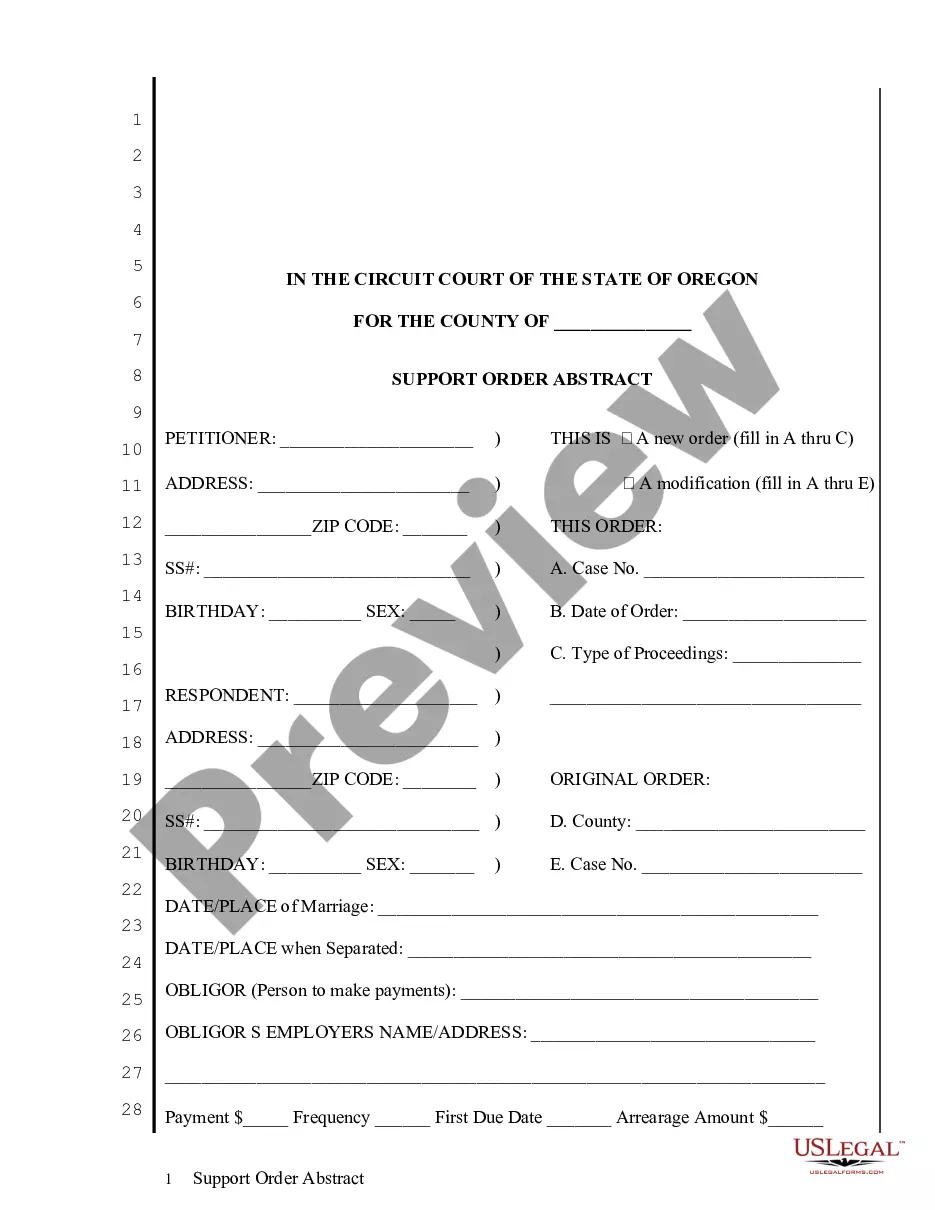
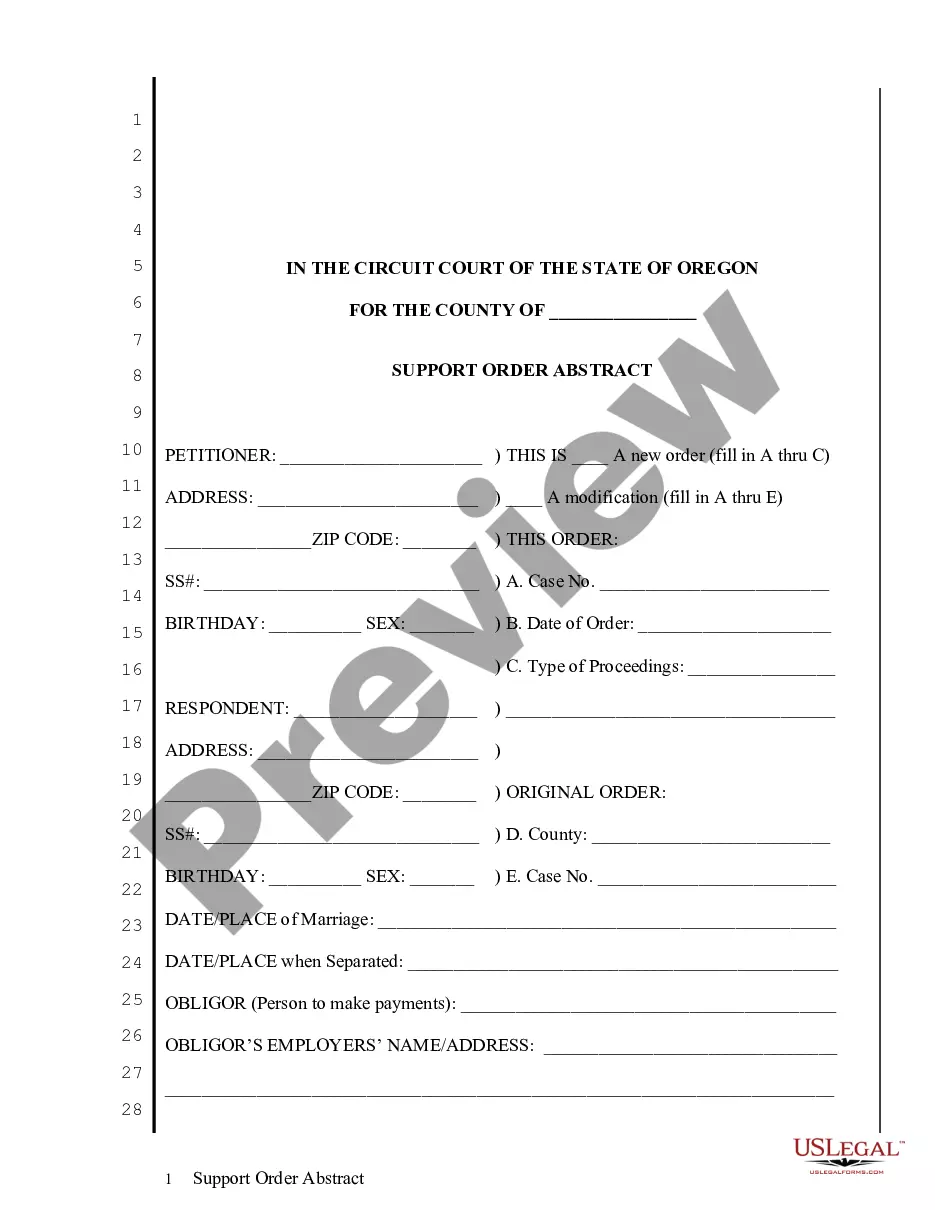
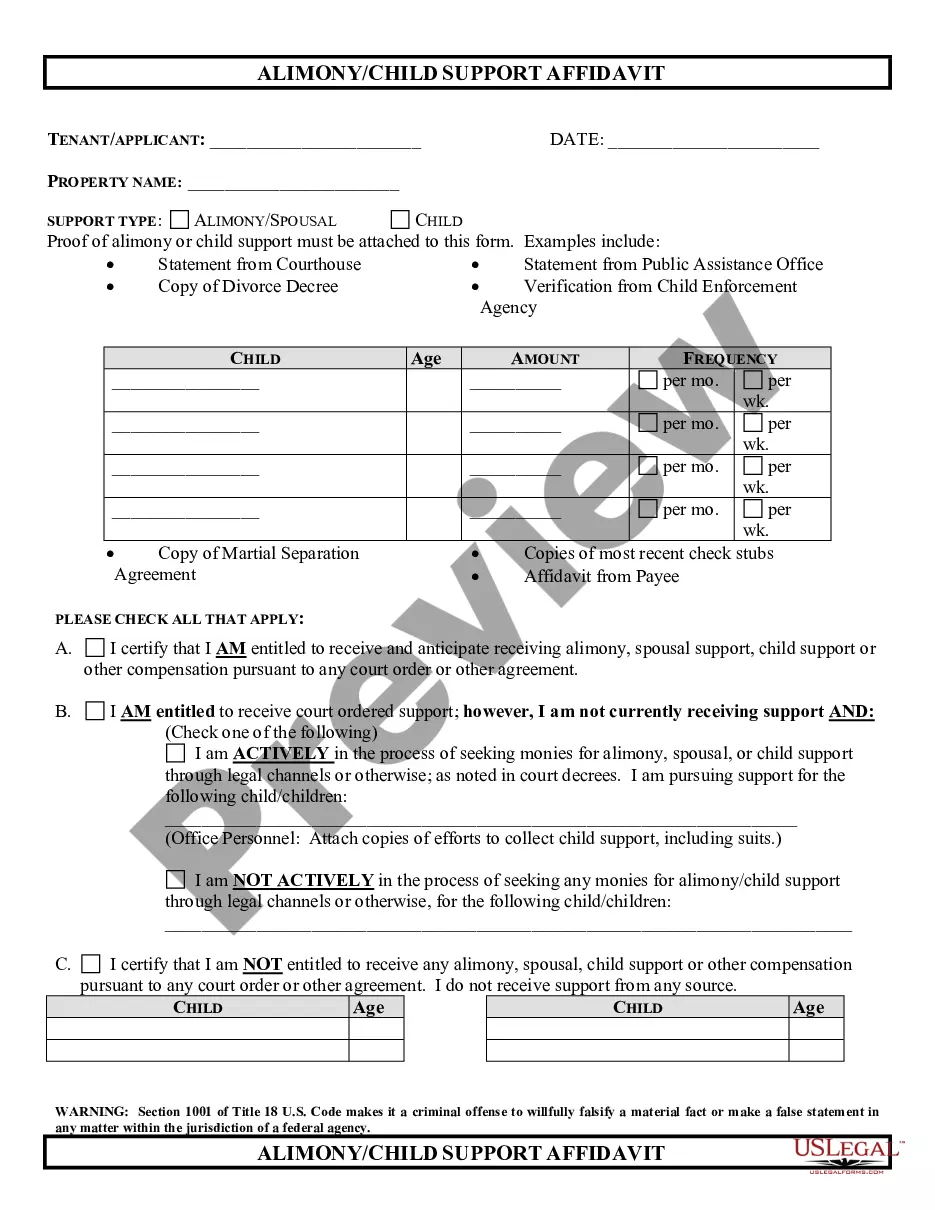
The Support Order Abstract is a legal document used in Oregon for domestic litigation, specifically regarding support orders. This form serves as a summary of the support order issued by the court and is essential for both enforcement and modification processes. Unlike other legal forms, it encapsulates critical details such as the case number, parties involved, and payment obligations, allowing for efficient tracking and management of support payments.
What’s included in this form
- Case number: Identifies the legal case associated with the support order.
- Parties involved: Lists the petitioner and respondent along with their contact information.
- Order details: Specifies whether the order is new or a modification and includes relevant dates.
- Obligor information: Provides details about the person responsible for making support payments.
- Payment terms: Includes the obligation amount, payment frequency, and due dates.
- Beneficiaries: Identifies individuals receiving support, along with their birthdates and relationships to the obligor.

Situations where this form applies
This form is necessary when a court issues a support order in domestic litigation cases. You should use the Support Order Abstract to formally document a new support order or to modify an existing one. It is needed in situations such as divorce, child support, or spousal support cases where financial responsibilities are established by the court.
Who this form is for
- Individuals involved in domestic litigation in Oregon, such as custodial parents seeking child support.
- Respondents required to comply with a support order issued by the court.
- Attorneys representing parties in support order cases.
Instructions for completing this form
- Enter the names and addresses of both the petitioner and respondent.
- Select whether the order is new or a modification and fill in the relevant sections accordingly.
- Provide the case number and details regarding the type of proceeding.
- Identify the obligor and their employer's information, if applicable.
- Specify the obligation amount, payment frequency, and due dates clearly.
- List all beneficiaries along with their relevant details, including relationships and birthdates.
Notarization guidance
This form does not typically require notarization unless specified by local law. However, it is advisable to consult the court or an attorney for any specific requirements regarding notarization in your case.
Get your form ready online
Our built-in tools help you complete, sign, share, and store your documents in one place.
Make edits, fill in missing information, and update formatting in US Legal Forms—just like you would in MS Word.
Download a copy, print it, send it by email, or mail it via USPS—whatever works best for your next step.
Sign and collect signatures with our SignNow integration. Send to multiple recipients, set reminders, and more. Go Premium to unlock E-Sign.
If this form requires notarization, complete it online through a secure video call—no need to meet a notary in person or wait for an appointment.
We protect your documents and personal data by following strict security and privacy standards.

Make edits, fill in missing information, and update formatting in US Legal Forms—just like you would in MS Word.

Download a copy, print it, send it by email, or mail it via USPS—whatever works best for your next step.

Sign and collect signatures with our SignNow integration. Send to multiple recipients, set reminders, and more. Go Premium to unlock E-Sign.

If this form requires notarization, complete it online through a secure video call—no need to meet a notary in person or wait for an appointment.

We protect your documents and personal data by following strict security and privacy standards.
Mistakes to watch out for
- Failing to include the correct case number.
- Not updating the form when modifying an existing support order.
- Leaving out critical information about the obligor or beneficiaries.
- Using outdated versions of the form which may not comply with current legal standards.
Benefits of completing this form online
- Convenient access from anywhere, allowing you to complete the form at your own pace.
- Editable format for easy customization before printing or submission.
- Reliable templates drafted by licensed attorneys to ensure compliance with legal standards.
Looking for another form?
Form popularity
FAQ
There is hope and it is possible to renegotiate a divorce after the divorce is final. If there has been a material change in circumstances, then there are possibilities to renegotiate the divorce settlement.However, the division of property that has been negotiated in a settlement is final and cannot be renegotiated.
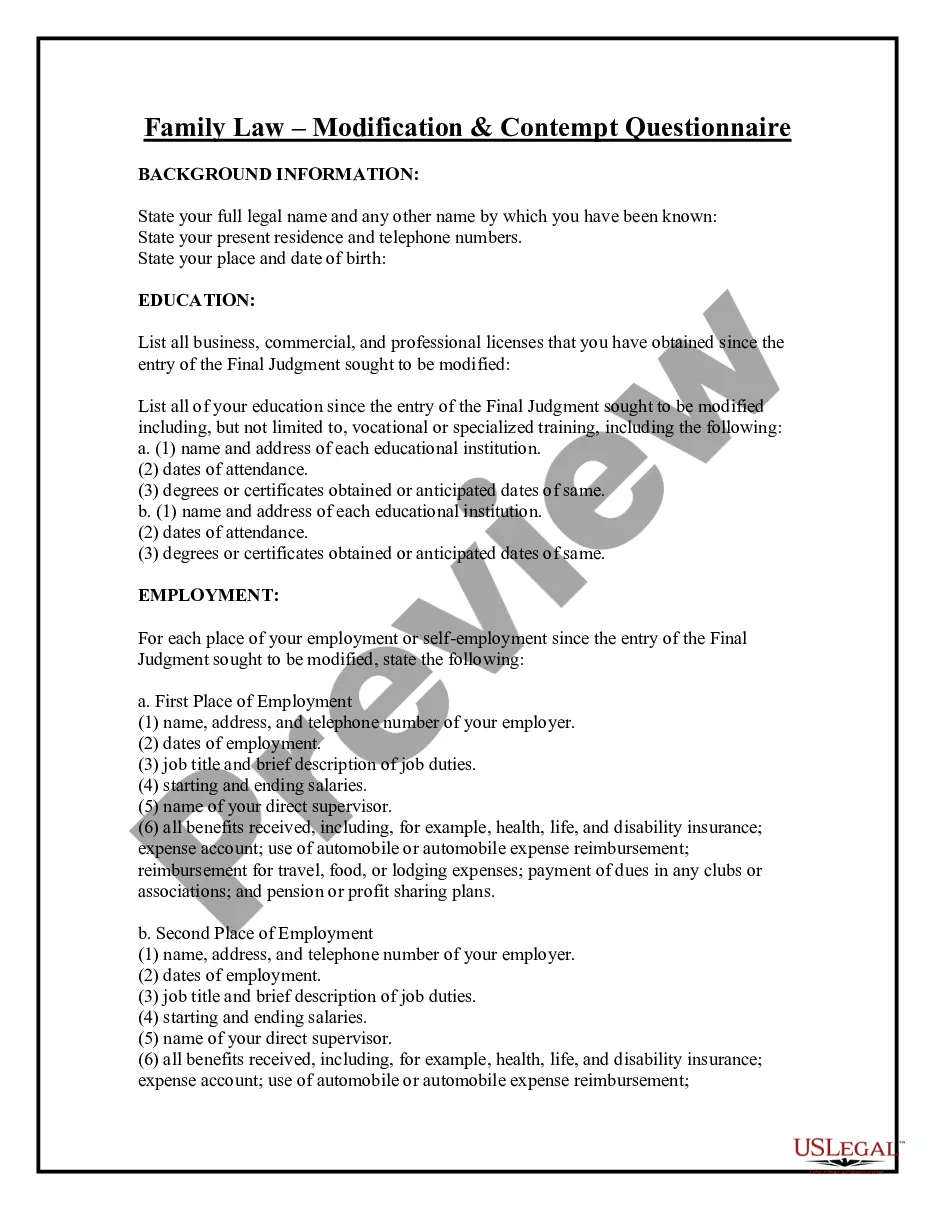
There are two distinct ways in which a divorce judgment can be changed:Appealing the judgment to a California District Court of Appeals. Filing a motion to modify the terms of the decree with the court where the original judgment was filed.
If you and your spouse agreed on a settlement during your original divorce proceedings, appealing the decision can be next to impossible. Your next option is to have your divorce agreements modified. With the help of a family law attorney, you can file a motion to modify the divorce decree in light of new evidence.
Once the divorce decree is signed, you have the right to file an appeal the terms of the divorce or a motion to modify certain specific terms. An appeal must be filed within thirty days of the original judgment. Modifications can be requested at any time after the divorce is finalized.