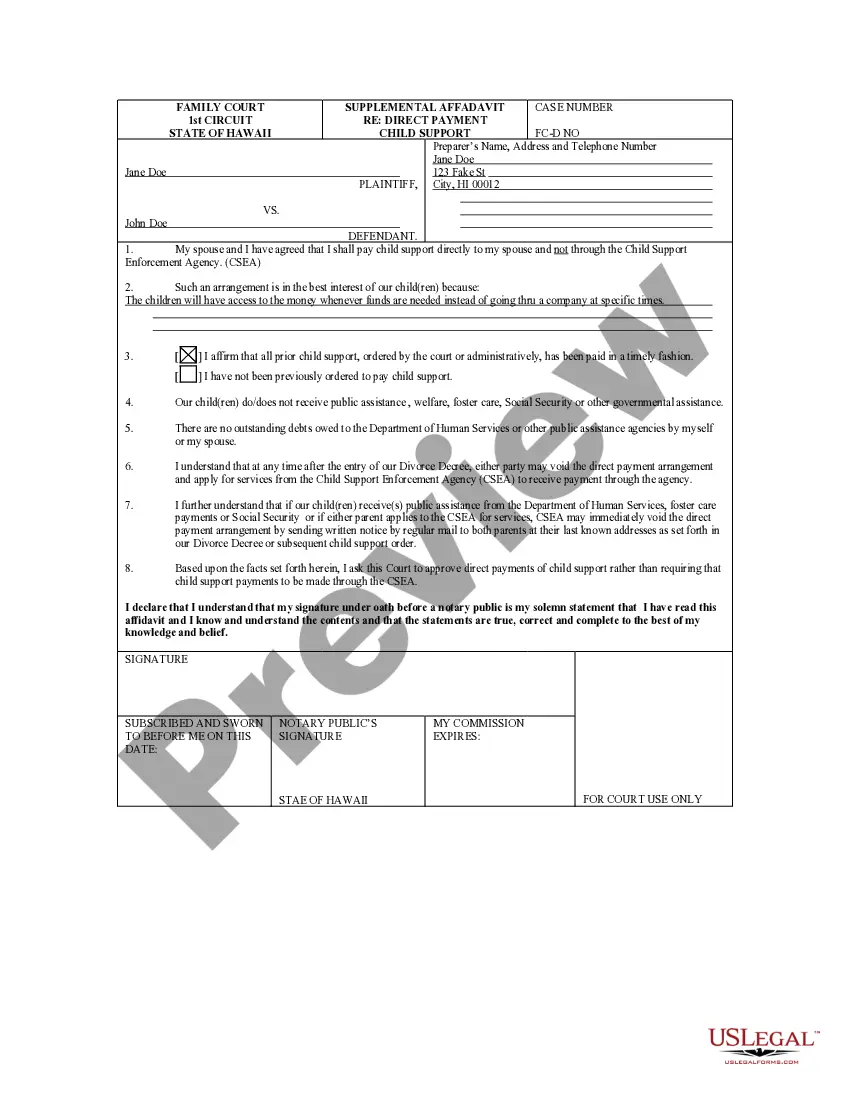
Oregon Trial by Affidavit
Overview of this form
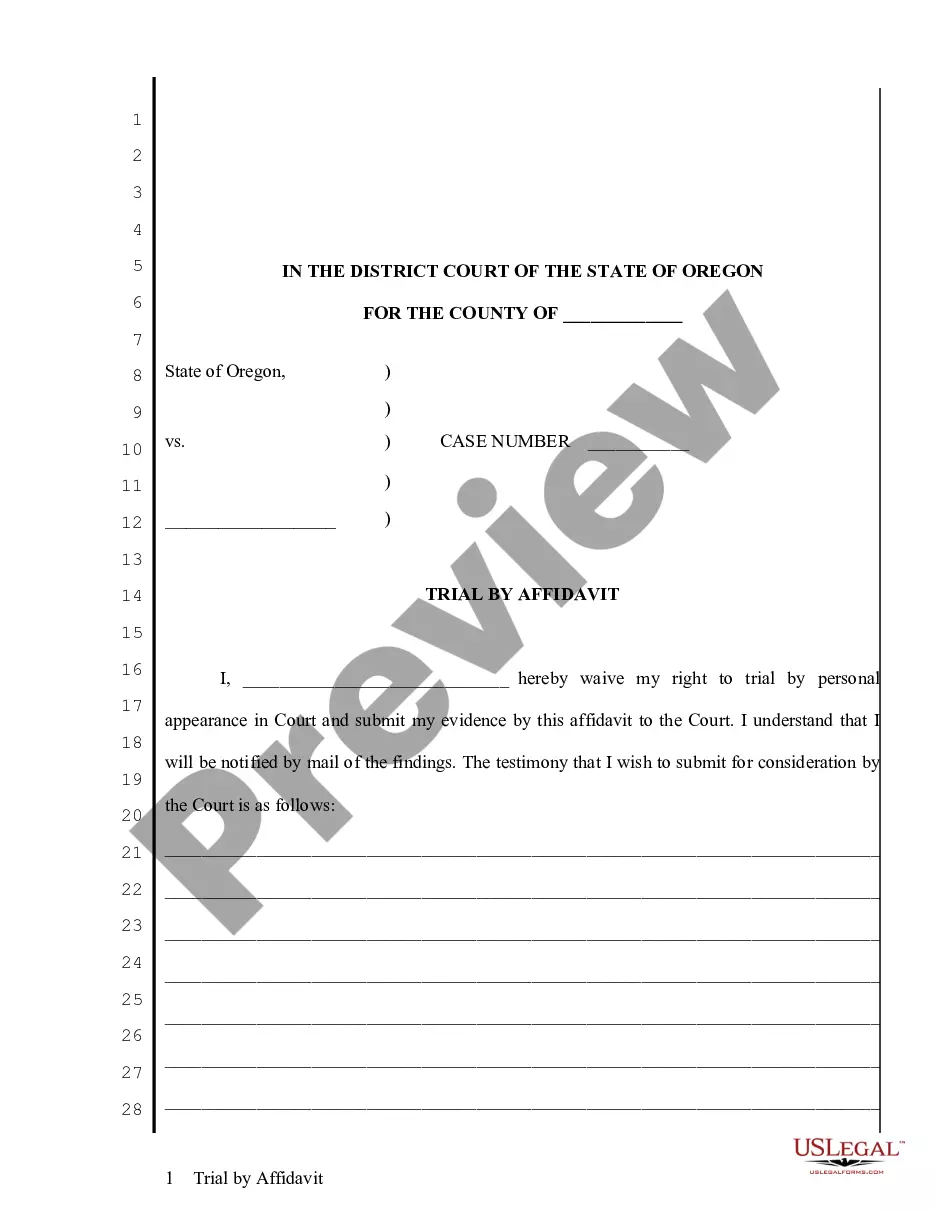
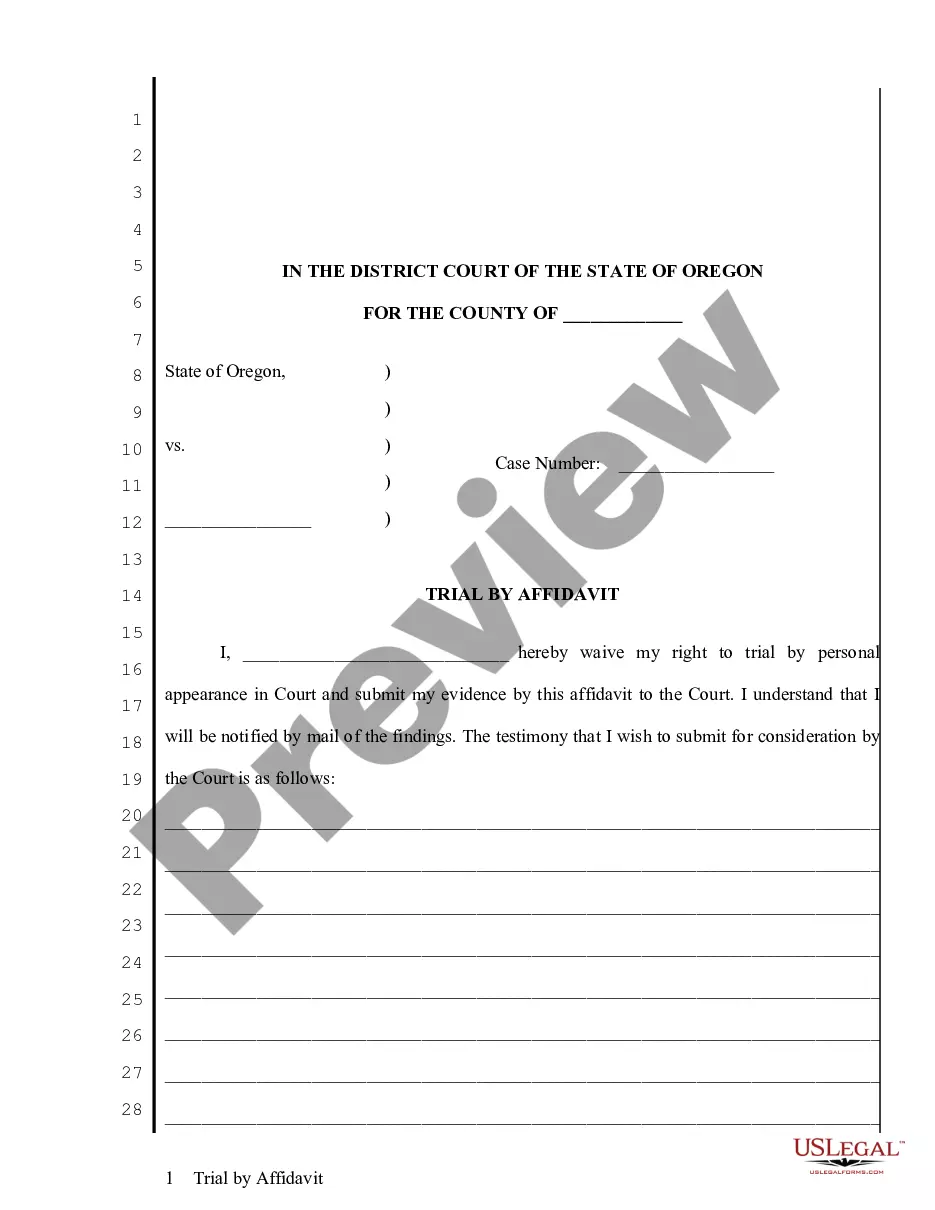
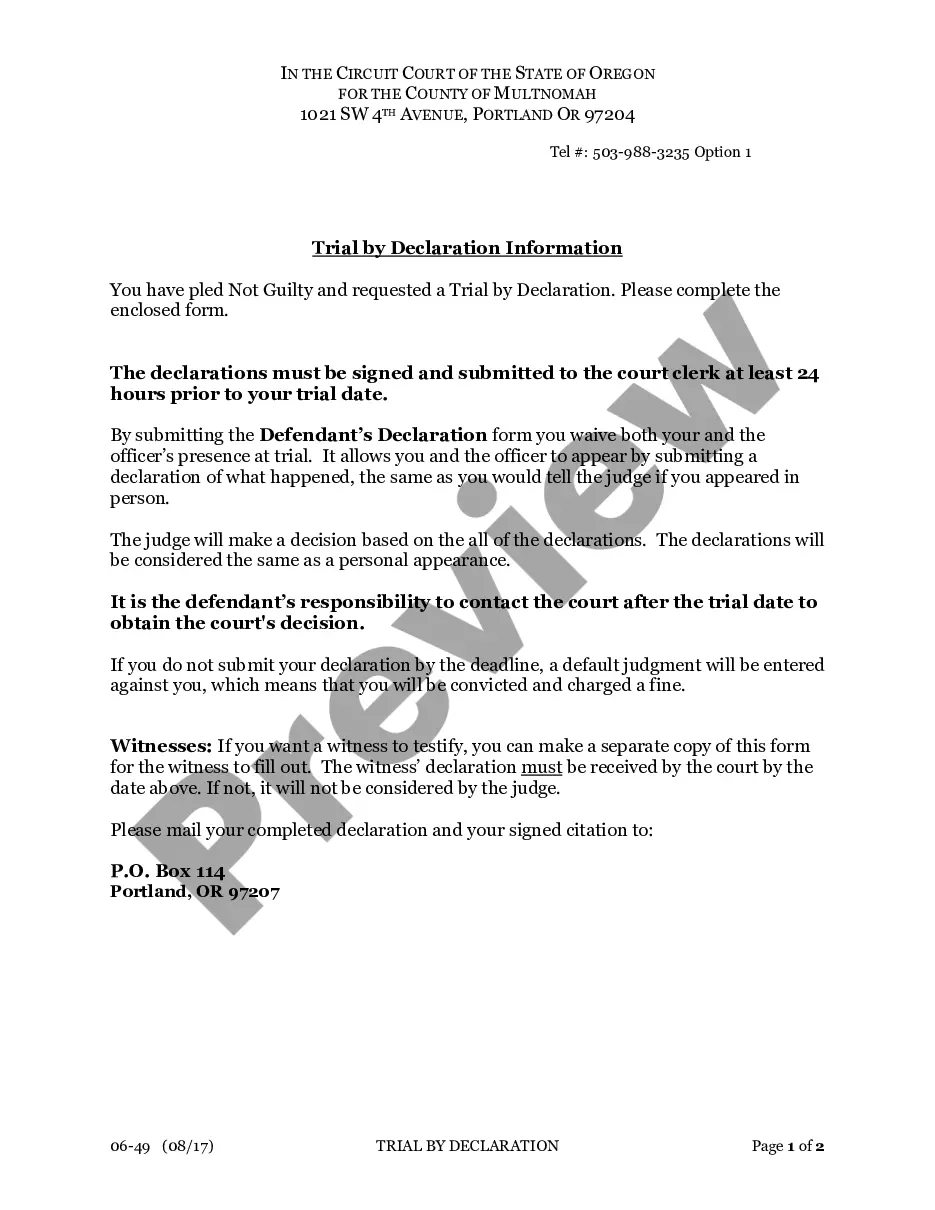
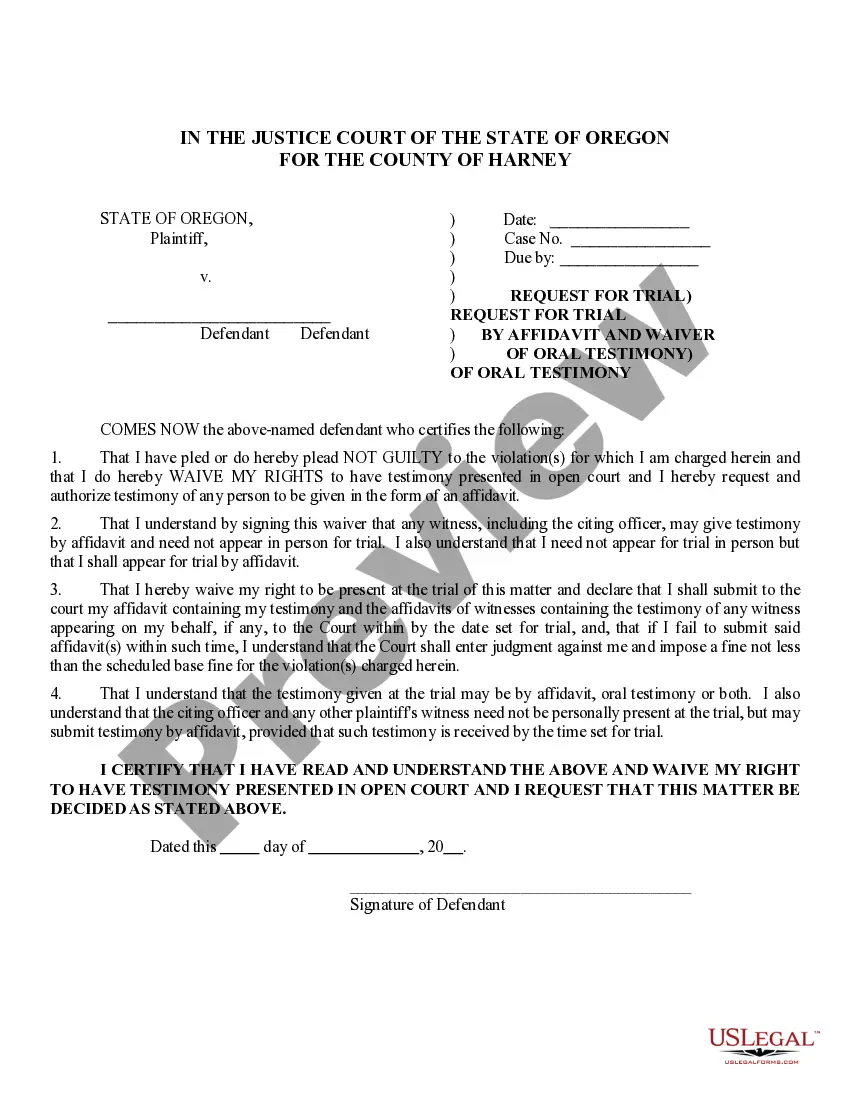
The Trial by Affidavit form allows an individual, known as the affiant, to waive their right to a personal appearance in court. Instead, they submit their evidence through a sworn affidavit. This process differs from traditional trials, allowing individuals to present their case in writing, which can be beneficial for those who may have difficulty attending court in person.
Main sections of this form
- Affiant's declaration to waive personal appearance.
- Space for the affiant to detail the evidence they wish to submit.
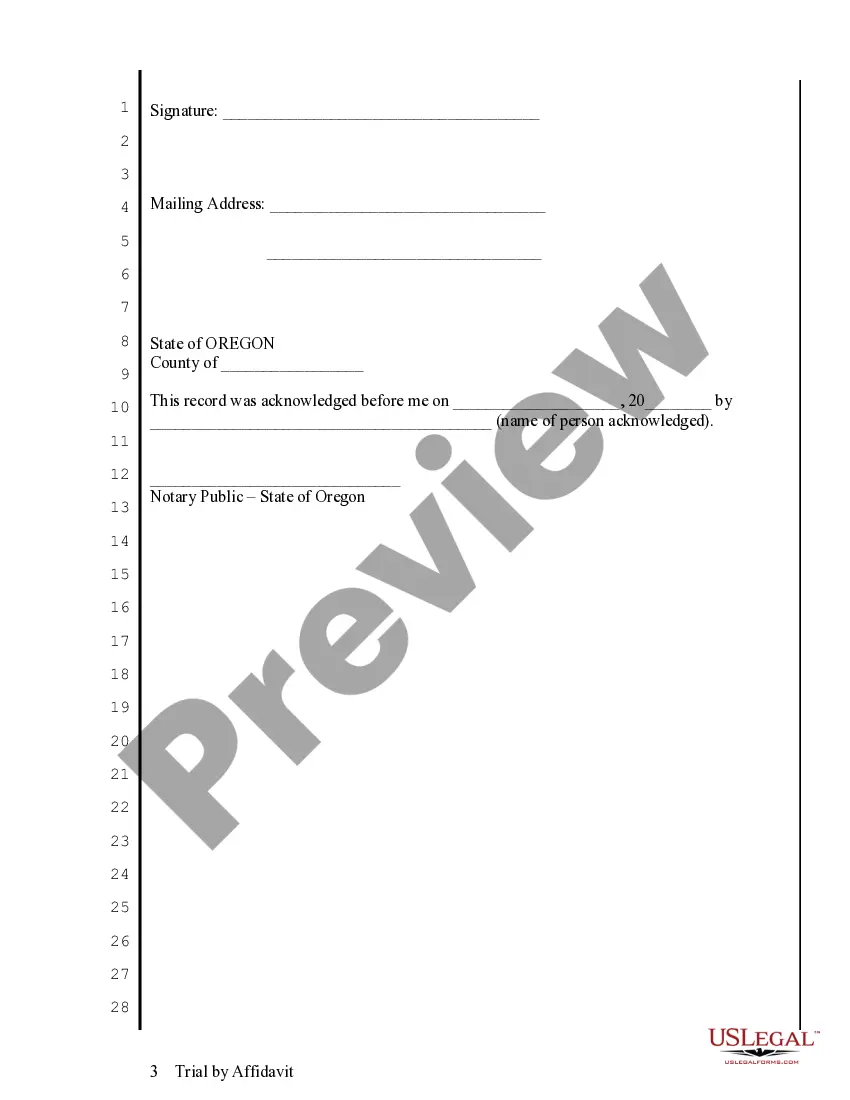
- Signature line for the affiant to confirm their statements.
- Mailing address for notifications from the court.
- Notary public section for validation.


Situations where this form applies
This form is used when an individual prefers to present their case without appearing in court. It is suitable for situations where the affiant cannot attend court due to health reasons, travel constraints, or personal preferences. This form is often utilized in civil matters where evidence needs to be submitted in a written format for the court's consideration.
Intended users of this form
- Individuals involved in civil disputes who wish to present their evidence via affidavit.
- People unable to attend court due to legitimate reasons like health or travel.
- Anyone seeking a more streamlined process to resolve their case without a court appearance.
Steps to complete this form
- Enter the county and case number where applicable.
- Fill in your name as the affiant and provide your mailing address.
- Clearly describe the evidence you wish to submit for the court's consideration.
- Sign the affidavit to certify that the information provided is accurate.
- Have the affidavit witnessed and notarized, if required.
Is notarization required?
To make this form legally binding, it must be notarized. Our online notarization service, powered by Notarize, lets you verify and sign documents remotely through an encrypted video session.
Get your form ready online
Our built-in tools help you complete, sign, share, and store your documents in one place.
Make edits, fill in missing information, and update formatting in US Legal Forms—just like you would in MS Word.
Download a copy, print it, send it by email, or mail it via USPS—whatever works best for your next step.
Sign and collect signatures with our SignNow integration. Send to multiple recipients, set reminders, and more. Go Premium to unlock E-Sign.
If this form requires notarization, complete it online through a secure video call—no need to meet a notary in person or wait for an appointment.
We protect your documents and personal data by following strict security and privacy standards.

Make edits, fill in missing information, and update formatting in US Legal Forms—just like you would in MS Word.

Download a copy, print it, send it by email, or mail it via USPS—whatever works best for your next step.

Sign and collect signatures with our SignNow integration. Send to multiple recipients, set reminders, and more. Go Premium to unlock E-Sign.

If this form requires notarization, complete it online through a secure video call—no need to meet a notary in person or wait for an appointment.

We protect your documents and personal data by following strict security and privacy standards.
Common mistakes
- Failing to provide complete information in the evidence section.
- Not signing the affidavit before submission.
- Omitting to have the document notarized when necessary.
- Providing an incorrect case number or jurisdiction details.
Benefits of using this form online
- Convenience of completing the form at your own pace.
- The ability to easily edit and save information as needed.
- Access to reliable legal templates drafted by licensed attorneys.
Main things to remember
- The Trial by Affidavit allows evidence submission without a court appearance.
- It is particularly useful for straightforward cases or when personal attendance is not feasible.
- Ensure the affidavit is completed correctly and notarized for legal effectiveness.
Looking for another form?
Form popularity
FAQ
In the sentence, the person writing the statement must state that he or she is stating that the information is accurate. (Example: I, Jane Doe, solemnly swear that the contents of this document are true and correct, and that I agree to abide by the terms in this affidavit.)
Using an Affidavit as Admissible Evidence An affidavit is admissible evidence, although some courts may require you to testify to the affidavit or they may consider it hearsay. Since hearsay is not admissible as evidence, your affidavit may not be used for evidence if someone objects to it unless you testify.
5.4 Rule 5 of Chapter XI of the High Court of Karnataka Rules, 1959, provides that affidavits intended for use in the High Courts may be made before and attested by any judicial officer, Magistrate or other presiding officer of civil, criminal or revenue Court; any Registrar or Sub-Registrar of Assurances; the
If you are eligible, you can request a deferral from the court once every 7 years. Essentially, it's your one get out of jail free card for a traffic ticket. Most drivers are eligible for 1 moving violation deferral and 1 non-moving violation deferral every 7 years.
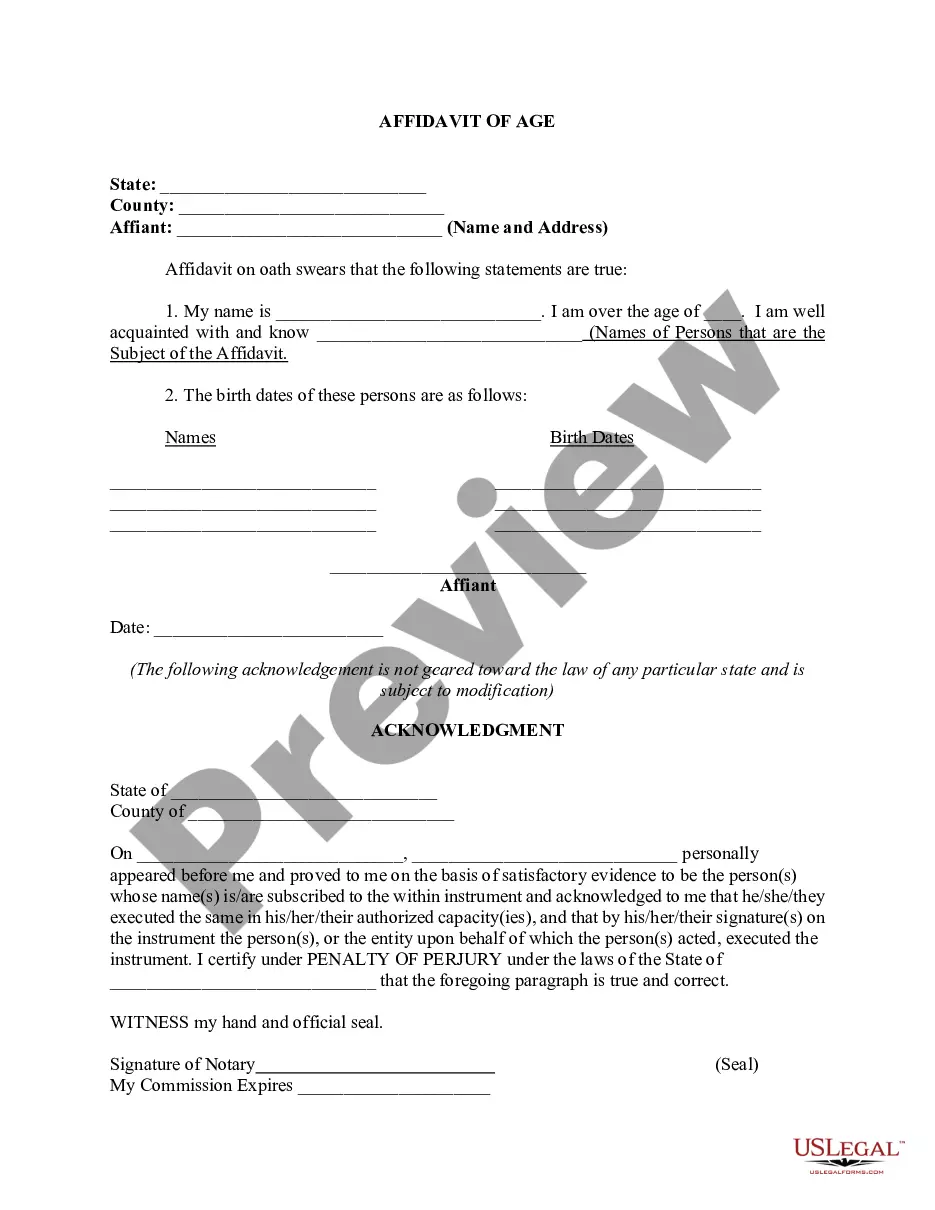
An affidavit is a written statement that is considered made under oath. It is only valid when made voluntarily and without coercion. When you sign an affidavit, you are asserting that the information is true and that you have personal knowledge of the facts contained in the affidavit.
An affidavit is used for the purpose of proving in court that a claim is true, and is typically used in conjunction with witness statements and other corroborating evidence. Through an affidavit, an individual swears that the information contained within is true to the best of their knowledge.
How to Dismiss Your Traffic Ticket. Contact your court to request permission to enroll in traffic school for ticket dismissal. Depending upon the severity of your violation, you may be able to call your court to request permission, or you may need to appear at the court date listed on your citation.
Oregon doesn't use a point tracking system to keep track of traffic violations and levy suspensions. They have the Driver Improvement Program, which simply means that the more tickets a driver gets, the more chances a license will be suspended.
An affidavit, by itself, is inadmissible. One cannot cross examine a piece of paper. It is hearsay without the person who signed it present in court and ready to testify about it as well as authenticate it if necessary. So, an affidavit by itself does not stand up in a court of law.