Oregon Trial by Affidavit - waiver
Understanding this form
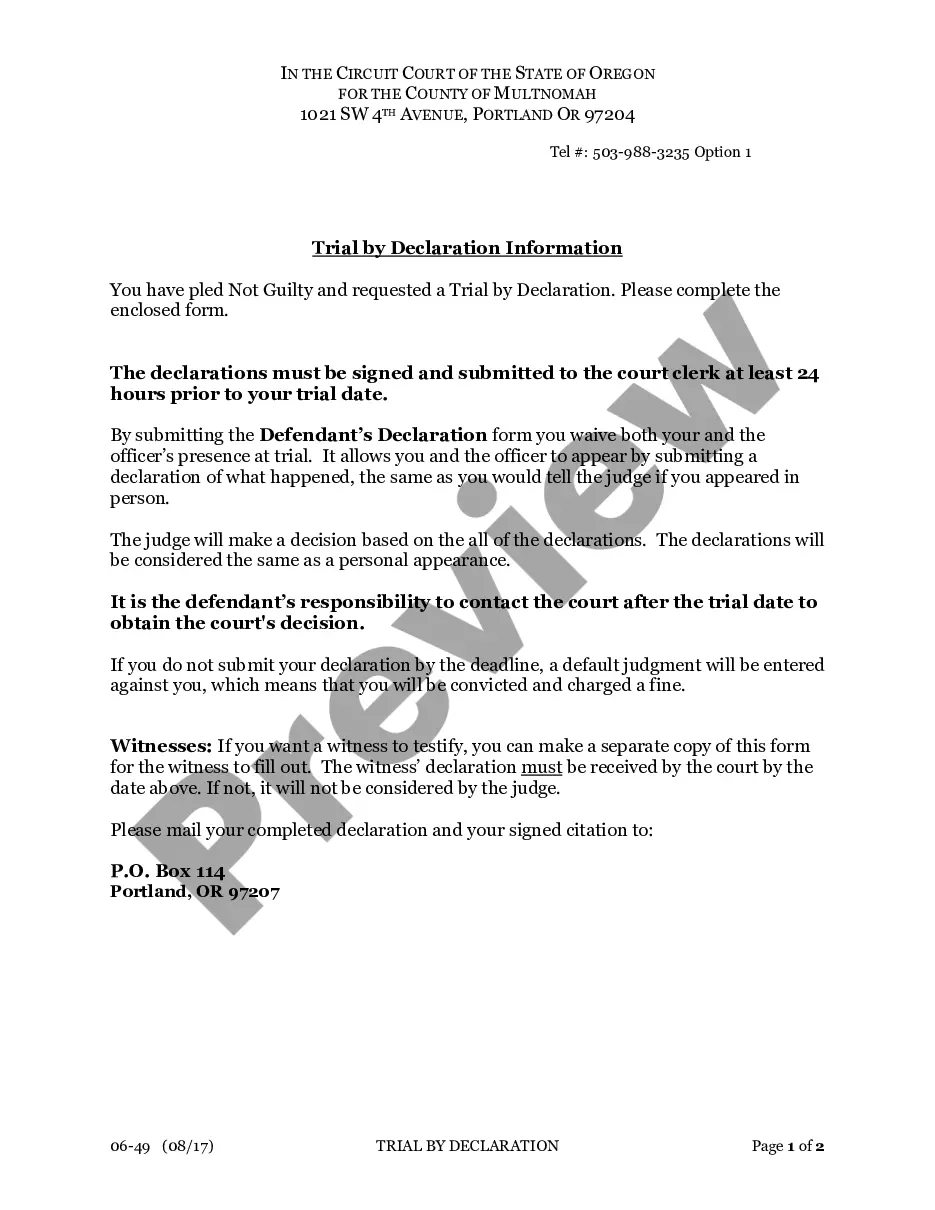
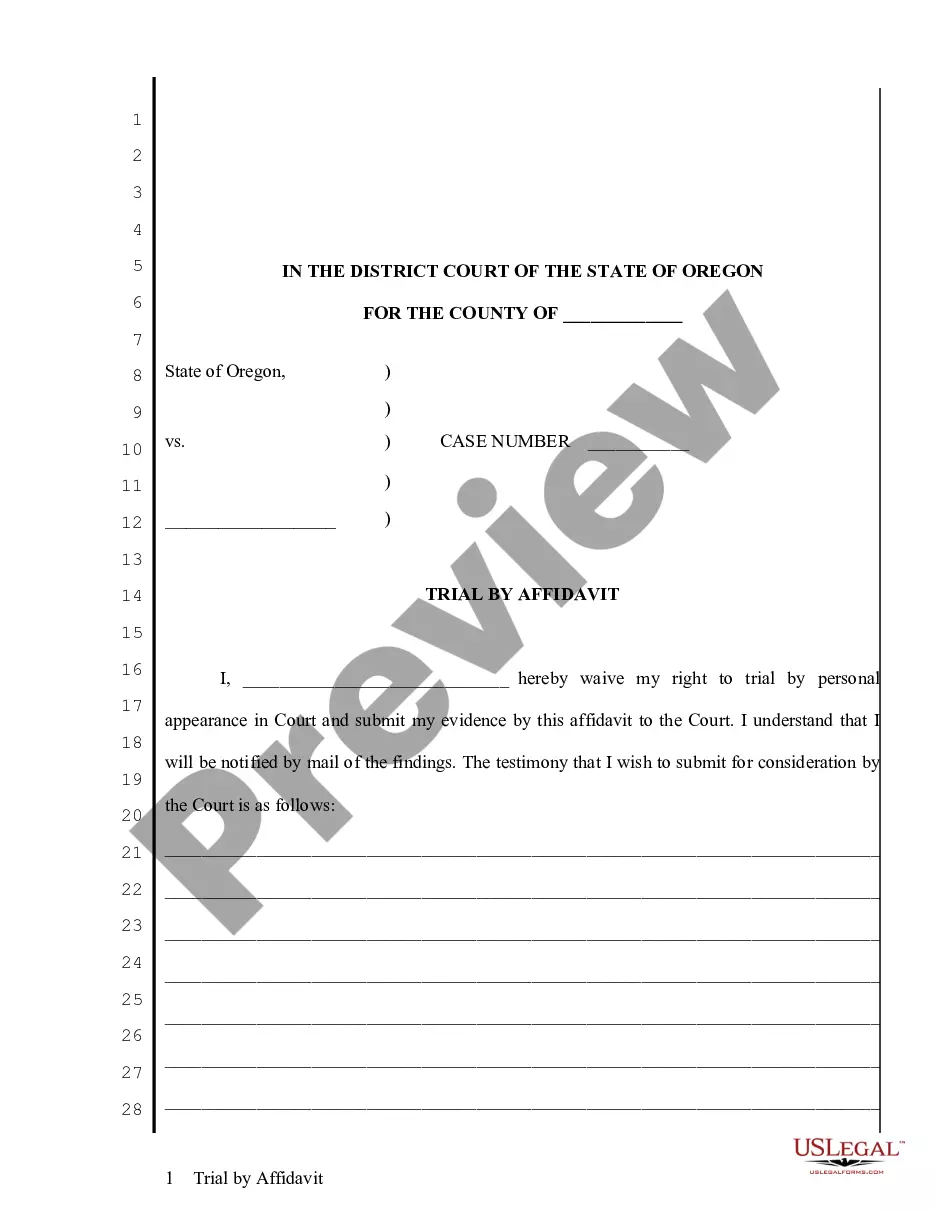
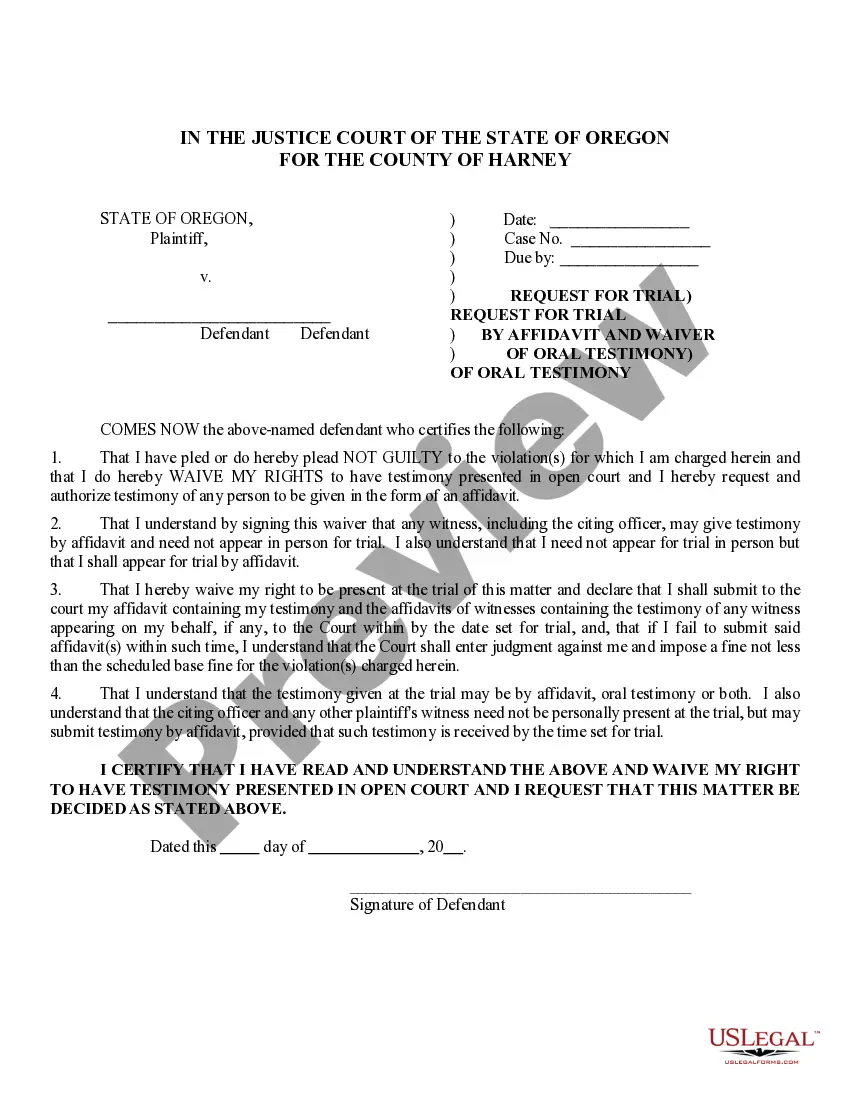
The Trial by Affidavit - Waiver is a legal form used in Oregon that allows defendants to contest a citation without attending a court hearing in person. By submitting this form, both the defendant and the officer involved agree to present their case through written declarations. This process streamlines the legal proceedings, allowing the judge to make a ruling based on the submitted statements instead of personal appearances. It differs from other trial methods as it waives attendance requirements for both parties, making it a convenient option for those who have pleaded not guilty.
What’s included in this form
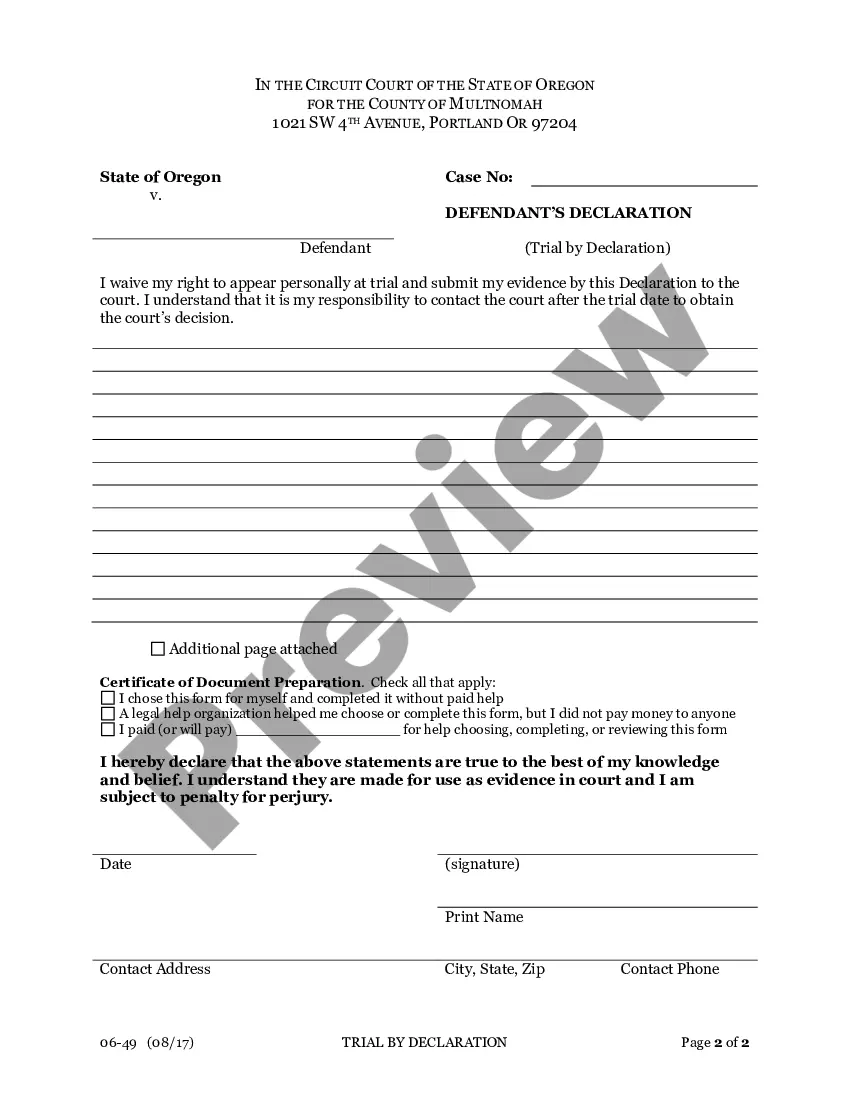
- Defendant's Declaration: A statement where the defendant waives their right to appear in court and presents their evidence.
- Witness Declaration: A section that allows witnesses to submit their own declarations if they wish to provide additional testimony.
- Certificate of Document Preparation: An area for the defendant to confirm how they completed the form, including assistance received.
- Contact Information: Spaces provided for the defendant to include their contact address and phone number.
- Submission Instructions: Clear guidelines on where and when to send the completed forms to the court.
Common use cases
You should use the Trial by Affidavit - Waiver form if you have received a citation and wish to contest it without attending a trial in person. This form is useful when you want to present your case based on written evidence, especially if attending court is inconvenient or impossible. It is typically applied in situations involving minor traffic offenses or other infractions where a personal appearance may not be necessary.
Who this form is for
- Individuals who have received a citation and intend to plead not guilty.
- Defendants who are unable to appear in court for a trial due to scheduling conflicts or other reasons.
- Persons wishing to contest charges without the need for a formal court appearance.
- Those who have documented evidence or witness statements they wish to submit instead of testifying in person.
Steps to complete this form
- Fill out the Defendantâs Declaration section, clearly stating your case and the reason for contesting the citation.
- Include any relevant evidence or statements from witnesses if applicable; make separate copies of the declaration form for each witness.
- Complete the Certificate of Document Preparation to indicate how you filled out the form.
- Provide your contact information, including your address and phone number, to the court.
- Submit the completed form and any additional evidence to the court clerk at least 24 hours before your trial date.
Does this document require notarization?
This form usually doesn’t need to be notarized. However, local laws or specific transactions may require it. Our online notarization service, powered by Notarize, lets you complete it remotely through a secure video session, available 24/7.
Get your form ready online
Our built-in tools help you complete, sign, share, and store your documents in one place.
Make edits, fill in missing information, and update formatting in US Legal Forms—just like you would in MS Word.
Download a copy, print it, send it by email, or mail it via USPS—whatever works best for your next step.
Sign and collect signatures with our SignNow integration. Send to multiple recipients, set reminders, and more. Go Premium to unlock E-Sign.
If this form requires notarization, complete it online through a secure video call—no need to meet a notary in person or wait for an appointment.
We protect your documents and personal data by following strict security and privacy standards.

Make edits, fill in missing information, and update formatting in US Legal Forms—just like you would in MS Word.

Download a copy, print it, send it by email, or mail it via USPS—whatever works best for your next step.

Sign and collect signatures with our SignNow integration. Send to multiple recipients, set reminders, and more. Go Premium to unlock E-Sign.

If this form requires notarization, complete it online through a secure video call—no need to meet a notary in person or wait for an appointment.

We protect your documents and personal data by following strict security and privacy standards.
Avoid these common issues
- Failing to submit the declaration at least 24 hours before the trial date, which can lead to a default judgment.
- Not checking for all required signatures, including the defendant's.
- Omitting witness declarations or failing to complete them correctly.
- Forgetting to include contact information, which could prevent the court from reaching you with the decision.
Advantages of online completion
- Convenience of being able to fill out and download the form from anywhere, at any time.
- Editability allows you to customize the form easily without the need for printed copies.
- Access to professionally drafted legal forms ensures compliance with local laws.
- Quick submission process to meet court deadlines, reducing the risk of penalties.
Looking for another form?
Form popularity
FAQ
A quitclaim deed transfers title but makes no promises at all about the owner's title.A person who signs a quitclaim deed to transfer property they do not own results in no title at all being transferred since there is no actual ownership interest. The quitclaim deed only transfers the type of title you own.
A release form or a waiver is simply a legal document containing an agreement between two parties.A waiver is an essential document that informs participants of the risks involved in certain activities and also protects you from liability.
A waiver is not complete until it includes the signatures of both the event host and business owner and that of the participant. The date should also be included alongside the signatures. You may also include a signature line for a witness if necessary.
Get help. Writing a waiver should not be complicated. Use the correct structure. Proper formatting. Include a subject line. Include a caution! Talk about the activity risks. Do not forget an assumption of risk. Hold harmless.
A waiver is the voluntary relinquishment or surrender of some known right or privilege.In some cases, parties may sign a "non-waiver" contract which specifies that no rights are waived, particularly if a person's actions may suggest that rights are being waived.
Quitclaim deeds are most often used to transfer property between family members. Examples include when an owner gets married and wants to add a spouse's name to the title or deed, or when the owners get divorced and one spouse's name is removed from the title or deed.
The quitclaim deed is a legal document (deed) used to transfer interest in real estate from one person or entity (grantor) to another (grantee).Title companies may require a person to execute a quitclaim document in order to clear up what they consider to be a cloud on the title prior to issuing title insurance.
A quitclaim deed is dangerous if you don't know anything about the person giving you the property. You should be sure that a person actually has rights to a property before signing it over with a quitclaim deed.
A quitclaim deed releases a person's interest in a property without stating the nature of the person's interest or rights, and with no warranties of that person's interest or rights in the property.