Oregon Heirship Affidavit - Descent

About this form
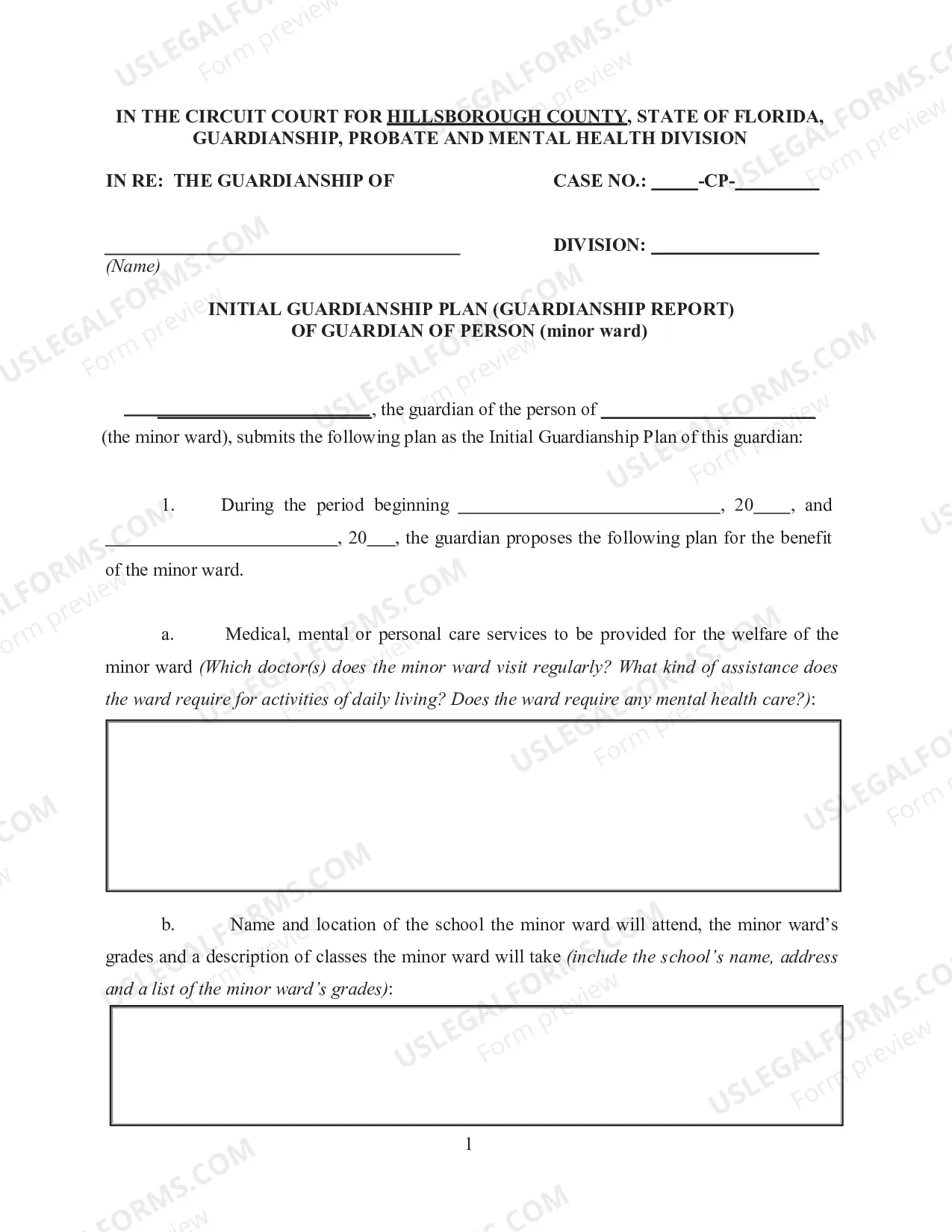
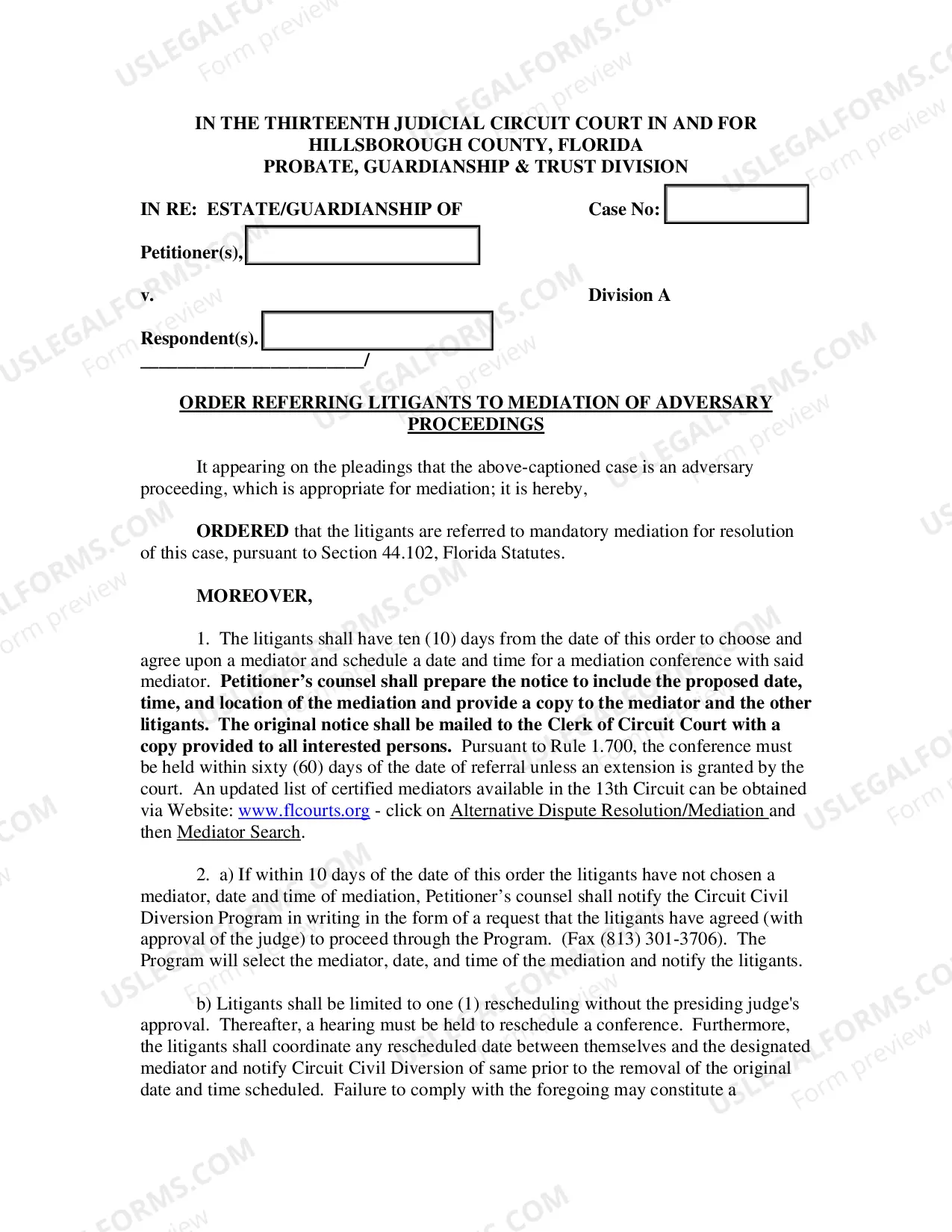
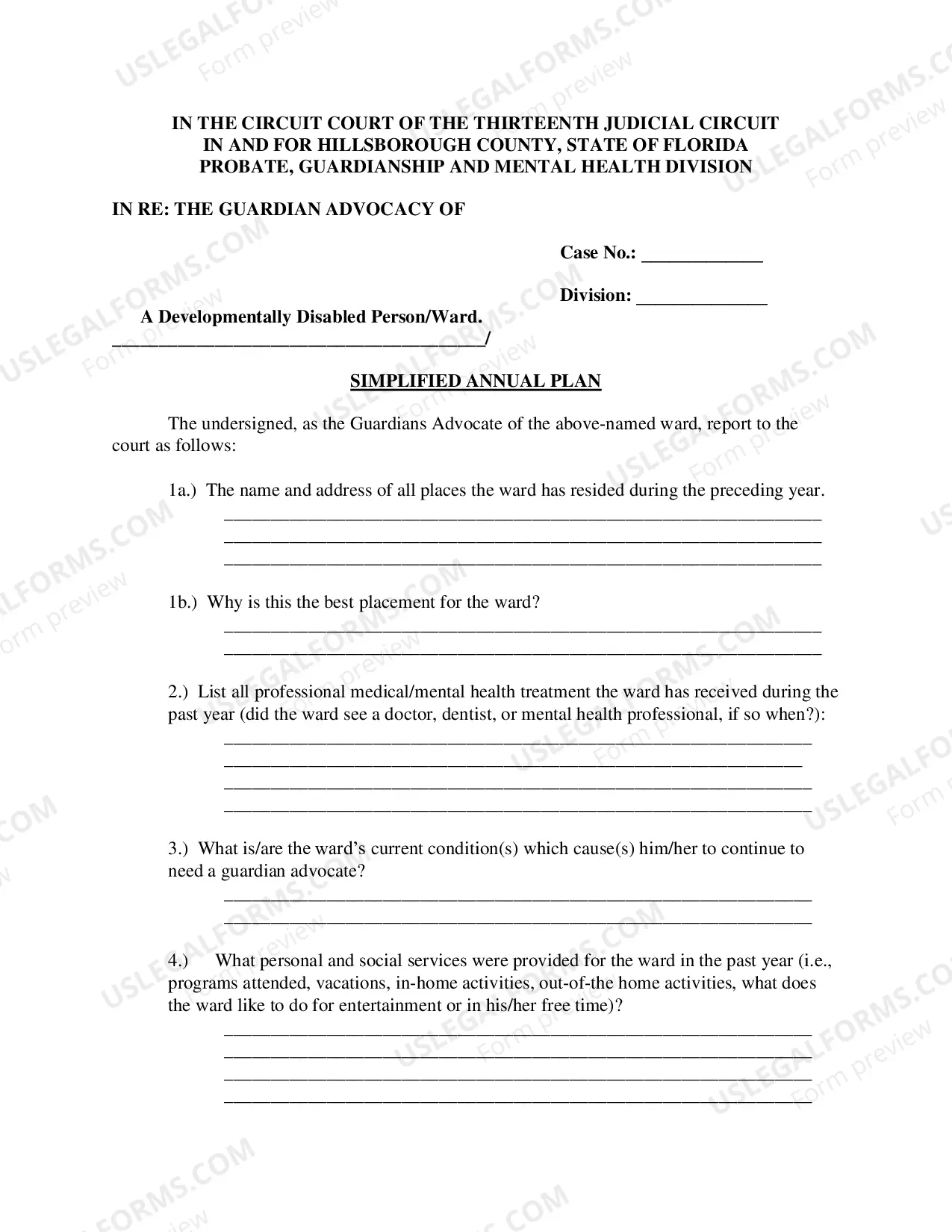
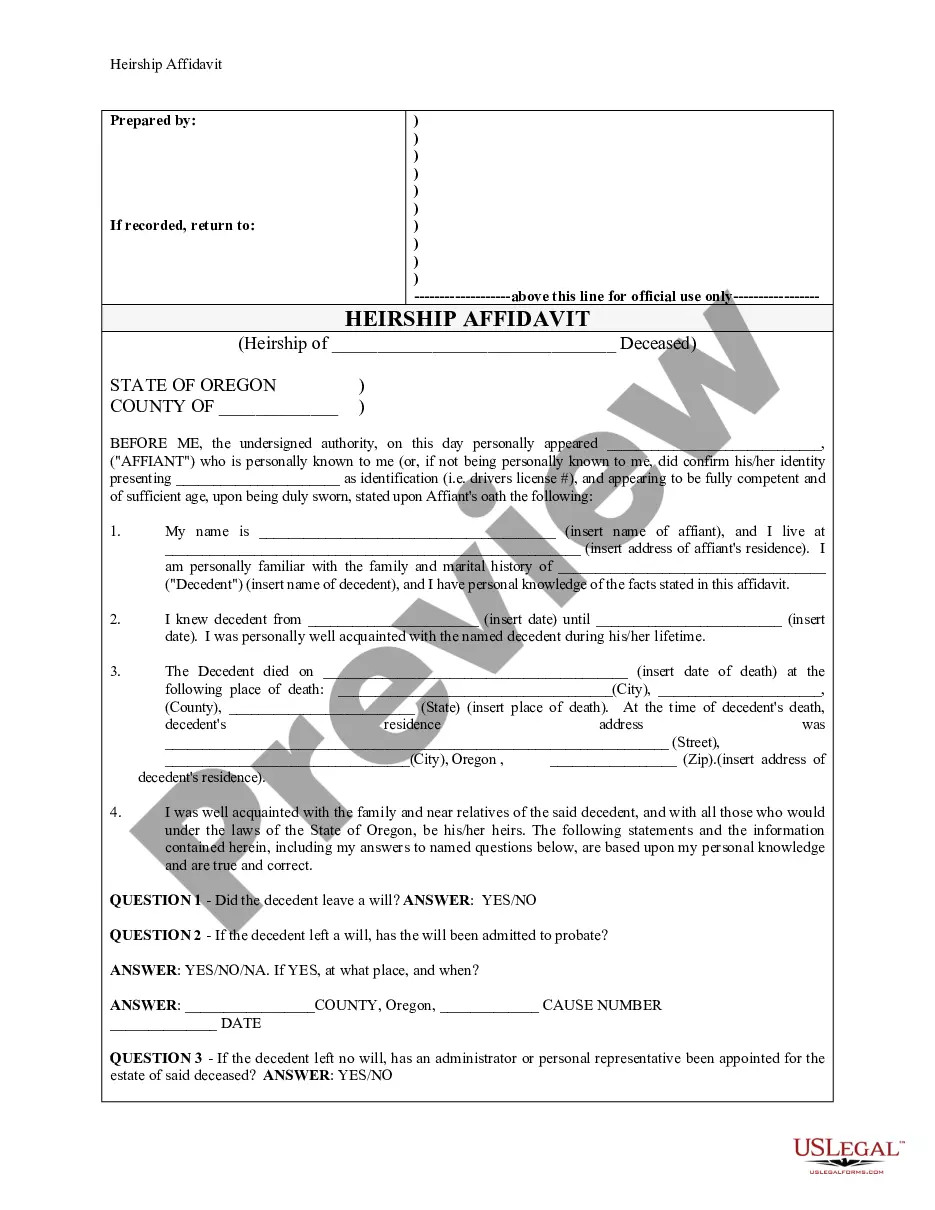
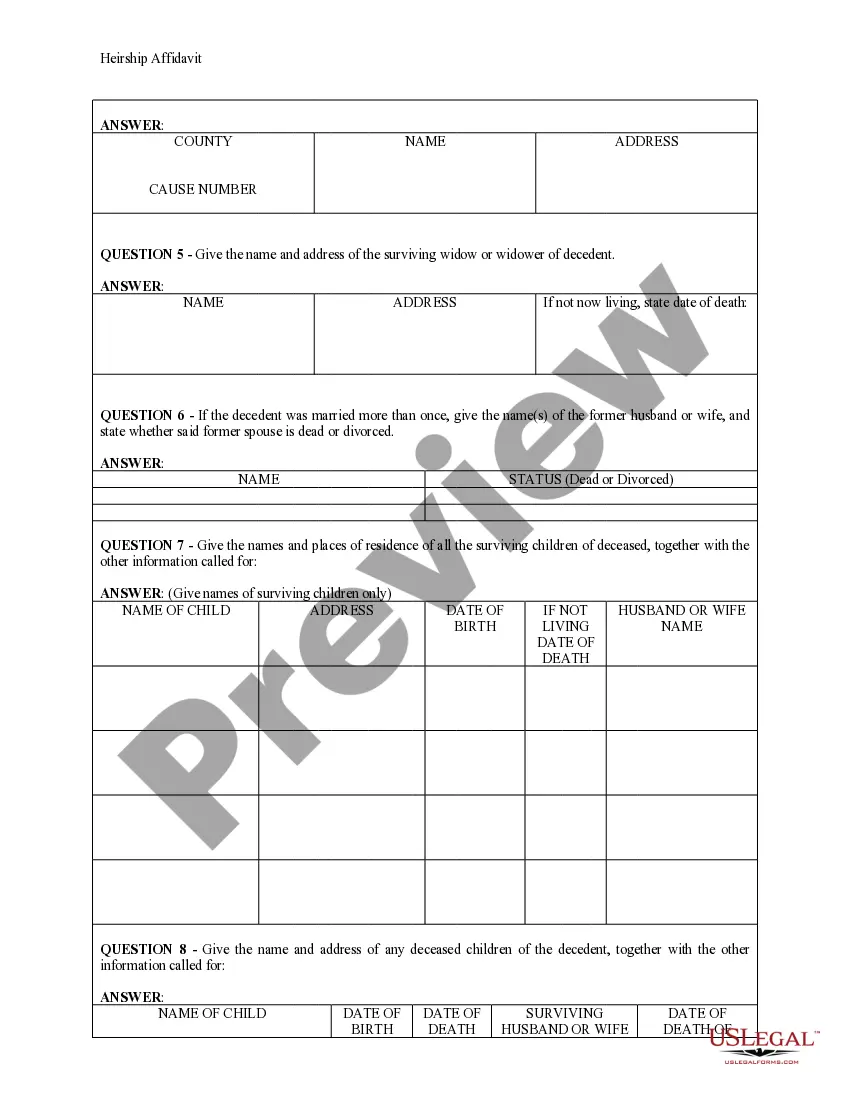
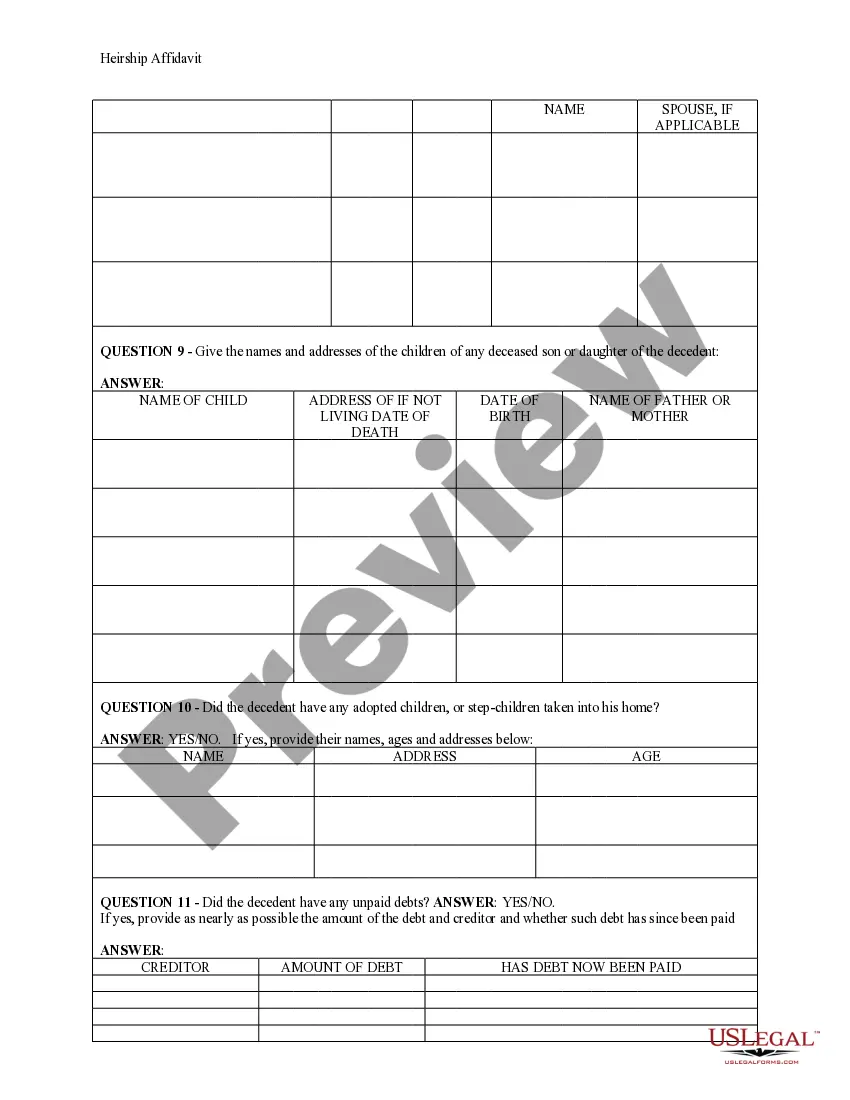
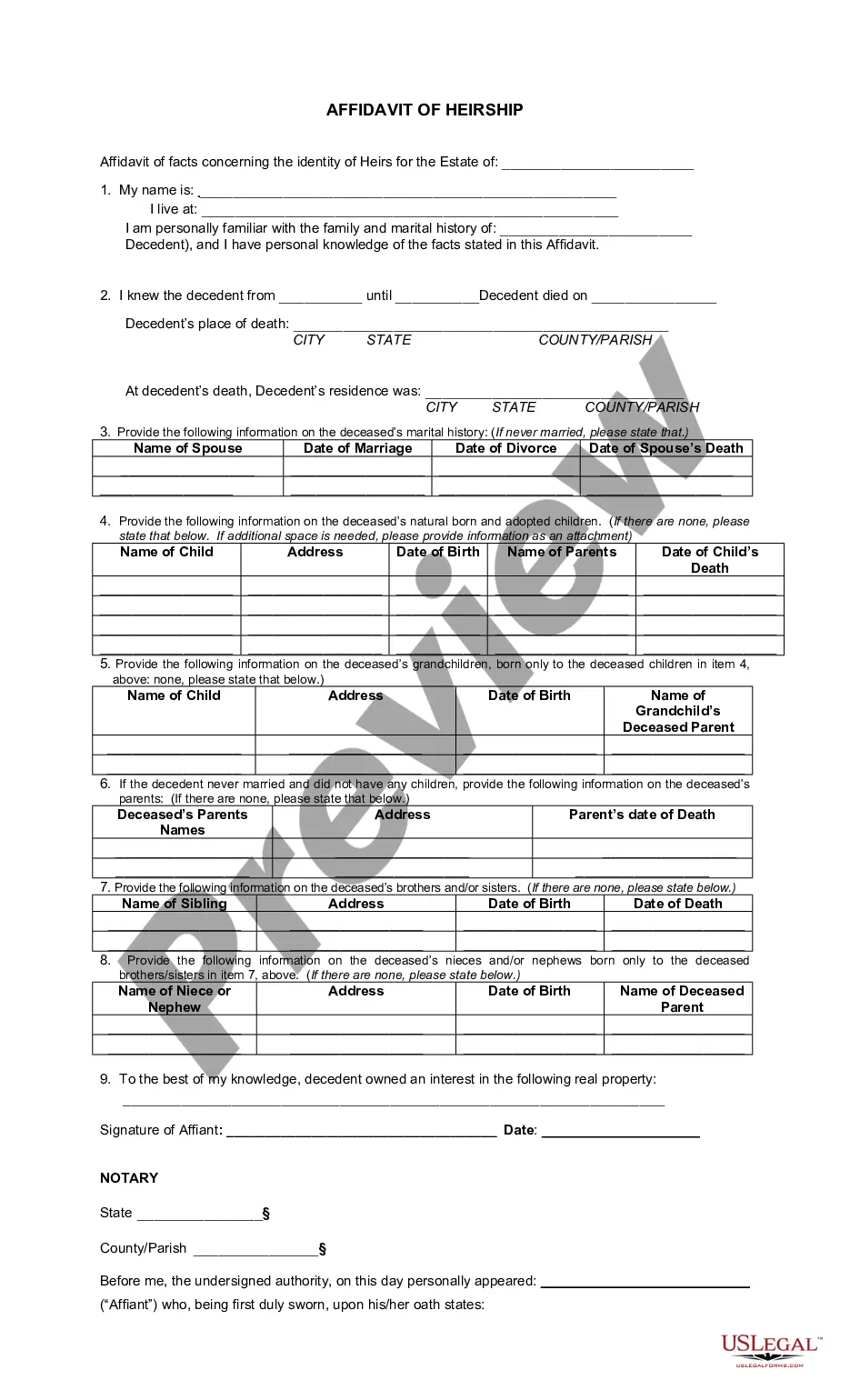
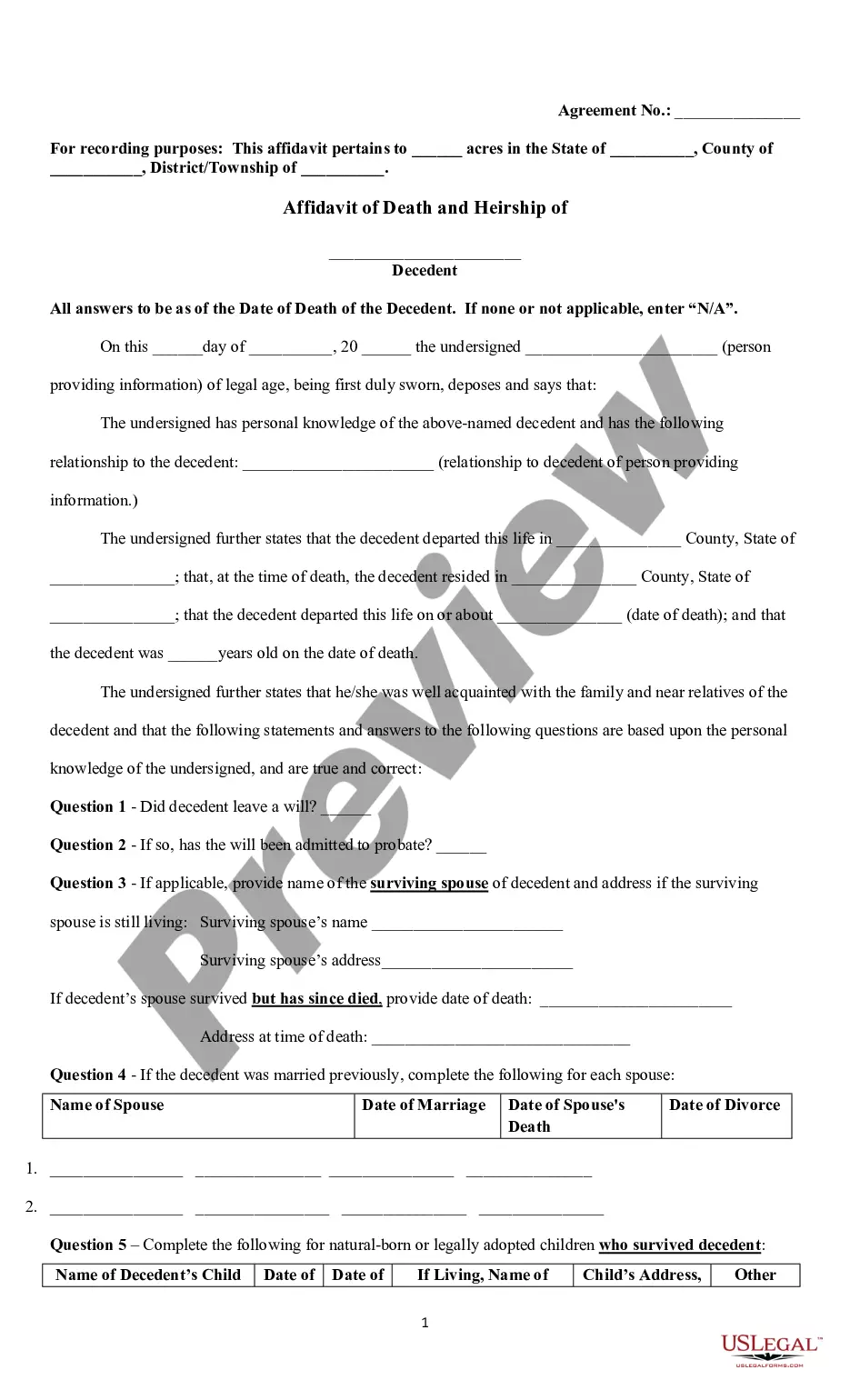
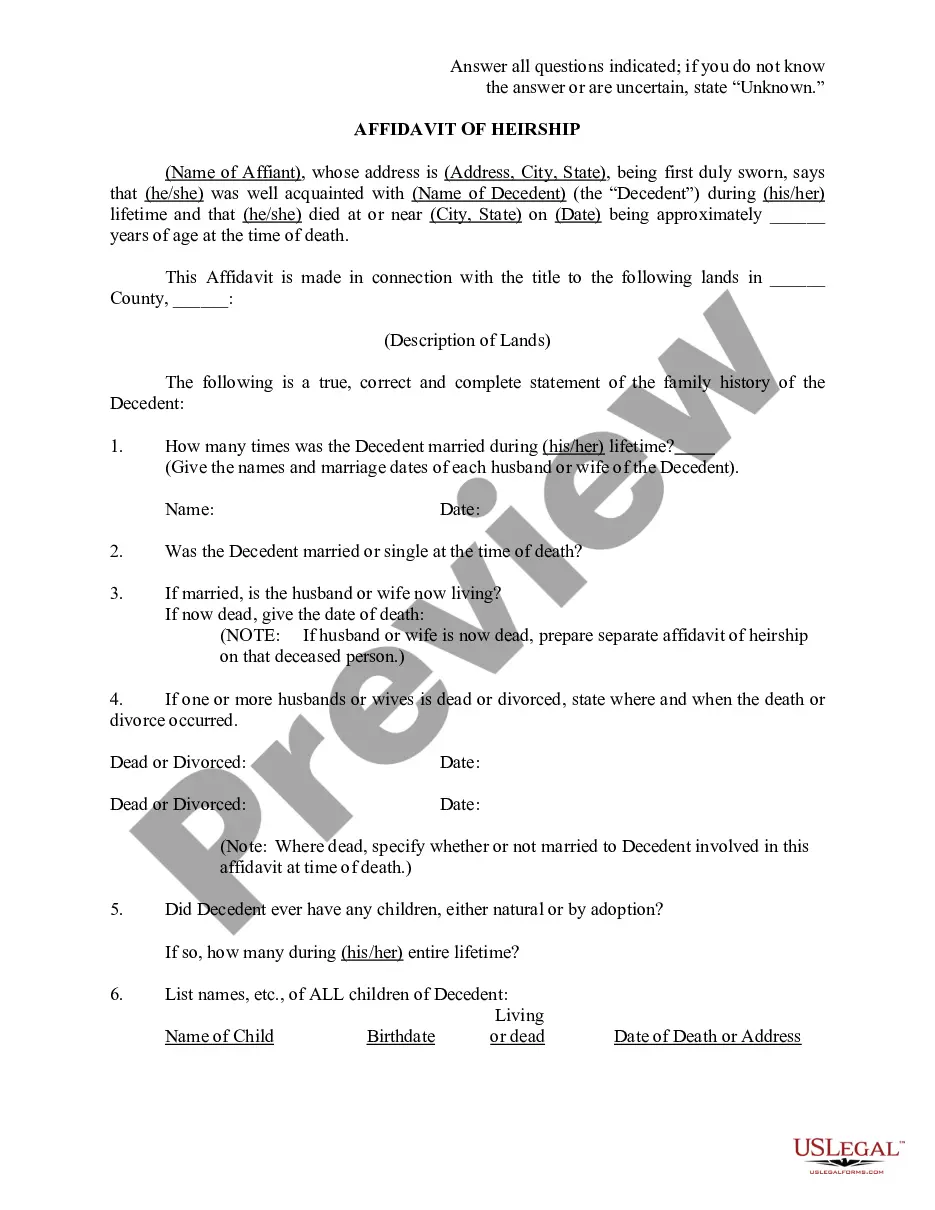
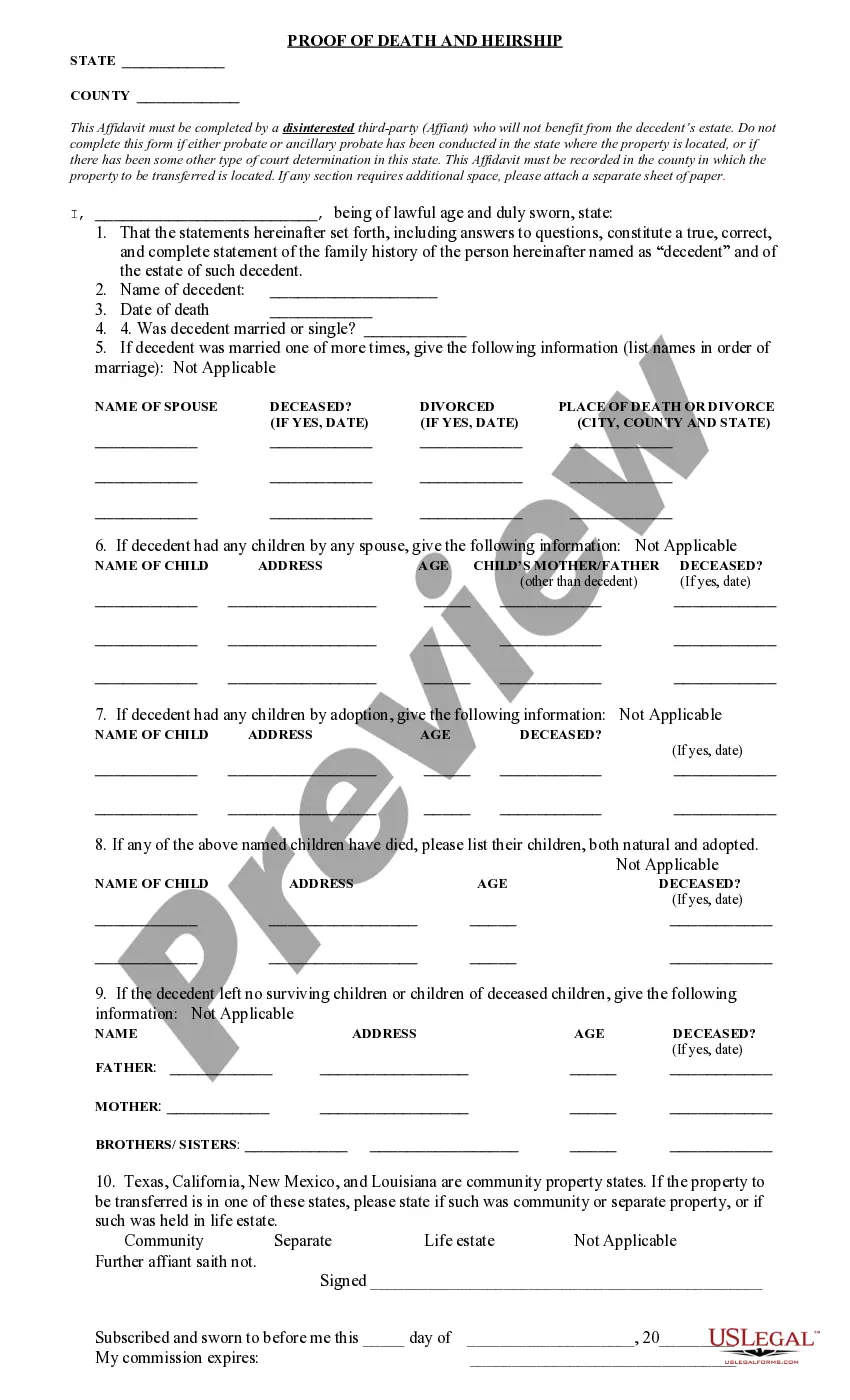
The Heirship Affidavit - Descent is a legal document used to declare the heirs of a deceased person. This form serves to establish ownership of personal and real property, especially in cases where the deceased did not leave a will. Unlike a probate document, which may require court involvement, the Heirship Affidavit allows heirs to assert their rights over inherited property without opening an estate. It can be recorded in official land records to facilitate property transactions, thereby simplifying the transfer process for heirs.
Key components of this form
- Affiant's personal details, including name and address.
- Information about the deceased, including their name, date of death, and residence.
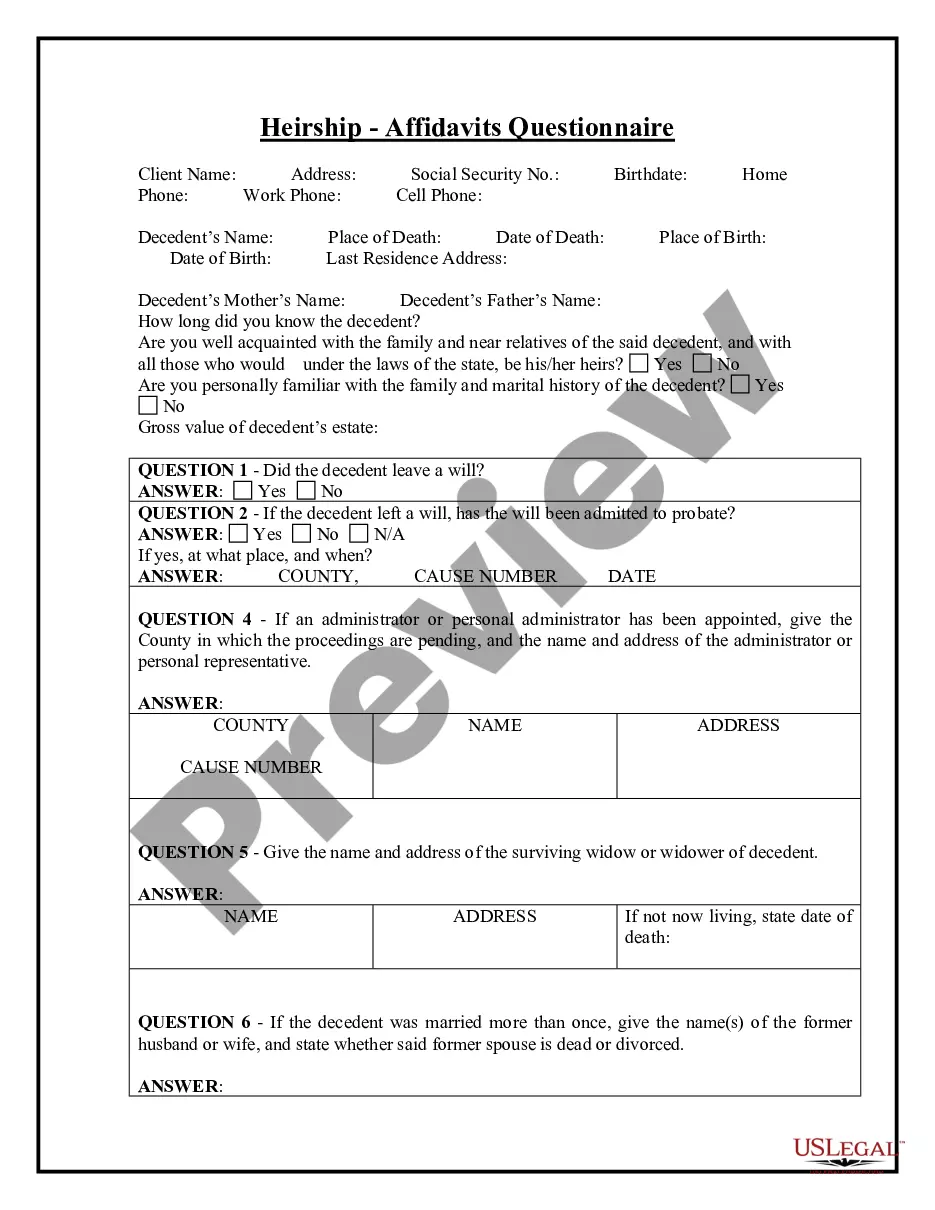
- Questions regarding the existence of a will and its probate status.
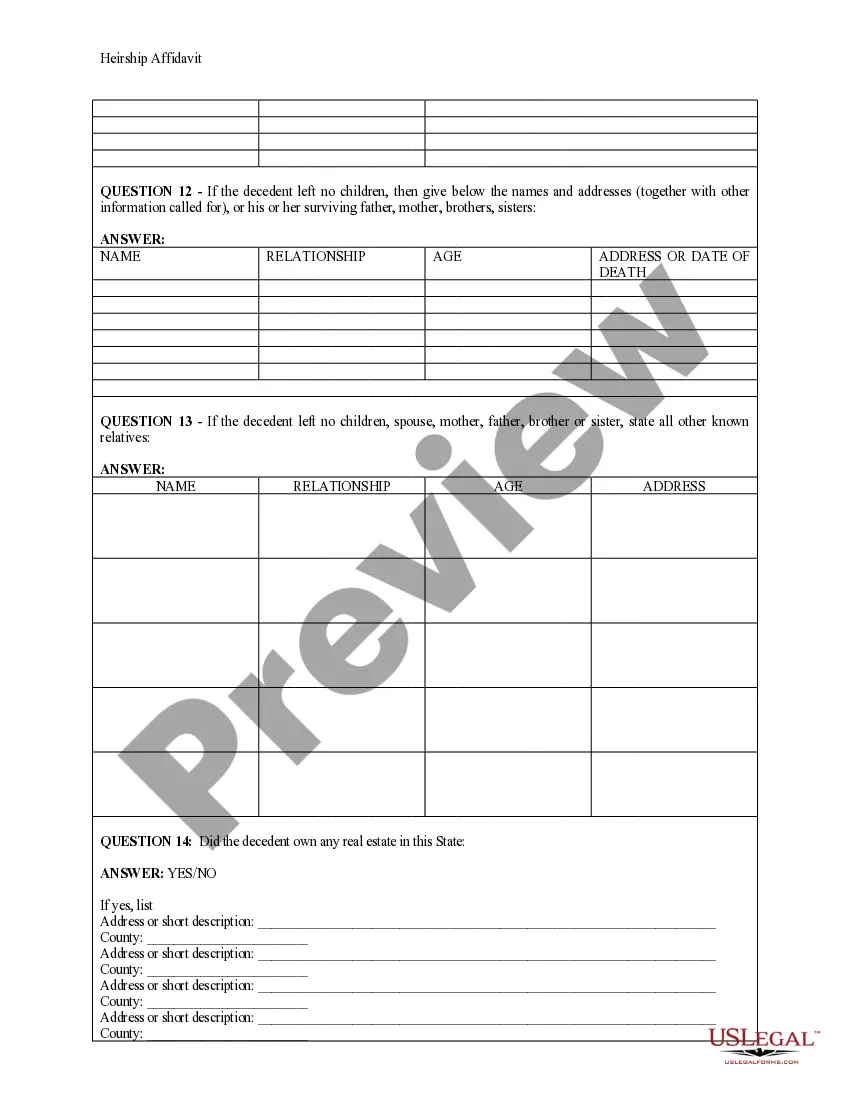
- Details of the surviving relatives, including spouse, children, and other descendants.
- Listing of any real estate owned by the deceased.
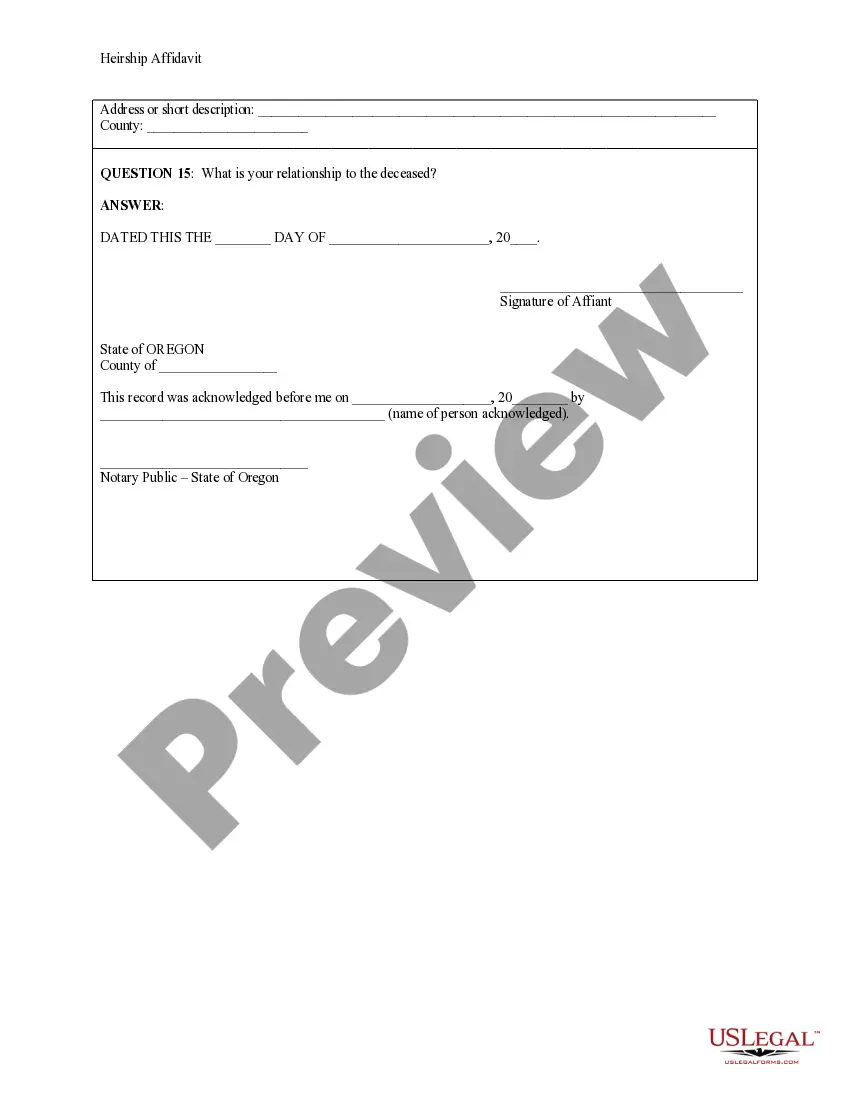
- Affiant's signature and notarization section.
When to use this form
This form is commonly used in situations where an individual dies intestate (without a will), and there is a need to establish rightful heirs for property division. It can be particularly helpful when heirs wish to sell or manage property left by the decedent, and there is no formal estate opened. For example, if a person passes away leaving a house and a son wants to sell it, the son would need this affidavit to represent his legal right to do so.
Who should use this form
- Individuals acting as heirs to a deceased person's estate.
- Persons looking to establish their rights to property inherited from a relative.
- Relatives needing to clarify ownership before selling or transferring property.
- Individuals who are familiar with the deceased's family and marital history.
Completing this form step by step
- Begin by entering the name and address of the affiant (the person completing the affidavit).
- Provide details about the deceased, including their name, date of passing, and last known residence.
- Answer questions regarding the existence of a will and any probate procedures that may apply.
- List all surviving relatives, their relationships to the deceased, and their addresses.
- Include information about any real estate owned by the deceased at the time of death.
- Sign the affidavit and have it notarized to ensure legal recognition.
Does this form need to be notarized?
This document requires notarization to meet legal standards. US Legal Forms provides secure online notarization powered by Notarize, allowing you to complete the process through a verified video call, available 24/7.
Get your form ready online
Our built-in tools help you complete, sign, share, and store your documents in one place.
Make edits, fill in missing information, and update formatting in US Legal Forms—just like you would in MS Word.
Download a copy, print it, send it by email, or mail it via USPS—whatever works best for your next step.
Sign and collect signatures with our SignNow integration. Send to multiple recipients, set reminders, and more. Go Premium to unlock E-Sign.
If this form requires notarization, complete it online through a secure video call—no need to meet a notary in person or wait for an appointment.
We protect your documents and personal data by following strict security and privacy standards.

Make edits, fill in missing information, and update formatting in US Legal Forms—just like you would in MS Word.

Download a copy, print it, send it by email, or mail it via USPS—whatever works best for your next step.

Sign and collect signatures with our SignNow integration. Send to multiple recipients, set reminders, and more. Go Premium to unlock E-Sign.

If this form requires notarization, complete it online through a secure video call—no need to meet a notary in person or wait for an appointment.

We protect your documents and personal data by following strict security and privacy standards.
Common mistakes
- Failing to include all known heirs can lead to disputes later.
- Not having the affidavit notarized, which is necessary for legal validity.
- Providing incorrect information about the deceased's property or debts.
- Leaving questions unanswered, which may delay processing.
Why use this form online
- Convenience of downloading and filling the form at your own pace.
- Easy access to templates vetted by licensed attorneys.
- Ability to edit information to reflect accurate details before submission.
- Immediate availability without the need for physical appointments.
Quick recap
- The Heirship Affidavit is crucial for establishing heirs when someone dies without a will.
- Completing the form accurately and ensuring notarization are essential for legality.
- This form helps simplify the transfer of property ownership among heirs.
Looking for another form?


Form popularity
FAQ
1. This form should be completed by someone other than an Heir. This person should be someone who is familiar with the family history of the deceased (decedent), and who will obtain no benefit from the Estate. The person who fills out the form is referred to as the AFFIANT.
Does an affidavit of heirship need to be recorded in Texas? Yes, after the affidavit is signed and executed, it must be filed with the county deed records where the decedent's real property is located.
An Affidavit of Heirship is a sworn statement that heirs can use in some states to establish property ownership when the original owner dies intestate. Affidavits of Heirship are generally used when the decedent only left real property, personal property, or had a small estate.
An affidavit is used for the purpose of proving in court that a claim is true, and is typically used in conjunction with witness statements and other corroborating evidence. Through an affidavit, an individual swears that the information contained within is true to the best of their knowledge.
The front of Oregon titles shows survivorship information. When DMV issued a title with survivorship and one of the owners is deceased, the surviving owner(s) may transfer with proof of death of the deceased owner. By a written request with the current title.
An affidavit of heirship is needed to transfer a deceased person's interest in real or personal property to his or her heirs when the decedent dies without leaving a last will and testament or without disposing of all of his or her property in a will.
When a person who owns real property dies intestate, and there is no survivor mentioned in the deed, the heirs of the decedent, must file an affidavit of descent to establish their chain of title to the property. This affidavit, is known as an affidavit of descent.
In the event of death, a member or representative of your family must call PERS Customer Service at 503-598-7377 or toll free at 888-320-7377 and report the death as soon as possible.
Heirship Proceedings in Texas An heirship proceeding is a court proceeding used to determine who an individual's heirs are.This process involves a court-appointed attorney who investigates the deceased individual's family history and confirms to the court the identity of the heirs.