Oregon Electrical Contract for Contractor
Understanding this form
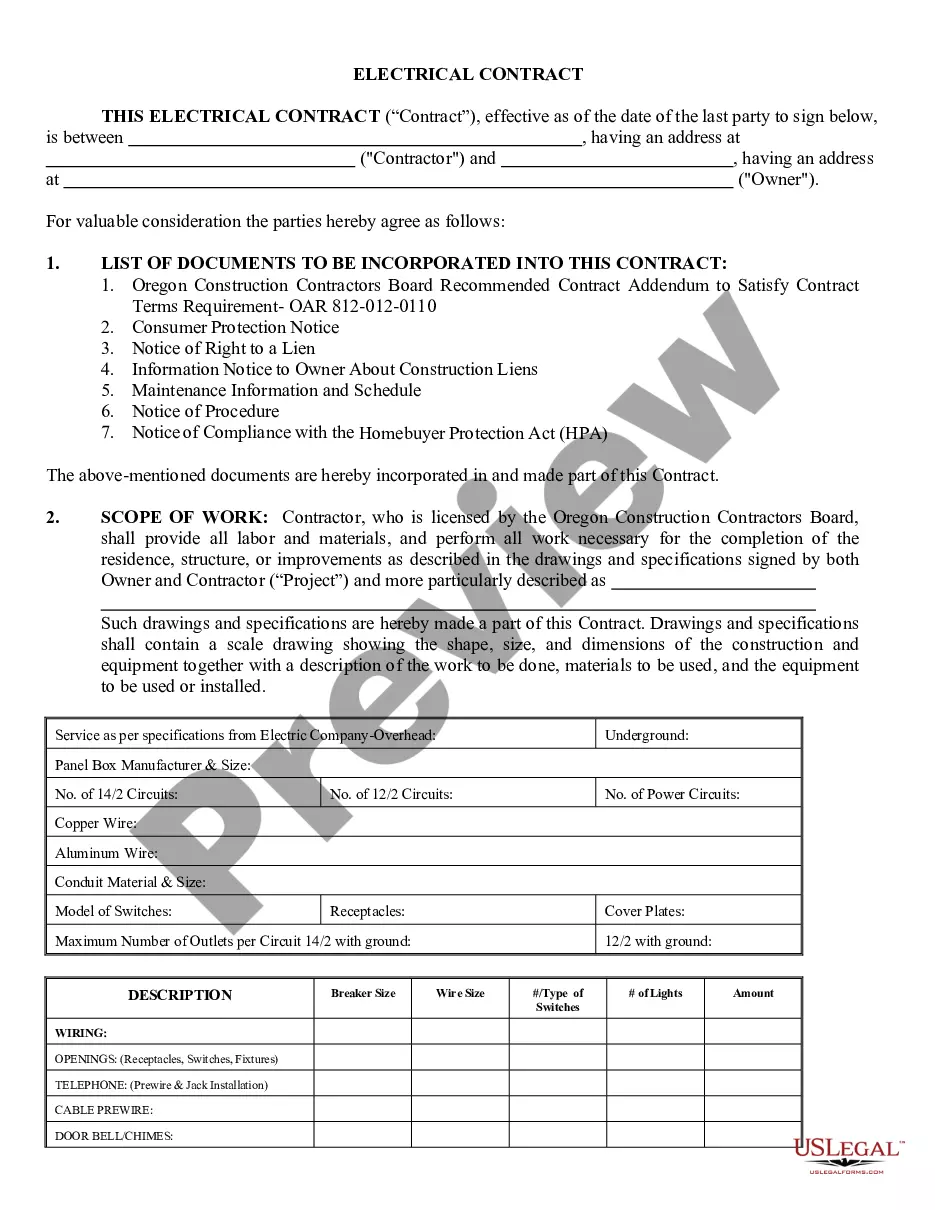
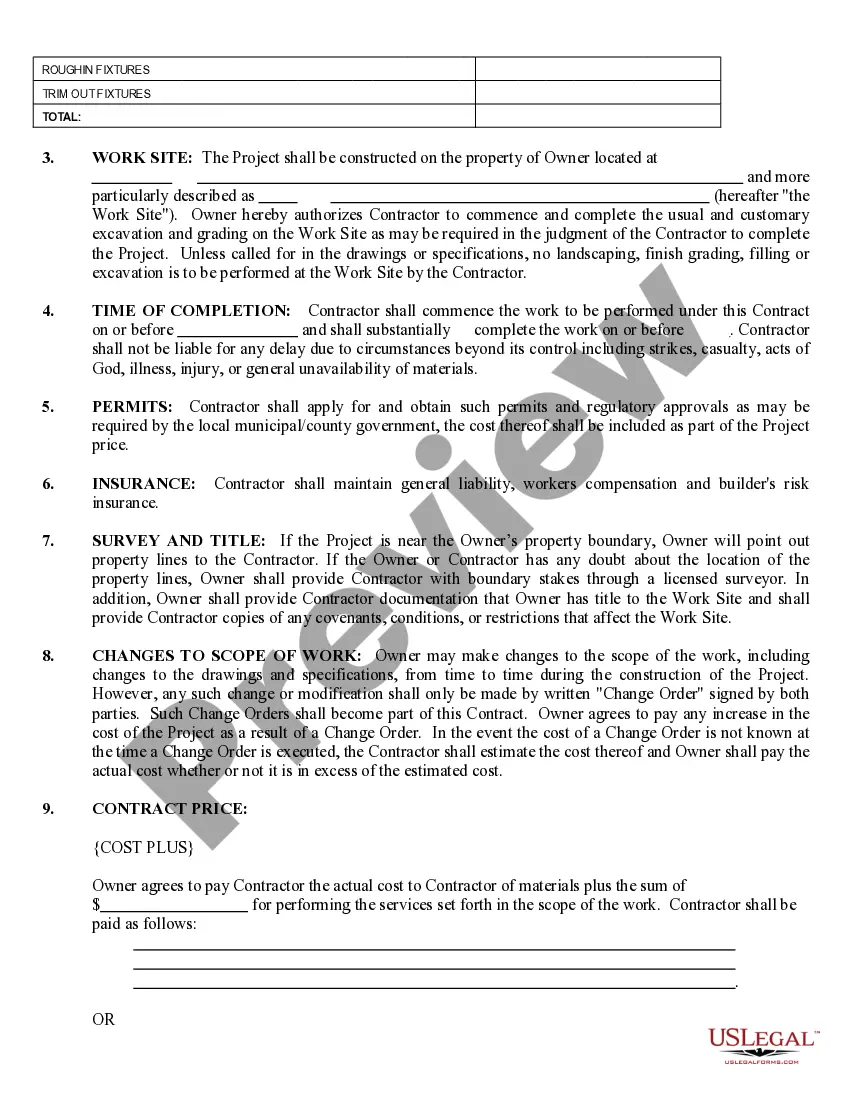
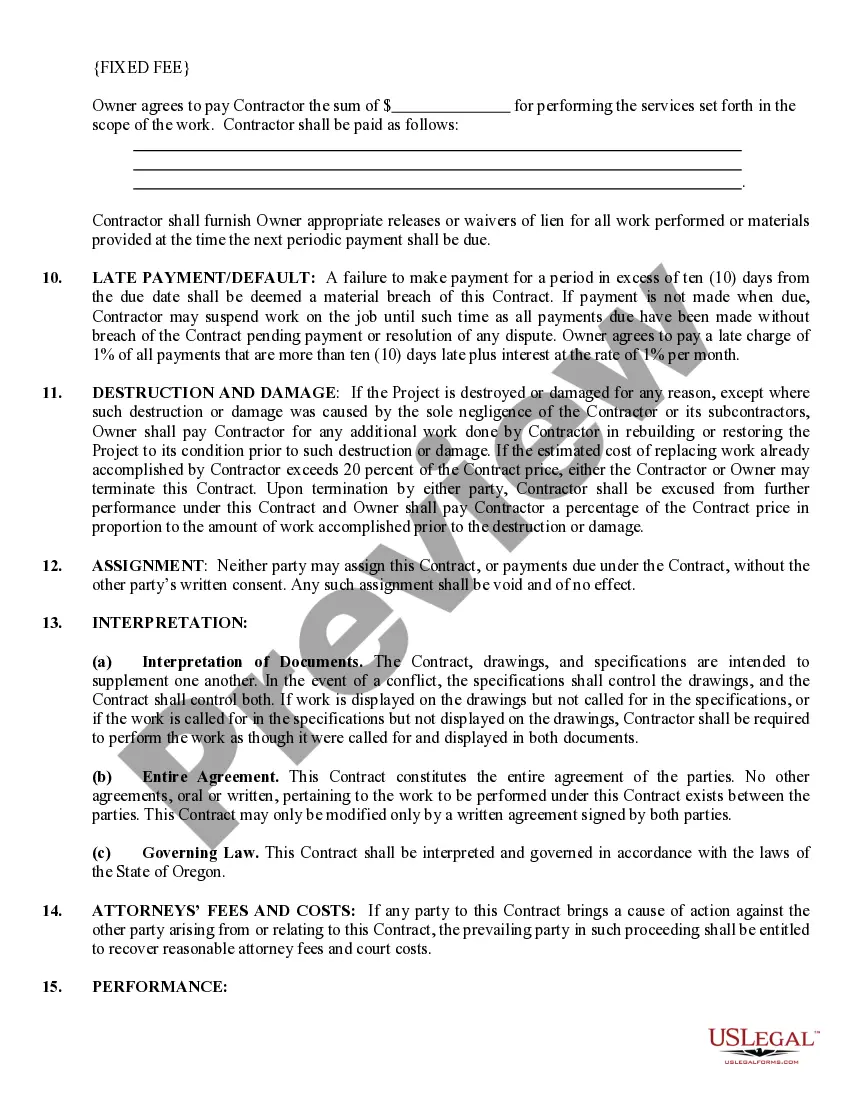
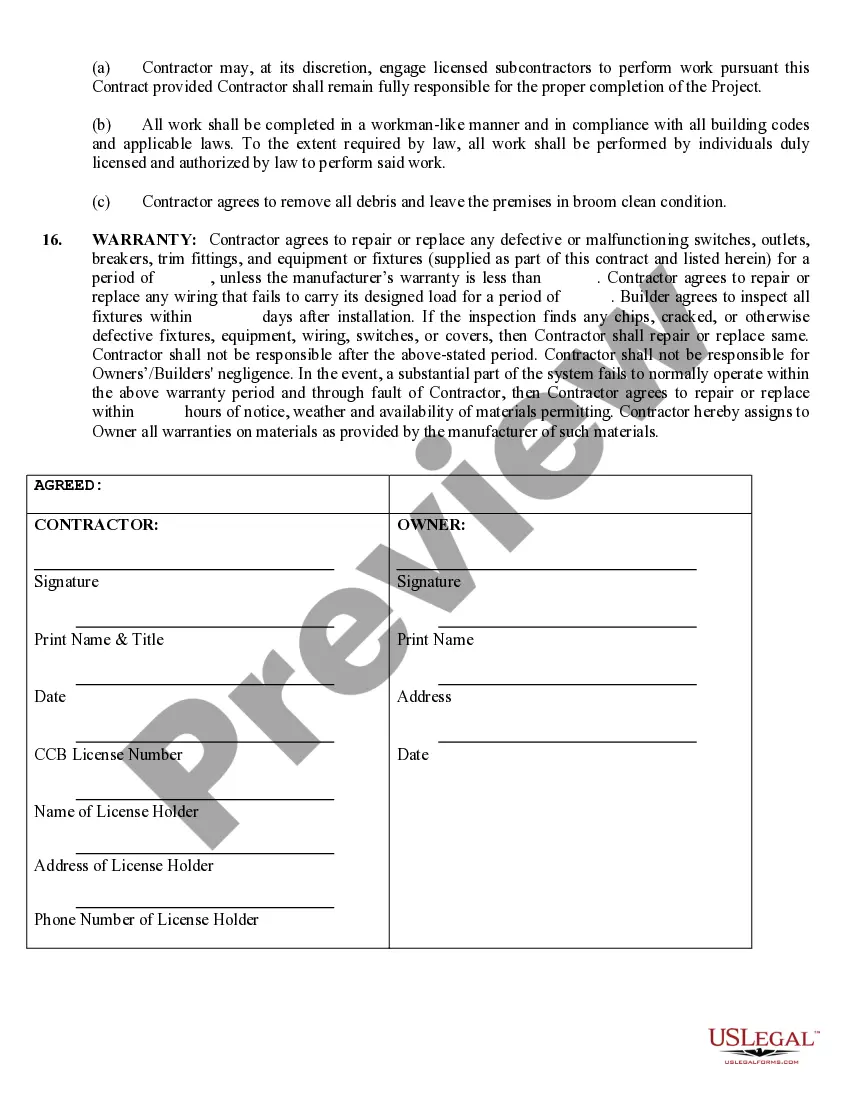
The Electrical Contract for Contractor is a legal document designed for use between electrical contractors and property owners in Oregon. This form outlines the terms of engagement for electrical work, which can be executed under either a cost-plus or fixed-fee arrangement. It addresses critical aspects such as payment structures, change orders, warranty, insurance requirements, and project scope. Unlike generic contracts, this form is tailored to comply with Oregon law, ensuring that both parties are protected and informed about their rights and responsibilities during the project.
Form components explained
- Permits: Details requirements for permits and municipal approvals.
- Insurance: Specifies insurance obligations for the contractor, including liability and workers' compensation.
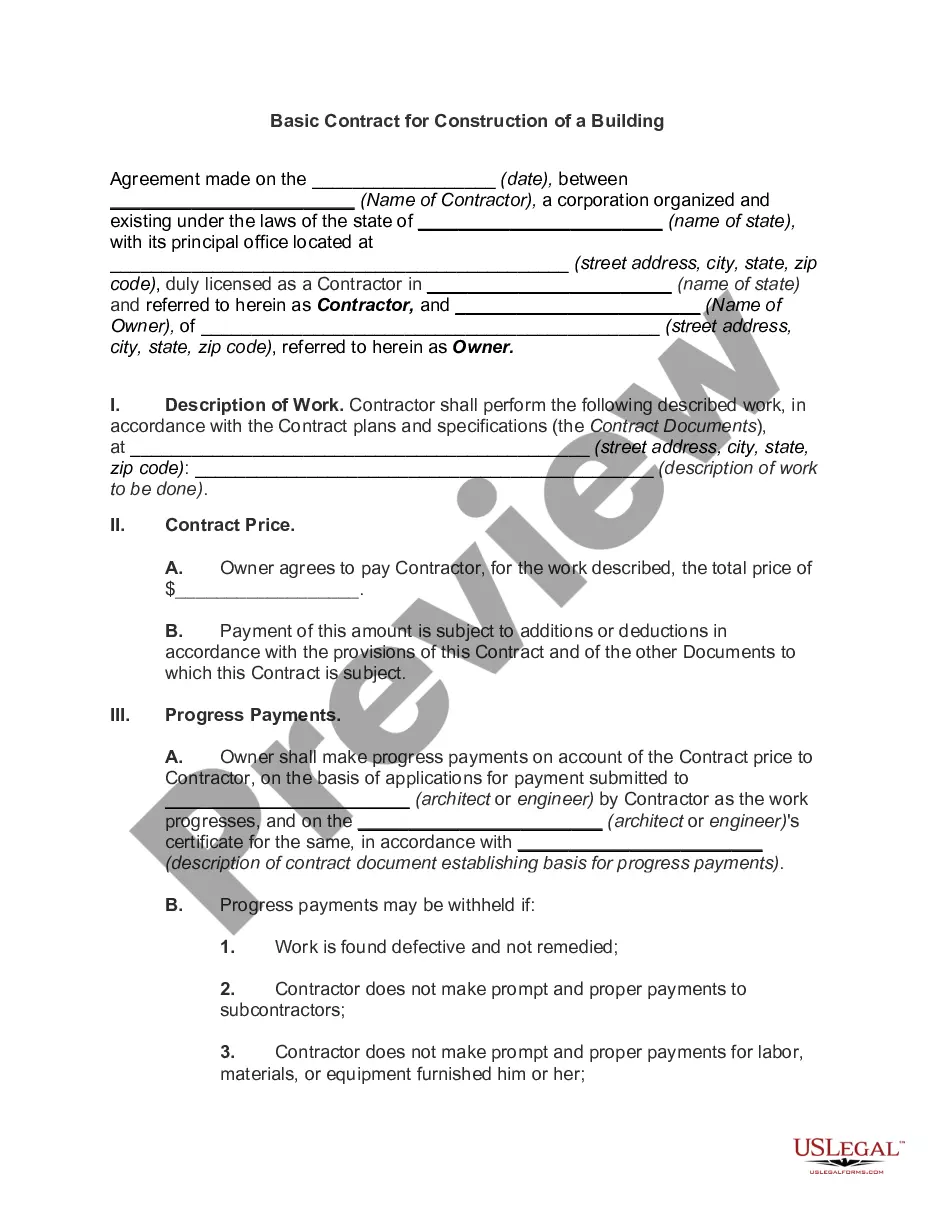
- Change Orders: Outlines the process for modifying project scope and cost adjustments.
- Destruction and Damage: Provides guidelines on handling project destruction or damage and related costs.
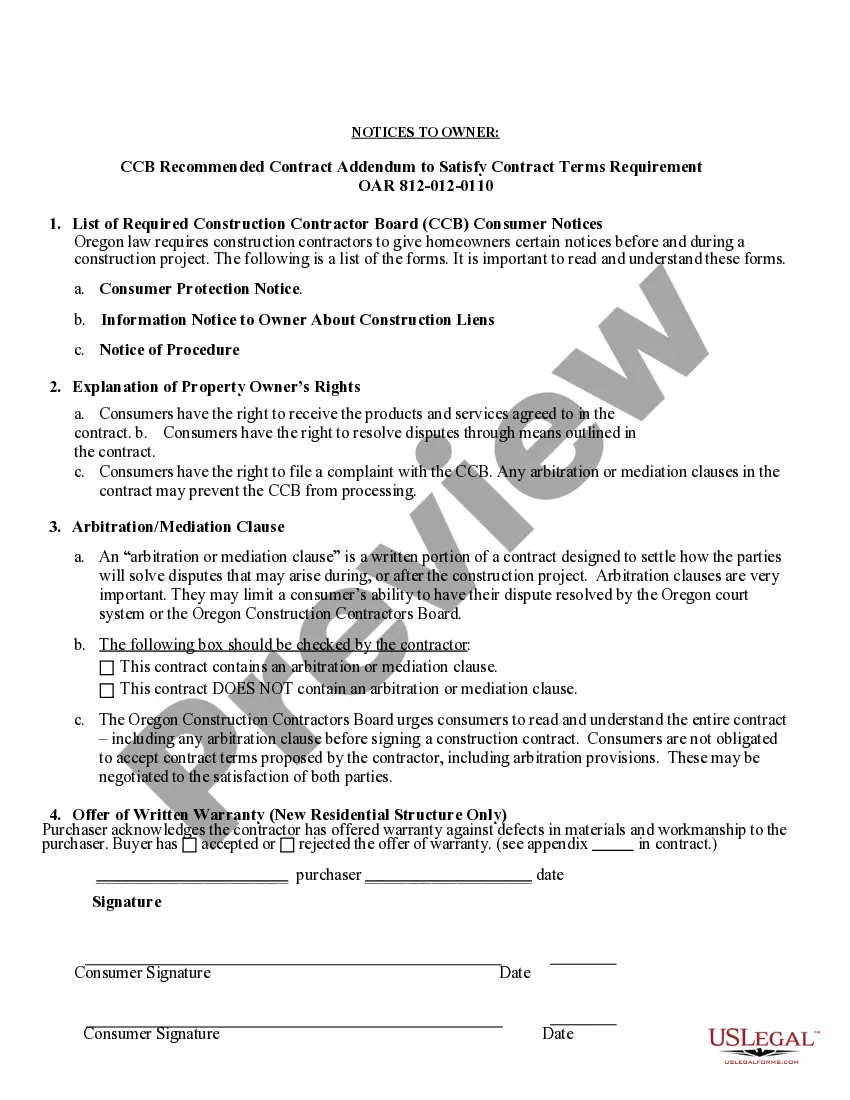
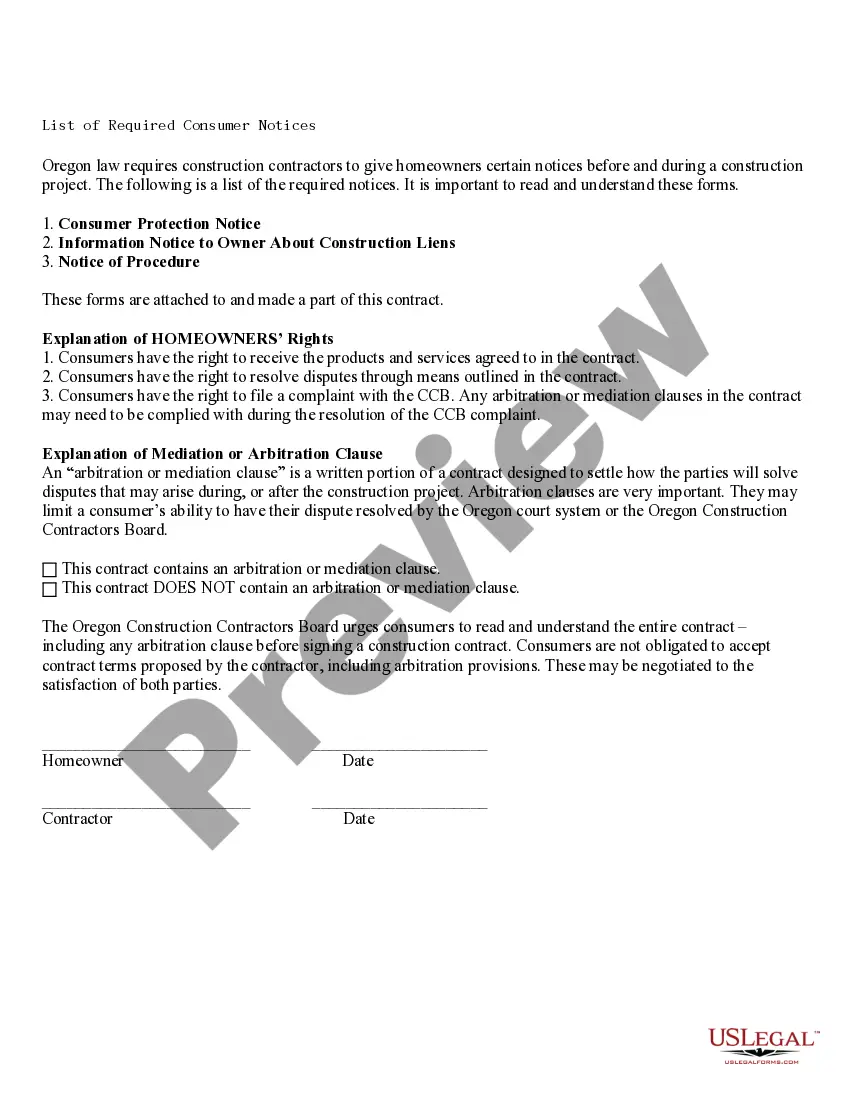
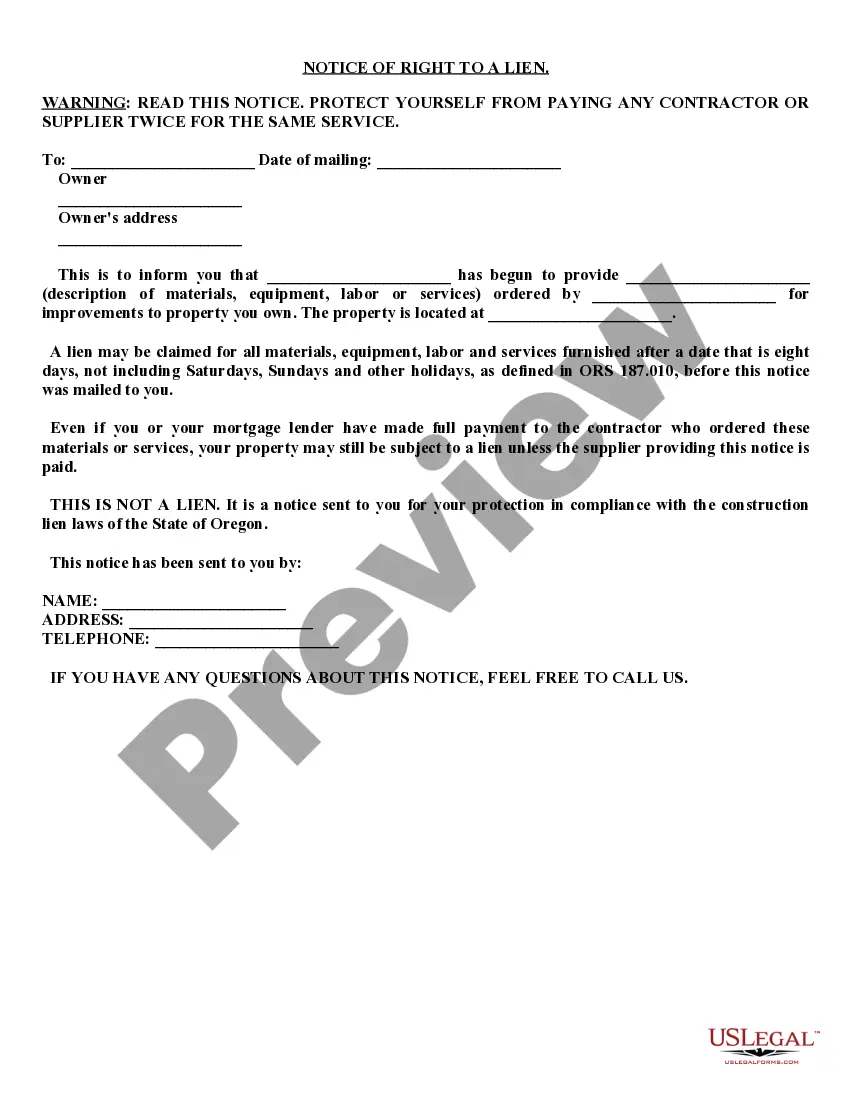
- Consumer Protection Notice: Emphasizes homeowner rights and procedures regarding construction liens.
- Dispute Resolution: Details processes for arbitration or mediation in case of disputes.




Common use cases
This contract should be used when a property owner is hiring an electrical contractor to perform work on a project, regardless of the project size. It may be necessary in situations where the project costs exceed a certain amount, typically $2,000, or when specific services such as remodeling or new installations are required. Using this form ensures that the project is legally compliant and that both parties have a clear understanding of their duties and rights.
Who can use this document
- Electrical Contractors: To outline their responsibilities and terms with a client.
- Property Owners: To protect their interests and ensure accountability from the contractor.
- Real Estate Developers: Who require clear agreements for electrical work on new developments.
- Homeowners undertaking remodeling or renovation projects involving electrical installations.
Completing this form step by step
- Identify the parties: Clearly state the names and addresses of the electrical contractor and property owner.
- Specify the project details: Include a description of the work to be performed and any relevant specifications.
- Outline payment terms: Indicate whether the payment will be cost-plus or a fixed fee arrangement along with the payment schedule.
- Document insurance and permits: Verify and include information regarding necessary insurance coverage and obtained permits.
- Sign the contract: Ensure both parties sign and date the contract to make it legally binding.
Is notarization required?
Notarization is generally not required for this form. However, certain states or situations might demand it. You can complete notarization online through US Legal Forms, powered by Notarize, using a verified video call available anytime.
Get your form ready online
Our built-in tools help you complete, sign, share, and store your documents in one place.
Make edits, fill in missing information, and update formatting in US Legal Forms—just like you would in MS Word.
Download a copy, print it, send it by email, or mail it via USPS—whatever works best for your next step.
Sign and collect signatures with our SignNow integration. Send to multiple recipients, set reminders, and more. Go Premium to unlock E-Sign.
If this form requires notarization, complete it online through a secure video call—no need to meet a notary in person or wait for an appointment.
We protect your documents and personal data by following strict security and privacy standards.

Make edits, fill in missing information, and update formatting in US Legal Forms—just like you would in MS Word.

Download a copy, print it, send it by email, or mail it via USPS—whatever works best for your next step.

Sign and collect signatures with our SignNow integration. Send to multiple recipients, set reminders, and more. Go Premium to unlock E-Sign.

If this form requires notarization, complete it online through a secure video call—no need to meet a notary in person or wait for an appointment.

We protect your documents and personal data by following strict security and privacy standards.
Avoid these common issues
- Not obtaining written change orders for modifications to the project's scope.
- Failing to confirm that the contractor holds the necessary licenses and insurance before signing.
- Ignoring the importance of understanding the Consumer Protection Notice and its implications.
- Not ensuring all details about the project and payment terms are explicitly included in the contract.
Why complete this form online
- Convenience: Easily download and complete the form at your own pace.
- Editability: Make adjustments to meet your specific project needs without hassle.
- Reliability: Access forms drafted by licensed attorneys to ensure they meet legal standards.
- Time-saving: Eliminate the need for costly legal consultations for standard contract setups.
Legal use & context
- This contract is legally enforceable as long as both parties abide by its terms.
- It serves as a protection tool for both contractors and property owners in the event of disputes.
- Non-compliance with local regulations can undermine the contract's validity.
Summary of main points
- The Electrical Contract for Contractor is essential for clear agreements between contractors and property owners.
- It is vital for ensuring compliance with Oregon state laws regarding electrical work.
- Proper completion and understanding of the contract can prevent disputes down the line.
Looking for another form?
Form popularity
FAQ
The general contractor may hire an electrician, a plumber, a cabinet maker-installer, a tile layer and a granite installer. New Construction: Probably the most complex construction project is building a new house.
If you run a small business that hires 1099 contractors, also known as independent contractors, it is vital that you have them sign an independent contractor contract. This is because there is a significant gray area between who is classified as an independent contractor and who is classified as an employee.
The Simple Differences Between an Electrician and a General Contractor. And there is a difference. While both can perform some of the same functions, the essential difference is that when you hire a general contractor you're hiring someone who is a licensed electrician, but not a master electrician.
Wiring. Electrical outlets. Lighting fixtures.
Building Codes Division y You must be both the owner and the occupant of the home to obtain a permit to do the electrical work yourself. y If you do not own or do not intend to live in the unit, a licensed electrical contractor must do the work.
Both parties should sign the contract, and both should be bound by the terms and conditions spelled out in the agreement. In general that means the contractor will be obliged to provide specified materials and to perform certain services for you. In turn, you will be required to pay for those goods and that labor.
(1) Except as otherwise provided in this subsection, a person is not required to obtain a license to make an electrical installation on residential or farm property that is owned by the person or a member of the person's immediate family if the property is not intended for sale, exchange, lease or rent.
Identifying/Contact Information. Title and Description of the Project. Projected Timeline and Completion Date. Cost Estimate and Payment Schedule. Stop Work Clause and Stop Payment Clause. Act of God Clause. Change Order Agreement. Warranty.