Oregon Paving Contract for Contractor
What is this form?
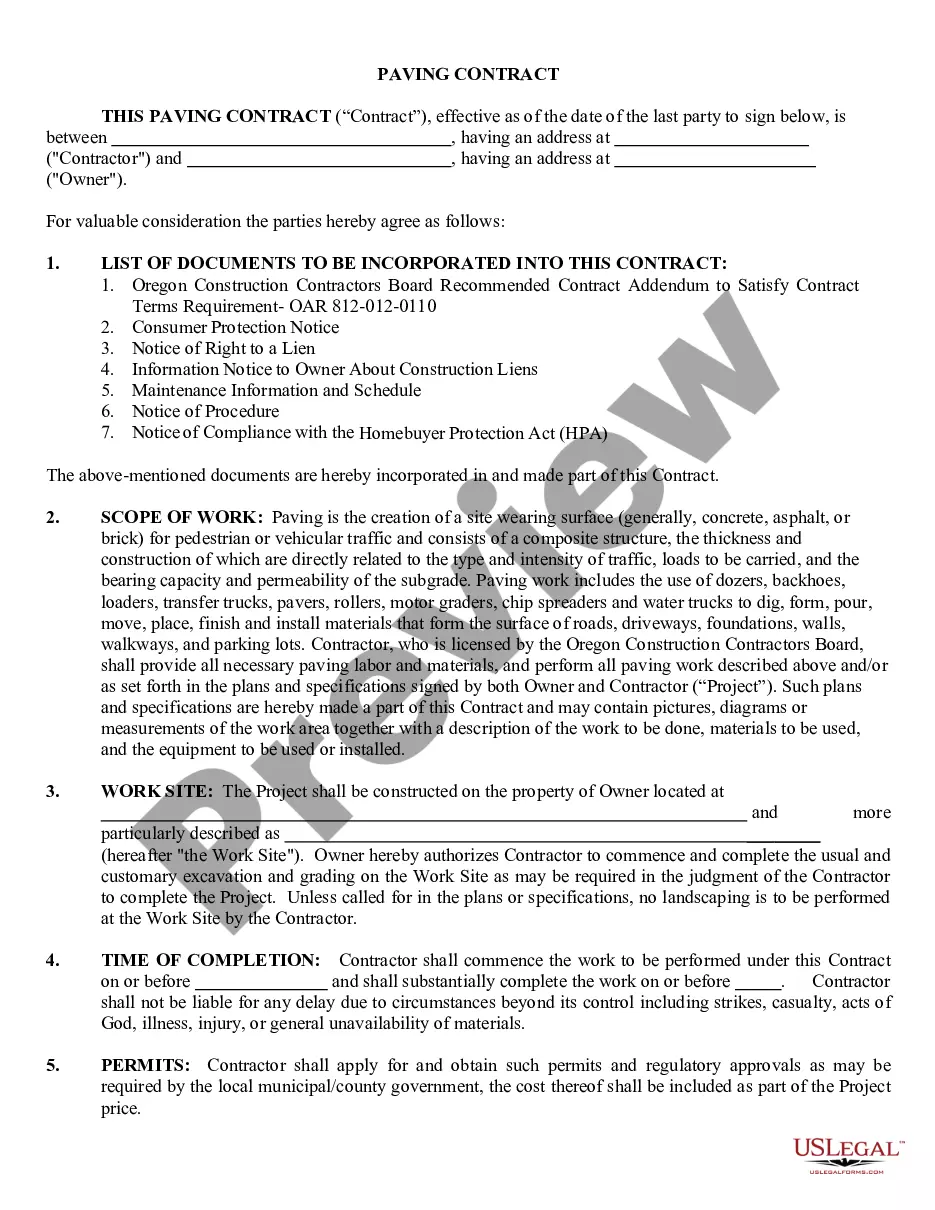
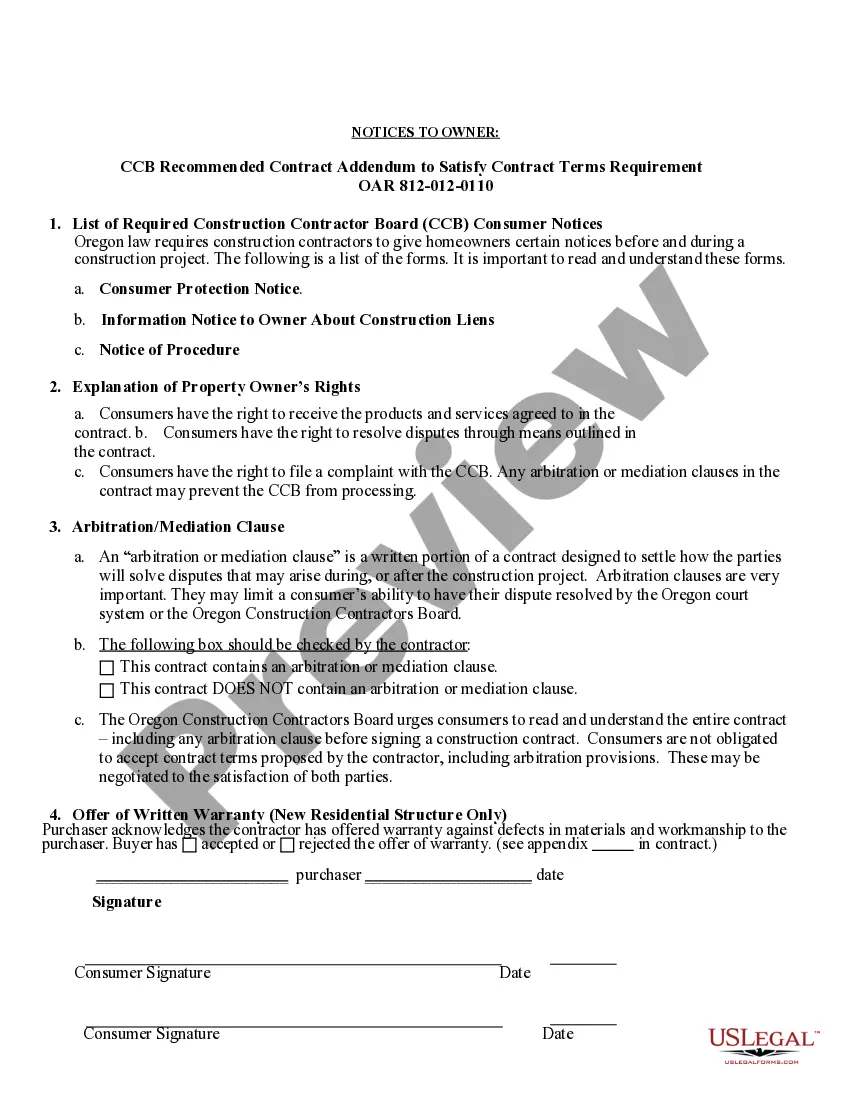
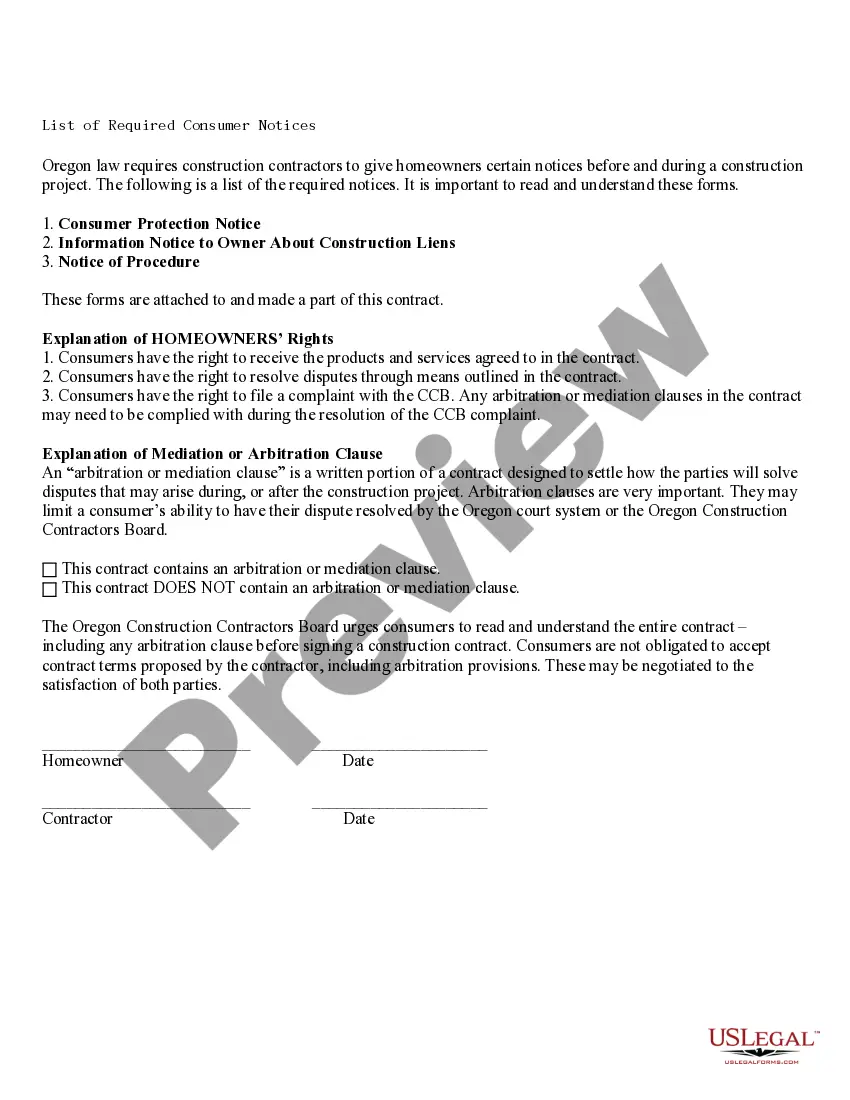
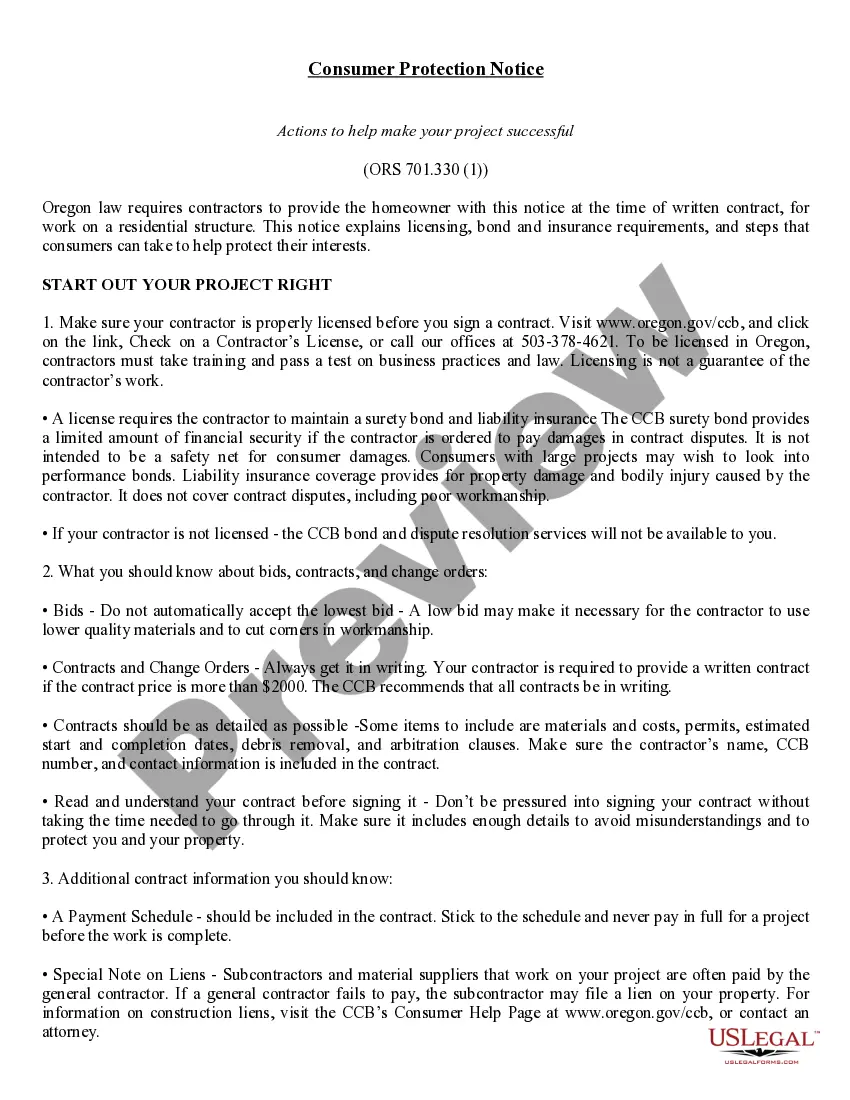
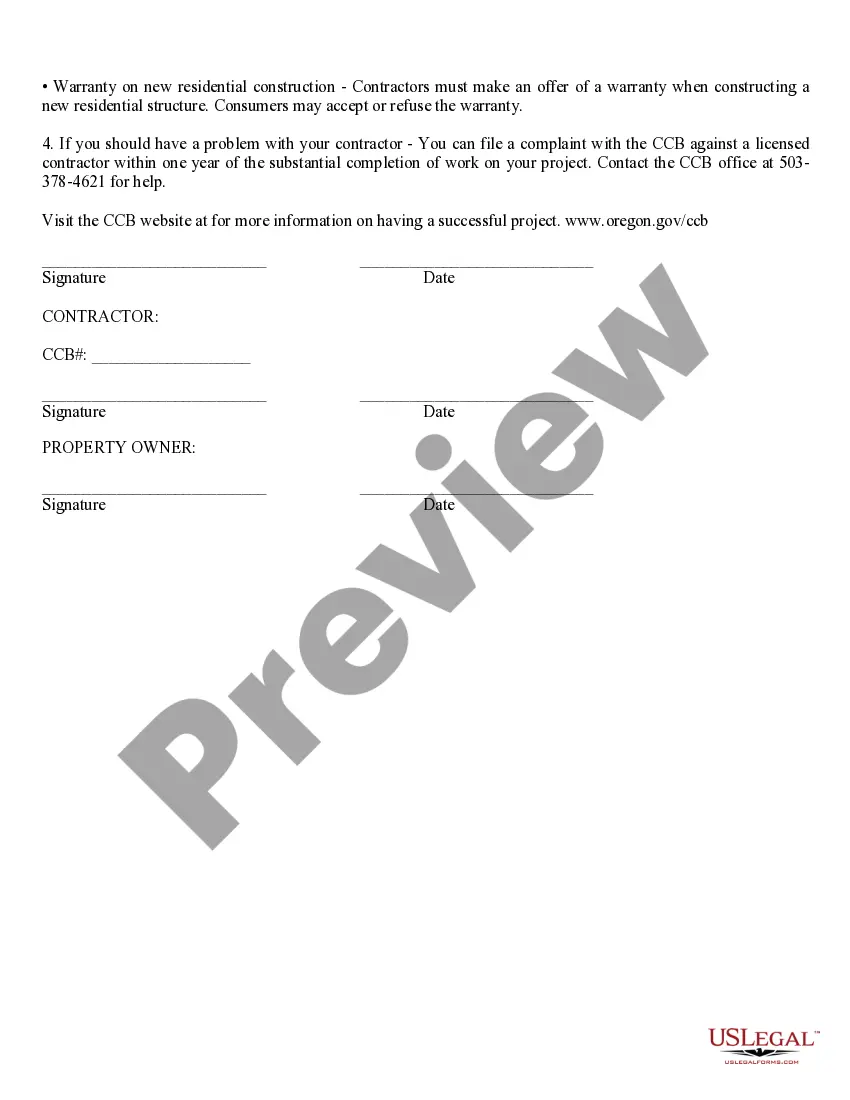
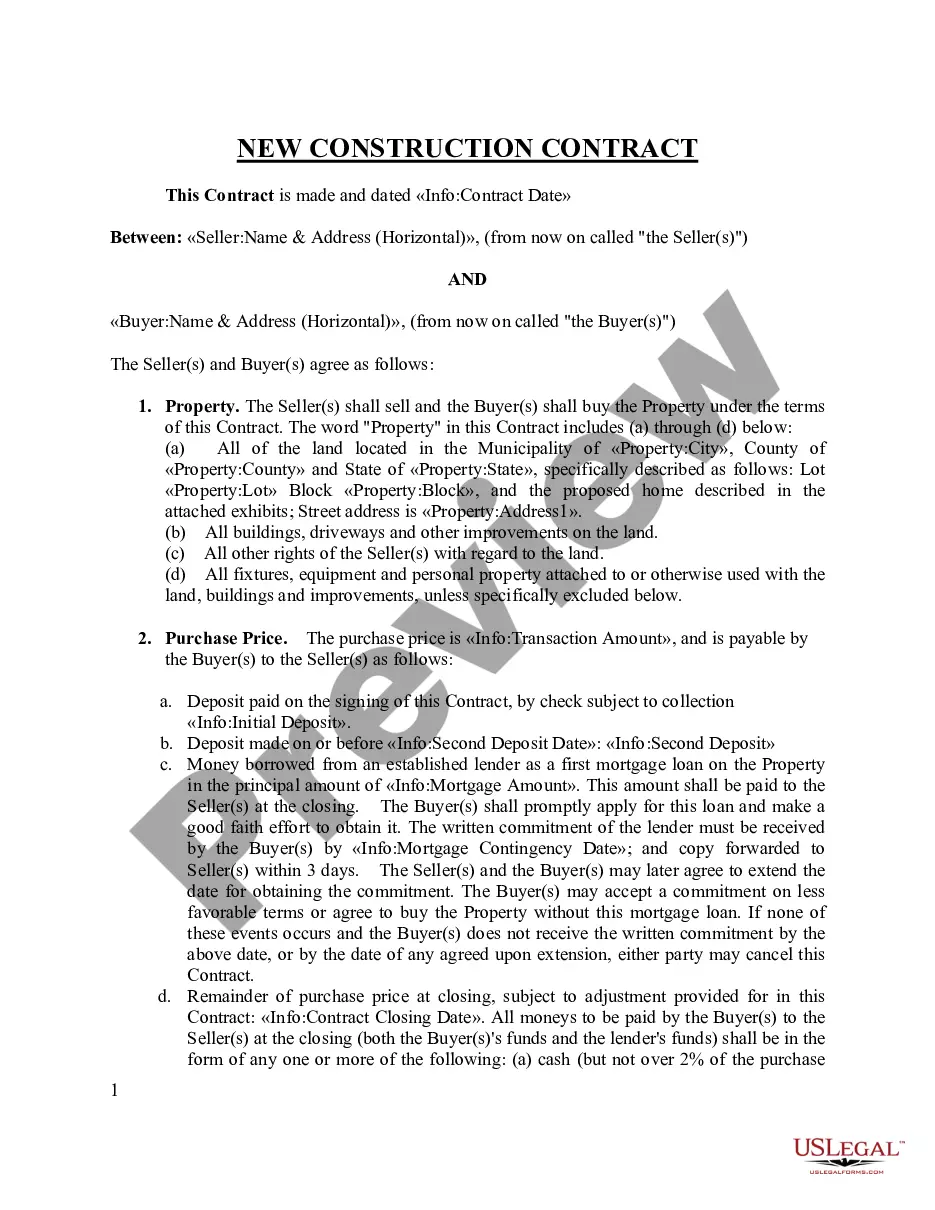
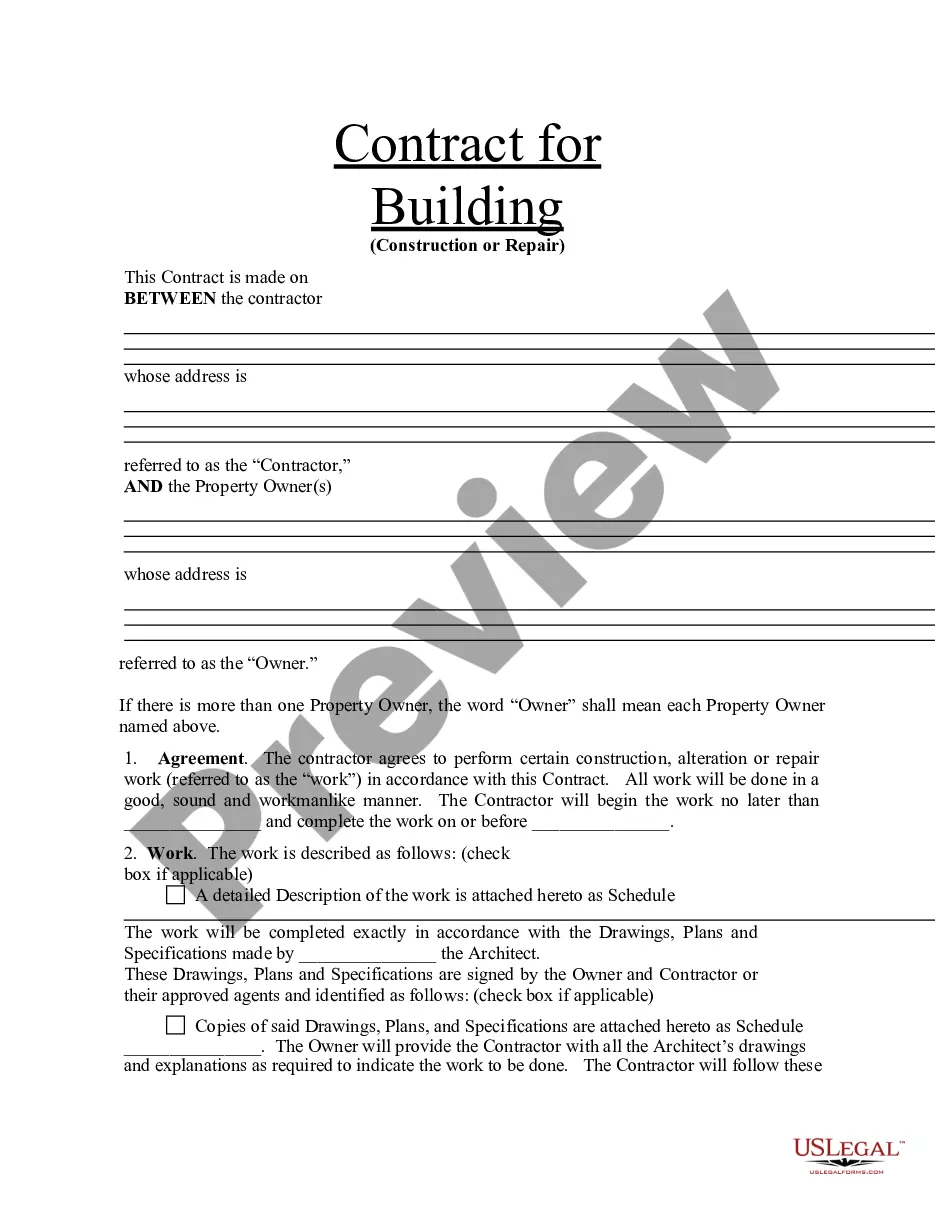
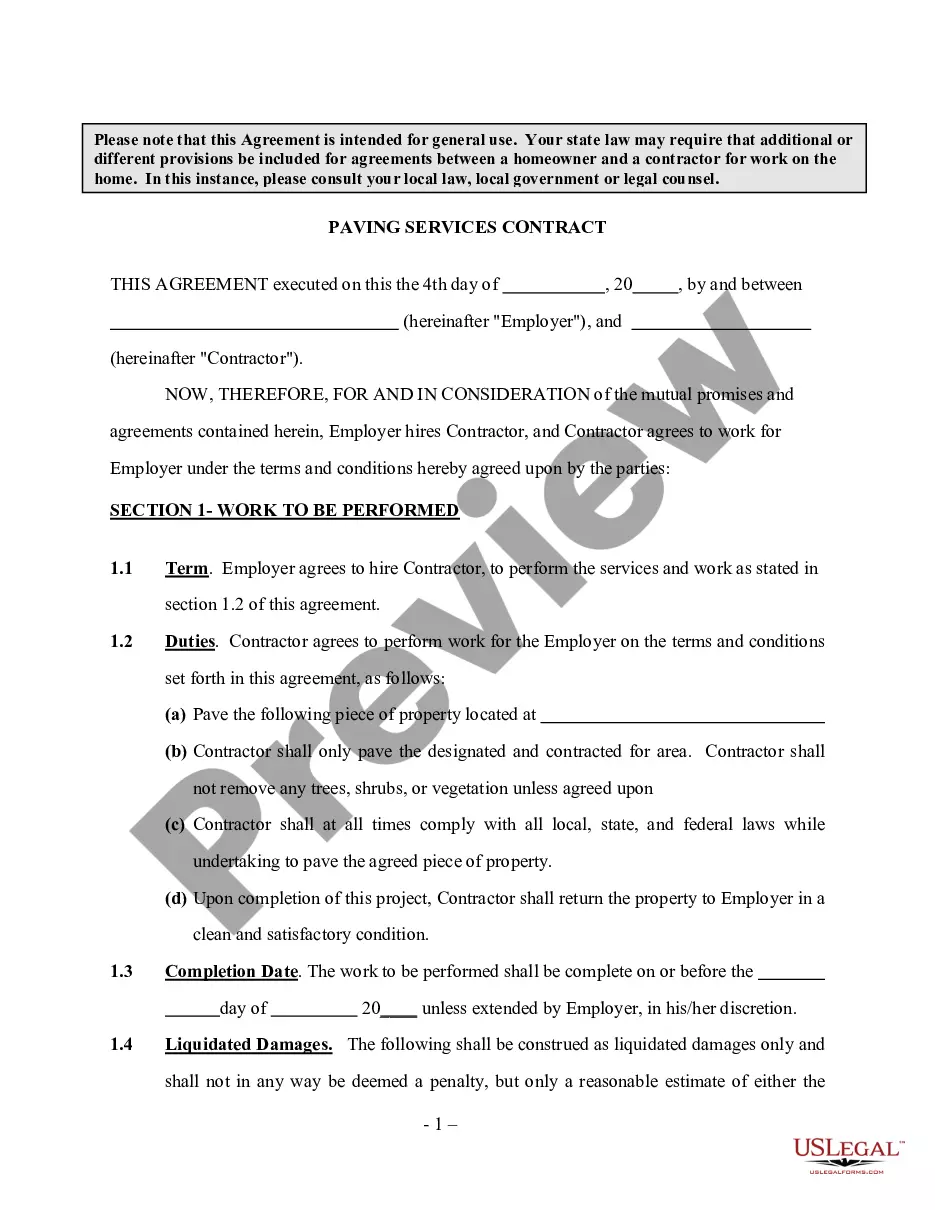
This Paving Contract for Contractor is a legal document designed to formalize the agreement between paving contractors and property owners. It outlines the terms and conditions under which paving work will be performed, including payment arrangements, scope of work, and responsibilities of both parties. This contract differs from other construction contracts by providing specific clauses related to paving projects, making it suitable for contractors and homeowners in need of paving services. This form complies with the laws of the State of Oregon.
Form components explained
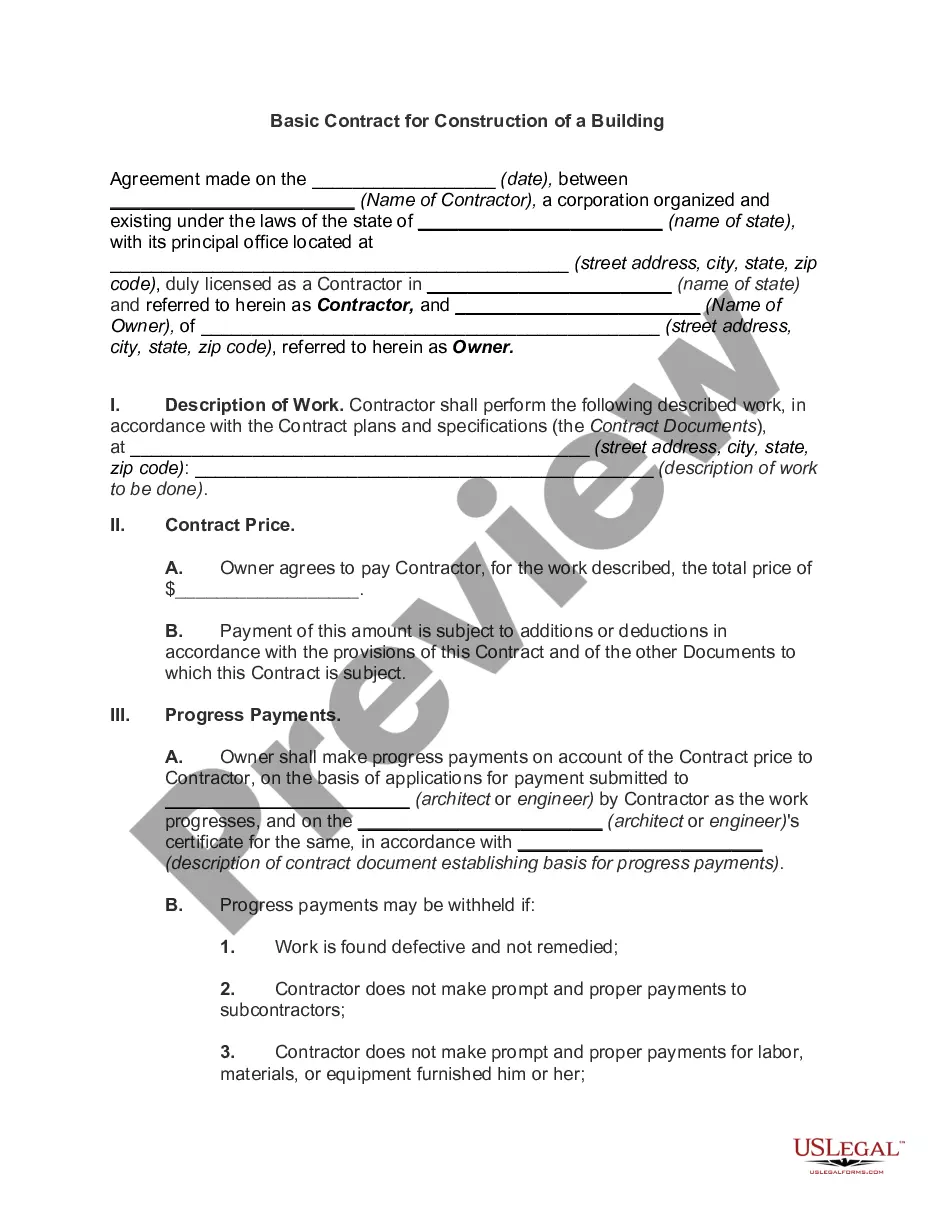
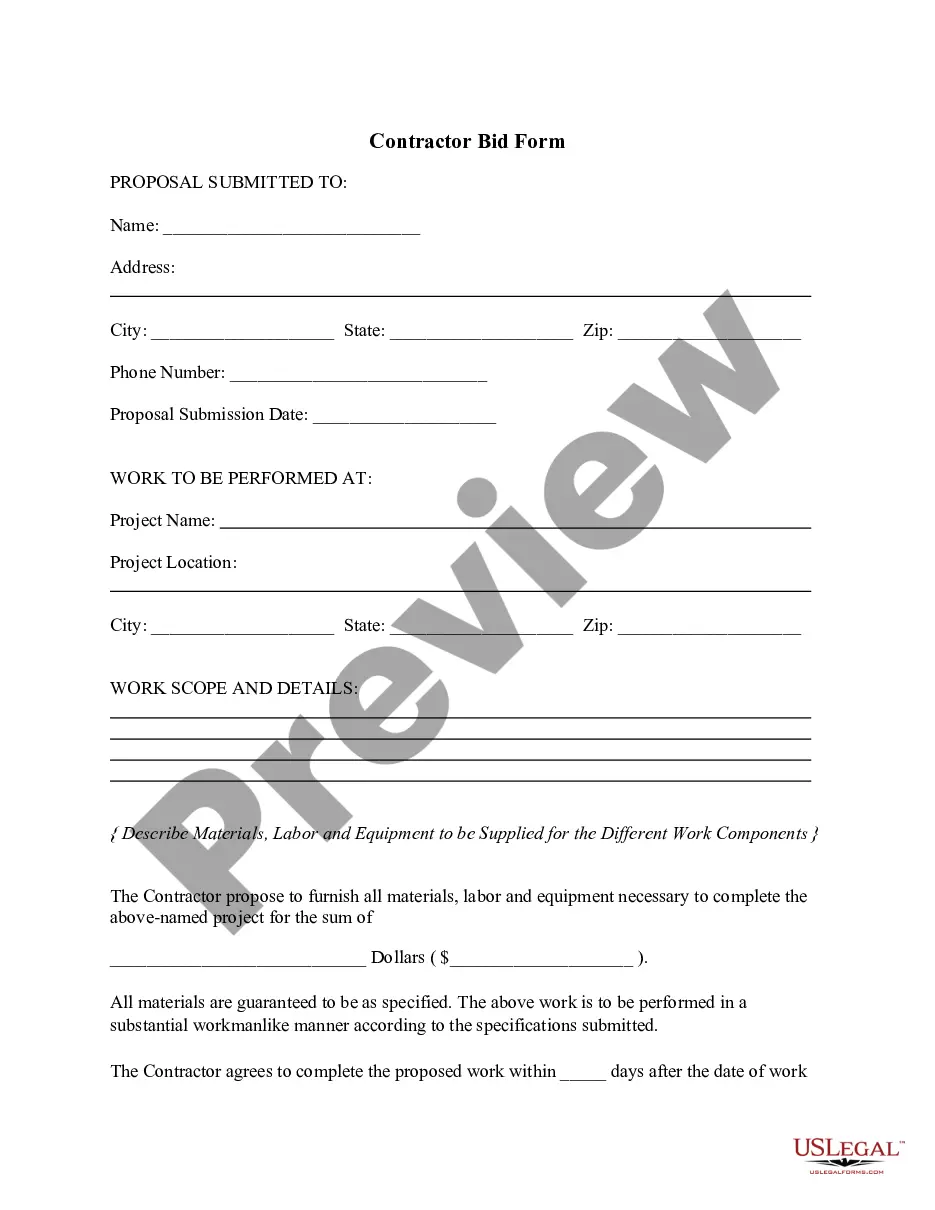
- Scope of Work: Details the type of paving work to be completed and associated materials.
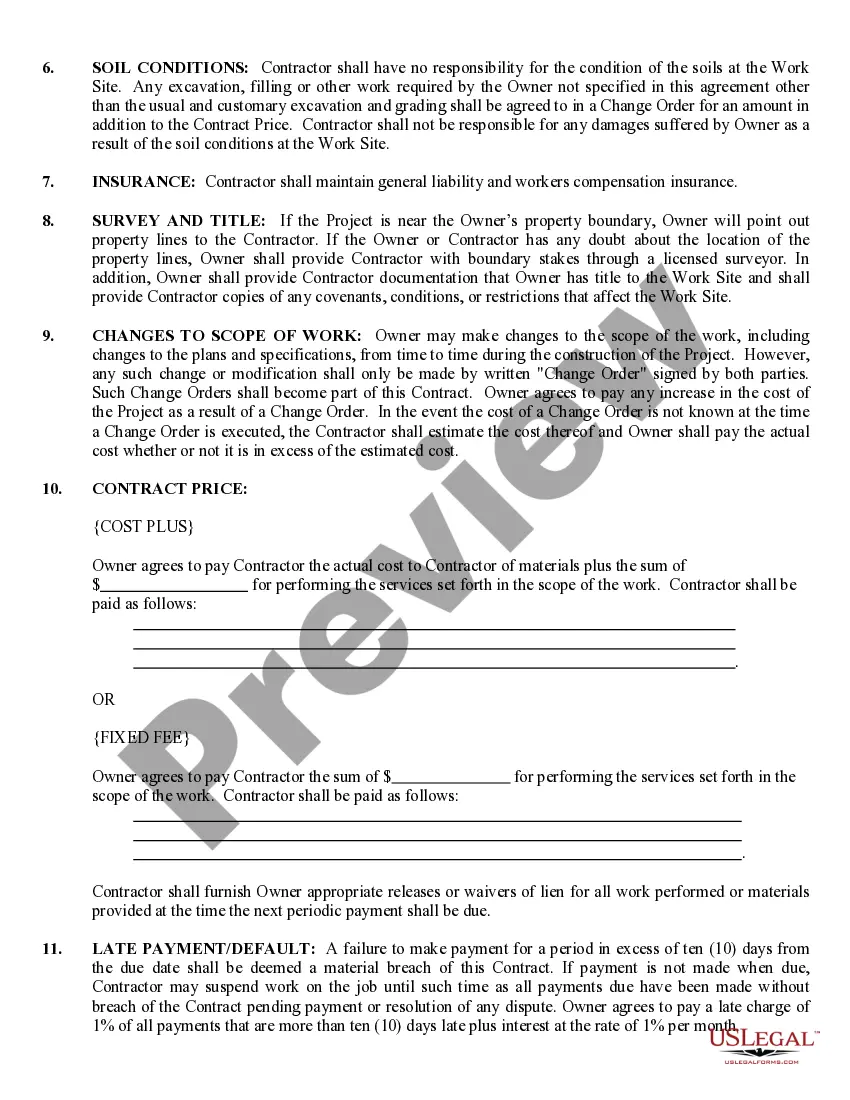
- Payment Terms: Clarifies whether a fixed fee or cost-plus payment structure will be used.
- Change Orders: Established process for modifying the scope of work during the project.
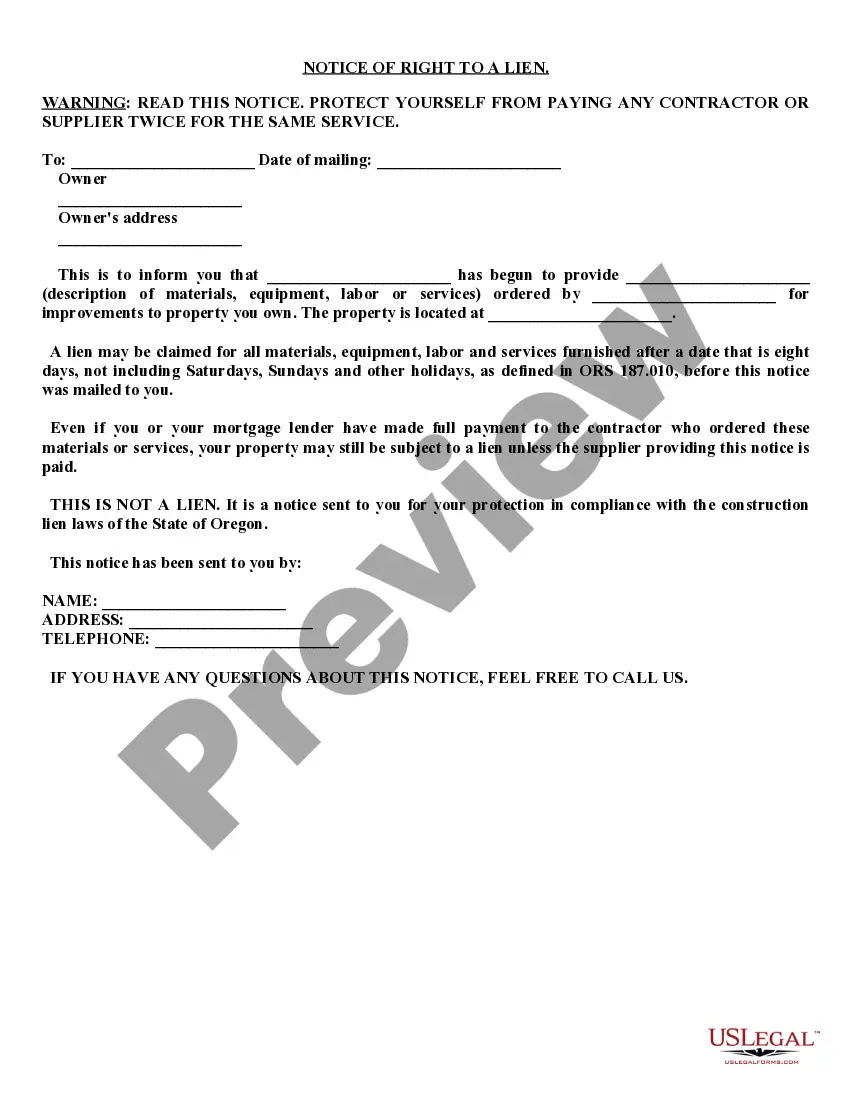
- Permits: Indicates the contractor's responsibility to obtain necessary permits.
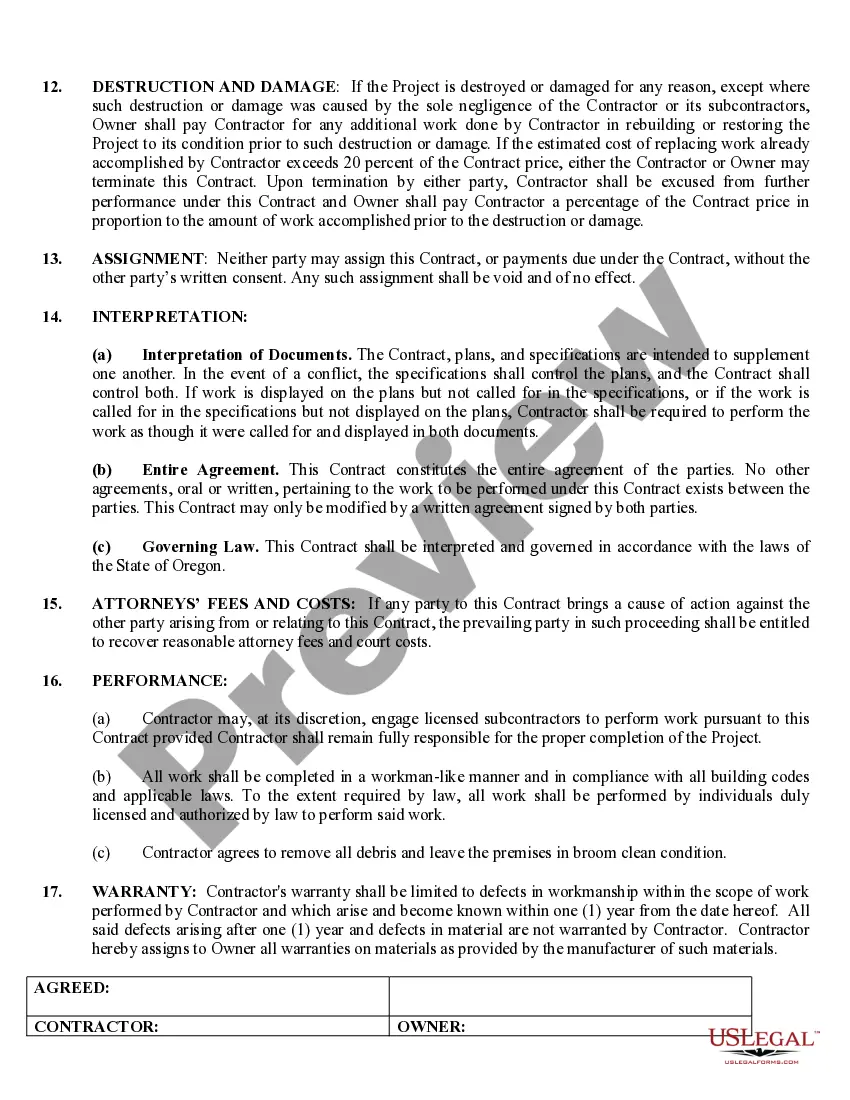
- Insurance: Describes the contractor's coverage for general liability and worker's compensation.
- Warranties: Defines warranties on workmanship and materials provided.

Situations where this form applies
This form is necessary when a property owner wishes to engage a paving contractor to perform work such as laying asphalt, concrete, or brick surfaces. It should be used in scenarios involving driveways, parking lots, or any other paved areas requiring durable surfaces. The contract helps to ensure that both parties are clear on their commitments and protects the rights of the property owner.
Who should use this form
- Property owners planning to hire a paving contractor for driveway or parking lot installations.
- Paving contractors who need a formal agreement to outline project details with clients.
- Developers managing paving projects that require detailed contractual agreements.
How to prepare this document
- Identify the parties: Clearly state the names and contact information of both the property owner and the paving contractor.
- Specify the scope of work: Detail the specific paving tasks to be completed, including materials and methods to be used.
- Enter payment terms: Choose between a fixed fee or cost-plus structure and clearly outline payment schedules.
- Include necessary permits: Indicate which permits the contractor will be responsible for securing.
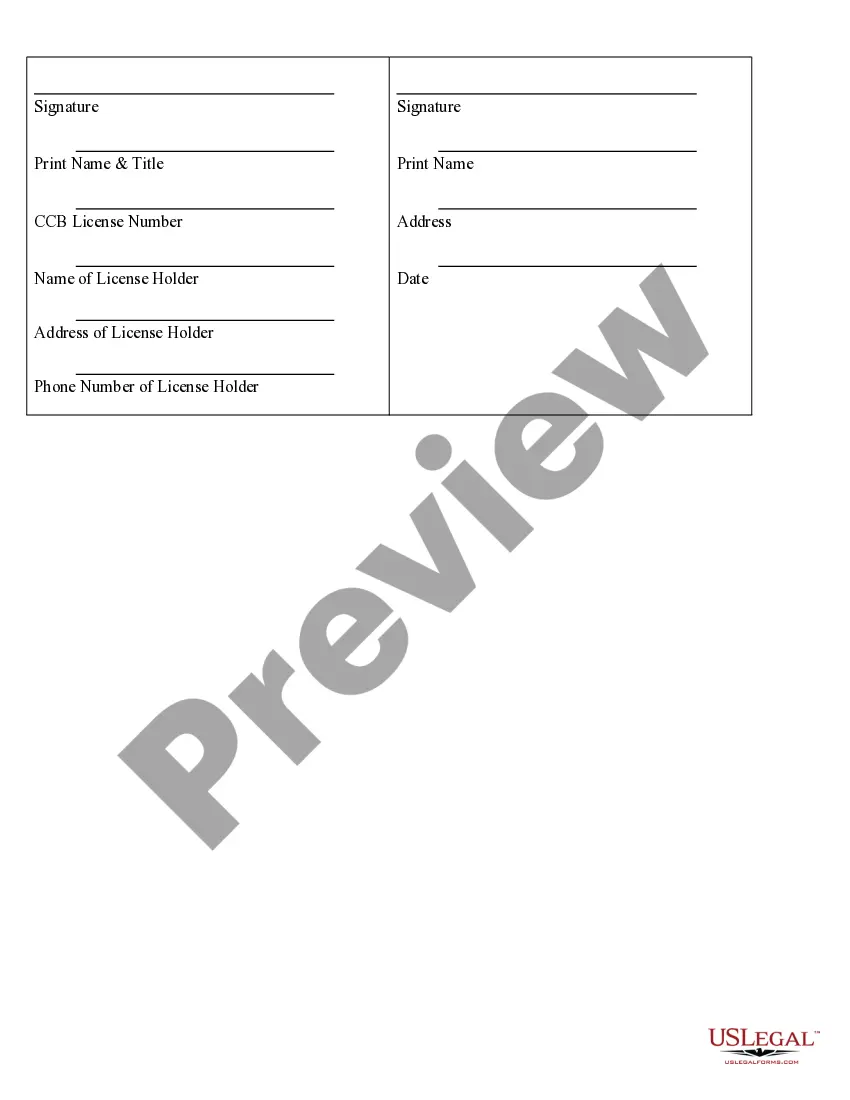
- Sign and date: Ensure both parties provide their signatures and the date, making the contract enforceable.
Notarization requirements for this form
This form does not typically require notarization unless specified by local law. However, having it notarized can add an extra layer of authenticity and assurance for both parties involved in the paving project.
Get your form ready online
Our built-in tools help you complete, sign, share, and store your documents in one place.
Make edits, fill in missing information, and update formatting in US Legal Forms—just like you would in MS Word.
Download a copy, print it, send it by email, or mail it via USPS—whatever works best for your next step.
Sign and collect signatures with our SignNow integration. Send to multiple recipients, set reminders, and more. Go Premium to unlock E-Sign.
If this form requires notarization, complete it online through a secure video call—no need to meet a notary in person or wait for an appointment.
We protect your documents and personal data by following strict security and privacy standards.

Make edits, fill in missing information, and update formatting in US Legal Forms—just like you would in MS Word.

Download a copy, print it, send it by email, or mail it via USPS—whatever works best for your next step.

Sign and collect signatures with our SignNow integration. Send to multiple recipients, set reminders, and more. Go Premium to unlock E-Sign.

If this form requires notarization, complete it online through a secure video call—no need to meet a notary in person or wait for an appointment.

We protect your documents and personal data by following strict security and privacy standards.
Common mistakes to avoid
- Failing to clearly define the scope of work, leading to misunderstandings about project expectations.
- Not specifying payment terms, which can result in disputes over the cost of the project.
- Neglecting to include necessary permits and insurance requirements, putting the project at risk.
Benefits of using this form online
- Instant access: Download the contract anytime, ensuring you have the necessary paperwork ready when needed.
- Editability: Customize the document to fit the specific needs of your paving project quickly.
- Legal reliability: The form is drafted by licensed attorneys, ensuring it complies with Oregon law.
Looking for another form?
Form popularity
FAQ
Contractual terms are defined as conditions, warranties or innominate terms. This may be specified in the contract, implied by the nature of it, or implied by law.
Key elements of a contract. For a contract to be valid, it must have four key elements: agreement, capacity, consideration, and intention.
Definition. An agreement between private parties creating mutual obligations enforceable by law. The basic elements required for the agreement to be a legally enforceable contract are: mutual assent, expressed by a valid offer and acceptance; adequate consideration; capacity; and legality.
If you run a small business that hires 1099 contractors, also known as independent contractors, it is vital that you have them sign an independent contractor contract. This is because there is a significant gray area between who is classified as an independent contractor and who is classified as an employee.
"Contract" means the total legal obligation resulting from the parties' agreement under ORS 84.001 (Short title) to 84.061 (Federal electronic signatures law partially superseded) and other applicable law.
Identifying/Contact Information. Title and Description of the Project. Projected Timeline and Completion Date. Cost Estimate and Payment Schedule. Stop Work Clause and Stop Payment Clause. Act of God Clause. Change Order Agreement. Warranty.
Homeowners who enter into contracts with contractors to improve, remodel or repair their homes almost always have a right to cancel the contract, without any penalty or obligation, within three business days after signing the contract.
In order for a contract to be considered binding, it must include the basic elements of a contract, including offer and acceptance, consideration, mutuality or intention, legality, and capacity. If a contract includes all of these elements, it is most likely a binding contract.
Both parties should sign the contract, and both should be bound by the terms and conditions spelled out in the agreement. In general that means the contractor will be obliged to provide specified materials and to perform certain services for you. In turn, you will be required to pay for those goods and that labor.