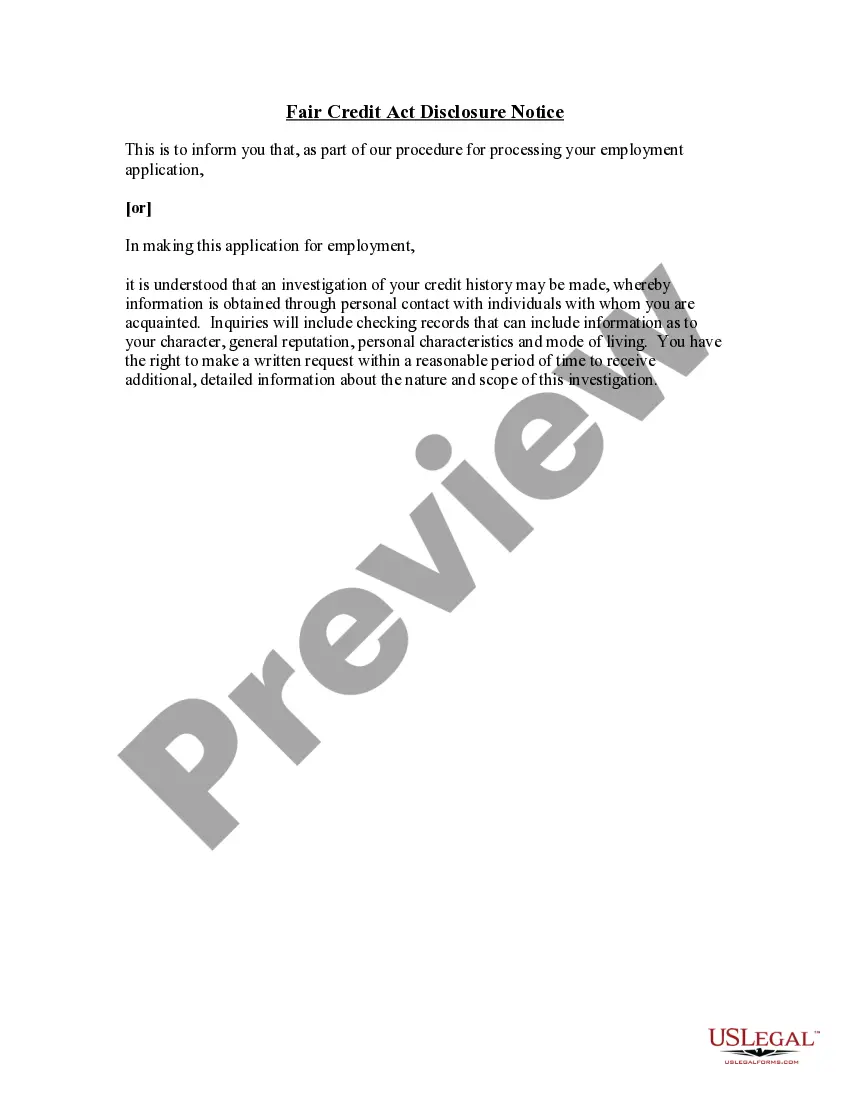
Oklahoma Fair Credit Act Disclosure Notice
Description
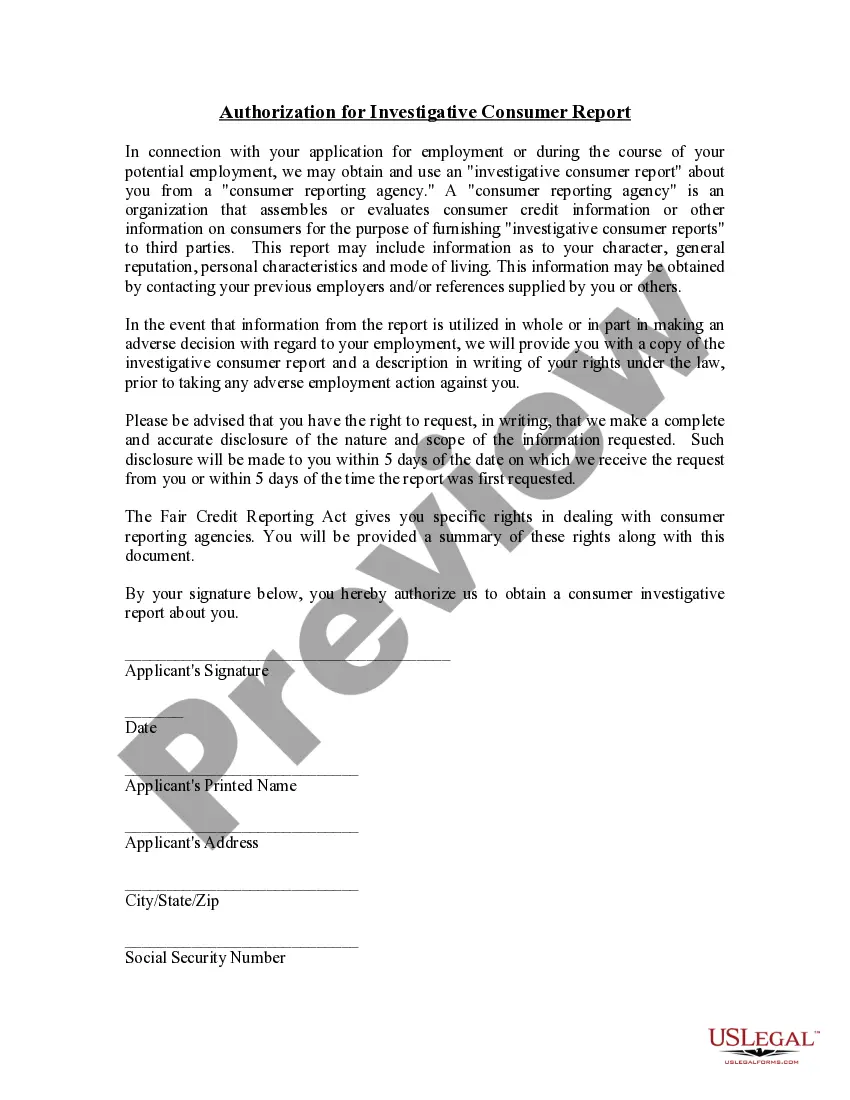
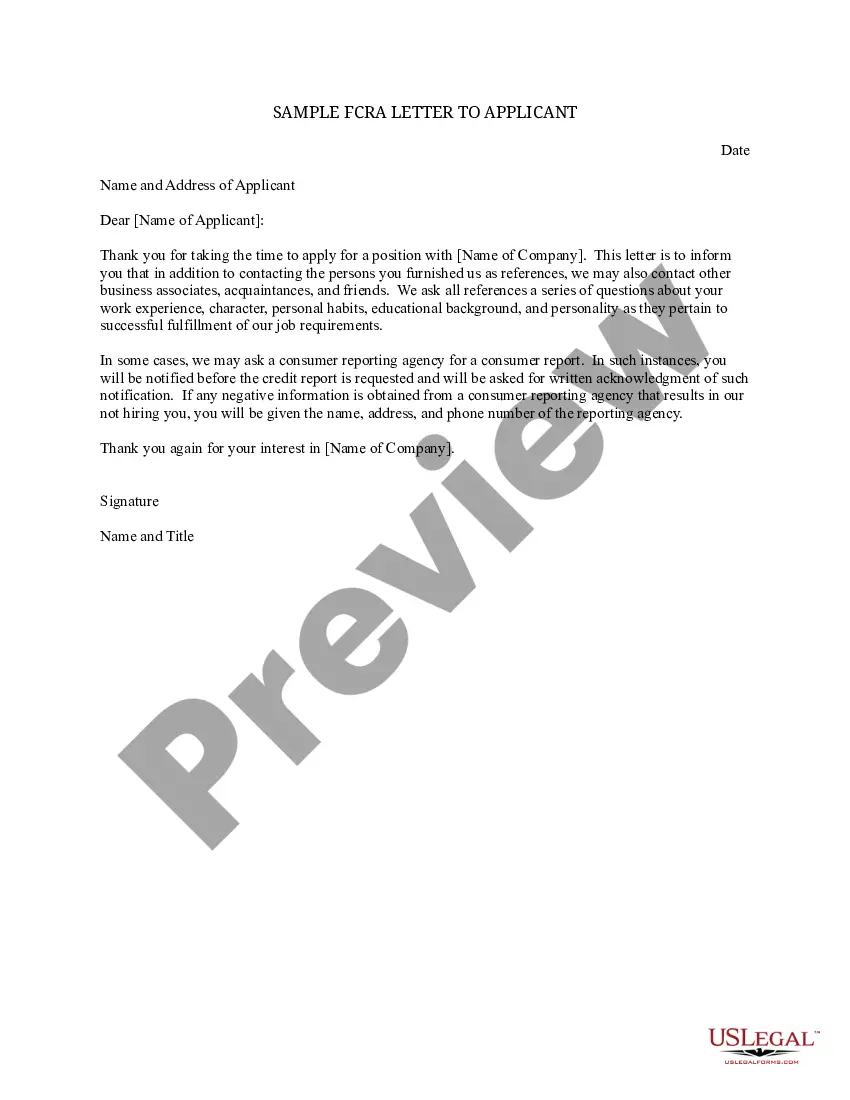
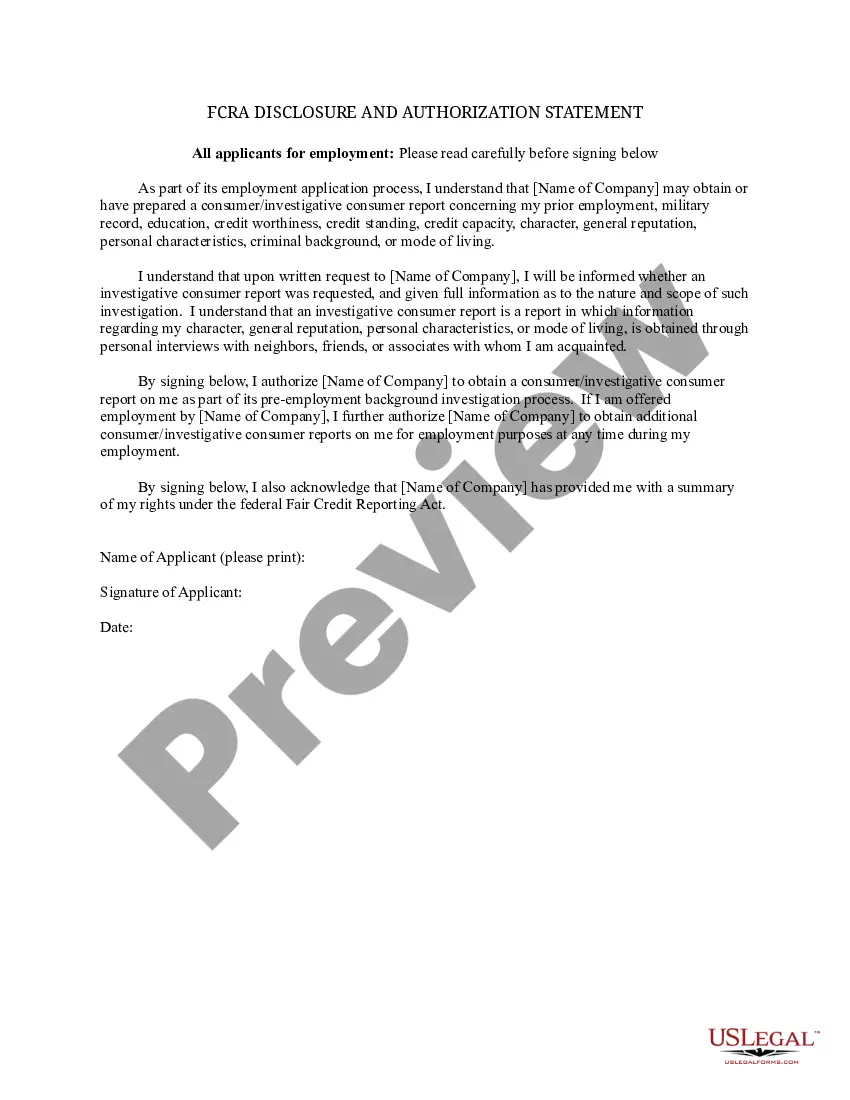
How to fill out Fair Credit Act Disclosure Notice?
US Legal Forms - one of the largest collections of legal documents in the United States - offers a variety of legal template documents that you can download or print.
By utilizing the website, you can access thousands of forms for business and personal purposes, categorized by regions, states, or keywords.
You can find the latest updates of forms like the Oklahoma Fair Credit Act Disclosure Notice in just a few minutes.
If the form does not meet your requirements, use the Search field at the top of the screen to find one that does.
Once you are satisfied with the form, confirm your choice by clicking on the Buy Now option. Then, choose the pricing plan you prefer and provide your details to register for an account.
- If you already have a subscription, Log In to download the Oklahoma Fair Credit Act Disclosure Notice from your US Legal Forms library.
- The Download button will be available on each form you view.
- You can access all previously acquired forms in the My documents section of your account.
- If you are using US Legal Forms for the first time, here are some straightforward instructions to help you get started.
- Ensure you have selected the correct form for your city/state. Click the Review button to view the content of the form.
- Check the form summary to confirm that you have selected the appropriate document.
Form popularity
FAQ
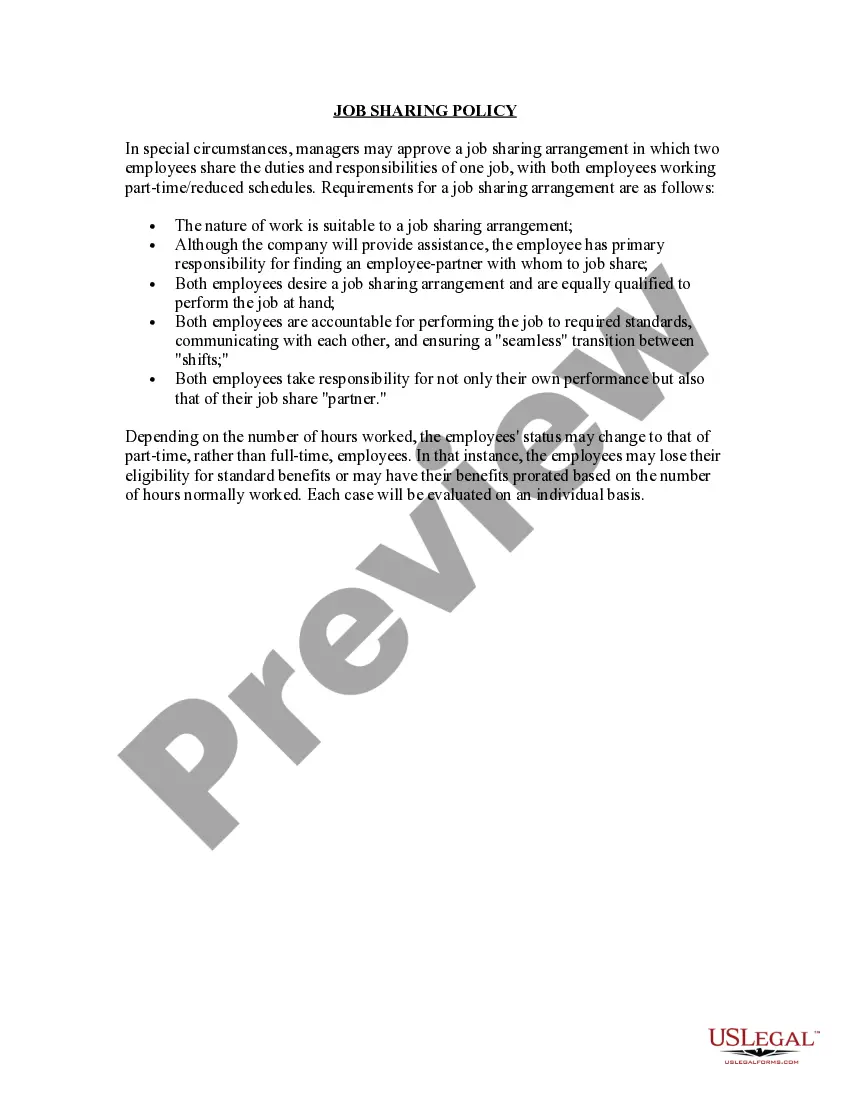
The Fair Credit Reporting Act (FCRA) is a federal law that requires you to make a disclosure to employees or applicants informing them that you will obtain a consumer report about them for employment consideration purposes.
The Fair Credit Reporting Act describes the kind of data that the bureaus are allowed to collect. That includes the person's bill payment history, past loans, and current debts.
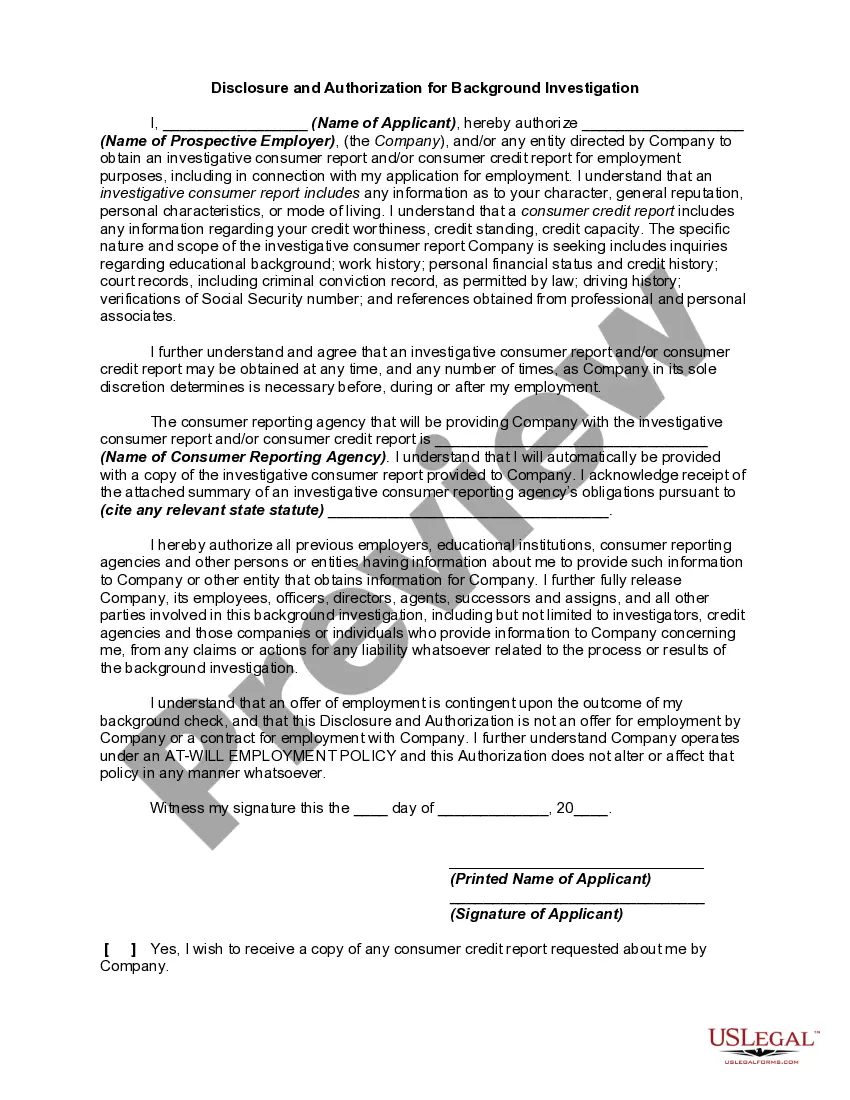
Under the FCRA, an employer may not run a background check on a prospective employee without first providing "a clear and conspicuous disclosure . . . in a document that consists solely of that disclosure, that a consumer report may be obtained for employment purposes." For efficiency, many employers include all
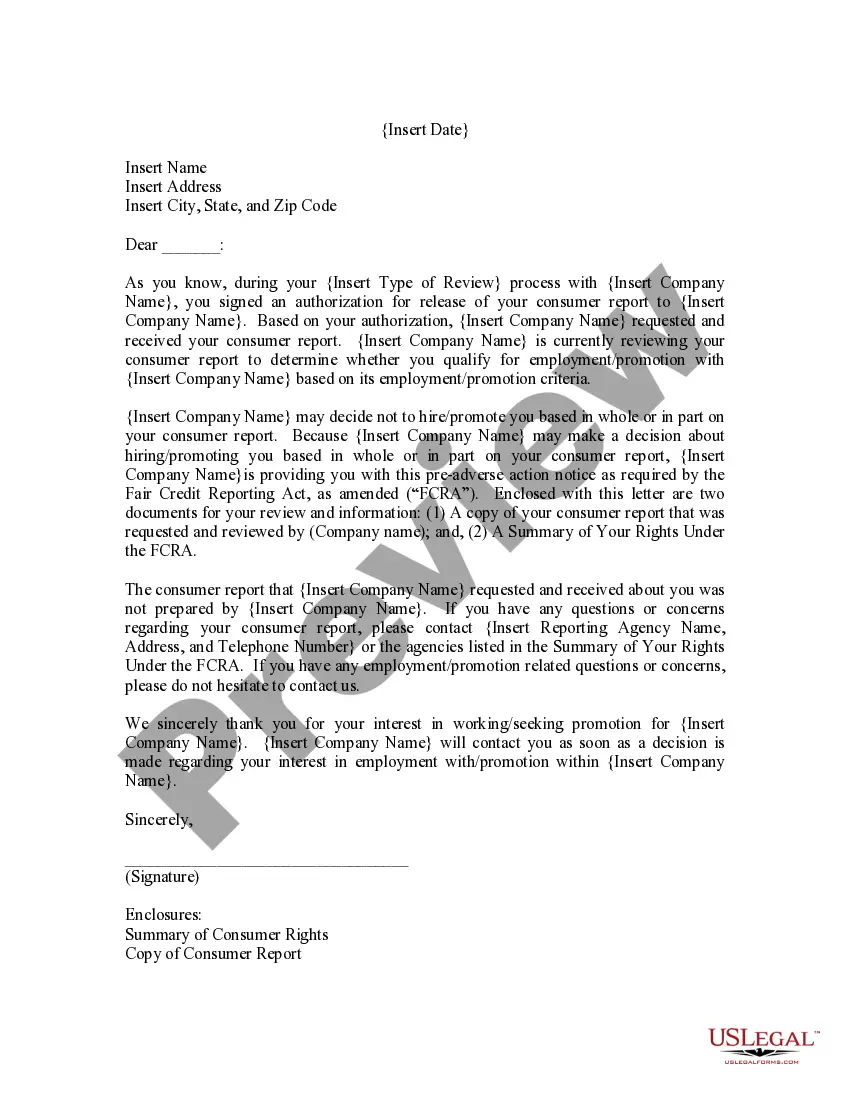
The FCRA gives you the right to be told if information in your credit file is used against you to deny your application for credit, employment or insurance. The FCRA also gives you the right to request and access all the information a consumer reporting agency has about you (this is called "file disclosure").
Access to Your Credit Report The act requires credit reporting agencies to provide you with any information in your credit file upon request once a year. You must have proper identification. You have a right to a free copy of your credit report within 15 days of your request.
On July 21, 2010, Congress passed the Dodd-Frank Wall Street Reform and Consumer Protection Act (Dodd-Frank Act). Section 1100F of the Dodd-Frank Act amended the FCRA to require disclosure of credit scores and information relating to credit scores for both risk-based pricing and FCRA adverse action notices.
Disclosures to consumers. (a) Every consumer reporting agency shall, upon request and proper identification of any consumer, clearly and accurately disclose to the consumer: (1) The nature and substance of all information (except medical information) in its files on the consumer at the time of the request.
The Fair Credit Reporting Act describes the kind of data that the bureaus are allowed to collect. That includes the person's bill payment history, past loans, and current debts.
Under the FCRA, an employer may not run a background check on a prospective employee without first providing "a clear and conspicuous disclosure . . . in a document that consists solely of that disclosure, that a consumer report may be obtained for employment purposes." For efficiency, many employers include all
The Act (Title VI of the Consumer Credit Protection Act) protects information collected by consumer reporting agencies such as credit bureaus, medical information companies and tenant screening services. Information in a consumer report cannot be provided to anyone who does not have a purpose specified in the Act.