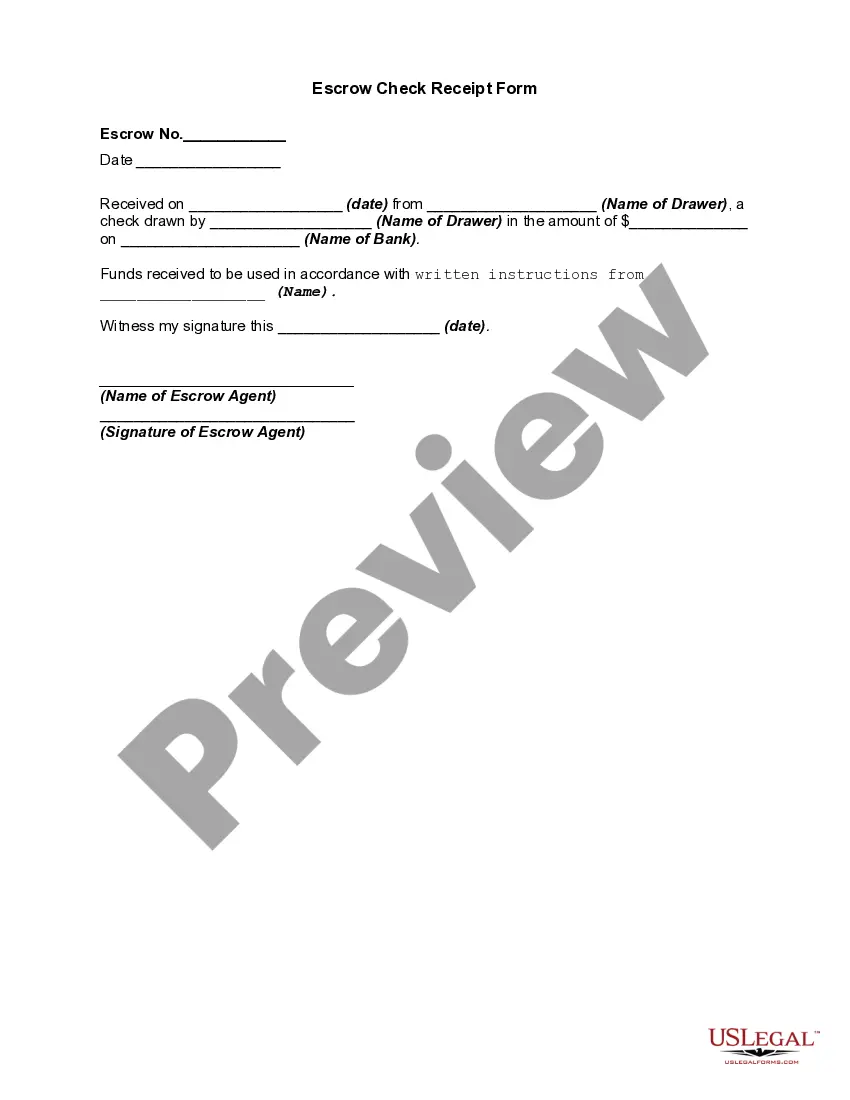
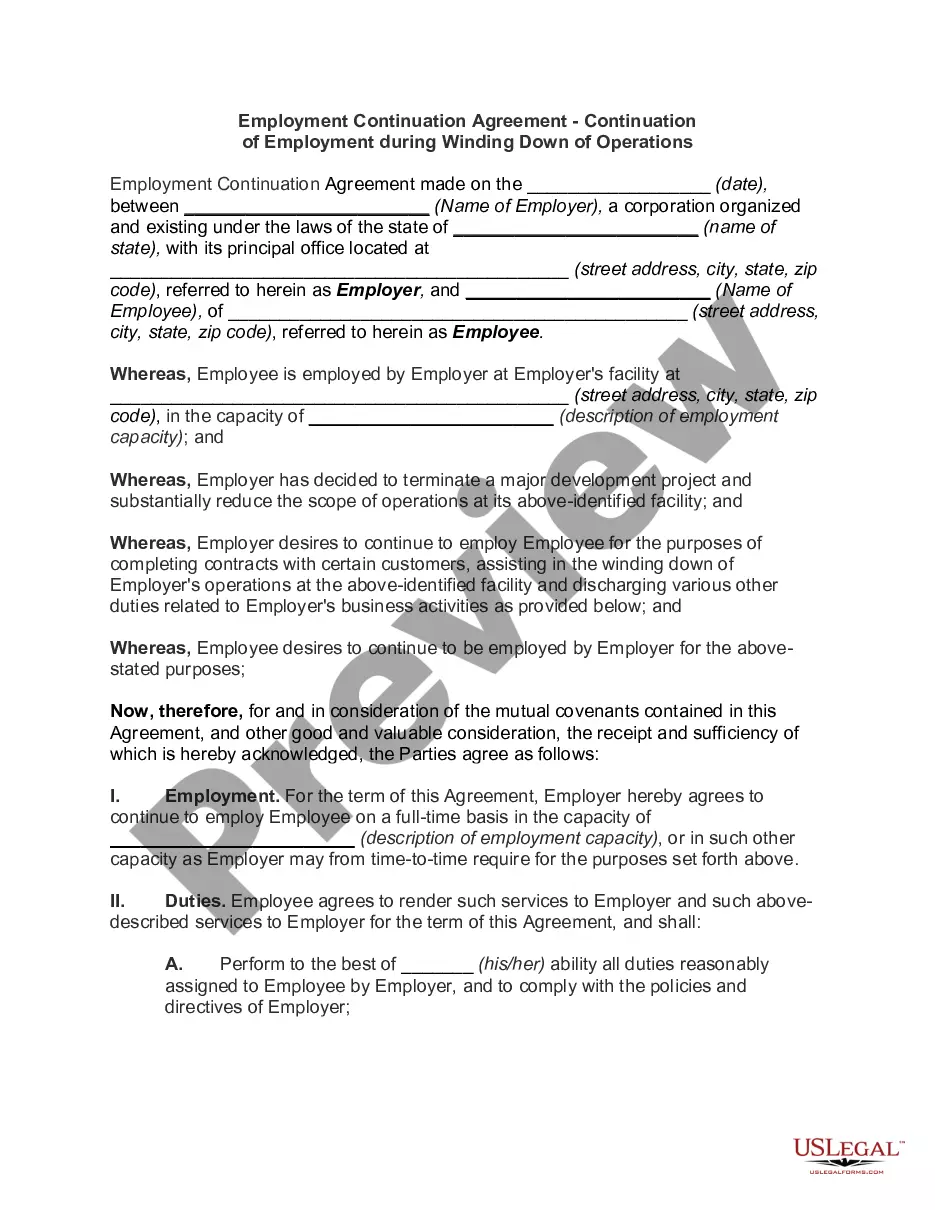
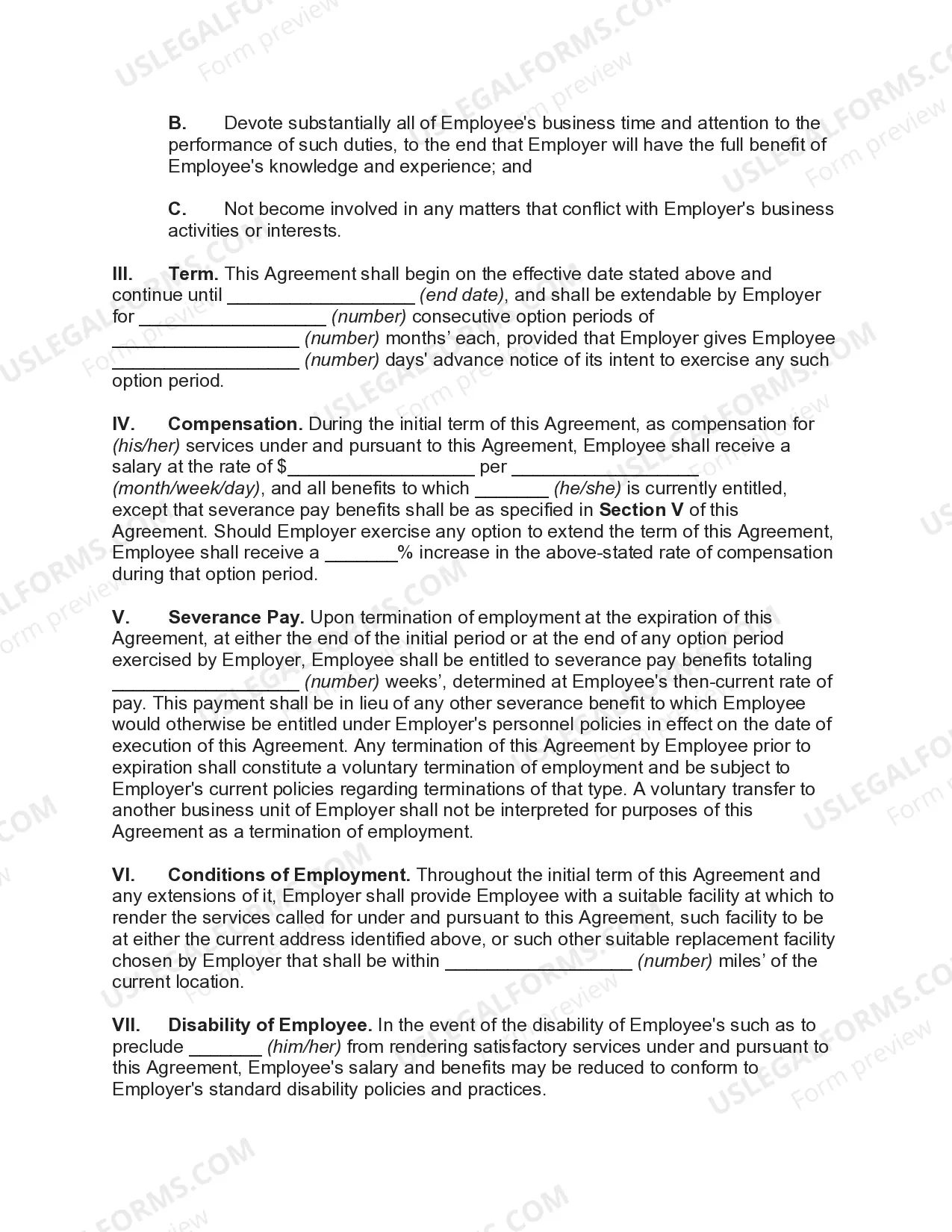
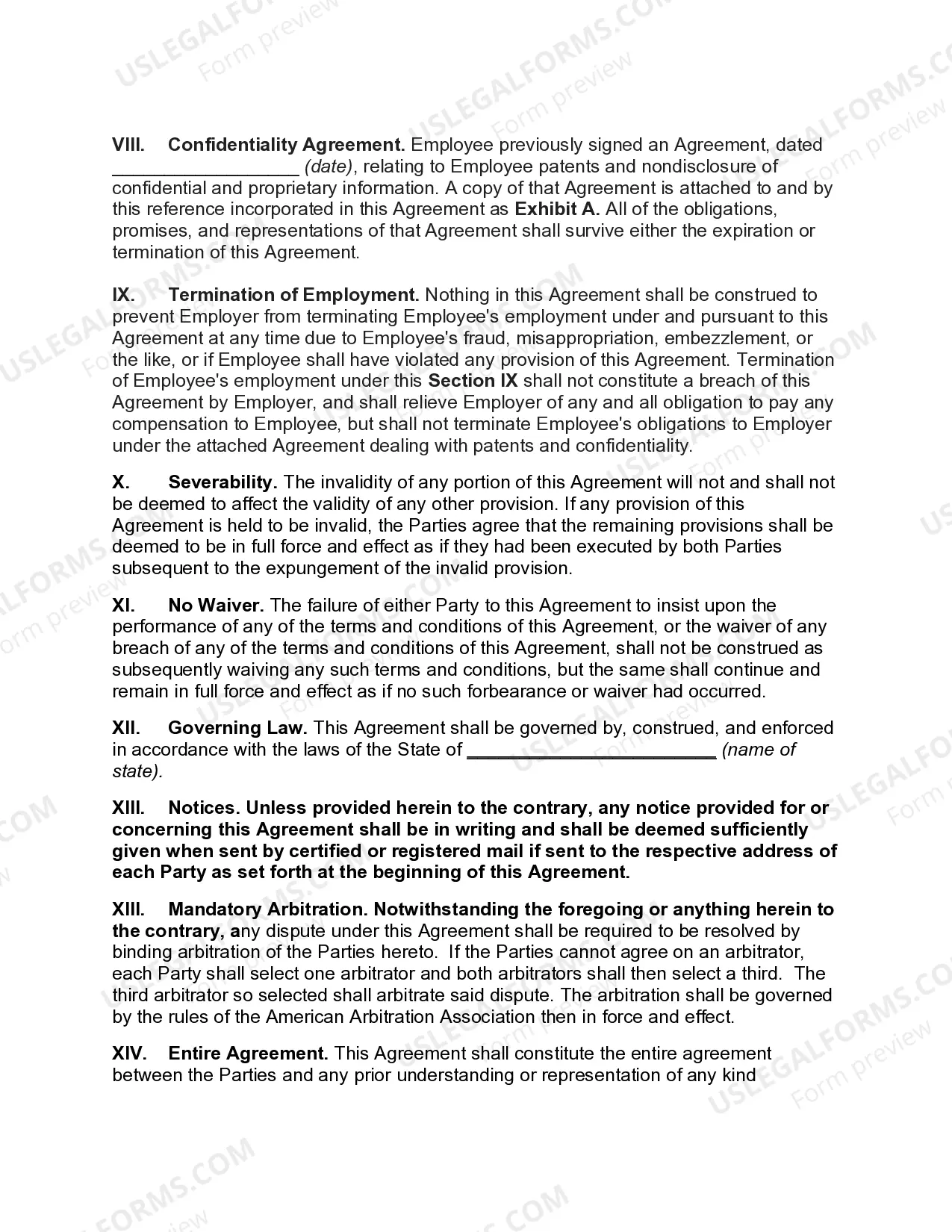
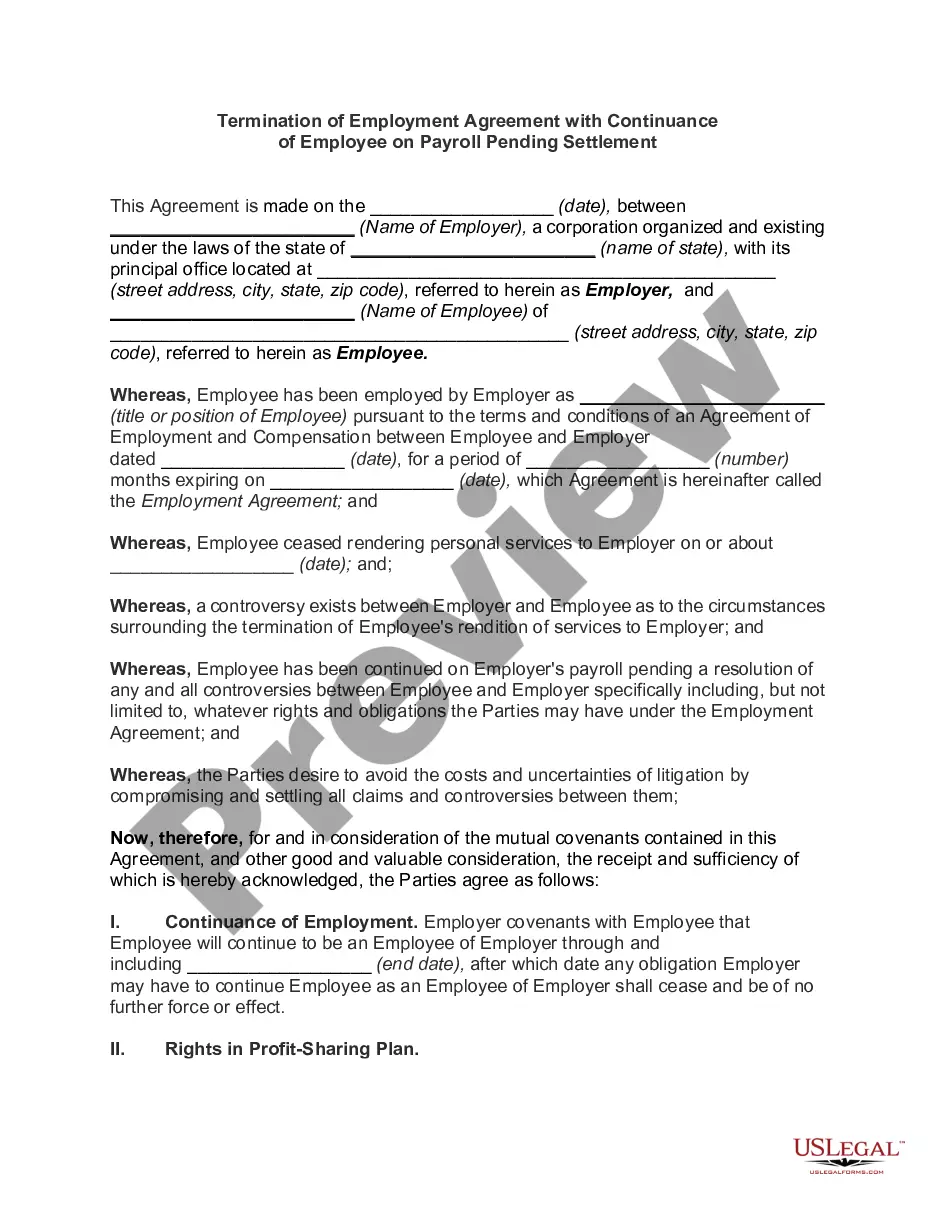
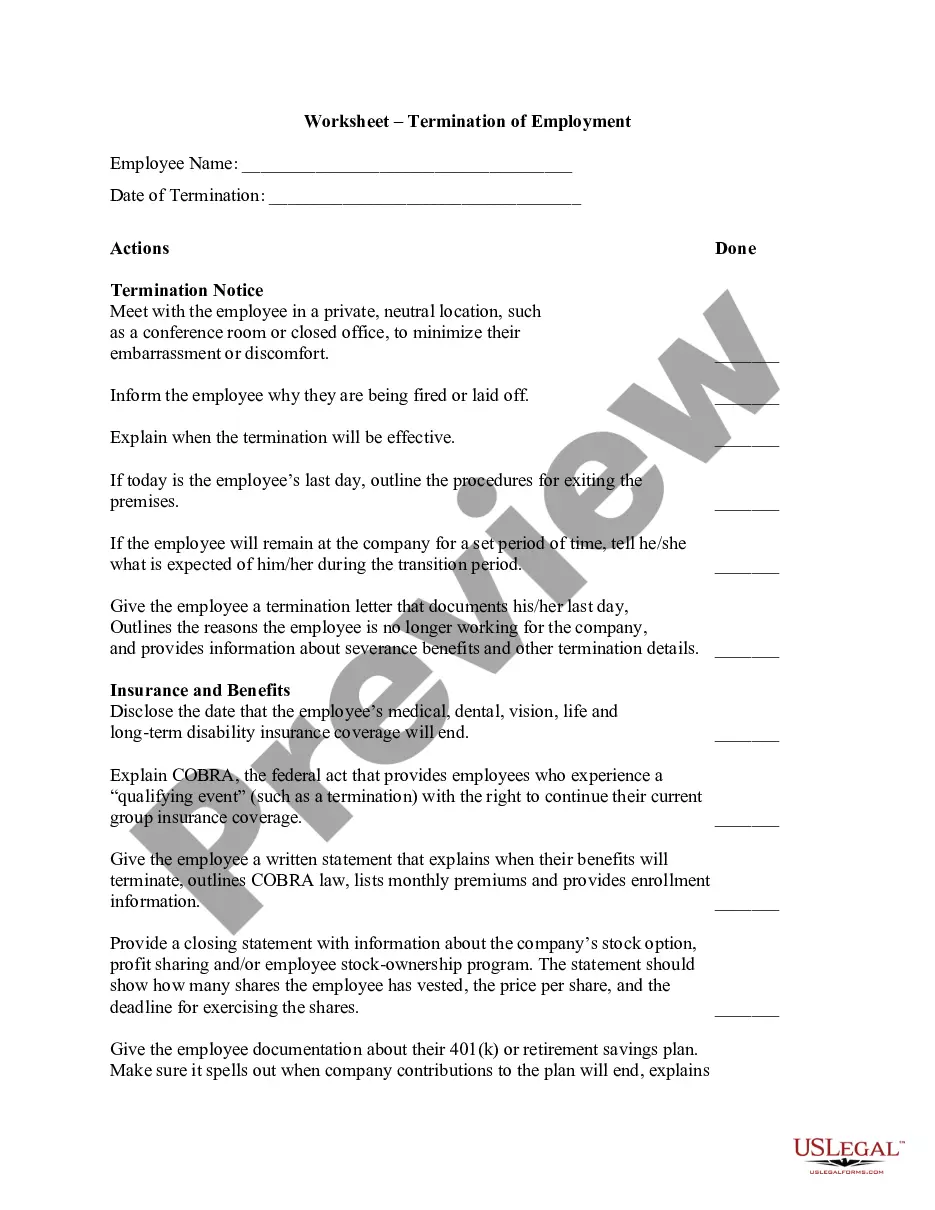
Oklahoma Employment Continuation Agreement - Continuation of Employment during Winding Down of Operations
Description
Get your form ready online
Our built-in tools help you complete, sign, share, and store your documents in one place.
Make edits, fill in missing information, and update formatting in US Legal Forms—just like you would in MS Word.
Download a copy, print it, send it by email, or mail it via USPS—whatever works best for your next step.
Sign and collect signatures with our SignNow integration. Send to multiple recipients, set reminders, and more. Go Premium to unlock E-Sign.
If this form requires notarization, complete it online through a secure video call—no need to meet a notary in person or wait for an appointment.
We protect your documents and personal data by following strict security and privacy standards.

Make edits, fill in missing information, and update formatting in US Legal Forms—just like you would in MS Word.

Download a copy, print it, send it by email, or mail it via USPS—whatever works best for your next step.

Sign and collect signatures with our SignNow integration. Send to multiple recipients, set reminders, and more. Go Premium to unlock E-Sign.

If this form requires notarization, complete it online through a secure video call—no need to meet a notary in person or wait for an appointment.

We protect your documents and personal data by following strict security and privacy standards.
Looking for another form?


How to fill out Employment Continuation Agreement - Continuation Of Employment During Winding Down Of Operations?
You might spend numerous hours online trying to locate the authentic document template that meets the federal and state requirements you need.
US Legal Forms provides thousands of legal forms that are reviewed by professionals.
You can download or print the Oklahoma Employment Continuation Agreement - Continuation of Employment during Winding Down of Operations from my service.
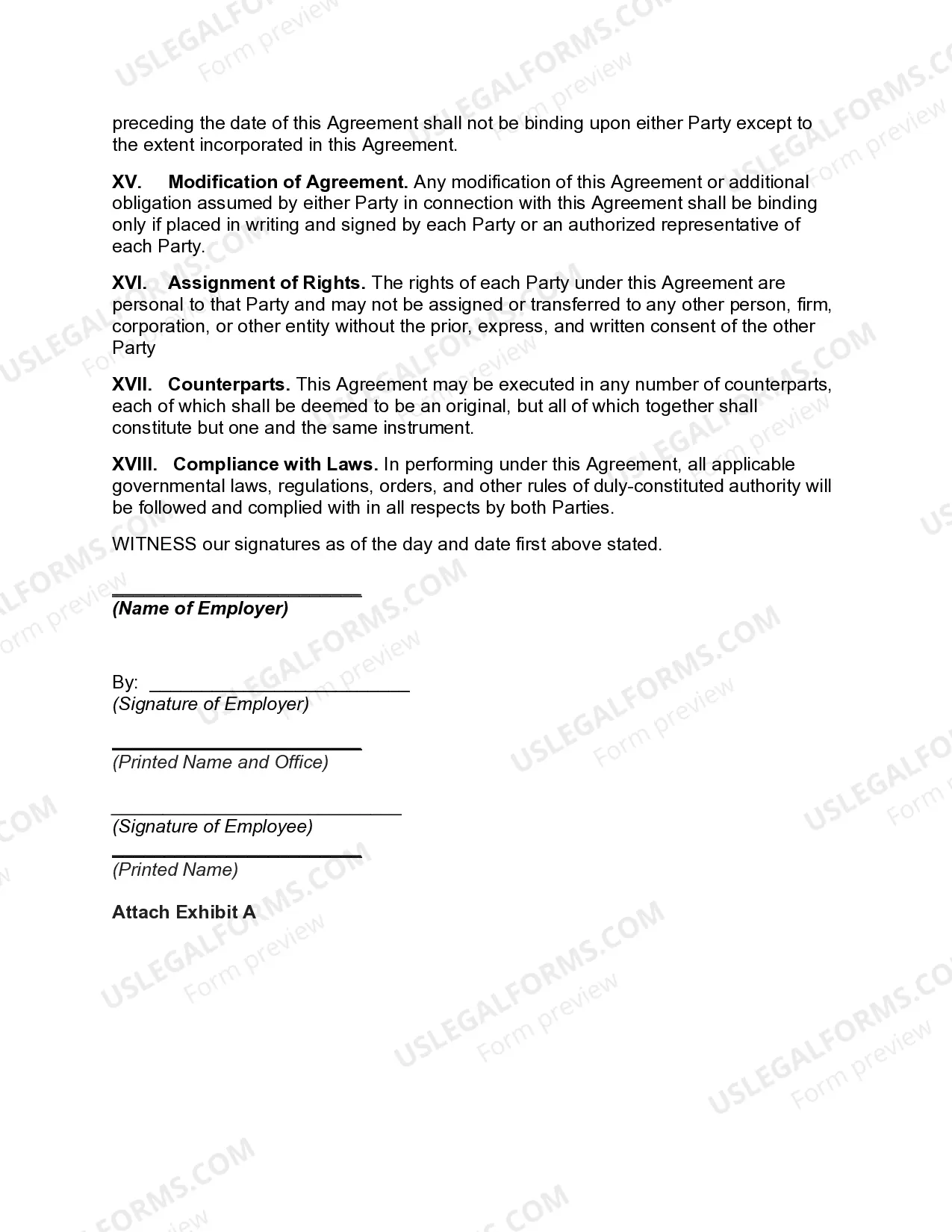
If available, utilize the Review option to look through the document template simultaneously.
- If you already have a US Legal Forms account, you can Log In and then select the Download option.
- After that, you can complete, modify, print, or sign the Oklahoma Employment Continuation Agreement - Continuation of Employment during Winding Down of Operations.
- Every legal document template you purchase is yours indefinitely.
- To obtain another copy of any purchased form, go to the My documents tab and click on the corresponding option.
- If you are using the US Legal Forms website for the first time, follow the straightforward instructions below.
- First, ensure that you have chosen the correct document template for the state/city you select.
- Review the form description to ensure you have chosen the right form.
Form popularity
FAQ
Yes, Oklahoma is an at-will employment state, meaning that employers can terminate employees for almost any reason, as long as it is not illegal. However, at-will employment does not eliminate the possibility of wrongful termination claims. The Oklahoma Employment Continuation Agreement - Continuation of Employment during Winding Down of Operations offers a framework that can provide more security and clarity during periods of business transition.
Continuous employment is when an employee has worked for one employer without a break. The length of continuous employment gives certain rights to employees, including: maternity pay. flexible working requests.
Thus, the employee is giving up a legal right and needs to get something (some consideration) from the employer in exchange. In many states, such as New York, employment or continued employment is considered sufficient consideration.
Generally, employees who lose their jobs in a layoff have no automatic right to severance pay. However, there are a few exceptions: Mass layoff severance. In a few states, employers are required to provide a small amount of severance as part of a large layoff or plant closing.
Oklahoma law has widely accepted that new (and sometimes continued) employment is sufficient consideration to bind employees to such agreements.
Continuous employment usually means working for the same employer without a break.
Continuous employment is when an employee has worked for one employer without a break. The length of continuous employment gives certain rights to employees, including: maternity pay. flexible working requests.
Consideration in the Employment Context At the outset of the employment relationship, the employer's provision of remuneration in exchange for the employee's services will generally serve as sufficient consideration to bind the parties to an employment agreement.
Provide consideration in addition to an offer of employment or continued employment. Examples of such possible additional consideration include a cash payment, stock options, training, education, a raise, additional paid time off, guaranteed severance, or a promotion.
Under the federal WARN Act, employers are required to provide written advance notice in the event of either a plant closing or a mass layoff. Both of these events are specifically defined under the Act.