Oklahoma Continuing Garnishee's Answer/Affidavit; Calculation for Continuing Garnishment of Earnings
Understanding this form
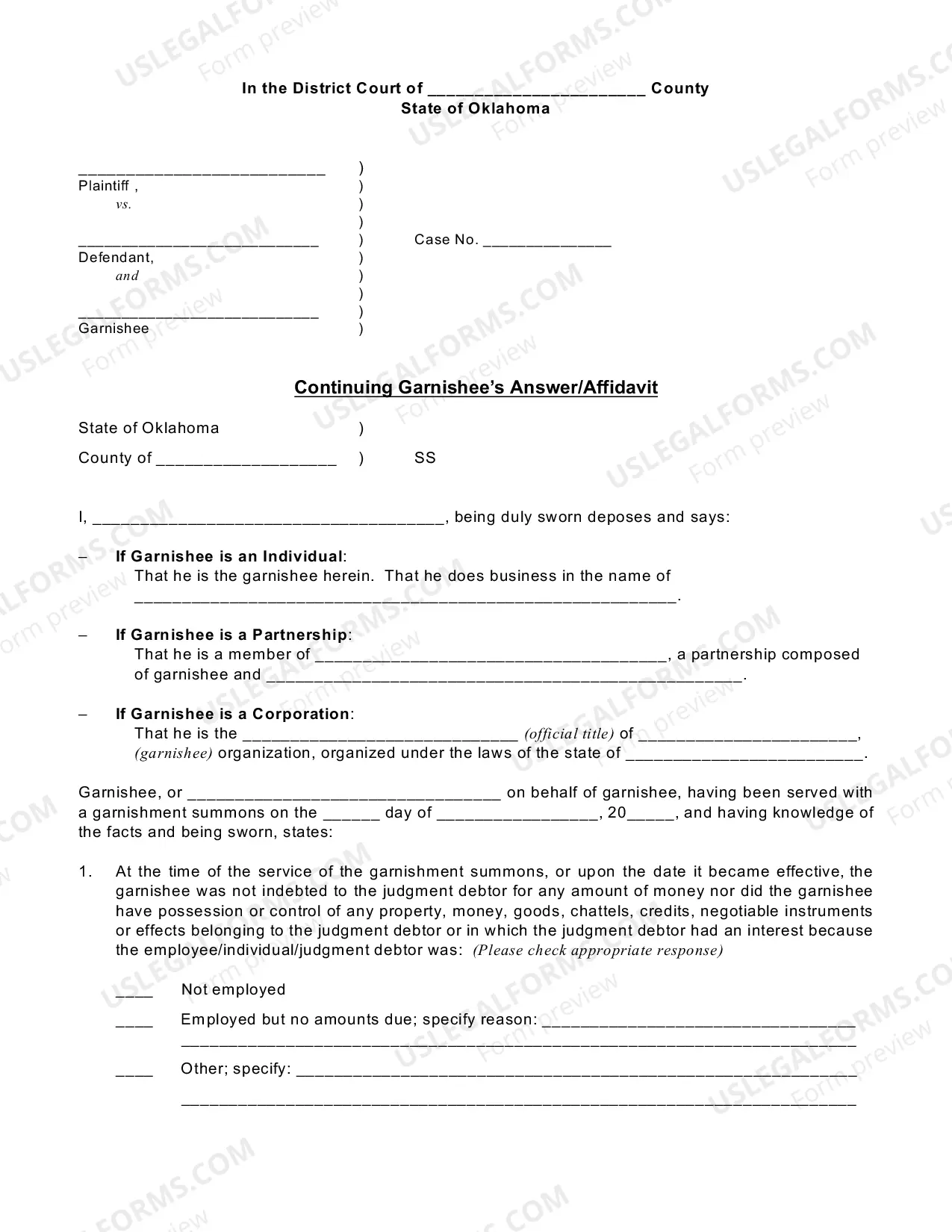
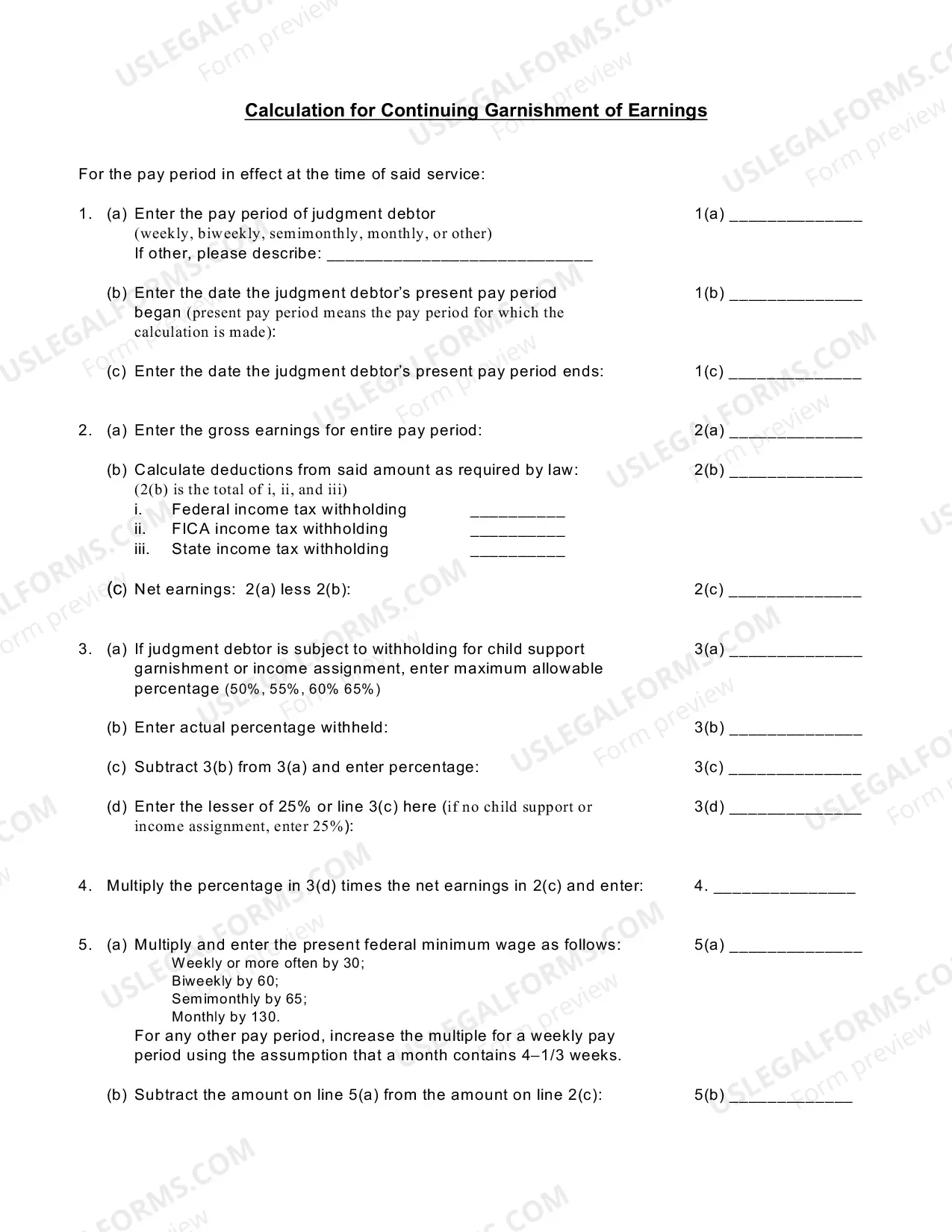
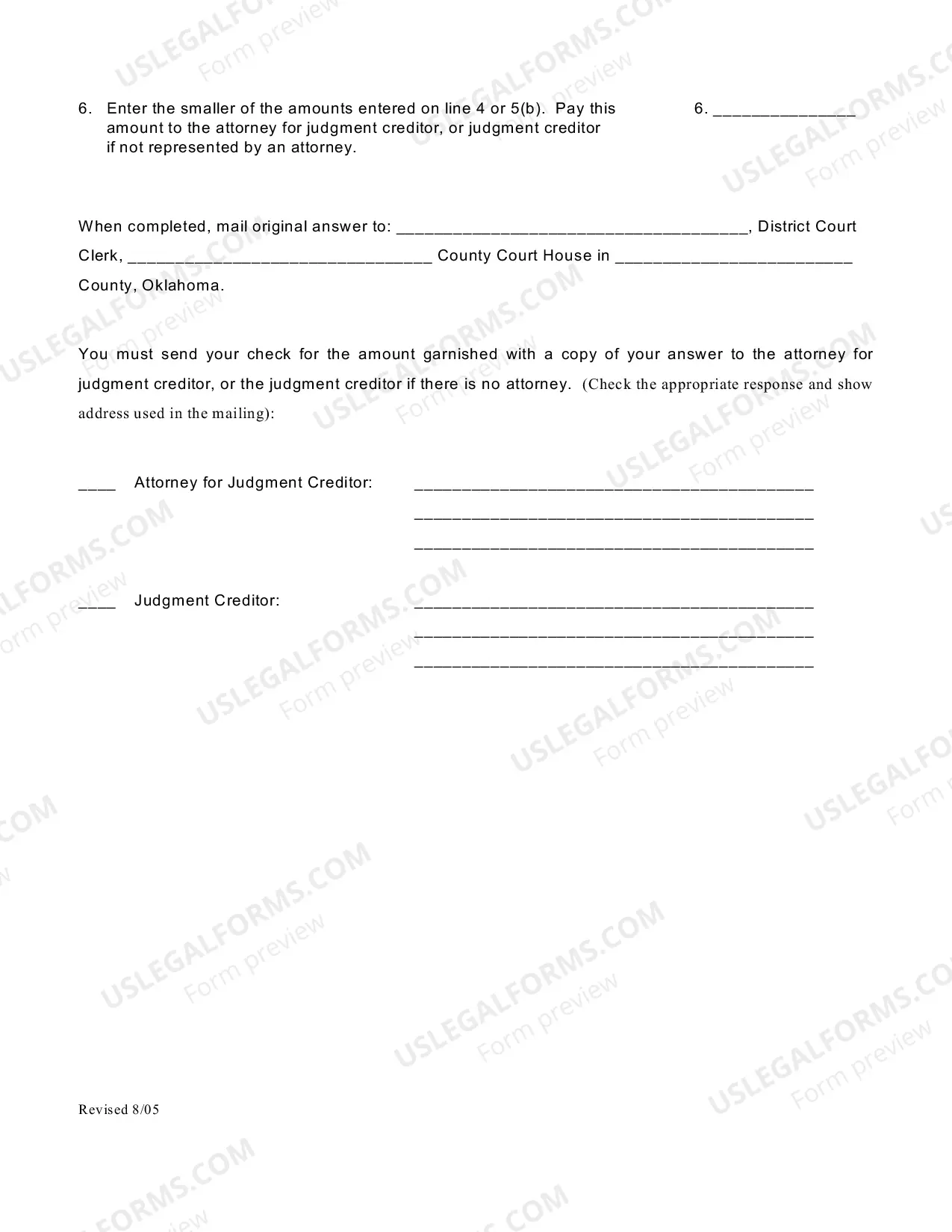
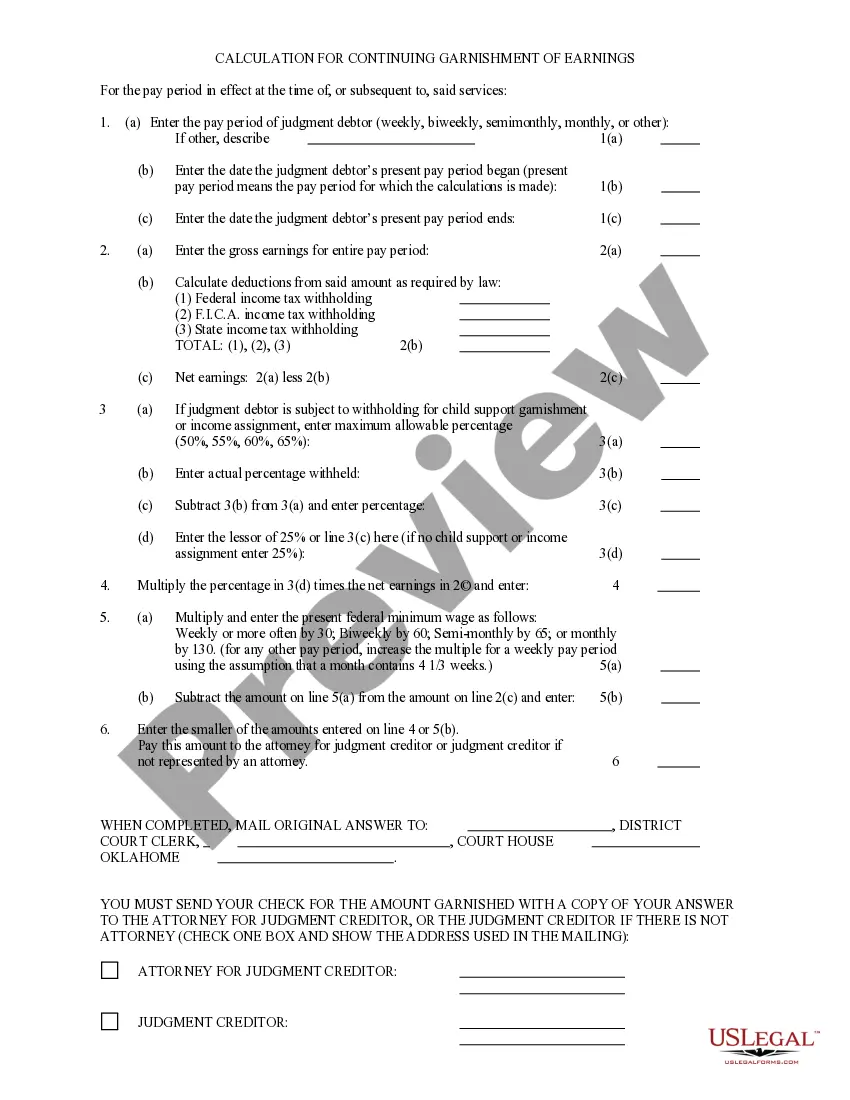
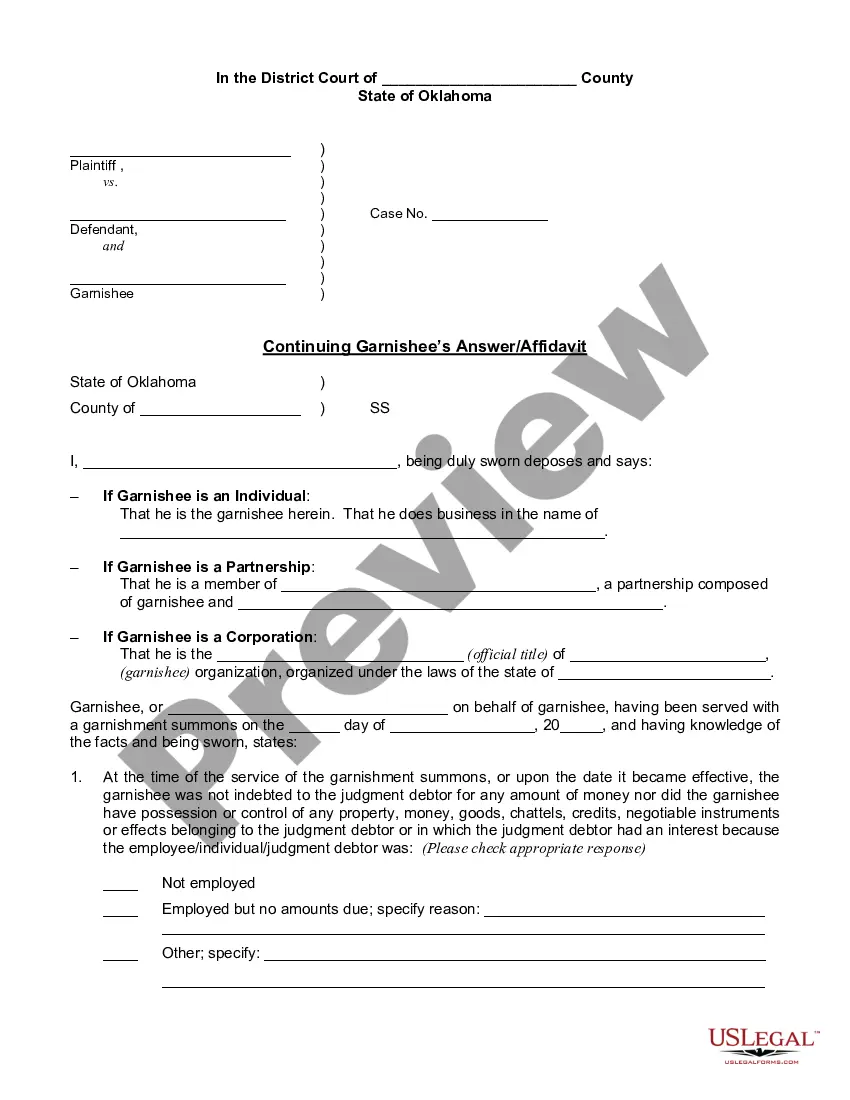
The Continuing Garnishee's Answer/Affidavit; Calculation for Continuing Garnishment of Earnings is a legal document used in the state of Oklahoma to respond to a garnishment summons. It specifically addresses the garnishee's obligations regarding the earnings of a judgment debtor. This form differs from other garnishment forms by incorporating detailed calculations of the debtor's earnings to determine the amount that can be garnished from their paycheck.
Key parts of this document
- Identification of the garnishee and their relationship with the judgment debtor.
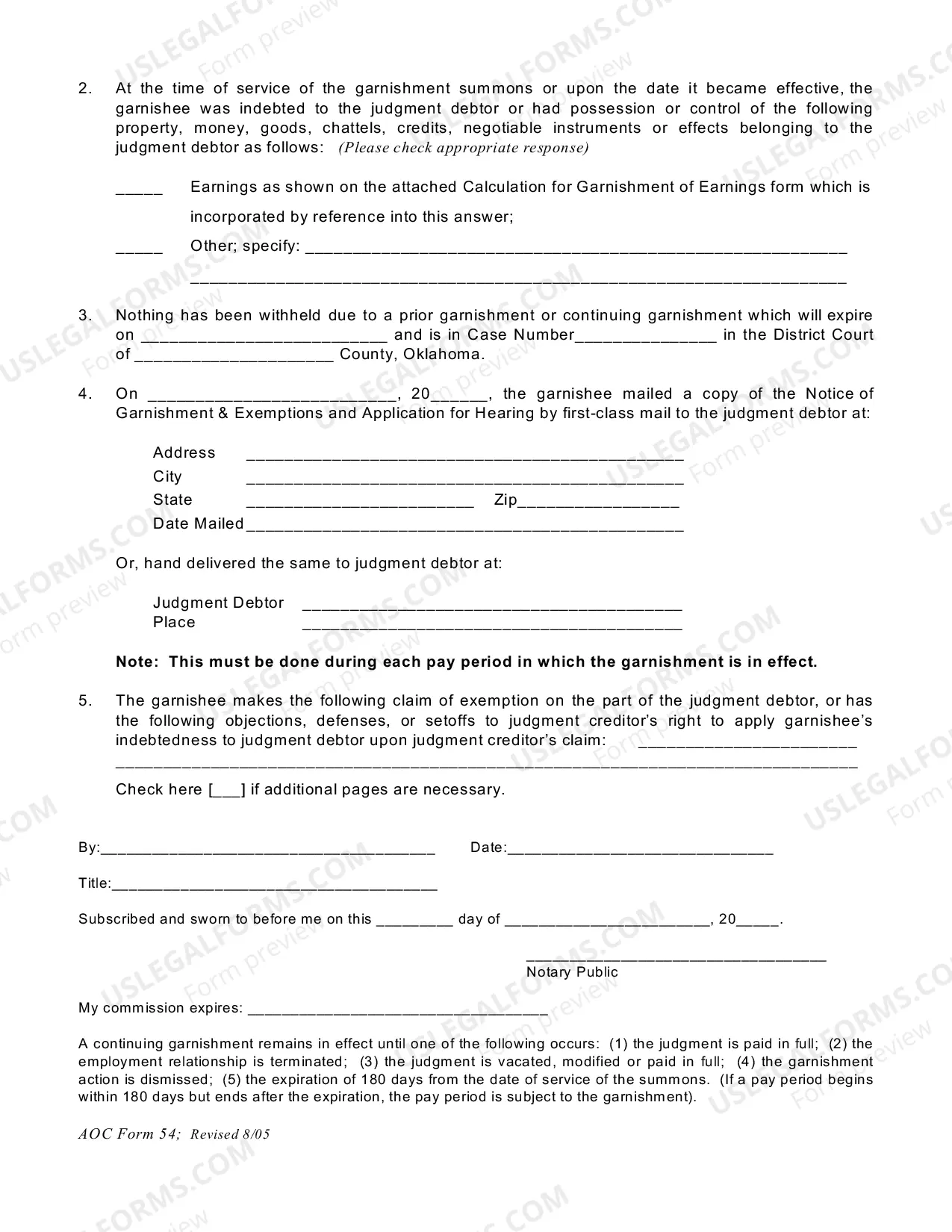
- Declaration of whether the garnishee owes money or possesses property belonging to the judgment debtor.
- Details on any prior garnishments affecting the debt owed.
- Notification process to the judgment debtor about the garnishment.
- Calculation of amounts to be garnished based on the debtor's earnings.
When to use this document
This form should be used when a garnishee has received a garnishment summons regarding a judgment debtor's earnings. It is necessary whenever the garnishee must report whether they are holding any amounts owed to the debtor at the time of the garnishment or how much can be lawfully withheld from the debtor's paychecks.
Who should use this form
- Employers who have received a garnishment summons for an employee.
- Financial institutions holding funds on behalf of a judgment debtor.
- Any entity or individual served as a garnishee in an Oklahoma court case.
How to prepare this document
- Identify the garnishee and provide their business name if applicable.
- State whether the garnishee is indebted to the judgment debtor at the time of service.
- Document the earnings or property held by the garnishee belonging to the judgment debtor.
- Complete the calculations for garnishment based on the judgment debtor's earnings.
- Sign the affidavit in front of a notary public.
Notarization requirements for this form
Notarization is not commonly needed for this form. However, certain documents or local rules may make it necessary. Our notarization service, powered by Notarize, allows you to finalize it securely online anytime, day or night.
Get your form ready online
Our built-in tools help you complete, sign, share, and store your documents in one place.
Make edits, fill in missing information, and update formatting in US Legal Forms—just like you would in MS Word.
Download a copy, print it, send it by email, or mail it via USPS—whatever works best for your next step.
Sign and collect signatures with our SignNow integration. Send to multiple recipients, set reminders, and more. Go Premium to unlock E-Sign.
If this form requires notarization, complete it online through a secure video call—no need to meet a notary in person or wait for an appointment.
We protect your documents and personal data by following strict security and privacy standards.

Make edits, fill in missing information, and update formatting in US Legal Forms—just like you would in MS Word.

Download a copy, print it, send it by email, or mail it via USPS—whatever works best for your next step.

Sign and collect signatures with our SignNow integration. Send to multiple recipients, set reminders, and more. Go Premium to unlock E-Sign.

If this form requires notarization, complete it online through a secure video call—no need to meet a notary in person or wait for an appointment.

We protect your documents and personal data by following strict security and privacy standards.
Common mistakes
- Failing to report all amounts owed to the judgment debtor.
- Not completing the earnings calculation correctly.
- Neglecting to send a notice to the judgment debtor after filing.
- Missing the notarization step, if required, before submission.
Why complete this form online
- Convenient access to legal forms from anywhere at any time.
- Easy editing and customization to fit specific case details.
- Reliable templates drafted by licensed attorneys ensuring compliance with legal requirements.
Looking for another form?

Form popularity
FAQ
Affidavit for continuing garnishment is a sworn statement by a plaintiff or his/her attorney or agent requesting the issuance of a summons of continuing garnishment as the defendant is indebted to the plaintiff on a judgment from a particular court and the plaintiff believes that the garnishee is or may be an employer
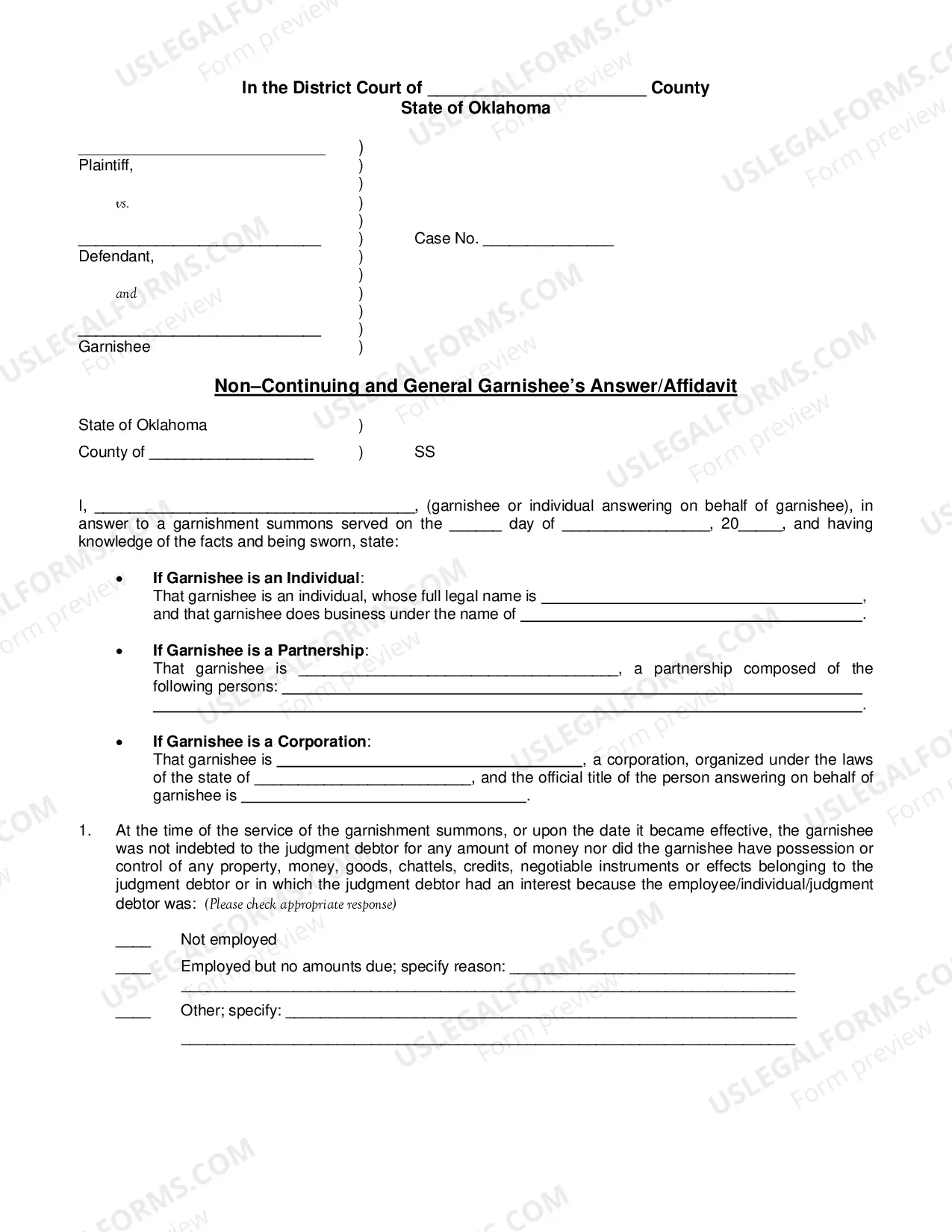
Non-continuing garnishment This is essentially a bank levy, which allows the creditor to take non-exempt money directly from your account. This may also result in a bank account freeze while they take funds from the balance of your account to pay the judgment.
You can only be paying on one garnishment at a time. This kind of exemption is claimed as an "undue hardship." Undue Hardship. You can apply for an "undue hardship" exemption" if you have a family to support.
25% of your disposable earnings for that week, or. the amount by which your disposable earnings for the week exceed 30 times the federal minimum hourly wage.
For example, if you make $500 per week in disposable income, only $125 of that amount can be subject to garnishment. This is because 25% of $500 is equal to $125, which is less than the amount your wages surpass 30 times the federal minimum wage ($217.50).
Wage garnishments can be stopped through two options: 1) Pay the debt in full with interest and attorney fees. 2) File bankruptcy. You may file for Chapter 7 or Chapter 13 bankruptcy.
A creditor MUST have a judgment against you before it can get a garnishment. There are two basic limits on the amount creditors can take from your wages. First, they cannot take more than 25% of your take-home pay. Second, a creditor must leave you with at least $217.50 a week or $870 a month in net (take-home) pay.
Under federal law and Oklahoma state law, whichever is lesser of the following can be garnished: 25% of your weekly disposable earnings, OR. The amount your weekly earnings exceeds 30 times the federal minimum wage of $7.25.