Oklahoma Summons
What this document covers
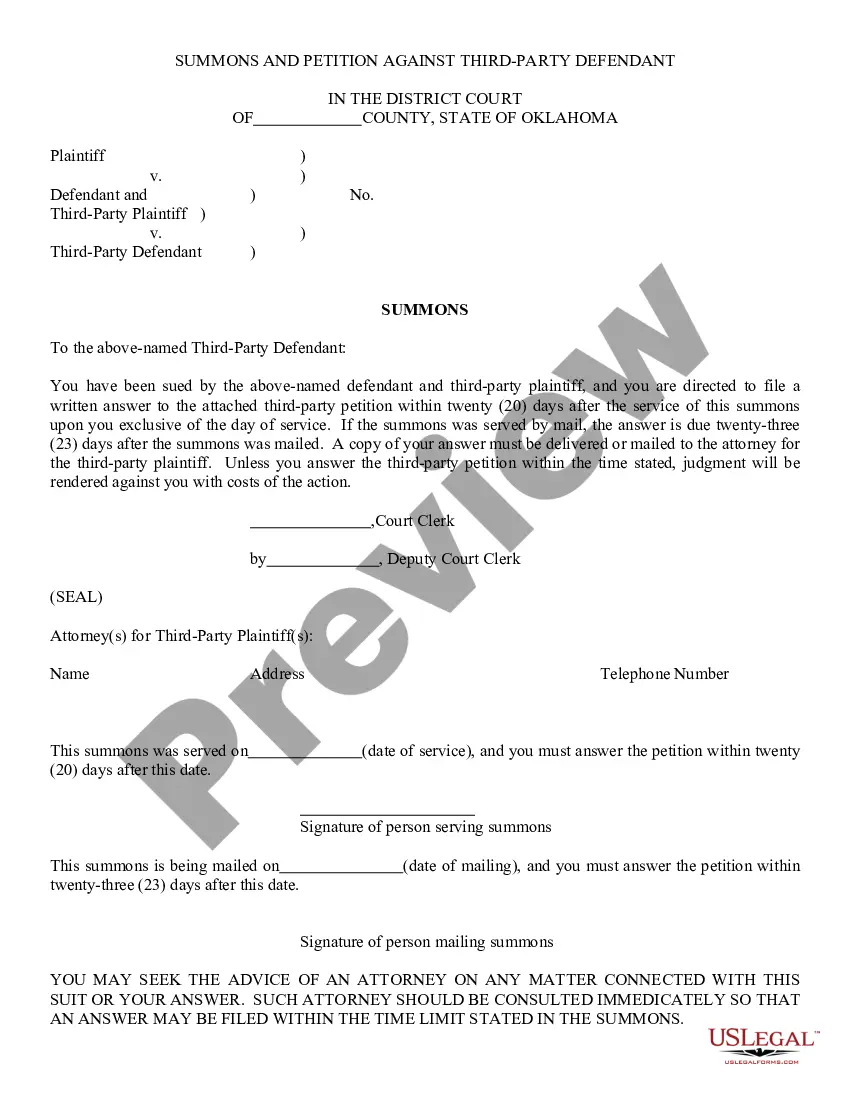
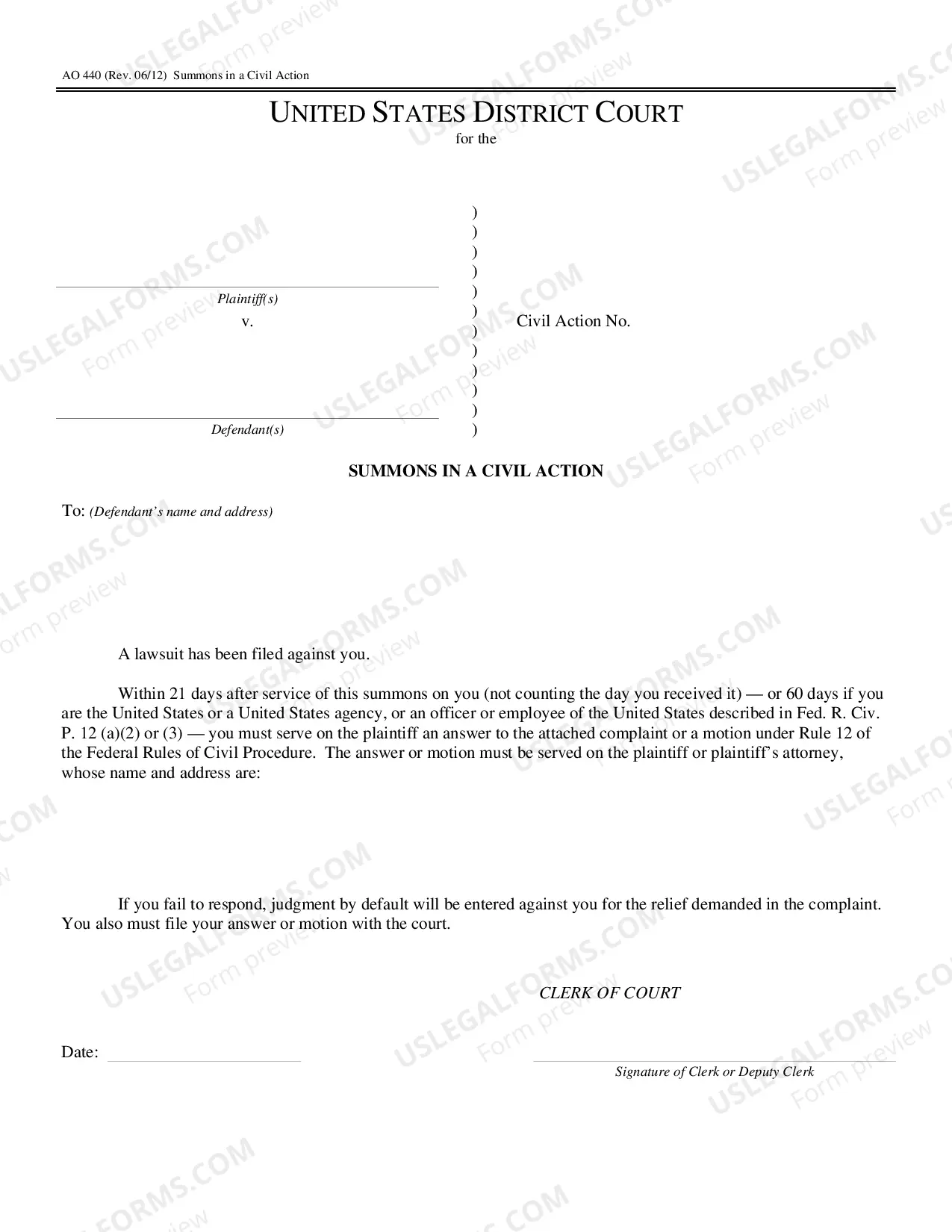
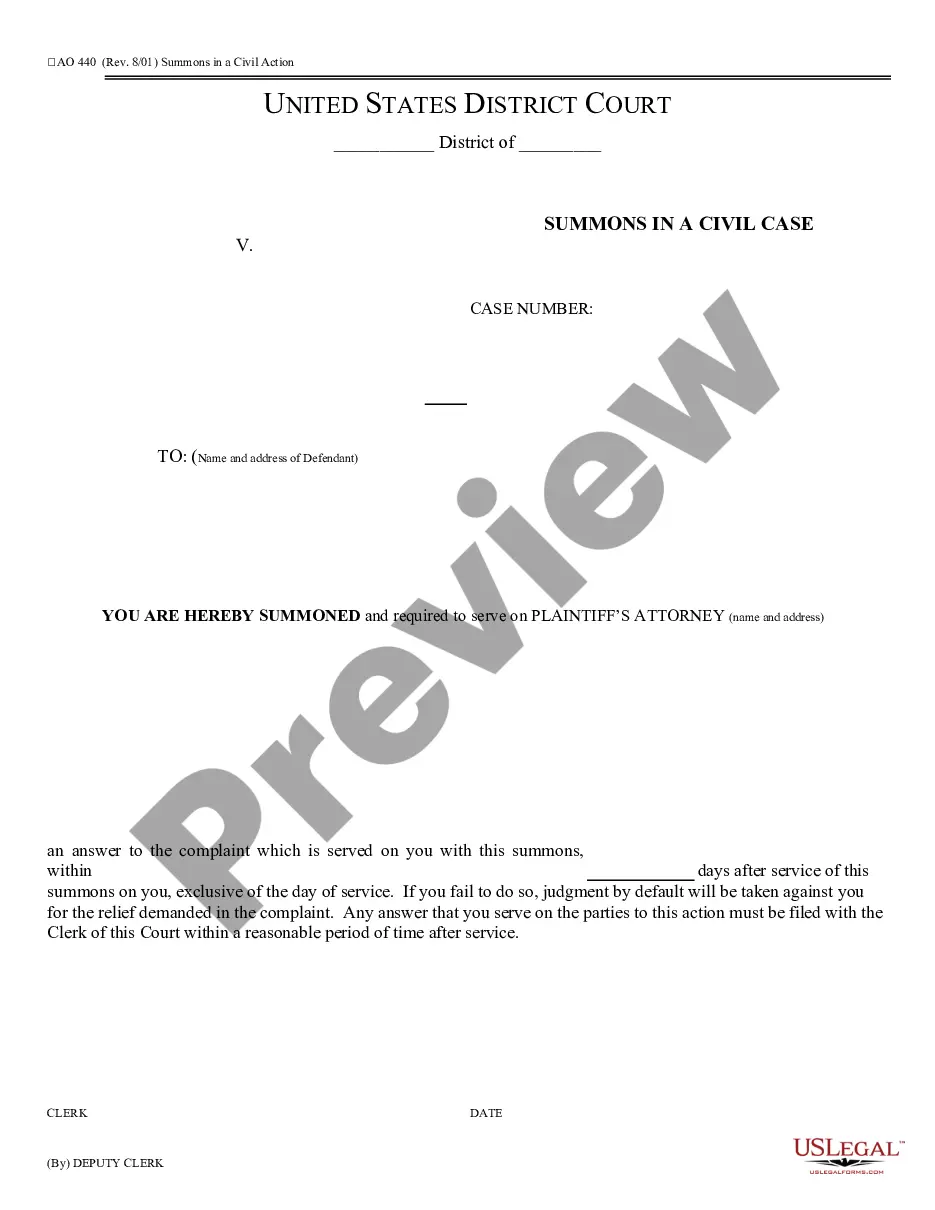
The Summons is a legal document issued by the court to notify a third-party defendant that they are being sued as part of an existing case. It informs the recipient about the requirement to respond to a third-party petition within a specified time frame. Unlike other summonses, this form specifically addresses claims made by a third-party plaintiff against another party, distinguishing it from standard summonses related to direct actions against defendants.
Key parts of this document
- Caption: Identifies the court and parties involved in the case.
- Notification: Clearly states that the individual has been sued and must respond.
- Response Deadline: Specifies the time frame in which the third-party defendant must file an answer.
- Attorney Information: Requires details of the third-party plaintiff's attorney for communication.
- Service Information: Indicates how the summons was served, either in person or by mail.

Situations where this form applies
This Summons should be used when a party (the third-party plaintiff) wants to bring another party (the third-party defendant) into an ongoing legal action. It is typically employed when the third-party plaintiff believes that the third-party defendant is liable for all or part of the claims asserted against them. This form ensures that the third-party defendant is notified and given an opportunity to respond.
Who can use this document
- Individuals acting as third-party plaintiffs in a lawsuit.
- Attorneys representing clients who are bringing a third-party claim.
- Parties involved in civil litigation where additional parties need to be added to the case.
Completing this form step by step
- Identify the court and county where the case is filed.
- Fill in the names of the parties involved, including the plaintiff, defendant, and third-party defendant.
- Add the case number assigned by the court.
- Specify the date of service and the method used for serving the summons.
- Include the signature of the person who served the summons, if applicable.
Does this form need to be notarized?
This form usually doesn’t need to be notarized. However, local laws or specific transactions may require it. Our online notarization service, powered by Notarize, lets you complete it remotely through a secure video session, available 24/7.
Get your form ready online
Our built-in tools help you complete, sign, share, and store your documents in one place.
Make edits, fill in missing information, and update formatting in US Legal Forms—just like you would in MS Word.
Download a copy, print it, send it by email, or mail it via USPS—whatever works best for your next step.
Sign and collect signatures with our SignNow integration. Send to multiple recipients, set reminders, and more. Go Premium to unlock E-Sign.
If this form requires notarization, complete it online through a secure video call—no need to meet a notary in person or wait for an appointment.
We protect your documents and personal data by following strict security and privacy standards.

Make edits, fill in missing information, and update formatting in US Legal Forms—just like you would in MS Word.

Download a copy, print it, send it by email, or mail it via USPS—whatever works best for your next step.

Sign and collect signatures with our SignNow integration. Send to multiple recipients, set reminders, and more. Go Premium to unlock E-Sign.

If this form requires notarization, complete it online through a secure video call—no need to meet a notary in person or wait for an appointment.

We protect your documents and personal data by following strict security and privacy standards.
Common mistakes
- Failing to serve the summons properly, which can lead to delays or dismissal.
- Not responding to the summons within the specified time period.
- Omitting key information, such as the case number or parties' names.
Why use this form online
- Convenience: Access and download the form from anywhere, at any time.
- Editability: Customize the form easily with necessary details.
- Reliability: Ensure the use of legally vetted templates drafted by licensed attorneys.
Looking for another form?

Form popularity
FAQ
The Oklahoma Summons is a court-issued notice to a third-party defendant in an ongoing case. It informs the recipient that they have been sued as part of the existing action and must respond to the third-party petition within the court’s deadline. The document also identifies the case caption and the parties, guiding service and communication.
Being served with the Oklahoma Summons means you are named as a third-party defendant in an ongoing case. The summons provides the caption, notifies you of the lawsuit, and states the deadline to respond to the third-party petition. It also lists the third-party plaintiff’s attorney and how service was made, so you know whom to contact.
After the summons is issued, the third-party defendant must file an answer to the third-party petition within the specified deadline. The answer addresses the allegations and may include defenses or cross-claims. Timely response helps move the case forward; consulting an attorney can help ensure proper format and deadlines are met.
You have it when you are served as a third-party defendant in an ongoing case. The Oklahoma Summons includes a caption with the court and parties, explicit notification that you’ve been sued, a response deadline, and service details showing how you were served and who to contact for further communication. The document also lists the third-party plaintiff’s attorney for contact.
Common reasons include bringing an additional party into an ongoing case who may be liable for part or all of the claims. The summons ensures the third-party defendant is notified and given an opportunity to respond within the deadline, helping determine liability and keep the case moving efficiently.
This form is tailored for third-party claims within an ongoing case, not a direct action against a defendant. It emphasizes the third-party plaintiff’s claim against another party and requires information like the attorney contact and specific service details, in addition to the usual caption and notification.