Oklahoma Special Warranty Deed - Corporation to Two Individuals / Husband and Wife
Understanding this form
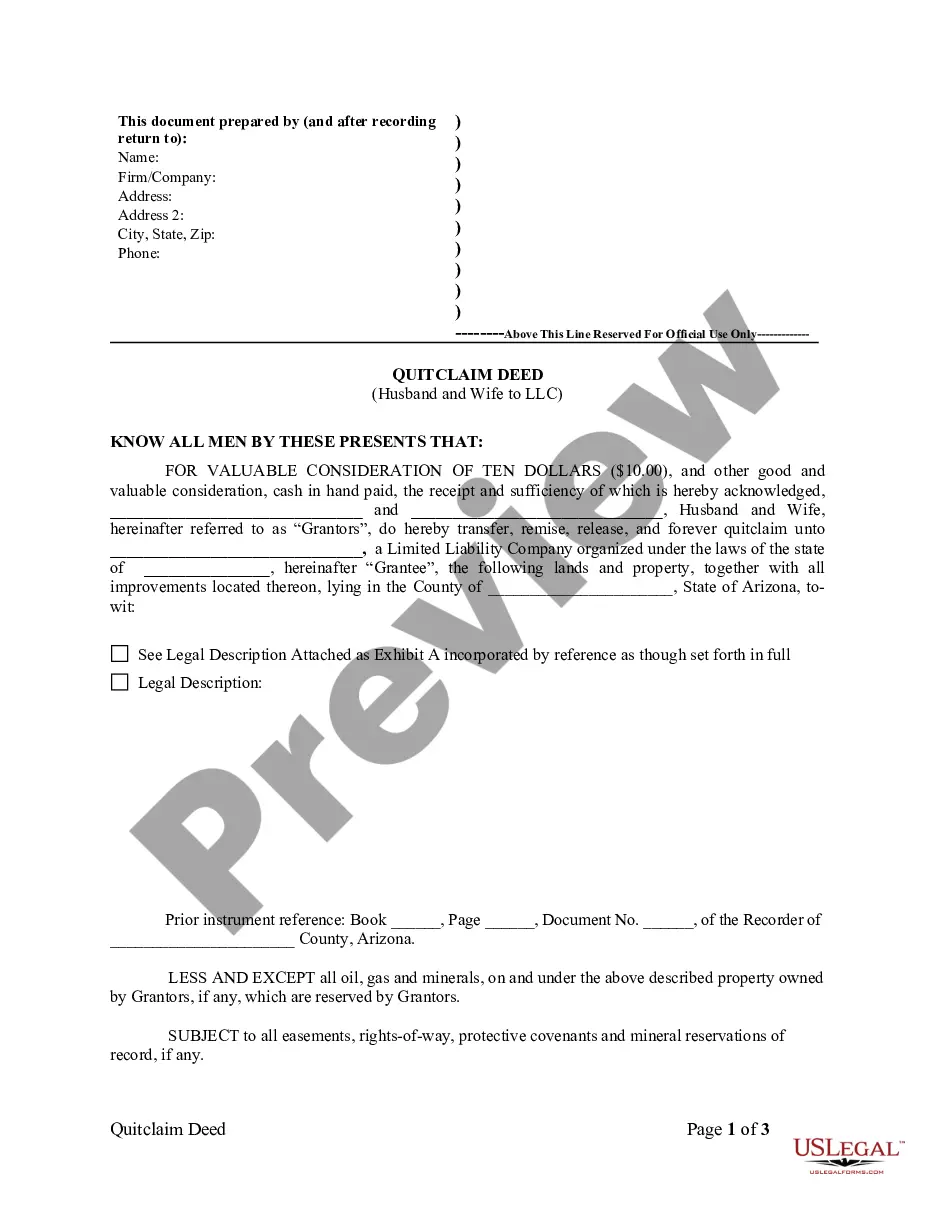
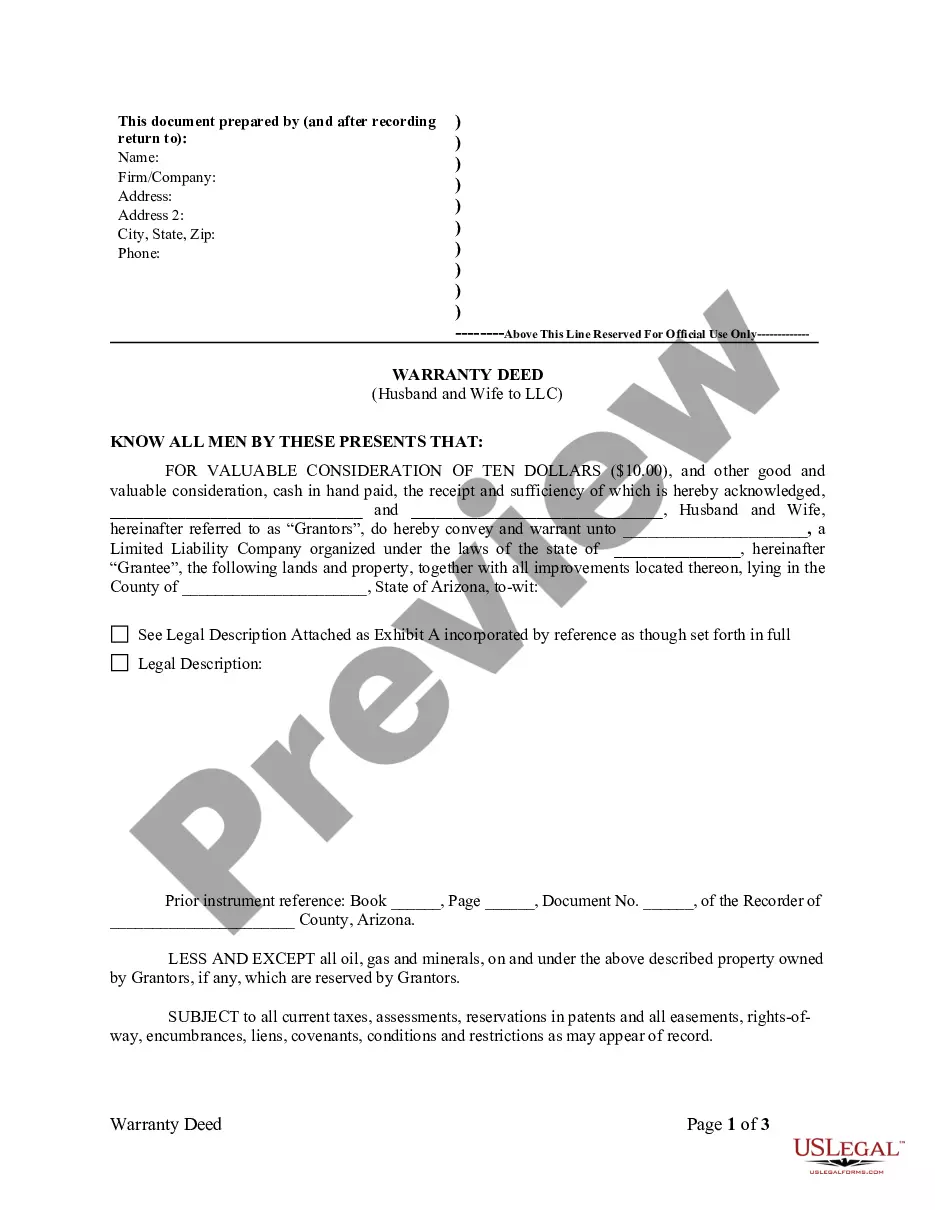
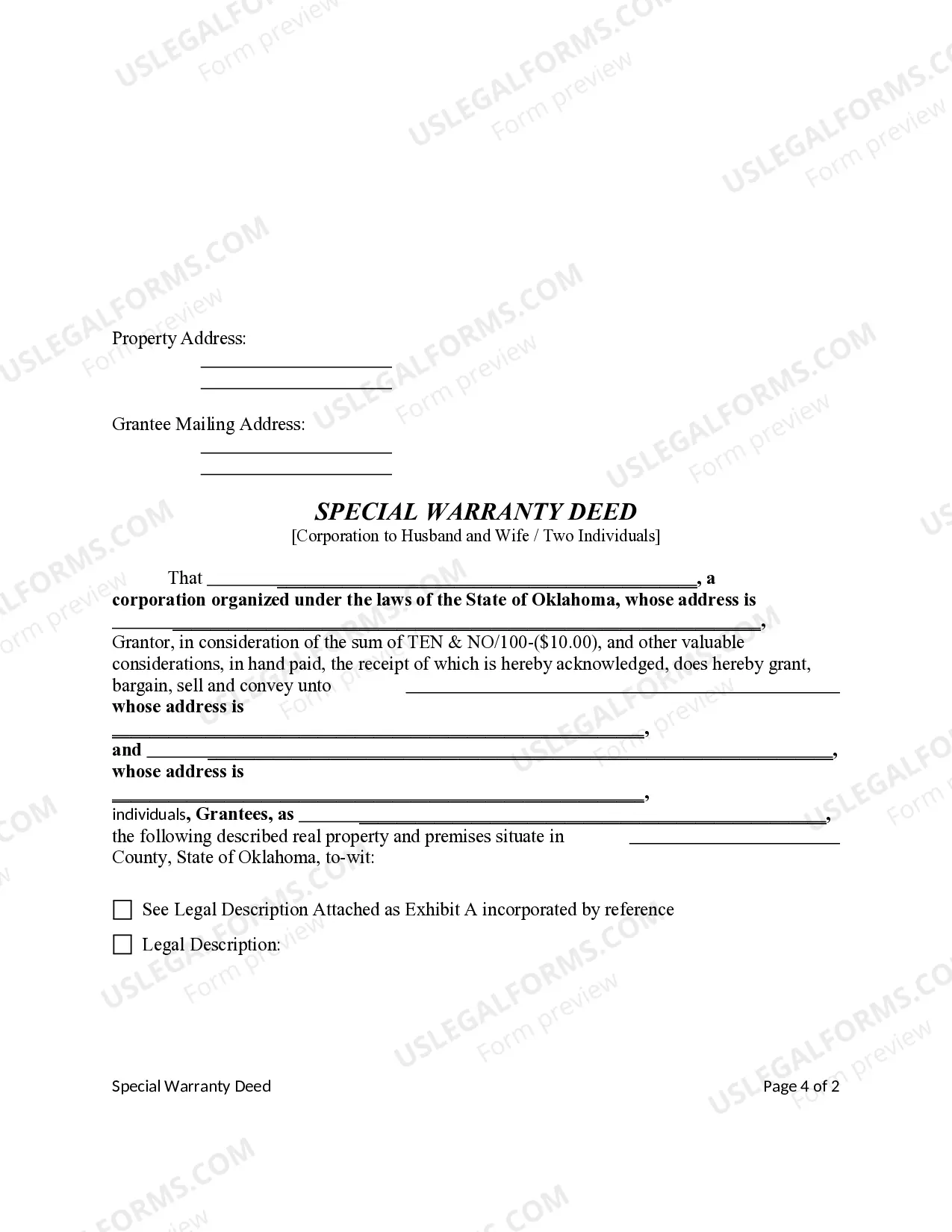
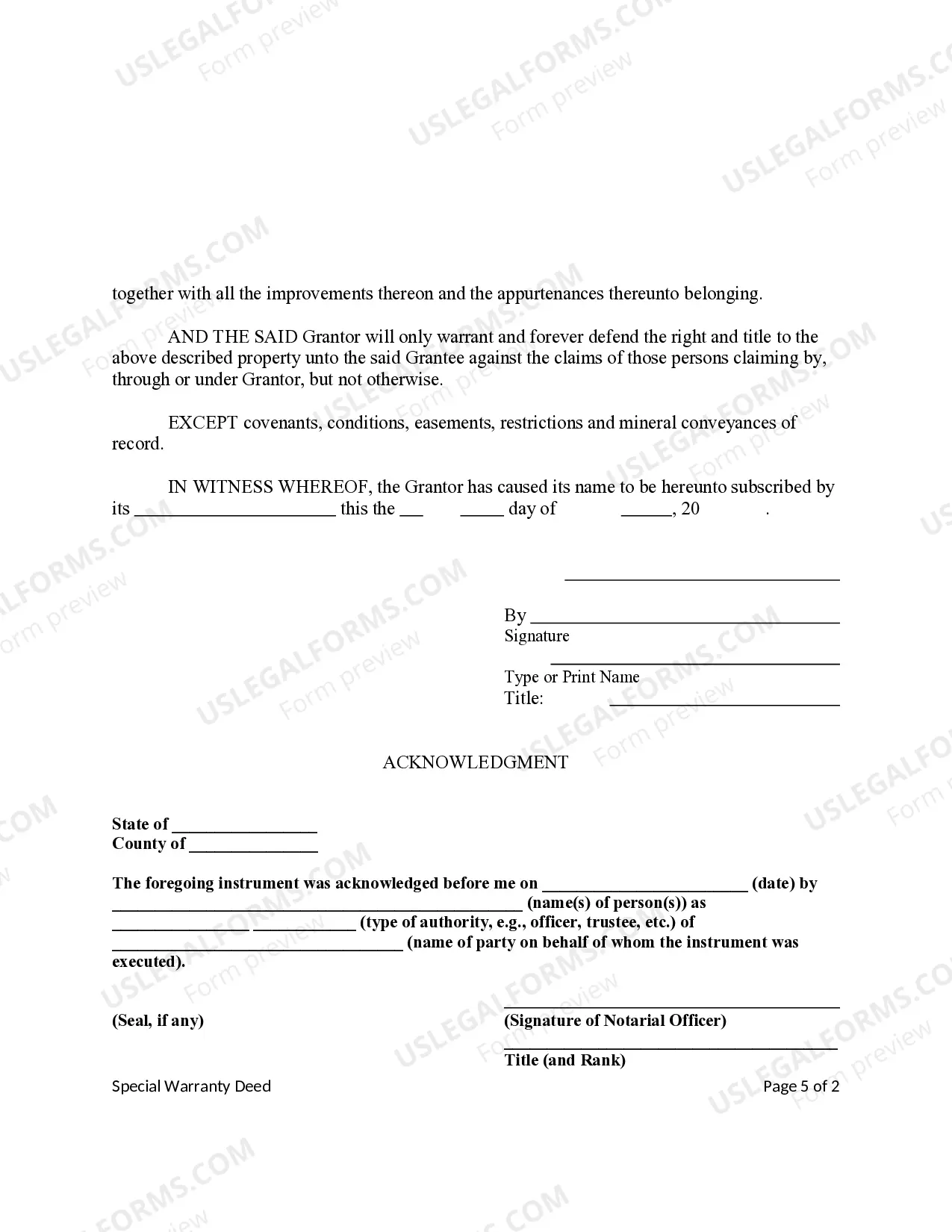
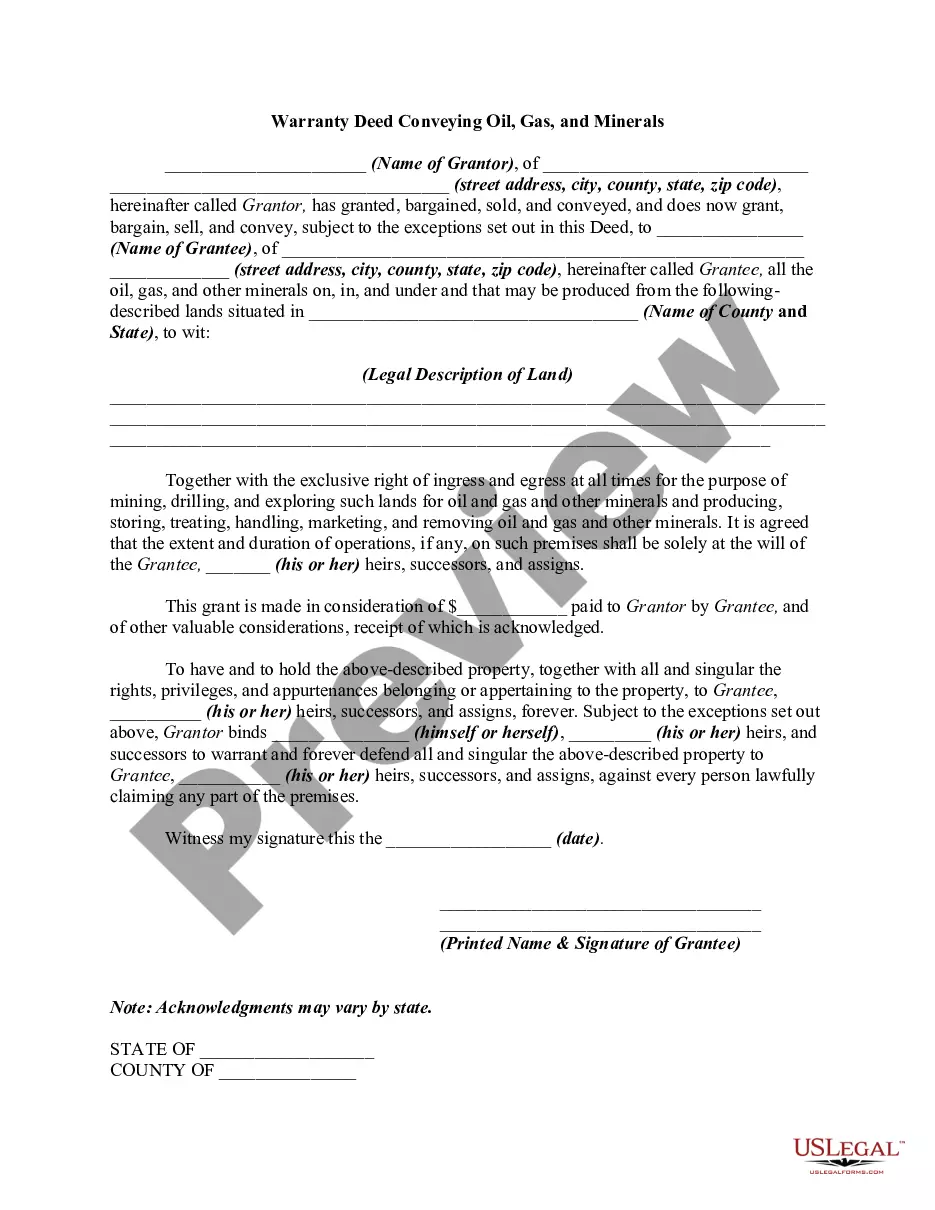
This Special Warranty Deed is a legal document used when a corporation transfers property to two individuals or a husband and wife. Unlike a general warranty deed, it only provides limited warranties regarding the property's title. The corporation, as the grantor, guarantees the property's title against claims that may arise from its actions, but not against claims made by others. This deed is compliant with Oklahoma state laws, making it a secure option for such transactions.
Key components of this form
- Identification of the Grantor (the corporation) and Grantees (the individuals or couple).
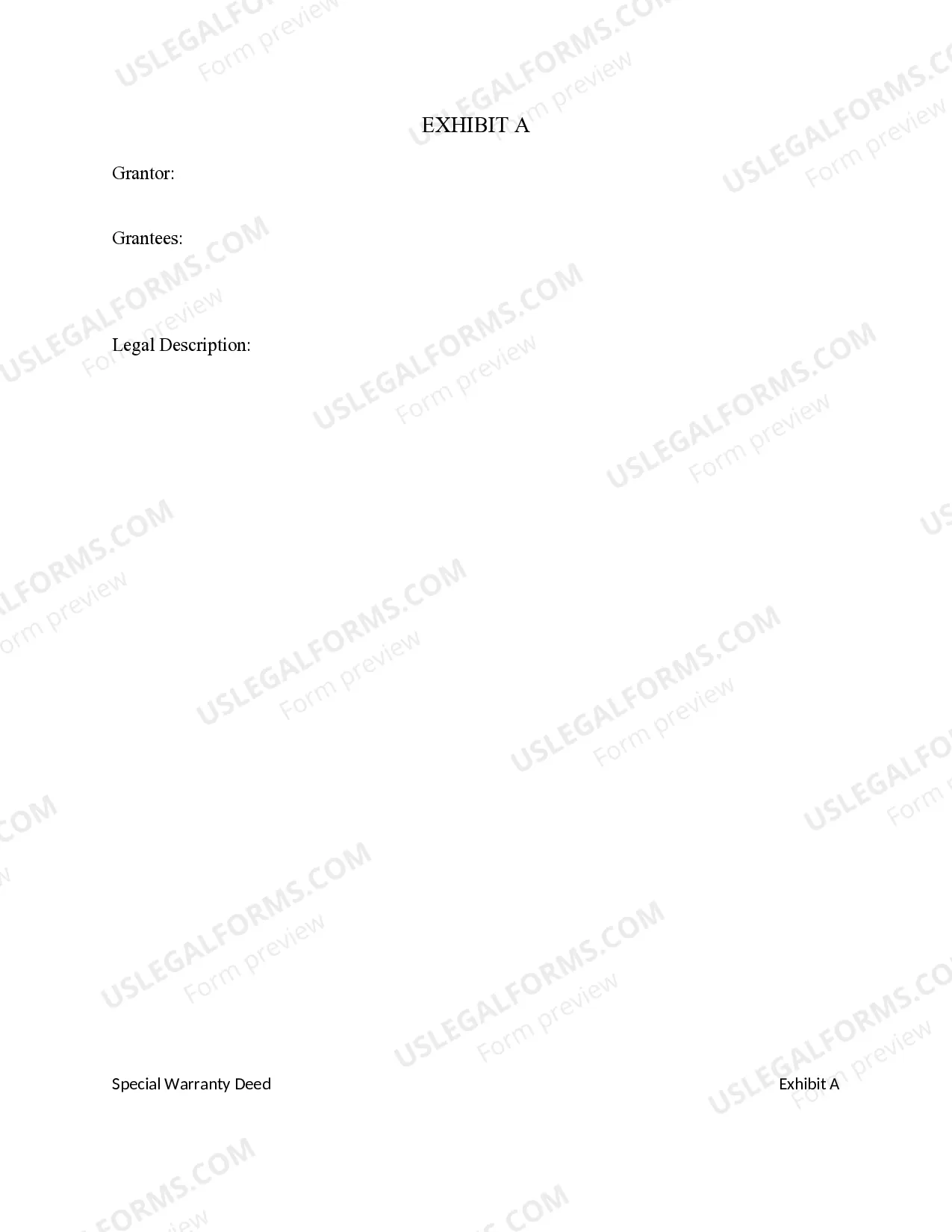
- Description of the property being transferred.
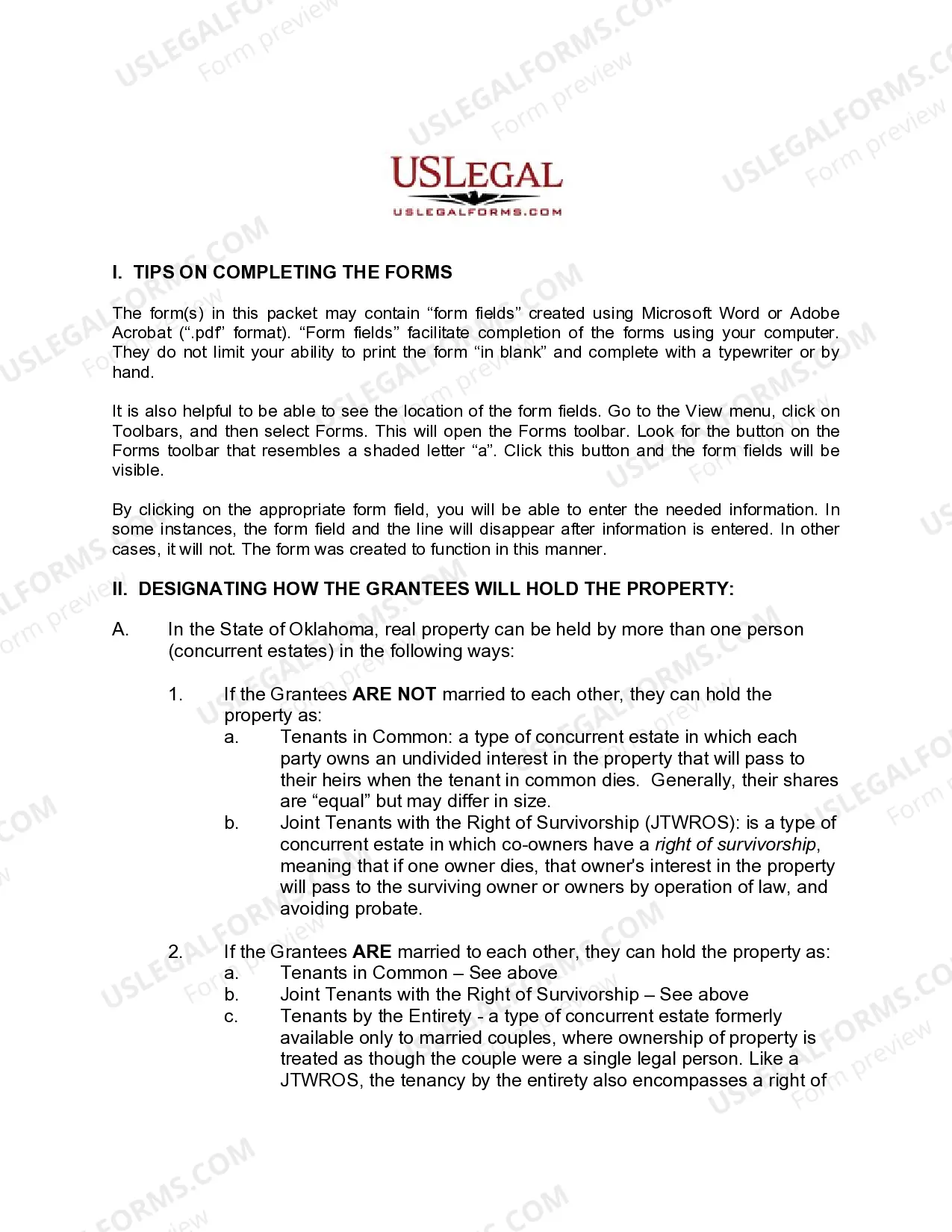
- Specified way the Grantees will hold the property (e.g., tenants in common, joint tenants with right of survivorship, or tenants by the entirety).
- Notarization section to validate the transaction.
- Signature lines for both the Grantor's representative and a notary public.



Situations where this form applies
This form should be used when a corporation is transferring real property to two individuals or a married couple. It is particularly beneficial when the corporation only wishes to warrant the title against its own claims, providing a streamlined approach for asset transfers between parties while limiting liability.
Who this form is for
- Corporations transferring real estate assets.
- Individual buyers who are purchasing property from a corporation.
- Married couples or unmarried individuals looking to acquire property together.
- Real estate professionals facilitating corporate property transactions.
Completing this form step by step
- Identify the Grantor (the corporation) and Grantees (the individuals or couple).
- Clearly describe the property being transferred.
- Choose the manner in which the Grantees will hold the property.
- Enter the required dates and add signatures where indicated.
- Ensure the document is notarized if required.
Notarization guidance
This form needs to be notarized to ensure legal validity. US Legal Forms provides secure online notarization powered by Notarize, allowing you to complete the process through a verified video call, available anytime.
Get your form ready online
Our built-in tools help you complete, sign, share, and store your documents in one place.
Make edits, fill in missing information, and update formatting in US Legal Forms—just like you would in MS Word.
Download a copy, print it, send it by email, or mail it via USPS—whatever works best for your next step.
Sign and collect signatures with our SignNow integration. Send to multiple recipients, set reminders, and more. Go Premium to unlock E-Sign.
If this form requires notarization, complete it online through a secure video call—no need to meet a notary in person or wait for an appointment.
We protect your documents and personal data by following strict security and privacy standards.

Make edits, fill in missing information, and update formatting in US Legal Forms—just like you would in MS Word.

Download a copy, print it, send it by email, or mail it via USPS—whatever works best for your next step.

Sign and collect signatures with our SignNow integration. Send to multiple recipients, set reminders, and more. Go Premium to unlock E-Sign.

If this form requires notarization, complete it online through a secure video call—no need to meet a notary in person or wait for an appointment.

We protect your documents and personal data by following strict security and privacy standards.
Common mistakes
- Failing to provide a complete property description.
- Not specifying how the Grantees will hold the property.
- Omitting necessary signatures or dates.
- Not obtaining a notarization when required.
Benefits of completing this form online
- Convenient access to fillable forms at any time.
- Editable fields allow for easy completion and adjustments.
- Drafted by licensed attorneys, ensuring compliance with legal standards.
Quick recap
- This form is specific for transactions involving a corporation transferring property to individuals or a couple.
- It offers limited warranties, only defending against claims arising from the Grantor's ownership.
- Complete the form accurately, paying special attention to property descriptions and Grantee designations.
Looking for another form?
Form popularity
FAQ
If you've recently married and already own a home or other real estate, you may want to add your new spouse to the deed for your property so the two of you own it jointly. To add a spouse to a deed, all you have to do is literally fill out, sign and record a new deed in your county recorder's office.
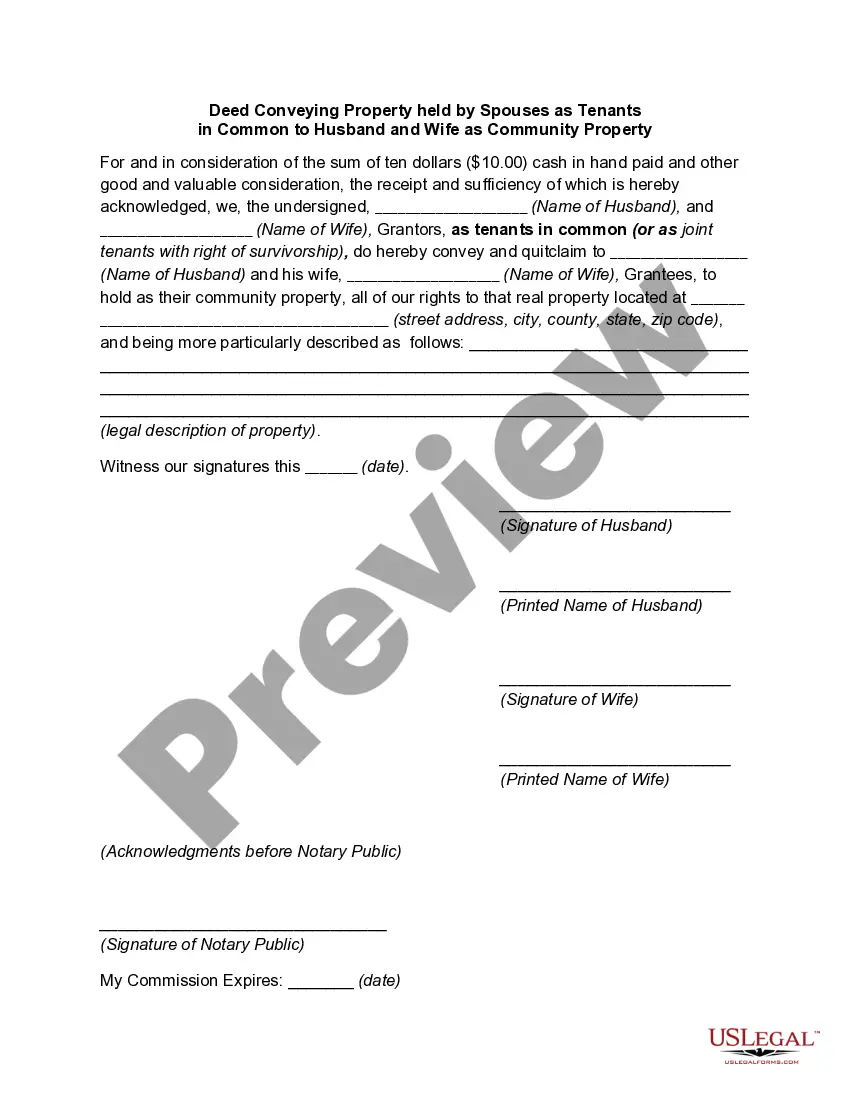
Adding someone to your house deed requires the filing of a legal form known as a quitclaim deed. When executed and notarized, the quitclaim deed legally overrides the current deed to your home. By filing the quitclaim deed, you can add someone to the title of your home, in effect transferring a share of ownership.
Special warranties allow the transfer of property title between seller and buyer. The purchase of title insurance can mitigate the risk of prior claims to the special warranty deed.
Fill out the "grantor" section of the warranty deed. The grantors are the givers, or current owners, of the property. Use the legal name of each grantor and insert current addresses after each grantor's name.
A warranty deed, also known as a general warranty deed, is a legal real estate document between the seller (grantor) and the buyer (grantee). The deed protects the buyer by pledging that the seller holds clear title to the property and there are no encumbrances, outstanding liens, or mortgages against it.
It's important to note that a warranty deed does not actually prove the grantor has ownership (a title search is the best way to prove that), but it is a promise by the grantor that they are transferring ownership and if it turns out they don't actually own the property, the grantor will be responsible for compensating
Let's start with the definition of a deed: DEED: A written instrument by which one party, the Grantor, conveys the title of ownership in property to another party, the Grantee. A Warranty Deed contains promises, called covenants, that the Grantor makes to the Grantee.
Step 1 Fill in the grantor's name and address along with indicating whether or not the grantor is married. Step 2 Enter the consideration to be paid for the property. Step 3 Write in the grantee's name and address and check the box showing how they intend to hold the property.