Oklahoma Fencing Contract for Contractor
Overview of this form
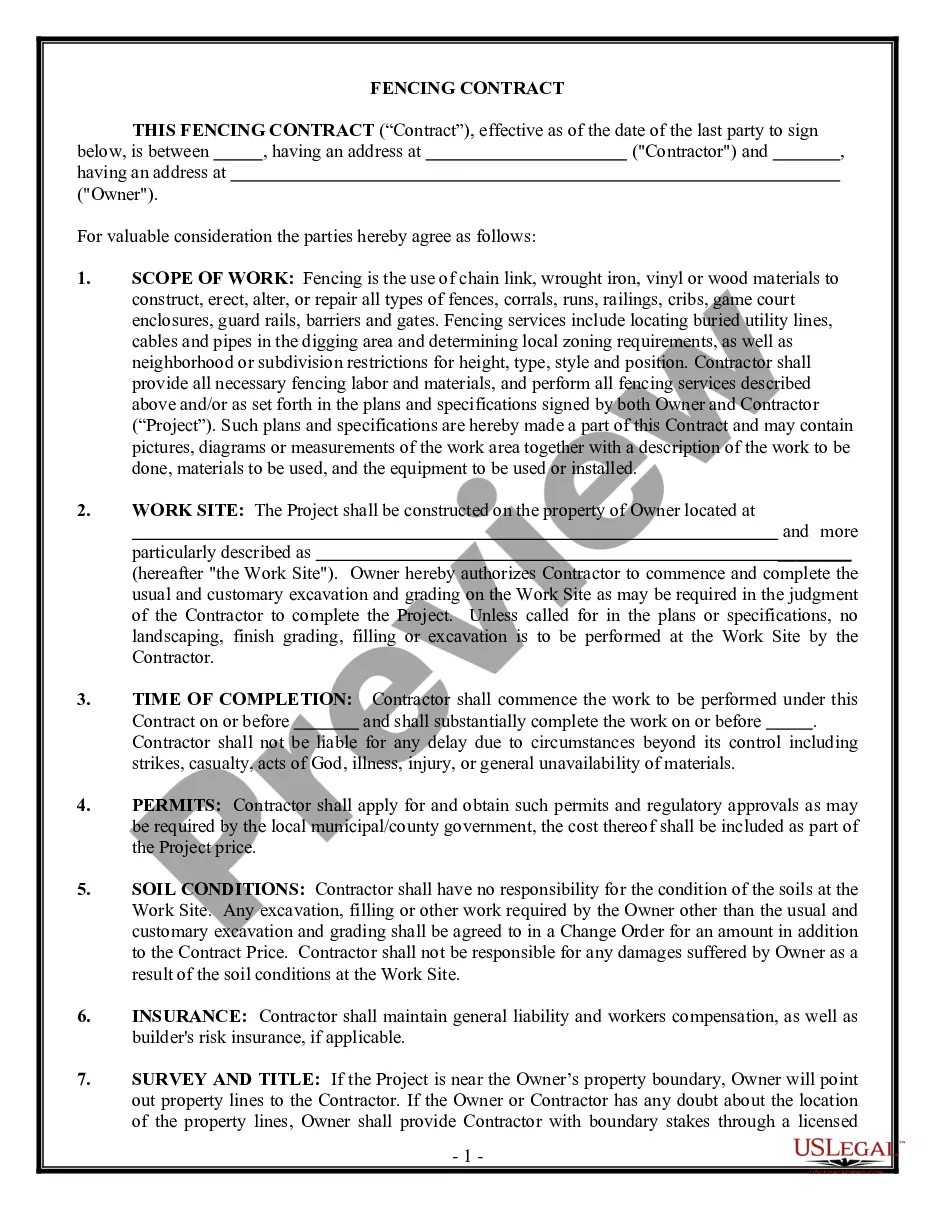
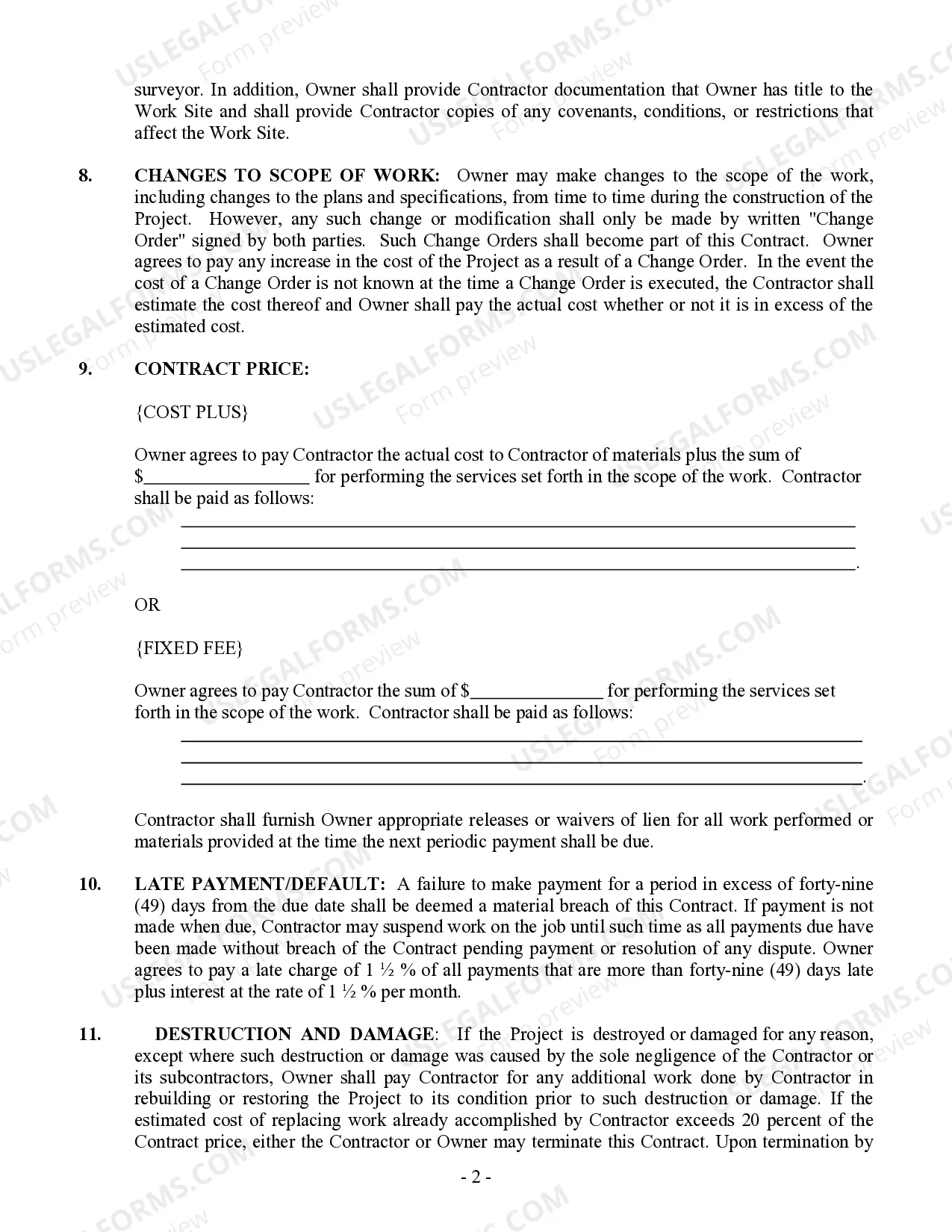
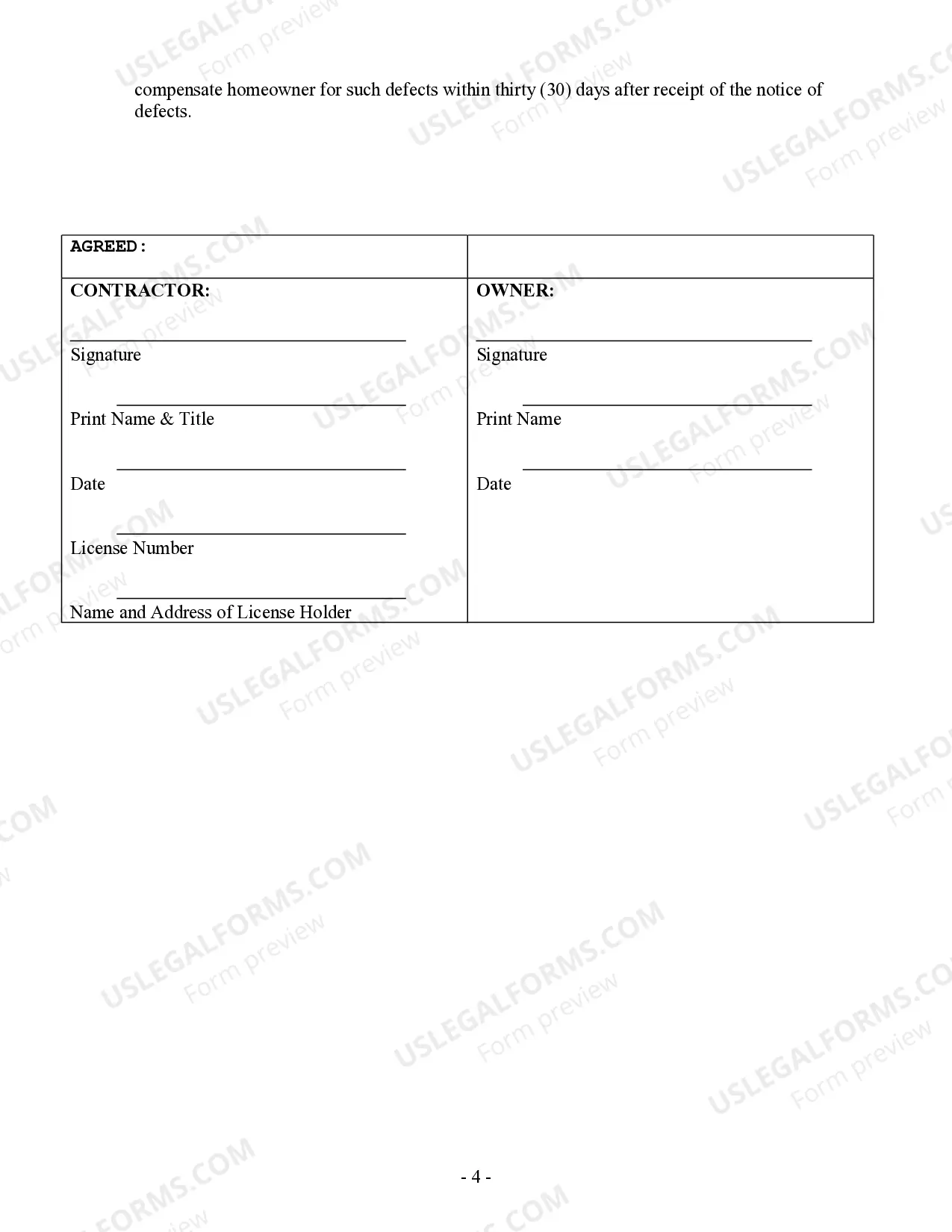
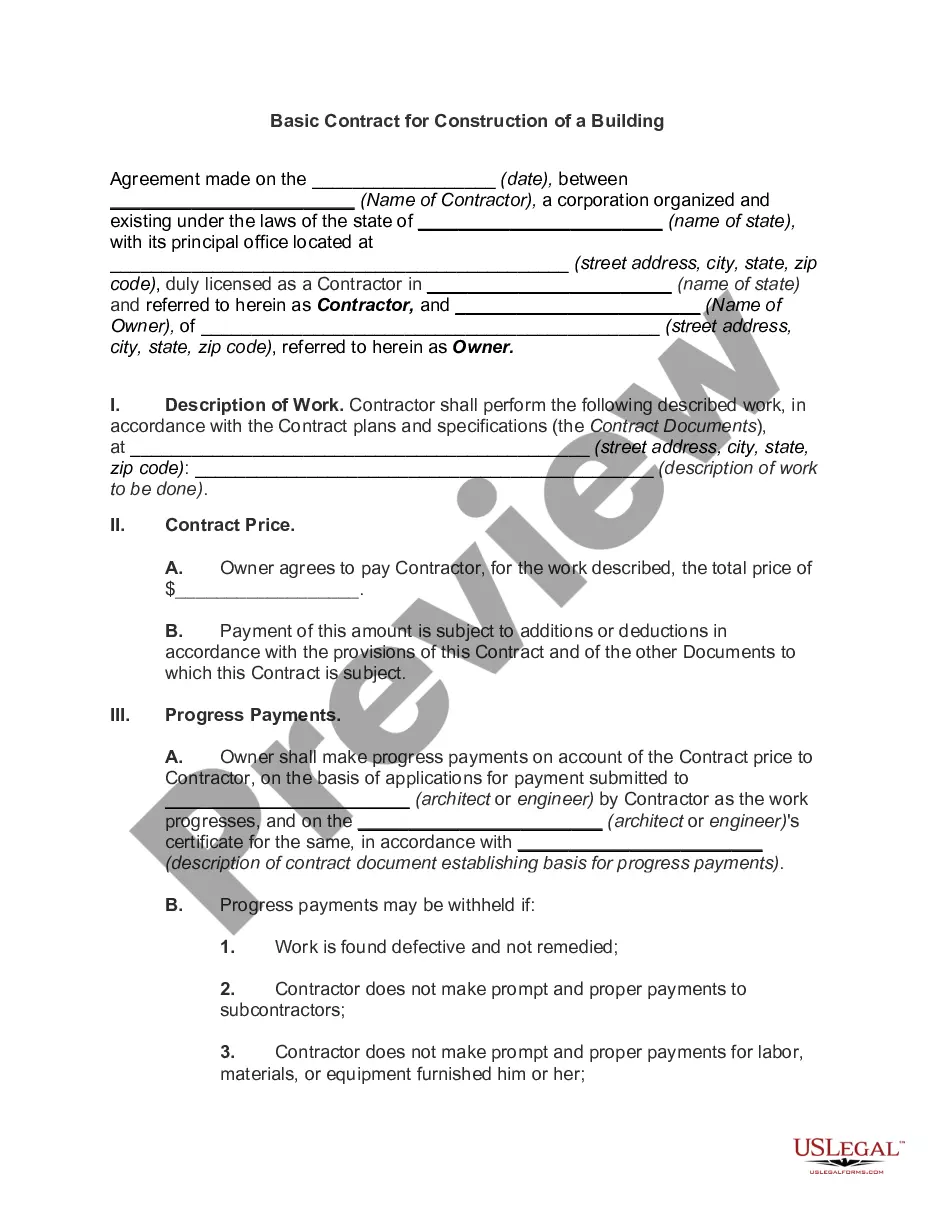
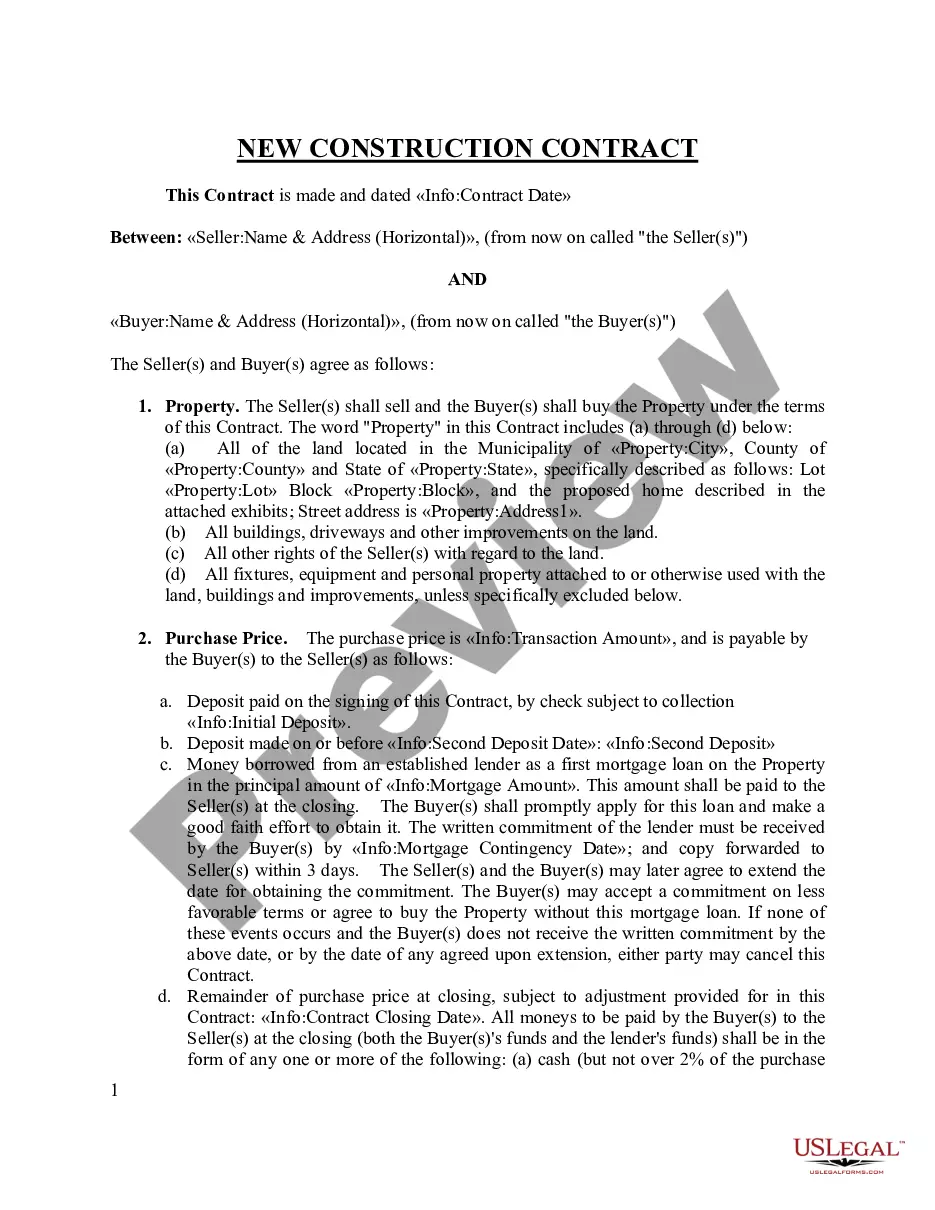
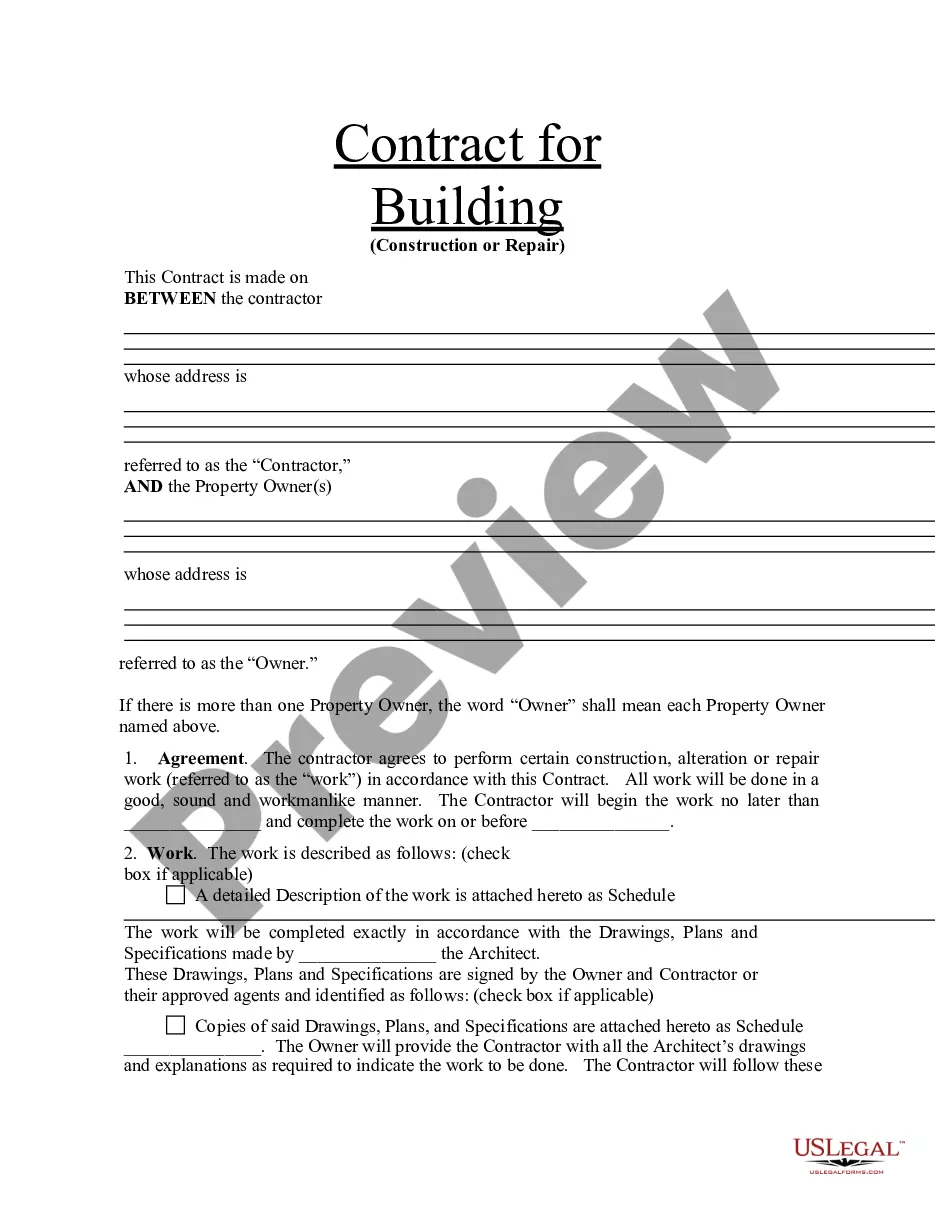
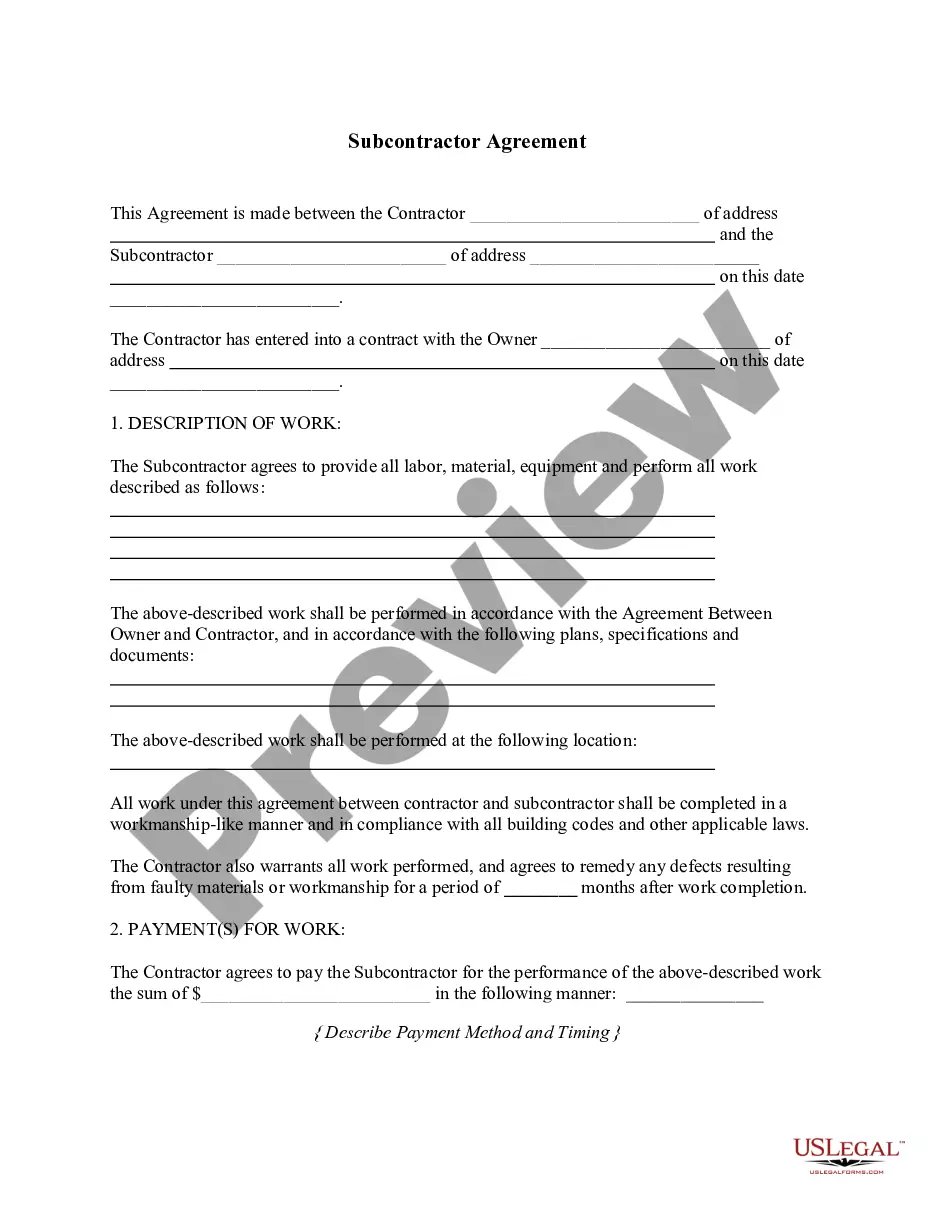
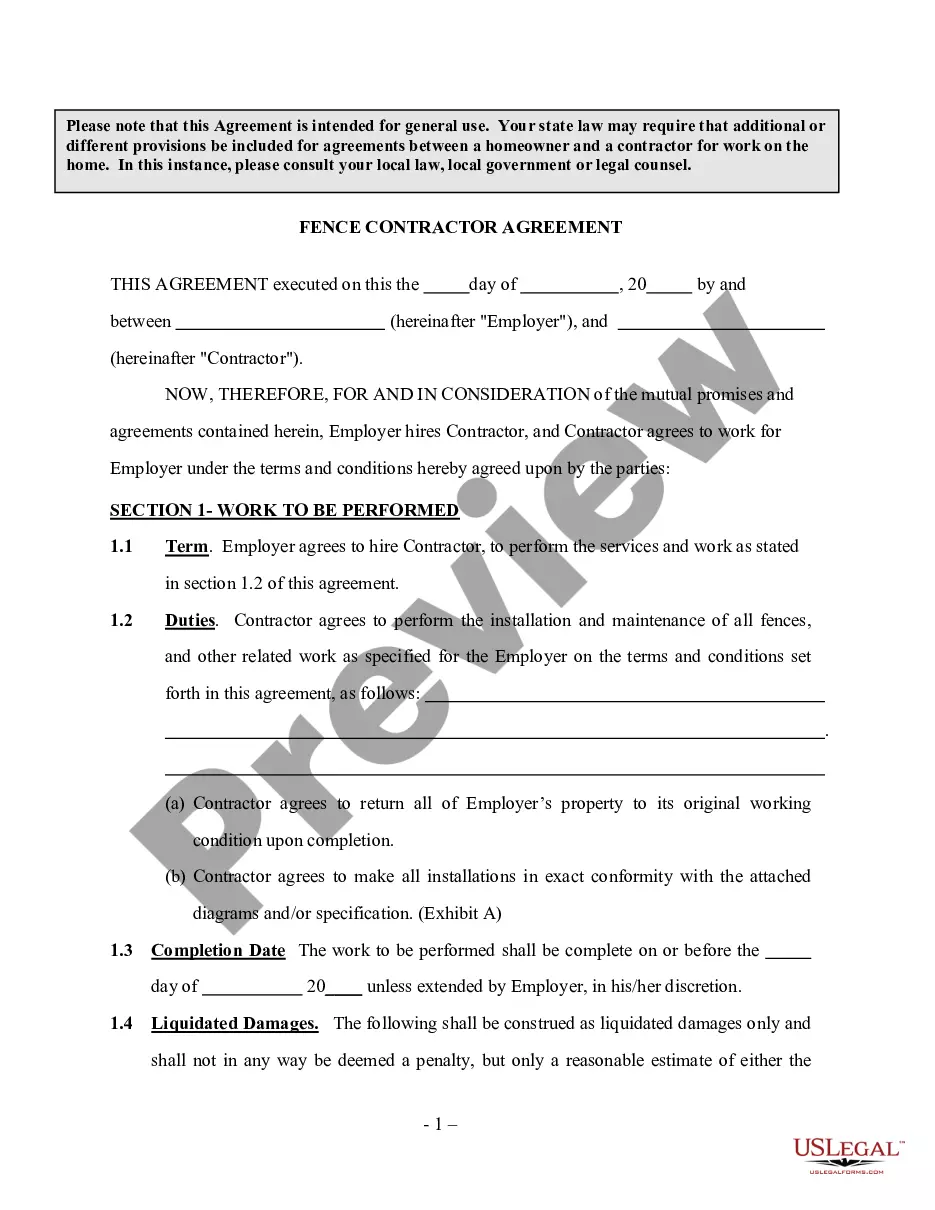
The Fencing Contract for Contractor is a legal document used by fencing contractors and property owners to outline the terms of a fencing project. This contract is crucial for establishing either a cost-plus or fixed fee payment arrangement. It covers essential matters such as change orders, insurance, warranties, and work site specifications, ensuring both parties understand their rights and responsibilities. This form is specifically designed to meet the legal requirements of the State of Oklahoma.
Key parts of this document
- Work site details, including the property's location.
- Contractor responsibilities for obtaining necessary permits.
- Specifications regarding soil conditions and liability.
- Insurance requirements for the contractor.
- Procedures for changing the scope of work through written change orders.
- Provisions related to late payments and default.
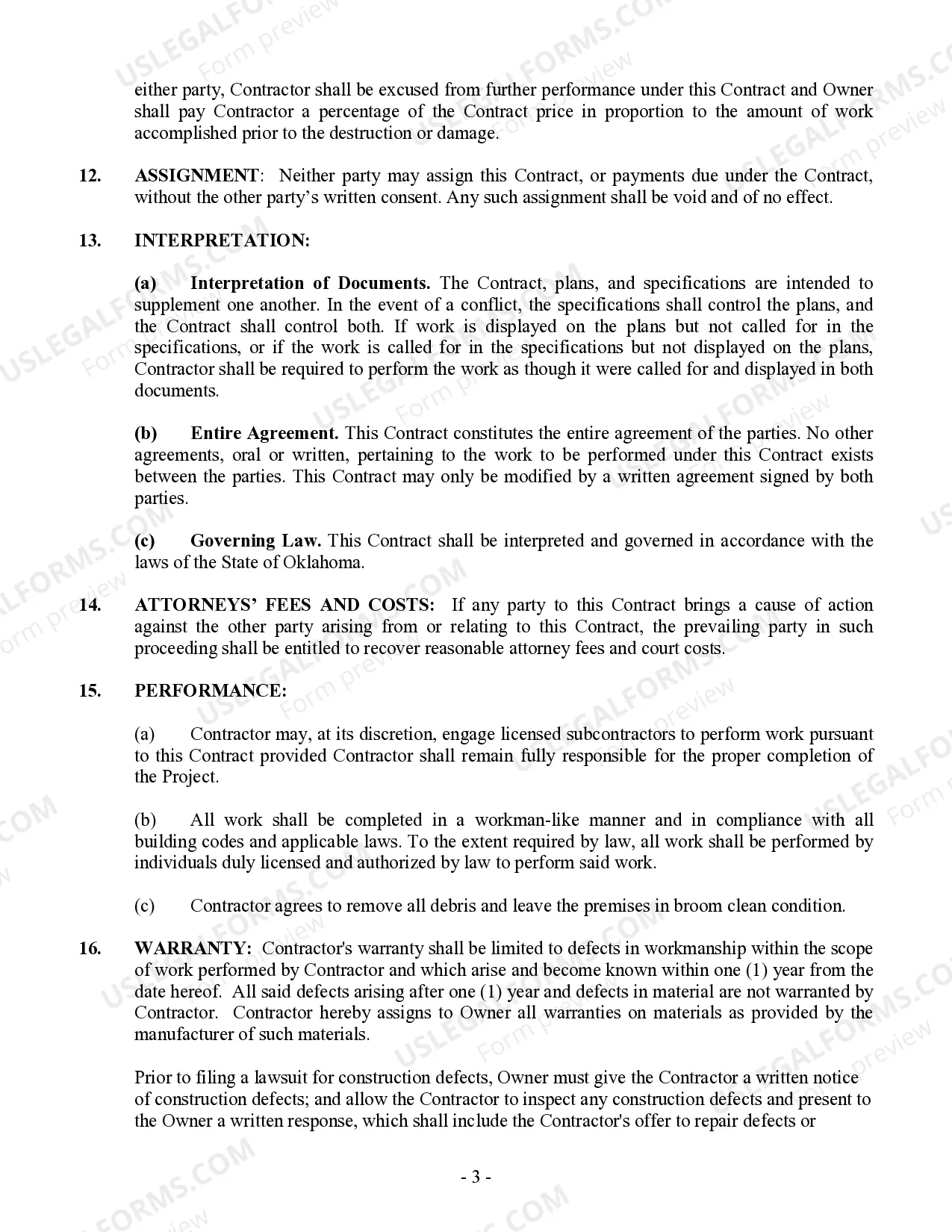
- Warranty information and the contractor's obligations for workmanship.
- Limitations on assignment of the contract without consent.

When to use this form
This form is essential when a property owner hires a fencing contractor to build or repair a fence. Use this contract to clarify payment arrangements, responsibilities, and project specifications before the work begins. It is particularly valuable when changes to the project may arise or when ensuring both parties have a clear legal understanding of their obligations and rights.
Who should use this form
- Property owners seeking to hire a contractor for fencing projects.
- Fencing contractors who require a formal contract with property owners.
- Individuals or organizations in Oklahoma planning any fencing-related construction work.
Steps to complete this form
- Identify the parties involved by entering the names and contact information of the property owner and the contractor.
- Specify the work site by detailing the property's location where the fencing project will take place.
- Enter the contract price, stating whether it is a fixed fee or cost-plus arrangement.
- Include any additional terms related to change orders or insurance requirements.
- Both parties should sign and date the contract to validate the agreement.
Notarization requirements for this form
In most cases, this form does not require notarization. However, some jurisdictions or signing circumstances might. US Legal Forms offers online notarization powered by Notarize, accessible 24/7 for a quick, remote process.
Get your form ready online
Our built-in tools help you complete, sign, share, and store your documents in one place.
Make edits, fill in missing information, and update formatting in US Legal Forms—just like you would in MS Word.
Download a copy, print it, send it by email, or mail it via USPS—whatever works best for your next step.
Sign and collect signatures with our SignNow integration. Send to multiple recipients, set reminders, and more. Go Premium to unlock E-Sign.
If this form requires notarization, complete it online through a secure video call—no need to meet a notary in person or wait for an appointment.
We protect your documents and personal data by following strict security and privacy standards.

Make edits, fill in missing information, and update formatting in US Legal Forms—just like you would in MS Word.

Download a copy, print it, send it by email, or mail it via USPS—whatever works best for your next step.

Sign and collect signatures with our SignNow integration. Send to multiple recipients, set reminders, and more. Go Premium to unlock E-Sign.

If this form requires notarization, complete it online through a secure video call—no need to meet a notary in person or wait for an appointment.

We protect your documents and personal data by following strict security and privacy standards.
Mistakes to watch out for
- Not specifying the exact work site can lead to misunderstandings later.
- Failing to include clear terms for change orders may result in disputes over project scope and costs.
- Neglecting to outline payment timelines can cause payment delays and default issues.
Benefits of using this form online
- Convenient access to legally drafted documents that can be personalized for specific needs.
- Easy editing capabilities allow for quick adjustments as project requirements change.
- Reliable templates that comply with Oklahoma laws, reducing the risk of legal issues.
Legal use & context
- The Fencing Contract is legally binding once signed by both parties.
- It provides a framework for resolving disputes, thereby protecting both the owner and contractor.
- Compliance with local construction codes and regulations is essential for enforceability.
Key takeaways
- The Fencing Contract for Contractor is essential for clear agreement on fencing projects.
- It provides legal protections for both property owners and contractors in Oklahoma.
- Complete the form carefully to avoid typical mistakes and ensure smooth project execution.
Looking for another form?

Form popularity
FAQ
Successful general contractors often have a degree in construction management or civil engineering, along with several years in the construction industry. Regardless of your approach, start planning three to five years in advance to become a general contractor. At a minimum, you need to: Be at least 18 years old.
Oklahoma does not offer a state license for general contractor work. However, you must obtain a contractors license for many specialty trades including plumbing, electrical, and mechanical contracting work.
As a handyman, you will not need a state license to work in Oklahoma on any renovation, remodeling, repair or construction project. Make sure to check with local governments to see if there are any regulations on the local level before you begin work.
In Oklahoma, general contractors are not required to have state licenses to perform their construction services.Also, state licenses are not required for small general contractors or subcontractors who do commercial or residential renovation, remodeling and repair construction projects.
Oklahoma does not offer a state license for general contractor work. However, you must obtain a contractors license for many specialty trades including plumbing, electrical, and mechanical contracting work.
There is no general business license required to start or own a business in Oklahoma. However, many types of specific businesses and occupations require licenses, permits or other filings.
Step 1: Choose the Right Business Idea. Step 2: Plan Your Oklahoma Business. Step 3: Get Funding. Step 4: Choose a Business Structure. Step 5: Register Your Oklahoma Business. Step 6: Set up Business Banking, Credit Cards, and Accounting. Step 7: Get Insured. Step 8: Obtain Permits and Licenses.