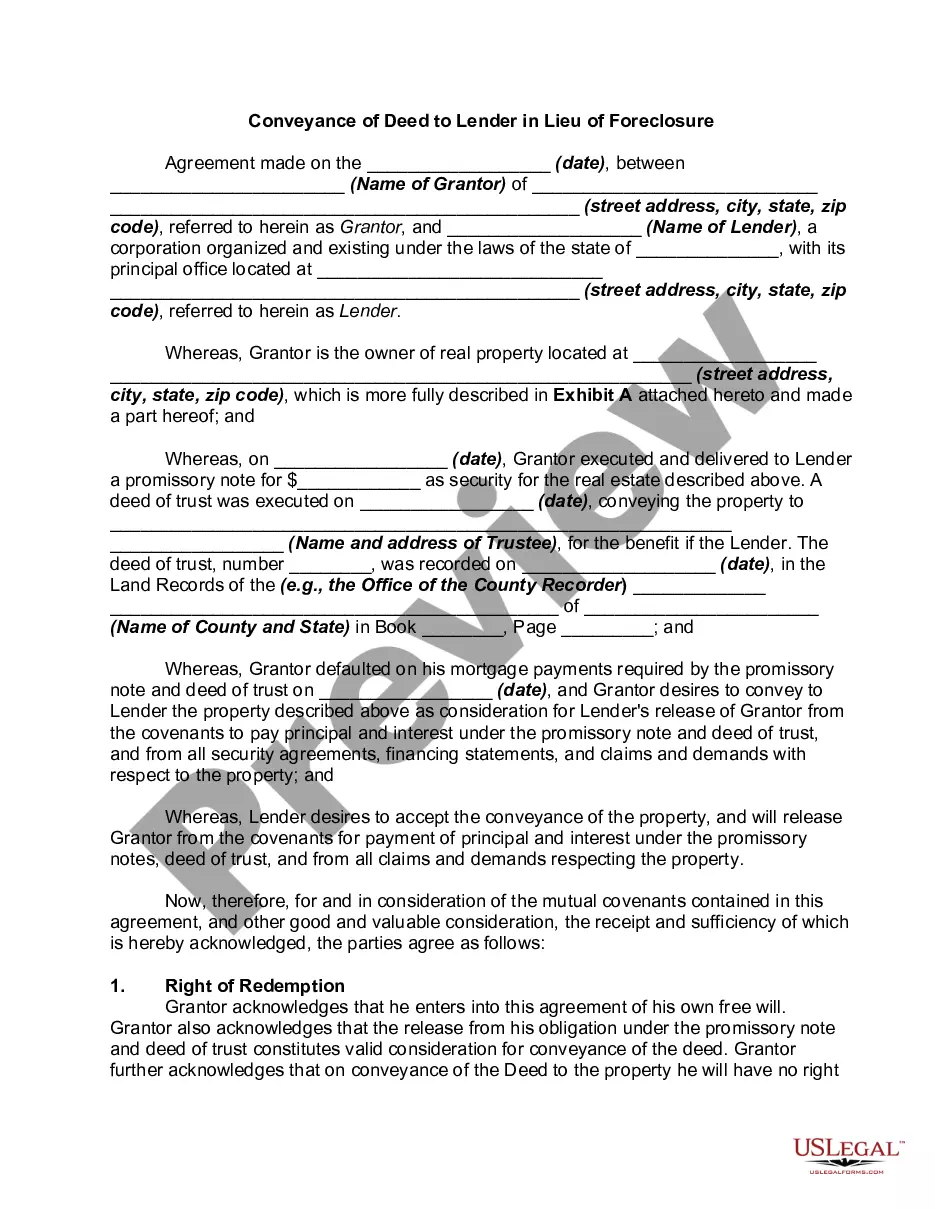
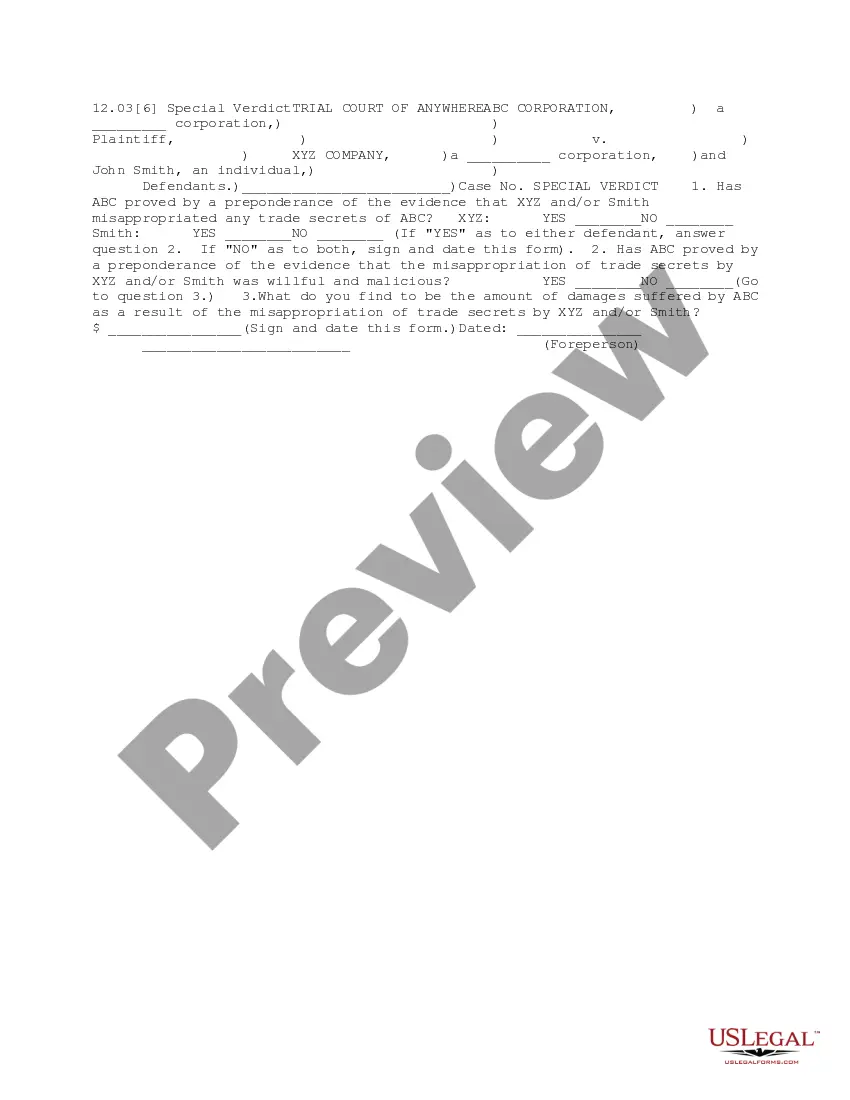
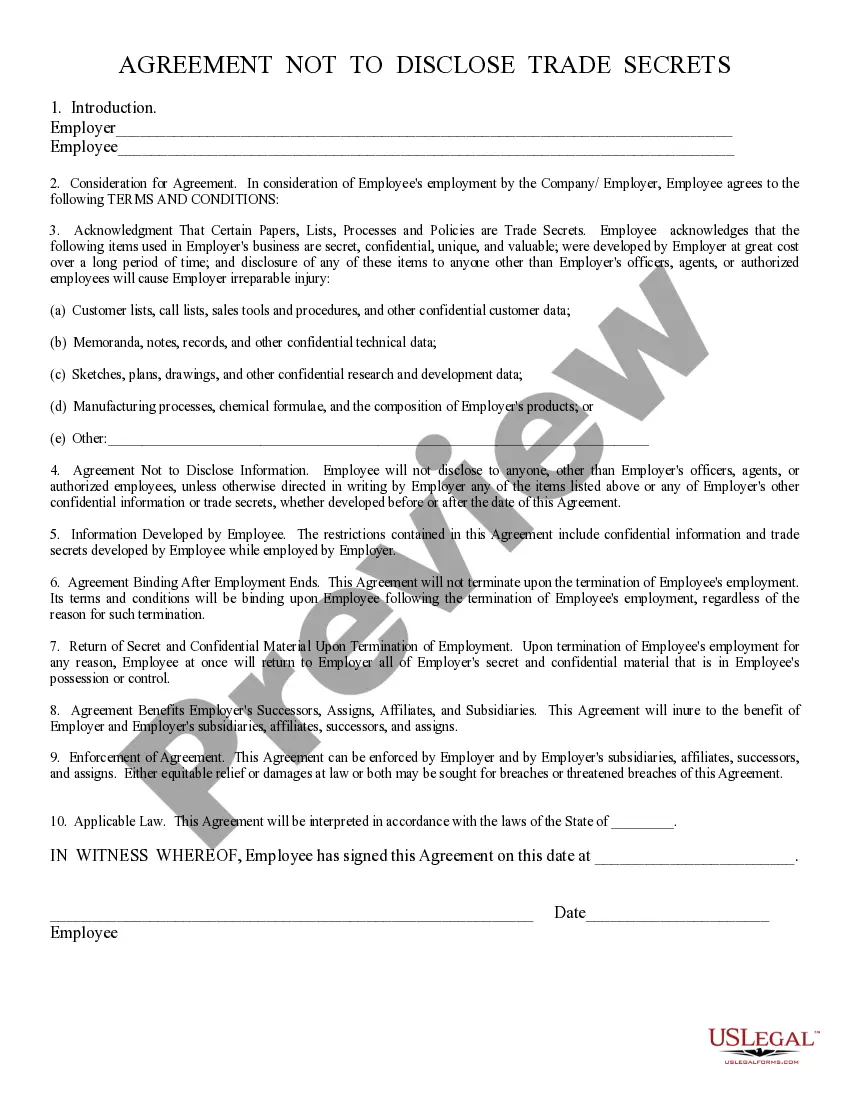
This form is a Special Verdict usable in cases involving misappropriation of commercial trade secrets.
Ohio Special Verdict
State:
Multi-State
Control #:
US-TS12036
Format:
Word;
PDF;
Rich Text
Instant download
Description

Get your form ready online
Our built-in tools help you complete, sign, share, and store your documents in one place.
Built-in online Word editor
Make edits, fill in missing information, and update formatting in US Legal Forms—just like you would in MS Word.
Export easily
Download a copy, print it, send it by email, or mail it via USPS—whatever works best for your next step.
E-sign your document
Sign and collect signatures with our SignNow integration. Send to multiple recipients, set reminders, and more. Go Premium to unlock E-Sign.
Notarize online 24/7
If this form requires notarization, complete it online through a secure video call—no need to meet a notary in person or wait for an appointment.
Store your document securely
We protect your documents and personal data by following strict security and privacy standards.

Make edits, fill in missing information, and update formatting in US Legal Forms—just like you would in MS Word.

Download a copy, print it, send it by email, or mail it via USPS—whatever works best for your next step.

Sign and collect signatures with our SignNow integration. Send to multiple recipients, set reminders, and more. Go Premium to unlock E-Sign.

If this form requires notarization, complete it online through a secure video call—no need to meet a notary in person or wait for an appointment.

We protect your documents and personal data by following strict security and privacy standards.
Looking for another form?



How to fill out Special Verdict?
You may spend time online searching for the legitimate file design that fits the state and federal needs you want. US Legal Forms provides a large number of legitimate kinds which are analyzed by pros. You can easily download or print out the Ohio Special Verdict from our services.
If you have a US Legal Forms profile, you can log in and then click the Download key. Afterward, you can full, edit, print out, or indication the Ohio Special Verdict. Each legitimate file design you purchase is your own forever. To obtain one more version associated with a obtained form, proceed to the My Forms tab and then click the related key.
If you are using the US Legal Forms web site the first time, stick to the straightforward guidelines under:
- Very first, be sure that you have selected the best file design to the region/metropolis of your choice. Read the form description to ensure you have selected the right form. If readily available, take advantage of the Review key to search through the file design as well.
- If you want to discover one more edition of your form, take advantage of the Search industry to obtain the design that suits you and needs.
- When you have identified the design you would like, click on Buy now to carry on.
- Choose the pricing program you would like, enter your accreditations, and register for a merchant account on US Legal Forms.
- Comprehensive the purchase. You can utilize your Visa or Mastercard or PayPal profile to pay for the legitimate form.
- Choose the format of your file and download it for your device.
- Make adjustments for your file if required. You may full, edit and indication and print out Ohio Special Verdict.
Download and print out a large number of file layouts while using US Legal Forms Internet site, which offers the largest collection of legitimate kinds. Use skilled and condition-distinct layouts to deal with your company or specific needs.
Form popularity
FAQ
A general verdict is that by which they pronounce generally upon all or any of the issues, either in favor of the plaintiff or defendant; a special verdict is that by which the jury find the facts only, leaving the judgment to the Court.
A general verdict is a verdict in which the jury decides which party should win the case, without listing its specific findings on any disputed issues. Juries issuing a general verdict are not required to provide the court with the justifications or reasonings underlying their decision.
At the end of a trial, the judge or in jury trials, the jury, must return a verdict of guilty or not guilty with respect to each charge. The verdict does not need to be the same for each charge.
Rule 26 - General Provisions Governing Discovery (A)Policy; discovery methods It is the policy of these rules (1) to preserve the right of attorneys to prepare cases for trial with that degree of privacy necessary to encourage them to prepare their cases thoroughly and to investigate not only the favorable but the ...
Rule 50(a) provides for a motion for judgment as a matter of law (JMOL) which may be made at any time before submission of the case to the jury. This was previously known as a motion for a directed verdict.
Thus, in effect, the judge or jury would have three choices - guilty, not proven, and not guilty.
For example, in a personal injury case, the jury may provide a general verdict that the defendant is liable for the plaintiff's injuries. However, the jury may also answer interrogatories related to the amount of damages the plaintiff should receive for medical expenses, lost wages, and pain and suffering.
R. 37(F) provides factors for judges to consider when a party seeks sanctions against an opponent who has lost potentially relevant electronically stored information. This rule does not attempt to address the larger question of when the duty to preserve electronically stored information is triggered.