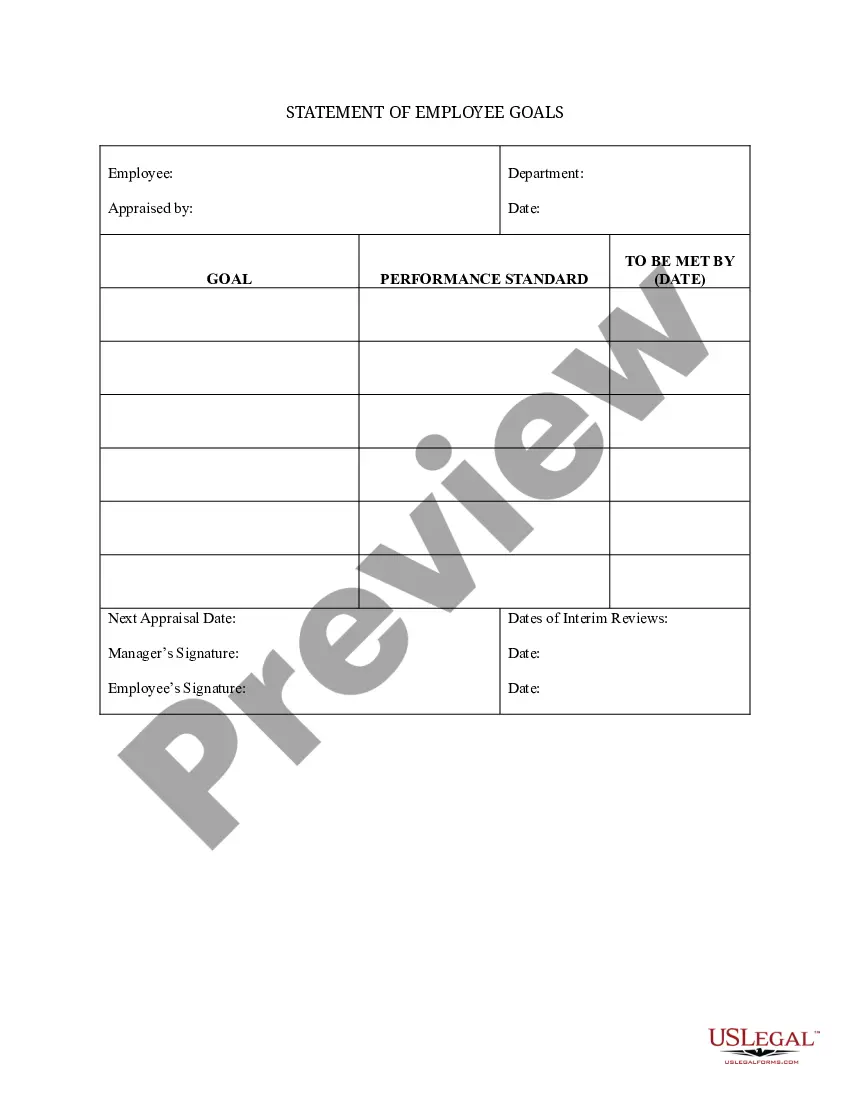
Ohio FMLA Information Letter to Employee
Description
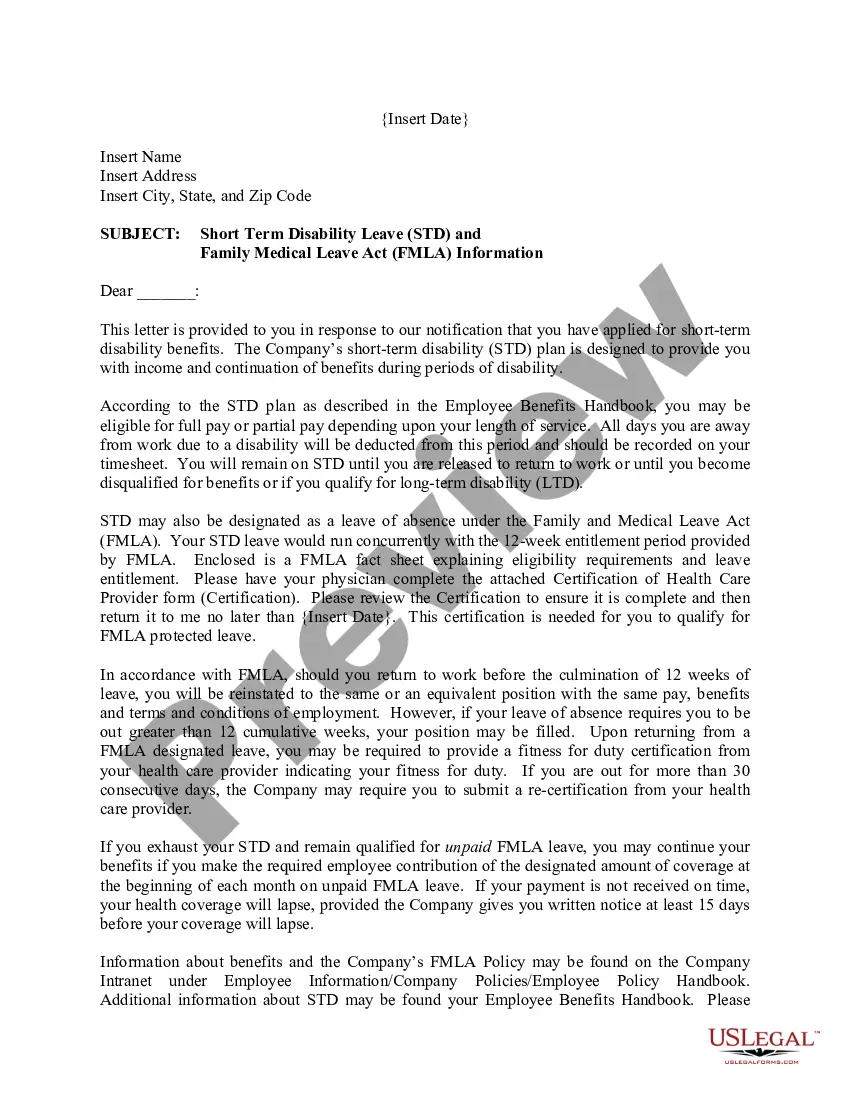
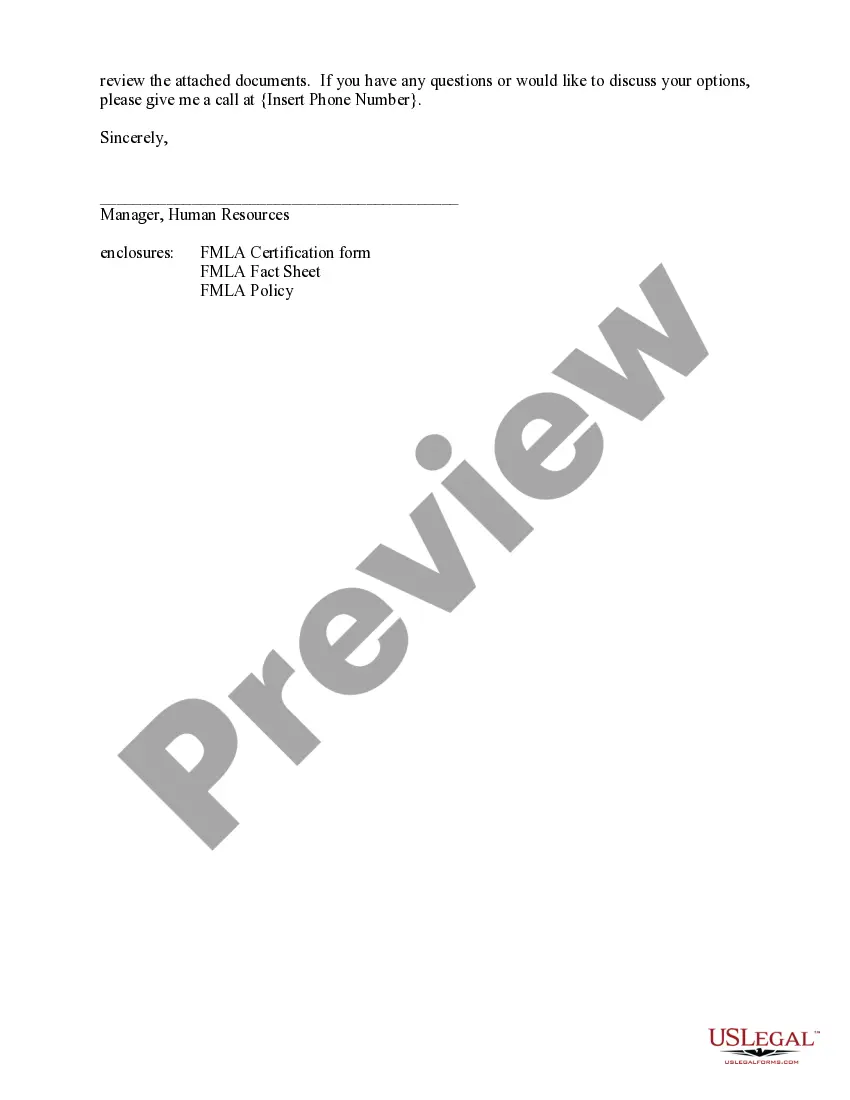
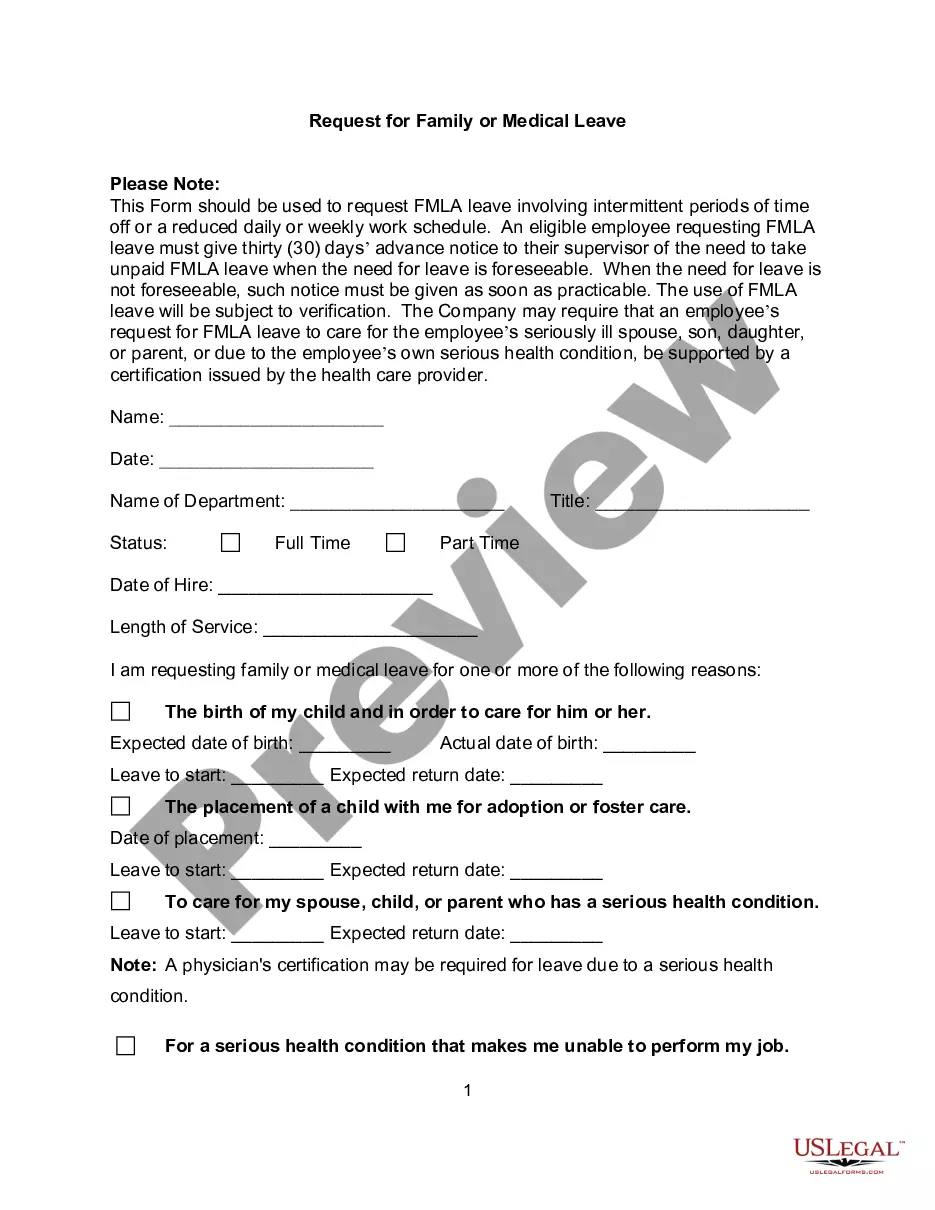
Get your form ready online
Our built-in tools help you complete, sign, share, and store your documents in one place.
Make edits, fill in missing information, and update formatting in US Legal Forms—just like you would in MS Word.
Download a copy, print it, send it by email, or mail it via USPS—whatever works best for your next step.
Sign and collect signatures with our SignNow integration. Send to multiple recipients, set reminders, and more. Go Premium to unlock E-Sign.
If this form requires notarization, complete it online through a secure video call—no need to meet a notary in person or wait for an appointment.
We protect your documents and personal data by following strict security and privacy standards.

Make edits, fill in missing information, and update formatting in US Legal Forms—just like you would in MS Word.

Download a copy, print it, send it by email, or mail it via USPS—whatever works best for your next step.

Sign and collect signatures with our SignNow integration. Send to multiple recipients, set reminders, and more. Go Premium to unlock E-Sign.

If this form requires notarization, complete it online through a secure video call—no need to meet a notary in person or wait for an appointment.

We protect your documents and personal data by following strict security and privacy standards.
Looking for another form?

How to fill out FMLA Information Letter To Employee?
If you need to aggregate, retrieve, or print legal document templates, utilize US Legal Forms, the largest assortment of legal forms available online.
Take full advantage of the site's straightforward and user-friendly search feature to find the documents you need.
Various templates for business and personal purposes are organized by categories and states, or keywords.
Choose your preferred pricing plan and enter your details to register for an account.
Step 5. Complete the payment process. You can use your Visa or Mastercard or PayPal account to finalize the transaction.
- Use US Legal Forms to quickly find the Ohio FMLA Information Letter to Employee with just a few clicks.
- If you are already a US Legal Forms user, Log In to your account and click on the Obtain option to get the Ohio FMLA Information Letter to Employee.
- You can also access forms you previously obtained in the My documents tab of your account.
- If it’s your first time using US Legal Forms, follow the instructions below.
- Step 1. Ensure you have selected the template for the correct city/region.
- Step 2. Use the Review option to examine the content of the form and remember to check the details.
- Step 3. If you are not satisfied with the form, utilize the Search field at the top of the screen to find alternative versions of the legal form template.
- Step 4. Once you have found the template you need, select the Acquire now option.
Form popularity
FAQ
Although district courts conflict on whether a disclosure of an employee's medical information constitutes an interference claim under FMLA, the Court finds that enforcing labor regulation makes clear that confidentiality of medical information is a right provided by and protected by the FMLA. Citations Omitted.
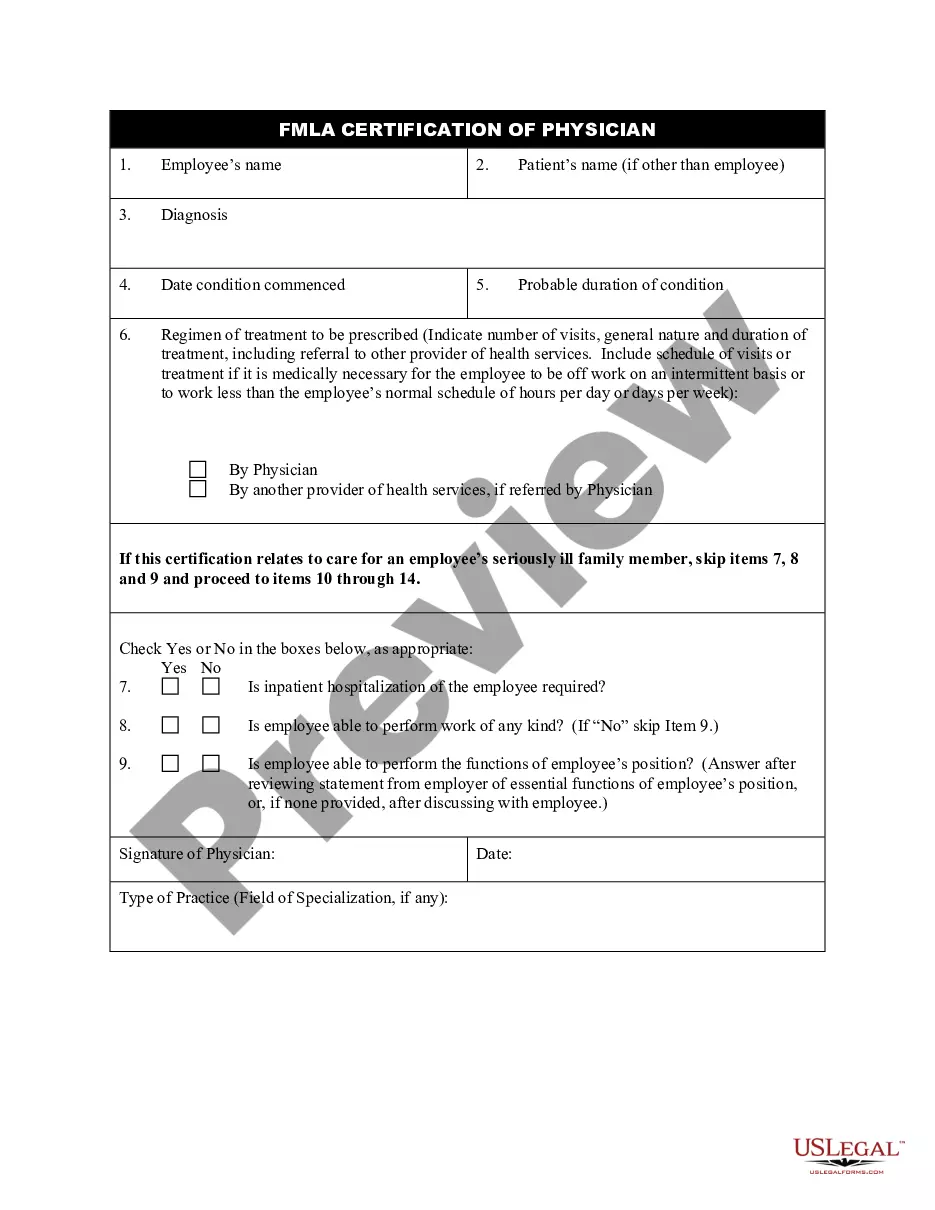
Dear (Supervisor / HR Manager): Please be advised that I hereby request an FMLA leave for a period of (number of weeks) in connection with my serious health condition. The leave is to start on (date). Attached is my medical note reflecting the need for FMLA leave.
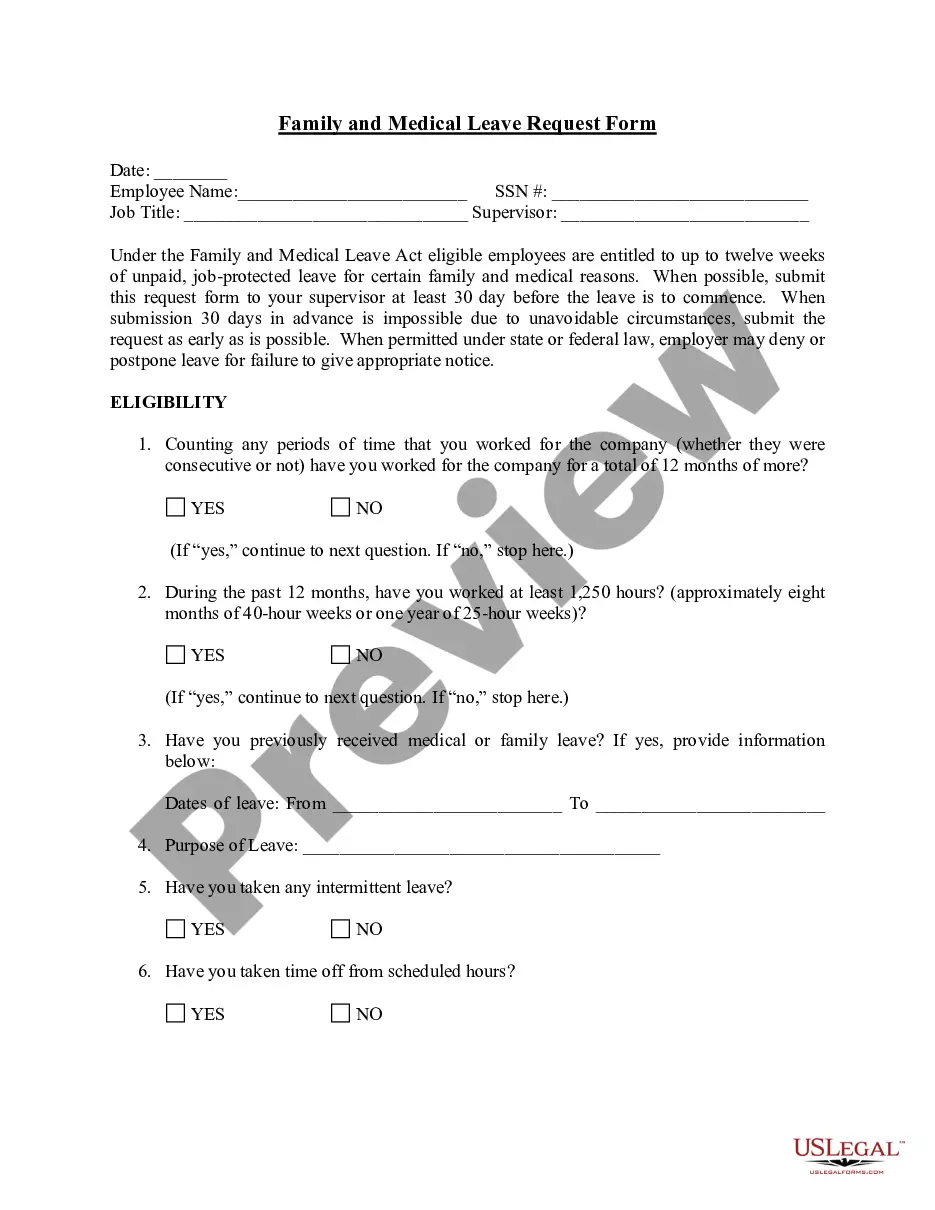
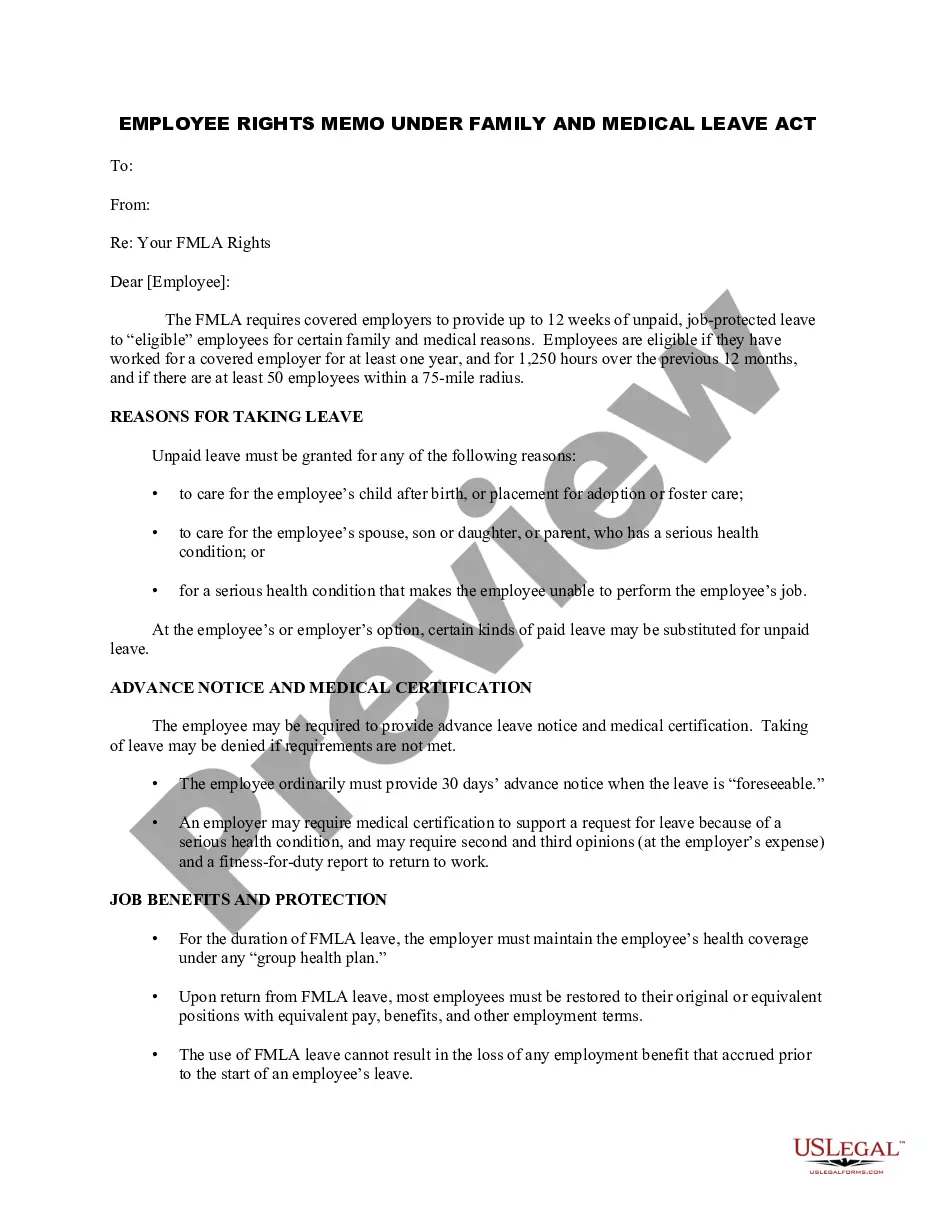
To be eligible for FMLA benefits, an employee must:work for a covered employer;have worked for the employer for a total of 12 months;have worked at least 1,250 hours over the previous 12 months; and.work at a location where at least 50 employees are employed by the employer within 75 miles.
Make the initial request by talking to your immediate supervisor about it. Fill out the paperwork your human resources department requires to make the leave official. Discuss the absence with your supervisor before sharing it with your colleagues and co-workers. Your boss shouldn't be the last to know.
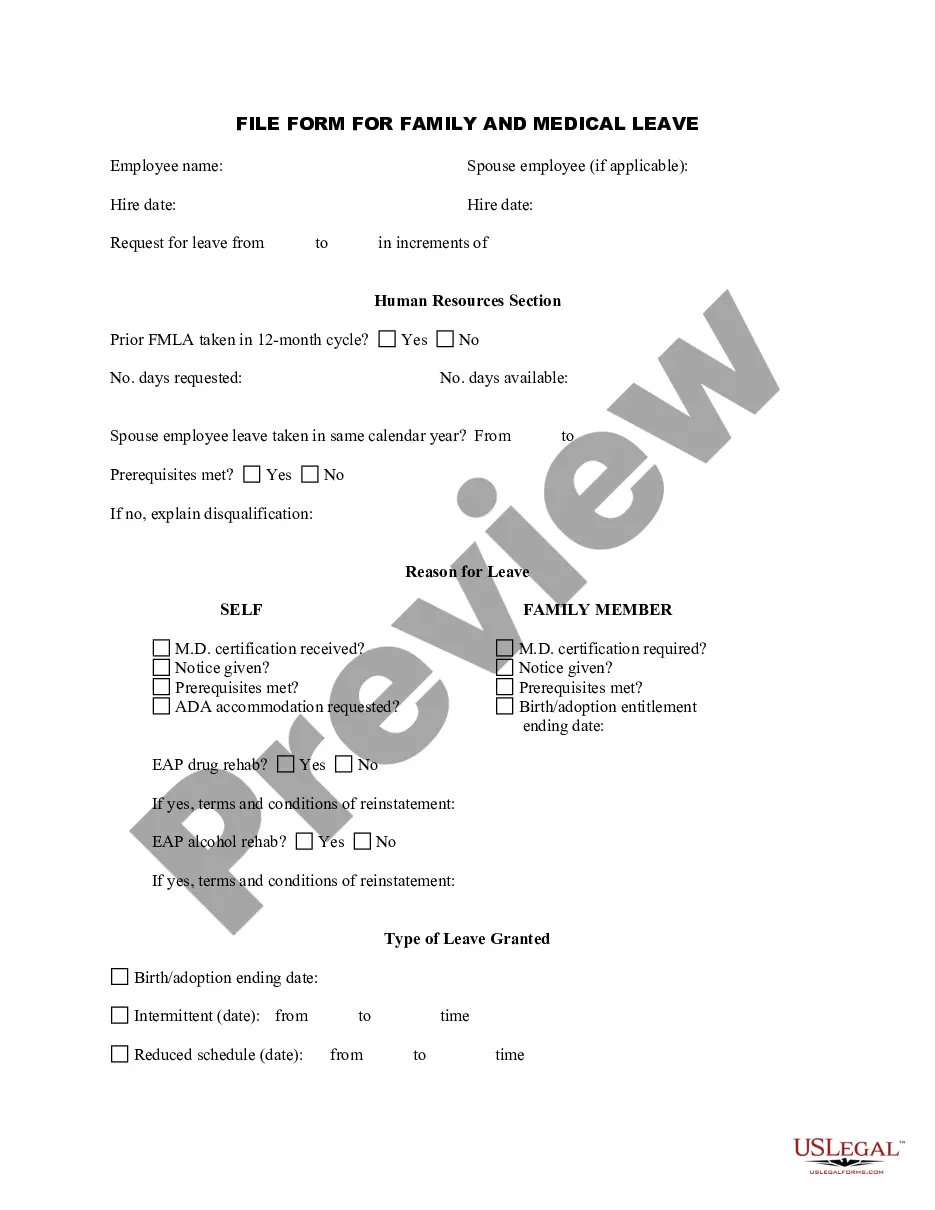
The Family and Medical Leave Act (FMLA) entitles eligible employees to take up to 12 workweeks of unpaid, job-protected leave in a 12-month period for specified family and medical reasons.
While the employee is on leave, an employer can ask the employee to provide status updates, including asking the employee to obtain a second opinion regarding her condition. The caveat is that you may only ask the employee; you cannot ask anyone else about a particular employee's leave.
An employee can lawfully be terminated while on medical leave if they would have been terminated regardless of whether they exercised their rights under the FMLA. However, if an employer fires or lays off a worker because they took medical leave, then the termination is unlawful.
The FMLA and the ADA provide employees with the right to the confidentiality of their medical information. Employees who find their rights infringed upon may choose to, and have the right to, pursue the matter in court.
In general, when an employee is out, we recommend informing coworkers only that the employee is on a leave of absence. The reasons for the leave are not any of the coworkers' business, and the employee might not want the reasons known by others.
An employee can lawfully be terminated while on medical leave if they would have been terminated regardless of whether they exercised their rights under the FMLA. However, if an employer fires or lays off a worker because they took medical leave, then the termination is unlawful.