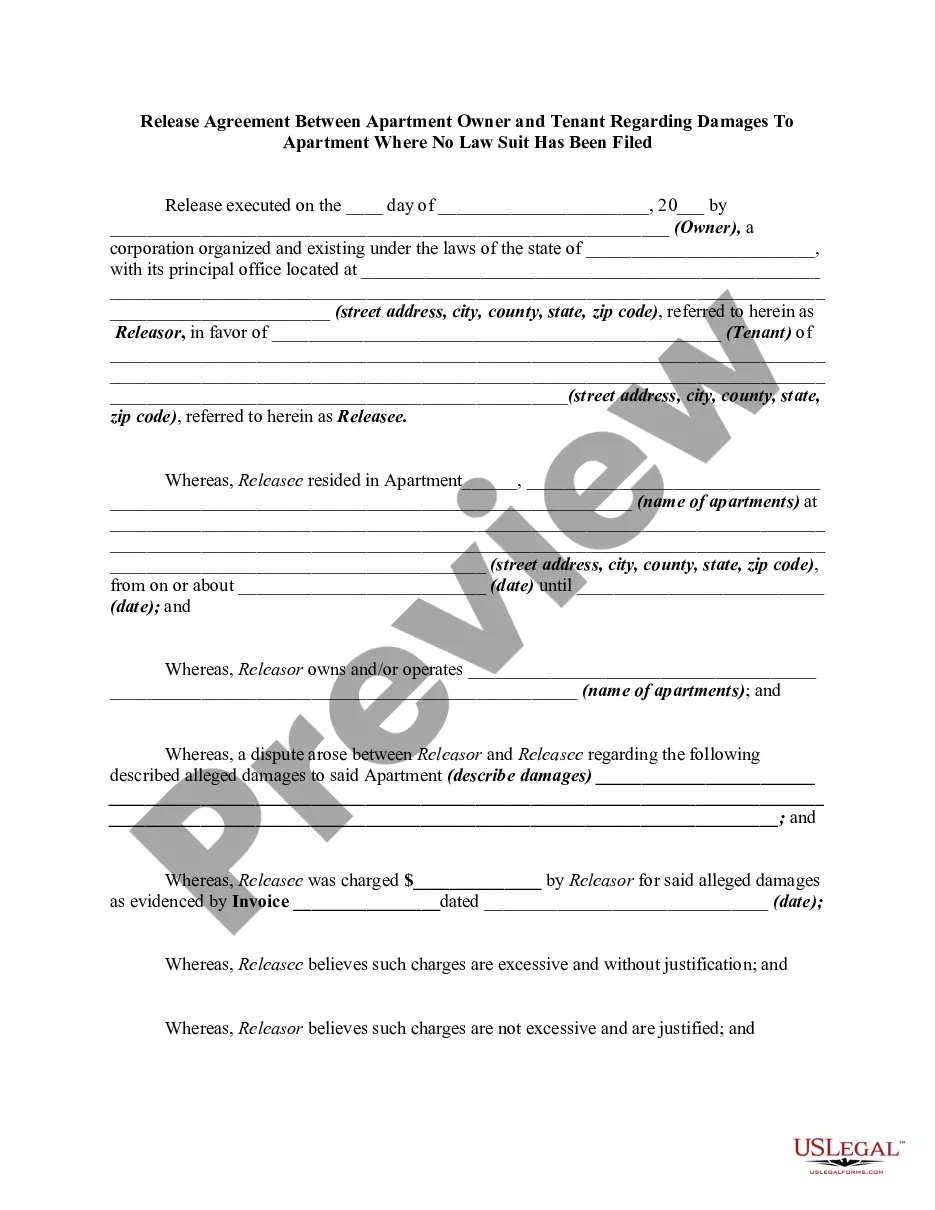
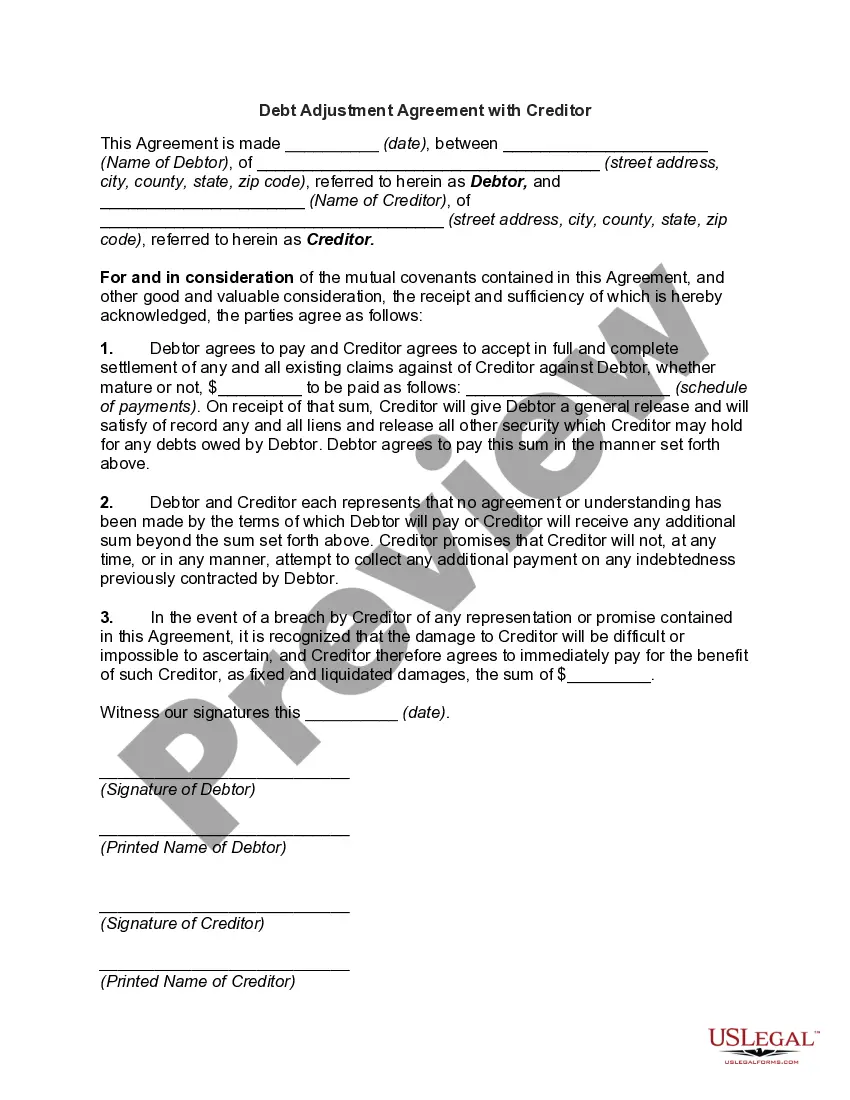
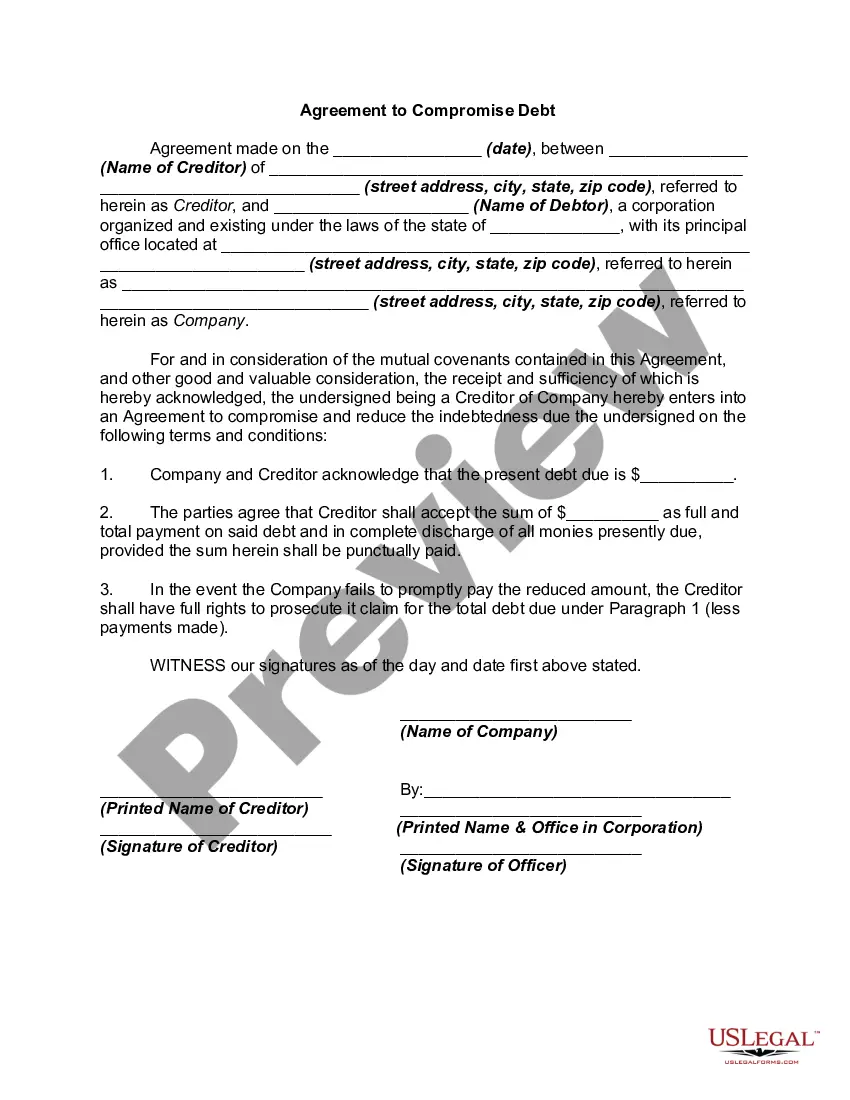
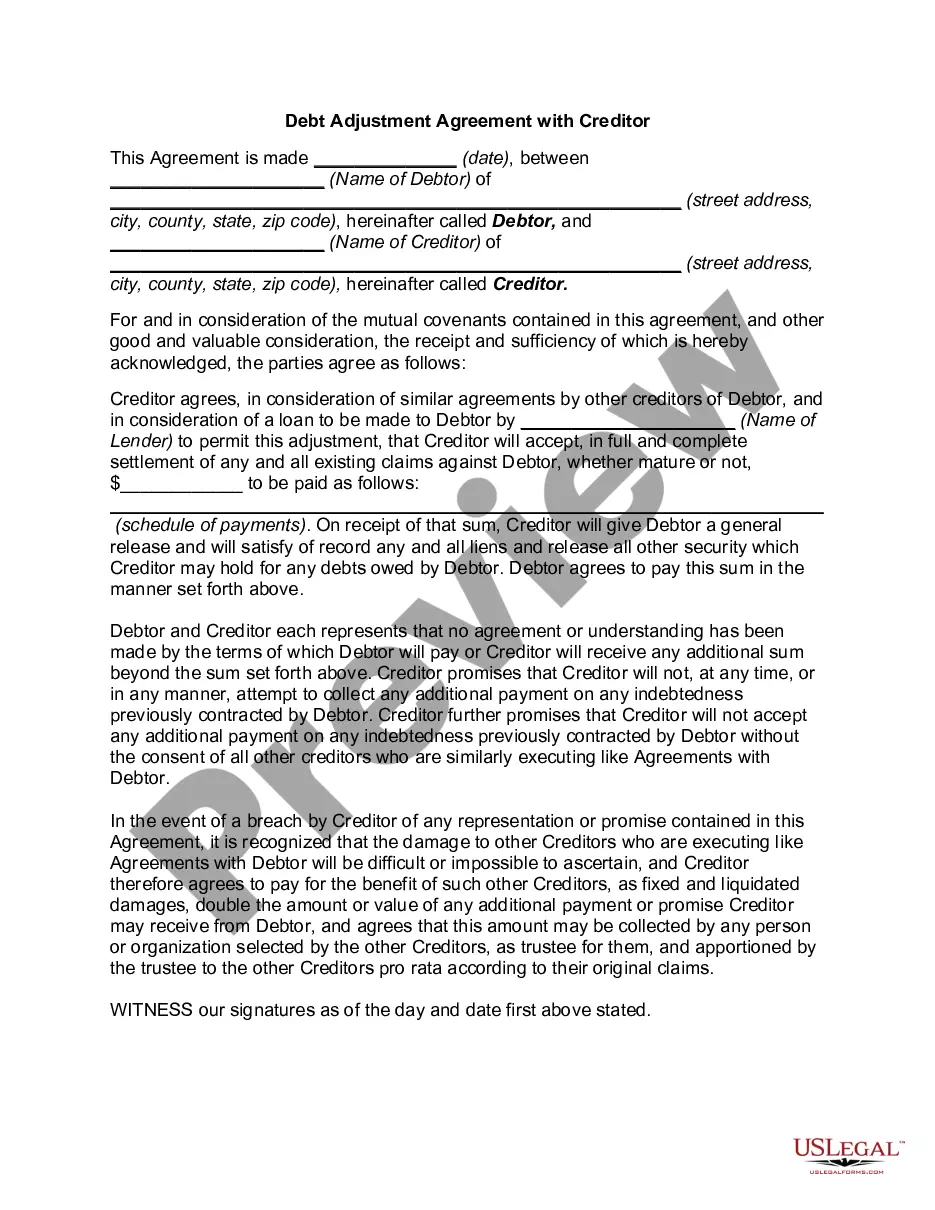
Ohio Debt Adjustment Agreement with Creditor
Description
Get your form ready online
Our built-in tools help you complete, sign, share, and store your documents in one place.
Make edits, fill in missing information, and update formatting in US Legal Forms—just like you would in MS Word.
Download a copy, print it, send it by email, or mail it via USPS—whatever works best for your next step.
Sign and collect signatures with our SignNow integration. Send to multiple recipients, set reminders, and more. Go Premium to unlock E-Sign.
If this form requires notarization, complete it online through a secure video call—no need to meet a notary in person or wait for an appointment.
We protect your documents and personal data by following strict security and privacy standards.

Make edits, fill in missing information, and update formatting in US Legal Forms—just like you would in MS Word.

Download a copy, print it, send it by email, or mail it via USPS—whatever works best for your next step.

Sign and collect signatures with our SignNow integration. Send to multiple recipients, set reminders, and more. Go Premium to unlock E-Sign.

If this form requires notarization, complete it online through a secure video call—no need to meet a notary in person or wait for an appointment.

We protect your documents and personal data by following strict security and privacy standards.
Looking for another form?

How to fill out Debt Adjustment Agreement With Creditor?
US Legal Forms - one of the largest collections of legal documents in the United States - offers a vast selection of legal templates that you can purchase or print.
By using the website, you can find thousands of documents for business and personal purposes, organized by categories, states, or keywords. You can obtain the latest versions of forms such as the Ohio Debt Adjustment Agreement with Creditor in just seconds.
If you already have a subscription, Log In and retrieve the Ohio Debt Adjustment Agreement with Creditor from the US Legal Forms library. The Download button will appear on each document you open. You can access all previously downloaded documents within the My documents section of your account.
Process the payment.
Use your credit card or PayPal account to complete the transaction. Choose the format and download the form to your device. Make changes. Fill out, modify, and print and sign the downloaded Ohio Debt Adjustment Agreement with Creditor. Each template you add to your account has no expiration date and is yours forever. Therefore, if you want to download or print another copy, simply go to the My documents section and click on the document you need. Access the Ohio Debt Adjustment Agreement with Creditor through US Legal Forms, one of the most extensive libraries of legal document templates. Utilize thousands of professional and state-specific templates that meet your business or personal demands and requirements.
- Make sure you have chosen the correct document for your city/county.
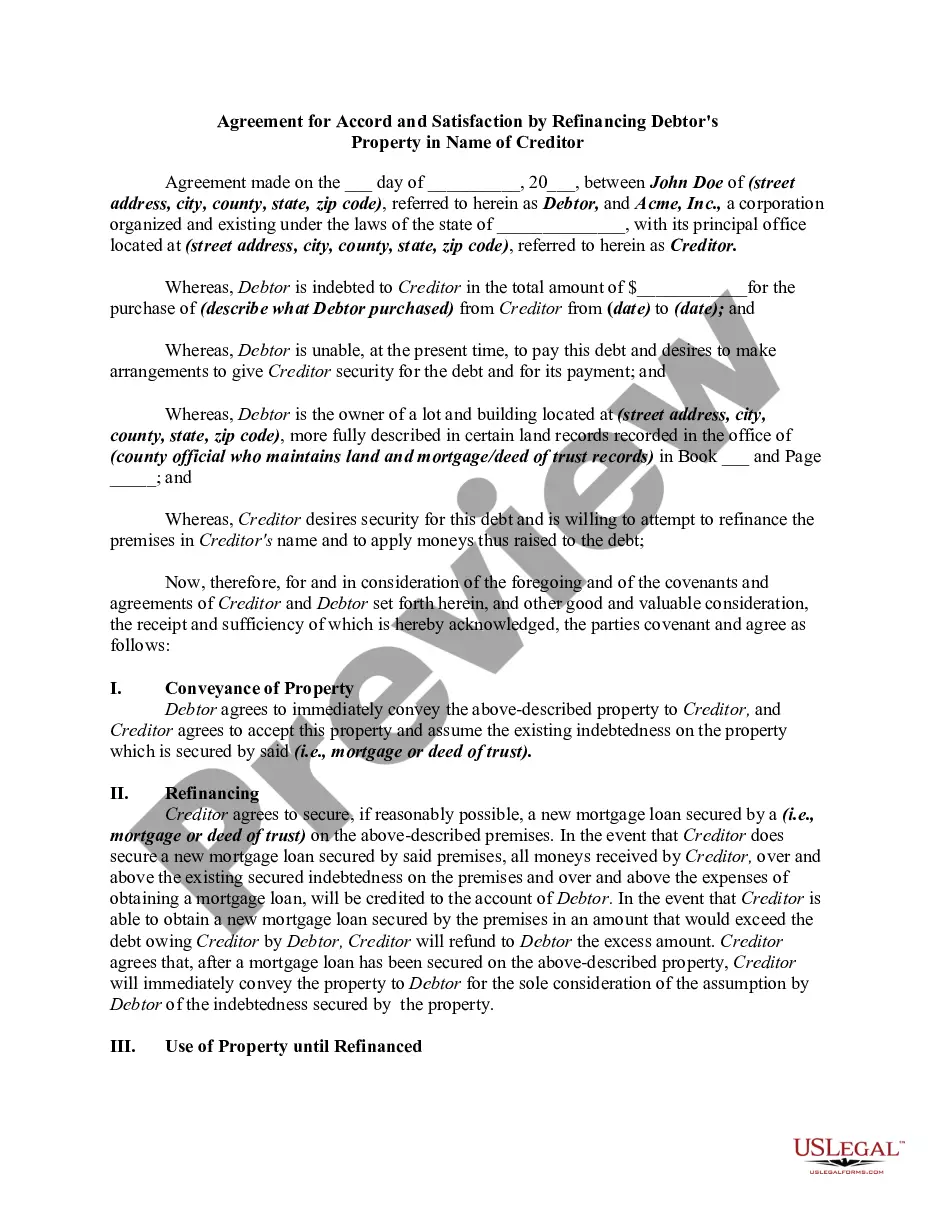
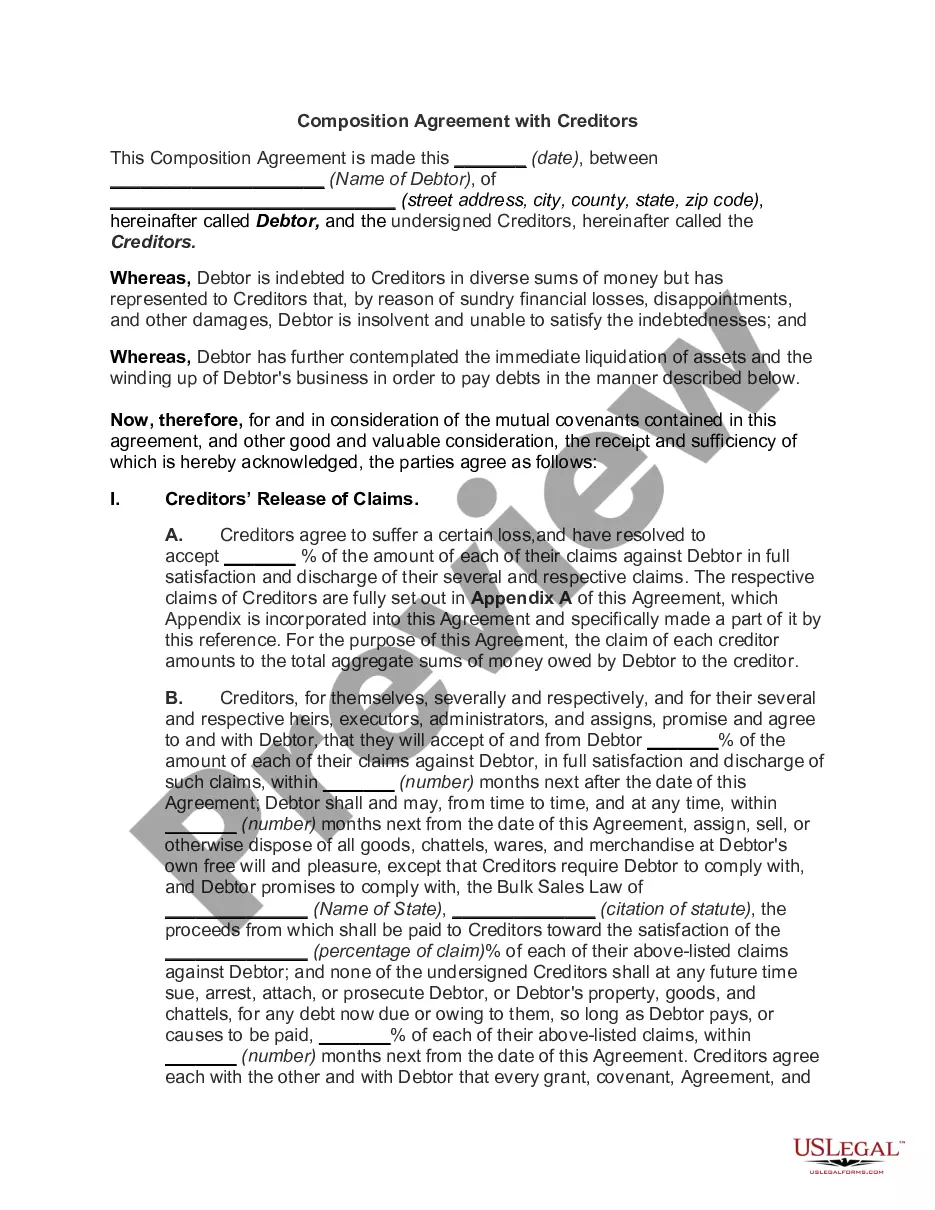
- Click the Preview button to review the form’s content.
- Read the form summary to ensure you have selected the appropriate document.
- If the document does not meet your needs, use the Search field at the top of the screen to find the one that does.
- Once you are satisfied with the form, confirm your selection by clicking the Download now button.
- Then, select the pricing plan you prefer and provide your details to register for an account.
Form popularity
FAQ
The best sample for a debt validation letter includes a formal greeting, an explanation of the debt, and a request for the creditor to provide proof of the debt. You can find template samples online that align with the structure needed. Utilizing an Ohio Debt Adjustment Agreement with Creditor ensures that your letter reflects a clear intent to resolve the debt.
For most debts, the time limit is 6 years since you last wrote to them or made a payment. The time limit is longer for mortgage debts. If your home is repossessed and you still owe money on your mortgage, the time limit is 6 years for the interest on the mortgage and 12 years on the main amount.
Debt settlement is an agreement made between a creditor and a consumer in which the total debt balance owed is reduced and/or fees are waived, and the reduced debt amount is paid in a lump sum instead of revolving monthly.
Generally, those options are to:Continue to handle the debt on your own.Contact the creditors for help.Settle the debt either on your own or with the assistance of a third party.Work with a nonprofit credit counseling agency through a debt management plan.Seek legal protection through bankruptcy.
Once you've done your research and put aside some cash, it's time to determine what your settlement offer will be. Typically, a creditor will agree to accept 40% to 50% of the debt you owe, although it could be as much as 80%, depending on whether you're dealing with a debt collector or the original creditor.
Once a judgment is obtained by a creditor, it remains in effect for years. Although the judgment can become dormant, it can be revived. This means your creditors can execute a judgment against you even five years after it is ordered.
Generally, those options are to:Continue to handle the debt on your own.Contact the creditors for help.Settle the debt either on your own or with the assistance of a third party.Work with a nonprofit credit counseling agency through a debt management plan.Seek legal protection through bankruptcy.07-Oct-2016
Debt settlement can cause your credit score to fall by more than 100 points, and it stays on your credit report for seven years. If your creditors close accounts as part of the settlement process, this can cause your credit utilization to increase, which also negatively affects your credit score.
Yes, you can remove individual accounts from your debt management plan. To do so, call customer support and make the request. The consequences for removing a credit card account from a debt management program are similar to those of canceling a program, though possibly not as severe.
A debt settlement attorney can negotiate with your lenders if you have a large amount of unsecured debt to lower the amount you owe. Unsecured debt is debt that didn't require a collateral, such as credit cards, student loans, or medical bills.