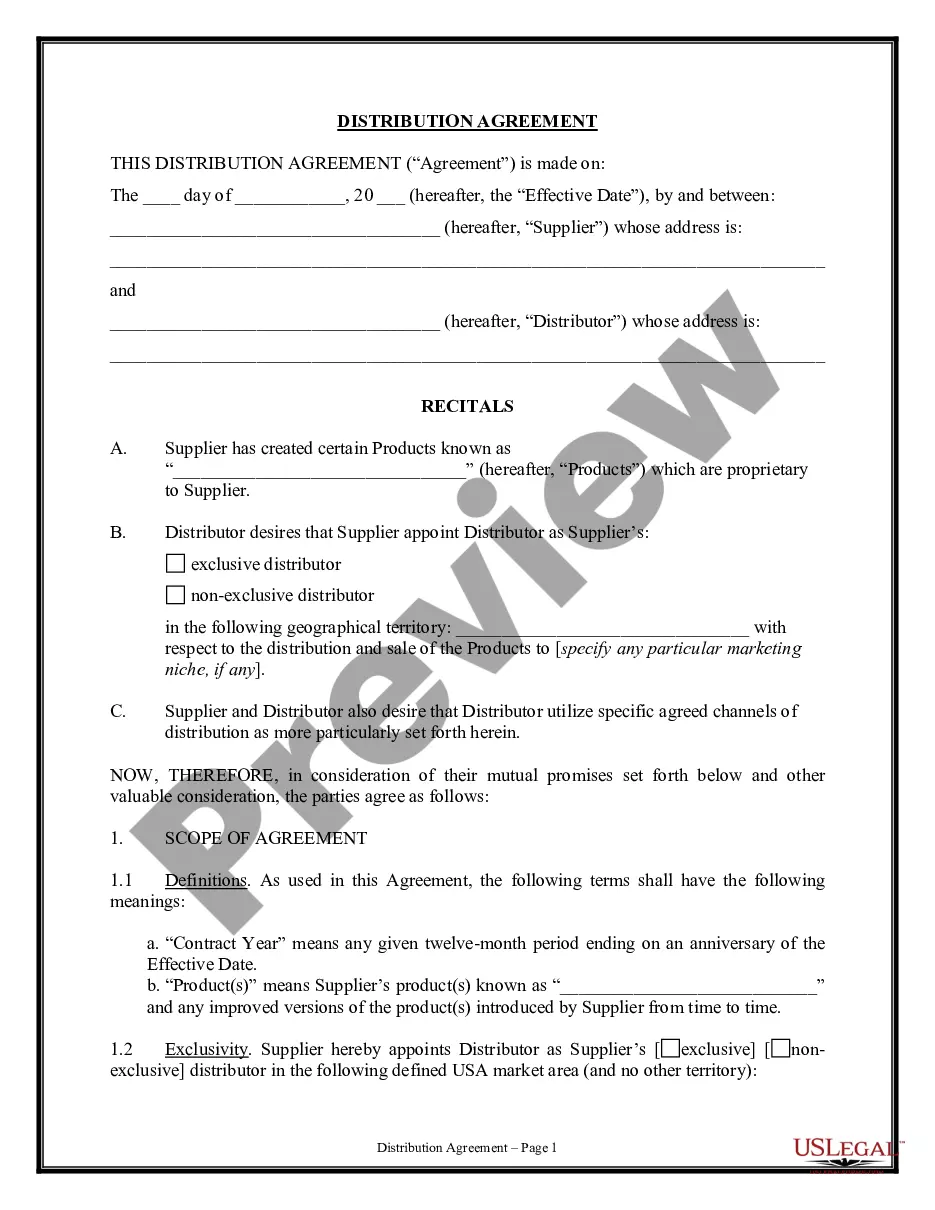
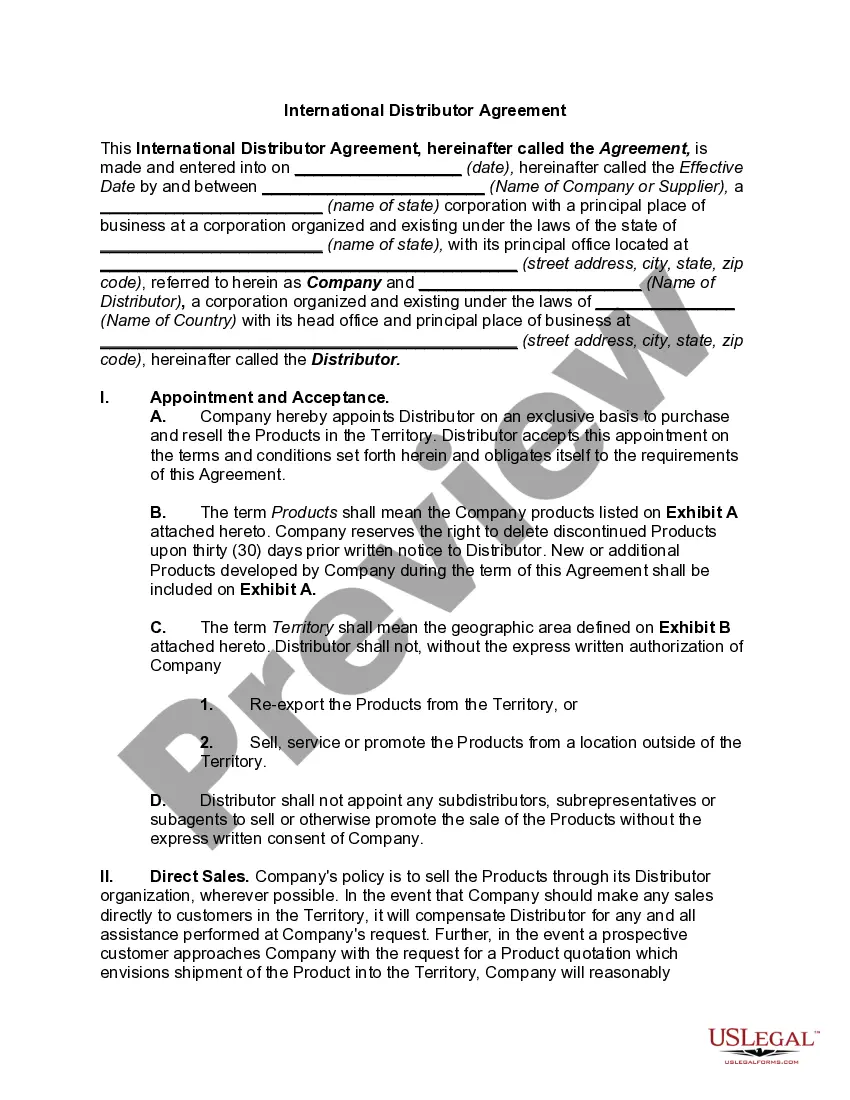
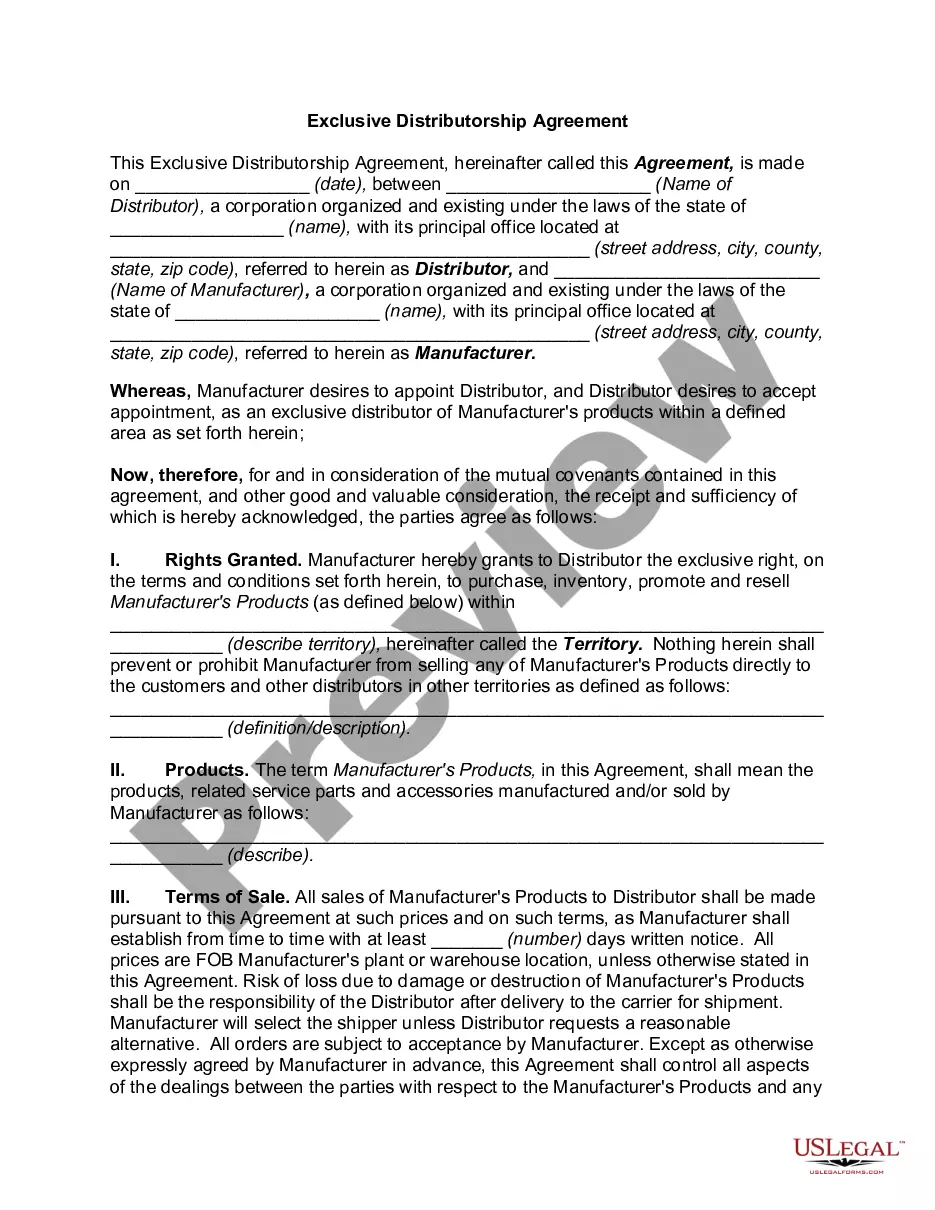
Ohio Distributorship Agreement
Description
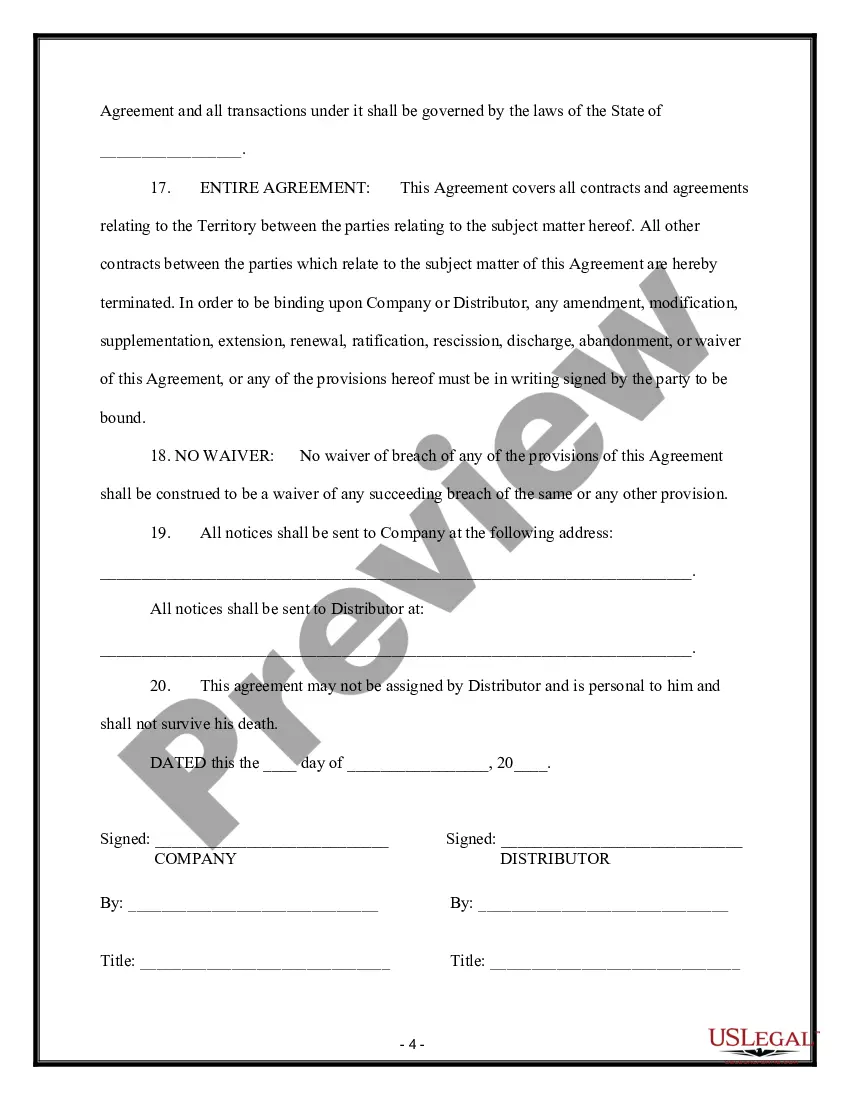
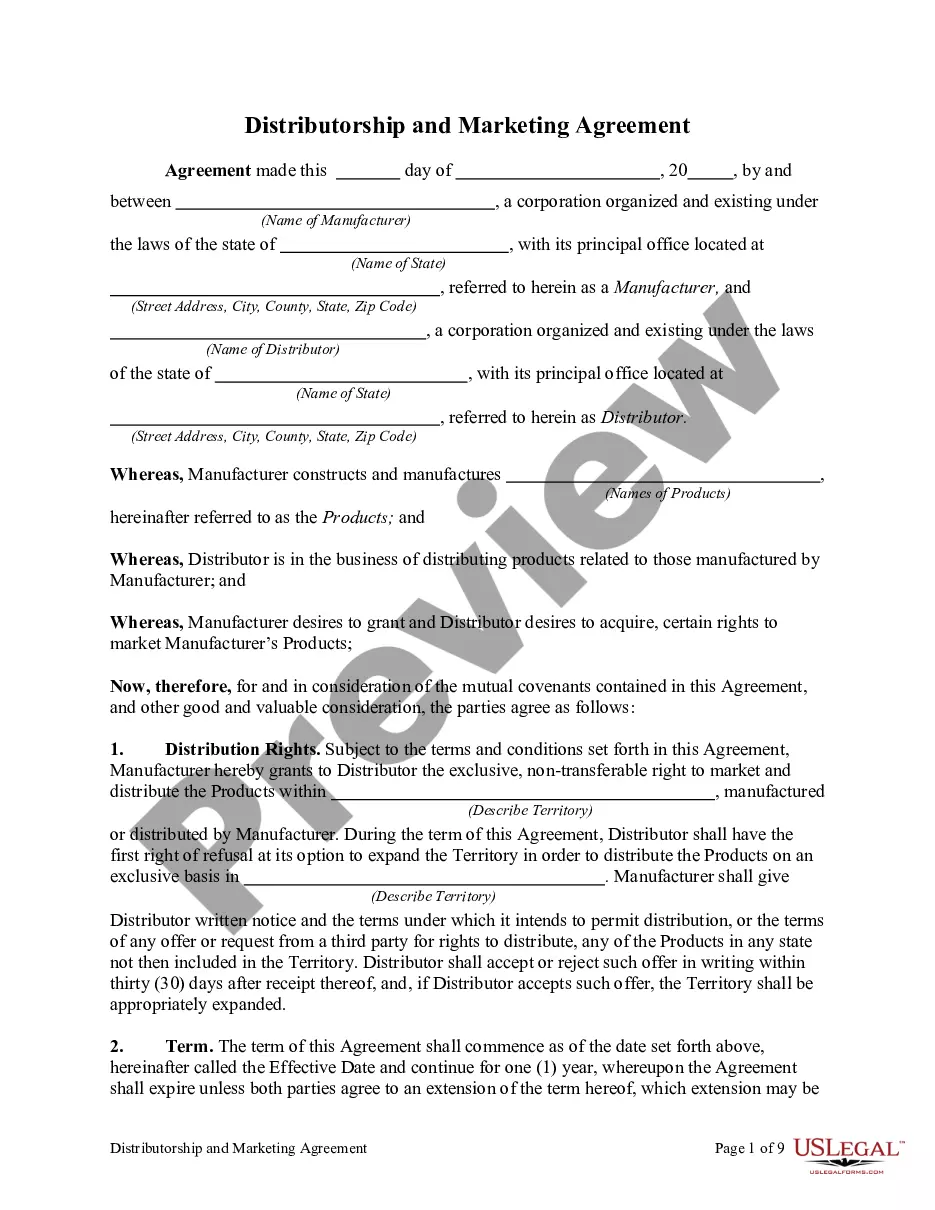
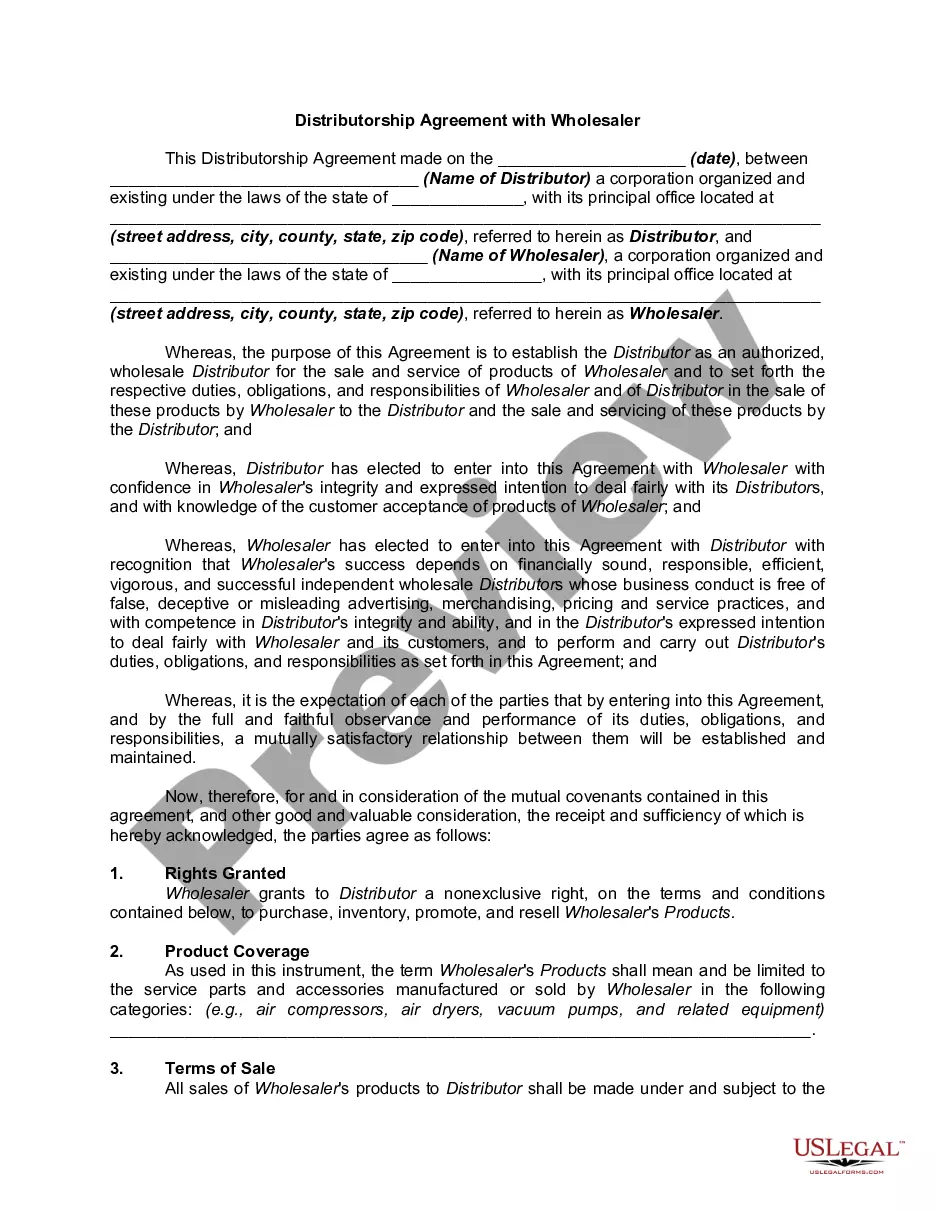
Get your form ready online
Our built-in tools help you complete, sign, share, and store your documents in one place.
Make edits, fill in missing information, and update formatting in US Legal Forms—just like you would in MS Word.
Download a copy, print it, send it by email, or mail it via USPS—whatever works best for your next step.
Sign and collect signatures with our SignNow integration. Send to multiple recipients, set reminders, and more. Go Premium to unlock E-Sign.
If this form requires notarization, complete it online through a secure video call—no need to meet a notary in person or wait for an appointment.
We protect your documents and personal data by following strict security and privacy standards.

Make edits, fill in missing information, and update formatting in US Legal Forms—just like you would in MS Word.

Download a copy, print it, send it by email, or mail it via USPS—whatever works best for your next step.

Sign and collect signatures with our SignNow integration. Send to multiple recipients, set reminders, and more. Go Premium to unlock E-Sign.

If this form requires notarization, complete it online through a secure video call—no need to meet a notary in person or wait for an appointment.

We protect your documents and personal data by following strict security and privacy standards.
Looking for another form?




How to fill out Distributorship Agreement?
US Legal Forms - one of the largest collections of legal documents in the United States - offers a variety of legal form templates that you can download or print.
By using the website, you will find thousands of forms for business and personal purposes, organized by categories, states, or keywords. You can find the latest versions of forms like the Ohio Distributorship Agreement in just moments.
If you already have a monthly subscription, Log In and download the Ohio Distributorship Agreement from the US Legal Forms catalog. The Download button will be available on every form you view. You can access all previously downloaded forms under the My documents section of your account.
Choose the format and download the form to your device.
strong>Edit. Fill in, modify, print, and sign the downloaded Ohio Distributorship Agreement. Each form you added to your account has no expiration date and is yours permanently. So, if you want to download or print another copy, simply go to the My documents section and click on the form you need. Access the Ohio Distributorship Agreement with US Legal Forms, the most extensive collection of legal document templates. Utilize thousands of professional and state-specific templates that meet your business or personal needs and requirements.
- strong>Ensure you have selected the correct form for your city/county. Click the Preview button to review the content of the form.
- Check the form details to make sure you have chosen the right document.
- If the form doesn’t meet your needs, use the Search box at the top of the screen to find the one that does.
- If you are satisfied with the form, confirm your choice by clicking the Download now button.
- Then, select the pricing plan you prefer and provide your information to register for the account.
- strong>Complete the payment. Use your credit card or PayPal account to finalize the purchase.
Form popularity
FAQ
In Ohio, it is generally mandatory to have a physical lot or location for your dealership to obtain a dealer license. This requirement ensures that you have a dedicated space to operate your business and meet local zoning laws. If you're considering starting a dealership, it is advisable to look into establishing a location that meets all legal requirements. Additionally, understanding the implications of an Ohio Distributorship Agreement can help clarify your responsibilities in this situation.
In Ohio, you can sell up to five vehicles in a calendar year without needing a dealer's license. However, selling more than this limit requires you to be licensed, meaning it's crucial to keep track of your transactions. It's advisable to consult with professionals or legal advisors, especially when considering entering into an Ohio Distributorship Agreement, to ensure compliance with state laws and requirements.
The process of obtaining a dealer's license in Ohio can take anywhere from a few weeks to several months, depending on various factors. You need to gather necessary documentation, complete the application, and meet all local requirements. It is essential to ensure your paperwork is complete, as delays can occur with missing information. Using resources like the US Legal platform can help streamline your application process, making it easier to navigate the obligations of forming an Ohio Distributorship Agreement.
A distributor agreement governs the relationship between a manufacturer and a distributor, focusing on the distribution of goods in bulk. Conversely, a dealer agreement outlines the relationship between a manufacturer and a dealer, specifying the sale of products directly to consumers. Both agreements have unique terms and can be crucial in setting up an effective Ohio Distributorship Agreement that supports your business strategy.
The primary difference between a distributor agreement and a reseller agreement lies in the roles each party plays in the supply chain. A distributor buys products in bulk and sells them to retailers, while a reseller typically purchases products from a distributor to sell them to end consumers. Understanding these distinctions helps in drafting the appropriate Ohio Distributorship Agreement tailored to your business needs.
A distributor purchases large quantities of products directly from manufacturers and sells them to various retailers or dealers. In contrast, a dealer generally sells products directly to the end consumer. This distinction affects how each operates in the supply chain and typically encompasses the terms laid out in an Ohio Distributorship Agreement, which binds distributors to specific terms and conditions.
Opening a dealership in Ohio requires careful planning and execution. First, you will need to research the market and select the right location for your business. Next, you must apply for the necessary licenses and permits, ensuring compliance with local regulations. Additionally, consider drafting an Ohio Distributorship Agreement to clarify the terms of your operations with suppliers.
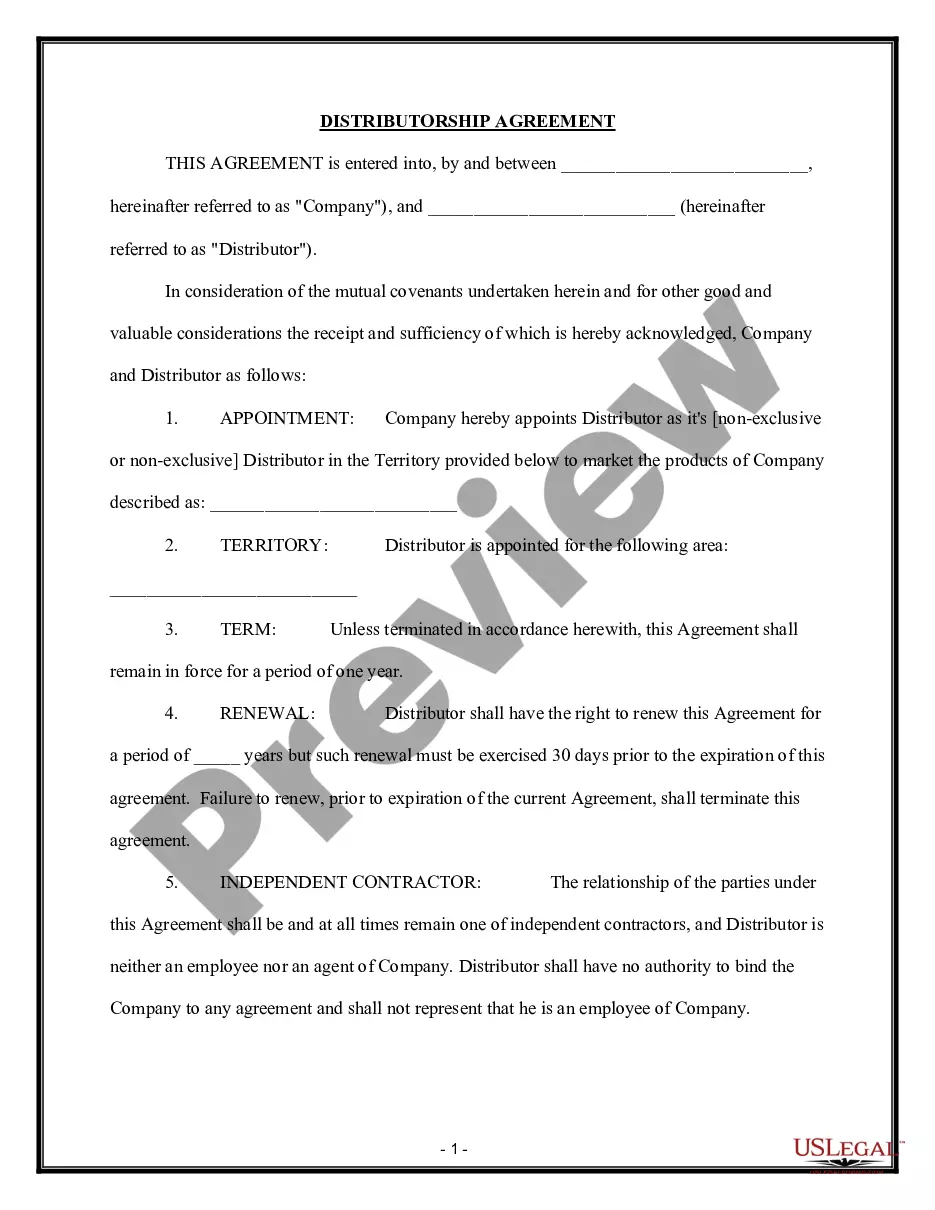
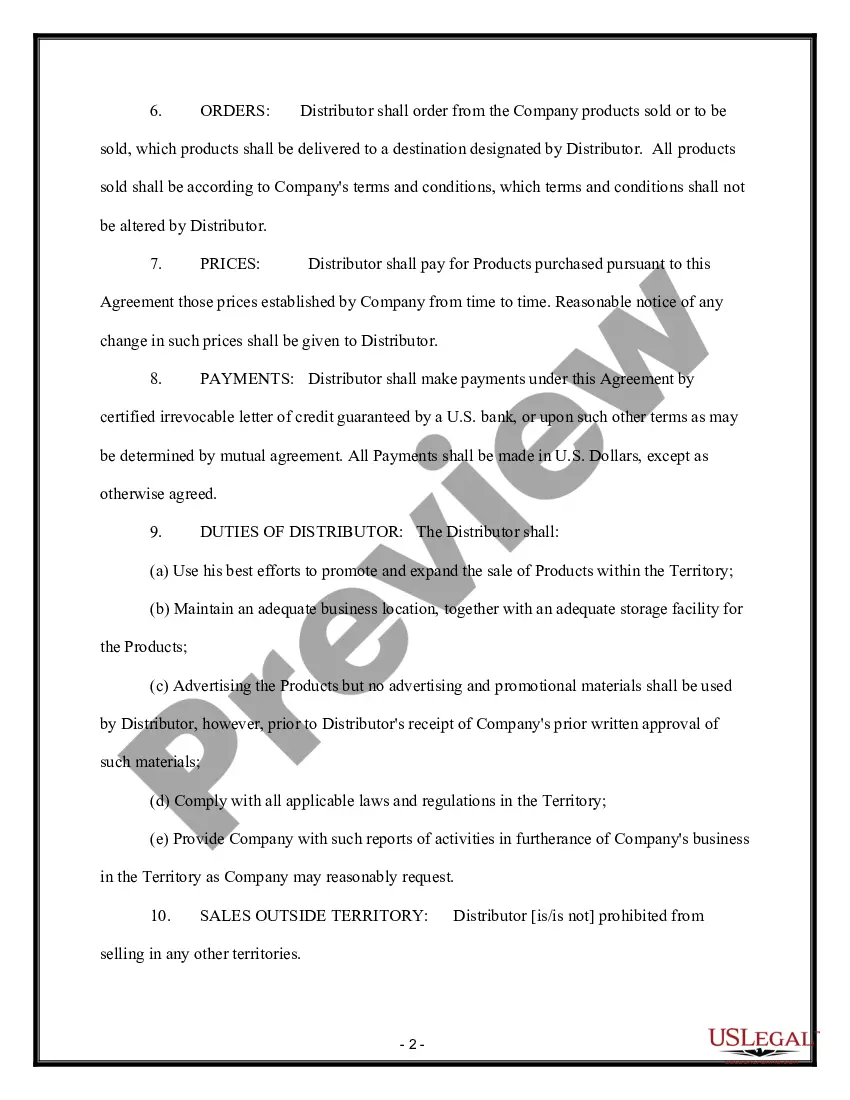
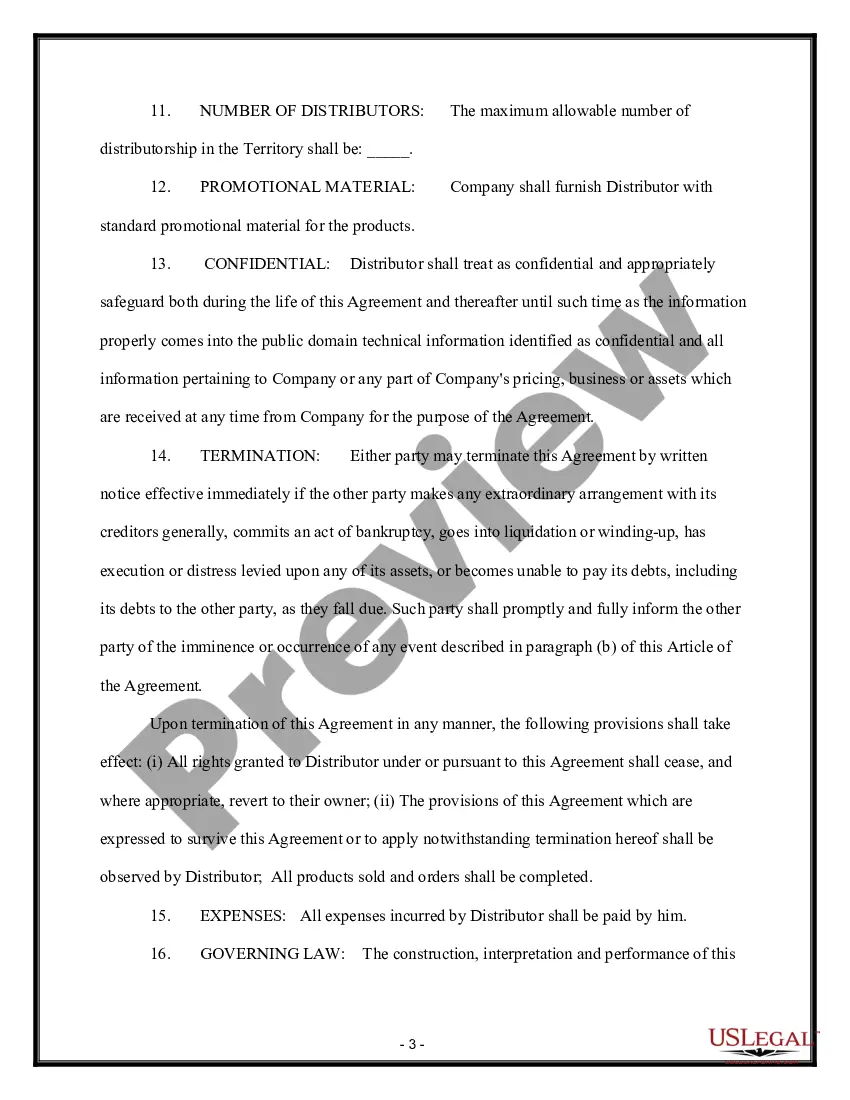
An Ohio Distributorship Agreement includes various important elements designed to protect both the supplier and distributor. Key components generally cover product descriptions, terms of sale, delivery schedules, and dispute resolution processes. Moreover, it is crucial to incorporate clauses about confidentiality and non-compete agreements, ensuring that sensitive information remains protected while fostering a productive partnership.
A distribution strategy generally includes several critical components such as target markets, distribution channels, and sales tactics. In the context of an Ohio Distributorship Agreement, it should also assess logistics and supply chain considerations to ensure efficient product delivery. By designing a comprehensive distribution strategy, businesses can enhance their reach and improve customer satisfaction.
The primary purpose of a distribution agreement, like an Ohio Distributorship Agreement, is to define the business relationship between the supplier and distributor clearly. This agreement helps both parties align their goals and expectations, ensuring effective product distribution and market penetration. Importantly, it serves as a legally binding document that protects the interests of both parties and promotes fair business practices.